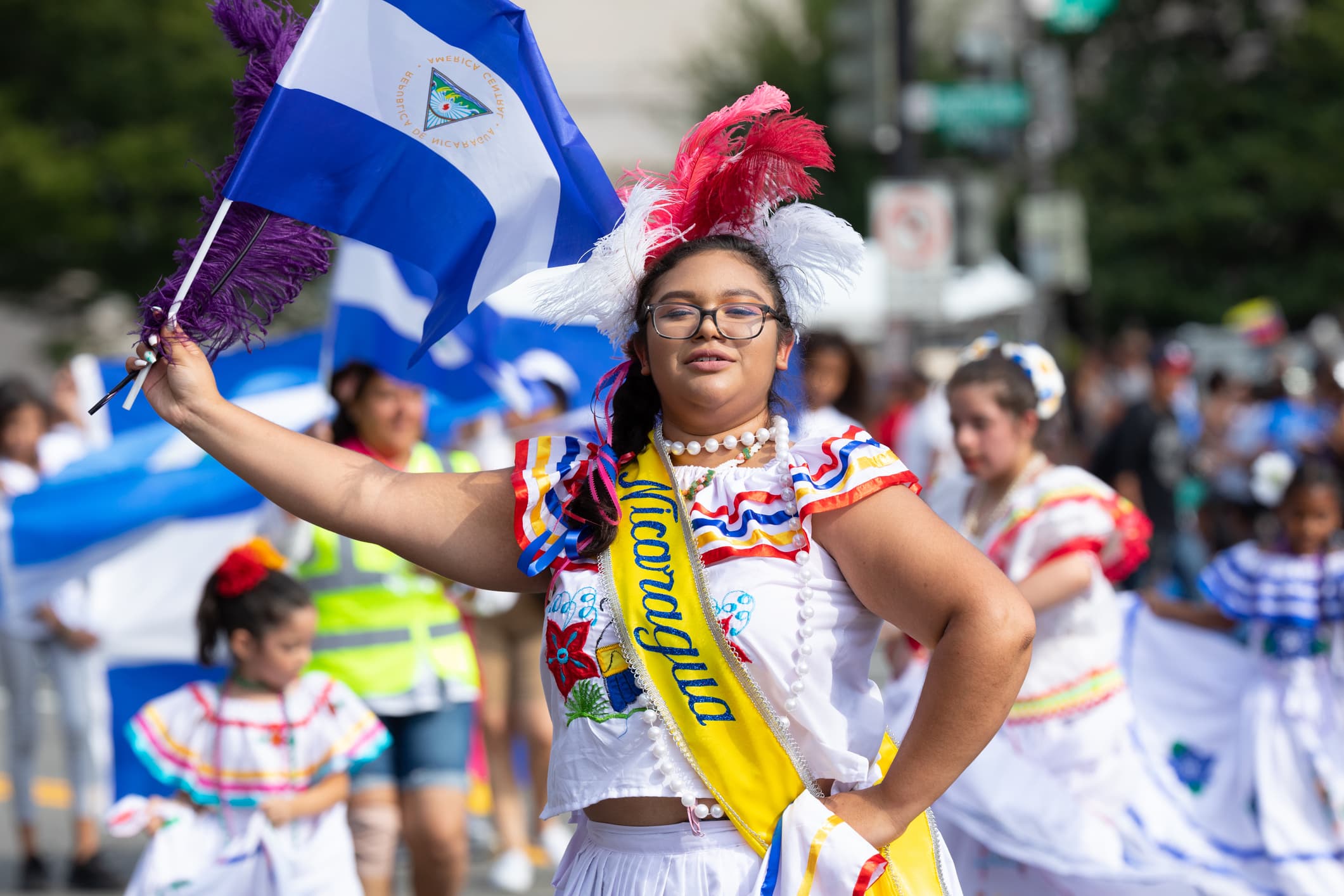
In the wind-up to July 19th festivities celebrating the overthrow of its U.S.-installed puppet dictator Anastasio Somoza, the U.S. State Department issued a dire warning to travelers. Only Washington could twist the concept of a national celebration of freedom into a “demonstration.”
Only Washington could project and apply the attacks it makes on its own citizens by equating alleged thought crimes made by anti-imperialist peaceniks with terrorism. The Trump administration has made it clear that U.S. taxpayers are now not even allowed to criticize how their money is spent and wasted.
So this year’s 47th anniversary of the Sandinista People’s Revolution in 1979 takes place in the most internationally complex and regionally adverse context since the dissolution of the Soviet Union.
As usual, U.S. government statements completely distort reality to frighten people from the U.S. and allied countries from visiting Nicaragua.
In fact, the current State Department travel advisory describes circumstances comprehensively more true of the United States now than of Nicaragua, including poor access to medical care, repressive policing and lack of personal safety.
In Nicaragua, free public medical care is the rule, not the exception, and incidents of police violence, let alone lethal police shootings, are exceptionally rare.
The country is categorically more secure and peaceful than most countries in the Americas, especially more so than its Central American neighbors, including Costa Rica where narcotics-related crime has increased greatly in recent years.
More generally, the contrast is complete between this year’s celebration of the 250th anniversary of the U.S. Revolution of 1776 and the celebration of the Sandinista Revolution here in Nicaragua.
In the case of the U.S., the anniversary celebrated the self-serving lie of U.S. freedom and democracy covering up the country’s ignominious history of genocide, slavery, predatory plutocracy and imperialism.
To the contrary, Nicaragua’s Sandinista Revolution has always been faithful to its vision of freeing Nicaragua’s people from poverty by promoting genuine economic democratization and social inclusion.
Nicaragua’s solidarity-based national development model focuses on the human person so as to meet the needs and aspirations of all the country’s families defending the wealth they produce and redistributing it to reduce poverty, prioritizing health care, education and new infrastructure.
The July 19th Anniversary
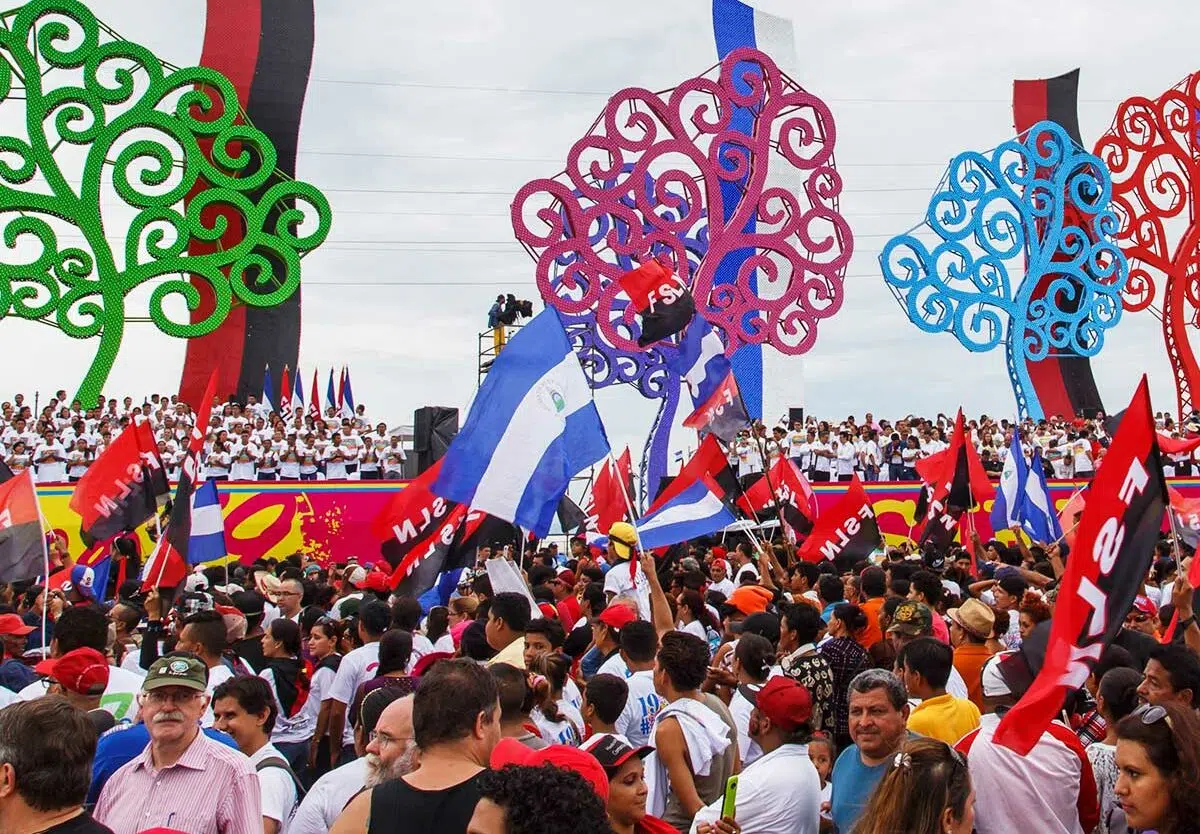
The anniversary of the Sandinista Popular Revolution of July 19th in Nicaragua is always a moment with multiple layers of meaning. In part, it is a commemoration that recalls the decades of revolutionary struggle against the Somoza dictatorship and its American masters, finally overthrown in 1979.
The anniversary also honors the example of Augusto Sandino, Blanca Araúz and the peasants and workers of the heroic Army in Defense of National Sovereignty which forced the Yankee army to leave Nicaragua in 1933 after years of military occupation.
Additionally, it honors and remembers as a living presence the tens of thousands of heroes and martyrs who gave their lives in the insurrection against the dictatorship to make possible the democratization, human development and prosperity now under way in Nicaragua under the Sandinista government.
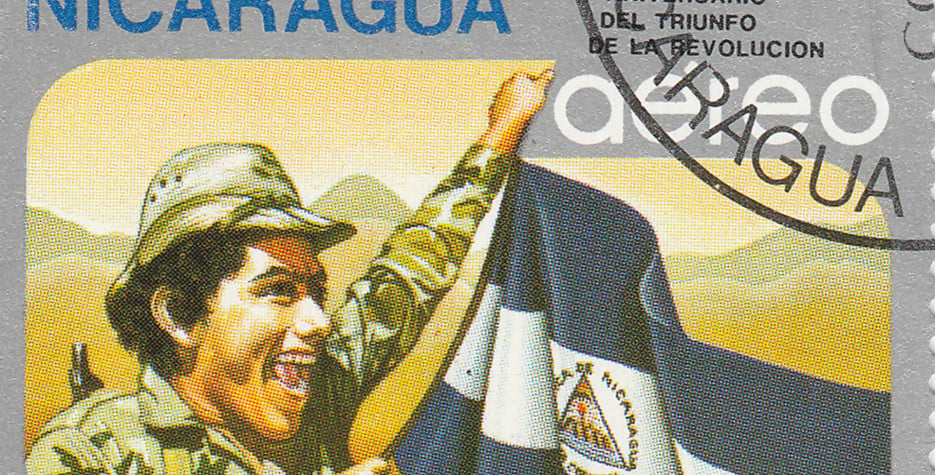
The 47/19 anniversary also commemorates even more tens of thousands of Nicaraguans, the vast majority civilians, killed during President Ronald Reagan’s terrorist war in the 1980s against the Nicaraguan people. The anniversary is a forceful affirmation of Nicaragua’s resistance against the ruthless commercial and financial blockade that was an integral part of that bloody 1980s war.
Similarly, 47/19 celebrates the popular resilience during the years of the concerted class war by neo-liberal U.S. puppet governments against the majority of the population between 1990 and 2007.
Guided by their owners in Washington, they set about trying to destroy the Sandinista National Liberation Front (FSLN) and the revolutionary achievements of the 1980s.
Resilience and Revolutionary Dignity
Those achievements included vital issues of national life, such as agrarian reform, free health care and education, trade union rights, the viability of cooperatives and municipal governments, the nationalized supply of water and electricity, as well as technical and credit support to small farmers, gender equity and inclusive equal rights for all.
For 17 years—until January 2007—the FSLN and the popular movement organizations successfully resisted this offensive by the national oligarchy and its American owners. Finally, after Daniel Ortega’s victory in the November 2006 national elections, the Sandinista National Liberation Front was able to resume the implementation of its historic revolutionary program originally proclaimed in 1969.
It is precisely the successful affirmation of national sovereignty that provokes the ceaseless attacks on independent countries like Cuba and Nicaragua by the West. The now brazenly fascist North American and European ruling elites and their allies around the world seek to normalize genocide and arbitrary criminal aggression, and explain away abuses such as torture, censorship and judicial and administrative persecution. They cannot tolerate independent countries like Nicaragua, because they cannot bear so much Truth and Light, nor the solid socioeconomic and cultural victories of its Christian, solidarity-based model.
This is the reality behind constant U.S. meddling in Nicaragua’s internal politics, as when it intervened in the country yet again through the failed coup attempt of 2018, after more than a decade of social stability and economic success unprecedented in Nicaragua’s history.
Resistance and Victorious Recovery
That unsuccessful aggression, concocted by the governments of the United States and also of the European Union, caused serious damage to the Nicaraguan economy. The country lost hundreds of thousands of jobs and, over the next five years, suffered about $17 billion in lost production and investment and a drastic drop in important service industries such as tourism.
Just two years later, in 2020, Nicaragua was hit by two powerful hurricanes, Eta and Iota, which devastated much of the northern territory of Nicaragua and its neighboring countries. That same year, the economies of the region, including Nicaragua’s, were seriously affected by the measures implemented internationally to deal with Covid-19.
Despite all the extremely adverse consequences of these various setbacks, Nicaragua’s economy has recovered thanks to economic policies focused on Nicaragua’s families, careful management of public sector finances, and appropriate, responsible use of available external funds. This judicious macroeconomic management, combined with the determination of Nicaragua’s families and the resilience of the country’s popular economy, made it possible to overcome the worst effects of the successive previous crises. The sustained activity of the popular economy, mainly of small and micro enterprises, was key to the country’s economic recovery because it contributes about 70% of all employment in Nicaragua and about half of the gross national income.
Another important factor in the resilience of the economy has been the proactive exploration of new international markets stimulated by the government’s diversification of its international relations, especially with the countries of Africa and Asia. So, this 47/19 anniversary of the Sandinista Popular Revolution celebrates the country’s extraordinary economic recovery after the five adverse years following 2018, but also celebrates the impressive modernization of infrastructure and connectivity.
The once isolated Caribbean Coast is now connected by two all-weather roads reaching the Northern Caribbean Region and its main urban centers in the mining region and the regional capital, Bilwí and, in the Southern Region, to the city of Bluefields and the Pearl Lagoon and Kukra Hill area among other towns that were previously more difficult to reach by road.
In general, estimates reckon that the country has increased its road network nine-fold compared to the one that existed in 2006. The same applies in relation to the coverage of electric energy that now covers more than 99% of the national territory and to drinking water access that now reaches more than 95% of the country.
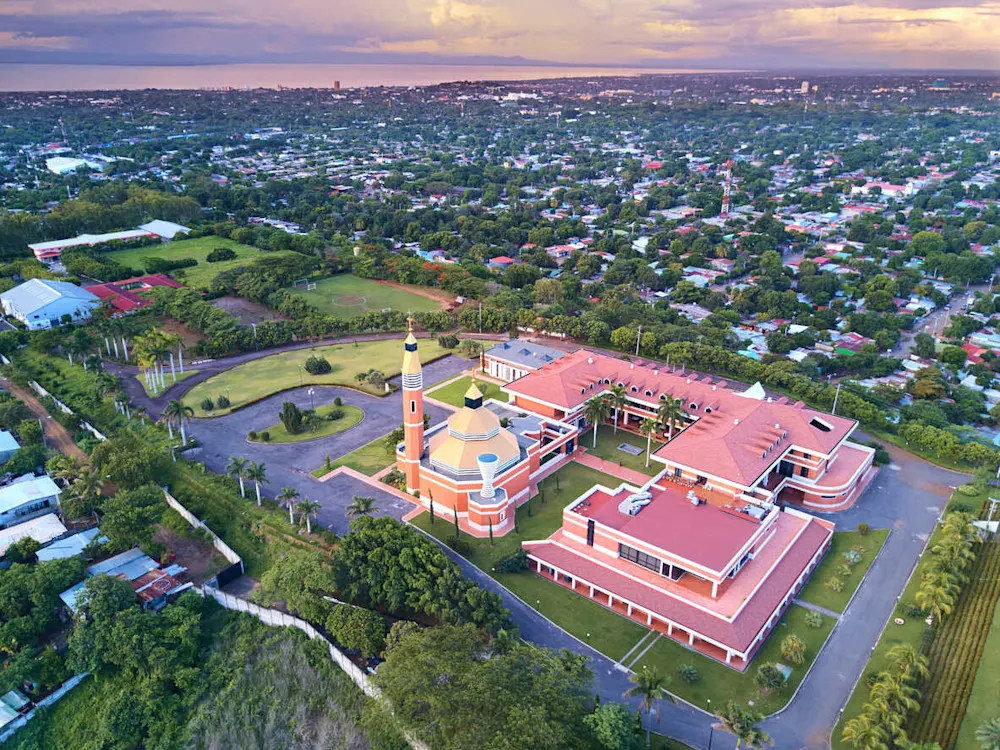
A new international airport capable of handling intercontinental traffic will be ready in 2028, in addition to improvements of the current Augusto C. Sandino International Airport in the capital of Managua. The country’s main port of Corinto on the Pacific has been improved in recent years to handle progressively more cargo and a new deep-water port is now being built near Bluefields on the Caribbean Coast.
A Regional and International Model
New well-equipped and staffed hospitals are opened every year to meet the needs of both expanding urban centers and to improve access to health care for families in previously neglected rural areas. Nicaragua now has the best and most extensive public health system in the region with modern equipment and diagnostic units, along with increasingly better prepared medical personnel capable of advanced procedures such as fetal surgery.
A modern Nuclear Medicine Center is being developed thanks to Russian cooperation, which also facilitates production of new vaccines with the already established Mechnikov Latin American Institute of Biotechnology in Managua.
The country has the most innovative public education system in the region that includes pre-school and technical education, as well as primary and secondary education. It also has the most accessible high-quality public university system in the region that offers low-cost enrollment and numerous scholarships.
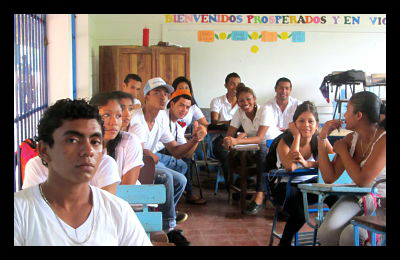
The public health and public education systems are completely free. Nicaragua has the best disaster prevention and mitigation system in the region, perfected through quarterly national exercises with high participation of the population. The country is internationally recognized for having one of the best phytosanitary and agricultural control systems in the world, which gives the country’s food exports a marked advantage over its regional competitors.
In fact, in the regional context, in addition to its exceptional investment in public infrastructure, health and education, Nicaragua also leads the region in many other areas. In relation to gender equity, Nicaragua has the highest representation of women in the government sector in the region and socio-economic policies that prioritize women with access to preferential credit and the delivery of property titles, health care and defense against violence.
In terms of the recognition of Indigenous peoples, the government since 2007 has granted 23 territorial titles to the various native and Afro-descendant peoples throughout the country, covering 37,000 km, which is about 30% of the national territory. In terms of citizen security, Nicaragua is the safest country in Central America and among the safest in all the Americas.
The Living Revolutionary Legacy
So, the 47/19 anniversary celebrates multiple victories, including the country’s historic victories over foreign imperialist intervention, overcoming the period of neo-liberal misrule from 1990 to 2007, and the economic setbacks after 2018. It celebrates the great progress made in the country’s modernization, its undeniable democratization and its exemplary model of peace and stability. Nicaragua inspires other peoples around the world, as Barthélemy Kére, the President of the Constitutional Council of Burkina Faso, observed in 2024:
“The Victory of the Sandinista Revolution…was a catalytic event for the development of Nicaragua and Latin America as a continent in general. Through the Revolution, the Republic of Nicaragua has fully achieved its sovereignty and has managed to restore the dignity of its courageous people. Today, despite the sanctions unjustly imposed on it, Nicaragua continues to be a model of social development, and an inspiration to many countries around the world.”
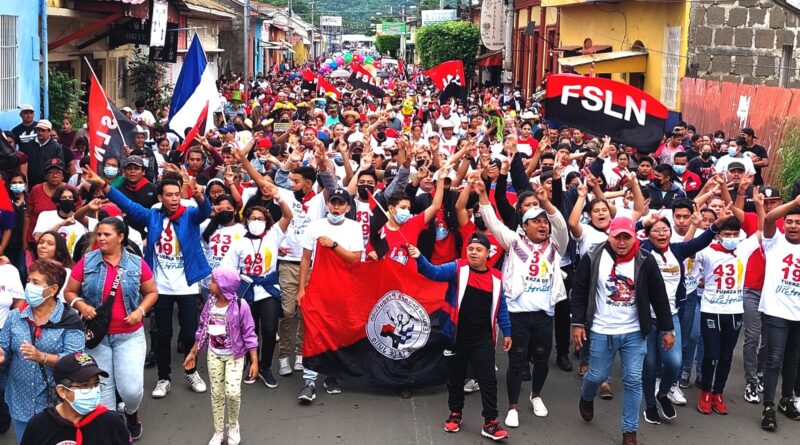
Nicaragua is a vibrant tribute to the power of Sandino’s spiritual, moral and political vision of solidarity and cooperation. It represents a firm and tireless commitment to regional unity and resistance against imperialist domination and to peace. The current phase of the Sandinista Popular Revolution ensures the transmission into the future of its defense of Nicaragua’s families as the protagonists of the national wealth creation to promote the human development of all, in brother and sisterhood and solidarity.
As a leader of the Sandinista Youth Movement recently said, “The peace and sovereignty that Nicaraguans enjoy today is the legacy of the resistance struggles against foreign intervention, a legacy that bequeathed to us to continue steadfast in defense of our self-determination, sovereignty and national dignity.”
19/47 celebrates that legacy and example, as Comandante Daniel Ortega declared in 2020 in the Plaza de la Revolución: “We said and we took an oath in this Square 41 years ago, exactly in this place, at the foot of the National Palace, where our General Sandino lies, where Carlos Fonseca lies, we swore reaffirming that we are bearers of the Flag of Dignity of our General Sandino, which Carlos inherited and which was transferred to the Nicaraguan People when they entered here triumphant on July 19th.”
And as now Co-President Rosario insisted, on another anniversary, concerning the great victories achieved by the Sandinista Popular Revolution, “…all the Triumphs belong to the People, and as always in these days, and every day, I send an especially warm embrace to the families whose spouses, children, siblings, relatives in general, gave their lives so that we might have this dignified, free, harmonious, loving and patriotic nation, where we live together in peace, where we continue to cultivate reconciliation and affection, and where we seek to advance for the common good of everyone, with everyone, everyone together.”

CovertAction Magazine is made possible by subscriptions, orders and donations from readers like you.
Blow the Whistle on U.S. Imperialism

Click the whistle and donate
When you donate to CovertAction Magazine, you are supporting investigative journalism. Your contributions go directly to supporting the development, production, editing, and dissemination of the Magazine.
CovertAction Magazine does not receive corporate or government sponsorship. Yet, we hold a steadfast commitment to providing compensation for writers, editorial and technical support. Your support helps facilitate this compensation as well as increase the caliber of this work.
Please make a donation by clicking on the donate logo above and enter the amount and your credit or debit card information.
CovertAction Institute, Inc. (CAI) is a 501(c)(3) non-profit organization and your gift is tax-deductible for federal income purposes. CAI’s tax-exempt ID number is 87-2461683.
We sincerely thank you for your support.
Disclaimer: The contents of this article are the sole responsibility of the author(s). CovertAction Institute, Inc. (CAI), including its Board of Directors (BD), Editorial Board (EB), Advisory Board (AB), staff, volunteers and its projects (including CovertAction Magazine) are not responsible for any inaccurate or incorrect statement in this article. This article also does not necessarily represent the views the BD, the EB, the AB, staff, volunteers, or any members of its projects.
Differing viewpoints: CAM publishes articles with differing viewpoints in an effort to nurture vibrant debate and thoughtful critical analysis. Feel free to comment on the articles in the comment section and/or send your letters to the Editors, which we will publish in the Letters column.
Copyrighted Material: This web site may contain copyrighted material the use of which has not always been specifically authorized by the copyright owner. As a not-for-profit charitable organization incorporated in the State of New York, we are making such material available in an effort to advance the understanding of humanity’s problems and hopefully to help find solutions for those problems. We believe this constitutes a ‘fair use’ of any such copyrighted material as provided for in section 107 of the US Copyright Law. You can read more about ‘fair use’ and US Copyright Law at the Legal Information Institute of Cornell Law School.
Republishing: CovertAction Magazine (CAM) grants permission to cross-post CAM articles on not-for-profit community internet sites as long as the source is acknowledged together with a hyperlink to the original CovertAction Magazine article. Also, kindly let us know at info@CovertActionMagazine.com. For publication of CAM articles in print or other forms including commercial internet sites, contact: info@CovertActionMagazine.com.
By using this site, you agree to these terms above.
About the Author
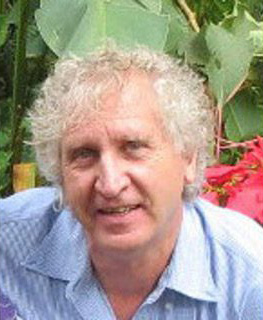
Stephen Sefton is a Nicaraguan citizen who has written on Nicaragua and Latin America since 2003.
His articles and interviews have appeared in numerous internet outlets in both English and Spanish over the last twenty years. Since 2008 he has coordinated the Tortilla con Sal media collective.
Between 1986 and 1993, he lived in Nicaragua and Honduras for a total of four years, moving permanently to Nicaragua in 1994 where he assists various community health and education activities, mainly in Estelí.
Stephen can be reached at stephen@tortillaconsal.com.

Here is a brief summary of the human rights violations that are still ongoing in Nicaragua.
https://www.oas.org/fr/CIDH/jsForm/?File=/en/iachr/media_center/PReleases/2026/064.asp&utm_content=country-nic&utm_term=class-mon
Between 2021 and 2024, at least 37 universities and higher education institutions – most of which are known for supporting social movements – have had their legal status revoked under administrative sanctions.
These closures, the experts underscored, are part of a broader strategy to prevent organised opposition and restrict academic freedom.
Furthermore, since the 2018 protests, it is estimated that hundreds of students and professors have faced arbitrary expulsion or dismissal for their political beliefs, but specific percentages are challenging due to government censorship and data restrictions.
Government reforms and university control
In 2022, the Government introduced reforms through Law 1114, which removed university autonomy, centralising control over academic institutions.
The experts emphasised that this reform effectively placed the government in charge of academic institutions’ finances, administration, and curriculum, undermining independent thought and freedom.
The report also found that in universities which haven’t closed, students and professors deemed critical of the regime now face barriers to obtaining diplomas or transcripts. This restricts not only their educational progression but also future employment opportunities
I read with interest the recent article regarding Nicaragua, but I feel compelled to offer a more complete perspective based on documented global findings. While the article presents a favorable view of the current administration, international bodies like the United Nations report a sharp contraction of civic space. For instance, the U.S. State Department maintains a Level 3 “Reconsider Travel” advisory due to risks of arbitrary law enforcement. This environment heavily impacts fundamental sectors like health, education, and independent journalism. The government under Daniel Ortega and Rosario Murillo has systematically shuttered dozens of media outlets, forcing independent reporters into exile. Furthermore, the dissolution of nearly 30 universities has severely restricted academic freedom, while healthcare workers face political pressure for treating dissenting citizens. Treatment of the political opposition and public dissent has similarly intensified. Independent human rights monitors note that critics face arbitrary detention, asset confiscation, and the stripping of their nationality. Following recent announcements that future electoral structures will restrict opposition participation, the UN Human Rights Chief expressed deep concern over the systematic dismantling of democratic norms. A balanced public dialogue benefits from acknowledging these documented challenges to human rights and civil liberties. Thank you for providing a platform to discuss these critical matters.
Es falso decir que 37 universidades ha sido cerradas en Nicaragua en los últimos años. Actualmente hay más de 40 universidades en Nicaragua y más de 30 de ellas son privadas, lo cual es fácil de verificar en línea.
Algunas pocas universidades privadas fueron asumidas por el Consejo Nacional de Universidades (ahora Consejo Nacional de Rectores Universitarios) porque se negaron a cumplir con los requisitos de presentación de informes de larga data a la autoridad reguladora correspondiente a pesar de que se les dio hasta dos años para hacerlo.
Las muy pocas universidades afectadas ahora son universidades públicas que ofrecen los mismos cursos o cursos similares a un costo mucho menor o incluso nulo para los estudiantes.
international human rights monitors and the United Nations have documented the closure or state takeover of at least 37 higher education institutions in Nicaragua. While the physical buildings or administrative shells may remain under state control, their independent legal status, autonomy, and leadership have been systematically eliminated.
Documented reports by organizations like the UN Human Rights Council confirm that at least 37 universities and higher education centers have had their legal status revoked or have been forcibly dissolved since 2018
Prominent independent institutions—such as the Jesuit-run Universidad Centroamericana (UCA)—were accused of political dissent, shut down, and had their assets seized by the state to be repurposed under government control. You argues that universities were merely “assumed” by the National Council of Universities (CNU) rather than closed. However, human rights organizations define these administrative takeovers as forced closures and de facto confiscations that destroy academic freedom.
Por supuesto el Departamento de Estado norteamericano va a afirmar falsamente que Nicaragua es un país riesgoso para visitar, lo cual ciertamente aplica a los mismos EE.UU, ese aviso contra Nicaragua se contradice por las experiencias de alegría y satisfacción de cientos de miles de turistas cada año que disfrutan los maravillosos atractivos de nuestro país.
Por otro lado, es cierto, por ejemplo, que las autoridades cerraron algunos medios de comunicación, todos los cuales habían recibido financiamiento extranjero y desempeñado un papel activo en los intentos de desestabilización de 2018, pidiendo la destitución violenta del gobierno o medidas económicas coercitivas y otras medidas para presionar al gobierno y dañar la economía del país. Ninguno de esos medios fue independiente, todos fueron financiados desde afuera por fuentes ideologicamente opuestos al sandinismo.
En 2018, las personas que dirigían esos medios como La Prensa, o 100% Noticias o Confidencial beneficiaron de la amnistía ofrecida por el gobierno con la condición de que no se repitieran las mismas ofensas contra el país y su gobierno electo. Los propietarios de los medios en cuestión rompieron esas condiciones, por lo que sus medios fueron cerrados y se exiliaron a Costa Rica y otros lugares o fueron expulsados. Diversos medios de comunicación opuestos al gobierno pero patrióticos y respetuosos de las leyes continúan transmitiendo en Nicaragua, por ejemplo numerosas estaciones de radio locales y canales de televisión por cable. Hasta donde yo sé, ahora no hay periódicos físicos en Nicaragua, mientras que los medios de oposición con sede fuera de Nicaragua tienen una presencia en línea fuerte, incluso abrumadora, de la que abusan para continuar pidiendo el derrocamiento del gobierno electo y, todos ellos financiados por instituciones gubernamentales de EE. UU. y sus organizaciones satélites sin fines de lucro de un tipo u otro.
Este comentario repite la falsedad que las autoridades disolvieron más de 30 universidades privadas. Es fácil averiguar que hay más de 40 universidades en Nicaragua de las cuales más de 30 son privadas.
En relación a la controversía sobre la propuesta de una reforma de la ley electoral, se trata de otro capítulo de la interminable campaña de falsedades sobre Nicaragua, que deliberadamente excluye una versión basada en los hechos que es fácil de confirmar si se toma la molestia de leer lo que las autoridades en Nicaragua explican y publican, por ejemplo, aquí
https://www.tortillaconsal.com/bitacora/node/9895
Thank you for sharing your perspective on the situation in Nicaragua. While it is true that many tourists visit the country safely and enjoy its wonderful attractions, official travel advisories are typically based on broader assessments of legal risks, healthcare, and the potential for arbitrary detention. Regarding the media closures, independent bodies like the Inter-American Commission on Human Rights and global press freedom groups view the shutdown of outlets like La Prensa, 100% Noticias, and Confidencial as a widespread crackdown on independent journalism rather than a matter of law enforcement. I understand we may see these complex political developments differently, but I appreciate the opportunity to exchange views.