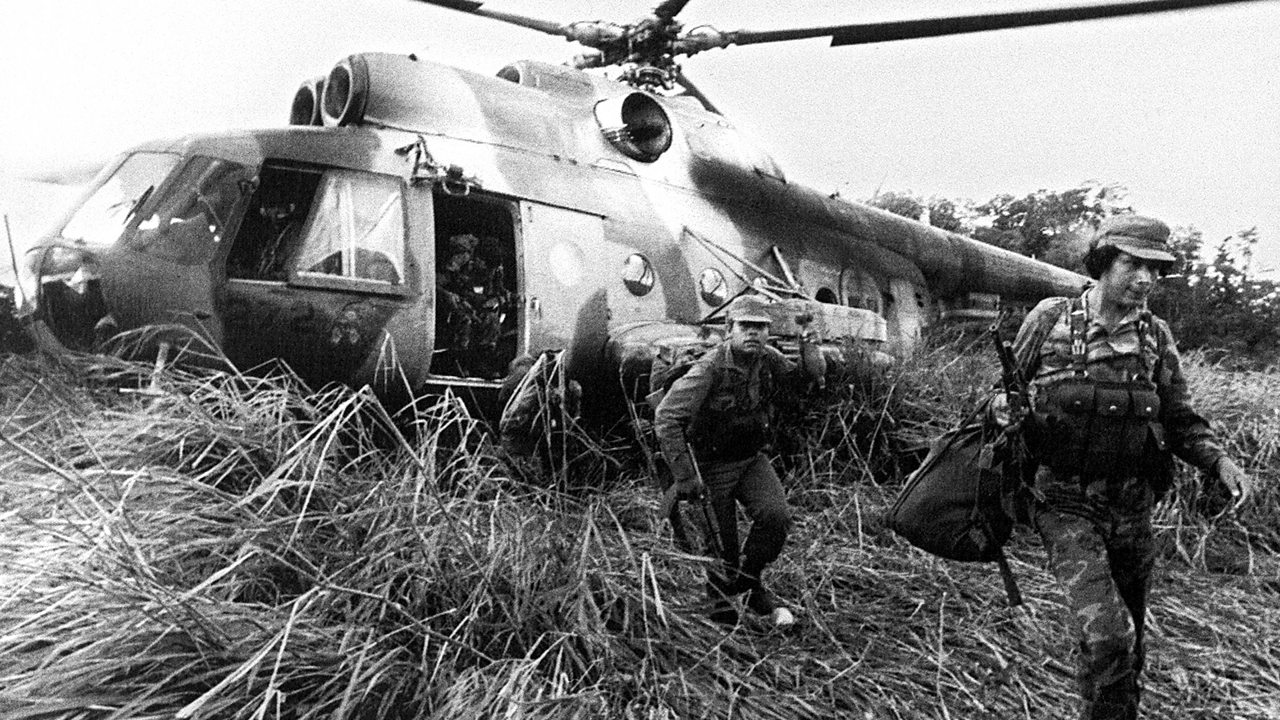
Chicopipe, Nicaragua, August 1985: Lest We Forget What Our Wars Really Mean
My wife Lucy and I lived in Nicaragua (1985-1987) during the Contra War of the 1980s as members of the long-term team of Witness for Peace. Our work was to document the effects of the war in rural communities, to accompany the people however we could, and to arrange for fact-finding delegations from the U.S.
The following is taken with a very few edits from my field journal written soon after we investigated the events described below. I deliberately tried to know and write the names of all the victims. They deserve to be remembered, now on the 41st anniversary of their deaths. (The Reagan administration was well aware of such events.)
On the morning of December 16, 1985, Lucy and I were in the town of Achuapa. We woke early, and at 7 a.m. two teenage boys, Ivan and Alex, showed up to be our guides for the day. They led us into the hills to the west above Achuapa, along a road, then up a path winding through fields—beautiful country, seemingly serene, cows, corn growing, light breeze, bright sunlight. Finally, we arrived at the house of Doña Zelfida Reyes Casco. Her house had a roof of thatch held up by wooden poles, with walls of rough boards on two sides only. The other sides were open to the elements. Her story I managed to record almost verbatim.
I am 55 years old. I am the daughter of Savino Reyes and Viviana Casco. I was at the river on the morning of August 11 [1985] at 7 a.m. washing clothes. When I returned to my house, my three sons, Tolin (aged 38), Miguel (aged 35), and Guillermo (aged 22) weren’t there. On the ground I saw the military clothes of my son Miguel. He was in the militia for a year but had since left it. I saw Miguel’s papers and books burned in the house. I didn’t know what had happened, but I went to a neighbor’s house down the path. On the way I met a boy who told me that the contras had come. The next day, they found the bodies of my sons. Their bodies had no faces, no hair. It was hard to identify them, but I knew their clothing…and their hands. I left to live in Achuapa. After three months I returned to my house here.
When she stopped speaking, she sat quietly with Lucy and me for a while. Then Zelfida told us that her son Tolin was deaf and was a polio victim who had trouble walking. As we left I thought, how could we wish this woman, now alone without her sons, a happy Christmas?
With our two guides, we continued along the path that became more hilly and rocky. The day was growing hot. We reached Angelica’s house, a simple wooden structure with a dirt floor, like most houses in the area. When we arrived, Angelica was in the middle of chores, but she quickly made us feel as if she had lots of time for us. Lots of children around her, mostly grandchildren, we guessed.
Angelica told us she was at home on the morning of August 11 when her daughter-in-law Gregoria came running down the path to Angelica’s house, crying. Gregoria told Angelica, “They took Paulino [Gregoria’s husband]. He told them don’t kill me, I’ll go.” Gregoria said the contra tied Paulino’s hands behind his back and took him away, right in the middle of his breakfast. The following Saturday, Angelica identified Paulino’s body. She told us it had more than a dozen stab wounds and his face was unrecognizable. She knew him by his hands and his clothes. While she talked she laughed nervously between tears.
As we left Angelica, Lucy and I and our guides went along the path past the abandoned house where Paulino and Gregoria had lived. Gregoria had since moved to the town of El Sauce. We began the hot, two-hour walk back to Achuapa in the late afternoon. When we arrived, we gave our two young teen guides a few pieces of candy and thanked them. I wondered how they processed what we had seen and heard that day.
The next morning, José Santos, a local farmer, arrived as planned at 6 a.m. to take us farther along the road we had traveled the previous day. After a two-hour walk, we arrived at the house of Marcelino who told us his story.
The contra arrived at my house at 11 a.m. on the morning of August 11, while I was tending my cow outside. They entered by the road. They were wearing clothes of a different color from what the [Sandinista] army wears. They had rifles—AK47s, FALs [automatic weapons manufactured in Belgium]—mortars and grenades. They struck me, then entered my house. They stole food, clothing, soap, and grains. When I entered the house, they grabbed me, carried me out and forced me to walk with them. [The contra forces used grenades made in Pennsylvania.]
Then I saw more contras coming down from the hills, many more. The one who was in charge said they wanted to destroy anything that was organized in Nicaragua—cooperatives, the CDS, more—and they wanted to frighten us farmers. They made me carry a backpack and a heavy mortar.
We walked around all day, went through El Barro [another comarca along the road] at noon. In the late afternoon we stopped for the night near Quebrada Cayuya, at the place called Chicopipe. The contras gave me only coffee. They split us into two groups. I recognized some others being held captive together, farmers like me—Bernardo Rocha from El Carrizo, Paulito Cruz from El Cacao, Eliberto Martinez from El Porvenir, Damien Reyes, Jesus Velasquez, others. In the other group I recognized Paulino Velasquez [Angelica’s son] and Victoriano Reyes Arauz from El Cacao, Benedito Osorto from Achuapa, Antolin, Miguel, and Guillermo Reyes Casco [Zelfida’s sons], and Daniel Martinez.
During the night we in my group didn’t sleep. It rained a lot. We could hear the cries and screams of our compañeros in the other group not far away. They were all tortured and killed. At 5 a.m., the contras left us. We returned to our homes.
As Marcelino was telling his story, he began to sob and had to excuse himself for a few minutes. His wife served us hot, fresh tortillas and hot sweet milk. Marcelino told us that he and his family, with their four children, fled to Achuapa after he returned from kidnap. His story shows the network of relationships among people of several comarcas, a network of relationships that provided at least a minimum of physical and psychological support for the survivors.
When we left Marcelino and his family, Jose Santos led us to his own parents’ house some distance away, up a hill and across a stream. There we were served hot, fresh coffee. Then, farther up the hill to another house of an older couple who had twelve sons and daughters. The contras had killed one of their sons, a Sandinista Army lieutenant, along the road on August 11.
The father asked us to walk with him. He led us down another path, steep in places, across streams, through cow corrals, past other isolated households. We wondered where he was taking us. Finally, we stopped at a small depression beneath a hillock by a stream bed hidden in dense vegetation in the afternoon sunshine. There we saw eleven small wooden crosses painted blue. This place was known as Chicopipe.
The crosses bore the names of those killed by the contra on that August 11 night, names we also recognized from that and the previous day. We saw a pile of rocks at the stream bed where two men had found the partially decomposed bodies six days after the massacre. Squatting down, I found two partly decomposed sneakers and a white shirt in the bushes near two of the crosses.
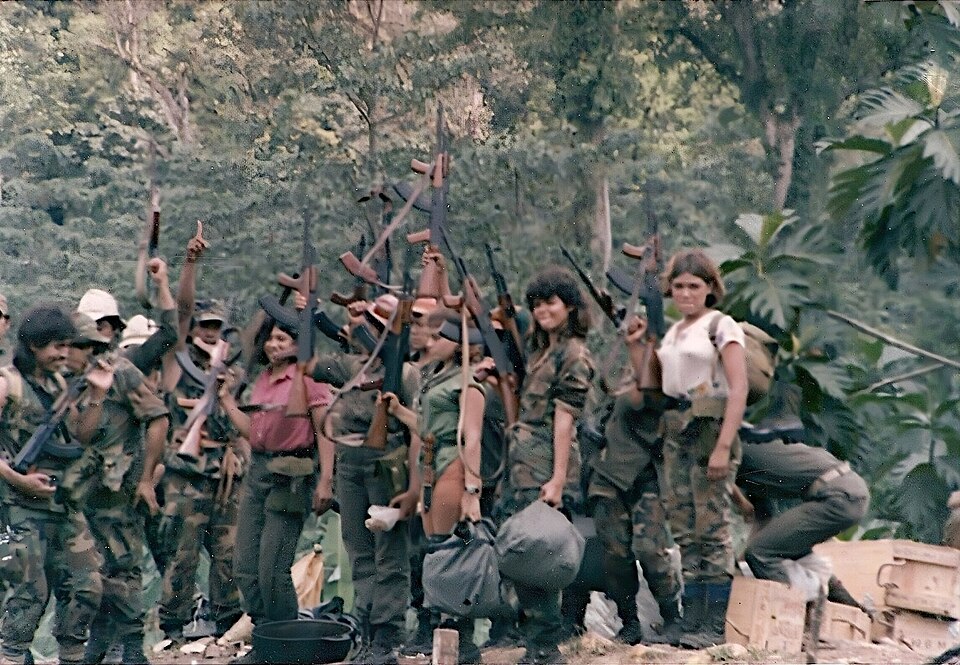
In my notebook I wrote, once again, the names of the dead: Juan Arauz, Eligio Rocha Hernandez, Aristides Monjarrez, Pedro Monjarrez, Ramon Benedicto Osorto, Daniel Martinez, Victoriano Reyes, Paulino Velasquez, and Antolin, Miguel, and Guillermo Reyes Casco.
Jose Santos then brought us to the house of Bernardo who, along with Marcelino, was one of the eight whom the contras had kidnapped and later released. We found his wife outside their house tending to their three children, and waiting for Bernardo to return from Achuapa. He finally got home shortly before dark. He told us his story:
On the morning of August 11 at 8 a.m. I was going to see my mother who lives in Rio Grande. I was near El Cacao when I saw three men walking. They wore civilian pants and military shirts of olive-green color, like some of the local defense militia.
They wanted me to give them information about the area, how it was organized, how many militia [members] it had, how many rifles. I told them I didn’t take account of such things. I didn’t know whether they were contras or compas [Sandinista soldiers]. It wasn’t clear, but I didn’t think compas would be asking such questions. One of them got annoyed with me because I didn’t tell them what they wanted to know. I told him I was a poor farmer who went every day from house to field and from field to house, that I didn’t know about other things. They took my horse, some food I was bringing to my mother—beans, a dozen eggs—and my hat.
They made me walk a short distance with them, and then one of them cursed me again and told me to lie face down on the ground. I put my hands up and said, “What’s this about?” They hit me with a rifle butt on my head and ears. They tied my hands behind me and forced me to walk with them. They took me with them all day Sunday and into Monday.
During this time, I saw other contras bringing other local men down from the hills. There were nine of us kidnapped. We went through El Barro at 11 in the morning. I recognized some of the others kidnapped with me, but some I didn’t know. Some of the contras wore blue uniforms [not the olive green of the Sandinistas] and carried grenade launchers.
We all spent the night near Quebrada Cayuya at Chicopipe. The contras put us in a circle. They said they were going to kill me and Eliberto Martinez because we were in the militia. We didn’t sleep during the night. In the morning, about 6 a.m. the contras left us. We went to our homes. I took my family and animals and went to Achuapa. I had an enflamed ear that still bothers me, and nervous tremors.
When Bernardo finished, we spent a short time more with him, then returned in the dark to Jose Santos’ house and stayed the night with his parents. His mother told Lucy: “You can’t imagine the fear, every day and every night fearing they’ll come.” Between exhaustion and adrenalin, we slept in the large front room with Jose’s parents and several grandchildren. The next day Lucy and I made the three-hour walk back to Achuapa.
This is what the contra war meant to many rural people and communities, whether they lived in comarcas such as those near Chicopipe, or in rural cooperative communities, or even on the roads where travelers were ambushed and killed. The physical, emotional, social, economic, and psychological toll on rural communities and individuals was disastrous, trauma remaining for years or decades.
But these stories also reveal how important a sense of community was for survival and healing. Marcelino recognized men from other small comarcas, and he recited their names and the names of their comarcas—El Carrizo, El Cacao, El Porvenir, El Barro—all part of the larger social network in which he lived.
I was always overwhelmed by the dignity and hospitality of the people who endured so much. They were willing to tell us their horrendous experiences while offering us hot coffee or sweet milk. I think their dignity and hospitality were an essential ritual that helped keep order and basic humanity in the chaos of the war. They lived a project of life amid the project of death that swept through their lives.

CovertAction Magazine is made possible by subscriptions, orders and donations from readers like you.
Blow the Whistle on U.S. Imperialism

Click the whistle and donate
When you donate to CovertAction Magazine, you are supporting investigative journalism. Your contributions go directly to supporting the development, production, editing, and dissemination of the Magazine.
CovertAction Magazine does not receive corporate or government sponsorship. Yet, we hold a steadfast commitment to providing compensation for writers, editorial and technical support. Your support helps facilitate this compensation as well as increase the caliber of this work.
Please make a donation by clicking on the donate logo above and enter the amount and your credit or debit card information.
CovertAction Institute, Inc. (CAI) is a 501(c)(3) non-profit organization and your gift is tax-deductible for federal income purposes. CAI’s tax-exempt ID number is 87-2461683.
We sincerely thank you for your support.
Disclaimer: The contents of this article are the sole responsibility of the author(s). CovertAction Institute, Inc. (CAI), including its Board of Directors (BD), Editorial Board (EB), Advisory Board (AB), staff, volunteers and its projects (including CovertAction Magazine) are not responsible for any inaccurate or incorrect statement in this article. This article also does not necessarily represent the views the BD, the EB, the AB, staff, volunteers, or any members of its projects.
Differing viewpoints: CAM publishes articles with differing viewpoints in an effort to nurture vibrant debate and thoughtful critical analysis. Feel free to comment on the articles in the comment section and/or send your letters to the Editors, which we will publish in the Letters column.
Copyrighted Material: This web site may contain copyrighted material the use of which has not always been specifically authorized by the copyright owner. As a not-for-profit charitable organization incorporated in the State of New York, we are making such material available in an effort to advance the understanding of humanity’s problems and hopefully to help find solutions for those problems. We believe this constitutes a ‘fair use’ of any such copyrighted material as provided for in section 107 of the US Copyright Law. You can read more about ‘fair use’ and US Copyright Law at the Legal Information Institute of Cornell Law School.
Republishing: CovertAction Magazine (CAM) grants permission to cross-post CAM articles on not-for-profit community internet sites as long as the source is acknowledged together with a hyperlink to the original CovertAction Magazine article. Also, kindly let us know at info@CovertActionMagazine.com. For publication of CAM articles in print or other forms including commercial internet sites, contact: info@CovertActionMagazine.com.
By using this site, you agree to these terms above.
About the Author
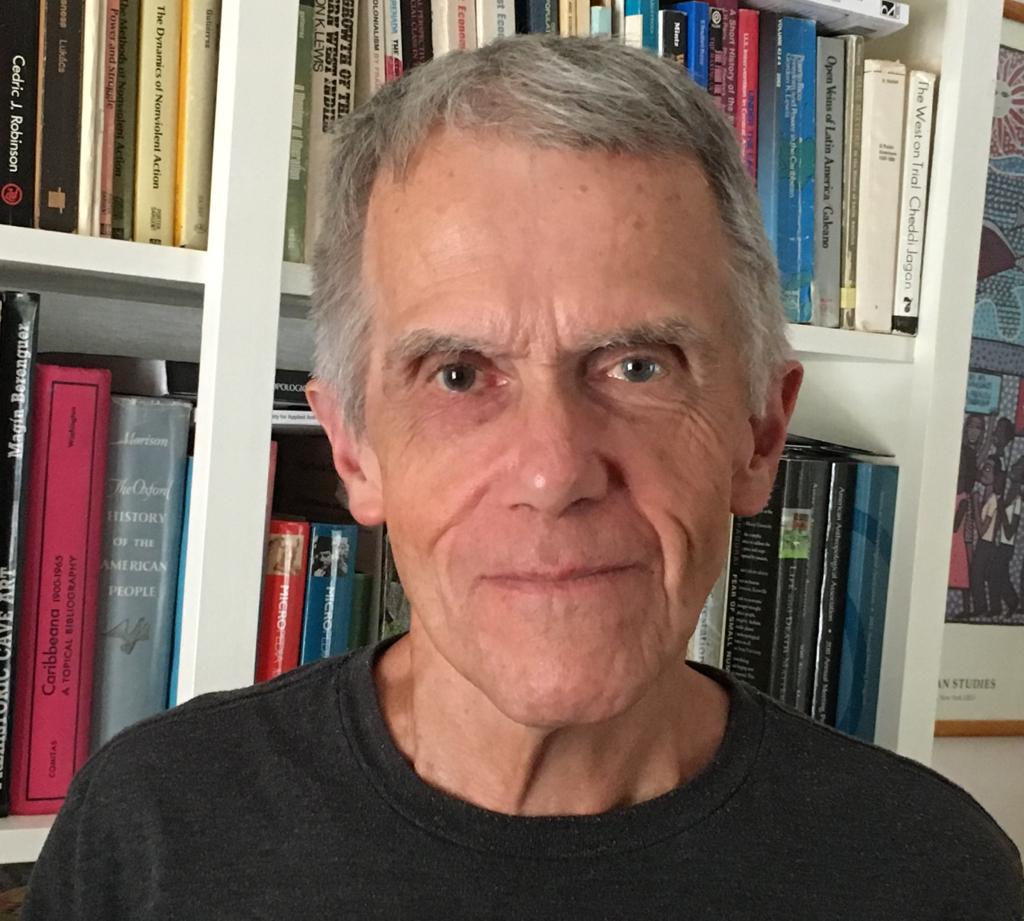
James Phillips is a cultural and political anthropologist with forty years as a student of Central America.
His major concerns are movements of social change, political conflict, human rights, colonialism, and immigrant and refugee populations.
He is the author of articles and book chapters on Honduras and Nicaragua. His most recent book is Extracting Honduras: Resource Exploitation, Displacement, and Forced Migration (Lexington Books, 2022).
James can be reached at anthrodocjp@gmail.com.


Now talk about the atrocities the Sandinistas committed.
During the early 1980s, the Sandinista military and government clashed sharply with the Miskito indigenous community along Nicaragua’s Atlantic Coast. This conflict escalated in late 1981 and early 1982 when the military launched La Navidad Roja (Red Christmas), a counter-insurgency operation aimed at cutting off ties between local communities and US-backed Contra rebels operating out of Honduras. During these operations, Sandinista forces carried out severe human rights abuses, including the extrajudicial killing of dozens of Miskito civilians, arbitrary detentions, and the systematic burning of ancestral villages, crops, and livestock to create a depopulated military zone. As part of this strategy, the Sandinista government forcibly relocated roughly 8,500 Miskito people from their borderlands along the Coco River to militarized resettlement camps further inland, such as Tasba Pri. This forced displacement caused immense cultural and psychological trauma, as the Miskito were stripped of their autonomy and traditional ways of life. However, recognizing the severe failure and backlash of these heavy-handed military policies, senior Sandinista leadership eventually shifted strategy, apologized for the abuses, and entered peace negotiations. This process culminated in the passage of the 1987 Autonomy Law, which legally recognized indigenous communal land rights and regions.
During the late 1980s and following his 1990 election defeat, Daniel Ortega personally and publicly admitted to the “serious mistakes” his government committed against the Miskito community, acknowledging that forced relocations and military incursions were massive policy blunders. As the Coordinator of the Junta and later as President, Ortega conceded that the administration initially misunderstood the indigenous population by treating demands for cultural autonomy as a counter-revolutionary threat. However, this push for reconciliation was a collective effort by the wider Sandinista leadership rather than his work alone. Tomás Borge, the powerful Minister of the Interior who oversaw domestic security, was heavily involved in both the initial repressive crackdowns and the subsequent shift toward peace negotiations. Additionally, the government established the Autonomy Commission, which worked directly with Miskito leaders to draft the 1987 Autonomy Law to legally recognize indigenous lands and self-governance. This historical push for peace stands in stark contrast with today, as Ortega’s modern regime faces intense criticism for reversing that very progress. Since returning to power, his government has been accused by human rights organizations like Amnesty International of dismantling local autonomy, failing to protect indigenous lands from illegal settlers, and launching violent crackdowns on modern Miskito leaders
This is an excellent article. Very well written.
Evaluating whether the Contras or the modern Ortega-Murillo administration committed more human rights abuses depends on whether the metric used is the sheer volume of lethal wartime casualties or the systematic, state-driven destruction of a nation’s civic freedoms. By the metric of direct physical violence, extrajudicial killings, and civilian terror, the Contras left a bloodier legacy. Operating as a U.S.-backed guerrilla force during the 1980s civil war, independent human rights monitors documented that the Contras used terrorism against civilians as a deliberate strategy. They routinely executed prisoners of war, targeted healthcare workers, destroyed rural infrastructure, and engaged in widespread torture, contributing to a war that cost tens of thousands of lives. While the 1980s Sandinista military under Ortega committed its own severe abuses, particularly against Indigenous Miskito communities, investigators consistently found the Contras to be the primary perpetrators of systematic civilian slaughter during that conflict.Conversely, by the metric of systematically stripping an entire population of their basic civil liberties, the modern Ortega-Murillo administration has executed a more comprehensive, state-driven assault on human rights. Rather than fighting from the margins like an insurgent army, Ortega has weaponized the entire apparatus of the law and the judiciary. Following a brutal 2018 crackdown where state police and government-backed paramilitaries killed over 300 peaceful demonstrators, the regime transitioned into total repression. The United Nations has formally accused the government of crimes against humanity for systematically closing over 5,500 non-governmental organizations, banning independent media, arresting Catholic clergy, and outlawing political opposition. Furthermore, the modern regime has pioneered the weaponization of statelessness, stripping hundreds of exiled journalists, activists, and dissidents of their nationality and property. Ultimately, while the Contras caused greater short-term lethal devastation, the modern Ortega government has inflicted a more permanent injury by completely dismantling democracy and eliminating the fundamental freedoms of the Nicaraguan people.