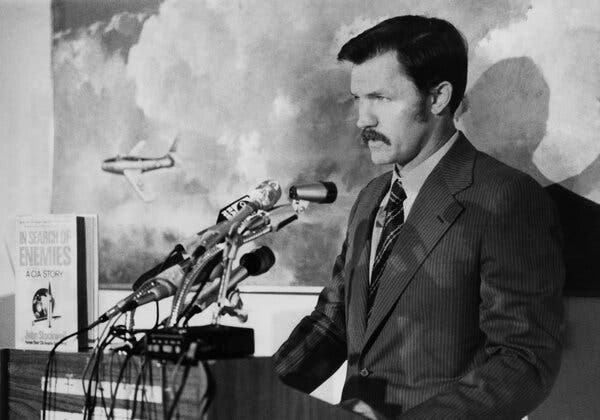
John Stockwell, a CIA operative in Africa and Asia who resigned from the Agency in December 1976 and wrote a tell-all memoir, In Search of Enemies (1978), died in June 2026.
With Philip Agee, Stockwell was among the most important national security and CIA whistleblowers of the Cold War era.
Both Agee and Stockwell were fixtures in the “CIA off-campus” movement in the 1980s and provided a political-economic critique that emphasized how the CIA served as the enforcement arm of an oligarchic capitalist elite that operated with impunity and above the law.
Born in Brazoria, Texas, in 1937, Stockwell attended missionary schools in the Belgian Congo, where his father had been contracted to build a hydraulic plant for a Presbyterian mission.
After receiving a bachelor’s degree in classics and history from the University of Texas in 1959,[1] Stockwell joined the Marine Corps and was then recruited into the CIA.
Stockwell said that, in the 1964 presidential election, he voted for Barry Goldwater (R-AZ) because he was taken by his calls for victory in Vietnam and because “everyone in Texas knew that Lyndon Johnson was corrupt to the core, with mob ties, with murders sometimes associated with his political campaigns.”[2]
After he became a whistleblower, Stockwell admitted that, when he joined the CIA, he displayed “the kind of naivety depicted in Graham Greene’s famous novel The Quiet American, seeing the world divided between the good guys and bad guys.” Stockwell also wrote that he had been deceived by CIA recruiters who told him that the CIA functioned to gather intelligence, and that it did not kill, use drugs, or damage people’s lives—which was untrue.[3]
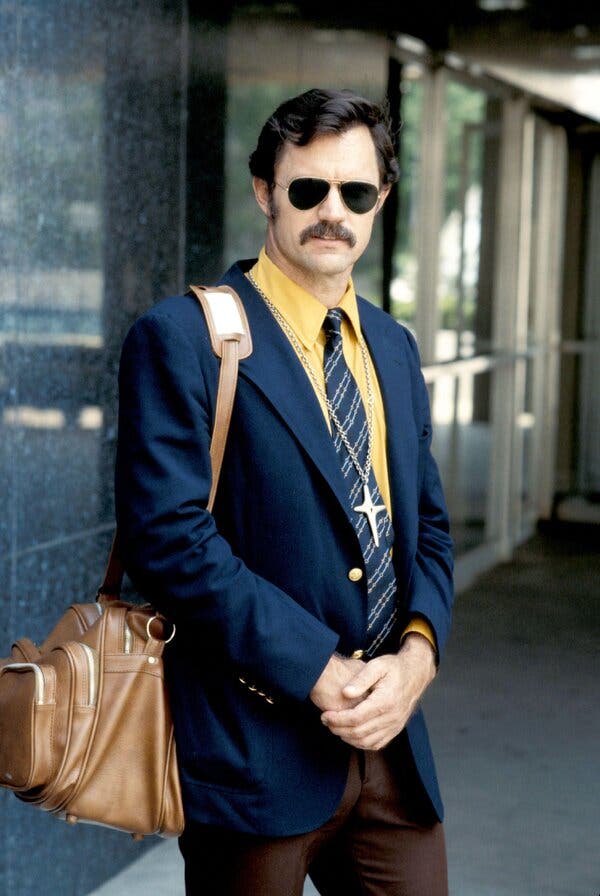
Initially, Stockwell found his work with the CIA to be exciting and glamorous, writing that he “reveled in the challenge and sheer fun of clandestine operations, the excitement of flying off on secret missions, the thrill of finding one more way to plant a bug in a Chinese embassy, and, eventually, the gratification of supervisory authority over other case officers.”
Stockwell’s first job with the CIA was in the Congo where he helped coordinate the suppression of a Lumumbaist rebellion known as the Simbas that aimed to topple Congolese dictator Joseph Mobutu who had been installed by the CIA so U.S. companies could exploit Congo’s rich mineral wealth.[4]
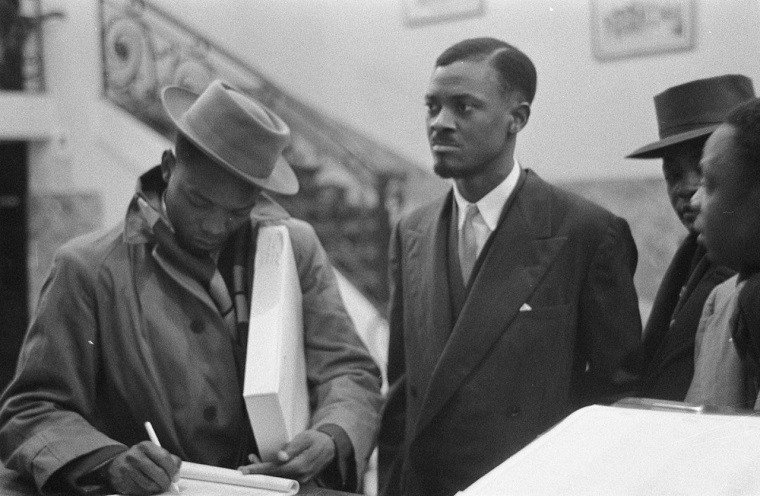
Patrice Lumumba was the martyred Congolese Prime Minister who had wanted to establish national control over Congo’s mining industry and was murdered by CIA proxies in collaboration with Belgian colonial agents. Stockwell wrote that the CIA officer who addressed his training class in 1965 spoke openly about having rode around in a car in Lubumbashi after curfew with Lumumba’s body in the back.[5]
After the Congo, Stockwell served in the CIA station in Bujumbura, Burundi, where he witnessed a genocidal campaign by the Watutsi elite after it put down a Hutu uprising. Stockwell also served with the CIA station in Kenya and in Tay Ninh Province in Vietnam where, Stockwell wrote, CIA operations “would have discouraged even the most callous, self-serving adventurers.”[6]
Stockwell was most off-put by the indifference of the CIA after he reported the sadistic behavior of a U.S.-trained South Vietnamese police chief who would drink cognac at night and torture suspects to death and then carve up their bodies and dump the remains in a local canal.[7]
Stockwell also discussed how, at the end of the Vietnam War, the CIA abandoned agents whom it had recruited and exposed in their operations, leaving them to be killed or placed in labor camps by the victorious communists.[8]
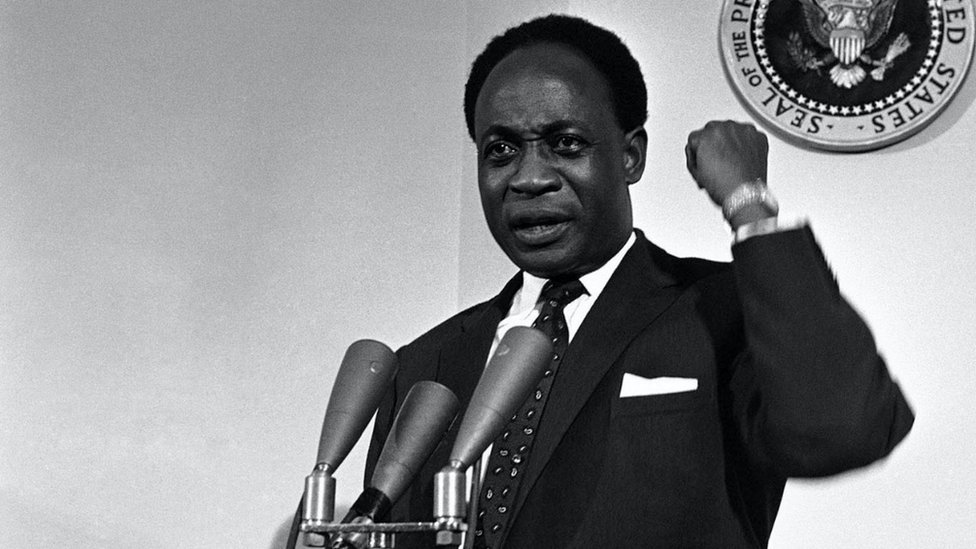
Stockwell had another assignment in the CIA station in Ivory Coast, where he gained first-hand knowledge of the CIA’s collaboration with right-wing coup plotters in neighboring Ghana who ousted Kwame Nkrumah, a socialist Pan-African leader named Africa’s “Man of the Millennium.”[9]
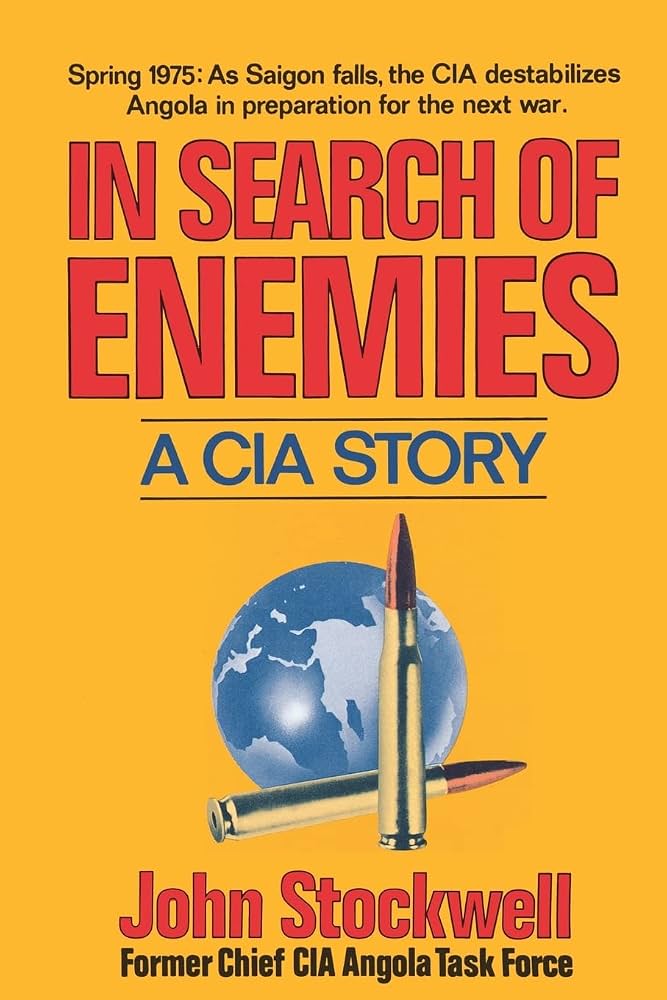
In Search of Enemies focuses primarily on Stockwell’s experiences as the head ot the CIA’s Angola desk during the 1975-76 Operation IAFEATURE, whose aim was to undermine the left-wing People’s Movement for the Liberation of Angola (MPLA).
The MPLA had emerged as the dominant political faction in Angola’s liberation movement during the 1960s and 1970s.
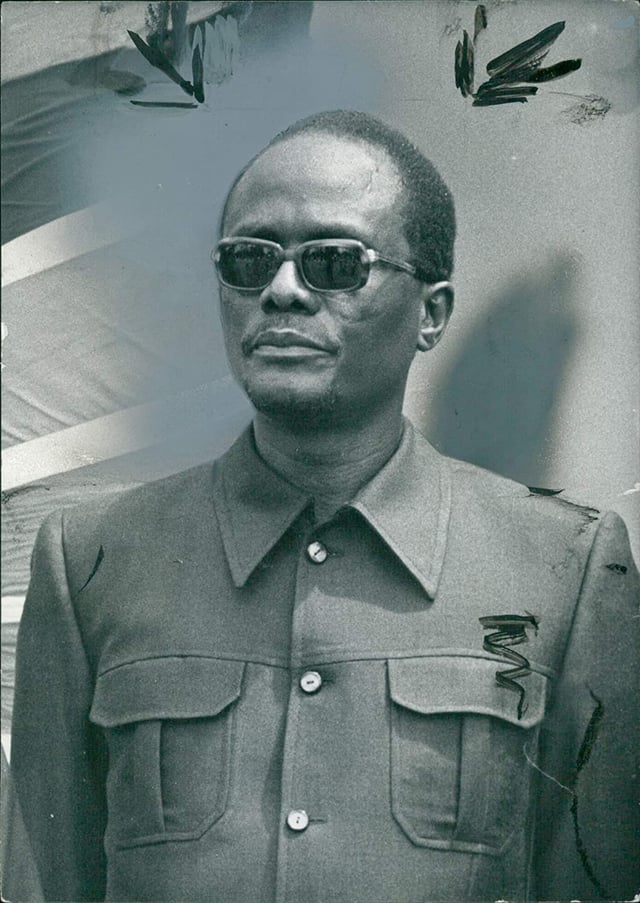
Rooted in the Mbundu tribe that spearheaded resistance to Portuguese colonialism, it had highly educated leaders whom CIA operatives in Angola believed were best qualified to lead Angola after it had obtained independence from Portugal in 1975.[10]
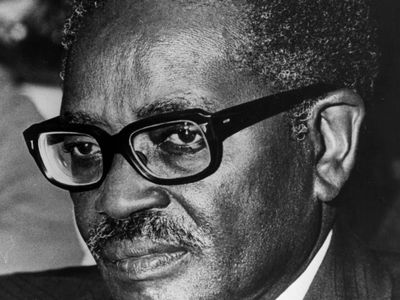
Wanting to establish good relations with the U.S., MPLA leader Agostinho Neto was a medical doctor and poet. Stockwell republished in In Search of Enemies, a poem that Neto wrote, challenging the pretenses underlying the concept of “Western civilization.”[11]
Stockwell explained how the U.S. government had supported Portugal in its anti-colonial wars because it did not want to jeopardize its access to military bases in the Azores. According to Stockwell, Portuguese Air Force General Tiago Mina Delgado received the Legion of Merit from General Curtis LeMay as U.S. bombs and napalm were dropped on Angola.[12]
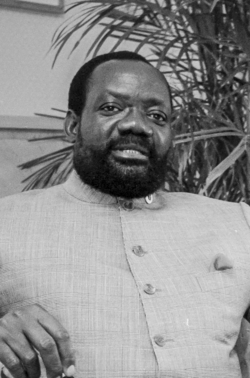
In an attempt to undermine the MPLA after independence, the CIA helped foment a bloody civil war by financing and equipping two right-wing political factions, the National Front for the Liberation of Angola (FNLA), led by Holden Roberto, and the National Union for the Total Independence of Angola (UNITA), led by Jonas Savimbi.
Roberto was a son-in-law of Congolese dictator Joseph Mobutu, a CIA proxy who deployed Congolese units that assisted the FNLA and terrorized the Angolan population.[13]
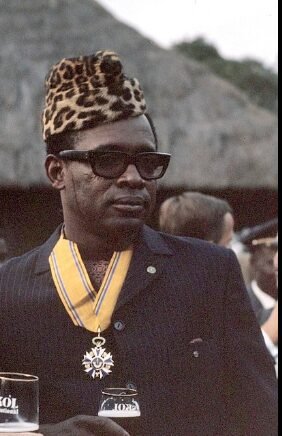
Stockwell made clear that the CIA was helping to do the dirty work of U.S. corporations, including especially Gulf Oil, whose access to the lucrative Cabinda oil field was jeopardized by the MPLA if it adopted a nationalization policy.[14]
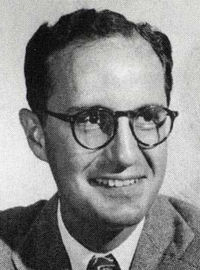
The vice president of Gulf Oil at the time happened to be Kermit Roosevelt, Jr., the CIA operative who had masterminded the CIA’s 1953 coup in Iran.
Boeing and the De Beers mining corporation also had large-scale investments in Angola that were threatened by the MPLA.
Stockwell detailed how the directives for CIA operations in Angola came from the “40 Committee,” an interagency group set up by Richard Nixon that sanctioned CIA covert operations, and from Henry Kissinger who authorized more than $30 million to funnel arms and provide training to FNLA and subsequently UNITA fighters as part of an attempt to supposedly arrest Soviet influence in sub-Saharan Africa.
Jim Potts, the director of CIA clandestine operations in Africa who had worked with CIA operative Larry Devlin in Congo to support Mobutu, coordinated the military supplies to the FNLA and made all the field decisions.[15]
Much of the military aid was flown in through Congo in unmarked planes under the oversight of Mobutu, who wanted to annex the oil-rich Cabinda Province held by the MPLA.[16]
According to Stockwell, the FNLA leaders were much less educated than their MPLA counterparts and FNLA military capabilities were poor. CIA intelligence assessments obscured this because of a mixture of incompetence and political pressures that were placed on CIA officers.
Officially, the U.S. did not have any troops in Angola, though Stockwell points out that CIA paramilitary specialists and technicians worked directly with the FNLA and, later, UNITA.
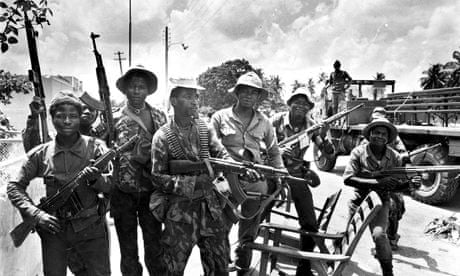
Additionally, the CIA coordinated a mercenary program that recruited and paid soldiers of fortune to fight on behalf of Roberto and the right-wing cause in Angola.
These mercenaries—whom the media made it seem went to Angola of their own volition—were mostly zealous anti-communists with experience in Vietnam and white supremacists who committed an orgy of atrocities.
Stockwell described mercenary Kostas Georgiou (AKA Tony Cullen) of Leeds as a “psychopath” who executed 14 people suspected of being MPLA supporters with another British mercenary named Peter McAleese. Cullen was eventually captured by the MPLA and executed.[17]
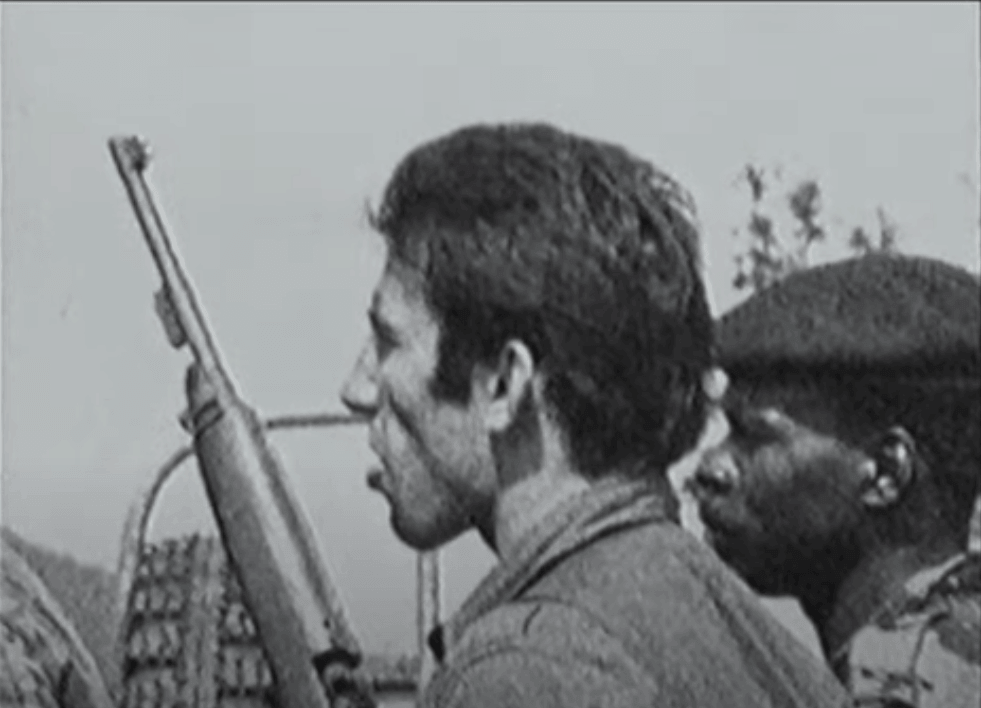
Some of the mercenary recruitment was carried out through French soldier of fortune Bob Denard, who had fought for Mobutu in Congo in another CIA-financed operation and had served with the French army in Vietnam.[18]
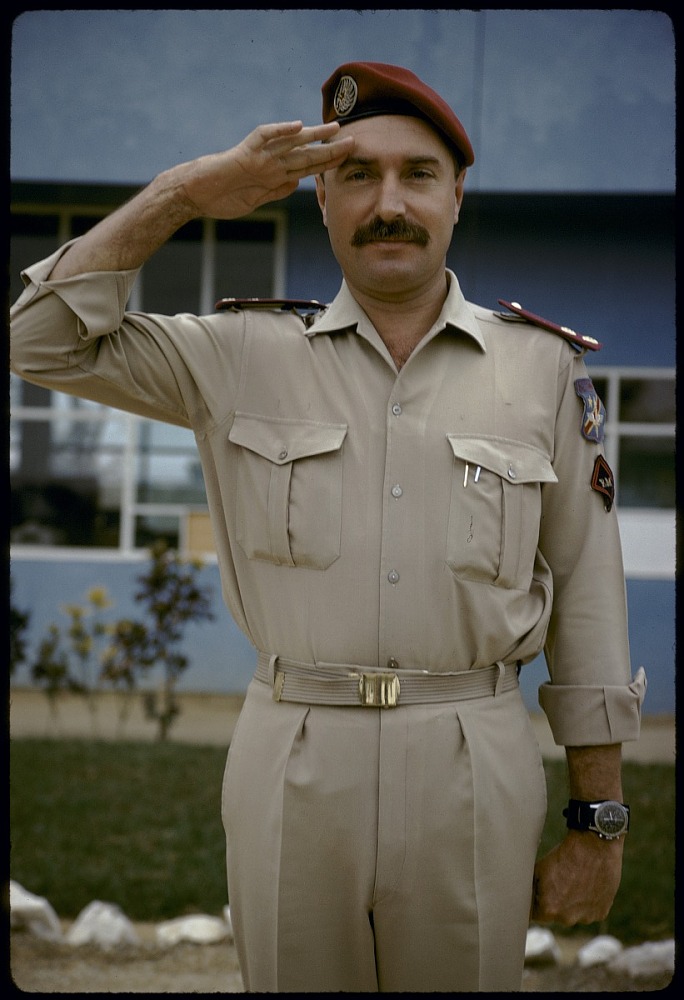
Kwame Nkrumah had compared Denard’s forces in Congo to the Ku Klux Klan.[19] According to Stockwell, Denard was paid $350,000 by the CIA to generate new recruits.
The mercenary program was designed to ensure what Stockwell termed “plausible deniability” for what was, in essence, a failed U.S.-led war for regime change in Angola.
Stockwell detailed how the CIA, in order to mollify the public, carried out a large-scale propaganda campaign, which involved planting stories in the media to suggest that the Soviets—and not the Americans—were the aggressors in Angola.
These stories alleged that the Soviets had sent military advisers to Angola before any Americans were there, which was untrue (only the CIA had paramilitary specialists operating in Angola when the war broke out).[20]
One of the fake news stories spread by the CIA claimed that 20 Soviet advisers and 35 Cubans were captured after UNITA had supposedly taken a town called Malanje. In reality, there were no Soviets or Cubans taken prisoner, and UNITA did not take control of Malanje.[21]
Stockwell noted that the CIA, in yet another fabrication, planted stories alleging that Cuban troops supporting the MPLA had committed atrocities in Angola, including rape and pillage.
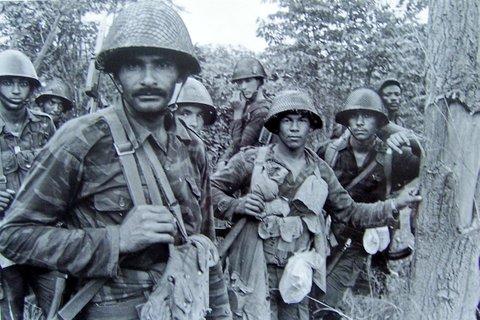
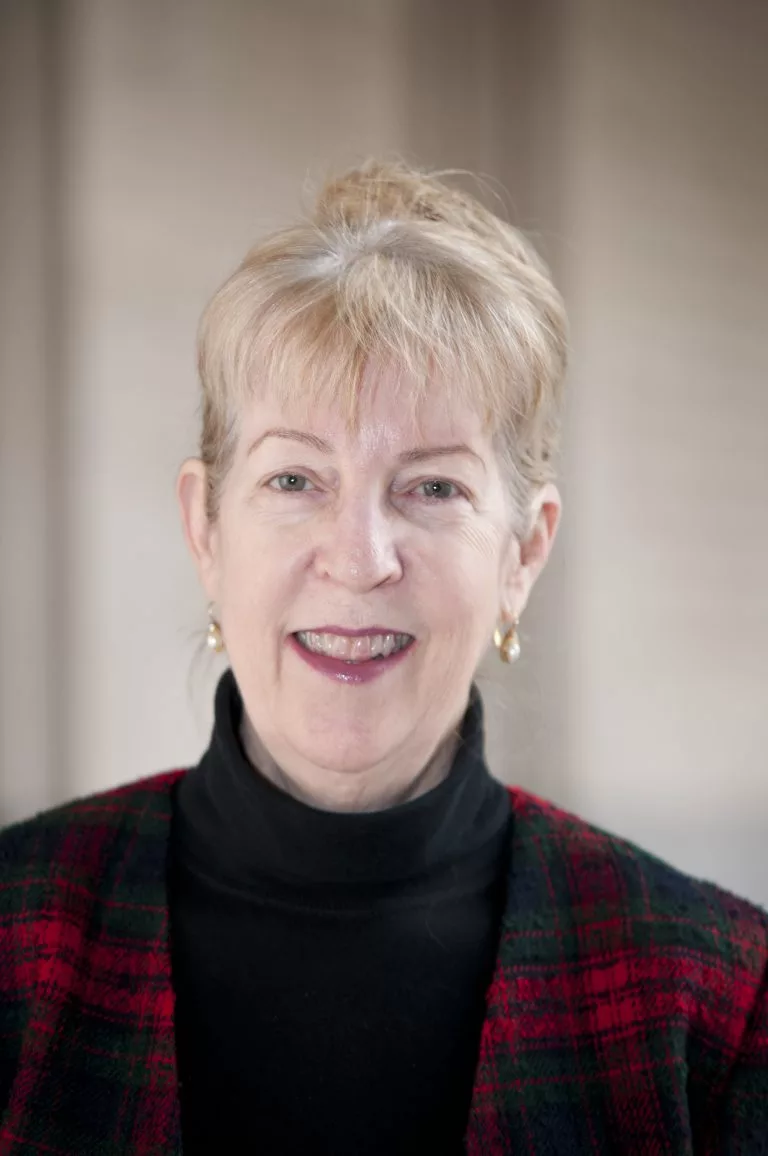
The story was completely fictitious; Caryle Murphy, a Washington Post reporter who covered the Angolan conflict and later won a Pulitzer Prize, found that Cuban soldiers fell in love with Angola, and were well behaved. The only atrocities Murphy could document had Cubans as the victims; not the perpetrators, as a number of captured Cubans were executed by UNITA in violation of the laws of war.[22]
One of the most unsavory aspects of the Angolan war was the CIA’s collaboration with the South African intelligence services and South African army fighters who came to Angola to support the FNLA and UNITA against the MPLA, some as mercenaries.
Stockwell noted that The Washington Post ran a characteristic propaganda piece featuring an interview with Holden Roberto who claimed that the FNLA had no South Africans or Southern Rhodesians working with them, which Stockwell said was a lie.[23]
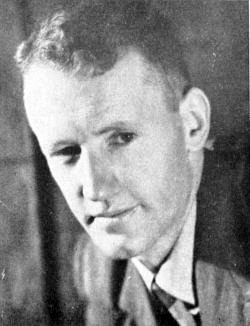
Southern Rhodesia was at the time a white supremacist state led by Ian Smith who had coordinated the brutal suppression of the black liberation movement, led at the time by future Zimbabwean President Robert Mugabe and Joshua Nkomo.
![r/MilitaryPorn - South African soldier in the 1970's during the Border War in Angola and South West Africa [478x674]](https://covertactionmagazine.com/wp-content/uploads/2026/08/r-militaryporn-south-african-soldier-in-the-1970.png)
According to Stockwell, many of the CIA operatives he worked with sympathized with the whites of South Africa, with the CIA having deep and long-standing ties to the South African intelligence services.[24]
After the MPLA obtained victory in the Angolan civil war, Stockwell testified before Congress on the deceits of the CIA, helping to spur passage of the 1976 Clark Amendment banning aid to the FNLA and UNITA.[25] In 1985, however, the Clark Amendment was repealed, and the Reagan administration resumed aid to UNITA, which was by then known as “Apartheid’s Contras” because of their deepened sponsorship by South Africa.[26]
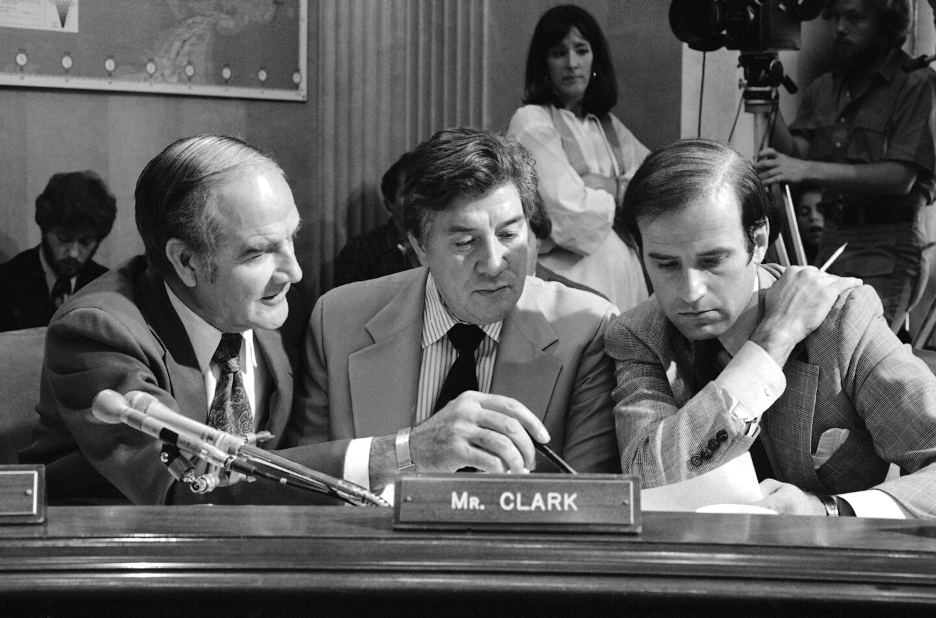
Stockwell concluded in In Search of Enemies that “it is impossible to count the total number of Africans who lost their lives during the [Operation IAFEATURE]. The figures doubtless ran into the thousands. No CIA staffers were killed meanwhile or suffered any worse discomfort than malaria—this is normal as the CIA always operated behind the scenes, letting others run serious risks.”[27] What Stockwell was describing here was a neo-colonialist foreign policy where native forces were used up and discarded as part of a strategy of divide and conquer and the local population was made to suffer.
Stockwell followed In Search of Enemies with a 1982 novel Red Sunset,[28] about an oil executive’s wife in Africa. After leaving the CIA, he began reading deeply and engaged with luminaries in the world peace movement while giving lectures about U.S. foreign policy, sometimes to large audiences.
Stockwell also began traveling to countries targeted by CIA destabilization campaigns, including Grenada, Jamaica, Cuba, Nicaragua, El Salvador, Honduras, Panama and Vietnam, and met with revolutionary leaders such as Daniel Ortega, leader of Nicaragua’s 1979 Sandinista Revolution, and Maurice Bishop, the leader of Grenada’s socialist New Jewel Movement, who was killed in a 1983 coup that served as a prelude to U.S. bombing and regime-change operation.
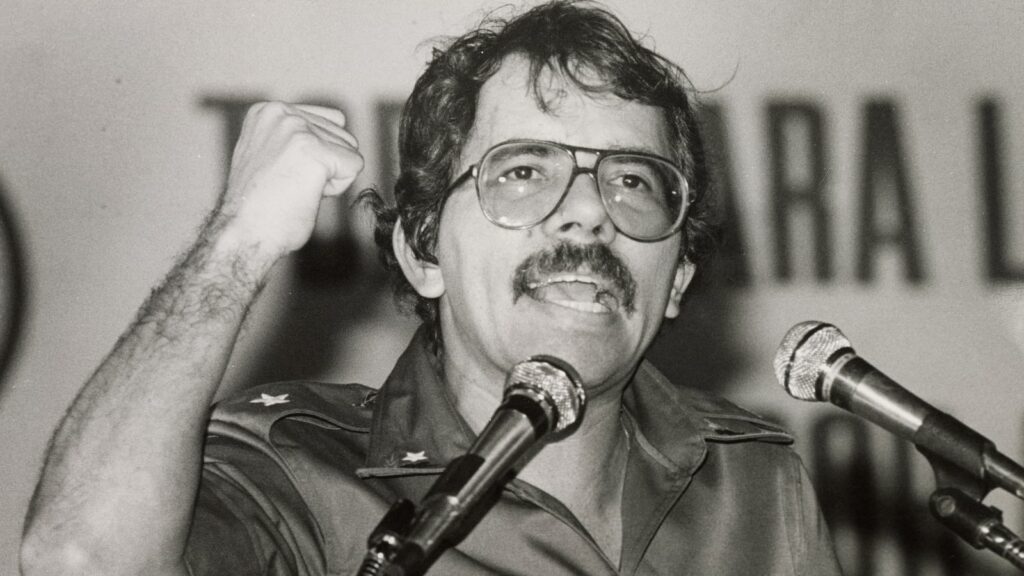
In March 1983, when Stockwell was in Grenada for a celebration of the New Jewel Movement, Ronald Reagan gave a speech saying that Grenada was a threat to U.S. national security.
Grenada Minister of Education Jacqueline Creft subsequently joked, saying that tiny Grenada was, indeed, getting ready to invade Washington, D.C., and then was prepared to take New York and Chicago.
Stockwell responded by telling her the matter was no joke because, if Reagan mentioned Grenada out of all the important things he could say in a big speech, then it was likely the U.S. was planning to invade. Creft replied to him that she knew this, unfortunately, as Grenadians had been “living under the talon of the U.S. eagle for centuries.”[29]
Stockwell recounted this story in his 1991 book, The Praetorian Guard: The U.S. Role in the New World Order, which provided an informed critique of U.S. foreign policy.
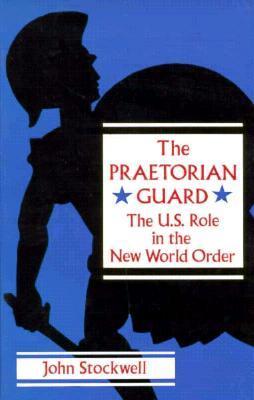
The Praetorian Guard was a Roman military force established in 27 BC that made and unmade emperors and came to be characterized by its corruption and venality, leading it to be abolished by the Emperor Constantine in the 4th century AD.
According to Stockwell, the U.S. military and CIA similarly were behaving as a rogue force whose function was to advance the interests of “the global financial order against fractious elements in the Third World.”
Stockwell depicted the Cold War as a ruinous conflict that had warped the U.S. economy and plunged the country into massive debt, and which was in essence a U.S. war on the Third World.
The wars he had personally been involved in—in Congo, Vietnam and Angola—were characteristic in their destructiveness and in targeting political movements that aimed to establish national sovereignty and control over their countries’ natural resources.
The Praetorian Guard included a detailed discussion of then-President George H. W. Bush, who had been CIA Director when Stockwell helped run the dirty war in Angola.
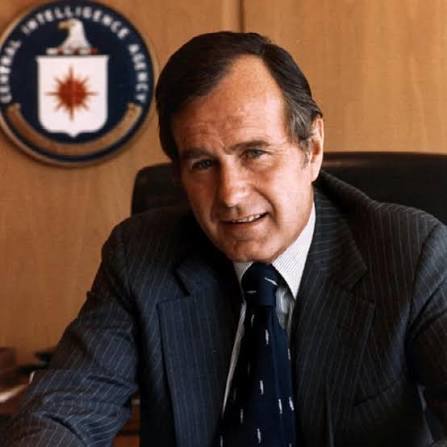
Stockwell depicted Bush as a venal character whose function as CIA director had been to try to shield the CIA from congressional investigations and scrutiny, and to enable it to continue with the secret operations it had carried out before the convening of the Church Committee which aimed to expose and rein in CIA abuses.
Bush brought into the CIA a team of right-wing economists who, Stockwell said, “cooked the statistical books and published a bloated assessment of alleged military spending by the Soviet Union” that justified the abrogation of Nixon-Kissinger’s détente policy and a renewed military build-up and aggressive foreign policy in the 1980s.[30]
Stockwell said that, when Bush became vice president and then president, he brought into high positions in government CIA operatives like Donald Gregg, a national security adviser (1979-1989) and ambassador to South Korea (1989-1993), with whom Bush had cultivated close relations when he was CIA director.
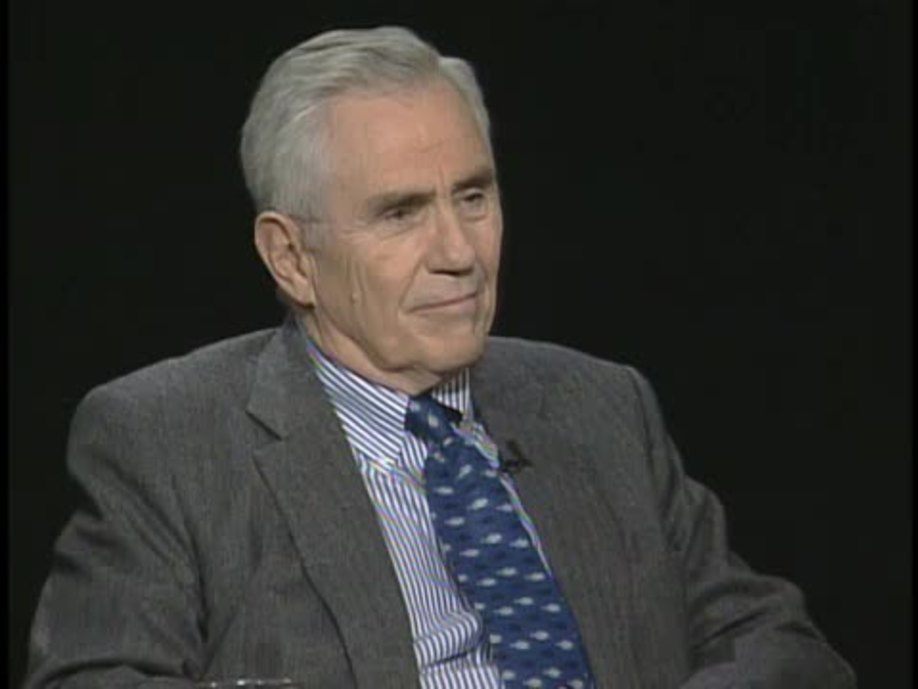
Gregg functioned as Bush’s personal liaison with the Nicaraguan Contras, a terrorist organization consisting of remnants of the former dictator Anastasio Somoza’s National Guard, whom the CIA armed in its attempt to destabilize Nicaragua after it had experienced a socialist revolution.
Bush’s support for the Contra War and appointment of spooks like Gregg to important government positions helped give the intelligence community enormous power in the 1980s and 1990s as part of the reinvigoration of a militaristic foreign policy following the Vietnam War.
Given his experience in Angola, Stockwell was especially disgusted at how Bush helped perpetuate arms deliveries to UNITA warlord Jonas Savimbi, including Stinger ground-to-air missiles when Savimbi boasted openly of shooting down passenger planes.[31]
Stockwell was writing on the heels of the U.S. military invasion of Panama to oust Manuel Noriega, with whom Bush had earlier cultivated contacts when he was CIA director. Stockwell aptly called the U.S. invasion of Panama “expensive, bloody and pointless.”[32]
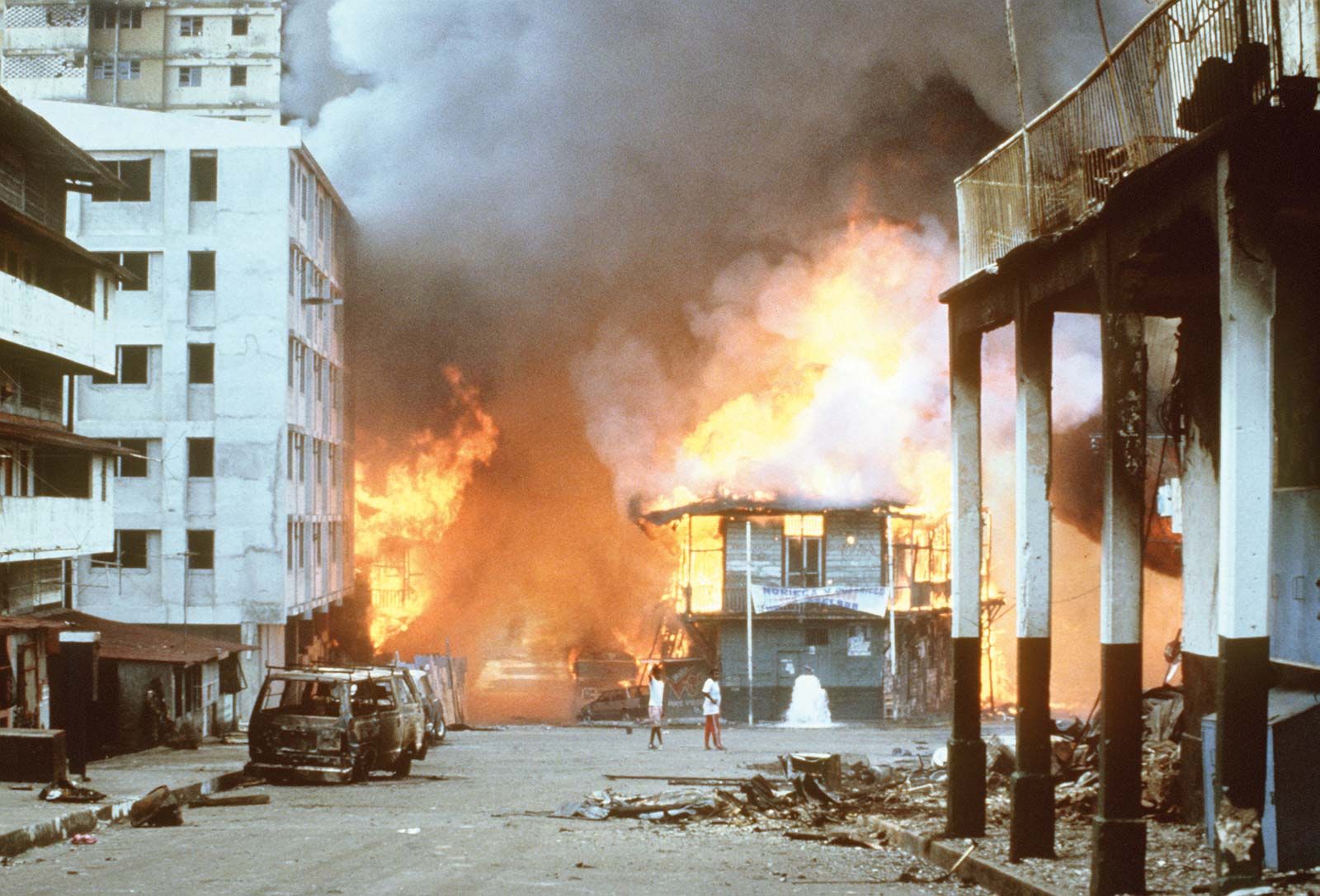
Stockwell also warned about the impending U.S. invasion of Iraq, which he predicted would also be “expensive and bloody”—as it proved to be.[33]
This war, he said, had been provoked by the U.S. which acted to destabilize Iraq through Kuwait.
The latter seized valuable Iraqi oil reserves and manipulating world oil prices, helping to precipitate an Iraqi invasion of Kuwait that provided a pretext for the U.S. invasion of Iraq—which was really all about oil.[34]
Stockwell noted that the manufactured pretext for war in Iraq fit a wide pattern of foreign policy dating back to the U.S. Mexican War, when U.S. soldiers had carried out provocative raids on the Mexican border in order to engender reprisal attacks. Lurid newspaper headlines suggesting Mexicans “were killing Our Boys in Texas” helped mobilize public support for a war that led to the conquest of wealthy Mexican provinces like California.[35]
Similarly, the FDR administration provoked Japan with an oil embargo and allowed the Japanese attack on Pearl Harbor to go forward to create a pretext for a war for empire in the Asia Pacific.
A generation later, LBJ used the CIA to provoke a North Vietnamese reprisal attack in the South China Sea in the Gulf of Tonkin incident to justify sending large numbers of U.S. ground forces into Vietnam.[36]
Besides the false pretexts for war, Stockwell catalogued the horrifying effects of CIA covert destabilization operations in countries like Indonesia, Vietnam and Nicaragua and CIA’s use of Taiwan, Burma, Tibet and Thailand to try to destabilize the People’s Republic of China (PRC).
Stockwell recounted that one of his CIA bosses once boasted over drinks at a happy hour that he would cut off the parachute of agents he distrusted so they would “cream” (i.e., die) when they jumped out of planes over China.[37]
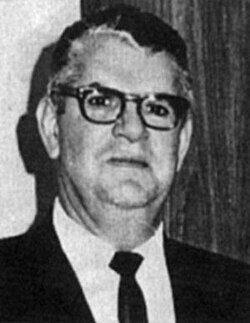
Stockwell noted that many of the CIA’s nefarious operations in the Cold War were carried out under the cover of the USAID’s Office of Public Safety (OPS), which ran police training programs. Richmond, Indiana, Police Chief Dan Mitrione symbolized the depravity of those programs when he was exposed for having taken beggars off the streets in South American countries and tortured them in front of students taking courses with him in police procedure.[38]
The Praetorian Guard included a well-researched chapter on the CIA’s role in the JFK assassination, discussed the CIA’s involvement in drug smuggling in the Indochina Wars and Central America, and the CIA’s infiltration of the media and higher education and pattern of conditioning of U.S. youth through television and the movies.
The Praetorian Guard and In Search of Enemies, collectively, provide a damning indictment of U.S. foreign policy that, unfortunately, is all too relevant in 2026.
If Stockwell were to update his analysis, he would have plenty of comparisons to offer to today’s world where the CIA continues to destabilize countries and carry out propaganda initiatives, mostly through the National Endowment for Democracy (NED).
Stockwell was a man of high intellect and political courage whose experiences working on the front-lines of the Cold War led him to become a whistleblower and dissident.
Why his colleagues did not take the same path is a question worth contemplating in light of the horrific activities that Stockwell described.
No doubt most of those colleagues were also intelligent and could see the damage being bred by U.S. government involvement in Angola among other places and the lies being used to sell it.
As Stockwell saw it, most of his colleagues had become extremely cynical, however, losing their capacity for empathy, and were narrowly fixated on their own careers.
It is a testament to Stockwell’s character that he stood above his contemporaries and decided to speak out against the great injustice and criminality of U.S. foreign policy in Sub-Saharan Africa and in the so-called developing world.
While this decision did not bring Stockwell material rewards or public acclaim—he wrote about being called a traitor and experiencing death threats—his actions were appreciated by many people who learned from his writings and lectures, and have earned him an honored place in history as an insider like Philip Agee who spoke truth to power.
Stockwell joined the ROTC while at the University of Texas. He said that he was typical of his generation in that he did not question conventional wisdom at the time. As a student, he would furiously write everything down the professor said, and “regurgitate his words” on tests. One of Stockwell’s professors was John Silber, a well-known conservative and supporter of U.S. foreign policy who later, as president of Boston University, engaged in a war against radical historian Howard Zinn. Stockwell wrote that another professor he had at the University of Texas, Clarence Ayres, “occasionally made suggestive comments but he was under constant pressure from the Texas legislature and university regents.” John Stockwell, The Praetorian Guard: The U.S. Role in the New World Order (Boston: South End Press, 1991), 34. ↑
Stockwell, The Praetorian Guard, 34. For a detailed CovertAction Magazine article on Johnson’s crime spree in Texas, see here. ↑
John Stockwell, In Search of Enemies: A CIA Story (New York: W. W. Norton, 1978), 9. ↑
For more details on this sordid episode, see Piero Gleijeses, Conflicting Missions: Havana, Washington and Africa, 1959-1976 (Chapel Hill: University of North Carolina Press, 2002). ↑
Stockwell, In Search of Enemies, 105. ↑
Ibid., 269. ↑
Stockwell, The Praetorian Guard, 47. ↑
Stockwell, In Search of Enemies, 31. Stockwell wrote that, during his time in Vietnam, he bugged foreign embassies, ran numerous covert operations, and even hired prostitutes to be used against Soviet and Chinese officials. ↑
Stockwell, In Search of Enemies, 201. ↑
Ibid., 64. ↑
Ibid., 65. ↑
Ibid., 51. ↑
Stockwell recounted how, when CIA Director William Colby gave a briefing to him and his colleagues about the Angolan War, he called the FNLA the “good guys” and MPLA the “bad guys, led by a drunken psychotic poet (Neto).” Stockwell, The Praetorian Guard, 50. Stockwell noted that it was the FNLA which started the war from Congo by attacking and killing MPLA troops in violation of the Alvor Accords. ↑
Stockwell, In Search of Enemies, 203. ↑
Potts had been a Yale University football player in the early 1940s who later in life contracted polio.
Stockwell, In Search of Enemies, 162. ↑
Ibid., 225. ↑
Denard was implicated in a plot to kill French Prime Minister Pierre Mendès France. ↑
See Gleijeses, Conflicting Missions. ↑
Stockwell, In Search of Enemies, 194. ↑
Ibid., 195. ↑
Ibid., 195. ↑
Ibid., 201. ↑
Ibid., 49. ↑
Stockwell credits University of Southern California (USC) history Professor Jerry Bender for helping to stop the war by writing to Senator John Tunney (D-CA) and helping to educate him about the war’s folly, which led Tunney to sponsor an amendment to stop funding for it. ↑
See William Minter, Apartheid’s Contras: An Inquiry into the Roots of War in Angola and Mozambique, rev. ed. (North Charleston, SC: BookSurge Publishing, 2008). ↑
Stockwell, In Search of Enemies, 247. Stockwell noted that Angola was filled with crippled and maimed people who were victims of the war and that the country suffered from famines in the 1980s when it had previously been a regional bread basket. When I traveled to Zambia in 2007, I met several survivors and veterans of the Angolan war living in Zambia who had been displaced and told me of the war’s horrors and how hard their lives had been because of it. ↑
John Stockwell, Red Sunset (New York: New American Library, 1982). ↑
Stockwell, The Praetorian Guard, 53. ↑
Ibid., 18-21. Stockwell noted that, after Chilean intelligence operatives linked to the CIA carried out a car bombing attack in Washington, D.C., in September 1976 that resulted in the deaths of former Chilean Foreign Minister Orlando Letelier and Ronni Moffitt, an employee of the Institute for Policy Studies, a left-wing think-tank, Bush went to the Justice Department and asked them to soft-pedal the investigation because it involved sensitive national security relationships. The corruption of the Bush family was apparent in Bush’s son Neil’s involvement in the savings-and-loan scandal, the biggest financial scandal of the 1980s. ↑
Stockwell, The Praetorian Guard, 24. ↑
Ibid., 10. ↑
See, for example, Ramsey Clark, The Fire This Time: U.S. War Crimes in the Gulf (New York: Thunder’s Mouth Press, 1992). ↑
Stockwell, The Praetorian Guard, 13. ↑
Ibid., 87. ↑
Ibid., 87, 88, 89. ↑
Ibid., 78. ↑
My book, Modernizing Repression: Police Training and Nation-Building in the American Century (Amherst, MA: University of Massachusetts Press, 2012), builds off Stockwell’s analysis and provides a detailed history of the OPS, based on archival research and interviews with ex-OPS operatives and members of their families. ↑
CovertAction Magazine is made possible by subscriptions, orders and donations from readers like you.
Blow the Whistle on U.S. Imperialism
Click the whistle and donate
When you donate to CovertAction Magazine, you are supporting investigative journalism. Your contributions go directly to supporting the development, production, editing, and dissemination of the Magazine.
CovertAction Magazine does not receive corporate or government sponsorship. Yet, we hold a steadfast commitment to providing compensation for writers, editorial and technical support. Your support helps facilitate this compensation as well as increase the caliber of this work.
Please make a donation by clicking on the donate logo above and enter the amount and your credit or debit card information.
CovertAction Institute, Inc. (CAI) is a 501(c)(3) non-profit organization and your gift is tax-deductible for federal income purposes. CAI’s tax-exempt ID number is 87-2461683.
We sincerely thank you for your support.
Disclaimer: The contents of this article are the sole responsibility of the author(s). CovertAction Institute, Inc. (CAI), including its Board of Directors (BD), Editorial Board (EB), Advisory Board (AB), staff, volunteers and its projects (including CovertAction Magazine) are not responsible for any inaccurate or incorrect statement in this article. This article also does not necessarily represent the views the BD, the EB, the AB, staff, volunteers, or any members of its projects.
Differing viewpoints: CAM publishes articles with differing viewpoints in an effort to nurture vibrant debate and thoughtful critical analysis. Feel free to comment on the articles in the comment section and/or send your letters to the Editors, which we will publish in the Letters column.
Copyrighted Material: This web site may contain copyrighted material the use of which has not always been specifically authorized by the copyright owner. As a not-for-profit charitable organization incorporated in the State of New York, we are making such material available in an effort to advance the understanding of humanity’s problems and hopefully to help find solutions for those problems. We believe this constitutes a ‘fair use’ of any such copyrighted material as provided for in section 107 of the US Copyright Law. You can read more about ‘fair use’ and US Copyright Law at the Legal Information Institute of Cornell Law School.
Republishing: CovertAction Magazine (CAM) grants permission to cross-post CAM articles on not-for-profit community internet sites as long as the source is acknowledged together with a hyperlink to the original CovertAction Magazine article. Also, kindly let us know at info@CovertActionMagazine.com. For publication of CAM articles in print or other forms including commercial internet sites, contact: info@CovertActionMagazine.com.
By using this site, you agree to these terms above.
About the Author
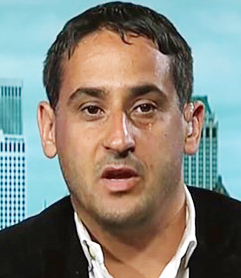
Jeremy Kuzmarov holds a Ph.D. in American history from Brandeis University and has taught at numerous colleges across the United States. He is regularly sought out as an expert on U.S. history and politics and co-hosts a radio show on New York Public Radio and on Progressive Radio News Network called “Uncontrolled Opposition.”
He is Managing Editor of CovertAction Magazine and is the author of eight books, including Obama’s Unending Wars (Clarity Press, 2019), The Russians Are Coming, Again, with John Marciano (Monthly Review Press, 2018), Warmonger. How Clinton’s Malign Foreign Policy Launched the U.S. Trajectory From Bush II to Biden (Clarity Press, 2023); with Dan Kovalik, Syria: Anatomy of Regime Change (Baraka Books, 2025), and Political Assassinations in America: The Intricate Nexus of Deep State Crime (Clarity Press, 2026).
Besides these books, Kuzmarov has published hundreds of articles and contributed to numerous edited volumes, including one in the prestigious Oxford History of Counterinsurgency .
He can be reached at jkuzmarov2@gmail.com and found on substack here.


Excellent well written article with a lot of factual content. The claim that Dan Mitrione engaged in torture has never been verified and I suspect that it may be propaganda.
Dan Mitrione was a U.S. Agency for International Development (USAID) public safety adviser who was kidnapped and executed in 1970 by the Tupamaro guerrillas in Uruguay. Following his death, the insurgents and subsequent leftist political campaigns claimed that Mitrione actively taught and practiced sadistic torture methods on prisoners. While investigative journalists later discovered evidence that his training programs condoned or advised on harsh, dehumanizing interrogation tactics, direct proof of him personally torturing individuals relies heavily on secondhand accounts and Cold War propaganda rather than verified documentation. The origins of these specific torture claims began immediately after his abduction in Montevideo, as the Tupamaros used allegations of his direct participation in police brutality to justify his extrajudicial execution. The narrative gained significant momentum in 1978 when Manuel Hevia Cosculluela, a self-proclaimed Cuban double agent, published an account alleging that Mitrione personally oversaw horrific torture tests on homeless individuals. Modern historians generally treat Cosculluela’s testimony with high skepticism, viewing it as a coordinated piece of active political messaging from the Cuban government. The global perception of Mitrione was permanently shaped by the 1972 political thriller film State of Siege, directed by Costa-Gavras. The movie dramatized Mitrione’s life, depicting his character as a cold, calculating mastermind of torture and a covert CIA operative. This cinematic portrayal cemented the allegations into the public consciousness, turning Mitrione into a universal symbol of covert U.S. intervention and regional police brutality. While historical investigators like journalist A.J. Langguth established that U.S. advisory programs under the Office of Public Safety did militarize regional police forces and tacitly accept systemic coercion, concrete evidence that Mitrione personally conducted physical torture remains unproven.