Warning: Trying to access array offset on value of type bool in /home/covertaction/public_html/wp-content/plugins/wp-word-count/public/class-wpwc-public.php on line 123
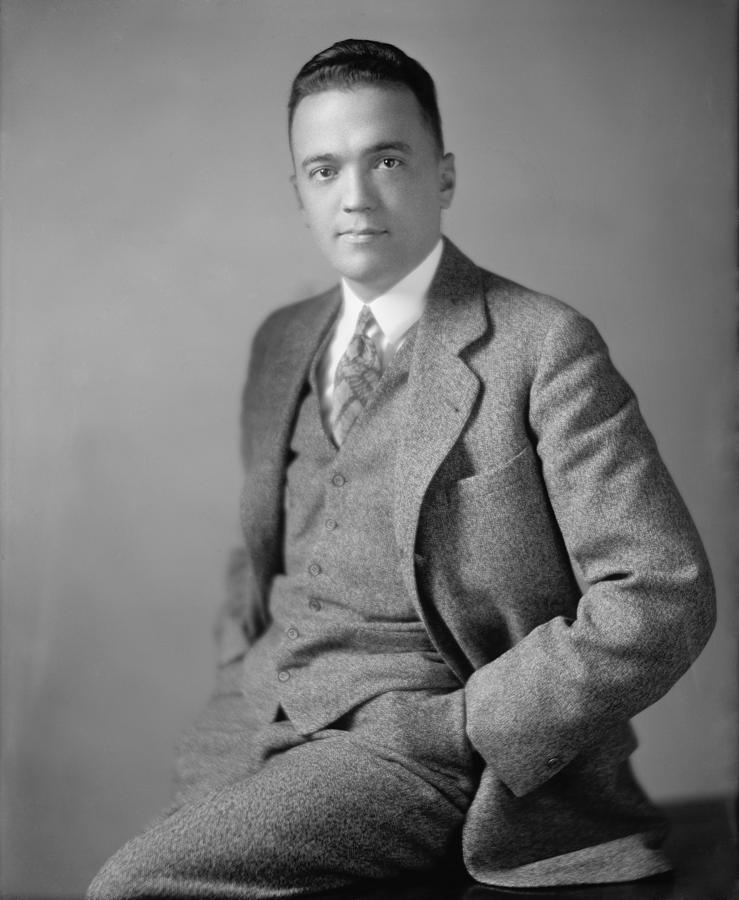
The smearing of Gaston Means has continued into the 21st century
In the upside-down world in which we live, corrupt government officials are celebrated in the media and given prizes and awards, while whistleblowers who expose their malfeasance face smear attacks and persecution and can be framed for crimes and sent to prison for long periods.
The pattern[1] goes far back in American history. A CovertAction Magazine article on the 1935 assassination of Louisiana Senator Huey Long, for example, spotlighted the story of Jessica Lauren Fields, a whistleblower who was sent to an asylum for the criminally insane for 45 years after she tried to expose a conspiratorial plot to kill Long involving wealthy Louisiana businessmen and political officials.
Gaston Means was another important whistleblower from that period who met a bleak fate. And his name continues to be dragged through the mud, even today.
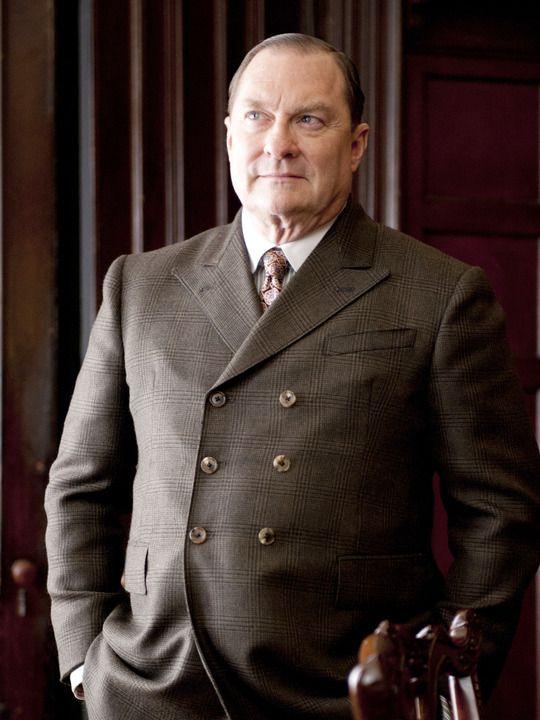
In an HBO series called Boardwalk Empire, Means, for example, was depicted as a middleman in Attorney General Harry Daugherty’s protection racket for organized crime who plots the assassination of Daugherty’s “gofer” Jess Smith, the de facto Assistant Attorney General.
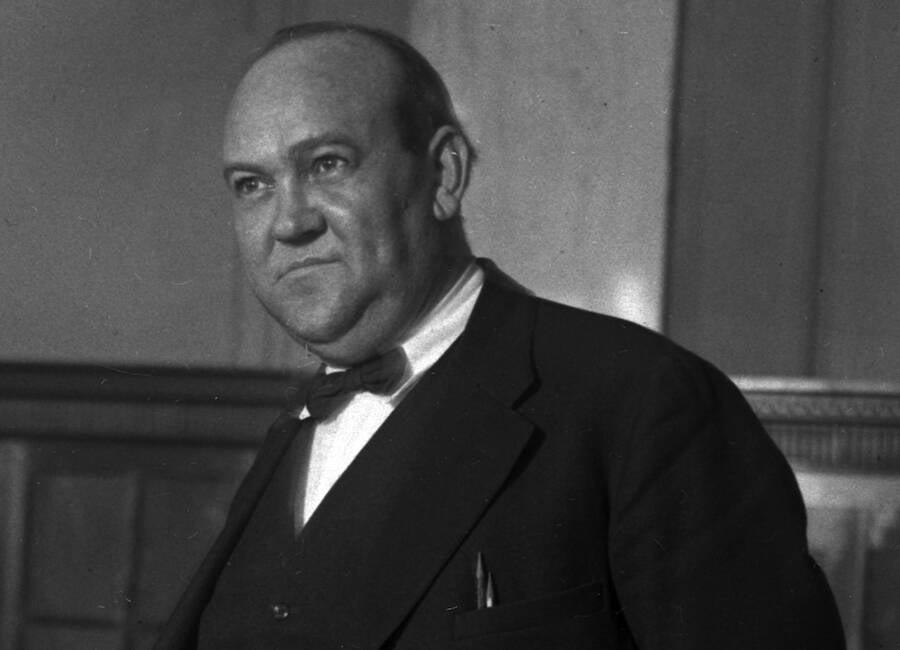
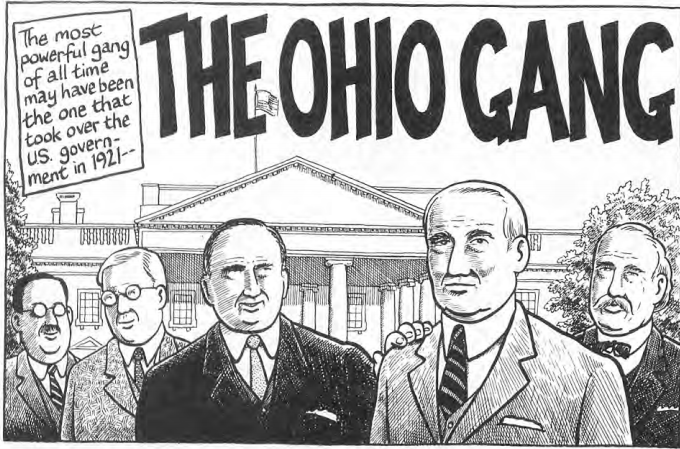
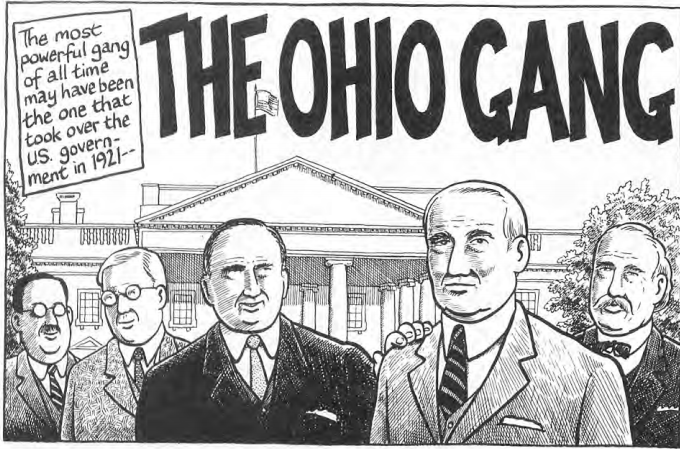
Described by Bureau of Investigation [predecessor to FBI] Director William J. Burns as “one of the best investigators who ever lived,”[2] the real Means blew the whistle on Daugherty and other corrupt government officials associated with the “Ohio Gang” and their involvement in Smith’s murder and deep-seated corruption in the Warren G. Harding administration (1921-1923).
Because he had implicated powerful people in criminal activity, future FBI Director J. Edgar Hoover had Means arrested under Daugherty’s orders in what investigative journalist Hank Messick called “an act of revenge.”[3] Means in turn spent the rest of his life in prison.
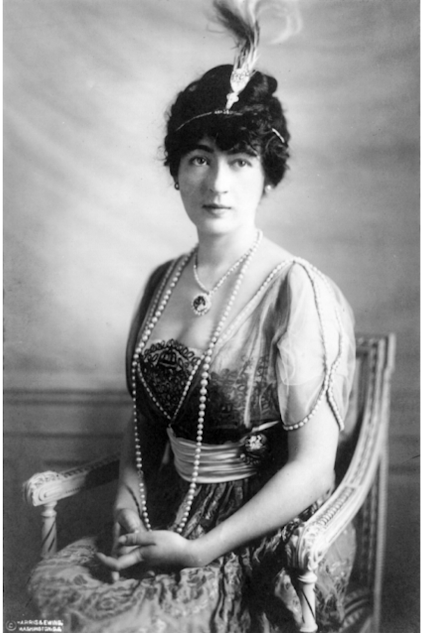
The person who accused Means of the crime that put him in prison, Evelyn Walsh McLean, happened to be the wife of Washington Post editor Ned McLean, who was close friends with Hoover and Warren and Florence Harding.[4]
In 1936, Hoover penned an article in The American Magazine, which accused Means—whom he was said to have always hated—of being a German agent during World War I and called him the “greatest faker of all time” and “most amazing figure in contemporary criminal history.”
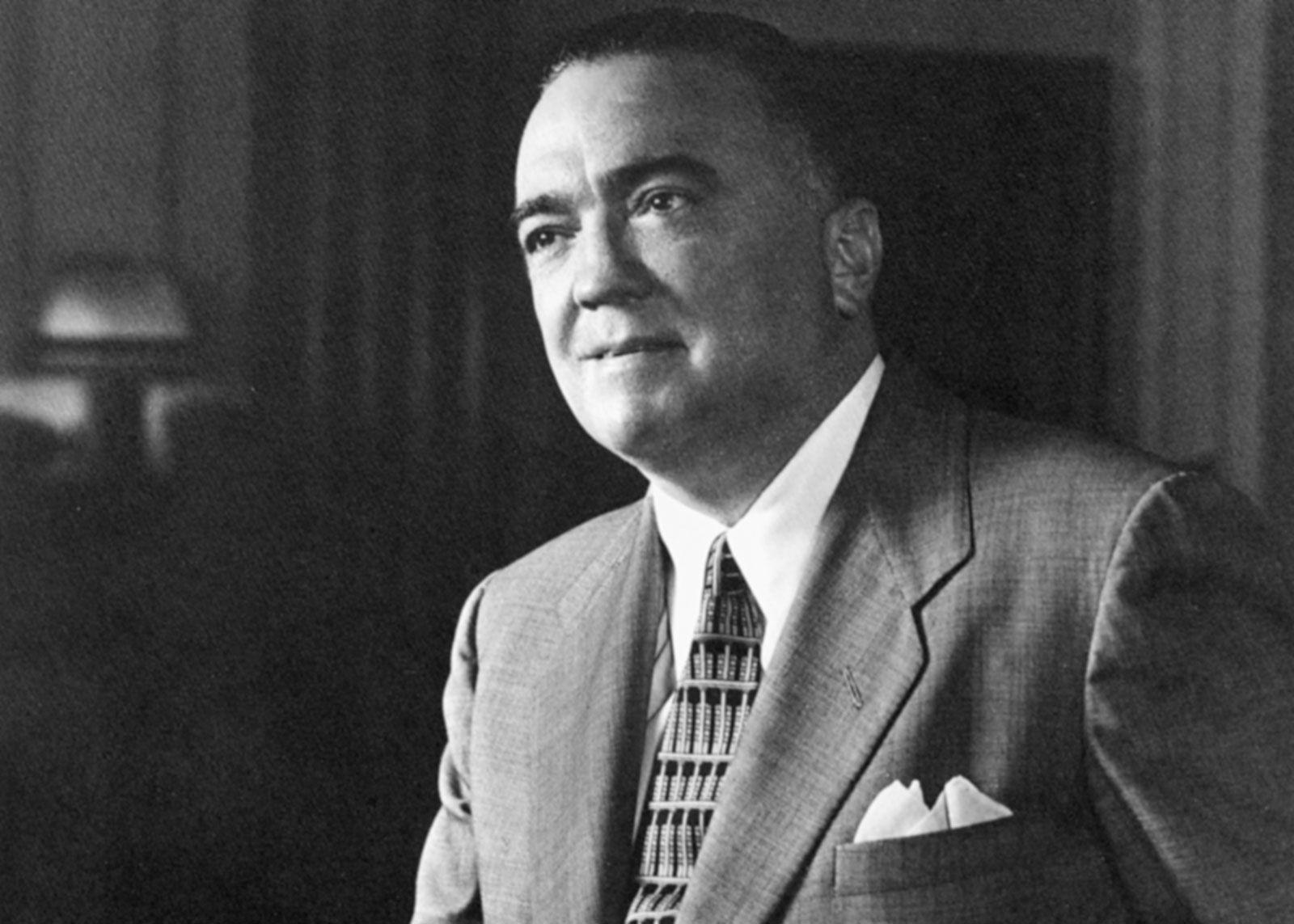
Hoover also called Means’ 1930 book The Strange Death of President Harding, which accused First Lady Florence Harding of poisoning her husband to protect him from prosecution, a “horrible hoax.”[5]
Attorney General Harry Daugherty called the book “vicious,” “monstrous” and obscene” and a New York Times book review called it “a work wherein lying amounted to pure genius.”[6]
Long after he had passed away in 1938, Means’ reputation continued to be debased.
A 1963 biography—which thanked J. Edgar Hoover in the acknowledgments—referred to Means as an “arch rogue” and “symbol of American criminality and corruption in the gaudiest and most lawless era in the nation’s history—the 1920s.”[7]
Other historians characterized Means as a “psychotic swindler” and “liar proud of the credibility of his lies,” an “out-and-out scoundrel” and “one of the greatest rogues in American history.”[8]
The latter characterization is obviously an exaggeration.
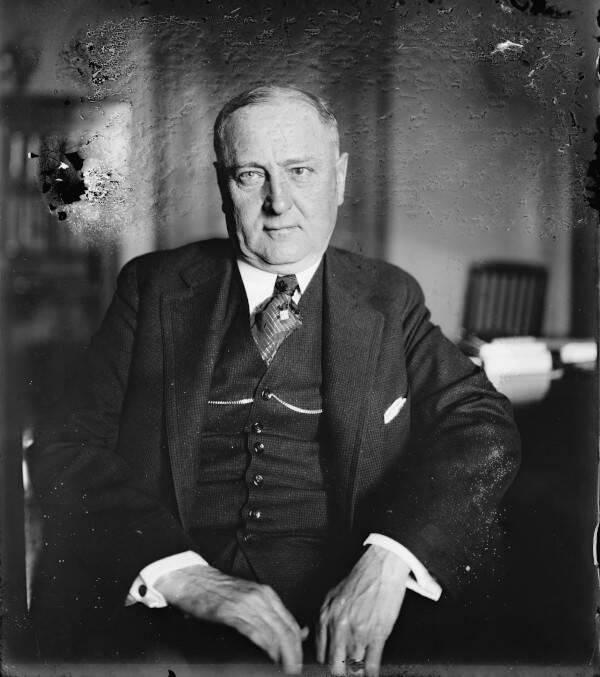
While Means was certainly no saint, his testimony before Senate hearings chaired by Thomas Walsh (D-MT) and Burton Wheeler (D-MT) was affirmed by Department of Justice (DOJ) whistleblowers and by other witnesses, including Bureau of Investigation (BI-predecessor to FBI) Director William J. Burns’ secretary Jesse Duckstein, and Jess Smith’s ex-wife Roxie Stimson, whom Daugherty tried to disparage as a “malicious, angry woman.”[9]
Historian Edwin P. Hoyt noted that Means’ testimony at those hearings, which probed the DOJ’s corruption under Harry Daugherty, was carried out “with the polish of a movie star.”[10]
Means detailed his role as a financial bagman for Daugherty whom he helped launder bribe money from crooks seeking pardons or release on parole and companies accused of war-time profiteering such as Standard Aircraft, which was accused of overcharging the U.S. Army Air Service by more than $6 million.[11]
Noting that everything in the Harding administration was “for sale,” Means described passing cash-filled envelopes on behalf of Daugherty to Jess Smith, and a Watergate-style campaign of break-ins, phone tapping and surveillance of Harding administration critics, including members of Congress.[12]
Means testified further about an extortion scheme run by Daugherty and Smith, through an attorney named Thurston who died later under suspicious circumstances, targeting German-Americans who were trying to reclaim property seized during World War I.
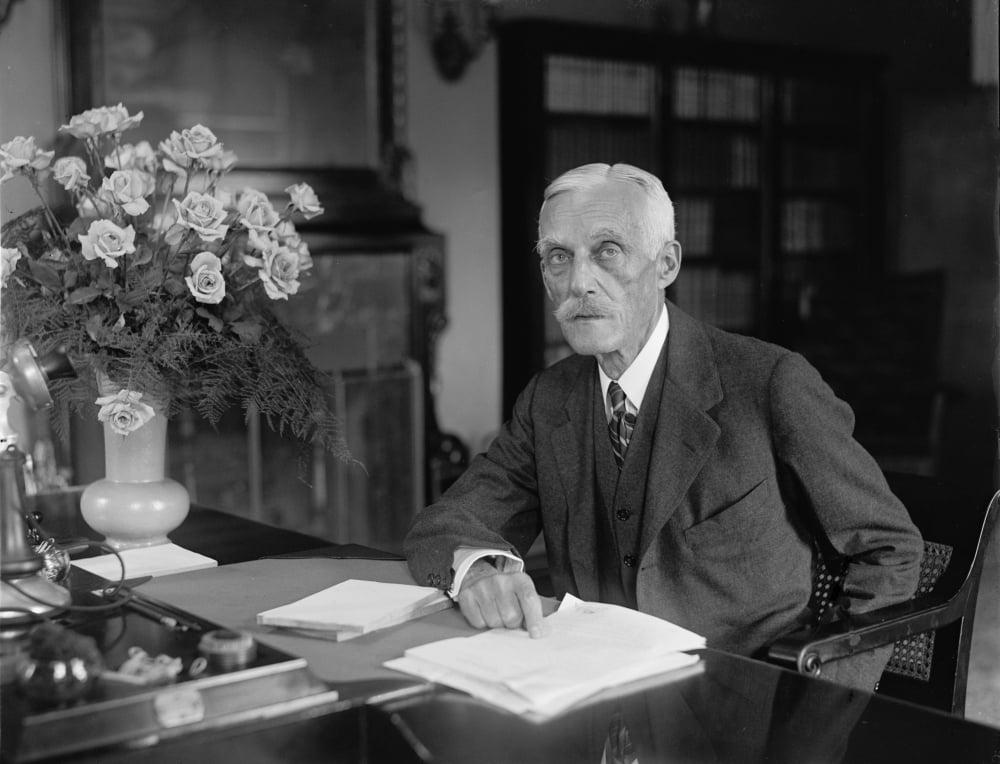
Additionally, he suggested that the Republican Party had helped pay off campaign debt through illicit bootlegger payoffs and that Treasury Secretary Andrew Mellon—who called Means’ testimony “vicious piffle”—had profited from illegal whiskey deals.[13]
Daugherty had tried to claim that he had only seen Means twice in his life and said that he fired him after indicting him for two felonies, which is what he said led him to ally with what he called a “congressional plot to get revenge on him.”[14]
However, Laton McCartney’s 2009 book on the Teapot Dome scandal characterized Means as Daugherty’s “fixer” which meant that Daugherty was lying to try to protect his own reputation.[15]
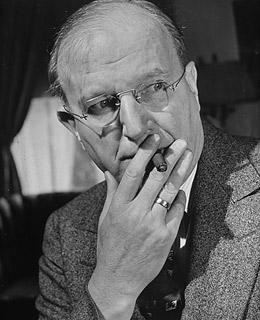
In his memoir, Daugherty accused Burton Wheeler of being a “red agent” who used the investigation against him to try to “discredit our form of government” and “establish a Soviet form of government in the U.S.[16]
Daugherty in turn called Means the “general manager of Wheeler and his two radical associates on the committee,” adding that for days and weeks, Means “strutted and posed and regaled [the committee] with stories that would have done credit to Baron Munchausen [a fictional character known for spreading false stories].”[17]
Having transformed the Justice Department into a “first aid station to crooks,” to quote former special agent Hazel Scaife,[18] Daugherty clearly had a vested interest in trying to discredit Means and the Wheeler committee, which he said was conducted in a “riot of perjury and a parade of criminals, convicts, ex-convicts and men under indictment for felonies.”
These slanderous remarks should be regarded critically by historians, many of whom instead repeat what Daugherty said, especially pertaining to Means.
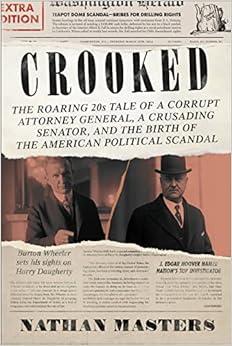
In his book, Crooked: The Roaring 20s Tale of a Corrupt Attorney General, a Crusading Senator, and the Birth of the American Political Scandal, Nathan Masters details Daugherty’s attempts to blacken the reputation and destroy the career of anyone who crossed him and tried to expose his corrupt activities.
A pro-labor congressman from Minnesota, for example, who tried to introduce articles of impeachment against President Harding after Daugherty unlawfully quashed a railroad strike, was driven to a nervous breakdown and, in his last act before he was forced to resign as Attorney General, Daugherty tried to have Wheeler indicted on phony influence peddling charges.[19]
Means Tries to Rescue Girl Whose Death Harding and Daugherty Covered Up
Means appears favorably compared to Daugherty and Harding in a story told by historian McCartney that exposed the debauchery prevalent in the Harding administration.
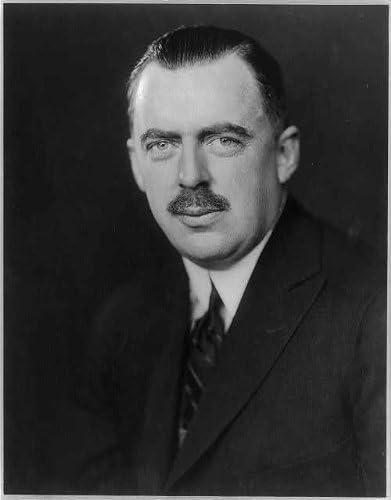
The story centered on a raucous after-dinner party at a house rented by Daugherty and Jess Smith near the Capitol where Washington power brokers would drink liquor in violation of prohibition statutes, play poker and cavort with chorus girls and high-end prostitutes brought from New York by then Washington Post owner Ned McLean. Judges and pardons were allegedly auctioned off at the after-hours parties.
On the night in question, things got out of hand around 3:00 a.m. when the guests—who included Harding—started throwing plates, glasses and bottles on a table where some of the girls were dancing.
When one of the girls was hit with a bottle and lost consciousness, instead of calling an ambulance, Jess Smith called Gaston Means who shepherded the girl into his car and took her to a hospital.
When the girl later died, Daugherty and William J. Burns covered up the whole affair, as did Harding, who had been quickly taken back to the White House by aides after the girl was struck.[20]
Blowing the Whistle on a Political Murder
When Jess Smith was found dead with a gunshot wound to his head on May 30, 1923, Daugherty tried to blame Means for causing Smith to kill himself by “blackening” his name “with carefully concocted stories when coached by Senator Wheeler.”[21]
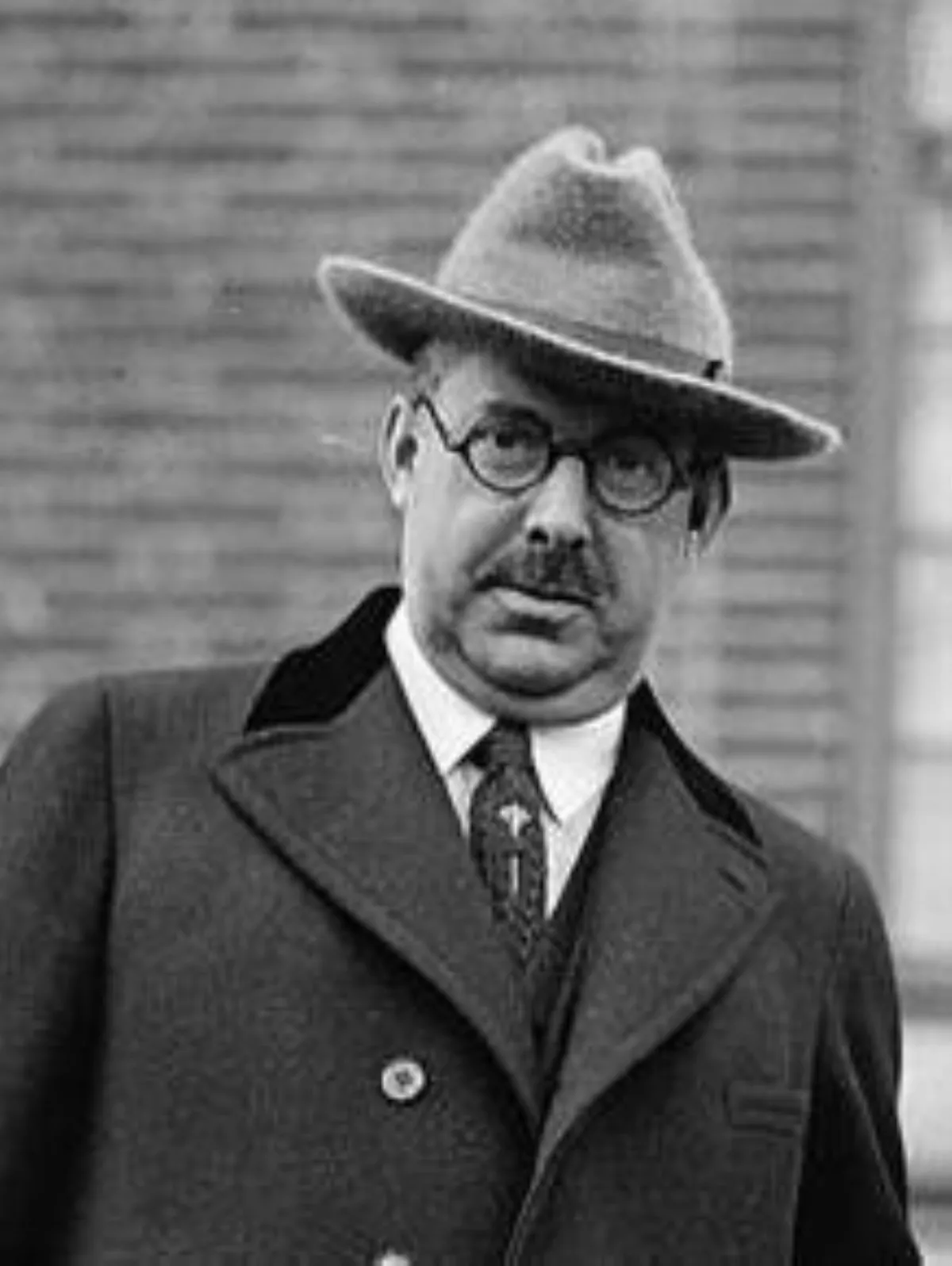
In his memoir, Daugherty wrote that Smith had committed suicide after having lost some of his mental capacity following surgery designed to treat an acute infection of the abdomen.[22]
By contrast, Means stated that, just prior to his death, the “Ohio gang” had discovered that Smith had kept a record of all the cash that passed through his hands and that Smith was contemplating becoming a prosecution witness. As such, the gang decided that Smith had to be eliminated. He was persuaded to purchase a revolver, and the “suicide” was no suicide at all.[23]
Journalists Hank Messick and Samuel Hopkins Adams affirmed that “there were circumstances in connection with the death [of Smith] that were dubious. No autopsy was performed. The Department of Justice took efficient charge and all was hushed up as soon as possible.”[24]
Smith was said to have shot himself with a pistol in Washington’s prestigious Wardman Hotel; however, nobody heard the shot, and Smith never fired a pistol in his life—he was mortally afraid to even hold one.[25]
Harding had confided to then-Commerce Secretary Herbert Hoover that the Bureau of Investigation was about to arrest Smith, which put him in a trap because he was a man who knew too much.
Daugherty had sent Warren E. Martin, an FBI officer and member of the “Ohio gang,” to stay with Smith, and Martin was the person who reported Smith dead the next morning.
Incriminating documents that Smith had in his possession were conveniently burned in his fireplace.
Smith was right-handed but allegedly shot himself in the left temple and, afterwards, somehow managed to fit his head into a wastebasket in his bathroom.
Equally curious was the fact that William J. Burns—a Daugherty appointee—misplaced the suicide/murder weapon after being first on the scene after Smith died.[26]
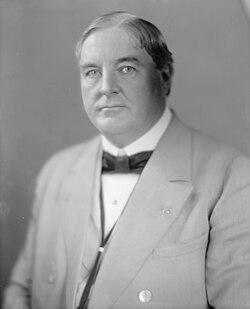
Senator J. Thomas Heflin (D-AL) said: “Nobody knew what he [Smith] knew, and with him dead there was nobody to tell the story—so Jess Smith was murdered.”[27]
Which is precisely what Means had said.
The Strange Death of Warren Harding
Means came to write The Strange Death of Warren Harding after he had been hired by First Lady Florence Harding to investigate Warren’s affair with a young woman named Nan Britton who alleged that Harding fathered her child—a claim that was validated by correspondence found 40 years after Harding’s death and by recent DNA testing.[28]
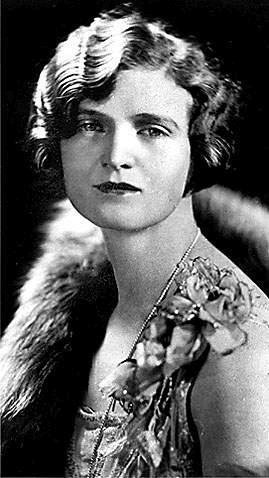
Means purported to reveal in his book not only Mrs. Harding’s role in her husband’s murder, but “the tragic web-mystery of the entire Harding administration,” which had been “garbled and distorted and buried beneath an avalanche of untruths and misrepresentations.”
The administration’s true history was in actuality a “scarlet thread” that “entangled politicians, bankers, capitalists, industrialists, [and] worthwhile world and underworld characters.” It was part of a period of “high ambitions, dazzling lights and impenetrable blackness—of trusts dishonored and basest treacheries—of amazing contrasts and blatant conspiracies and hidden murder.”[29]
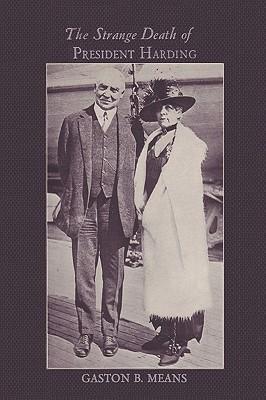
Means wrote that he was the “only living human being who held accurate knowledge of dangerous truths concerning social, political, financial and international secrets of President Harding and his Ohio gang associates.”
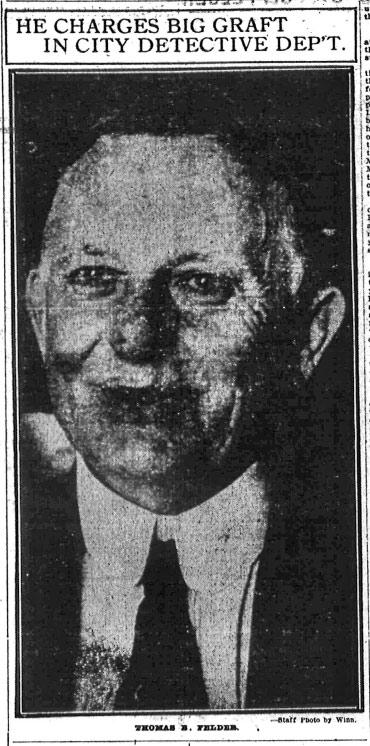
The others who knew of the secrets—he listed: Veterans Bureau legal adviser Charles F. Cramer, Jess Smith, a Boston lawyer named Thurston, Connecticut Republican Party boss John T. King, Justice Department investigator/agent C. F. Hately, Warren G. Harding, Mrs. Florence Kling Harding, homeopathic physician (and Army Medical Corps General) Charles Sawyer, and Colonel (and political fixer) Thomas B. Felder—all supposedly committed suicide or died suddenly.[30]
Colonel Felder, who had been indicted in a mail-fraud scheme with others in the Ohio Gang, was said to have died from alcohol poisoning, though no autopsy was performed.
He had been a close friend of Harry Daugherty and Jess Smith, and was traveling to Atlanta to provide Means with key incriminating documents about them when he died. Means said that, had Felder lived, he was “prepared and was just about to reveal to the world the multiple scandals during the era referred to by John W. Davis, the 1924 Democratic Party candidate for the presidency, in his acceptance speech, as “those melancholy years.”[31]
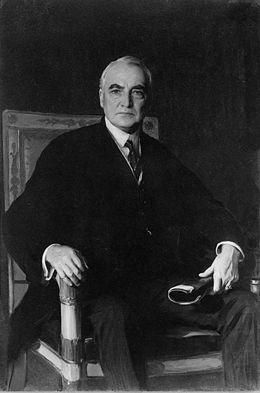
The way Means depicted it, Harding was good looking, but easily manipulable, and “always blind to the faults of his friends—everyone knows that.”
In 1893, Harding had first met Daugherty, a lobbyist and two-term state representative who made him run for lieutenant governor of Ohio and backed his political career. Daugherty was fond of saying that Harding “looks like a president and has the regal look of a king.”[32]
When Florence hired Means to look into her husband’s affair with Nan Britton—a pretty blond 30 years younger than Warren—he uncovered that the affair had begun when Warren was the owner of The Marion Daily Star, and Britton was only 14 or 15 years old. She would come into the newspaper offices and sit on Harding’s lap and he would fondle her breasts.
When Florence confronted Harding with her knowledge of Ms. Britton, Warren, dramatically, said to his wife: “You have ruined me, you have ruined me and your contemptible detective [Mr. Means].”[33]
Florence subsequently asked Warren what he would do with her now and Warren said “you can do what you damn please.” Florence replied: “Warren—Warren—think of our young love,” to which Warren responded, “in truth, I never loved you. You ran me down.”

Facing impeachment, Harding’s health began to suffer; Florence said he “lost his jovial, confident demeanor and was looking and acting more and more like a hounded animal.”[34]
Means said that, contrary to the reports of a heart attack or stroke, Warren’s death in San Francisco’s Palace Hotel was from ptomaine poisoning. Tellingly, the newspapers noted “how wonderfully well Mrs. Harding was bearing up under the tremendous shock [of her husband’s death].”[35]
Means had grown very close to Florence, who told him the whole story of her involvement.
She said that she had been alone with Warren before his death and that, after he drank the poison, he lay back and rested, and then suddenly opened his eyes and looked into her face, before nodding off for eternity.
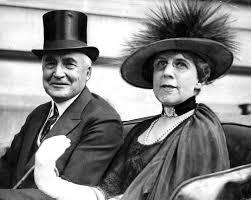
Means allegedly asked: “Do you think he knew?” to which Florence replied: “Yes.”[36]
Afterwards, Florence prevented an autopsy by guarding Warren’s body and claiming that she did not want it cut up. Florence allegedly told Means that, by killing her husband, she had fulfilled her destiny and had no regrets.
That destiny was as the guardian and protector of her husband’s career—till death do us part.
True Crime Writer Confirms Means’ Story Over Daugherty’s
Harry Daugherty claimed that there was no record of Means visiting the White House in the White House logs so his story must be false (a claim endorsed by various historians).[37]
However, Means would have most likely used a pseudonym and true crime writer Alan Hynd confirmed that Means’ story was true.
In a 1958 book Murder, Mayhem and Mystery, he wrote that Florence Harding had asked William J. Burns for a trusted man to investigate Warren’s affair with Nan Britton, and he sent her Means.[38]
According to Hynd’s sources, the White House meeting occurred in the second floor sitting room, and Ms. Harding instructed Means to find out everything he could about Nan Britton.
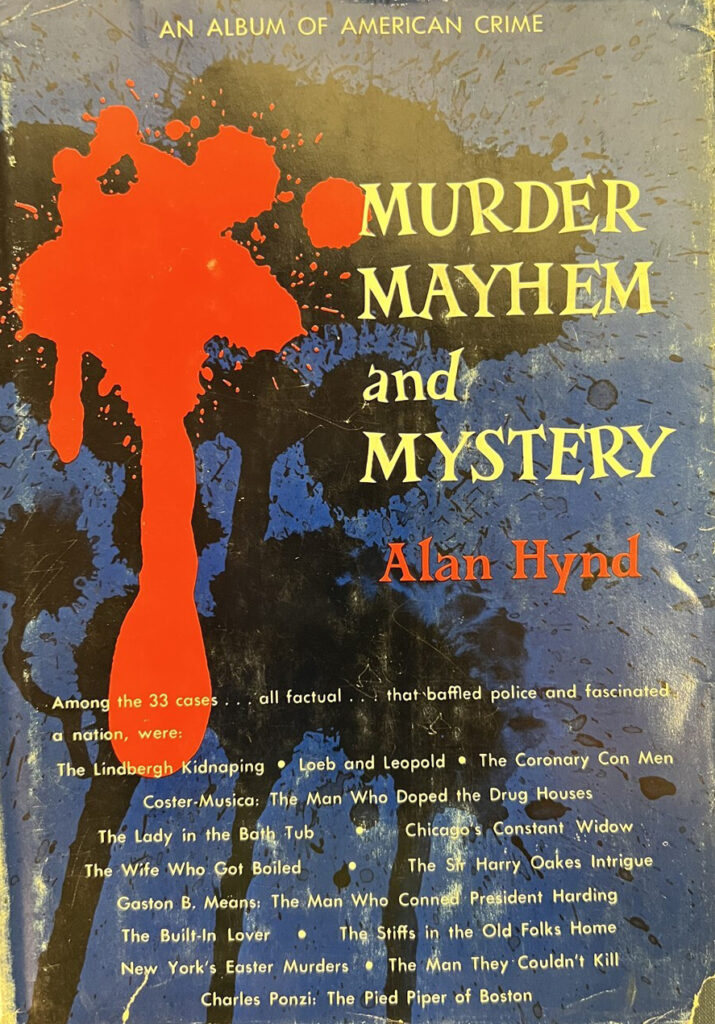
Hyde said that Means rented an apartment across the street from where she lived in Chicago and paid an elevator operator there to enter her apartment when she was out at the movies. There he found a collection of postcards addressed to Harding and Britton’s diary which had intimate details of the affair, which started after Britton had submitted some poems that she wrote to the Marion Star.
Back in Washington, Warren Harding is said to have walked in on a meeting between Means and Ms. Harding where Means was presenting his findings to her.
Warren responded by having Means fired from his job with the Bureau of Investigation. In an attempt to get Means to hand over Britton’s diaries, Warren further paid a visit to Means’ apartment on 16th street near the White House.
Means agreed to give the diaries in exchange for a job as a special agent for the enforcement of prohibition, a lucrative job because of the potential for graft.[39]
Members of Harding’s secret service detail later confirmed that they had indeed taken Harding to Means’ apartment. Means’ butler also testified that Harding had visited Means’ apartment.
Hynd in his account additionally published letter of recommendation for Means’ appointment as special agent for the enforcement of prohibition, which resulted from his having blackmailed the president.[40]
The Verdict of History Becomes Clearer
However one assess Means character, it is clear in hindsight that most aspects of his story—down to the names of the people who died suspiciously—are true.
Professor Phillip G. Payne wrote that even a historian who disparaged Means as a liar “described the scene of Harding’s burial in a way that left open the possibility that something was amiss.”[41]
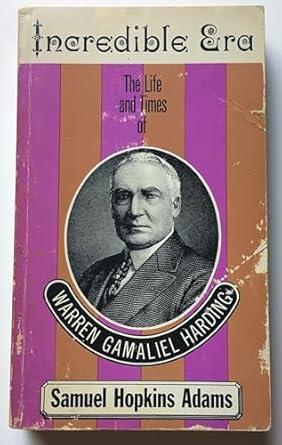
Samuel Hopkins Adams wrote in his 1939 book The Incredible Era that he was told by a jurist who knew Warren and Florence Harding that Florence had killed Warren. Numerous friends of the Hardings had also told him that they were convinced Florence had poisoned Warren to save him from impending disgrace with the exposure of the Nan Britton affair, the Teapot Dome scandal, illegal stock trades he had engaged in under a psuedonym and other crooked practices in his administration.[42]
Adams pointed out that, while in Seattle just before going to San Francisco, Harding fell mysteriously ill with food poisoning from eating spoiled crabs. No one else in his party experienced the same poisoning.
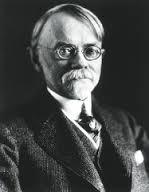
Additionally, Harding’s doctor, Charles Sawyer, died one year after Warren’s death from chillingly similar circumstances (suspected arsenic poisoning) at a time when Florence was visiting him at his Ohio farm. The implication was that Dr. Sawyer was “put out of the way because he knew too much.”[43]
In 2018, descendants of Palace Hotel co-founder William Sharon, a U.S. senator from Nevada, told the Marin Independent Journal that, when Sharon’s granddaughter, Janet Johnston, entered the Hardings’ room and saw that Warren was dead, Florence flew into a rage, claiming that the hotel’s food had killed her husband and that she was going to sue.
Janet, however, told Florence that the claim was ludicrous as no one else staying at the hotel suffered from any food-borne illnesses.
When Janet picked up a half-filled glass near President Harding’s bed, she found that it had a noxious odor and suspected that whatever was in the glass had something to do with his death.
Janet told Florence that she intended to have the contents of the glass analyzed, at which point Florence snatched the glass away and managed to pour whatever was in it down the drain. She then turned to Janet and said “there will be no lawsuit.”[44]
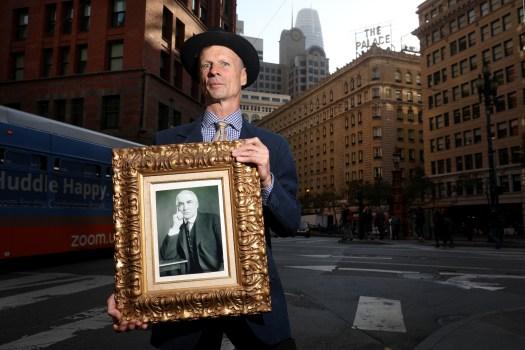
Florence’s behavior in this description make her look guilty of murdering her husband and covering it up—just as Means had described it in his 1930 book that J. Edgar Hoover, Harry Daugherty and The New York Times claimed was a hoax.
The bottom line is that, while Means may not have been a saint, his historical reputation deserves to be reconsidered, if not rehabilitated.
People can learn from his story how the smears of one generation can spill over into the next—and how whistleblowers are often unjustly treated and disparaged, with negative consequences for society as a whole.

An example CovertAction Magazine recently spotlighted was the disparagement of CIA whistleblowers Bill Hamilton and Michael Riconosciuto in an Emmy-winning Netflix film titled American Conspiracy: The Octopus Murders. CovertAction Information Bulletin founder Philip Agee was persecuted as a CIA whistleblower and forced to live for years on the run after exposing serious state crimes. A 2021 book sustained the false accusation that he was a foreign agent, though the book characteristically offers no proof to back up its thesis. ↑
Nathan Masters, Crooked: The Roaring 20s Tale of a Corrupt Attorney General, a Crusading Senator, and the Birth of the American Political Scandal (New York: Hachette Books, 2023), 163. In a letter to Prohibition Commissioner Roy A. Haynes, Burns described Means as a “resourceful, courageous man” who had “made some very powerful enemies by the courageous manner in which he has gone after crooks.” Edwin P. Hoyt in Spectacular Rogue: Gaston B. Means (Indianapolis, IN: Bobbs-Merrill Co., 1963), 152. ↑
Hank Messick, John Edgar Hoover: A critical examination of the Director and of the continuing alliance between crime, business, and politics (New York: David McKay, 1972), 36; Julie Means Kane, My Life with Gaston B. Means, As Told by His Wife, Julie P. Means (self-published, 2021), 56, 57. Means was charged with taking bribes from bootleggers, forging a senator’s name and conspiring to bribe high government officials to block prosecution of a mail fraud case. McLean accused Means of swindling her of $104,000 while investigating the Lindbergh baby kidnapping. ↑
Evelyn Walsh McLean was a mining heiress. Alice Roosevelt said of Ned McLean, who was implicated in all kinds of corruption schemes associated with the Harding administration and Ohio gang, that he had “no chin and no character.” ↑
J. Edgar Hoover, with Courtney Ryley Cooper, “The Amazing Mr. Means,” Reader’s Digest, March 1937, 30-33; Gaston B. Means, as told to May Dixon Thacker, The Strange Death of President Harding (New York: Guild Publishing Corporation, 1930). Hoover cited the fact that May Dixon Thacker renounced her own book as a hoax. However, Dixon may have been directly or indirectly pressured to do so; if that were the case, it would not be the first or last time that happened. ↑
S. T. Williamson, “The Tragedy of Harding and His Administration; In ‘Incredible Era,’ Samuel Hopkins Adams Tells the Story in Its Dramatic Entirety,” The New York Times, November 5, 1939, https://www.nytimes.com/1939/11/05/archives/the-tragedy-of-harding-and-his-administration-in-incredible-era.html; Harry M. Daugherty, with Thomas Dixon, The Inside Story of the Harding Tragedy, rev ed. (Belmont, MA: Western Islands, 1975), 225, 226. At the time of The Strange Death of President Harding’s release, Daugherty issued a statement to the press in which he said that “the attack upon Mr. Harding and President Harding both of whom are dead, is a disgrace to America, but as long as people live and thrive on gossip and falsehood, and as long as unscrupulous, sensational publications spread such falsehoods, the standard of American citizenship will be lowered. The book will appeal to those envious souls who love to see men in high places befouled when they cannot be broken and will put soiled money in the pockets of the author who is just returned from the penitentiary, where in my routine of duty I was compelled to send him.” Historians have for years parroted Daugherty and Hoover’s views. Philip G. Payne in a generally illuminating study, for example, called The Strange Death of Warren Harding a “work of fiction.” (Philip G. Payne, Dead Last: The Public Memory of Warren G. Harding’s Scandalous Legacy (Athens: Ohio University Press, 2008). ↑
Hoyt, Spectacular Rogue, 9. In a laudatory review of Hoyt’s book, Time Magazine called Means a “preposterous liar and swindler..whose career in rascality was well under way at the age of ten, when he used to go around eavesdropping on prospective jurors for his father [a lawyer].” ↑
Francis Russell, The Shadow of Blooming Grove: Warren G. Harding in His Times (New York: McGraw-Hill, 1968), xv; Robert H. Ferrell, The Strange Deaths of President Harding (Columbia: University of Missouri Press, 1996), 40; Dean Jobb, “The Life and Times of Gaston Means, One of the Greatest Rogues in American History,” Crime Reads, November 15, 2024, https://crimereads.com/gaston-means-american-history/; Historian Robert K. Murray, in The Harding Era: Warren G. Harding and His Administration (Minneapolis: University of Minnesota Press, 1969), characteristically called Means a “perjurer, thief, convict and swindler.” ↑
Jobb, “The Life and Times of Gaston Means”; Messick, John Edgar Hoover, 36; Laton McCartney, The Teapot Dome Scandal: How Big Oil Bought the Harding White House and Tried to Steal the Country (New York: Random House, 2009), 233. Department of Justice whistleblowers specified that Daugherty ignored 55 anti-trust cases referred to it by the Federal Trade Commission for prosecution. Masters, Crooked, 126, 226. ↑
Hoyt, Spectaclar Rogue, 229. ↑
Frederick Lewis Allen, Only Yesterday: An Informal History of the 1920s (New York: Perennial Classics, 1931), 130, 131, 132; Masters, Crooked, 174. Daugherty’s brother Mal was involved in some of the bribery schemes. The DOJ dropped the charges against Standard Aircraft after Means said he received a $10,000 bribe through a Japanese financial conglomerate, Mitsui Co., which represented the firm. ↑
Samuel Hopkins Adams, Incredible Era (New York: Capricorn Books, 1939), 322; Jobb, “The Life and Times of Gaston Means, One of the Greatest Rogues in American History”; McCartney, The Teapot Dome Scandal, 72, 73; Masters, Crooked, 124, 173. A popular saying at the time was: “who spilled the beans, Gaston Means.” Burton Wheeler was among the congressmen subjected to illegal surveillance. ↑
Allen, Only Yesterday; Adams, Incredible Era; Masters, Crooked, 174; Hoyt, Spectacular Rogue, 233, 247. The conservative Atlanta Constitution called Means’ testimony “disgraceful.” Particular outrage was reserved for the fact that he had the nerve to attack Andrew Mellon, who was at the time among the richest men in the U.S. ↑
Phillip G. Payne, Dead Last: The Public Memory of Warren G. Harding’s Scandalous Legacy (Athens: Ohio University Press, 2009), 146; Daugherty, The Inside Story of the Harding Tragedy. Echoing Daugherty’s view, Edwin P. Hoyt accused Means of turning the Walsh-Wheeler committee into a “ribald circus,” and said that he had “bedeviled two Cabinet officers and helped destroy the careers of one of these.” Hoyt, Spectacular Rogue, 10. ↑
McCartney, The Teapot Dome Scandal, 64. ↑
Daugherty, The Inside Story of the Harding Tragedy, 205. For more on Wheeler’s career and the smears directed against him, see Marc C. Johnson, Political Hell-Raiser: The Life and Times of Senator Burton K. Wheeler of Montana (Norman: University of Oklahoma Press, 2020). ↑
Ibid., 210. Daugherty wrote that every word Means said before the Wheeler committee was a lie. He claims that Means himself wrote him a letter renouncing much of his testimony. ↑
Masters, Crooked, 180. ↑
Ibid., 60, 85; McCartney, The Teapot Dome Scandal, 253, 254; Johnson, Political Hell-Raiser. The Minnesota congressman was Oscar Keller. Daugherty also sent Bureau of Investigation agents to threaten and harass the family of Senator Thomas Walsh. Walsh stated that “the Department of Justice and Bureau of Investigation are hand-picked by Daugherty and rotten to the core.” ↑
McCartney, The Teapot Dome Scandal, 64. McLean, of course, made sure that the story about the dead girl and illegal activity going on at the Ohio gang party house was not reported on in the Post. ↑
Daugherty, The Inside Story of the Harding Tragedy, 231. ↑
Ibid., 233. ↑
Means, The Strange Death of President Harding; Lewis, Only Yesterday, 133. ↑
Adams, Incredible Era, 27, 308; Messick, John Edgar Hoover, 25. ↑
Means, The Strange Death of President Harding, 226; Messick, John Edgar Hoover, 25. ↑
Johnson, Political Hell-Raiser, 50, 51. ↑
In Donald Jeffries, Crimes and Cover-Ups in American Politics, 1776-1963, with foreword by Ron Paul (New York: Skyhorse Press, 2019), 203. True crime writer Alan Hynd suggests that Means was himself the killer on behalf of the Ohio Gang, which then covered it up. As evidence, he says that Means’ butler saw him leaving his apartment in the middle of the night and walking in the street when this was not his normal routine (to take midnight walks). Additionally, a milkman spotted Means getting ot of a taxi cab at 6 AM. Means was accused of the crime by Evalyn Walsh McLean, the wife of the Washington Post editor Ned, whom Means later allegedly conned out of $104,000 by falsely claiming that he had information on the Lindbergh baby kidnapping that would give The Washington Post a scoop. Alan Hynd, Murder, Mayhem and Mystery: An Album of American Crime (New York: A.S. Barnes Co., 1958), 398. ↑
Eugene P. Trani and David L. Wilson, The Presidency of Warren G. Harding (Lawrence, KS: University Press of Kansas, 1977), 178; Jeffries, Crimes and Cover-Ups in American Politics, 1776-1963, 203. Daugherty had tried to discredit Means by claiming he had fabricated allegations of the affair when Daugherty had himself worked to cover it up, knowing that Harding had fathered a love child with Britton. Daugherty knew that Harding was a serial adulterer. Masters, Crooked, 25. ↑
Means, The Strange Death of President Harding, 25. ↑
Lewis, Only Yesterday, 133. Lewis concluded that the Harding administration was responsible in two short years and five months for “more concentrated robbery and rascality than any other in the whole history of the federal government.” ↑
Means, The Strange Death of President Harding, 16. ↑
Means, The Strange Death of President Harding, 49. ↑
Ibid. According to Means, Harding at that point threatened him, telling him he would be placed under surveillance and indicted, which he eventually was. ↑
Means, The Strange Death of President Harding, 260. ↑
Other reports described Florence as being “stoic” during her husband’s funeral. ↑
Means, The Strange Death of President Harding, 263. ↑
Daughterty, The Inside Story of the Harding Tragedy, 226. ↑
Hynd, Murder, Mayhem and Mystery, 386-392. ↑
According to Hynd, Means made over $7 million in bribes from bootleggers in 1922, a fortune that allowed him to lead a life of luxury in which he purchased three custom buuilt cars and a yacht, to hire a large domestic staff for his home, and to rent expensive apartments for various mistresses that he took. Hynd, Murder, Mayhem and Mystery, 386-392. ↑
Hynd, Murder, Mayhem and Mystery, 386-392. A graduate of Columbia University, Hynd was known as a top crime writer in the 1940s and 1950s who wrote for Readers Digest, the American Mercury and Saturday Evening Post. According to Hynd, Means demanded that Harding pay her $50,000 for the information on Britton that he provided to her. ↑
Payne, Dead Last, 146. Payne was referring to historian Francis Russell. ↑
Adams, Incredible Era, 378. See also McCartney, The Teapot Dome Scandal, 148. McCartney makes clear that Harding was not aloof but knew all about the corrupt practices of the “Ohio Gang.” ↑
Adams, Incredible Era, 378; Oswald Garrison Villard, Fighting Years: Memoirs of a Liberal Editor (New York: Harcourt, Brace and Company, 1939); Edward B. MacMahon and Leonard Curry, Medical Cover-Ups in the White House (Washington, D.C.: Farragut Publishing, 1987), 89. Frederick Lewis Allen, the editor of Harper’s Magazine who wrote a popular history of the 1920s, also believed that there was foul play in Harding’s death. Florence Harding herself died a suspicious death one year after Warren’s death and after she had been seen burning incriminating documents back in Marion, Ohio. ↑
Thomas Peele, “San Francisco hotelier’s heir says Harding was assassinated,” Marin Independent Journal, September 3, 2018, https://www.marinij.com/2018/09/03/san-francisco-hoteliers-heir-says-harding-was-assassinated/. ↑
CovertAction Magazine is made possible by subscriptions, orders and donations from readers like you.
Blow the Whistle on U.S. Imperialism

Click the whistle and donate
When you donate to CovertAction Magazine, you are supporting investigative journalism. Your contributions go directly to supporting the development, production, editing, and dissemination of the Magazine.
CovertAction Magazine does not receive corporate or government sponsorship. Yet, we hold a steadfast commitment to providing compensation for writers, editorial and technical support. Your support helps facilitate this compensation as well as increase the caliber of this work.
Please make a donation by clicking on the donate logo above and enter the amount and your credit or debit card information.
CovertAction Institute, Inc. (CAI) is a 501(c)(3) non-profit organization and your gift is tax-deductible for federal income purposes. CAI’s tax-exempt ID number is 87-2461683.
We sincerely thank you for your support.
Disclaimer: The contents of this article are the sole responsibility of the author(s). CovertAction Institute, Inc. (CAI), including its Board of Directors (BD), Editorial Board (EB), Advisory Board (AB), staff, volunteers and its projects (including CovertAction Magazine) are not responsible for any inaccurate or incorrect statement in this article. This article also does not necessarily represent the views the BD, the EB, the AB, staff, volunteers, or any members of its projects.
Differing viewpoints: CAM publishes articles with differing viewpoints in an effort to nurture vibrant debate and thoughtful critical analysis. Feel free to comment on the articles in the comment section and/or send your letters to the Editors, which we will publish in the Letters column.
Copyrighted Material: This web site may contain copyrighted material the use of which has not always been specifically authorized by the copyright owner. As a not-for-profit charitable organization incorporated in the State of New York, we are making such material available in an effort to advance the understanding of humanity’s problems and hopefully to help find solutions for those problems. We believe this constitutes a ‘fair use’ of any such copyrighted material as provided for in section 107 of the US Copyright Law. You can read more about ‘fair use’ and US Copyright Law at the Legal Information Institute of Cornell Law School.
Republishing: CovertAction Magazine (CAM) grants permission to cross-post CAM articles on not-for-profit community internet sites as long as the source is acknowledged together with a hyperlink to the original CovertAction Magazine article. Also, kindly let us know at info@CovertActionMagazine.com. For publication of CAM articles in print or other forms including commercial internet sites, contact: info@CovertActionMagazine.com.
By using this site, you agree to these terms above.
About the Author
Jeremy Kuzmarov holds a Ph.D. in American history from Brandeis University and has taught at numerous colleges across the United States. He is regularly sought out as an expert on U.S. history and politics and co-hosts a radio show on New York Public Radio and on Progressive Radio News Network called “Uncontrolled Opposition.”
He is Managing Editor of CovertAction Magazine and is the author of eight books, including Obama’s Unending Wars (Clarity Press, 2019), The Russians Are Coming, Again, with John Marciano (Monthly Review Press, 2018), Warmonger. How Clinton’s Malign Foreign Policy Launched the U.S. Trajectory From Bush II to Biden (Clarity Press, 2023); with Dan Kovalik, Syria: Anatomy of Regime Change (Baraka Books, 2025), and Political Assassinations in America: The Intricate Nexus of Deep State Crime (Clarity Press, 2026).
Besides these books, Kuzmarov has published hundreds of articles and contributed to numerous edited volumes, including one in the prestigious Oxford History of Counterinsurgency .
He can be reached at jkuzmarov2@gmail.com and found on substack here.








jg, thanks for your comments on numerous articles. to address your point, much of the information in The Strange Death of President Harding is actually corroborated through other sources. The corruption of the Harding administration and Ohio gang that Means goes into is well documented. The whole point of this article is that whistleblowers are often denigrated and maligned to protect the powerful people whose corruption and crimes they expose. Historians contribute to the smear campaign and whistleblowers reputation remained blackened when they are the ones exposing corruption. The term conspiracy theory is often invoked as part of the smear campaign when conspiracies by the rich and powerful occur throughout history and are documented to have occurred. See my new book related to this: https://www.amazon.com/Political-Assassinations-America-Intricate-Nexus/dp/1963892348 Jeremy Kuzmarov
This article contains a lot of truthful information, so I do not want to be too critical and am praising the excellent parts of this article. But I am also bringing attention to this subject as shown below:
The Strange Death of President Harding (1930) is one of the most notorious and sensationalized pieces of political gossip in American history. While it was a massive bestseller upon release, it is entirely discredited today as a work of historical fiction and financial exploitation. The Premise and Claims The book claims to expose the “truth” behind the sudden 1923 death of President Warren G. Harding. Its most explosive allegation is that First Lady Florence Harding poisoned her husband to prevent him from being impeached or disgraced by unfolding political scandals (like Teapot Dome) and his own extramarital affairs .Why It Lacks Credibility The Author’s Reputation: Gaston B. Means was a notorious con man, fraudster, and former heavily corrupted Department of Justice operative. He wrote the book primarily for financial gain while capitalizing on public suspicion. The Ghostwriter’s Recantation: Shortly after publication, ghostwriter May Dixon Thacker publicly recanted the book. She admitted she had been duped by Means, realizing his “evidence” and diaries were completely fabricated. Medical Reality: Modern historians and medical experts agree that Harding died of a sudden heart attack or stroke, driven by high blood pressure and heart disease, not poison. Verdict As History: Completely worthless. It is a fabricated account built on hearsay and invented evidence. As Pop Culture Artifact: Fascinating. It serves as an excellent case study in how public distrust, media sensationalism, and political scandal can allow conspiracy theories to thrive.