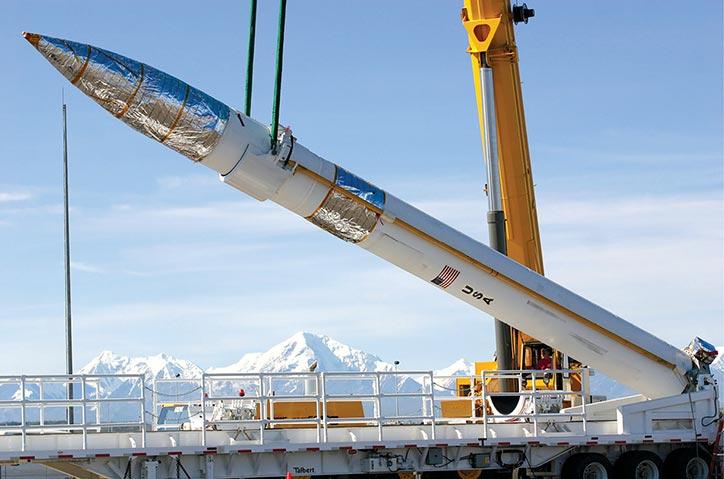
In early March, Alaska Senator Dan Sullivan (R), who chairs the Senate Committee on Commerce, Science and Transportation’s Subcommittee on Coast Guard, Maritime and Fisheries, convened a hearing at the University of Alaska at Anchorage focused on Arctic security infrastructure.
Sullivan stated in his remarks that the U.S. was “undergoing the largest military build-up and expansion, billions of dollars in investment in Alaska, since World War II,” adding that “my belief is we’re doing a lot, but we need to do more.”
To back up this latter assessment, Sullivan presented charts showing joint Russian-Chinese strategic bomber flights and naval task force operations near Alaska and claimed that Russia continues to expand its Arctic footprint with 54 icebreakers, many nuclear-powered and weaponized, along with deep-water ports, air fields and forward operating bases.
Additionally, Sullivan said that China, despite having no Arctic territory, calls itself a “near-Arctic state” and is rapidly expanding its polar capabilities, with its research vessels operating off Alaska’s coast throughout last summer, likely for military purposes.[1]
Sullivan previously told The New York Times: “Ukraine just demonstrates even more, what matters to these guys [Russians] is presence and power. And when you start to build ports, when you start to bring up icebreakers, when you start to bring up Navy shipping, when you have over 100 fifth-generation fighters in the Arctic in Alaska, we’re starting to now talk Putin’s language.”
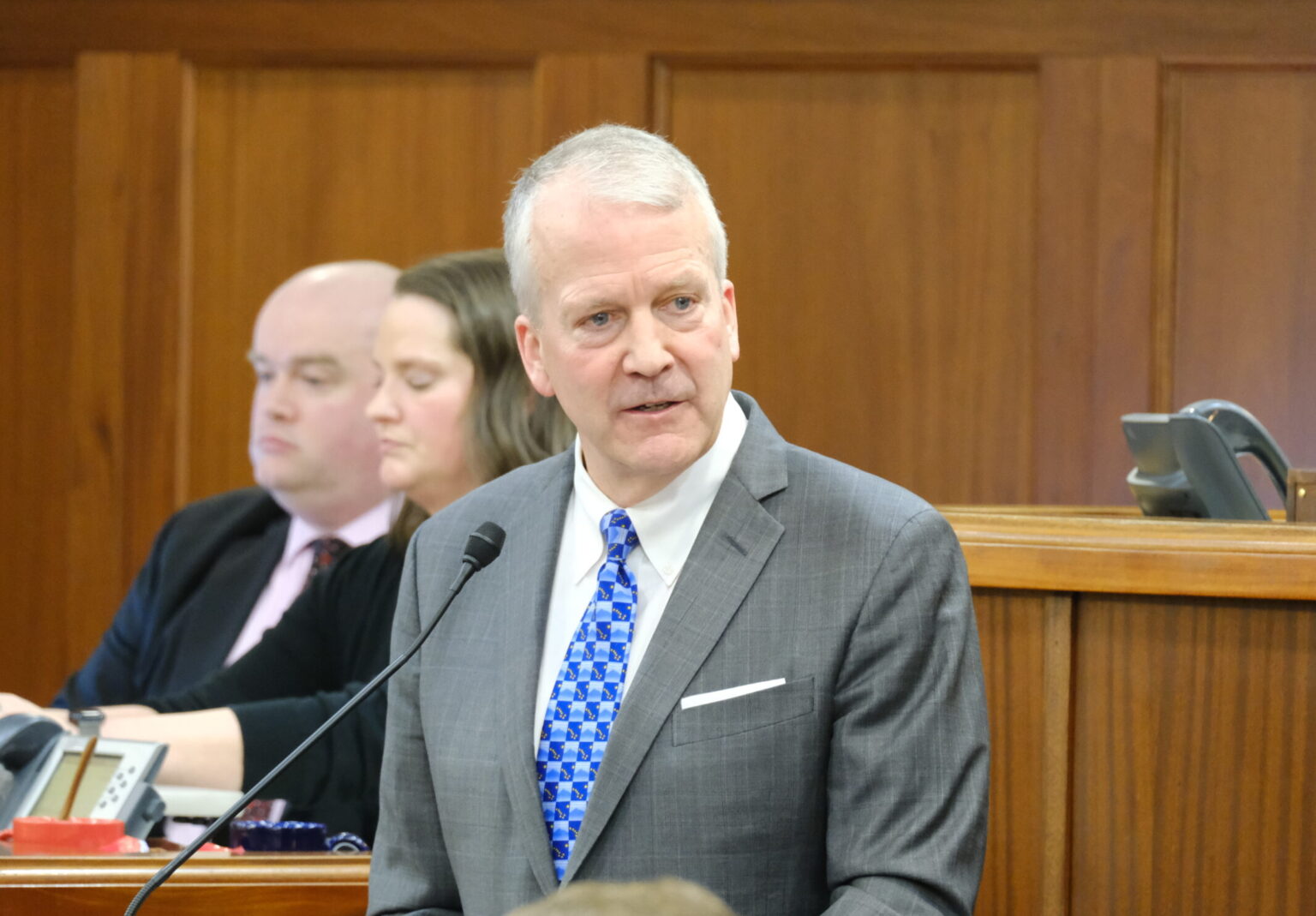
Sullivan also sits on the Senate Armed Services Committee which, in June advanced the $1.15 trillion 2027 National Defense Authorization Act (NDAA) authorizing a historic $2.6 billion in military construction and projects specifically for Alaska and requiring the Pentagon to create a plan to fortify and staff previously abandoned armories in rural Alaska.
Sullivan called this year’s NDAA “a grand-slam home run,” whose $2.6 billion military investment, “by far the largest investment ever in our great state…bolster[s] Alaska’s role as the cornerstone of America’s missile defense system, the hub of Arctic and Indo-Pacific air combat power, and a vital platform for expeditionary forces. A centerpiece of this year’s NDAA is the beginning of the historic, multi-year, $7 billion ‘Fighter Town USA’ at JBER [Joint Base Elmendorf-Richardson], which will build 26 state-of-the-art facilities to make JBER the most strategic base in the world.”
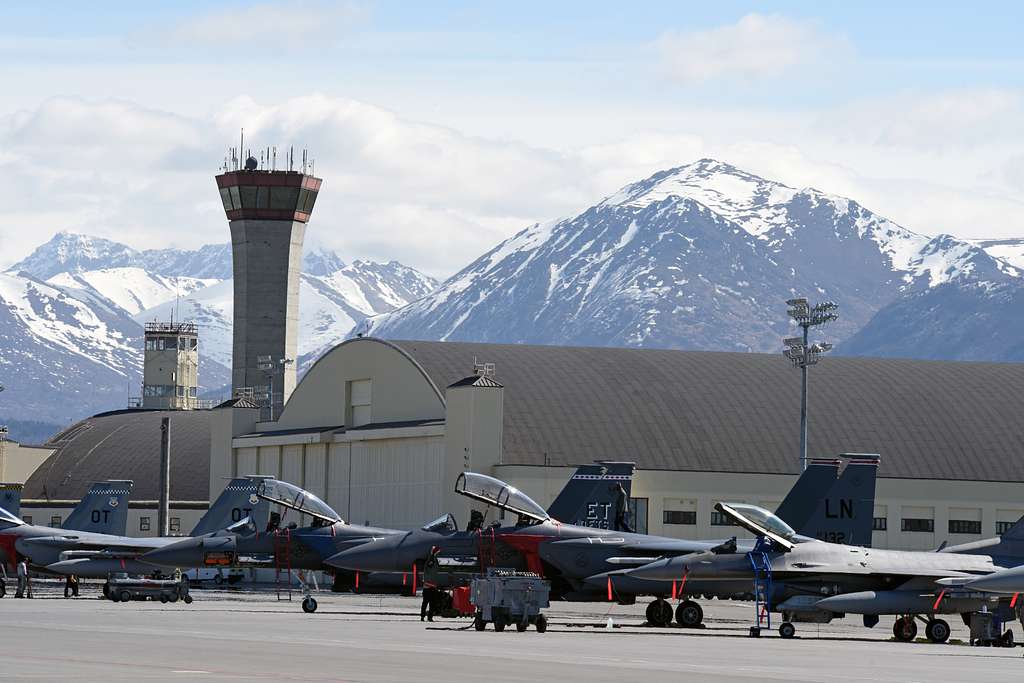
JBER currently hosts F-22 Stealth planes and should soon be able to host the F-47 Stealth fighter jet after upgrades to the world-class base under the Fighter Town Project are completed.
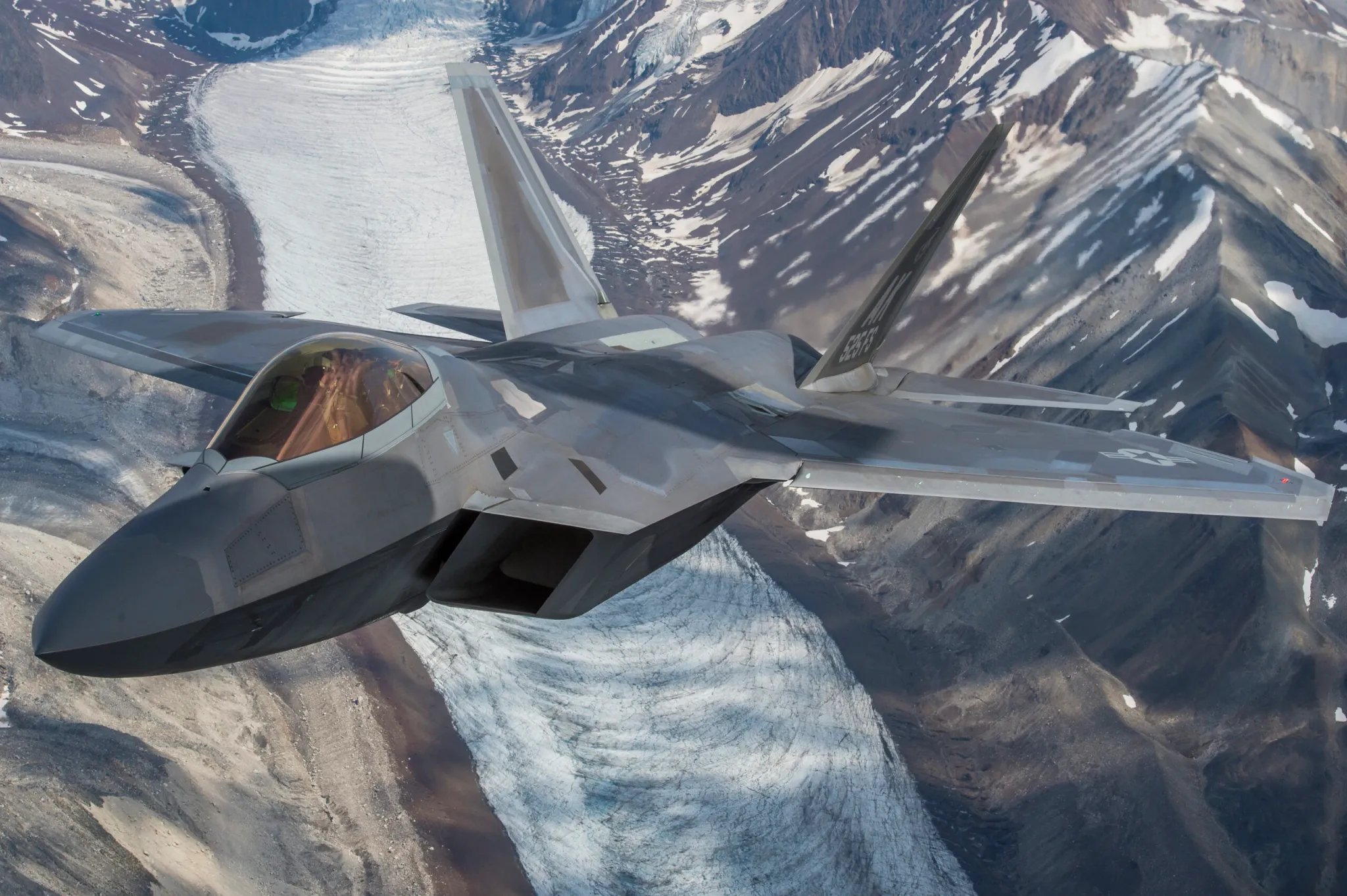
In March 2022, The New York Times reported that the Air Force had transferred dozens of F-35 fighter jets to Alaska and announced that Alaska would host “more advanced fighters than any other location in the world.”
Alaska is also poised to host some of the most advanced U.S. military ships, including the Coast Guard’s newest polar icebreaker, the Storis, which is docked at Auke Bay in Juneau.
Some $25 billion has been budgeted for Coast Guard expansion in Alaska—the largest in the service’s history—which will allow for 16 new icebreakers, 22 new cutters and 40 new helicopters.
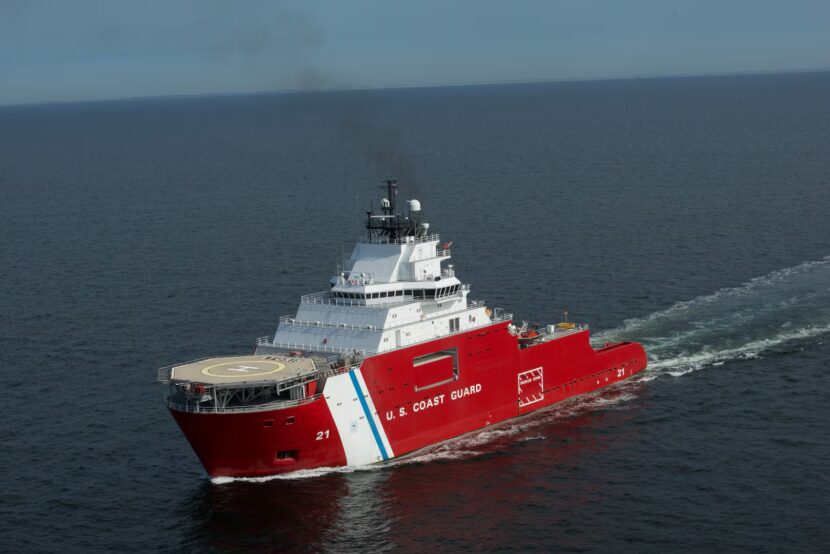
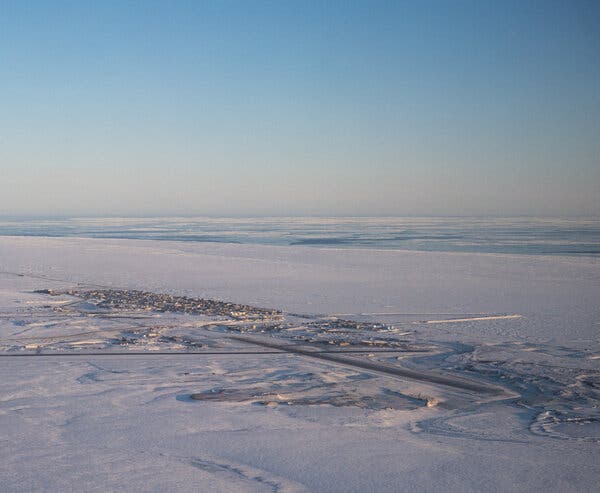
On Alaska’s western coast, $400 million has been budgeted for the Port of Nome to begin construction of the nation’s first Arctic deep-water port that will serve as a forward staging hub for the Coast Guard and Navy. General Gregory Guillot, the NORTHCOM commander, called the Port of Nome “a game changer for operations in the Arctic,” Sullivan said in the hearing.
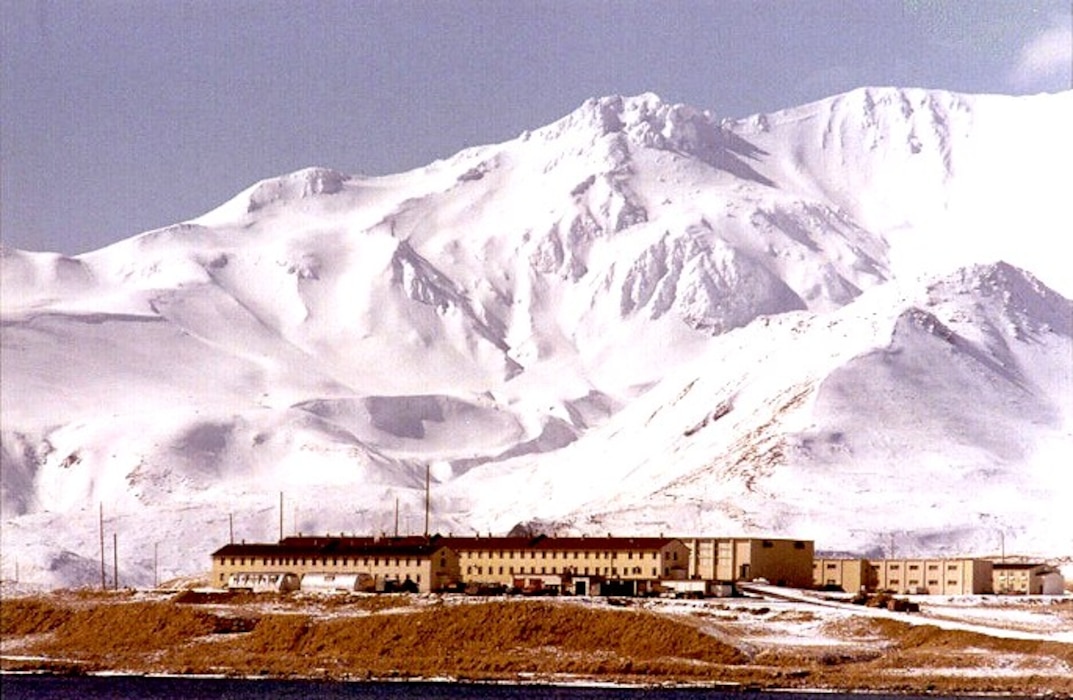
Further, Sullivan pointed out that the naval base at Adak, which sits at what he called the “strategic hinge between the Arctic and Indo-Pacific,” received $115 million to begin reopening. Funded in part through the so-called “One Big, Beautiful Bill Act,” the project involves all military services as well as the Aleut Corporation and the State of Alaska, which contributed $30 million to repave runways, Sullivan said.
“The Most Strategic Place on Earth”
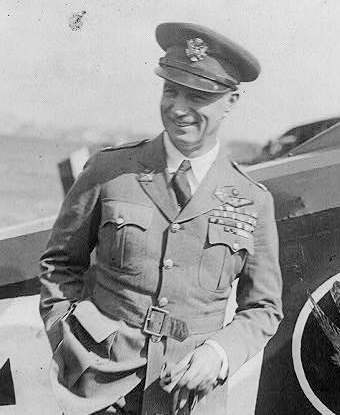
Brigadier General Billy Mitchell, the father of the U.S. Air Force who helped oversee the planting of a telegraph line in Alaska in 1901, called Alaska “the most strategic place on earth,” in testimony before Congress in 1935.[2]
The reason for this statement is that Alaska is the closest U.S. location to the center of the Northern Hemisphere, sits astride the Bering Strait chokepoint and Great Circle Routes between North America and Asia, and makes a perfect power projection platform from a military standpoint like with Hawaii.
Rich in minerals and oil, Alaska’s geo-strategic importance is further enhanced by the fact that it lies at the center of existing commercial shipping lanes between East and West used by shipping companies, including those run from Russia and China, which could be opened further with the retreat of ice coverage in the Arctic Ocean.
The U.S. Geological Survey estimates that 13% of the undiscovered oil and 30% of the gas worldwide is in the Arctic, along with coal, rare-earth metals and a host of other natural resources.
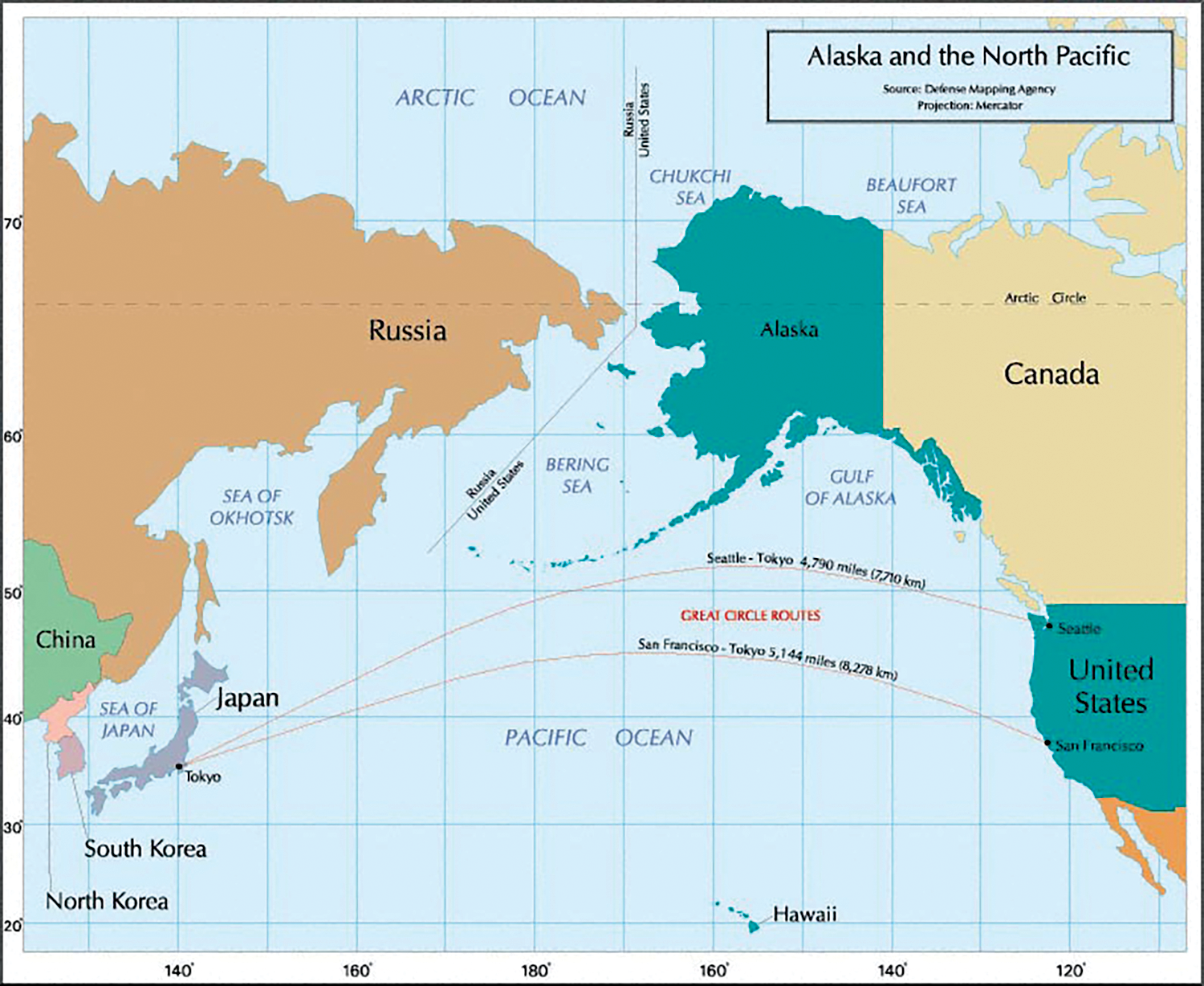
Claims to the resources are made under the auspices of the UN, which then adjudicates them according to the UN Convention on the Law of the Sea. The problem is that many of the claims overlap, complicating the UN’s ability to judge in a manner satisfactory to all the claimants.
The Russian Federation currently derives an estimated 20% of its gross domestic product from economic activity in the Arctic—with the U.S. intent on reducing Russian access as part of a larger foreign policy effort to try to weaken Russia as a potential geo-political rival and to in turn dominate the oil-rich Central Asian region.
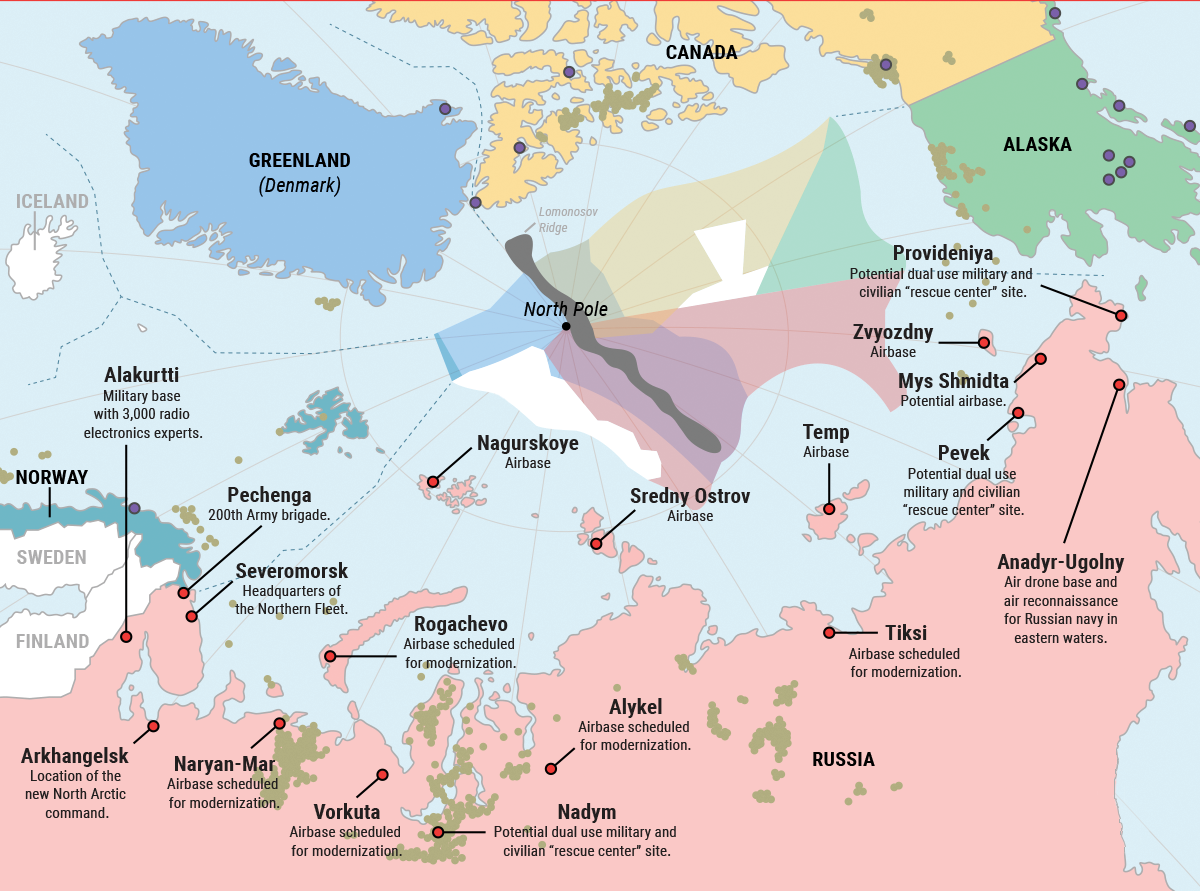
To try to offset the U.S. and secure its economic interests, the Russians have established a program to establish new or refurbish abandoned military bases in the Arctic, and have bolstered the Russian fleet of nuclear-fueled ice-breakers—which the 2027 NDAA aims to counteract.[3]
Already Most Militarized State
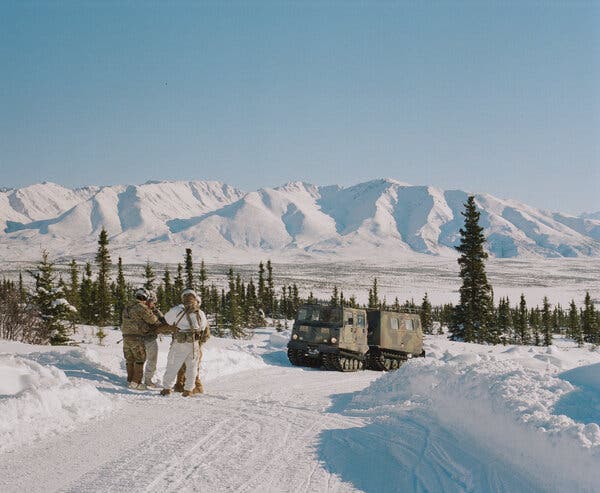
Prior to the most recent military build-up, Alaska was already one of the nation’s most militarized states, with more than 20,000 active-duty personnel assigned to places such as Eielson Air Force Base and Fort Wainwright in the Fairbanks area, and Coast Guard Air Station Kodiak.
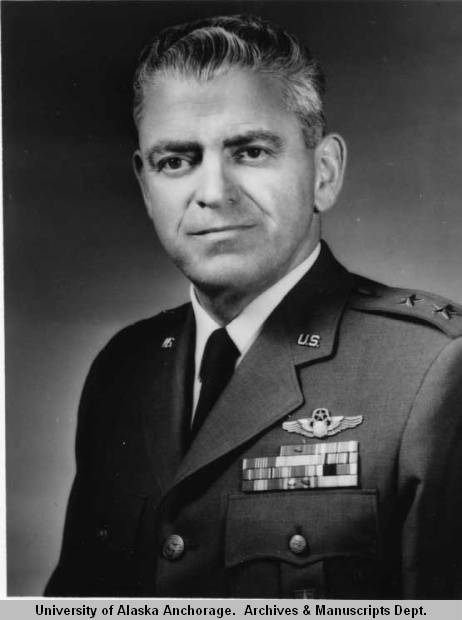
Major General James Jensen, commander of the Alaskan Air Command from 1963 to 1966, described Alaska as a “piece of U.S. real estate increasingly attractive to military planners…a key area in U.S. military strategy offering a base for aerial resupply, reinforcement and redeployment of either air or ground forces to Europe, North Africa, or the Middle East or to the Far East as the world situation may dictate.”[4]
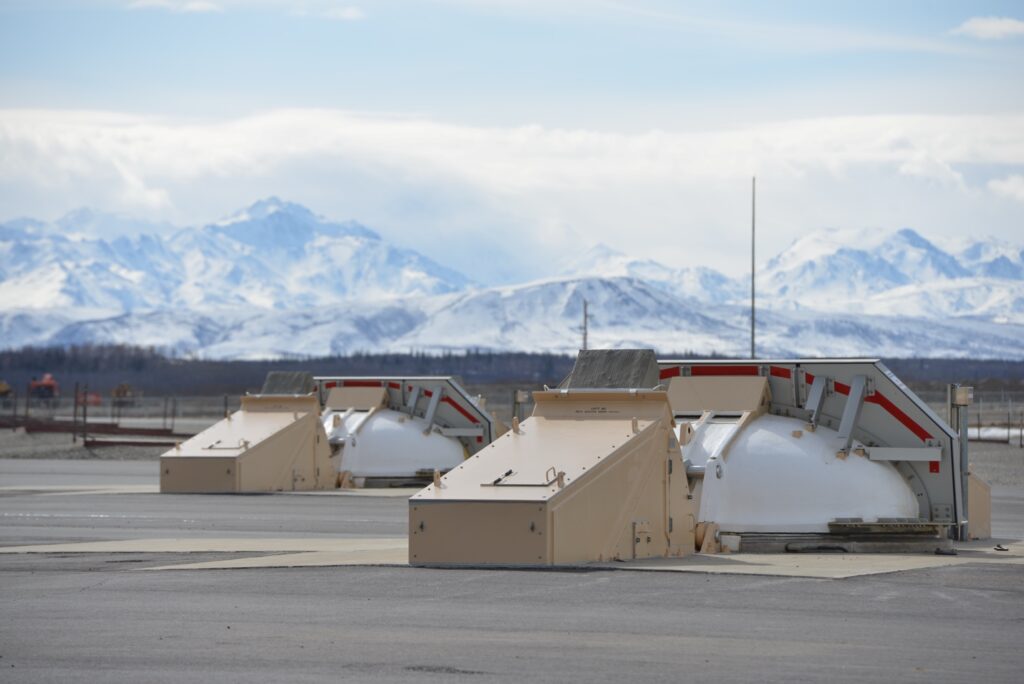
Long a “linchpin of America’s air atomic strategy,”[5] Alaska’s eight military bases include one at Fort Greely that hosts ground-based interceptor missiles designed to protect against intercontinental ballistic missiles (ICBMs) launched by any adversary.
The Army’s large training exercise—the first Combat Training Center rotation in Alaska—has taken place around Fort Greely, about 100 miles southeast of Fairbanks.
Additional war-gaming exercises in Alaska have made use of the approximately 120,000 square miles of airspace in the Joint Pacific Alaska Range Complex, which is considered the largest combat-training range in the world.
Military’s Dark History in Alaska
After purchasing Alaska from Russia in 1867, the U.S. Army was sent to occupy and administer it. The consequence was horrific for Alaska’s native population.
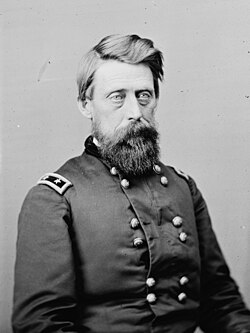
In 1868, Jefferson C. Davis (no relation to the president of the Confederate States of America), the first military governor of Alaska, ordered troops to destroy a native Tlingit village on Kupreanof Island after a Chilkat chief allegedly retaliated against some U.S. troops who kicked him in one of a number of brutal military operations targeting Alaska’s natives.[6]
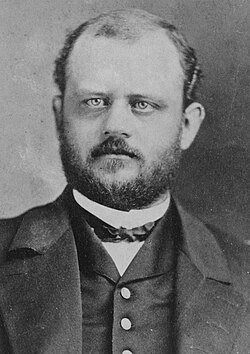
General John C. Tidball concluded that “the most effective as well as the most humane way of coercing these natives into good behavior is to destroy their habitations and canoes.”[7]
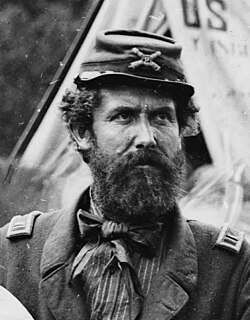
In the 1882 Angoon massacre, U.S. troops led by Commander Edgar C. Merriman torched a Hoochinoo village on Admiralty Island (Xootsnoowu) after the inhabitants allegedly took two white hostages following the killing of a Hoochinoo Shaman who worked for the North West Trading Company. Six children died of smoke inhalation. Dazed Hoochinoos were subsequently ordered to assemble at the Northwest Trading Company post where they were lectured about their obligation to “obey the white man’s laws.”[8]
Military Alaska: World War II and Cold War-Era Build-ups
Owing in large part to Alaska’s geographic proximity to Japan, more than 300 military installations were built in Alaska between 1941 and 1945, operating at a cost of nearly $3 billion.
More than 300,000 U.S. troops rotated in and out of Alaska during World War II and the U.S. War Department established a specialized Alaska Defense Command, which fought to expel the Japanese after they occupied the Aleutian Islands of Attu and Kiska.[9]
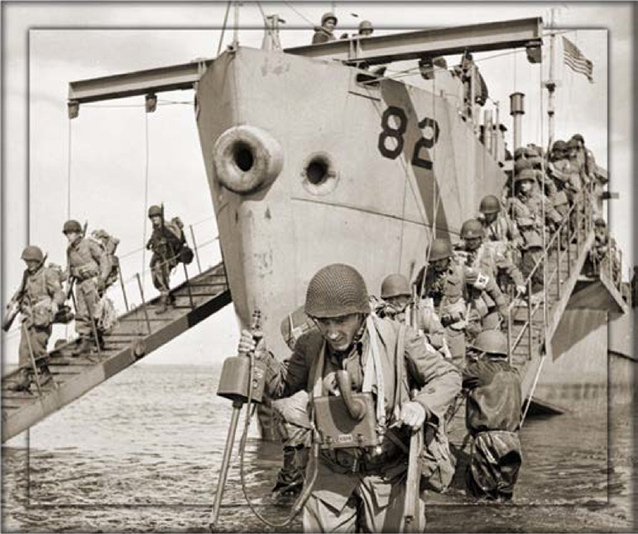
In the 1940s, Alaska was commonly referred to as “Military Alaska.”
Between 1947 and 1957, the U.S. military spent $1.2 billion on military construction projects in Alaska, building two major installations, Fort Richardson and Eielson Air Force Base, plus the forward bases at Galena, King Salmon and Shemya Air Force Base, and radar and communications stations.
Major improvements were made to Ladd Air Force Base and Elmendorf Air Force Base in Anchorage, which served as a major refueling point for C5A Galaxy, C-141 and Lockheed C-131 D6 aircraft resupplying U.S. ground forces in South Vietnam.[10]
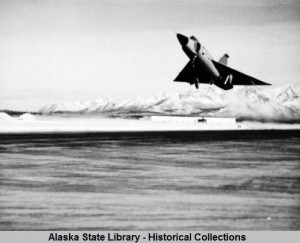
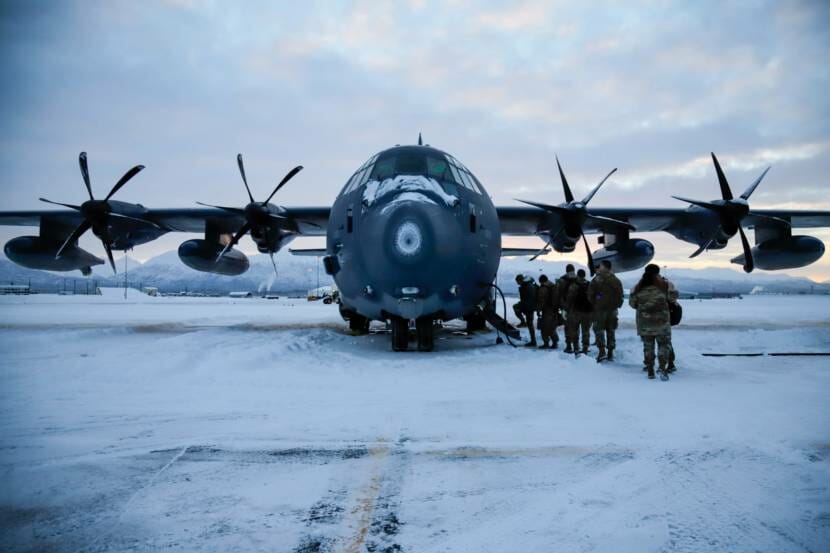
Because of its location adjacent to the Soviet Union, Alaska provided a place from which intelligence and surveillance flights could be launched and Soviet space and missile development monitored. Alaska was also valued as a training ground for cold weather military operations.[11]
Top-secret Project Charles, first conceived by MIT President James Killian (1948-1959) and initiated by the Truman administration, established a sophisticated radar detection system at Alaska military bases and planted censors linked to command centers and fighter interceptor squadrons that were prepared to shoot down Soviet bombers.[12]
In the late 1940s, the U.S. Air Force set up listening posts on the island of Sivuqaq (also known as St. Lawrence) and reconnaissance flights were flown near and over the Soviet Far East from bases in Alaska.
The U-2 spy plane flew from Eielson Air Force Base where the CIA established a detachment in June 1957.
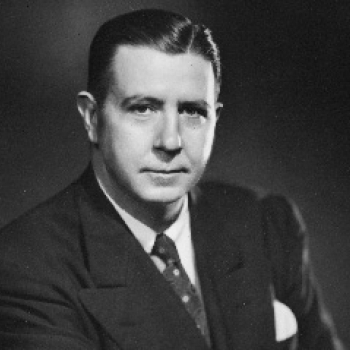
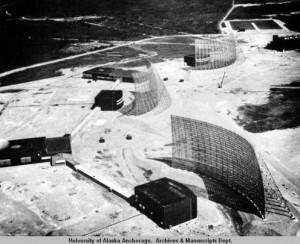
Additionally, the CIA established a station in Anchorage and tried to insert secret agents into the Soviet Union from there. The CIA was also found to have tested shell-fish toxins that could be used as a poison at another secret facility in Ketchikan, Alaska, from which toxic clams were shipped to the U.S. Army Biological Warfare laboratory at Ft. Detrick, Maryland.[13]
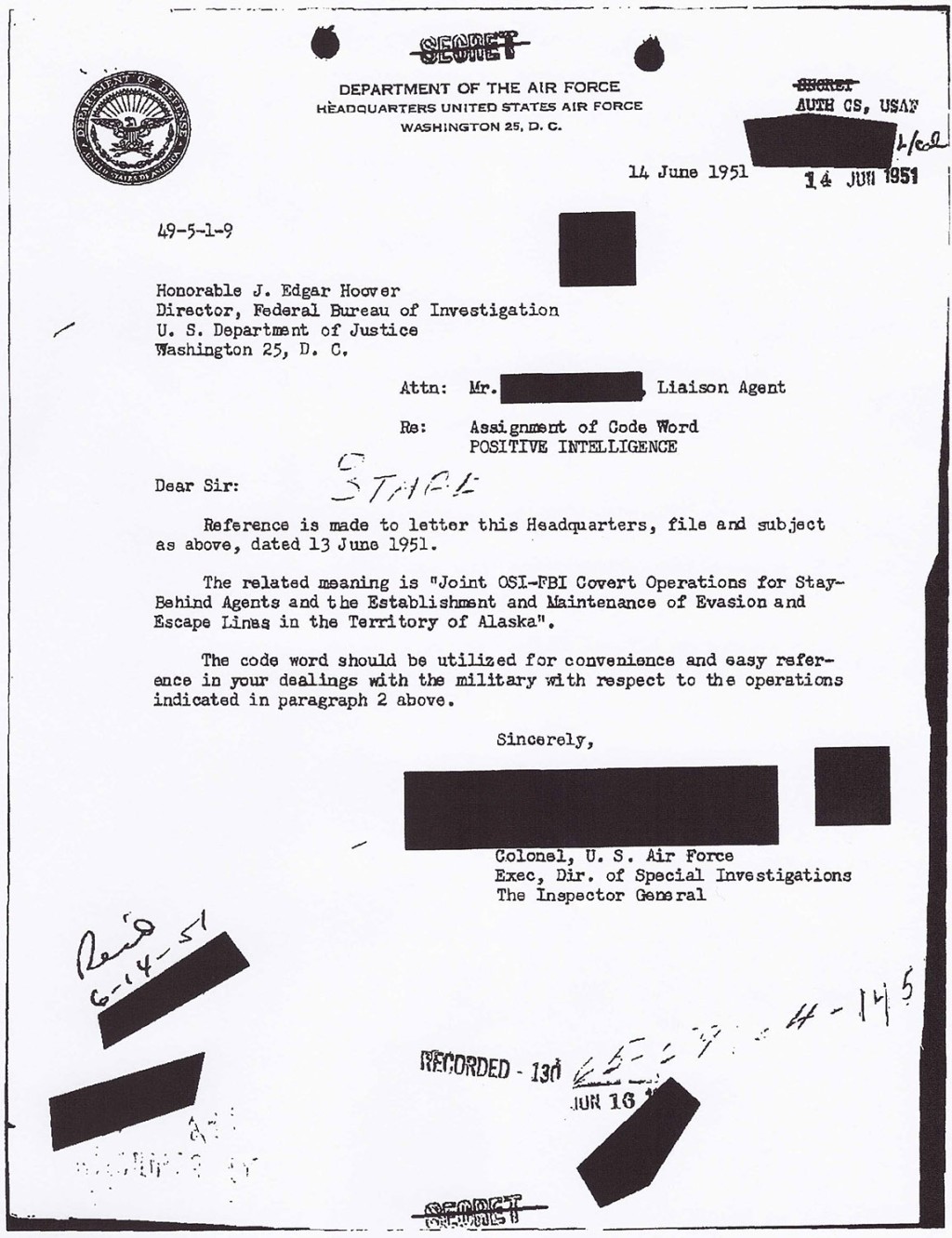
During the 1950s, Elmendorf Air Base hosted another secret program run by the Air Force Office of Special Investigations under Major Joseph J. Cappucci in conjunction with the FBI to create an underground intelligence network modeled after Operation Gladio in Western Europe that had access to hidden weapons caches.[14]
The network was to be activated in case of Soviet infiltration or invasion of Alaska, about which the CIA had been warned and developed paranoid fears
Declassified documents reveal that agents from the Eskimo, Indian and Aleut groups in Alaska were prevented from joining the stay-behind network because of a supposed “propensity to drink to excess” and “fundamental indifference to constituted governments and political philosophies.”
What espionage intrigues are going on today in the New Cold War are unknown and will, perhaps, only be revealed in small part decades from now.
Violating Rights of Native Communities
A March 2022 New York Times article quoted Julie Kitka, president of the Alaska Federation of Natives, who said that Alaska Natives are wary about the impacts of the U.S. military and its build-up to the region’s fragile environment, on which many depend for hunting and fishing.
The Alaska Historical Society acknowledges that many of the Cold War military facilities were built near Native communities, in one case requiring the relocation of the village of Kaktovik on Barter Island to make room for an air field. The construction and operations of the remote stations left a legacy of hazardous contamination and unsightly facilities and debris.[15]
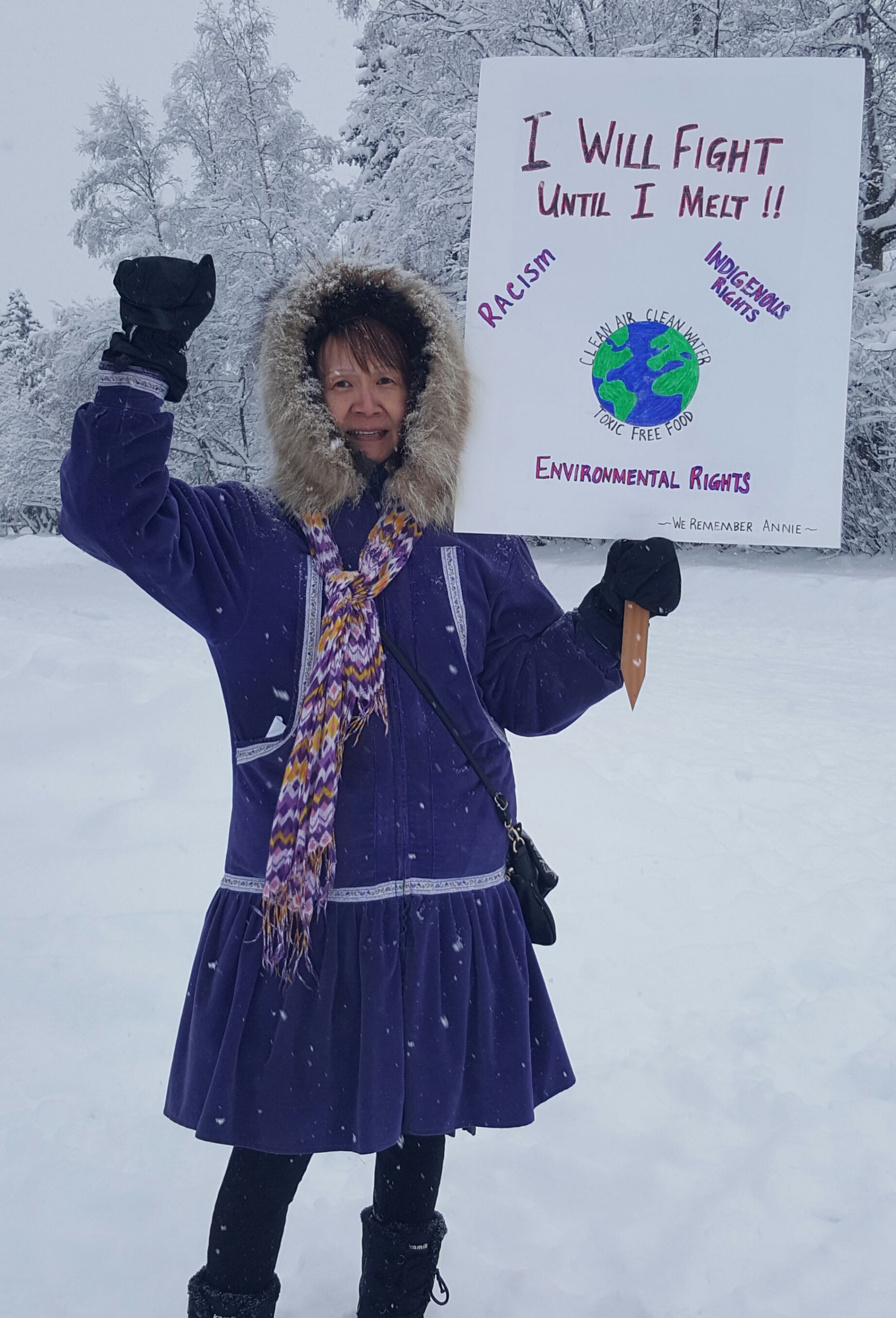
In March 2025, the Alaska Community Action on Toxics filed a complaint with the UN special rapporteur on toxics and human rights calling for an investigation of how military waste on Sivuqaq continued to violate the rights of the Indigenous Yupik people who live there to a clean environment and to consent to what happens on their land.
Cold War-era military bases left the land in Sivuqaq polluted with toxic chemicals, such as fuel, cancer causing mercury and polychlorinated biphenyls, or PCBs, that are known as “forever chemicals” because they persist for so long in the environment.[16]
A 2022 study found that 89% of the fish around Sivuqaq contained mercury exceeding the levels the Environmental Protection Agency (EPA) deemed appropriate for people who rely on subsistence fishing.
Viola Waghiyi, a cancer survivor whose father died of cancer and had three miscarriages, told the Alaska Beacon the contamination displaced 130 people and left her family and friends with a lasting legacy of illness. “It’s not a matter of if we’ll get cancer, but when,” she said.
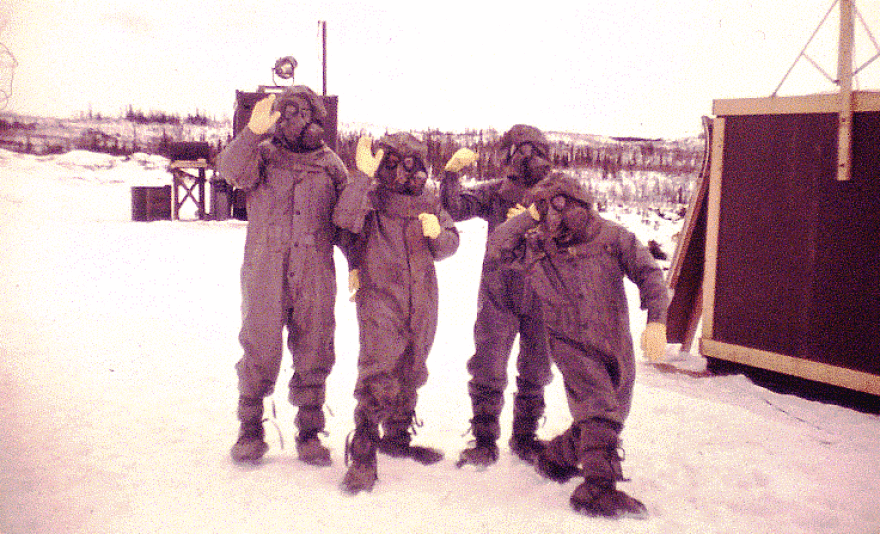
From 1954 to 1967, the U.S. Army conducted chemical and biological warfare experiments with agents ranging from mustard gas to tularemia at a super-secret Gerstle River test site at Delta Creek on the Fort Greely military reserve.
With biological warfare agents released into the environment, the test area is today a no man’s land into which thousands of nerve and mustard gas rockets were launched and detonated and germ and gas-laden artillery shells and mines were exploded.
Hundreds of rockets along with nerve-gas warheads also sank into the lake near Gerstle River and remain there indefinitely.[17]
Growing Democracy Deficit
After Dan Sullivan posted a video on his Facebook page extolling what he called possibly the “largest military buildup in Alaskan history”—which he said was great for national security and Alaska’s economy—Alaskans mocked and rebuked him in the comments section.
Here are some of those comments:
Duke Russell: “Did somebody call you Dan and said, you know what we really need are some more F-22s and Tony Hawk missiles?”
Garrett Lamb: “How is endless military spending good for our economy? Should be spending on things that improve your constituents lives instead.”
Sandy Xáadkil: “Alaskans are…facing unprecedented challenges at home. The cost of food keeps rising, fuel prices continue to strain family budgets, and medical costs are becoming out of reach for many….As a public servant for all Alaskans,…we need to hear more about your plan to help families afford groceries, fuel their vehicles, access healthcare and make ends meet. For many of us, that’s the issue that matters most right now.”
Rene E. Limeres: “More military? How ’bout more salmon, Dan?”
Spartacus McFeely: “All [Sullivan] does is talk about spending on the military. He is fully owned by the military industrial complex. Our tax dollars and endless debt goes to military hardware so we can go play war games and blow up countries and civilians all around the world. That foreign policy is not only unsustainable and unaffordable, it undermines our national security. All the while, China invests far wiser through soft power approaches that are pennies on the dollar compared to endless weaponry. And worse yet, [Sullivan] continues to cut services to our people while putting more money toward wars. Unbelievable.”
The latter comments all display what Noam Chomsky termed the growing democracy deficit in the U.S. by which political elites push militaristic policies that serve the interests of the corporate ruling class and military-industrial complex rather than those of their constituents who are increasingly left behind.[18]
According to opensecrets.com, Sullivan received $281,162 in campaign donations in 2025/2026 from the American Israel Public Affairs Committee (AIPAC), $24,000 from Blackstone Group, a top Wall Street investment firm, and $25,300 from Goldman Sachs, which invests heavily in the military and aerospace sectors.[19]
Studies have shown that over-spending on the military pushed by out-of-touch elites like Sullivan is an impediment to economic growth as it does not create the same number of jobs as civilian industries and does not spur many local offshoot industries, whether in the service or manufacturing sectors.
Furthermore, military personnel stationed in the state are often only temporary residents and do not pay local taxes or invest as much in the local economy as permanent civilian residents. The military additionally takes over choice land without paying taxes or putting the land to productive use.[20]
While, historically, many Alaskans may have supported their state’s evolution into a military outpost, more and more have come to recognize what the Indigenous people have known all along: Militarization is a dead end, which yields many negative consequences and casts a pall over Alaska that will not be easily lifted.

In 2018, China launched the Polar Silk Road Initiative which sought to align Chinese Arctic interests with the Belt and Road Initiative involving the building of new infrastructure and interlinking of China’s economy with its regional allies and countries around the world. As part of the Silk Road Initiative, China began creating new freight routes extending into the Arctic that would better enable extraction of natural resources while launching a new satellite to track shipping routes and monitor changes in sea ice in the region. ↑
Matthew Farish, “The First Century of U.S. Militarization in Alaska, 1867-1967,” in Adrian Hawkins and Peder Roberts, eds., The Cambridge History of the Polar Regions (New York: Cambridge University Press, 2023), 579. ↑
Russian divers have planted a national flag on the North Pole seabed in a symbolic claim to the region’s energy riches. To counter Russian and Chinese activities in the Arctic, besides the Alaska military build-up, American Marines have been deployed to train for Arctic warfare in Norway and, in 2023, then-Secretary of State Antony Blinken announced that the U.S. would open its northernmost diplomatic station in the Norwegian Arctic town of Tromsø, the only diplomatic station above the Arctic Circle. Furthermore, Donald Trump’s talk of the U.S. taking over Greenland was part of a calculated strategy in which the U.S. would use Greenland, where the U.S. already possesses the Thule Air Base, to project its power into the Arctic. ↑
Jonathan M. Nielson, foreword by Peter Karsten, Armed Forces on a Northern Frontier: The Military in Alaska’s History, 1867-1987 (Westport, CT: Greenwood Press, 1988), 199, 200. ↑
Farish, “The First Century of U.S. Militarization in Alaska, 1867-1967,” 583. ↑
Nielson, Armed Forces on a Northern Frontier, 28, 29; Farish, “The First Century of U.S. Militarization in Alaska, 1867-1967,” 568. Colonel Robert M. Scott wrote to Davis after the atrocity that, “fortunately, you are not hampered by a civilian government, Indian Bureau, etc. in Alaska and you have therefore a good chance to pitch in and punish such tribes…such action would have a first-rate effect and would keep their people in a wholesome state of anxiety.” Having overseen a notorious atrocity at Ebenezer, Georgia, during the American Civil War, Davis, according to historian Matthew Farish, oversaw the kidnapping of Tlingit leaders, hostage taking, imprisonment, bombing of villages and execution of Alaska’s natives. After retiring from his duties in Alaska, Davis was pulled out of retirement in 1873 and sent to oversee military operations with former Union General William Tecumseh Sherman that resulted in the extermination of the Modoc people in Oregon and California. More background on Davis can be found in Nathaniel Cheairs Hughes, Jr., and Gordon D. Whitney, Jefferson Davis in Blue: The Life of Sherman’s Relentless Warrior (Baton Rouge: Louisiana State University Press, 2002). ↑
Nielson, Armed Forces on a Northern Frontier, 29. ↑
Ibid., 33; Farish, “The First Century of U.S. Militarization in Alaska, 1967-1867,” 574. The Hoochinoo village was subjected to naval bombardment. Tlingit oral tradition disputes that there were white hostages involved. In the 1970s, the Tlingit and Haida Central Council hired anthropologist Philip Drucker to research the case. Drucker noted that in the official documents, despite the captive white men being the primary mission that brought the ships to Angoon, neither Merriman or Morris (another naval officer) “even mentions what should have been the climax of the expedition’s achievements, the rescue of the white captives, if there actually was such a rescue. Merriman afterwards said that a “most severe but eminently salutory lesson” was given to the Hoochinoos. A century later, descendants of the Hoochinoo were awarded $90,000 in compensation by the Bureau of Indian Affairs for their property losses. ↑
Nielson, Armed Forces on a Northern Frontier, 179. So many of the volunteers in the Alaska Defense Command were from Alaska’s Indigenous peoples—Aleut, Inupiak, Yupik, Tlingit, and many others—that the guard was nicknamed the “Eskimo Scouts.” ↑
Nielson, Armed Forces on a Northern Frontier, 199, 200. A $10 million oil pipeline was constructed between Whittier and Anchorage to meet the demand. ↑
Nielson, Armed Forces on a Northern Frontier, 199. ↑
Ibid., 187. President Truman authorized a think tank at MIT, the Lincoln Laboratory, to work on Project Charles, which became a prototype for the electronic battlefield adopted by Defense Secretary Robert McNamara during the Vietnam War. Hydrogen bomb creator Edward Teller, who was involved with Project Charles from its inception, tried to expand it in the 1980s to make it part of Ronald Reagan’s Strategic Defense Initiative (SDI aka Star Wars). ↑
Ocean researcher Patricia Tester, who found a trove of documents in Kodiak, Alaska, pertaining to the U-2 flight launched from Alaska, found contracts for clams and a shipping receipt between the Ketchikan facility in Alaska and the U.S. Army Biological Warfare lab at Fort Detrick. Tester said that, “in one of the files, there was a Department of Defense contract for toxic shellfish. And this is what led to the detective journey that brought us through the Cold War history. The contract was from the Department of Defense and it was for toxic clams written in October 6, 1952. The contract was for $10,000 of toxic clams—closer to $100,000 today—to be shipped to the East Coast. The department worked with the CIA to actually develop a replacement for the cyanide poison pill that was provided to U.S. covert agents and spies during that time.” ↑
Agents who were part of the network were paid $3,000 per year, which converts to more than $30,000 today. ↑
The Alaska Historical Society claims that “the problems were not addressed until the environmental and social movements of the 1960s and 1970s prompted actions by the military beginning in 1980s to clean up and restore the environment. Later, in the late 1990s, the military established a direct relationship with Alaska’s Native people to address past wrongs.” ↑
The complaint states that, “by exposing Yupik people of Sivuqaq to polluted drinking water sources, air, and soil, and by contaminating local native foods; by causing pervasive human exposure to hazardous chemicals through multiple routes; by toxifying the broader ecosystem; and by not cleaning up contamination sufficiently to protect human health and the environment, the U.S. Air Force and Army Corps of Engineers violated human rights long recognized in international law.” The U.S. Army now claims to have spent more than $130 million to have cleaned up the contamination in Sivuqaq. ↑
Nielson, Armed Forces on a Northern Frontier, 210. ↑
See Noam Chomsky, Failed States: The Abuse of Power and Assault on Democracy (New York: Metropolitan Books, 2006). Sullivan is facing a challenge in the November mid-terms from Democrat Mary Peltola, a native Yupik and tribal judge who emphasizes on her website that she is a military mom who will always put veterans first. While supporting certain progressive measures like for the environment which marks her as an improvement over Sullivan and opposing the Iran War, Peltola, who served in the House of Representatives from 2022-2025, is a moderate Blue Dog Democrat and has long supported U.S. aid to Ukraine. Her website does not offer any critique of Alaska’s growing militarism or critique of U.S. foreign policy, which is all too typical of the Democratic Party. ↑
Blackstone Group invests heavily in aerospace, intelligence and defense tech start-ups. ↑
For comparison with Hawai’i, see CovertAction Magazine article here. A classic study detailing the parasitic effect of excessive military spending and its negative economic effects is Seymour Melman, Pentagon Capitalism: The Political Economy of War (New York: McGraw Hill, 1970). ↑
CovertAction Magazine is made possible by subscriptions, orders and donations from readers like you.
Blow the Whistle on U.S. Imperialism

Click the whistle and donate
When you donate to CovertAction Magazine, you are supporting investigative journalism. Your contributions go directly to supporting the development, production, editing, and dissemination of the Magazine.
CovertAction Magazine does not receive corporate or government sponsorship. Yet, we hold a steadfast commitment to providing compensation for writers, editorial and technical support. Your support helps facilitate this compensation as well as increase the caliber of this work.
Please make a donation by clicking on the donate logo above and enter the amount and your credit or debit card information.
CovertAction Institute, Inc. (CAI) is a 501(c)(3) non-profit organization and your gift is tax-deductible for federal income purposes. CAI’s tax-exempt ID number is 87-2461683.
We sincerely thank you for your support.
Disclaimer: The contents of this article are the sole responsibility of the author(s). CovertAction Institute, Inc. (CAI), including its Board of Directors (BD), Editorial Board (EB), Advisory Board (AB), staff, volunteers and its projects (including CovertAction Magazine) are not responsible for any inaccurate or incorrect statement in this article. This article also does not necessarily represent the views the BD, the EB, the AB, staff, volunteers, or any members of its projects.
Differing viewpoints: CAM publishes articles with differing viewpoints in an effort to nurture vibrant debate and thoughtful critical analysis. Feel free to comment on the articles in the comment section and/or send your letters to the Editors, which we will publish in the Letters column.
Copyrighted Material: This web site may contain copyrighted material the use of which has not always been specifically authorized by the copyright owner. As a not-for-profit charitable organization incorporated in the State of New York, we are making such material available in an effort to advance the understanding of humanity’s problems and hopefully to help find solutions for those problems. We believe this constitutes a ‘fair use’ of any such copyrighted material as provided for in section 107 of the US Copyright Law. You can read more about ‘fair use’ and US Copyright Law at the Legal Information Institute of Cornell Law School.
Republishing: CovertAction Magazine (CAM) grants permission to cross-post CAM articles on not-for-profit community internet sites as long as the source is acknowledged together with a hyperlink to the original CovertAction Magazine article. Also, kindly let us know at info@CovertActionMagazine.com. For publication of CAM articles in print or other forms including commercial internet sites, contact: info@CovertActionMagazine.com.
By using this site, you agree to these terms above.
About the Author
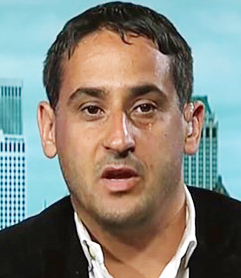
Jeremy Kuzmarov holds a Ph.D. in American history from Brandeis University and has taught at numerous colleges across the United States. He is regularly sought out as an expert on U.S. history and politics and co-hosts a radio show on New York Public Radio and on Progressive Radio News Network called “Uncontrolled Opposition.”
He is Managing Editor of CovertAction Magazine and is the author of eight books, including Obama’s Unending Wars (Clarity Press, 2019), The Russians Are Coming, Again, with John Marciano (Monthly Review Press, 2018), Warmonger. How Clinton’s Malign Foreign Policy Launched the U.S. Trajectory From Bush II to Biden (Clarity Press, 2023); with Dan Kovalik, Syria: Anatomy of Regime Change (Baraka Books, 2025), and Political Assassinations in America: The Intricate Nexus of Deep State Crime (Clarity Press, 2026).
Besides these books, Kuzmarov has published hundreds of articles and contributed to numerous edited volumes, including one in the prestigious Oxford History of Counterinsurgency .
He can be reached at jkuzmarov2@gmail.com and found on substack here.







Since this is very detailed well written article I cannot comment too much, so I am just adding something unrelated.
Alaska faces severe public health challenges regarding tobacco and alcohol misuse, driven by geographic isolation, historical trauma, and high rates of polysubstance use. The state experiences alcohol-related death rates nearly triple the national average, alongside significant health disparities that disproportionately impact Alaska Native communities