Just a few weeks ago, following the first round of Brazil’s presidential election, the world seemed convinced that a victory for Flávio Bolsonaro was inevitable.
History appeared to support that assumption: No candidate had ever overturned the first-round result in a Brazilian presidential runoff. Right-wing forces had been advancing across almost every electoral contest in the region, with Mexico and Uruguay as notable exceptions.
As discussed in my previous article, incumbent governments were finding it increasingly difficult to secure re-election and maintain continuity in office. Triumphalism took hold among those who could envision nothing but another popular defeat, both in the media and in the offices of governments aligned with Donald Trump’s foreign policy.
But there was one man who, shaped by a lifetime of labor activism and political struggle, had always believed that battles were meant to be fought. And so, what had seemed impossible began to shift in the final hours before election day.
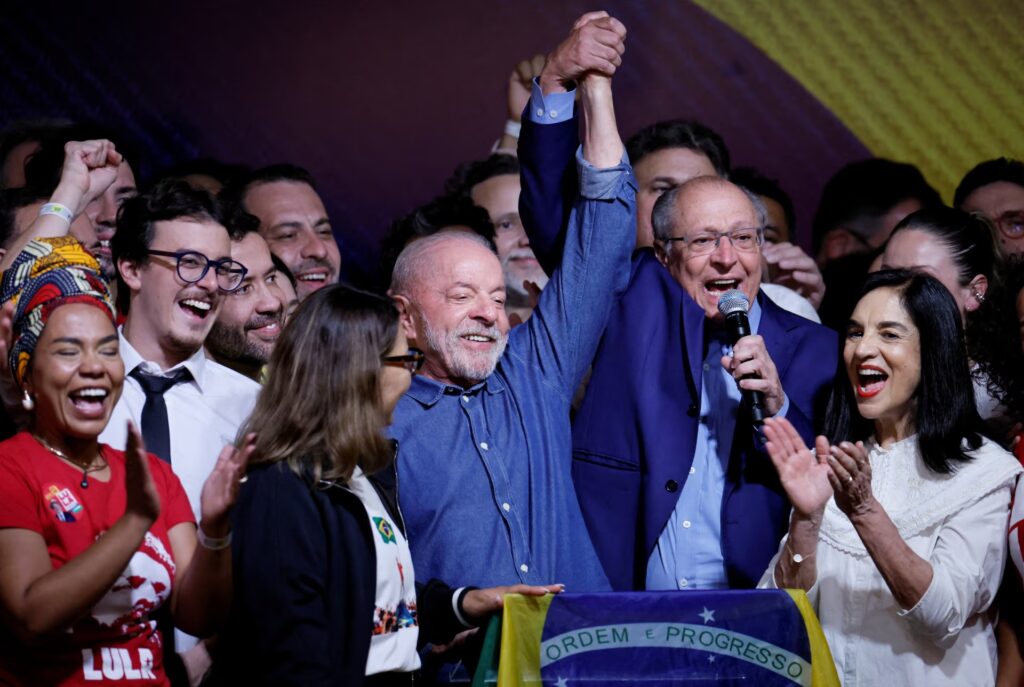
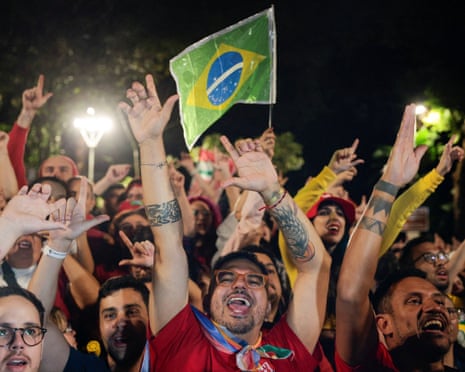
Although some pollsters and betting markets continued to give Flávio the edge right up to election day, as the hours passed, the race began to look remarkably close. Political analysts and major media outlets started raising questions. As Sunday unfolded, the emergence of a clear trend sent shock waves through the political establishment: Luiz Inácio Lula da Silva stunned the world with a resounding victory in Brazil’s presidential election.
In a runoff pitting two competing national projects against each other, with the entire world watching—and intervening—Lula achieved what few thought possible, opening a political path that had seemed increasingly difficult to navigate. His historic comeback secured a margin of more than four million votes in favor of continuity under the Workers’ Party (PT), out of a total electorate of more than 128 million voters.
The Trump Effect
Donald Trump’s second administration has been actively involved in Latin American political processes, and the so-called Donroe Doctrine has proved relentless and remarkably effective over nearly two years in office.
From steep tariffs used to exert pressure and weaken competing markets to explicit endorsements of ideologically aligned candidates, Washington has deployed a wide range of instruments. Campaign financing and military interventions, such as the one in Venezuela, are all part of a program driven by the White House to revive the traditional tenets of imperialism.
The string of victories by openly pro-American leaders had seemed to confirm the emergence of a regional dominance project. Following right-wing victories in Colombia, Peru and Chile, the political map was increasingly turning blue. This is precisely why Brazil represented such a consequential battle. Not only was it the sole country in the Southern Cone governed by a party rooted in a popular political movement, but its weight—both regionally and globally—made it an indispensable player. [NOTE: “turning blue” (line 3) There probably needs to be an explanation that, in Brazil (I’m not sure about other Latin American countries), blue represents the right wing and red represents the left wing.]
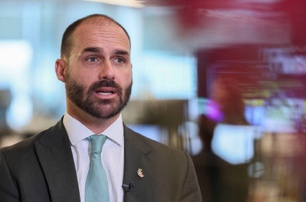
For all these reasons, Trump openly intervened in support of Flávio Bolsonaro’s candidacy. He also went out of his way to defend Eduardo Bolsonaro, Flávio’s older brother, who is wanted by Brazilian authorities. Further, Trump called for the release of Jair Bolsonaro, the family patriarch, who was convicted in Brazil for promoting an attempted coup.
There is another consideration, too. Following a long-standing American political tradition, the current president understands that, when the domestic economy fails to grow and gasoline prices rise, an expansionist foreign policy—through wars or military interventions—can help a president navigate electoral cycles more successfully.
U.S. interference in the Brazilian election was so blatant that the PT made anti-imperialism a central theme of its campaign. Relations between Brazil and the rest of the world, particularly its relationship with the northern hegemon, became one of the defining issues in the presidential debates. Even in his victory speech, Lula emphasized that the Brazilian people had chosen to reject becoming anyone’s “backyard.”
In a final twist to the campaign, and facing long-standing legal proceedings, Flávio decided to flee the country, finding refuge in Milei’s Argentina before being welcomed by Trump to the United States. Many Bolsonaro supporters are angry of course that Flávio had to flee.

Social Media and Multilateralism
This phenomenon had already emerged during the campaign leading up to the first round, but it intensified considerably in the final weeks. The role played by social media platforms was so blatant that allegations against technology companies, particularly Meta, gained traction over attempts to steer online conversations in Bolsonaro’s favor. Search results tended to prioritize content favorable to the opposition candidate, while Lula was conspicuously and sometimes brazenly pushed out of view.
In response, the PT stepped up its direct outreach efforts, particularly after its first-round setback. Through WhatsApp and TikTok, the party sought to break through the media blockade imposed by Silicon Valley. The “Lula Army” became a direct communication channel for debunking fake news and bringing Lula closer to voters. This effort proved vital to the campaign’s attempt to reverse the adverse result.
Brazil’s diplomatic tradition has weathered successive changes of government while maintaining a clear commitment to multilateralism. Even during Jair Bolsonaro’s presidency, despite repeated challenges to that tradition, Brazil maintained close ties with BRICS member countries, a bloc of which it is a founding member.

The election, therefore, opened a period of uncertainty about the country’s international future, particularly at a time when the region was shifting to the right and the United States was openly seeking to sever as many ties and bridges with China as possible.
In his public statements, Flávio made it clear that his national project would follow Trump’s lead.
The electoral outcome that many had anticipated would therefore have triggered a major realignment on the global chessboard. It was a kind of butterfly effect, prompting the world to watch—with considerable attention and concern—what unfolded in the land of samba and bossa nova.
Flávio’s defeat, then, represents a victory not only for Lula’s popular and national political project, but also for the multilateral approach that Brazil has been promoting for decades.
The Domino Effect: Israel, the United States and Argentina
Just as Lula’s victory came as a surprise to Brazil and the wider region, it is now worth considering the potential repercussions for upcoming electoral contests elsewhere. The world had been watching Brazil’s election closely, yet with a few notable exceptions among individual leaders, most governments chose to recognize the winner quickly.
Among those viewing the PT project with suspicion, a trio of governments whose alignment has become almost seamless now has reason to be on alert. The United States, Israel and Argentina—led by governments whose leaders identify closely with one another and openly challenge regional blocs and emerging powers—had a strong interest in seeing a different result on Sunday, October 25th.
It is hardly surprising, then, that the U.S. president was slow to acknowledge the winner, while Brazil’s principal South American trading partner remained conspicuously silent.
What appeared in early October to be a wave of momentum for the global right has suddenly become a far more complex challenge following Brazil’s electoral reversal. Against this backdrop, Israel’s election, unfolding in the wake of Lula’s recent victory, has left right-wing leader Benjamin Netanyahu facing an increasingly difficult situation. For the first time in years, poor electoral performance appears to have seriously undermined his chances of forming a government.
November will mark a turning point in American politics as Trump faces the mid-term elections, a contest that will prove decisive for the second half of his final presidential term. A hypothetical defeat, widely considered a likely outcome under the current circumstances, would signal another setback for the international right, leaving an increasingly complicated political landscape for both the American leader and his admirers south of the continent.
Finally, Javier Milei’s moment of glory appears to be over. He now faces a formidable challenge as he prepares to seek re-election in 2027. But that is still some way off. For now, progressive forces have every reason to celebrate a victory by Lula that was as decisive as it was unexpected.

CovertAction Magazine is made possible by subscriptions, orders and donations from readers like you.
Blow the Whistle on U.S. Imperialism

Click the whistle and donate
When you donate to CovertAction Magazine, you are supporting investigative journalism. Your contributions go directly to supporting the development, production, editing, and dissemination of the Magazine.
CovertAction Magazine does not receive corporate or government sponsorship. Yet, we hold a steadfast commitment to providing compensation for writers, editorial and technical support. Your support helps facilitate this compensation as well as increase the caliber of this work.
Please make a donation by clicking on the donate logo above and enter the amount and your credit or debit card information.
CovertAction Institute, Inc. (CAI) is a 501(c)(3) non-profit organization and your gift is tax-deductible for federal income purposes. CAI’s tax-exempt ID number is 87-2461683.
We sincerely thank you for your support.
Disclaimer: The contents of this article are the sole responsibility of the author(s). CovertAction Institute, Inc. (CAI), including its Board of Directors (BD), Editorial Board (EB), Advisory Board (AB), staff, volunteers and its projects (including CovertAction Magazine) are not responsible for any inaccurate or incorrect statement in this article. This article also does not necessarily represent the views the BD, the EB, the AB, staff, volunteers, or any members of its projects.
Differing viewpoints: CAM publishes articles with differing viewpoints in an effort to nurture vibrant debate and thoughtful critical analysis. Feel free to comment on the articles in the comment section and/or send your letters to the Editors, which we will publish in the Letters column.
Copyrighted Material: This web site may contain copyrighted material the use of which has not always been specifically authorized by the copyright owner. As a not-for-profit charitable organization incorporated in the State of New York, we are making such material available in an effort to advance the understanding of humanity’s problems and hopefully to help find solutions for those problems. We believe this constitutes a ‘fair use’ of any such copyrighted material as provided for in section 107 of the US Copyright Law. You can read more about ‘fair use’ and US Copyright Law at the Legal Information Institute of Cornell Law School.
Republishing: CovertAction Magazine (CAM) grants permission to cross-post CAM articles on not-for-profit community internet sites as long as the source is acknowledged together with a hyperlink to the original CovertAction Magazine article. Also, kindly let us know at info@CovertActionMagazine.com. For publication of CAM articles in print or other forms including commercial internet sites, contact: info@CovertActionMagazine.com.
By using this site, you agree to these terms above.
About the Author

Martin Epstein is a political scientist specialising in economics, a researcher at the Center for Argentine Political Economy (CEPA), and a professor at the University of Buenos Aires (UBA).
He is an economic journalist with over 15 years of experience covering policy, institutions, and politics in Latin America, with a focus on Argentina.
Earlier in his career, he worked with the UNDP and the ILO on institutional diagnostics and social policy in Argentina, and served as President of Amnesty International Argentina.
Martin can be reached at lic.epstein@gmail.com.