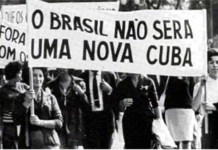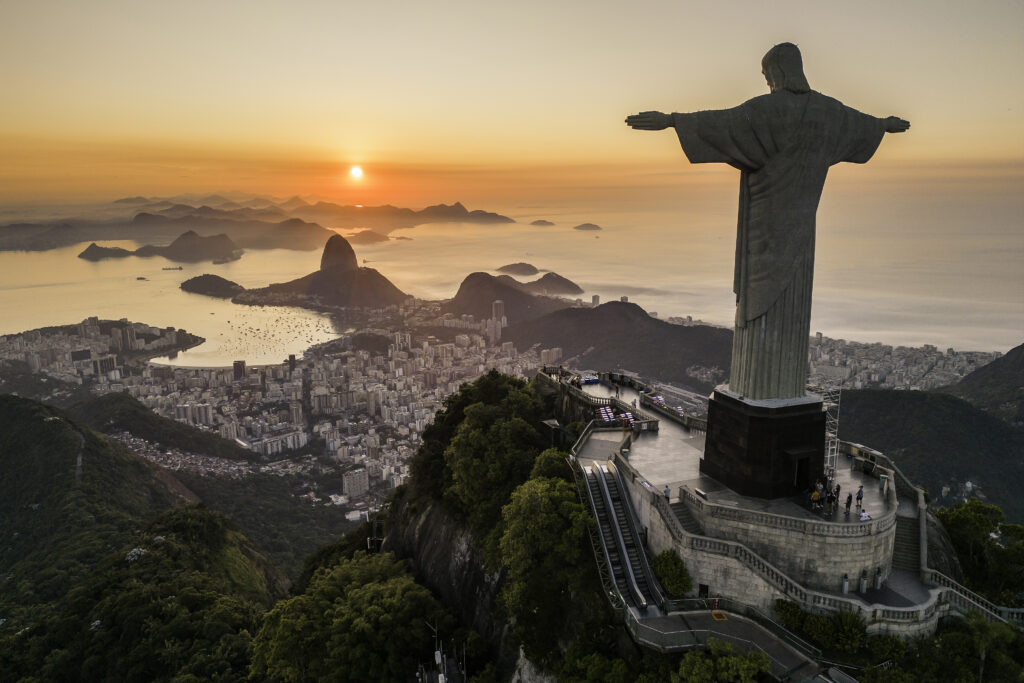
He who was born, was born / He who wasn’t born, won’t be born / Get out the way of the bullet train or else you might get torn.
—“He Who Was Born, Was Born” by MC G3
Will There Be “Peace, Liberty, And Justice” With Whatever Comes After Brazil?
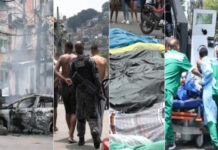
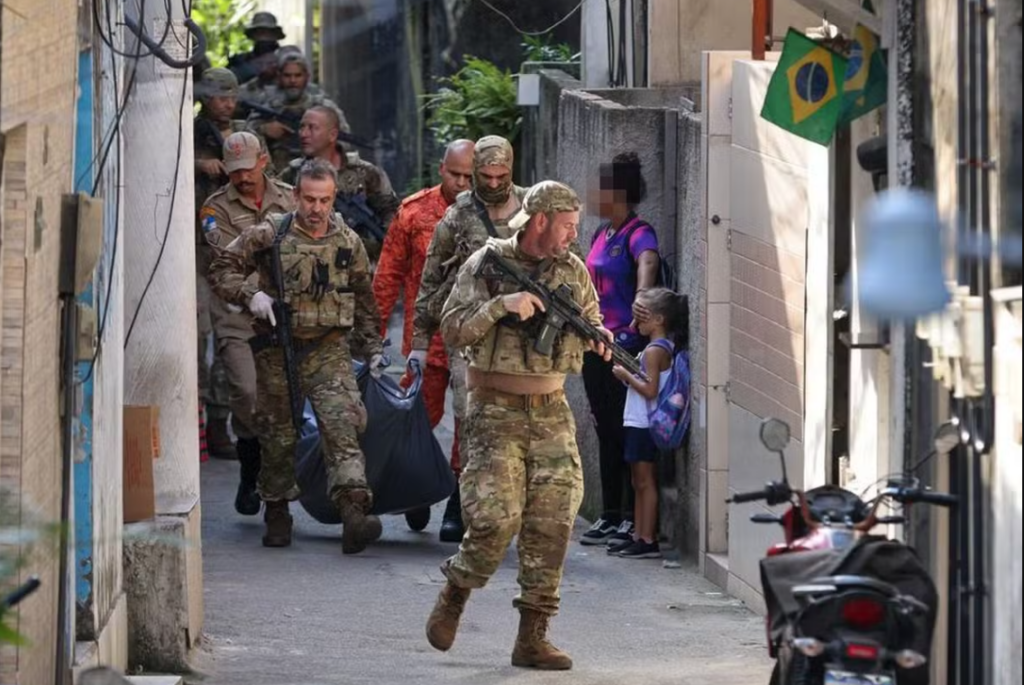
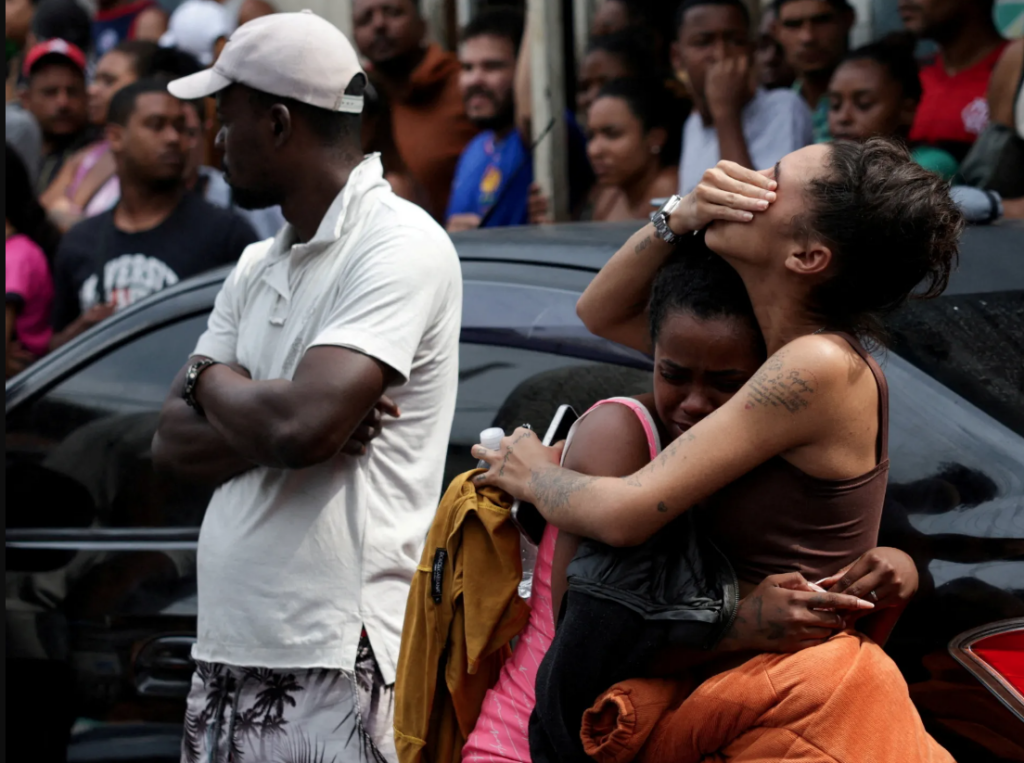
Recorded circa 2010, “I Fell Asleep in Rio and Woke Up in Iraq” is a song composed and performed by MC Duduzinho. One of many preludes to the October 28 “mega-police operation” (Operation Containment) into two favelas—Complexo do Alemão and Complexo da Penha—the left, according to officials, 121 “drug-trafficking suspects” and four policemen dead.
The stated objective of the attack was combating the influence and increased territorial gains by the Red Command (CV), a group I will discuss in this report.
“The state came to massacre, it wasn’t a police operation,” a woman in Complexo da Penha told the AFP news agency. “They came directly to kill, to take lives.”
Another favelado (local favela resident), 36-year-old resident and activist Raul Santiago, accused the police of summary executions. “There are people who have been executed, many of them shot in the back of the head, shot in the back. This cannot be considered public safety.”
Forensic evidence indicates that some victims were tortured before they were executed. At least one youth, 19-year-old Yago Ravel Rodrigues Rosário, was decapitated, his head purposefully cropped on tree branches. “Who said it was us who beheaded him? Wasn’t it them (local favela residents) who went looking for bodies?” questioned Rio de Janeiro’s Civil Police Chief, Felipe Curi. “Criminals could have made new lesions on the bodies to call attention to the press.”
Initially claiming they had no idea 60 people had been killed in a wooded area atop Complex da Penha and with no investigators dispatched to the scene following the police invasion, Curi accuses community members of “desecration of corpses” and using stolen cars to transport the dead to São Lucas square.
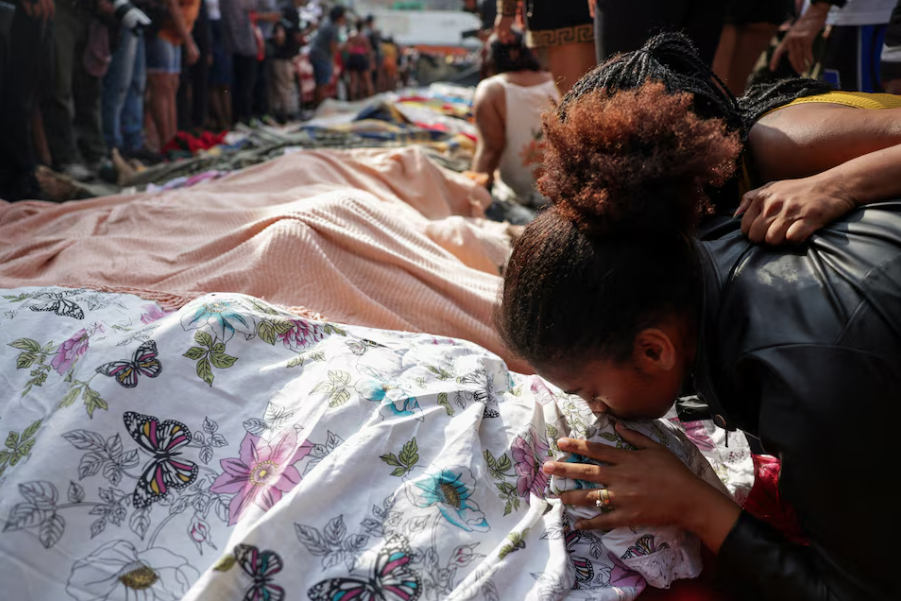
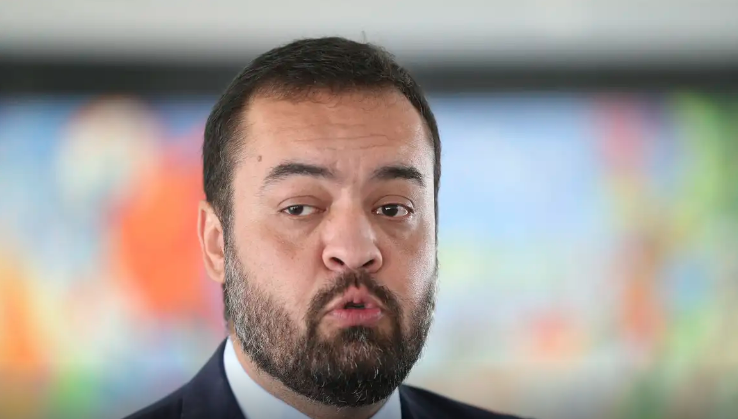
Tallying 2,500 officers and special forces members, Tuesday’s mega-police operation, which resulted in the largest massacre in Rio’s history, was publicly described as a “success” by Rio’s right-wing mayor Cláudio Castro. He also dubbed the invasion a “defense operation,” offering no hint, like his political opponents, to the systemic build-up to the large number of casualties. For some comparison, here is a short list of massacres committed by Brazilian police in Rio de Janeiro favelas just in the past two decades.
- Ladeira dos Tabajaras – 5 deaths [April 2025]
- Complexo do Salgueiro – 13 deaths [March 2023]
- Complexo do Alemão – 17 deaths [June/July 2022]
- Belford Roxo – 6 deaths (residents claim more than 15 casualties) [February 2022]
- Vila Cruzeiro – 24 deaths [May 2022]
- Jacarezinho – 28 deaths [May 2021]
- Fallet-Fogueteiro – 15 deaths [February 2019)
- Complexo do Alemão – 19 deaths [June 2007]
- Catumbi – 13 deaths [April 2007]
- Vidigal – 13 deaths [July 2006]
MC Duduzinho might as well have stepped out of bed amidst the Iran-Iraq War, an eight-year conflict (1980-1988), exacerbated and prolonged by the U.S. government’s material support for both parties.
Responding to reporters’ questions about the massacre, Rio de Janeiro’s Public Prosecutor and professor, Marcelo Rocha Monteiro, emphatically stated, “The best means of prevention,” referring to the media’s incessant references to organized crime, gangs and arms and drug-trafficking, “is repression.”
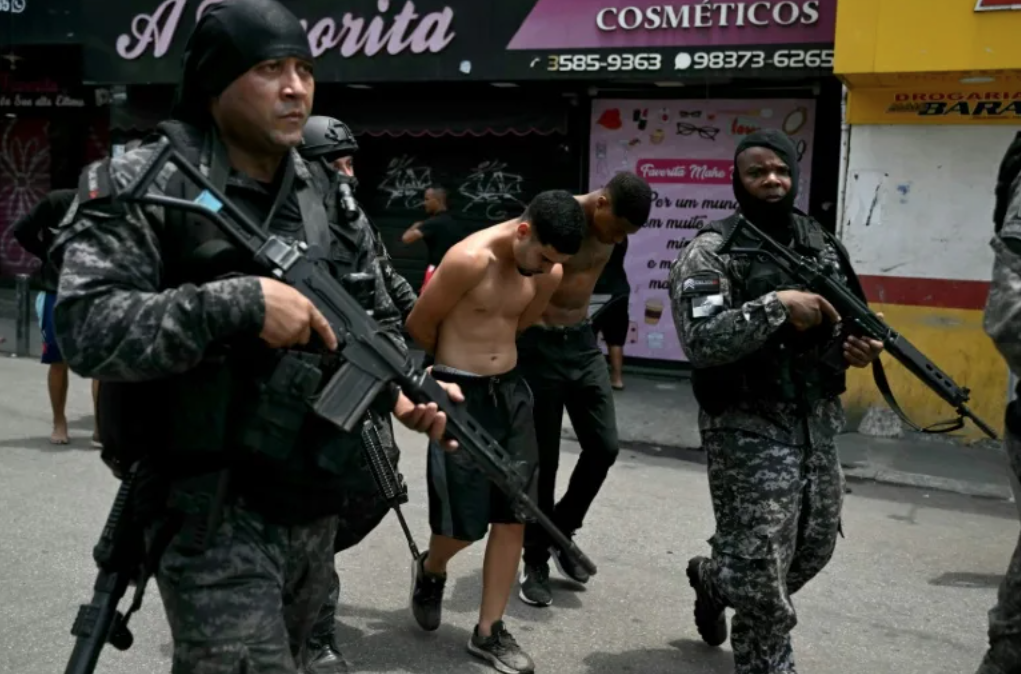
Look at it this way: If a miniature model of Rio de Janeiro were produced with the favelas renamed as countries and the police and special forces representing the U.S. government, it would resemble, if not outdo, U.S. military invasions abroad.
Brazil’s Rio de Janeiro Simply Flips the Script
Since they can’t just outlaw being Black, they target something associated with the Black community.
—Joel Luiz Costa, attorney and executive director of the Black Population Defense Institute
Swiping a page from the U.S.’s Iran-Iraq war strategy, Brazil, in general, and Rio de Janeiro, specifically, simply flips the script, under-funding, under-staffing, under-equipping, under-educating, under-virtually-everything its civil and military police force, institutions that lost a total of 170 officers last year to violence.
If anything, mainstream media and political discourse provide the bulk of their educational training, a crash-dummy course repeating how drug-trafficking stems from historically underserved, marginalized and exploited communities with more than two million residents.
Excluded from the class are reports like the recent FiscalData study revealing that during a six-year period (2017-2023), the income of the wealthiest 0.1% in Brazil increased five times over all citizens in the country. The increase amounted to 6.9% compared to the average 1.4%. Crunching the numbers further, FiscalData noted that, in 2017, the richest 0.1% concentrated 9.1% of Brazil’s entire income. Six years later, in 2023, the percentage had jumped to 12.5%.
Social assistance programs “fulfill an important role in reducing poverty and attenuating inequality at the bottom of the social pyramid over the past three decades,” FiscalData concluded. However, these measures have proved “absolutely insufficient and inadequate,” based on the root causes of increased concentration of wealth.
Meanwhile, last year’s Salary Loss from Racial Inequality report pointed out that Brazil’s largest demographic group, Black people, are subjected to over $228 billion (USD) in annual wage theft due to “racial inequalities” (as “racism” is too harsh a term for Brazil’s “racial democracy” creation myth).
With no guns manufactured or hard drugs produced in the favelas, observers and people on the ground pinpoint state officials as the clandestine suppliers of these illicit materials to poor communities, transforming residents desperate for change into convenient objetos de manobra (manipulative objects).
In March, Brazil’s federal police conducted a search warrant at the posh Barra da Tijuca residence of retired federal police officer Josias João do Nascimento in Rio de Janeiro. Accused of heading an international arms-trafficking operation, Nascimento is under investigation for trafficking 2,000 semi-automatic rifles from Miami to Rio and from there distributed to the CV. However, despite all the media rhetoric, authorities speaking at press conferences like Jekyll while openly operating like Hyde, breed the very conditions for sustained hostilities.
Subliminally meticulous in their messaging, one report about the police invasion, published by Metrópoles, stated that a portrait of Oruam, a trap artist from Complexo da Penha, was found at the residence of a detained CV leader, as if that too constitutes a criminal act.

War Amidst Romanticized, Sovereign Brazil
Apart from ideological disputes with Rio de Janeiro state officials over security management, the federal government’s response to the latest massacre is dispatching a technical team to discuss matters with right-wing Rio Governor Cláudio Castro.
Acting on similar impulse, as if the CV had launched a surprise attack on police stations and killed well over 100 officers, Brazilian President Luíz Inácio Lula da Silva also signed into law a bill proposed by his one-time political nemesis, Senator and former federal judge Sérgio Moro, which strengthens penalties against “organized crime.”
They have also acquiesced to his demand of transferring CV leaders from state prisons to federal penitentiaries. Inaugurated in 2006, during Lula’s first term in office, it is argued that the federal prison system, which periodically ping-pings such leaders to different states, has made a bad situation even worse. However, that issue requires a separate report.
What makes this dynamic of heightened concern is a plethora of media pundits all making their bid for who can bow lowest to U.S. imperialism when internal imperialist repression might seem insufficient.
One mused how “Brazil’s situation is very delicate and can get worse if, in the coming weeks, the Trump administration classifies the PCC (First Command of the Capital) and CV (Red Command) as terrorist organizations. If that happens, the operation which starts in Venezuela can end up in Brazil.”
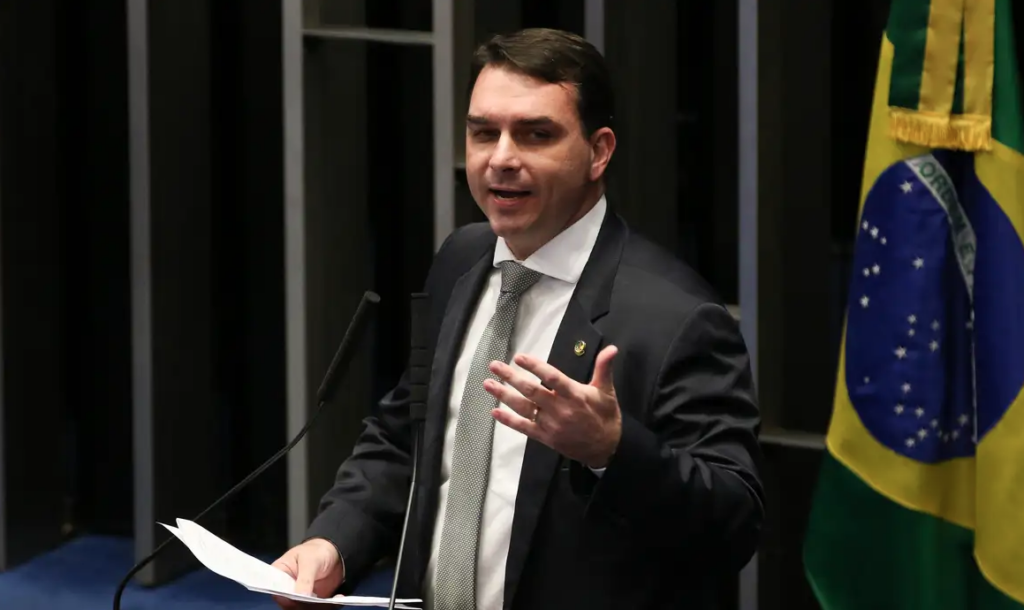
A few days later, Senator Flávio Bolsonaro, the son of former Brazilian president and convicted coup ringleader Jair Bolsonaro, posted a message on X alluding to the U.S. bombing boats in the Caribbean Sea:
How envious! I heard there are boats like this here in Rio de Janeiro, in Guanabara Bay, flooding Brazil with drugs. Wouldn’t you like to spend a few months here helping us fight these terrorist organizations?
Brazil’s Truth Commission Ignores the CV (and PCC)
They toss my face on the news, talking about we rap about gangs / These [Favelas] are concentration camps, where you all play cops and robbers / Then pick me to play the villain in your lying film / Giving me the starring role just to kill me at the end
— Lyrics by MC Poze do Rodo from “Diretamente do RJ” (Direct from Rio de Janeiro) in duo with Oruam
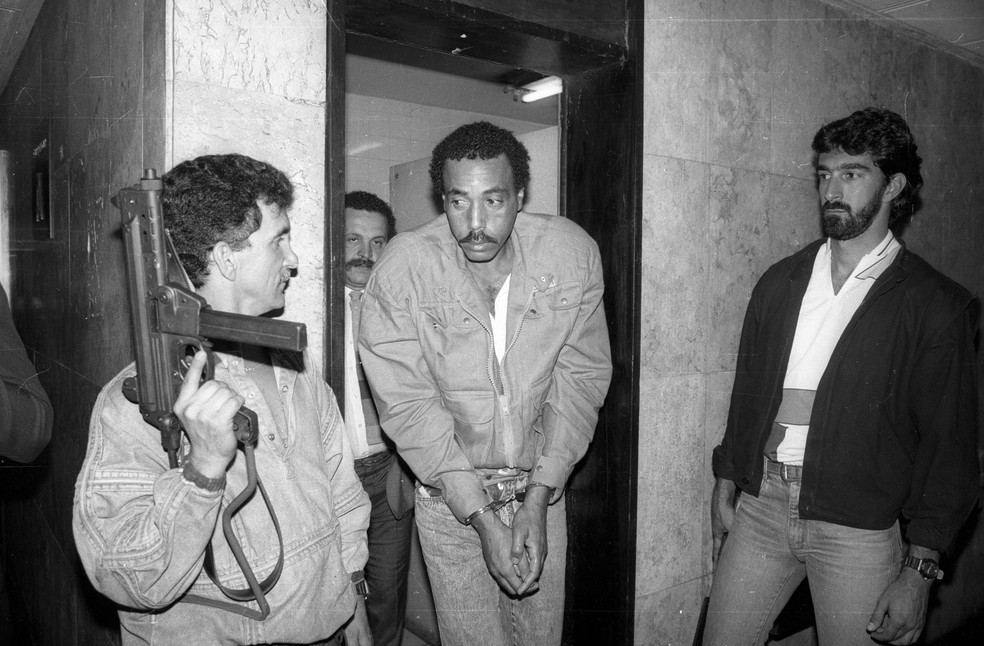
Rogério Lemgruber, the CV’s lead founder, thus the hyphenated acronym, CV-RL, in the title of this report, established the group while imprisoned at Cândido Mendes Penitentiary—“Cauldron of Hell”—(Ilha Grande, Rio de Janeiro). While 1979 is marked as the official date of the group’s founding, favelados (local favela residents) more in tune with on-the-ground events, cite a decade earlier, 1969, as the year the CV (previously called the Red Phalanx) emerged. In either case, the time frame encompasses the height of Brazil’s military dictatorship.
“Peace, Justice and Liberty” comprised the CV’s flagship slogan. Providing order and protection from prison guards were their initial objectives, goals achieved that garnered respect from other prisoners and even some prison officials, a testament to the excruciatingly miserable conditions to which they all were subjected.
Due south, in the neighboring state of São Paulo, impunity surrounding repeated police, skinhead, neo-Nazi, and death squad attacks forced youths in favelas and “quebradas” (ghettos) to ban together for safety. Though nameless and with no formal structure throughout the 1980s, the PCC began germinating among these groupings. Ultimately, ranks consolidated following the Carandiru massacre, where São Paulo security forces killed 111 inmates in Carandiru prison on October 2, 1992.
In December 2014, Brazil issued its Truth Commission report, a historical review board intended to investigate and shed light on human rights abuses before, during, and after the military dictatorship, an expansive time frame from 1946 to 1988. However, the commission’s three-volume, 3,388-page final publication, while it acknowledges repressive state apparatuses that committed (and commits) human rights abuses, does not mention the CV or PCC a single time. Almost in passing does the term “favela” appear on six occasions.
They fought to isolate themselves from the masses, an attitude we considered to be elitist.
—William da Silva Lima, one of the CV’s first members speaking about progressive, left-wing political prisoners he shared prison cells with in the 1960s and 70s.
Debatable as to why the PCC was excluded from Brazil’s Truth Commission due to its establishment after October 1992, the CV’s absence is not only inexcusable in a theoretical sense but adds fuel to the fire of unresolved economic and socio-political matters and ideologies of fear and repression that buckled yet again, giving way to 121 casualties in Brazil’s very own Bantustan last Tuesday.
It is a bitter reminder of the country’s Supreme Court unanimously concurring in April that Rio de Janeiro’s state government is in compliance with Brazil’s federal constitution regarding security policies. This marked the end of the much criticized ADPF-Favela hearings. In short, that 703 people were sent to early graves by Rio de Janeiro police forces last year, and 6,243 countrywide, according to Brazil’s magna carta and highest judicial institution, everything is A-OK.
The CV and PCC, organizations that defense attorney Flávia Fróes calls “anti-repression groups,” are not anomalies produced in a vacuum. The history of resistance to colonialism—Brazil, the last country in the Western Hemisphere to legally abolish chattel slavery serving as Exhibit A—is rife with examples.

Literally thousands of Quilombos remain scattered across the South American giant. Present-day favelas in Rio, whose origins trace directly back to these territories, include the Matriz hillside favela, Encontro hillside favela, Cachoeirinha hillside favela, Sampaio hillside favela, and Boca do Mato favela. Surviving refugees from Brazil’s war against Canudos commune (1896-1897) fled south to a poor hillside in Rio de Janeiro, which transformed into today’s Jacarezinho favela.
All things considered, Brazil is well overdue for a second, more robust, Truth Commission, one that absolutely requires third-party observers and negotiators to address the concerns of all sides in a society torn at its foundational seams.
Brazil’s “Healthy Left” Checks Out
Does the Brazilian government, particularly the current administration, have the political will to address the underlying and ongoing reasons giving rise to groups like the CV and PCC?
Confronted by 50% tariffs on his own country and the prospect of U.S. intervention in neighboring Venezuela, Lula’s September op-ed published in The New York Times and his address at this year’s UN General Assembly speak heavily about peace and non-intervention.
However, Brazil’s internal modus operandi, as far as Rio de Janeiro police forces engage with the favelas is concerned, operates like that miniaturized model of U.S. military invasions abroad.
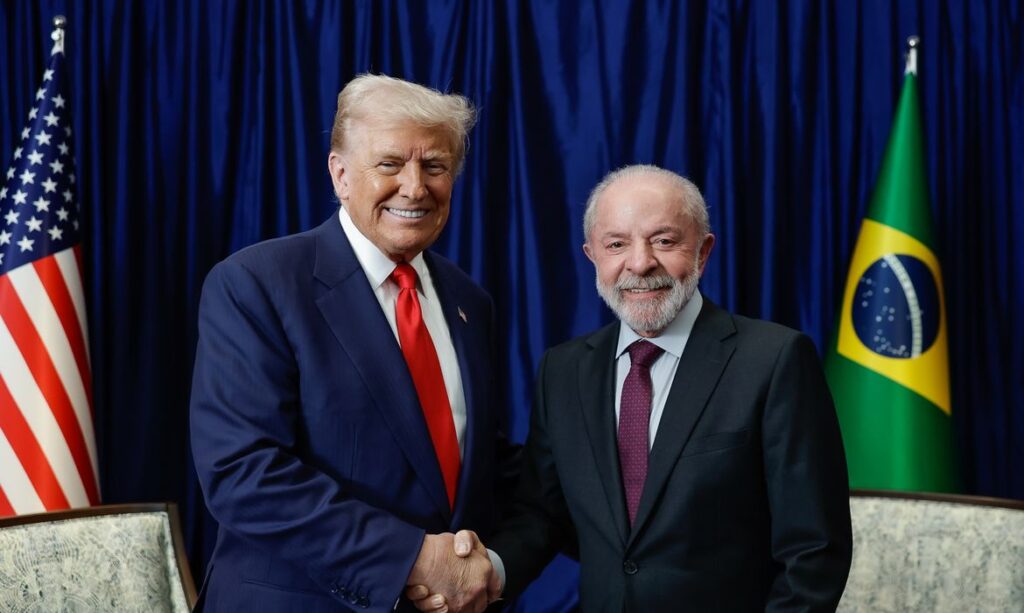
Responding to questions in parliament, Celso Amorim, Lula’s chief international affairs aide, stressed how “non-intervention is fundamental. Non-intervention is a fundamental principle of Brazilian foreign policy.”
Proving he is built only for the political big stage as opposed to just Rio, the former Minister of Foreign Affairs continued his reproach of foreign intervention that veered into the bizarre: “Even during the military regime, Brazil never accepted the idea of foreign intervention.”
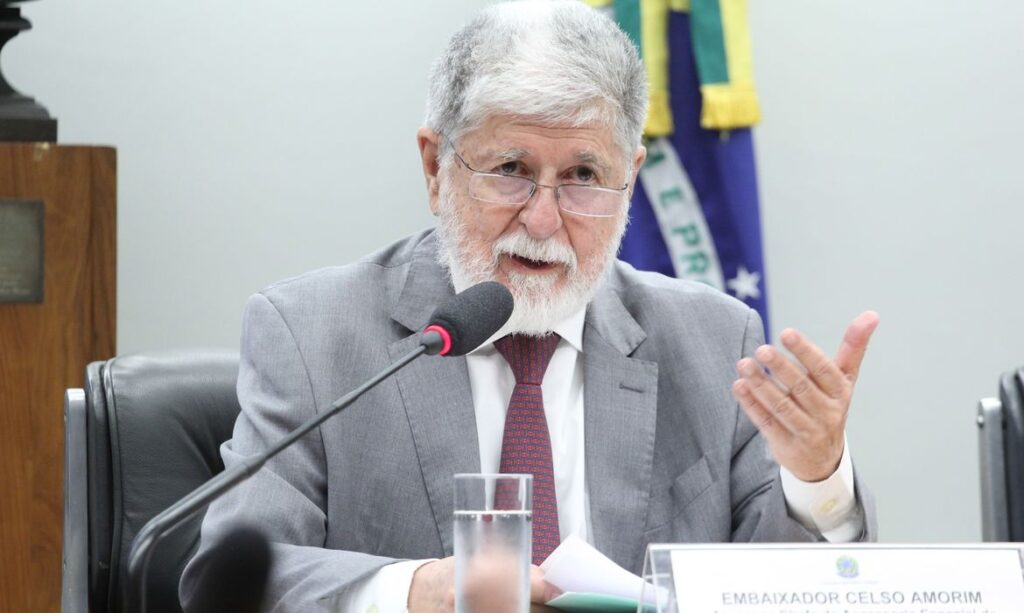
Like João Gilberto singing “Boy from Rio” and other hits conjuring “Marvelous City” nostalgia, Amorim’s pacifist lullaby is music to the ears of Brazil’s country club retreat leftists, a group that British intelligence agent Robert Evans described as the “healthy left.”
In the role of the top Information Research Department (IRD) representative operating from Britain’s embassy in Rio de Janeiro in the 1960s, Evans was more direct and clear: Freeze the Brazilian left by siphoning radicals and communists from their movement, particularly workers’ unions and other progressive activist organizations. Divisions created, material support and encouragement was provided to the “healthy left,” a debilitated group and “stabilizing factor, acting as brakes on the left-wing movement.”
They fought to isolate themselves from the masses, an attitude we considered to be elitist.
—William da Silva Lima, one of CV’s first members speaking about progressive, left-wing political prisoners with whom he shared prison cells in the 1960s and 1970s.
Segmenting last Tuesday’s record-breaking massacre to Rio’s right-wing government policies is the blame game the left rides with up until now. While it carries some weight, equally noticeable and despite having expressed “horror” over the bloodbath, Brazil’s commander-in-chief general’s silence over the event speaks volumes. No national address has been given, no condolences to grieving families or communities, neither he or a single major left-wing, progressive leader has yet to set foot in the Complexo da Penha or Complexo do Alemão to make their presence and concern felt if their plan means fighting “narco-terrorists.”
Talks of a second round Truth Commission? Forget it.
Politics Of Massacres
Days before the massacre, Lula announced he will be running for a fourth term as president. However, it is Rio’s governor, Castro, taking center stage, forcefully and unequivocally making his intentions known about how he is dealing with the favelas and their residents. Standard operations have not changed; they have only intensified.
Accused of abuse of power and corruption, Castro’s tough on crime measures come amid investigations against the governor by Rio’s State Supreme Court, which could result in his impeachment.
Hours after the massacre, speaking to reporters as if he were Brazil’s president, Castro chastised Lula’s government for not assisting in the fight against “narco-terrorism,” thus alluding to the federal administration’s weakness and, essentially, leaving Rio officials no choice but to take action. All that’s left has been an open, free-for-all killing field before the world and Lula’s “horrified” eyes.
In November, several months after the fact, the Workers Party (PT) solicited Brazil’s Supreme Court to consider opening investigations into Rio’s governor for espionage and putting Brazil’s sovereignty at risk by contacting the US earlier this year. Unintimidated, Castro has already announced “10 more scheduled operations,” against the CV, the likes of the massacre on 28 October.
And just like that, British intelligence officer Robert Evans’ prognosis decades ago holds true today. Not a single national creation myth, shared fluidly between the Brazilian right and “healthy left,” nor the present government is equipped to address the historical lineage of violent repression leading up to last month’s state-sponsored carnage in the slums of Rio de Janeiro.

CovertAction Magazine is made possible by subscriptions, orders and donations from readers like you.
Blow the Whistle on U.S. Imperialism

Click the whistle and donate
When you donate to CovertAction Magazine, you are supporting investigative journalism. Your contributions go directly to supporting the development, production, editing, and dissemination of the Magazine.
CovertAction Magazine does not receive corporate or government sponsorship. Yet, we hold a steadfast commitment to providing compensation for writers, editorial and technical support. Your support helps facilitate this compensation as well as increase the caliber of this work.
Please make a donation by clicking on the donate logo above and enter the amount and your credit or debit card information.
CovertAction Institute, Inc. (CAI) is a 501(c)(3) non-profit organization and your gift is tax-deductible for federal income purposes. CAI’s tax-exempt ID number is 87-2461683.
We sincerely thank you for your support.
Disclaimer: The contents of this article are the sole responsibility of the author(s). CovertAction Institute, Inc. (CAI), including its Board of Directors (BD), Editorial Board (EB), Advisory Board (AB), staff, volunteers and its projects (including CovertAction Magazine) are not responsible for any inaccurate or incorrect statement in this article. This article also does not necessarily represent the views the BD, the EB, the AB, staff, volunteers, or any members of its projects.
Differing viewpoints: CAM publishes articles with differing viewpoints in an effort to nurture vibrant debate and thoughtful critical analysis. Feel free to comment on the articles in the comment section and/or send your letters to the Editors, which we will publish in the Letters column.
Copyrighted Material: This web site may contain copyrighted material the use of which has not always been specifically authorized by the copyright owner. As a not-for-profit charitable organization incorporated in the State of New York, we are making such material available in an effort to advance the understanding of humanity’s problems and hopefully to help find solutions for those problems. We believe this constitutes a ‘fair use’ of any such copyrighted material as provided for in section 107 of the US Copyright Law. You can read more about ‘fair use’ and US Copyright Law at the Legal Information Institute of Cornell Law School.
Republishing: CovertAction Magazine (CAM) grants permission to cross-post CAM articles on not-for-profit community internet sites as long as the source is acknowledged together with a hyperlink to the original CovertAction Magazine article. Also, kindly let us know at info@CovertActionMagazine.com. For publication of CAM articles in print or other forms including commercial internet sites, contact: info@CovertActionMagazine.com.
By using this site, you agree to these terms above.
About the Author
A former editor-at-large for African Stream and ex-staff writer at Telesur, Julian Cola is publishing a memoir of intimate, community-inspired stories titled “Proibidão (Big Prohibited): Off-Grid Correspondence From Brazil & Ecuador.”
The pre-launch is in December 2025. It includes media beefs and, having taught in the teaching-English-industrial-complex, the book discusses linguistic soft-power in the region and creative ways of dealing with it as mentioned in the essay, Listening To 2Pac In The Andes (Kawsachun News).
For more information contact: traducoessemfronteiras@protonmail.com