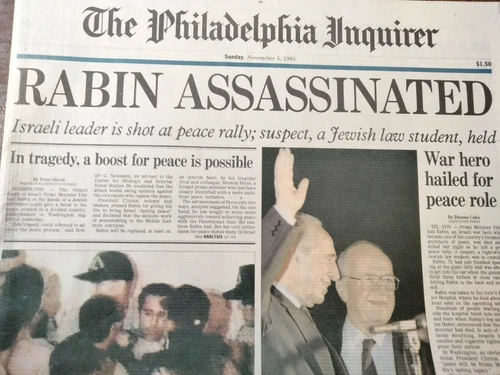
Who controls the past controls the future: who controls the present controls the past.
—George Orwell, quoted by Shabak chief Ami Ayalon in 1996.
Prime Minister Benjamin Netanyahu is not the only homicidal politician in the Promised Land. On December 29, 2025, Finance Minister Bezalel Smotrich of the Religious Zionism Party called Israeli Supreme Court President Isaac Amit, who has stood against legalizing Israeli settlements, “a megalomaniac, violent, predatory totalitarian who’s robbing Israel of its democracy” who should be “run over.”[1]
On January 2, 2026, former Israeli Prime Minister Ehud Olmert claimed that “Smotrich and His Far-right Ilk Are Preparing the Ground for the Next Political Murder,” referencing the 1995 assassination of Prime Minister Yitzhak Rabin.[2]
Olmert is not alone in this view. More than 700 academics and 142 retired judges are calling for Smotrich’s dismissal and prosecution for incitement to violence. Israeli opposition leader Yair Lapid insists Smotrich has threatened to “murder” the chief justice.
Two days later, a prominent district court judge, who was overseeing a naval bribery case that came close to Netanyahu, was run over by an off-road vehicle while driving his motorcycle on the highway. Police said it was an accident.
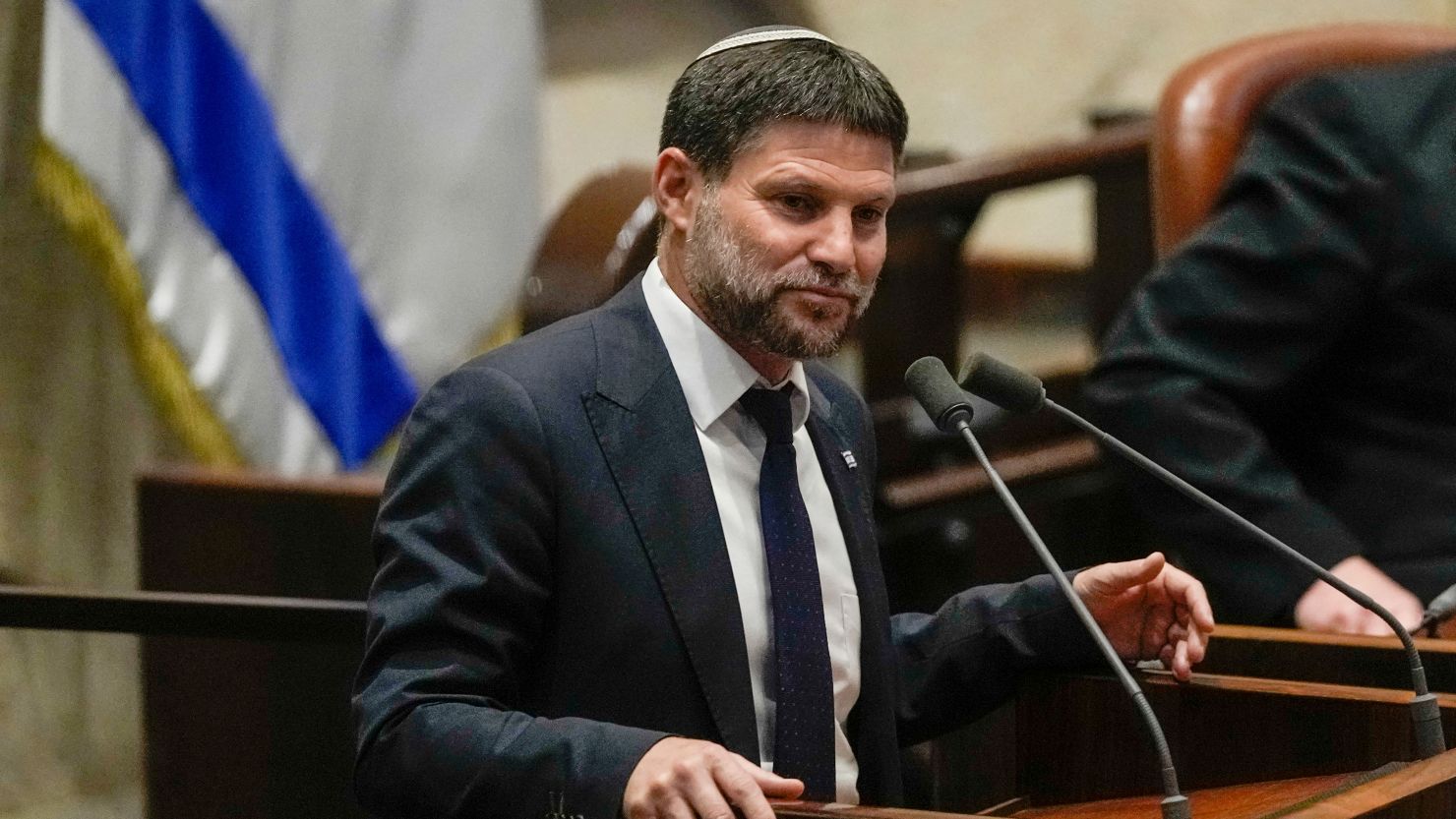
Olmert insists that Smotrich and National Security Minister Itamar Ben-Gvir are engaging in a campaign of incitement against Israel’s legal system.
He claims that Israel’s far-right ministers are preparing for a political assassination, given that this type of rhetoric preceded the November 4, 1995, murder of Prime Minister Rabin.
Smotrich, of Ukrainian heritage, was born in an illegal West Bank settlement and continues to reside in one. He is an ultra-Orthodox rabbi.
Ben-Gvir is Mizrahi, son of immigrants from Iraqi Kurdistan. He studied at a yeshiva founded by Brooklyn-born ultra-Orthodox Rabbi Meir Kahane and headed Kahane’s youth outreach.
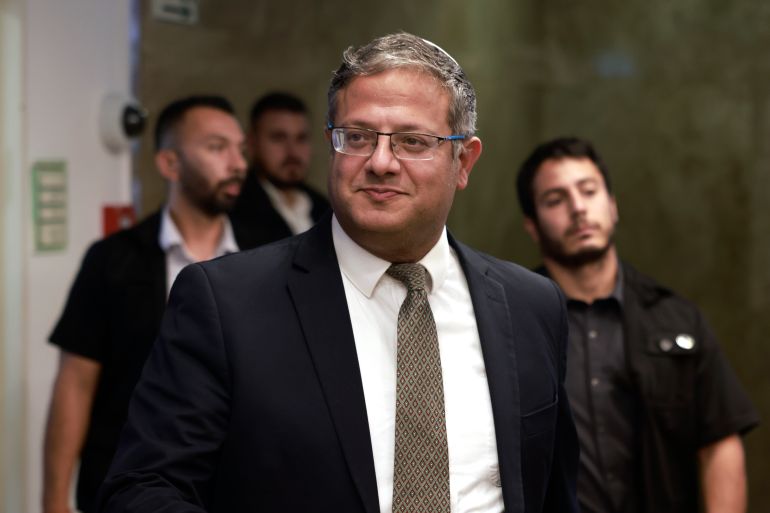
He has been charged with more than 50 crimes and convicted of eight, including supporting a terrorist organization. A lawyer, he lives in the West Bank. Since the 1990s Smotrich and Ben-Gvir have been notorious Kahanists.
Kahane is most known in the U.S. for founding the Jewish Defense League, which started by terrorizing Black people in Brooklyn.
In the 1960s, Kahane took a WASP-sounding pseudonym and went undercover for the CIA and Mossad. With a childhood friend he set up a think-tank and posed as a journalist. Under this cover he worked to dissuade Jewish students from joining anti-Vietnam war protests.
Later, he was more useful in attacking officials of the Soviet Union, claiming they were preventing Soviet Jews from emigrating to Israel.
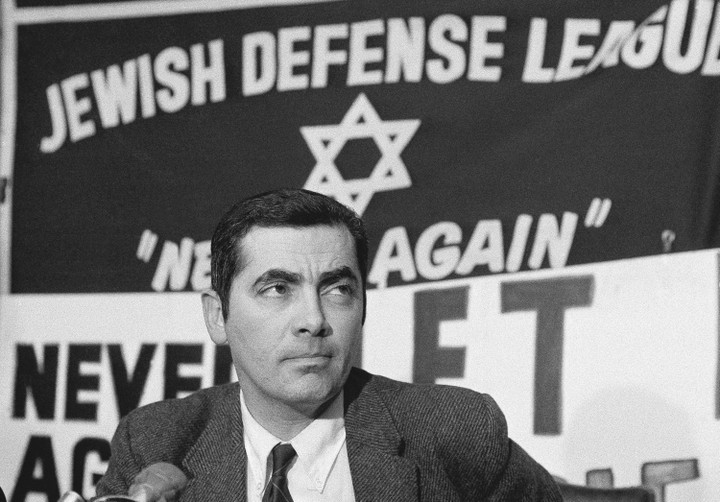
In 1971 JDL militants shot up the Soviet Mission to the United Nations in New York. Kahane was briefly arrested. After more terrorist attacks in the United States, including threats against President Richard Nixon and blowing up the office of Jewish impresario Sol Hurok, the JDL was named a terrorist organization.
Kahane then moved to the occupied West Bank where he opened a center in Kiryat Arba and preached to young Jews that ethnic cleansing was a religious imperative. In 1980 he was jailed for planning to blow up the Dome of the Rock (subsequently attempted by his followers in 1984).
He founded the Kach Party, which called for banning intermarriages between Jews and Arabs, segregating Jews and Arabs, revoking Israeli citizenship for non-Jews, and expelling Arabs from Israel, while declaring himself honorary president of the “Independent State of Judea.”
He won a seat in the Knesset in 1984. In 1985, historian of the Holocaust Yehuda Bauer warned, “Kahanism can well, heaven forbid, turn out to be the tip of a very large iceberg threatening our society.”[3]
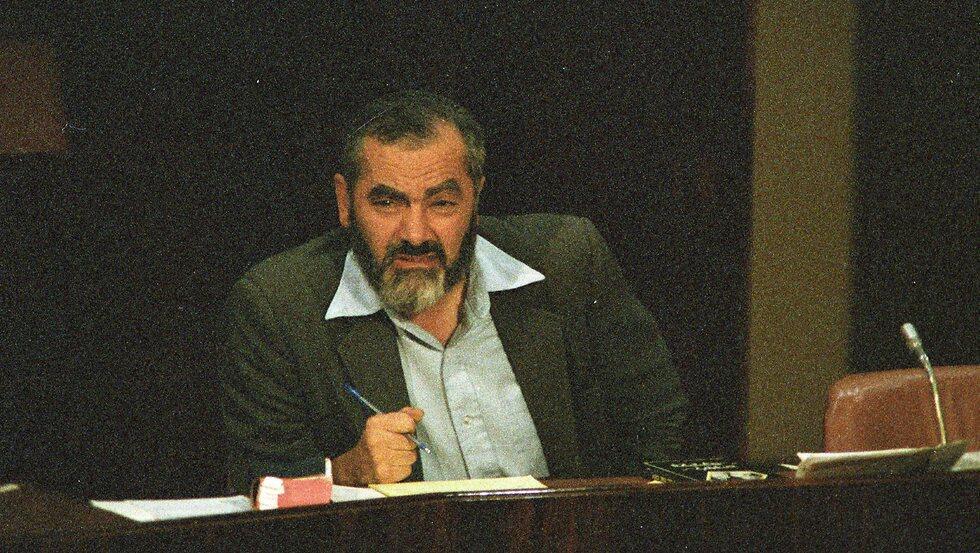
Kahane told journalists that “democracy and Judaism are two opposite things.”[4] He wanted to replace the constitutional government with a king and a supreme rabbinic court, who would rule following strict interpretation of Jewish law.
The Knesset subsequently amended the country’s basic law to bar any party or politician that supported violence against the state, incited racism, or rejected “the existence of Israel as a Jewish and democratic state.”[5] In 1988, after passage of the law, the Supreme Court banned Kahane from participating in Israeli politics.
On November 5, 1990, at a Zionist conference in New York City, Kahane was assassinated by an Egyptian militant. Shabak was certainly not sad to see him gone; nevertheless, he seeded many disciples among settlers, impoverished Mizrahi, and ultra-Orthodox immigrants, including Ben-Gvir, Boston-born doctor and Israeli military officer Baruch Marzel, Russian immigrant Avigdor Eskin, and young yeshiva student Smotrich.
Ehud Sprinzak of Hebrew University wrote of the American rabbi’s legacy: “Not a single Israeli I know has made a greater contribution to the brutalization of the nation and its public spirit than did Kahane.”[6] The same year, Aviezer Ravitzky, a religious scholar, gathered a group of intellectuals to assess the Kahane threat and to propose suggestions for the state. Their conclusions were on target but ineffective.
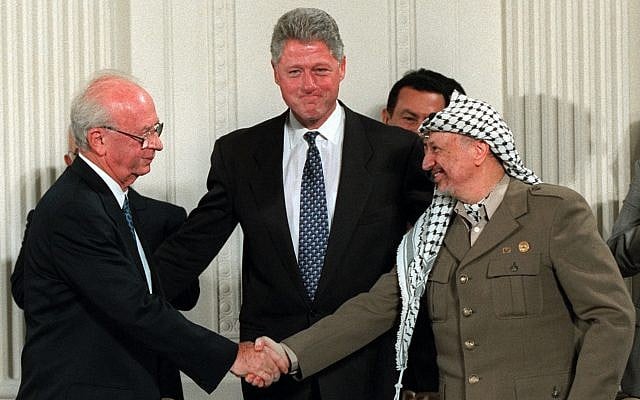
In 1995 Ben-Gvir, as an activist in Kahane’s Kach Party, vehemently opposed the Oslo Peace Accords agreed on by Rabin, Defense Minister Shimon Peres, and Palestine Liberation Organization Chairman Yassir Arafat. Ben-Gvir venerated Baruch Goldstein who, in February 1994, killed 29 Arabs at the Cave of the Patriarchs/Ibrahimi Mosque in Hebron. Goldstein was beaten to death by those present. In March 1995 Ben-Gvir dressed up for Purim as Baruch Goldstein and asserted: “He is my hero.”[7] Goldstein’s massacre prompted Rabin’s government to finally outlaw Kahanist parties as “terrorist organizations.”
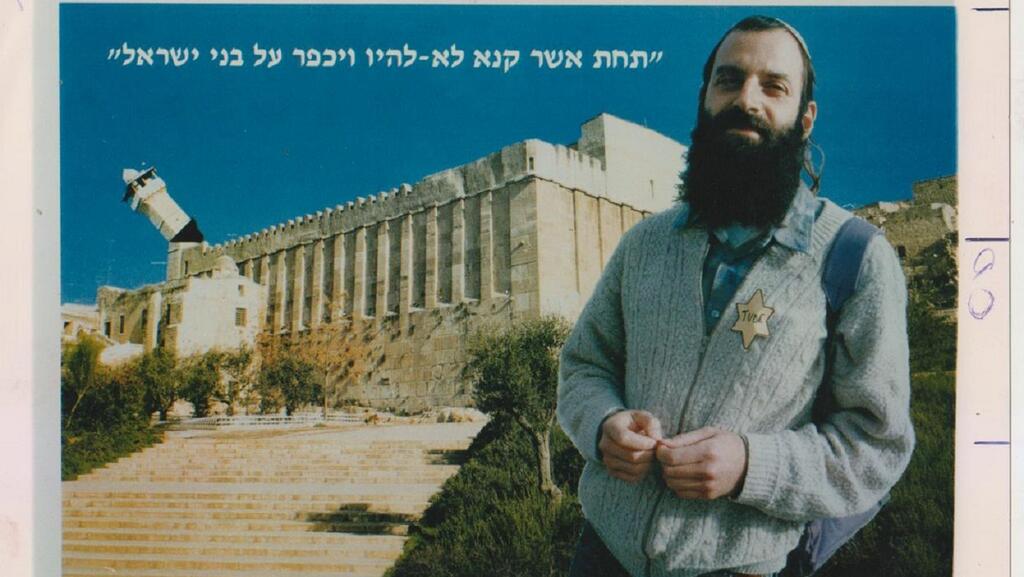
Two months after the massacre, Hamas launched its first suicide bombing of civilians within Israel proper.
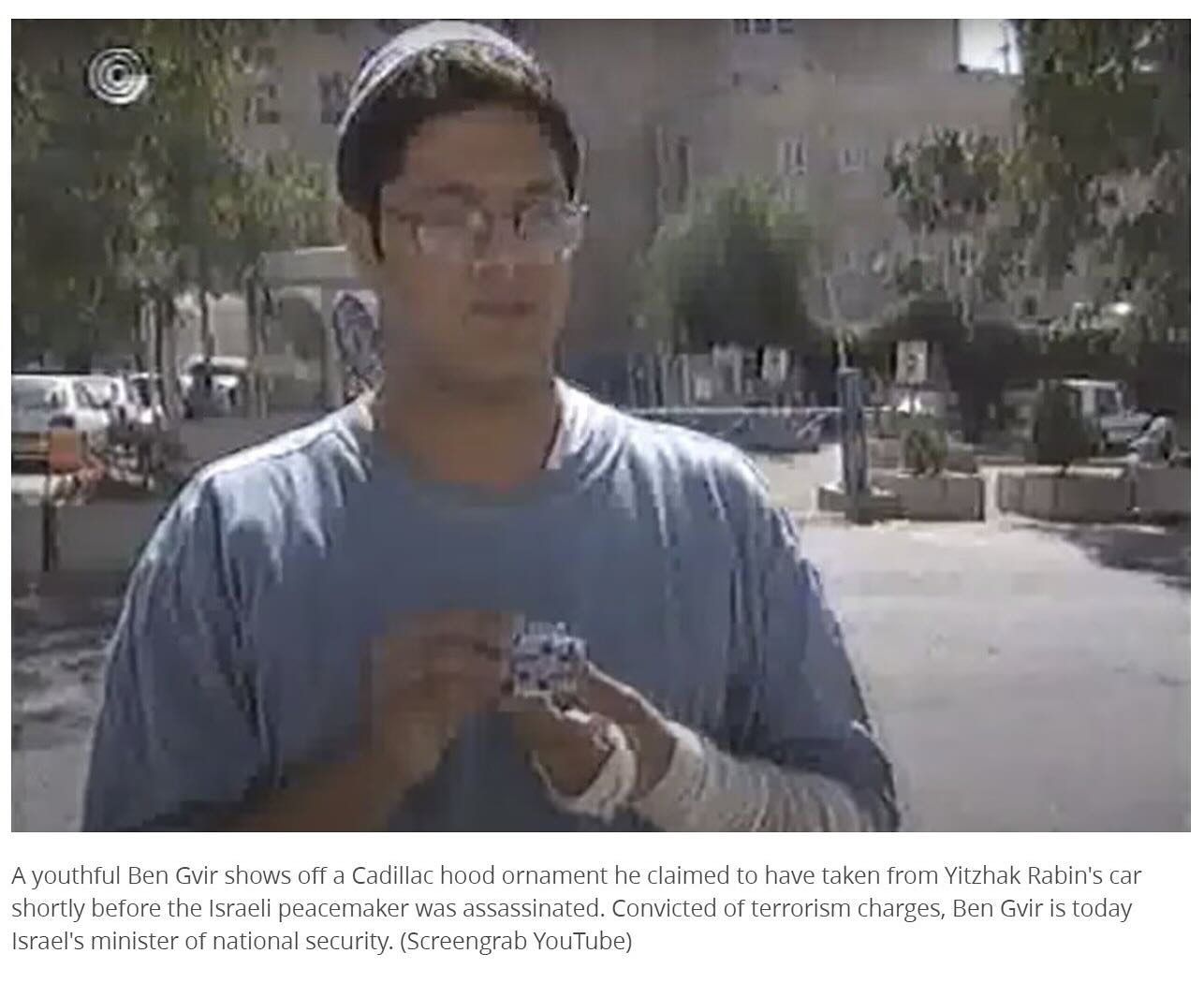
Shortly before the November 1995 assassination of Rabin, Ben-Gvir stole a hood ornament from the prime minister’s Cadillac, called the media, and bragged on television, “We got to his car, and we’ll get to him too.”[8]
Israel is a bitterly bifurcated entity and has been at least since Kahane moved there in 1971. A 2022 poll by Israel Democracy Institute “revealed that a record-high 62% of Israelis place themselves on the right wing of the political map.”[9]
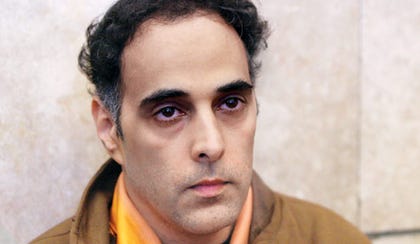
Today, the only left-wing party in the Knesset is the Arab party. Many in the right-wing majority would like to see Rabin’s convicted assassin, Yigal Amir, released from prison despite a law against it.
Organizers of the most recent memorial event for Rabin said, “Today, thirty years later, and two years after the October 7, 2023, massacre, incitement and division are once again on the rise….Israeli society stands at a breaking point.”[10]
It is time to revisit the assassination of Rabin with attention on who has benefited, rather than rigid left versus right ideological views. Given the preponderance of evidence, it is likely it was not Amir (Left) or Rabin’s bodyguard or Shimon Peres (Right) but one of the Kach terrorists of the time, such as Ben-Gvir, Marzel, or Eskin, if not 15-year-old Smotrich, who pulled the fatal trigger on Rabin.
Amir belonged to the religious Right, but he never attacked Arabs and had no personal animosity against Rabin. He wanted to kill the Oslo Accords. Whether or not he killed Rabin, he succeeded in his goal.
Rabin Demonized over Oslo Accords
At the time of the assassination, Likud Party candidate for prime minister Benjamin Netanyahu proclaimed he did not support the extremists or the vilification of Rabin and that he supported the Oslo agreements as legal law. Since the Rabin assassination, Netanyahu and extremist Ben-Gvir have been locked in an embrace of opportunism and blackmail, both apparently knowing more than the public about what happened on November 4, 1995.
In March 2020, after years of being banned, Ben-Gvir finally entered the Knesset under the banner of the Kahanist Jewish Power Party. In 2026 he serves “under” Netanyahu as national security minister as does Smotrich as finance minister. Marzel’s party is still outlawed, and he calls his formerly close ally and lawyer Ben-Gvir a sellout for aligning with Likud and Netanyahu.
Avigdor Eskin is devoted to Yigal Amir, holding vigils for him at the prison on his birthday and even helped him find a wife while incarcerated. Ben-Gvir was also involved in trying to get Yigal Amir released from prison and, in 2025, described Eskin as “synonymous with devotion.”[11]
Today, Netanyahu’s genocidal actions are nearly indistinguishable from the Kahanist goals of Ben-Gvir, Marzel, Eskin and Smotrich.
The Oslo Accords were the cause of the assassination of the prime minister in 1995. Under Oslo, land captured in the 1967 Six-Day War, which had been led by Rabin, would be returned to the Palestinians. Jewish Israelis who had settled on the captured land would be evicted. The ultra-Orthodox Right believed—and believes—that it was treasonous to return any of the original Land of Israel promised to Jews in the Torah. They believe that religious law supersedes secular laws, including those of the Zionist state.
To halt what they saw as giving away the promised lands, the ultra-Orthodox Right escalated abuse, first calling Rabin drunken and mentally ill and finally a traitor who deserved to die under an ancient notion known as din rodef or din moser, which proclaims a duty to stop, by killing if necessary, a Jew who is betraying Jews.
Theories Left and Right
At present, who killed Rabin is an ideological test, with only two possible answers. The founding Zionists, including the Supreme Court chief justice, insist that Rabin was murdered by an impressionable Mizrahi law student, who was “incited” by the Right.
The Far Right insists there was a conspiracy at the top levels of government, especially the domestic security agency Shabak (aka Shin Bet), to discredit the religious Right. Many believe that Peres was behind the Shabak conspiracy and that Rabin was killed by someone other than Amir, probably by Rabin bodyguard Yoram Rubin.
Others believe Rabin himself conspired to frame Amir in a failed assassination attempt, but that Shabak and Peres sabotaged his plan.
Likud chief Netanyahu tries to hold a middle position in which there was neither incitement nor conspiracy: Amir was just a lone nut.
Military historian Uri Milstein demonized Rabin, the popular military hero, in The Rabin File. Rabin’s flaws and failures of judgment were exposed. Subsequently, others claimed Rabin bribed opposition members in the Knesset to vote for the Oslo agreements.
Ultimately, after months of protests and increasing threats of violence, at a campaign rally in Jerusalem in October 1995 some protesters carried signs with Rabin portrayed as a Nazi and shouted “Traitor!” and the like, which Likud leader Netanyahu, who spoke from the balcony, did nothing to stop. It was after this rally that Ben-Gvir attacked Rabin’s car.
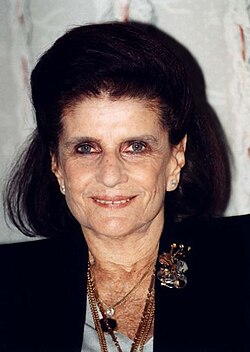
Peres insisted late in life that he did not like to see his rival Rabin humiliated and that they became closer. He said, “We’d meet in private at his home every Friday. We kept talking about practical matters, and he wouldn’t even let Leah in the room when we were meeting there.”[12] (Leah Rabin wrote that Rabin called Peres “a schemer.”)
Wealthy French-Israeli Jean Frydman, whom Peres had known since 1956, offered to pay for a peace and non-violence rally.[13] Rabin proudly refused to wear a bullet-proof vest or to ride in an armored limousine. There had been attacks on his person and a demonstration where someone carried a coffin with his name on it. It is remarkable that he agreed to the rally.
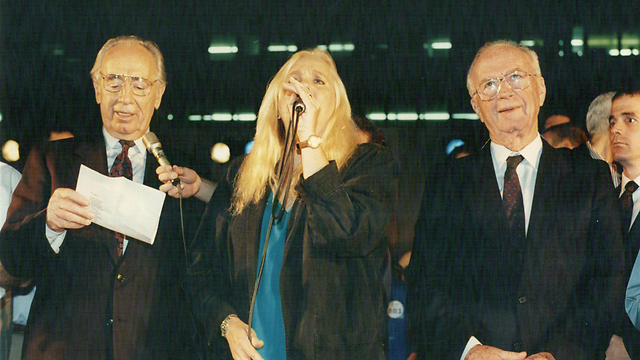
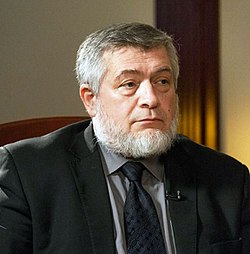
Murder was certainly in the air. Days before the fatal rally, Eskin sat in front of the prime minister’s house with a group of protesters, including Amir, and cast an ancient death curse on the prime minister. On the bus to Rabin’s peace rally, Amir, who had a loaded gun in his pocket, says a friend told him that Ben-Gvir was planning on killing Rabin that night.
In the official view, it was due to Shabak incompetence that Amir was able to lurk in the parking lot, evade VIP and police protection, and kill the prime minister with two bullets while slightly injuring bodyguard Rubin with one. Rabin died on the way to the hospital or shortly after arrival.
His wife was notified of his death at Shabak headquarters, where she had been driven in a separate limousine.
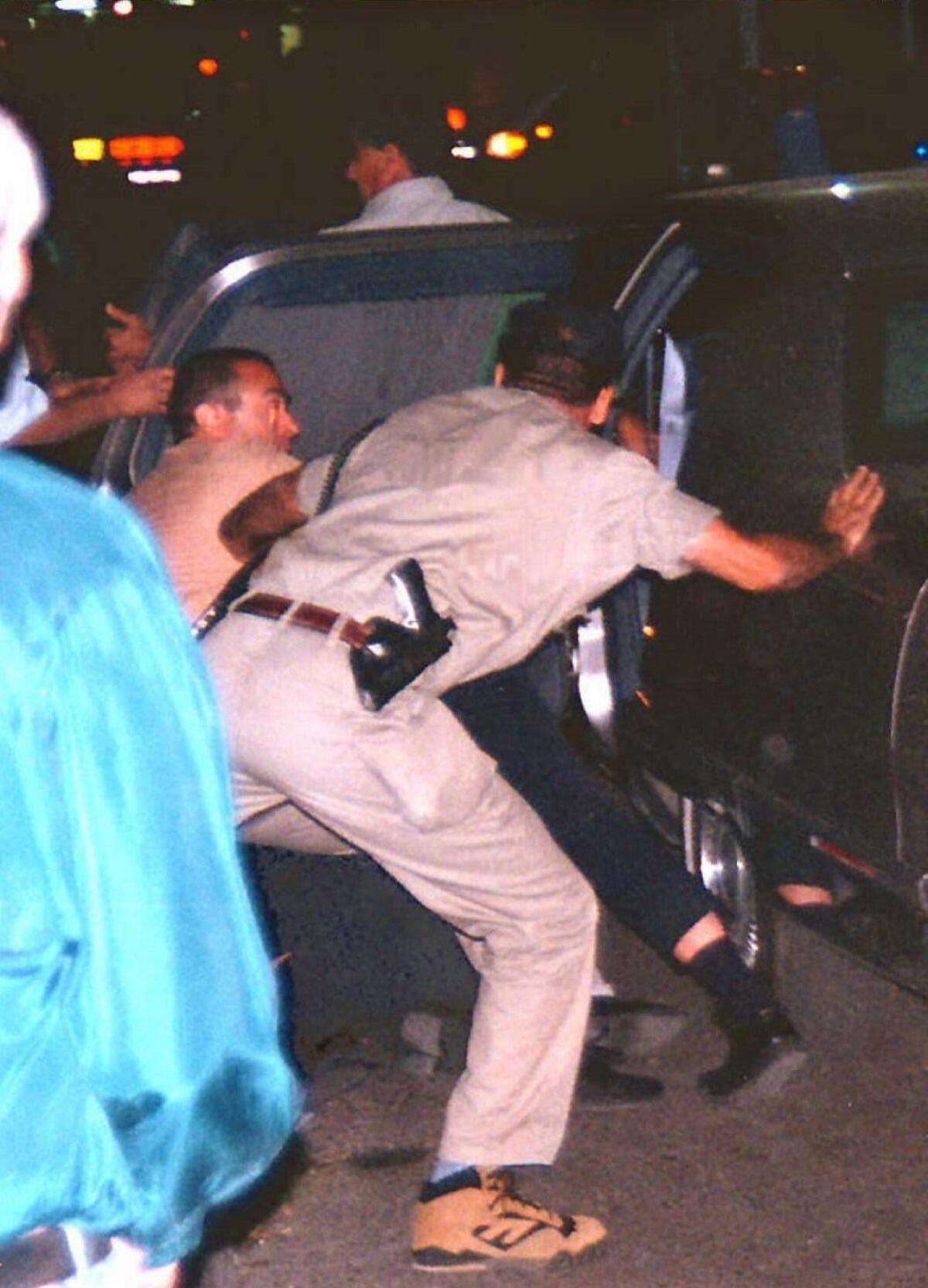
For the Israeli Right it is as clear as day that the murder was a conspiracy originating with the secular government of Rabin, Peres and Shabak chief Carmi Gillon, who was suspiciously in Paris at the time.
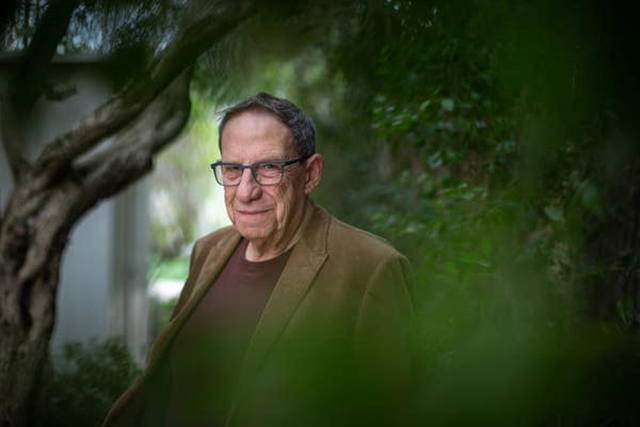
In the right-wing elements of Shabak paved the way for the murder of Rabin by inciting him via their agents, setting up Amir with fake bullets and making a path for him to shoot near the limo. Either real bullets had been returned to Amir’s gun, or Amir’s shot was not fatal and the fatal shot took place in the limo by the bodyguard, or possibly in the hospital. Amir was framed to discredit the religious Right.
Although it is anathema to question the lone-wolf guilt of Amir, who admitted that he intended to injure the prime minister, there are several irrefutable facts surrounding the case that make conspiracy a real possibility. Many of these facts were brought out by journalist-investigator Canadian Israeli Barry Chamish (Who Murdered Yitzhak Rabin?) and Israeli Natan Gefen (The Fatal Sting, which is available in english here).[14]
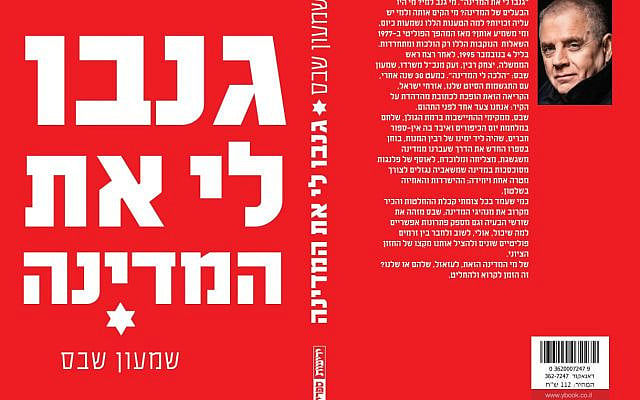
Disturbing Evidence
Many witnesses, including Rabin’s wife, said they heard shouts of “Blanks!” or “It isn’t real!” when Amir shot at Rabin. Amir said he fired three shots that he believed at the time to be real. Several witnesses said Rabin was not injured when he got into his limo. There is (disputed) evidence that a security officer who shouted “Duds!” was subsequently “suicided.”
Amir at first protested that he fired only to scare Rabin. He was surprised when police announced he was dead. Amir only accepted responsibility after being held in solitary confinement for 40 days. Amir’s rabbi is said to have disapproved of killing under din rodef or din moser. Amir’s mother insists her son is innocent. She says: “Everyone is too scared to talk about it” and “I have no idea who did it—ask Shabak.” She claims 90% of Israelis agree with her.
Significantly, Rabin was shot point blank from the front (impossible from Amir’ angle) as well as being hit in the back. Rabin’s concerned daughter gave his shirts to U.S. journalist Dan Ephron to give to an expert in Arizona.
The expert destroyed Rabin’s shirts by experimenting on them and concluded the front holes were not made by a gun but some kind of hole punch.
The level of incompetence of security is beyond belief. Amir had easy access to the area near Rabin’s car. No one tried to make him leave; police believed he was an undercover agent. Amir fired three times. None of the police or guards shot Amir or even at him.
The one who finally disarmed him (a new guard) said he considered shooting Amir but decided it would be more efficient to disarm him. Later, Shabak chief Gillon commented that the only thing he did not understand about how his team behaved was why Amir was not killed.
Experts vary in the amount of time it took the limo to get to the hospital—anywhere from two to twelve minutes. Bodyguard Rubin testified that he lost consciousness from when he got in the car until they arrived at the hospital. He also said he tried to give emergency treatment to Rabin but was injured himself. He may be lying and is the killer, as Chamish claimed, or someone else may have entered the car and shot the prime minister.
After the rally, Leah Rabin was driven in a separate limo to Shabak HQ. Presumably, had nothing gone wrong, her husband would have joined her. The HQ is farther from the rally site than the hospital where the prime minister ended up.
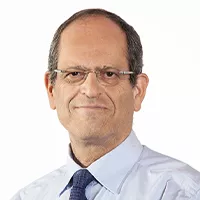
One of Rabin’s surgeons, Dr. Yoram Kluger, told Haaretz that it took 12 minutes to get to the hospital from the rally.[15] Shabak Non-Arab Division chief Hezi Kalo insists it was two minutes.
Blood coagulation evidence suggests Rabin was shot between five and seven minutes after the car left the rally. Whatever happened, the driver would have known about it. He said there was much pedestrian traffic and detours, and he took a “wrong turn,” which he deeply regretted. The driver eventually needed a guide to help him find the hospital.
A Shabak agent, Avishai Raviv, is a significant character in the narrative. Blue-eyed teenager Raviv was recruited as an infiltrator-informer for Shabak in 1987 at the latest. He became involved at high levels with Kahane and his groups, including with youth leader Ben-Gvir. In the early 1990s, Raviv founded Eyal, which staged media-influenced Kach ceremonies. Eyal also sometimes worked with Hamas. Raviv entered the same university as the Amir brothers, and they became political friends.[16]
Ben-Gvir said he suspected Raviv was a Shabak informer in February 1995 when a mutual friend was arrested and only Raviv knew where he was. Amir said everyone knew that Raviv was an informer; Amir considered him a naïve but basically well-meaning person.
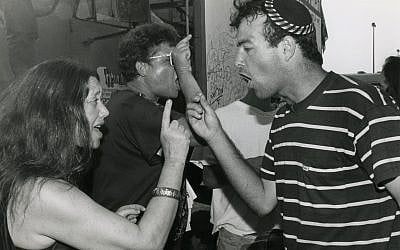
After Rabin’s murder, Shabak had Raviv placed in a cell near Amir. Their conversation included remarks that implied a larger plot. Raviv was not questioned by the Shamgar Commission until his importance was leaked four years later by the chief of police or the Attorney General. They had known Raviv as an agitator and allowed him to participate in Netanyahu’s rally, where he held posters of “Nazi” Rabin, and to attend a counter-demonstration at Rabin’s rally, where he spoke on his cell phone throughout.
After the shots, Raviv phoned his roommate who was watching on television and believed Rabin was uninjured. Raviv then called the media and claimed in the name of Sword of David: “We missed this time, but we will get him.”[17] These were virtually the same words Ben-Gvir told live television when he stole Rabin’s hood ornament the month before. When it was confirmed that Rabin had died, Raviv phoned media again, claiming Sword of David had done it. Sword of David was another fake organization founded by Raviv for Shabak.
In 2000 Raviv was tried for knowing about Amir’s plan and failing to prevent the killing. He was acquitted in 2003 on the grounds that he had been doing his job as an informer, and his handlers did not take the threats seriously. The handlers say he did not inform them of Amir’s threats against Rabin.
After his trial, Raviv went back to a secluded life. He had been paid extravagantly by Shabak, which is one reason many suspected him of being an informer. In May 2023 Raviv came out of obscurity and spoke with reporter Omri Assenheim about his work for Shabak for an episode of Uvda [Fact]. In promos, Raviv discusses working undercover in Kach. He mentions a hunger strike he and Ben-Gvir planned at Temple Mount. The clip shows Raviv talking about Ben-Gvir’s ability to gain media attention. Subsequent to the airing of the promo, Assenheim and others at Uvda received threatening messages, and the episode was pulled.[18]
The primary right-wing narrative posits bodyguard Rubin as the murderer; however, the driver was highly trusted by the Rabin family, and he made no such claim about the bodyguard. Both driver and bodyguard continued to work for the state. Rather, it seems likely that something unexpected happened as a result of the driver’s “wrong turn.”
Was the car hijacked by someone who knew the intended route to Shabak headquarters? Who might that be? The failure of the driver and bodyguard to acknowledge a gun-wielding hijacker would mean they were loyal to their employers. If an intruder were identified, they would be complicit in covering up a fake assassination gone awry which, if disclosed, would have been earth-shattering.
Many on the Right insist that Shimon Peres was the chief conspirator and beneficiary of the assassination. Chamish collaborator David Rutstein claimed to have a sworn affidavit from a Shabak officer stating that Peres was at the hospital and fired the fatal shots into the prime minister’s back himself. (Peres called Rutstein insane, and Rutstein in turn sued Peres for libel.)
Uri Barkan (pseudonym) published a novel—Blank—that claims Peres arranged the murder of Rabin in a conspiracy with the head of the Jewish Division. They double-crossed Rabin by inserting real bullets after Shabak agents had replaced Amir’s bullets with fake ones. Peres called Barkan’s book a “blood libel.”
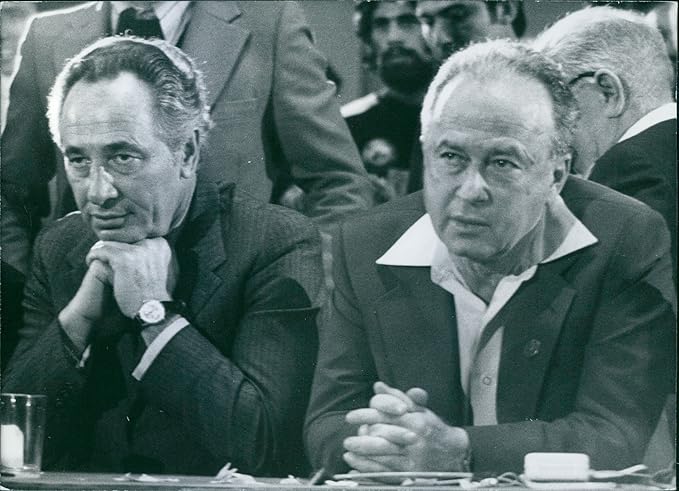
It is unlikely that Peres was behind a plot to kill Rabin. First, of course, is that Peres did not benefit after the assassination. Peres actually lost in the upcoming election. Second, Peres did not eventually see the implementation of the Oslo Accords, though he and French President François Mitterrand had initiated them, and he shared the Nobel Prize with Rabin and Arafat. Above all, Peres would not have considered it thinkable to kill a fellow Jew.
In May 2017, shortly before his death, Peres admitted his relationship with Rabin was always complicated, that they were rivals in different factions of the Labor Party: Rabin was military while Peres had been David Ben-Gurion’s protégé and instrumental in building Israel’s secret nuclear program with the assistance of France. Peres said he differed with Rabin on the viability of removing the settlers from the Golan Heights, but he always supported a two-state solution, not Greater Israel. He said the peace rally “was the first time Rabin hugged me. The first and the last. In hindsight, it was a goodbye hug. I missed him a lot after that.”[19]
Difficulties in Thought
Rabin assassination analyst David Morrison in his book on the subject (Lies: Israel’s Secret Service and the Rabin Murder) discusses “difficulties in thought” in which an official line is challenged by facts. Both the official and the right-wing theories have seemingly insoluble problems. Perhaps these difficulties in thought regarding who killed Rabin can be overcome.
One young right-wing theorist, French law student Pierre Lurçat, noticed that Mitterrand once participated in a staged (or real) assassination attempt on himself from which he gained sympathy and celebrity and that ambitious socialist Peres and Mitterrand had been politically and personally close since building a secret French-Israeli nuclear reactor in 1956. A Rabin fake assassination attempt might have been discussed between them, one that would emulate Mitterrand’s assassination scheme. Lurçat only intuited this scenario, but when authorities attacked him, he decided he had hit the nail on the head.[20]
Lurçat’s theory poses an intriguing possibility when it is understood that it was not Peres’s goals that were achieved by the murder but those of young Smotrich “and his ilk,” such as Marzel, Eskin, and Ben-Gvir. Could Peres and Mitterrand have sold a plan to Rabin and Gillon to set up Amir for an unsuccessful assassination attempt for the purpose, not of thrusting Peres into power but of boosting sympathy for Rabin and providing an opportunity to head off would-be assassins at the pass as well as securing victory for Rabin in upcoming elections?
Could this Mitterrand-Peres plan have been agreed on at the top and then hijacked by an outsider like Ben-Gvir, who recently had access to Rabin’s limo routes, attacked his car, and made threats against him?
Up until the murder, the Attorney General had insisted that violent words and even acts were protected “free speech.” According to polls conducted by Shabak and known to Rabin and Peres, there were at least 800 individuals prepared to kill Rabin (and/or Peres and Gillon).
According to Non-Arab Division head Kalo, it was impossible to monitor all the known and unknown potential Jewish assassins, though they had photos of many and had talking-tos with several hundred of them. But an unknown lone wolf was also always possible. It actually made some sense for the leaders to stage a phony assassination attempt, given that Shabak’s mandate was prevention of crime.
The Peres-Mitterrand Connection
From 1948 Israeli founding father and Labor Prime Minister Ben-Gurion was convinced Israel needed an atomic weapon for security. Labor Deputy Defense Minister Peres in 1954, at age 29, was sent to broker a deal with France for a nuclear reactor. In 1956 the secretary general of the French Socialist party, Guy Mollet, became prime minister and tightened military cooperation with Israel.
Mitterrand was justice minister in the Mollet government, but he was a right-centrist and not yet a socialist; however, he met with Israeli socialist minister Peres. Peres and Mitterrand forged a secret “agreement in principle” between the French and Israeli atomic energy commissions for Israel to get a small research reactor and fuel.
Another secret pact was signed by now Defense Minister Peres and new French Radical-Socialist Prime Minister Maurice Bourgès-Maunoury in 1957. The pact, which involved some back-dating hanky-panky, committed the two countries to cooperation in research and production of nuclear weapons at Dimona.
In October 1958 France’s Fourth Republic fell, and Mitterrand, after losing his ministry post and seat as Deputy in the National Assembly, dropped into obscurity. Meanwhile, Dimona went ahead.
A year later, the former justice minister was driving home in his Peugeot after a late-night supper at Paris’s Brasserie Lipp. As Mitterrand later reported, when his car approached the Luxembourg Garden on the Avenue de l’Observatoire, he noticed that he was being followed.
He sensed that he was about to become the victim of a drive-by shooting. (Such things were common during the OAS years, and he favored independence for Algeria though he was not close with the Gaullists.)
To avoid being killed, he parked, leaped out of his car, scaled a fence, and hid in a geranium bed. His car was strafed with machine-gun fire.
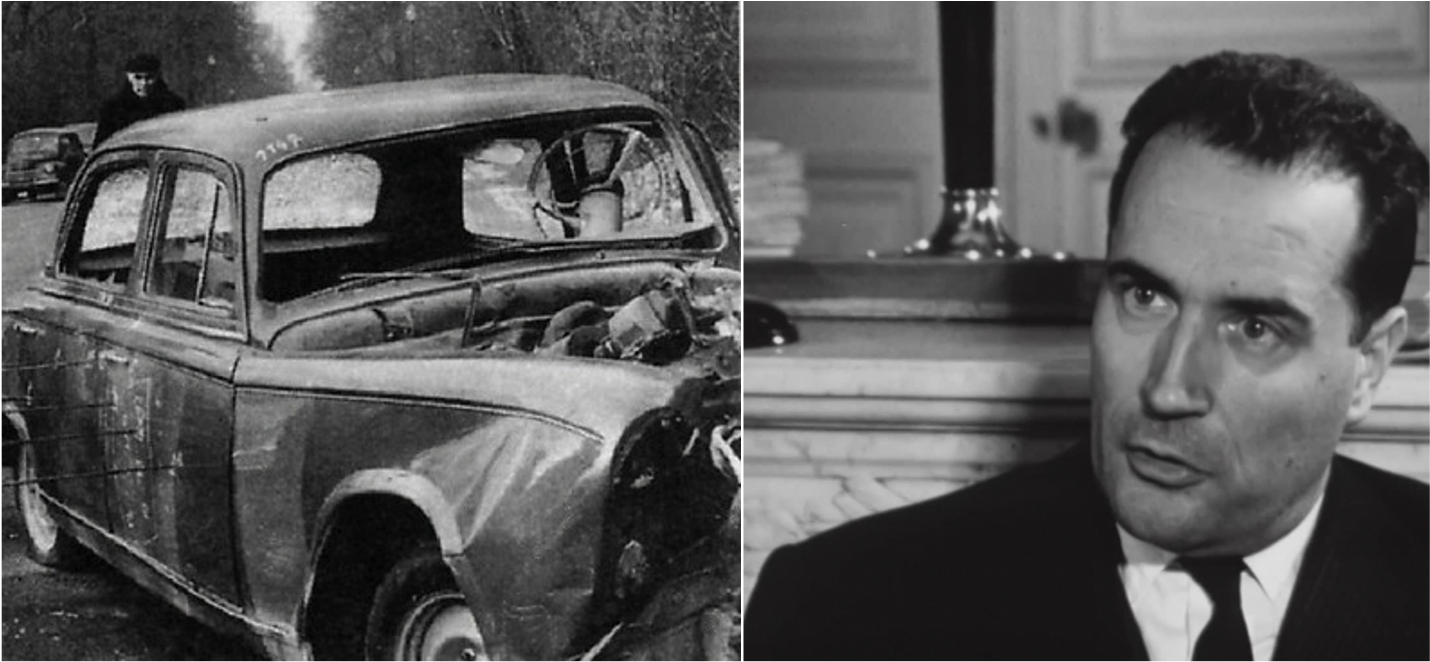
Overnight, the obscure Mitterrand became a celebrity, admired for his quick thinking and courage. He accrued sympathy as a victim of an attempted assassination, that is, until a letter appeared addressed to the police that was mailed the day before the attempted assassination.
The letter was from a right-wing Deputy who claimed Mitterrand had recruited him to stage a fake assassination attack in order to boost his popularity and crack down on the Right. The letter described in detail what was to happen—and did indeed happen.
Yet another French scandal ensued. Mitterrand’s attempt to gain from a self-created phony assassination attempt appeared to have failed.
Mitterrand, however, turned out to be as quick of mind as he was fleet of foot. He claimed his supposed co-conspirator told him to take the route he took to avoid an attack but that he suddenly realized he had been set up for murder. He was “teleguided” to get out and run. The real assassination was planned by five of his right-wing enemies whom he had prosecuted.
Mitterrand convinced at least some of the public that he had gone along with the fake assassination proposal because he suspected it was a cover for a real assassination plot, and he wanted to catch the culprits red-handed. To this day, it is not clear if Mitterrand conspired in a staged assassination attempt on himself or if he was intended to be the victim of a real assassination. In any case, he survived and thrived.
Mitterrand and Peres had similar conspiratorial personalities, with both involved in Israel’s secret nuclear program. Mitterrand must have discussed how to regain popularity with his more powerful friend Peres, who was guiding him to move Left. Did Peres possibly advise Mitterrand to go along with a fake assassination as part of thwarting a real one? Or even possibly to stage the whole event?[21]
Subsequent to his fake or real assassination attempt, Mitterrand clawed his way back into the limelight as a budding socialist. He became a mayor in 1962 and then a Deputy in the National Assembly. In 1964 he was elected president of a departmental council.
Because of Mossad participation in the abduction of Ben Barka in Paris in 1965, French relations with Israel had chilled. Mitterrand challenged Charles de Gaulle as head of state. He lost the election but formally joined the French Socialist party. In 1971 Mitterrand visited Israel as head of his party. He met with Defense Minister Peres. They worked together as socialists to resolve the problem of peace in Israel.
In 1974 Mitterrand was nearly elected president of France. He advised Israel to “recognize the right of Palestinians to organize themselves within the framework of a new state.”[22] Two years later Peres met Mitterrand at a Socialist Party meeting and supported the Israeli-Egyptian Camp David agreements of that year. Two years after that, they met at a Labor Party meeting in Israel.
In May 1981 Mitterrand was finally elected president of France, and Peres met with him at the president’s home, after which Mitterrand moved farther from a pro-Arab position. The next year Mitterrand visited Israel and met Peres (then the leader of the opposition) for breakfast at the King David Hotel. In the Knesset Mitterrand called for Palestinian statehood. Peres viewed Mitterrand’s visit as a “return to the golden days” of Franco-Israeli relations.[23]
In December 1984 Peres, now prime minister, made his first official state visit to France. From then on the two heads of state met regularly at the Élysée Palace and elsewhere. Mitterrand also met with PLO Chairman Arafat and favored a UN-involved peace process with an international conference. In late 1992 Mitterrand made an official visit to Israel in relation to the Oslo Accords, and shortly thereafter Peres went to France for the official signing.
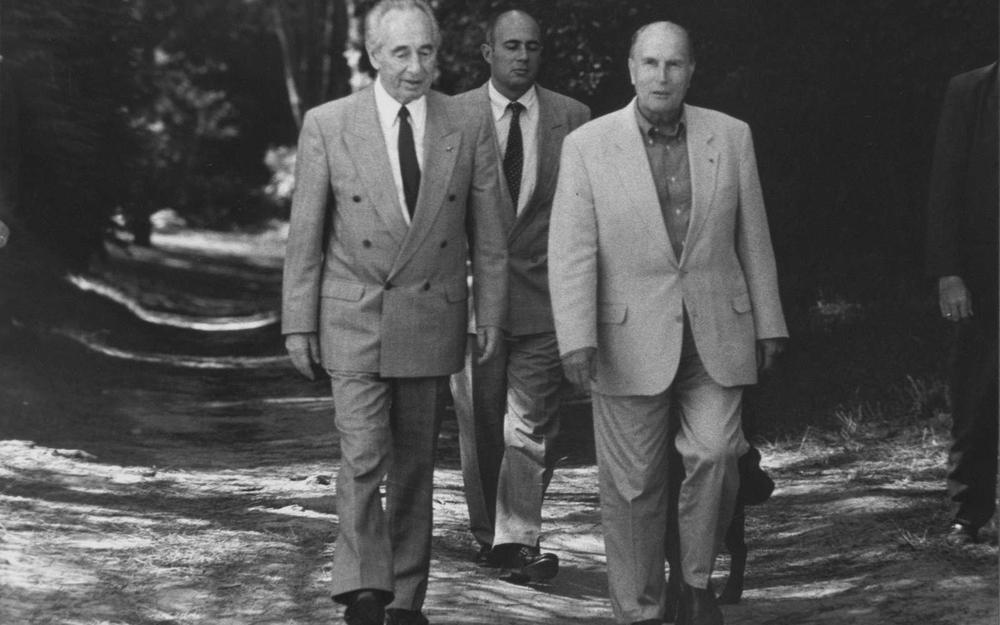
In January 1993 Peres was in Paris for the signing of the UN Chemical Weapons Convention. U.S. President George H. W. Bush talked with Mitterrand, who told him that Peres favored giving Gaza to the Palestinians but it would be too difficult to return the Golan Heights. Bush commented that “it would take more killings like the Temple Mount massacre.” Mitterrand said he was a friend of Israel and abruptly terminated the conversation.[24]
In September 1993 Peres met again with Mitterrand at the French president’s home. It was clearly important as it was held in private. It is likely that Peres consulted with Mitterrand over what to do about the threat facing himself and Rabin and their Oslo accords. It is not impossible that they considered Bush’s words and implementing the Mitterrand “Observatoire plan.”
It had worked stupendously for Mitterrand. Rabin had approved a false-flag attack in the past: on the USS Liberty. It had gone awry, but with the U.S. president, if not God, on his side, Rabin had won the war in six days anyway. His right-wing adversaries were convinced it was God who gave them the West Bank. In November 1993 Mitterrand visited Israel again.
There is no credible possibility that Peres or Gillon wanted Rabin to die, nor that Hezi Kalo would concur with such a thing. Gillon and Rabin were extremely close politically, and Gillon suffered from grief and guilt for the rest of his life. The only photo he kept in his office was that of Rabin.
Given the insoluble problems with the official version of the murder and the improbability that anyone associated with the Labor government would want Rabin dead, a fake assassination attempt best resolves the difficulties of thought as to what happened.
Shabak was known to have right-wingers in some positions. Raviv, who knew the Kach extremists well, might have inadvertently let something slip. A hijacker could have entered the presidential limo on the way to Shabak headquarters after Amit fired his blanks. From then on Shabak would be forced into a cover-up of the actual facts.
Netanyahu met with Peres after the murder, and they shook hands. Peres was easily blackmailed, and Netanyahu likely learned what really happened. Peres and Labor undertook no serious investigation of the incitement campaign nor did they crack down on the religious Right.
Netanyahu in his turn denied there was a Shabak conspiracy.
In early 1996, Israel killed a Hamas leader in Gaza with a cell phone bomb. Hamas avenged with suicide bombings. Peres, in return, bombed refugee camps. Intifada had started. It had started with the Kahanist escalations in Hebron. Israeli police chief Kobi Shabtai told the press, “The person who is responsible for this Intifada is Itamar Ben-Gvir.”[25]
Israel’s largest radical right-wing party, the National Religious Party, much like the Christian Zionists of Republican youth organization Turning Point USA, presented itself as primarily interested in “preserving tradition and cultivating strong family values.”[26] Peres tried to ally with the NRP, but the party threw its support to Likud. Netanyahu became prime minister, and the Oslo Accords inevitably died.
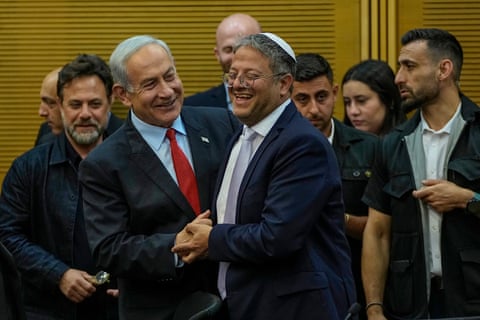
If Netanyahu knew who killed Rabin, those two would be locked in mutual opportunism and blackmail. In a dark version of the famous words of Casablanca’s Rick: It was “the beginning of a beautiful friendship.” Though it probably was not the very beginning, and it was actually very ugly.
Cui bono fuit?
Shabak and Peres must have immediately discovered from Rabin’s bodyguard and driver what, if anything, happened in the limo after the rally. If there was a fake assassination planned, as seems likely given the evidence, acknowledging that it was hijacked would destroy the plotters. Peres was easy for Netanyahu to blackmail.
Who is the most likely suspect of the murder of Prime Minister Rabin? 1. A Kahanist. Amir says he has not read or followed Kahane. 2. Someone who had already threatened Rabin in his car. Amir made no public threats and did not try to kill Rabin but to stop him. 3. Someone with a history of thuggish violence and arrests. Amir had a clean background and was a serious law student. 4. Someone with proven access to Rabin’s motorcade routes. Amir personally tracked Rabin for a while but had no inside connections to the prime minister’s office. 5. Someone who benefitted from the murder. Amir lost his freedom.
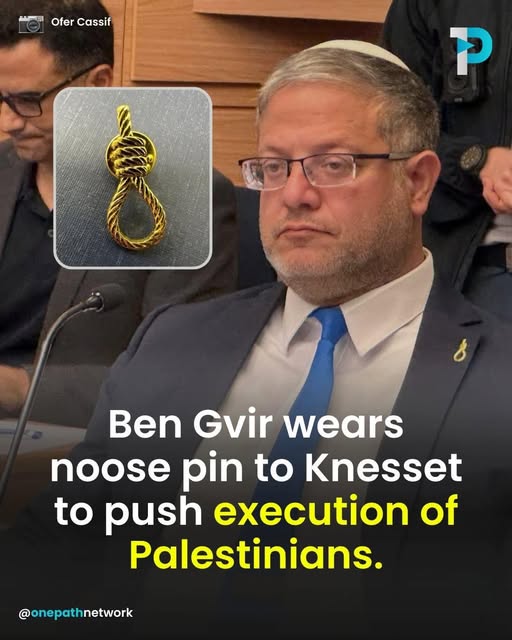
Who today threatens to shoot Arabs while holding a high ministry position?
It is inescapable that Itamar Ben-Gvir is the most likely assassin of Rabin. He was supposed to be under house arrest at the time, but such restrictions were easily evaded.
After 1995, Ben-Gvir attended law school where he specialized in defending Jewish extremists such as Marzel.
They maintained a close relationship and adherence to Kahane and the memory of Baruch Goldstein—until recently, when Marzel called him a sellout for softening a few positions to ally with Netanyahu.
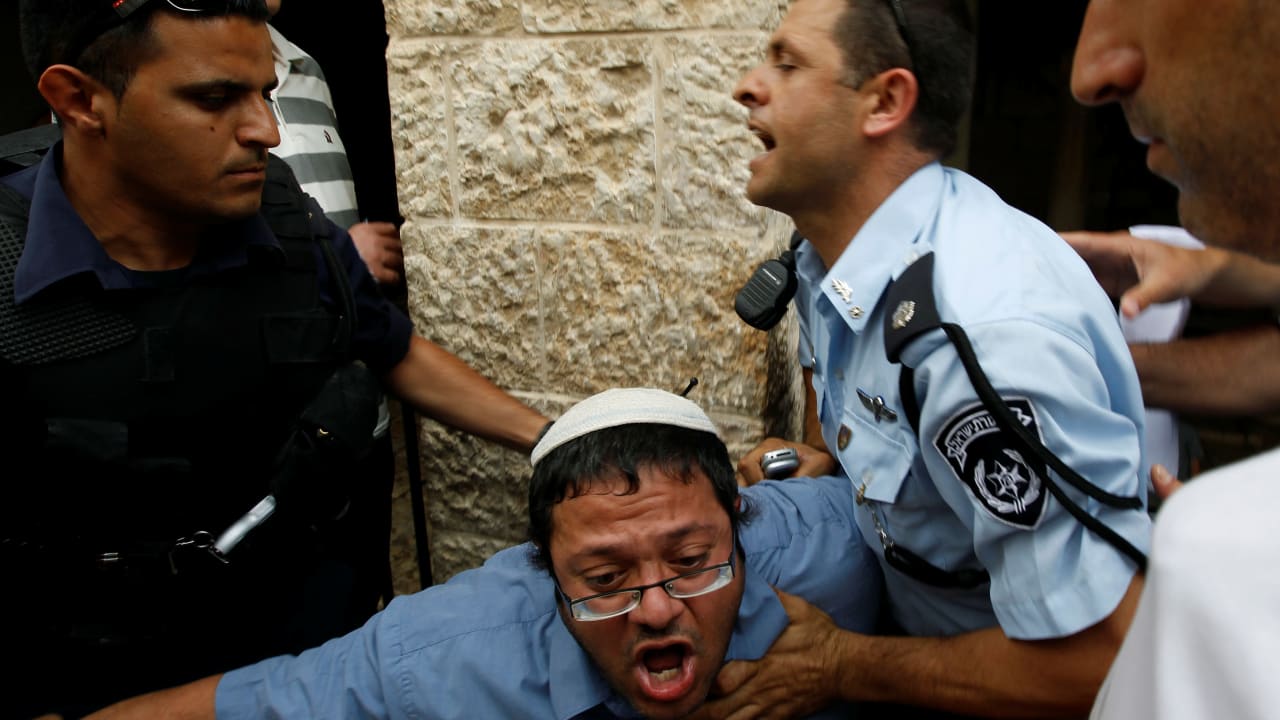
In 2007, Ben-Gvir was convicted of incitement to racism and support of terrorism. Israeli politics gradually slid to the right. In 2019 the Supreme Court reviewed Ben-Gvir’s history and allowed him to run for the Knesset. He lost but gained a lot of media traction. Marzel remains banned.
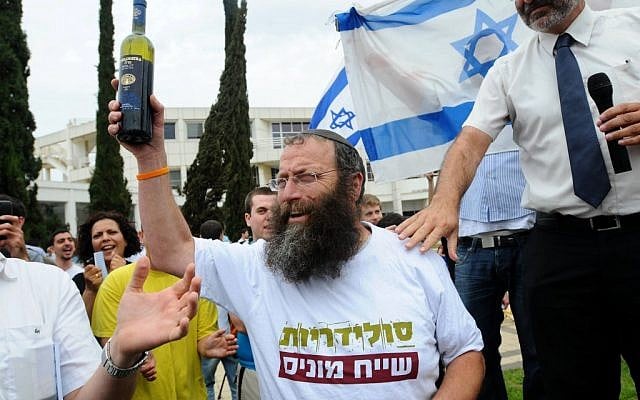
Ben-Gvir squeaked into the Knesset in March 2021. Netanyahu normalized the Kahanists by inviting Ben-Gvir and Smotrich into right-wing coalitions with him, a mistake of the highest degree according to some.
Netanyahu is hardly extremely religious, but the secular Supreme Court is their shared enemy, and they have shared secrets.
Though he probably does not favor a war-to-end-all-wars as the ultra-Orthodox (and Christian Zionists) happily anticipate, he has adopted the Kahanist goals of annexation of the Occupied Territories and the expulsion or extermination of the Palestinians living there.
Both Ben-Gvir and Smotrich continue to make threats to “mow down” opponents. Since being legitimized by Netanyahu, Ben-Gvir has continued to assault people.
In October 2021 he got into a physical clash with Joint List party leader Ayman Odeh at Kaplan Medical Center in Rehovot. As Odeh was leaving the room of a Palestinian hunger striker, Ben-Gvir tried to barge his way in. Push came to shove until staff intervened.
Two months later Ben-Gvir waved a gun at an Arab parking lot attendant in Tel Aviv. The next day the Knesset security chief gave Ben-Gvir a talking-to. “A pistol waved in the first act is fired in the third,” the Meretz Party leader warned.[27]
In October 2022, after a rock was thrown toward Ben-Gvir in the East Jerusalem neighborhood of Sheikh Jarrah, he pulled out a gun and urged police to fire on the rock throwers. Some 27 years after the murder of Rabin, outgoing Prime Minister Yair Lapid pointedly referenced Ben-Gvir, when he said that a pistol “is the weapon of the cowards, of the violators of the law, and it was the weapon of Yigal Amir.”[28]
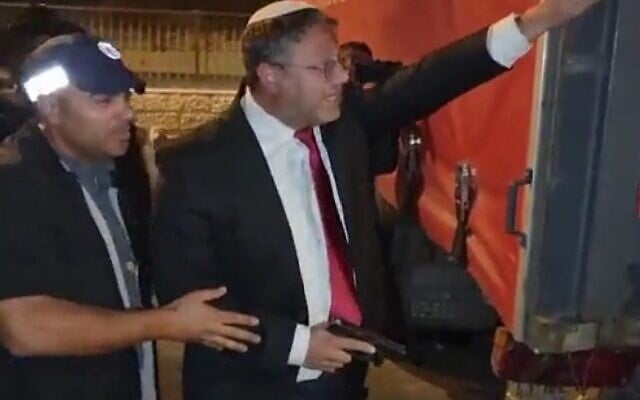
Ben-Gvir has gone from outcast to insider in just a few years. In the November 2022 election he was made national security minister. He now oversees the Israel Border Police in the West Bank.
President Isaac Herzog was overheard saying that the entire world was worried about Ben-Gvir becoming a minister. Rabin’s son Yuval, who resides in Europe, said the role of the young Ben-Gvir should not be forgotten.
From 2023 to 2026 Ben-Gvir and extremist settlers have stormed the Al-Aqsa Mosque on Temple Mount 14 times and have obstructed access to the Church of the Nativity and the Church of the Holy Sepulchre during religious holidays.
Kahanists and settlers experienced the Hamas breakout on October 7, 2023, as a longed-for opportunity. Similar to Zionist Christians, but with a different preferred outcome, Kahanists view an apocalyptic war as a prerequisite for the dawn of the Messianic age. For them, the battle will eradicate non-Jews from Greater Israel.
In July 2024 a Religious Zionism Party member called the Gaza war “a period of miracles.”[29] Ben-Gvir has made gun licenses significantly easier to obtain since October 7. In November 2025 Ben-Gvir said officials of the Palestinian Authority should be assassinated if the UN went forward with recognition of a Palestinian state. He further claimed that there was no such thing as Palestinians. Netanyahu reassured him that he opposes Palestinian statehood.
This January, independent conservative commentator Candace Owens, a rejected Turning Point USA associate, was denounced in the Knesset by Likud Party member Dan Illouz, who called her “a new enemy….I am speaking of a poison being sold to the American people as patriotism. I’m speaking of the intellectual vandalism of Tucker Carlson and Candace Owens.” Political enemies of Israel are equated with political enemies of the United States. The Knesset member says, “Candace and Tucker are a threat to America as much as to Israel.[30]
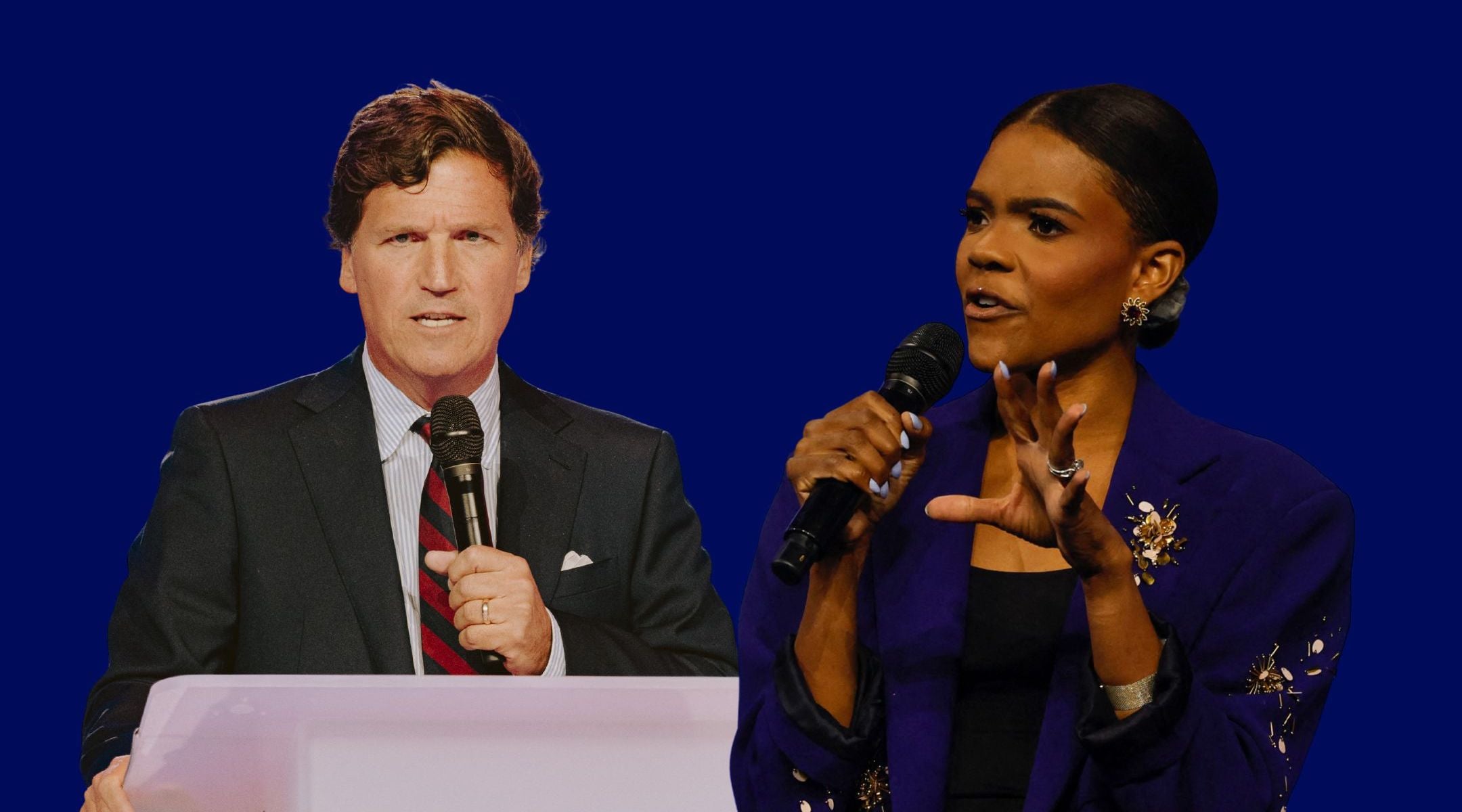
The combination of blackmail and opportunism, of the carrot and the cudgel, is in ascendance in Israel as it is in the United States today, so that one could legitimately speak of the “Union State of Israel-America.”
So many people believe charismatic Charlie Kirk, head of the conservative Turning Point USA, who rejected an enormous carrot from Bill Ackman and other Zionist donors, was assassinated by orders of Netanyahu, which the prime minister has repeatedly denied.
As the less blatant of the genociders, Netanyahu said at the 2022 anniversary event recognizing the murder of Rabin, “In a democracy, we must never allow the power of the fist to replace the power of persuasion.”[31] Charlie Kirk, had he lived, might have said, “Israeli speak with forked tongue: Prove me wrong!”

https://www.straitstimes.com/world/middle-east/israeli-judges-call-for-protection-after-threat-to-chief-justice ↑
https://www.haaretz.com/opinion/2026-01-02/ty-article-opinion/.premium/smotrich-and-his-ilk-are-preparing-the-ground-for-the-next-political-murder/0000019b-7b4c-d379-a3bb-fb7c8d9b0000 ↑
https://www.theguardian.com/news/2025/mar/20/meir-kahane-israel-kach-ben-gvir-long-dead-extremis ↑
https://www.theguardian.com/news/2025/mar/20/meir-kahane-israel-kach-ben-gvir-long-dead-extremist ↑
Idem. ↑
https://www.latimes.com/archives/la-xpm-1990-11-11-op-5885-story.html ↑
https://x.com/kann_news/status/1364979562694721541; https://www.middleeasteye.net/news/israel-ben-gvir-baruch-goldstein-meir-kahane-memorial-martyrs- ↑
https://www.haaretz.com/israel-news/2016-01-04/ty-article/.premium/jewish-terrorisms-star-lawyer/0000017f-eda1-da6f-a77f-fdaff1f00000 ↑
https://www.ynetnews.com/magazine/article/rktlrwgwj ↑
https://www.timesofisrael.com/ahead-of-rabin-memorial-rally-son-says-israeli-leaders-reignite-hatred-and-division/#:~:text ↑
https://www.haaretz.com/israel-news/2025-06-04/ty-article/ ↑
https://middleeasttransparent.com/peres-in-his-own-words-you-could-be-dead-while-youre-alive-and-you-could-also-live-after-your-death/ ↑
Frydman and Charles Bronfman, co-founder of the secretive Jeffrey Epstein–associated Mega Group, had contributed $1.6 million to Peres’s 1988 election campaign. Shortly after the assassination, when Ehud Barak had become Peres’s foreign minister, Frydman hosted a secret dinner at his home for Arafat and Barak. Frydman later said he never forgave himself for promoting the rally where Rabin was killed. ↑
See Jeremy Kuzmarov, “Yigal Amir is Israel’s Oswald,” CovertAction Magazine, November 3, 2023 for a summary of Chamish’s findings and of key anomalies in the case pointing to Yigal Amir having been set up as a patsy like Lee Harvey Oswald. ↑
https://rense.com/general/sting.htm ↑
Kalo told the Shamgar Commission that Raviv had been overzealous and created Eyal on his own. The commission decided otherwise. In 1997, Amir’s mother claimed Raviv goaded her son into shooting at Rabin (cf. Sirhan Sirhan and Robert Kennedy in 1968). ↑
https://www.israelnationalnews.com/news/41364 ↑
In 2022, Uvda had interviewed a youth leader who had conducted violent attacks against Palestinians and Israeli Arabs. “In the episode, she described various attacks that she was involved in and claimed that Ben-Gvir knew about and even helped plan many of the attacks.” After the episode aired, people involved in the program received anonymous threatening messages, and Ben-Gvir threatened legal action against the show. https://www.jpost.com/israel-news/article-744015. ↑
https://middleeasttransparent.com/peres-in-his-own-words-you-could-be-dead-while-youre-alive-and-you-could-also-live-after-your-death/ ↑
Barry Chamish, The Last Days of Israel (North Charleston, SC: CreateSpace, 2000), 7. Lurçat was living in Israel in 1993 and has translated Chamish and Jabotinsky into French. A former Betar leader, he was identified with the far-right Islamophobic French organization Generation Identity. ↑
This history may set off bells with serious JFK assassination researchers, who know that there was a cover story called the Big Event in which lower-level assassination participants were led to believe that there would be a fake assassination attempt (by Oswald) on November 22, 1963, in order to force Kennedy to overthrow Castro and even possibly attack the Soviet Union. They were fooled by the real assassination. ↑
AFP, Paris, December 14, 1976. ↑
jta.org/archive/mitterrand-tells-knesset-that-israel-has-a-right-to-live-but-this-right-cannot-be-denied-to-the-pal#:~:text. ↑
Paul Findley, “Peril in Being President,” Washington Report on Middle East Affairs, February 1992, 10. Mossad plotted to kill President Bush in 1991 in Madrid when he threatened to withhold aid over the Golan Heights settlements. The assassination failed when the plot was leaked. French government archives have been removed from the internet. ↑
https://www.trtworld.com/article/12765948/amp ↑
Michael Karpin and Ina Friedman, Murder in the Name of God: The Plot to Kill Yitzhak Rabin (New York: Metropolitan Books/Holt, 1998), 203. ↑
https://www.timesofisrael.com/far-right-mk-ben-gvir-summoned-by-knesset-security-over-gun-incident-in-pa ↑
https://www.timesofisrael.com/at-rabin-memorial-event-smotrich-claims-shin-bet-encouraged-assassination/ ↑
https://www.theguardian.com/news/2025/mar/20/meir-kahane-israel-kach-ben-gvir-long-dead-extremist ↑
Grace Gilson, Jerusalem Post, January 8, 2026. ↑
https://www.timesofisrael.com/at-rabin-memorial-event-smotrich-claims-shin-bet-encouraged-assassination/ ↑
CovertAction Magazine is made possible by subscriptions, orders and donations from readers like you.
Blow the Whistle on U.S. Imperialism

Click the whistle and donate
When you donate to CovertAction Magazine, you are supporting investigative journalism. Your contributions go directly to supporting the development, production, editing, and dissemination of the Magazine.
CovertAction Magazine does not receive corporate or government sponsorship. Yet, we hold a steadfast commitment to providing compensation for writers, editorial and technical support. Your support helps facilitate this compensation as well as increase the caliber of this work.
Please make a donation by clicking on the donate logo above and enter the amount and your credit or debit card information.
CovertAction Institute, Inc. (CAI) is a 501(c)(3) non-profit organization and your gift is tax-deductible for federal income purposes. CAI’s tax-exempt ID number is 87-2461683.
We sincerely thank you for your support.
Disclaimer: The contents of this article are the sole responsibility of the author(s). CovertAction Institute, Inc. (CAI), including its Board of Directors (BD), Editorial Board (EB), Advisory Board (AB), staff, volunteers and its projects (including CovertAction Magazine) are not responsible for any inaccurate or incorrect statement in this article. This article also does not necessarily represent the views the BD, the EB, the AB, staff, volunteers, or any members of its projects.
Differing viewpoints: CAM publishes articles with differing viewpoints in an effort to nurture vibrant debate and thoughtful critical analysis. Feel free to comment on the articles in the comment section and/or send your letters to the Editors, which we will publish in the Letters column.
Copyrighted Material: This web site may contain copyrighted material the use of which has not always been specifically authorized by the copyright owner. As a not-for-profit charitable organization incorporated in the State of New York, we are making such material available in an effort to advance the understanding of humanity’s problems and hopefully to help find solutions for those problems. We believe this constitutes a ‘fair use’ of any such copyrighted material as provided for in section 107 of the US Copyright Law. You can read more about ‘fair use’ and US Copyright Law at the Legal Information Institute of Cornell Law School.
Republishing: CovertAction Magazine (CAM) grants permission to cross-post CAM articles on not-for-profit community internet sites as long as the source is acknowledged together with a hyperlink to the original CovertAction Magazine article. Also, kindly let us know at info@CovertActionMagazine.com. For publication of CAM articles in print or other forms including commercial internet sites, contact: info@CovertActionMagazine.com.
By using this site, you agree to these terms above.
About the Author
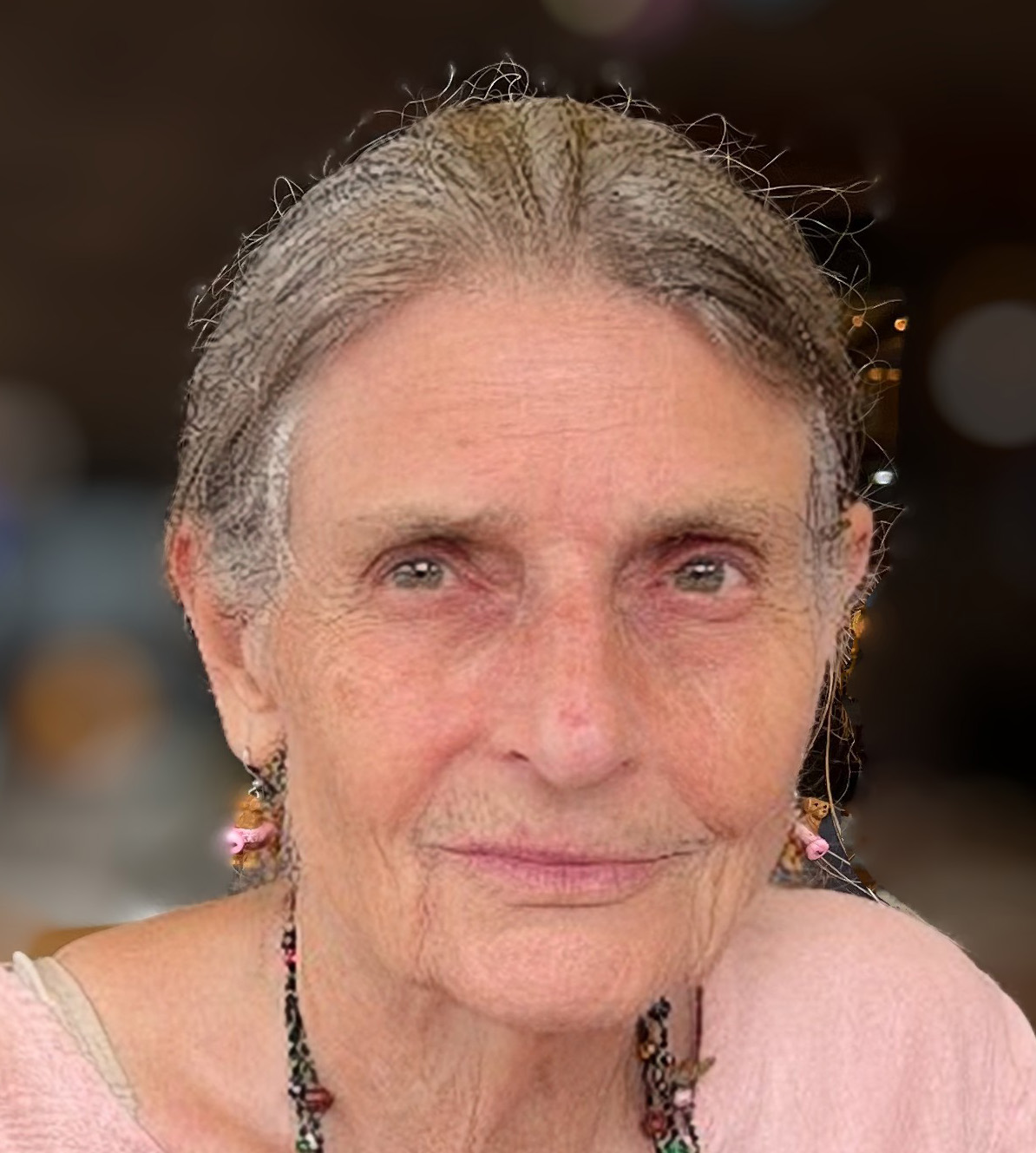
Kathleen Meigs is a thirteenth generation American and walked precincts for John Kennedy for president in 1960.
She matriculated at Stanford University, graduated from UCLA in history and has been a journalist, editor, and published academic author.
Her anthropological novel Mishopshno is available on Amazon. Her love is research, and her passion is truth and good government.
Kathleen can be reached at katymeigs@sbcglobal.net.