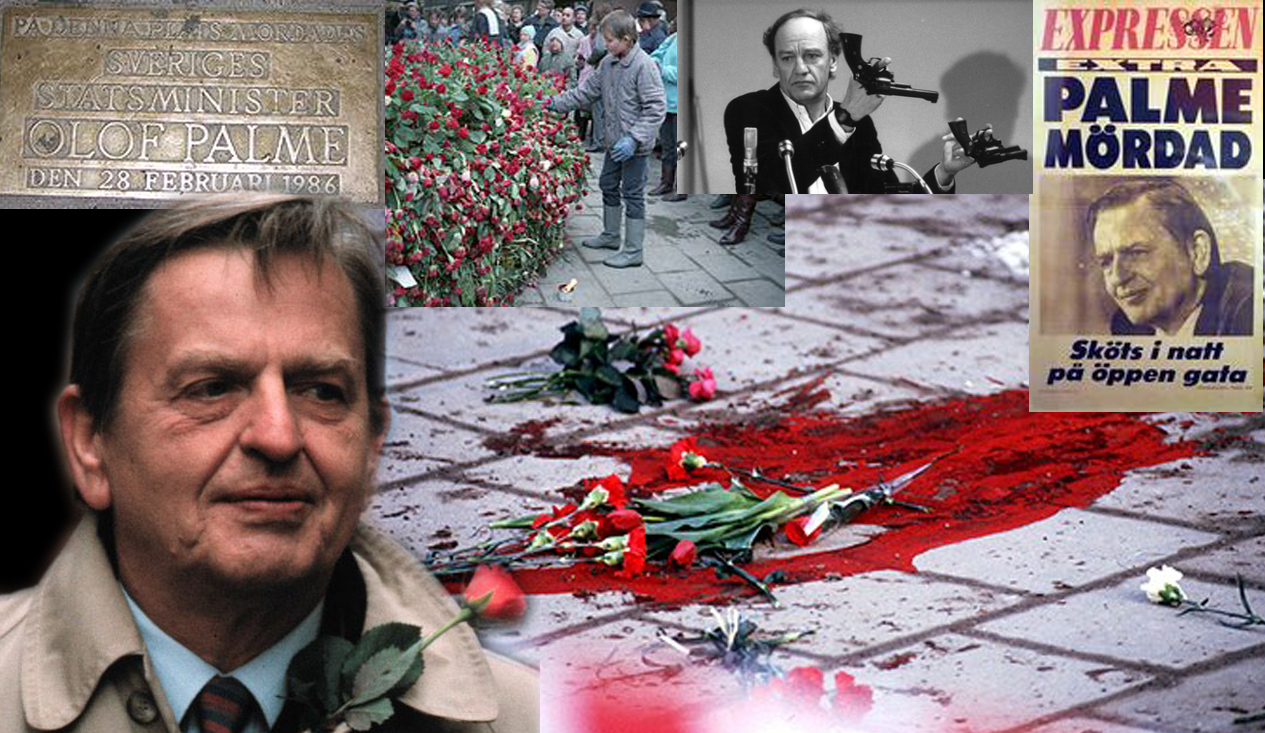
Serious investigations into Palme’s murder point to complicity of right-wing Swedish government officials and possibly the CIA
February 28, 2026, marks 40 years since Prime Minister Olof Palme of Sweden left his home to see the film The Brothers Mozart and never came back.
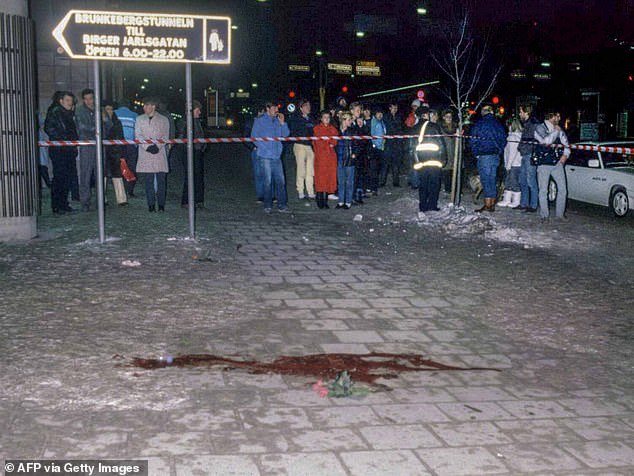
As Palme walked home with his wife Lisbeth Palme, he was shot in the back at 11:21 p.m. with an expertly aimed bullet. He did not stand a chance and died instantaneously.
The killer fled after discharging a second bullet that grazed Mrs Palme. A panicked onlooker immediately called the police at and told the operator he needed to report a murder. After 90 seconds of silence, he hung up.[1]
When a local patrol arrived at the scene, they encountered a hysterical Lisbeth Palme, but the officers did not appear to recognize her or her dead husband. “Don’t you recognize me?” she wept, “I am Lisbeth Palme, damn it, and there lies my husband Olof!”[2]
A general police alert about the fact that the prime minister had been assassinated did not issue until 2:05 a.m., during which time the killer could have benefited from any number of possible escape routes.[3]
Tommy Lindström, Stockholm’s police chief for serious crime, was awakened and given the news. He decided to go back to sleep.[4]
By the time the Swedish people turned on their radios on the morning of March 1, they had a dead prime minister, and an assassin on the loose owing to what seemed to be the extraordinary negligence of the Stockholm police—or, some whispered, perhaps worse.
Olof Palme
Olof Palme was a divisive figure. To his supporters, he was a left-wing, anti-imperialist hero who vigorously steered neutral Sweden’s independent path between the two Cold War superpowers. To his opponents, he was inexcusably weak in standing up for Western values against communism and his bloated welfare state stifled individuality.
Certain facts were indisputable. Mr. Palme was a Social Democrat who had pursued an outspoken foreign policy. He protested the U.S. war in Vietnam, even marching alongside North Vietnam’s Moscow Ambassador at a rally in 1968. The U.S. broke off diplomatic relations in protest.[5]
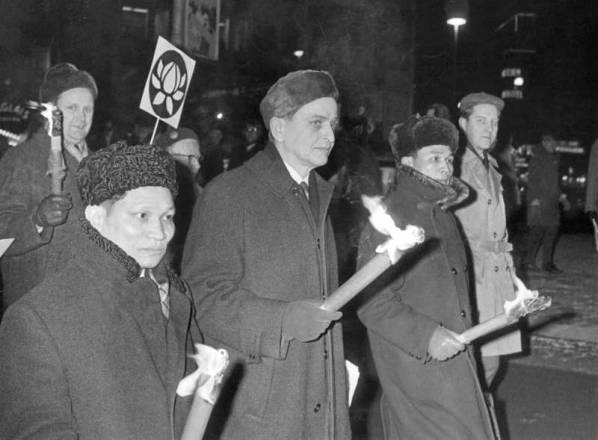
He was a consistent thorn in the side of apartheid South Africa and passionately championed nuclear disarmament. He extended his criticism to the Soviet Union, condemning its 1979 invasion of Afghanistan, and was no communist, even facing controversy over his abuse of surveillance powers to monitor Swedish communists.
Differences over Swedish defense policy came to a head in October 1981, when a Soviet submarine ran aground on the coastline of Sweden’s Karlskrona archipelago. The nation was outraged.
Maybe Sweden’s beloved neutrality was a luxury it could not afford—or so right-wing critics began to argue. In the paranoia that resulted from the incident, strange incidents off the Swedish coast seemed to multiply.
Some saw the hand of the U.S. and/or NATO, something that later received a degree of corroboration from at least one Western military figure and a detailed study carried out by investigator Ola Tunander.[6]
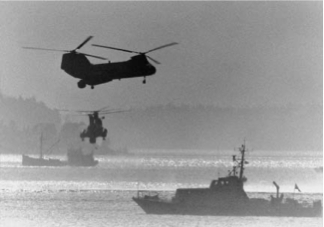
After these suspected false-flag incidents, right-wing critics became more forceful in their attacks on Palme, who was depicted as being at best weak on Moscow and, at worst, even a Moscow agent.
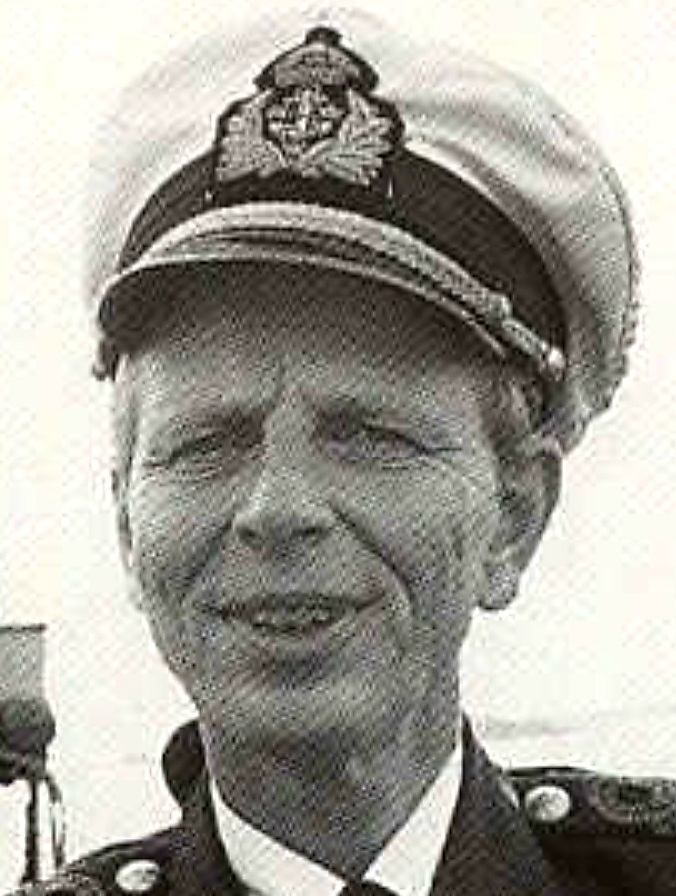
In November 1985, stirrings began in the Swedish military. Navy Commander Hans von Hofsten led a group of officers in public condemnation of Palme’s perceived laxity on the Soviet threat.[7]
This was an unprecedented step, a direct challenge from the military to the authority of a civilian prime minister. But Palme was not backing down easily from his commitment to neutrality. Underscoring his commitment to dialogue across the Iron Curtain, he accepted an invitation for a Moscow visit planned for later in 1986.
In the minds of Palme’s hard-line critics, their very worst fears were confirmed. Of course, he would never get to make that trip.
The Investigation
The police did little to restore confidence in their abilities after the night of the murder. The crime scene was not properly cordoned off, and it was members of the public who picked up and handed in the bullets used.[8]
Hans Holmér, the Stockholm police commissioner appointed to lead the investigation, did not follow leads based on the evidence. Rather, he devised the theory that Palme had been targeted by Kurdish separatists and directed the investigation toward this bizarre idea. [9]
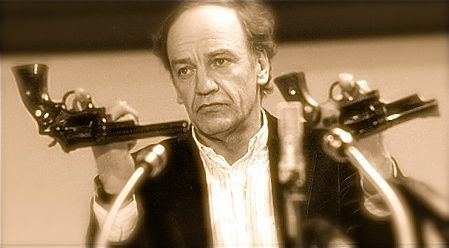
What possible motive Kurdish separatists would have had to organize the assassination of the leader of a neutral Scandinavian country was never adequately explained.
Unsurprisingly, the police were eventually forced to abandon this line of inquiry but, by then, incalculable harm had been done by diverting valuable resources away from more plausible suspects.
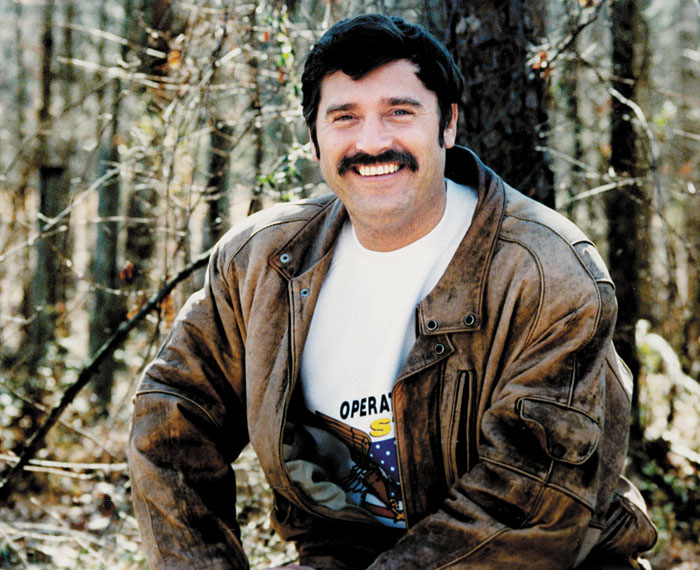
The first person arrested was named Viktor Gunnarsson, a political activist with links to the network of the controversial American Lyndon LaRouche.[10]
Although Gunnarsson fit the political profile of someone likely to murder Palme, and had been in the vicinity of the murder, the prosecutor directed that there was insufficient evidence to bring charges. (Gunnarsson himself was murdered in 1993.[11])
The difficulties were compounded by the fact that the police struggled to present a coherent description of the shooter. A photographic image that became known as “the Phantom” was released based on a description by only one witness who disowned the image when she saw it.[12] But soon the police were announcing a breakthrough.
Patsy #1
The subject of the breakthrough was a middle-aged drifter and alcoholic named Christer Pettersson.
Why Pettersson would wish to murder Palme was anybody’s guess. As a petty criminal living off public funds, Pettersson, if anything, fit the profile of the type of person Palme’s critics would have said benefited from Palme’s policies.
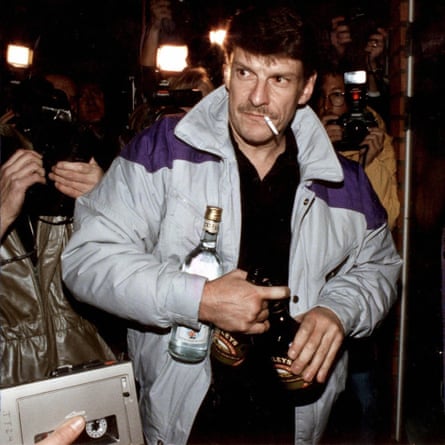
Nor was Pettersson a remotely plausible candidate to be someone’s gunman as part of a professional hit, which is what the circumstances strongly pointed to.
After all, no one could have known Palme would be at the crime scene unless the assailant or his accomplices were very closely monitoring the prime minister, who had only decided to see the film that afternoon, and had decided on a whim to return home on foot rather than take the subway.
The assassin had used an armour-piercing bullet,[13] which took account of the contingency that Palme might have been wearing a bullet-proof vest (in fact, he was not), while the single shot succeeded in killing Palme by instantly penetrating his carotid artery.
In addition to being a professional, the killer must also have been physically fit, given his quick and successful escape, which included sprinting up the 89-step stairway connecting the Tunnelgatan (where the Palmes were walking) to David Bagares gata (where the killer vanished), a level of fitness unlikely to be displayed by a chronic alcoholic and drug abuser like Pettersson.
Despite the overwhelming evidence against Pettersson’s guilt, the police were determined to secure his conviction—and did.
The star witness at the trial was no less than Lisbeth Palme, who had picked Pettersson out of a line-up.

This was despite the fact that she had previously given contradictory descriptions of the assassin and had even been confused as to whether there were one or two assassins.
It emerged that Palme’s widow had received a prompt from police before she chose Pettersson from the line-up.[14] Petterson’s lawyers appealed the conviction, and it was overturned by a unanimous appeals court.[15]
The deeper question is why the police pursued such an obviously unviable case. Lee Harvey Oswald, the accused assassin of President John Kennedy, famously yelled out to reporters that he was “just a patsy.” It seems Christer Pettersson was something similar.
The authorities remained bitter at the quashing of Pettersson’s guilt and continued to seek evidence that would justify another trial, culminating in a formal application in 1998 for him to be re-tried. The Supreme Court threw out the application.[16]
It was only in 2004, after Pettersson died, that the police and their media allies finally had to accept that the assassination would never be pinned on him.
Patsy #2
The investigation remained officially open until 2020. With the rest of the world focused on the Covid-19 pandemic, a press conference in Stockholm was called on June 10 amid much anticipation in Sweden. The Chief Prosecutor—confusingly named Krister Petersson—announced that no charges would be brought. The main suspect was dead.[17]
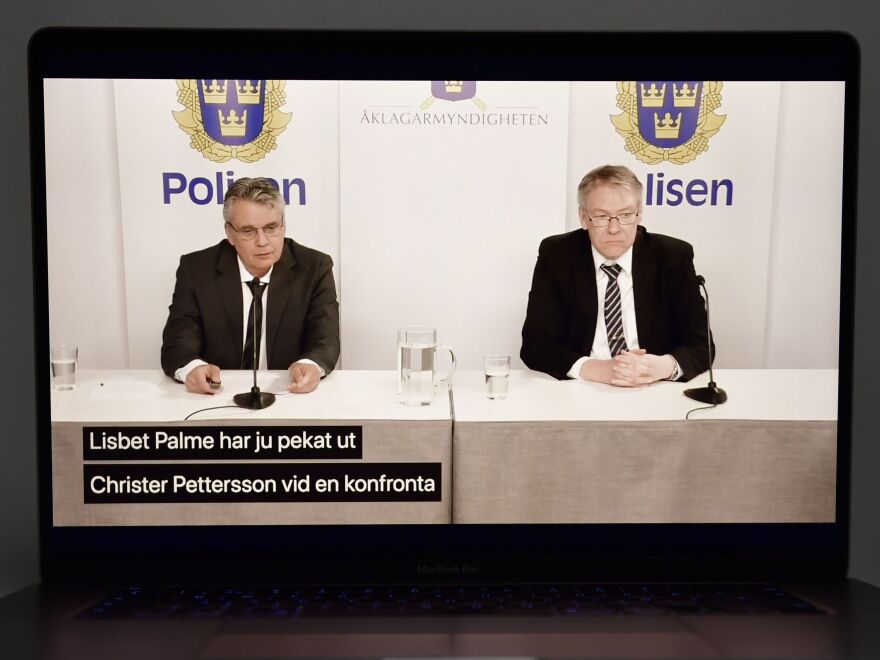
But Petersson was not referring to his namesake. Instead, the likely culprit was said to have been a portly insurance official named Stig Engström, who had committed suicide in 2000.
Engström was well-known to researchers of the assassination as “Skandiaman” after the Skandia insurance company where he worked. But he had never been arrested or charged in relation to the crime.
He came to attention because he spun a yarn as to how he had heroically tried to save the mortally wounded prime minister’s life when, in fact, he had done nothing of the sort. Although his office was close to the site of the assassination, none of the assassination witnesses remembered seeing Engström or corroborated his account.
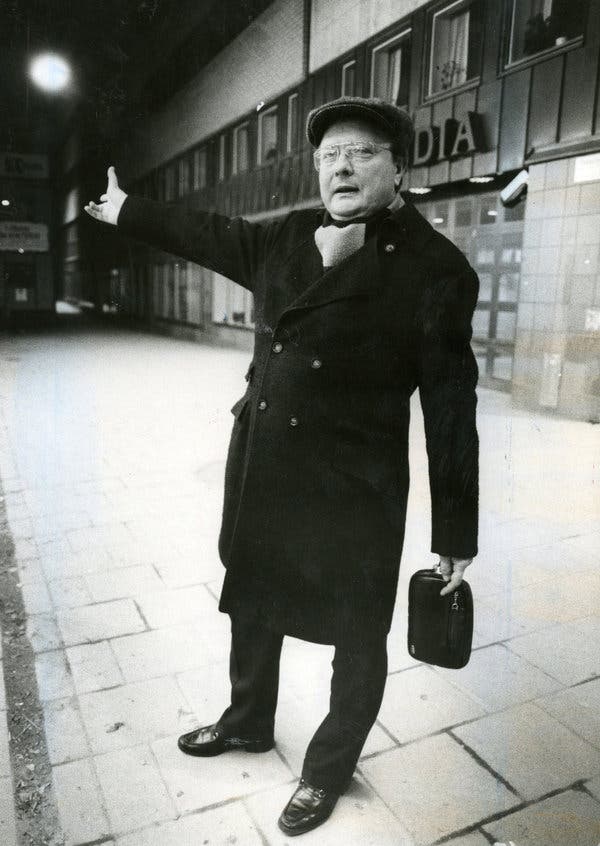
Those suspicious of Engström cited his false story as evidence that he had something to hide, even though drawing attention to himself in this fashion seemed a most unlikely course for the actual assassin. Further efforts to build a retrospective case against him centerd on his apparently conservative politics, possession of a gun license and a selective reading of witness testimony.
Having politics more conservative than Palme’s would have implicated the 47.9% of voters who voted for centrist, center-right and right-wing parties in the 1985 general election.[18]
It would have been necessary to investigate not just Engström but nearly half the Swedish population if mere disagreement with Palme were grounds for suspicion. Similar points could be made in respect to members of the population who possessed a gun license.
In Engström’s case, he was a member of a private shooting club in his free time, and this, rather than a desire to assassinate prime ministers, was the obvious basis for his possession of a firearm.
Efforts to re-interpret witness testimony to implicate Engström were no more convincing. Engström often wore a flat cap. Some witnesses said they saw the shooter wear a cap, but others did not.
Engström was never identified as the killer by any eyewitnesses. Descriptions that might have corresponded to Engström, such as the killer having a broad back or a long coat, concerned characteristics that were in no way unique to Engström.
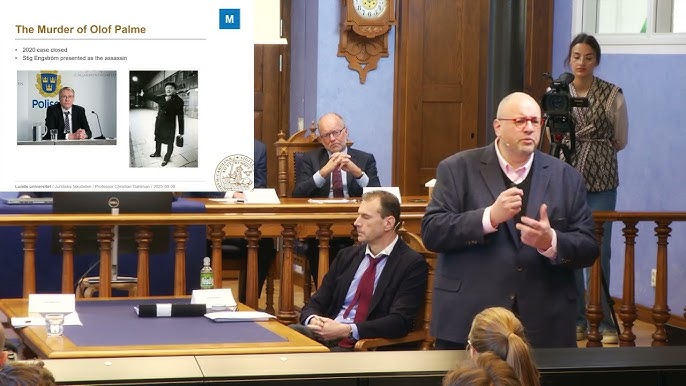
In a mock trial in 2025, the defense counsel posed the question, “Who doesn’t fit the eyewitnesses’ description of the shooter?”[19]
The mock trial obviously had no legal standing, but the participants were respected people.
Given Engström’s death, it also represented the best available substitute to having the claims against Engström tested in court. The mock trial was convened in Sweden’s prestigious Lund University and organized by Professor Christian Dahlmann of the Faculty of Law. Presiding was a panel comprised of five distinguished judges from five different countries. After hearing the evidence, they acquitted Engström unanimously.
In December 2025, the prosecutor announced that they no longer regarded Engström as a suspect.[20] The dead man who had been retrospectively accused had been retrospectively cleared. However, the prosecutor made clear that the investigation would not be re-opened.
The clearing of Engström’s name left open the question of why the authorities had been so determined to frame two different people as being Palme’s killers in the absence of any remotely credible evidence. Either this was an attempt to overcompensate for having allowed the killer to flee, or there was a more disturbing reason—deflecting from possible complicity of the Swedish state itself in the crime.
Police Incompetence—or Worse
Although police, like anyone else, make mistakes, it stretched credulity to believe that any police force could have displayed the incompetence shown by the Stockholm police the night of the assassination.
The fact that a bystander’s call went unanswered for 90 seconds might not be remarkable in other circumstances, but it seemed extraordinary considering the call was to an emergency line reporting a murder.
Adding to the mystery, the operator who initially transferred the call took sick leave the following day and appears never to have returned to work.[21]
The first hour following a serious crime is sometimes known as the “golden hour” for criminal investigators.
Every possible step must be taken in that first hour to apprehend the culprit, secure possible escape routes, and preserve evidence. In this case, nothing was done to impose border restrictions or alert police districts outside Stockholm until almost three hours later.
The “Baseball League”—a group of police officers with links to the extreme right—became a focal point for those who whispered that the state could have orchestrated the crime.
The officers associated with the Baseball League were notorious for violence toward suspects and links to extremists.
The police officer who established the group was none other than Hans Holmér, the senior police officer who was appointed to lead the investigation[22] and who led it down the rabbit-hole of pursuing Kurdish separatists. (In 1999, a review concluded that this had been deliberate misdirection.[23])
Holmér’s own movements at the time of the assassination became a focus for amateur sleuths. Prominent among these was the retired journalist Sven Anér.
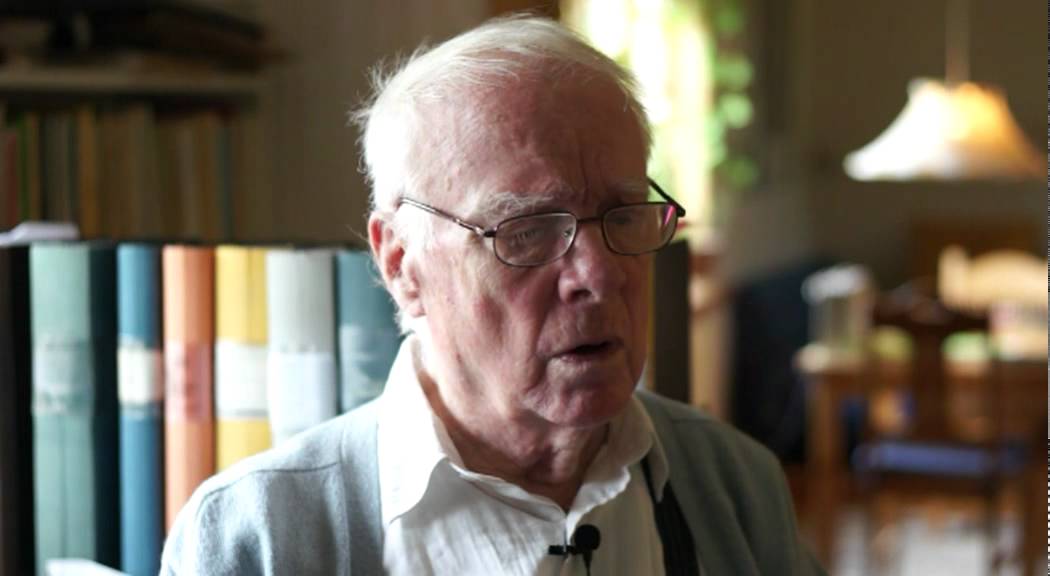
Anér discovered that Holmér’s account of staying in a hotel in the town of Borlänge at the time of the assassination was contradicted by hotel records.[24]
At first, the hotel could not identify any records of Holmér’s alleged stay. Curiously, a record later materialized that curiously recorded Holmér as having begun and ended his stay on one day, February 28, the day of the assassination.
The author, Jan Bondeson, suggested that, as 1986 was a leap year, Holmér may have checked out on February 29, which the system mistakenly recorded as February 28, as though it were a non-leap year.[25]
The fatal difficulty with this is that 1986 was not a leap year. There was no February 29.
More curious still, Holmér’s driver Rolf Dahlgren came forward to place Holmér in Stockholm—and as actually having passed the crime scene—the night Palme was assassinated.[26] Dahlgren himself later died under what some viewed as suspicious circumstances.
One recurrent feature of the case was the reporting by eyewitnesses of men standing in various locations around Stockholm that night with walkie-talkies.
As many as 80 such sightings were made,[27] far too many to be written off. Clearly, there would have been any number of legitimate reasons for this—security contractors, police officers, etc., but the difficulty was that no satisfactory explanation was ever provided for all these sightings.
The Secret Service—Säpo
As prime minister, Olof Palme was entitled to a security detail from Säpo, the Swedish secret service. He found it burdensome and, at times, would opt to go out without his security.
Accordingly, there did not seem to be anything strange when he told Säpo he said he would not require security guards for his trip to the cinema. But it would have been a very strange, indeed utterly reckless, decision had he known of recent threats on his life. Säpo had been aware of at least two serious threats or warnings.
One warning came from Säpo’s Norwegian counterpart. A Norwegian citizen named Trygve Thorgerson missed and returned a call that turned out to have been intended for a different Trygve Thorgerson.
Believing he was talking in confidence to the other Trygve Thorgerson, the caller, who identified himself as belonging to the Schiller Institute, spoke of the need to eliminate Palme to improve relations between Sweden and NATO/Western Europe.[28] The Schiller Institute was and is part of the Lyndon LaRouche network (the same network with which Viktor Gunnarsson, arrested shortly after the assassination, was linked).[29]
Thorgerson reported the incident to the Norwegian secret service, who relayed it to Säpo. The threat never appears to have been followed up or reported to Palme.
A second serious threat was passed on by a former mercenary named Ivan von Birchan, who in the weeks before the crime reported to Säpo that he had been offered a large sum of money to orchestrate Palme’s assassination.[30]
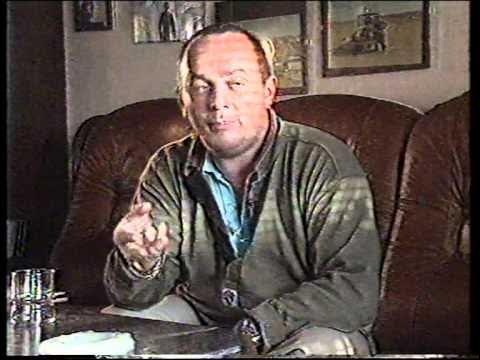
Again, it is not clear that any particular action was taken to caution Palme. Having apparently not been cautioned by his own security detail, Palme went out on the streets of Stockholm on the night of the assassination like a lamb to the slaughter.
Säpo chief Sven-Åke Hjälmroth informed colleagues shortly after the crime that the organisation had not had any agents on duty in central Stockholm that night.[31] This was a lie.
This was established when, in 2018, some 32 years after the murder, police investigators came into possession of a memorandum confirming a Säpo operation in Stockholm. The operation was code-named “Cosi fan tutte” after the opera by Mozart – ironically, the film Palme had seen at the cinema had also concerned a Mozart opera. The purpose of Säpo’s operation has never been revealed and requests to release further documents were refused.
When investigators sought Säpo’s file on Olof Palme, which had apparently been opened as far back as the 1950s, Säpo reported that it had disappeared, but were unable to explain how this could have happened.[32] It is difficult to credit that a professional intelligence service could simply lose its files on someone as important as a former prime minister.
The Naval Mutiny
The 1985 naval officers’ rebellion had been a direct attack on Palme’s authority. It touched on the most sensitive topic in Swedish defense, namely, the security of Swedish seas from Soviet submarine incursions. Dark rumors swirled that Palme was not merely indifferent to the supposed threat, but was actively colluding with the Soviets to allow the activity to continue.
When Palme sought to reassure Swedes that the country’s waters were secure, Commander Hans von Hofsten retorted by accusing Palme of a deliberate lie.[33] Von Hofsten faced no disciplinary action for this blatant insubordination to the country’s civilian prime minister.
Some 30 years after the assassination, investigative journalist Jan Stocklassa embarked on an audacious mission: to befriend a person suspected of having been the gunman. Stocklassa’s book The Man Who Played with Fire assigned the man the pseudonym Jakob Thedelin, and charted how the plan was accomplished by using a younger woman as an intermediary to connect with Thedelin after tracking down his Facebook profile.
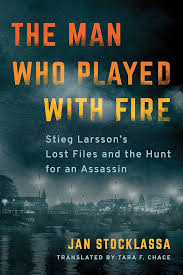
Thedelin never made an admission of direct involvement in the killing, but appeared to know a great deal about it. He identified Swedish UN diplomat Bernt Carlsson as having had important information about the assassination and even linked the Lockerbie bombing (in which Carlsson perished) with an attempt to prevent Carlsson from speaking out.
Thedelin recounted that he had met on several occasions with Hans von Hofsten, who had told him that Palme had “released” Soviet submarines discovered in Swedish waters. Thedelin believed that Palme’s assassination had saved Sweden from betrayal to the Soviet Union.[34]
Thedelin had been interviewed twice in 1987 as part of the original investigation. When Stocklassa was able to obtain copies of the police interviews that Thedelin had taken part in, it turned out that these included reference to a meeting with von Hofsten. Thedelin revealed that he had connected with von Hofsten in respect to one of the submarine incidents.[35]
Thedelin recounted that the meetings had taken place in Stockholm and even at home in von Hofsten’s country house. Just as Thedelin would recount so many years later, he relayed to his interviewers how von Hofsten told him of Palme’s alleged collusion in letting a Soviet submarine escape. The interviewers did not appear interested in pursuing this aspect of the interview.
The CIA and Right-Wing Americans
In one of his encounters with his supposed new friend, Thedelin made an eye-catching claim—that he had reported to a CIA handler.[36] He did not elaborate on his relationship with the Agency, but the link is notable given others who have sought to implicate the CIA in the killing. Notably, Ivan von Birchan, the ex-mercenary who had tipped off the authorities about being offered a contract for the job, claimed that the offer had come from a CIA agent named Charles Morgan.[37]
The CIA’s notorious counterintelligence chief James Angleton classed Palme as a likely Moscow asset,[38] albeit Angleton’s CIA career had come to an unceremonious end more than a decade before the killing.
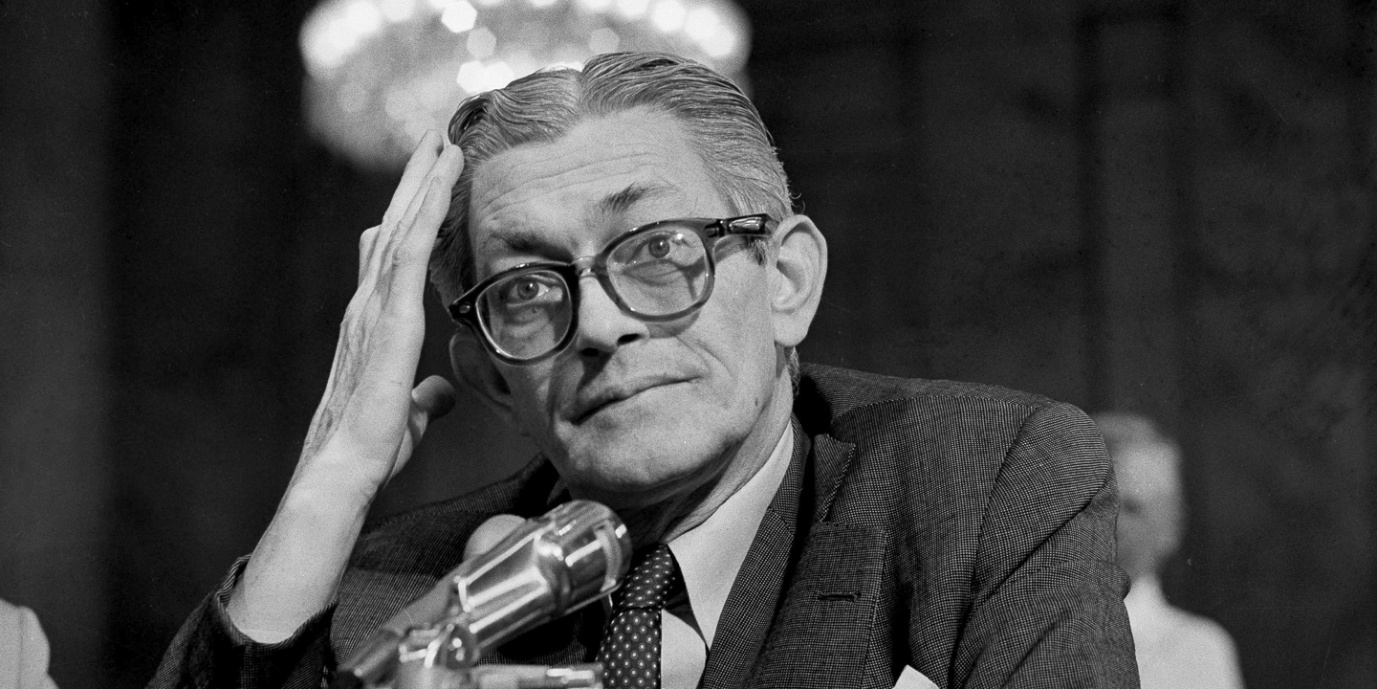
Interestingly, the CIA-backed International Journal of Intelligence and Counterintelligence devoted an article to the Palme assassination and sought to rebut the idea that Palme had been killed by an intelligence agency.[39]
It insisted that an intelligence agency could not have been behind the crime because the killer had momentarily paused before he fled, rather than fleeing instantly.
There were at least two possible leads potentially linking the Lyndon LaRouche movement to the case: the affiliations of Victor Gunnarsson, the initial suspect, who was promptly released, and the strange telephone call to Trygve Thorgerson by a man claiming to be from the Schiller Institute.
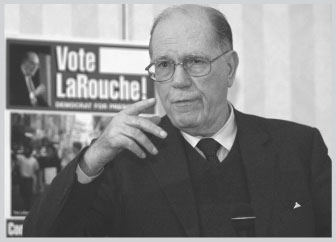
LaRouche himself was a cult figure who drew notoriety for various outlandish claims, such as accusing the British Royal Family of being in league with the Kremlin.
Although Western intelligence agencies were frequently the target of LaRouche’s invective, he appeared to develop a relationship with the CIA. In 1984, it was confirmed that he had been accommodated with at least two secret meetings with senior CIA officials.[40]
The exact nature of the relationship between LaRouche and the CIA is not known. At the time, the movement’s line was certainly extremely hostile to the politics of those such as Olof Palme. LaRouche accused Sweden of being the “weak link in the defense of Europe”[41] and campaigned strenuously for the accession of neutral Sweden to NATO. He even boasted of responsibility for von Hofsten’s naval mutiny.
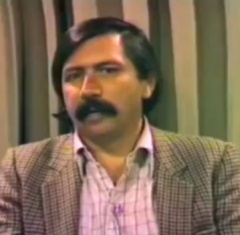
One person who certainly thought the CIA/NATO angle worth investigation was U.S. filmmaker Allan Francovich, who had previously produced an exposé of the CIA, On Company Business, and another documentary, The Maltese Double-Cross, concerning the Lockerbie bombing. Francovich died suddenly in 1997 while reportedly on his way to meet a contact who claimed to have crucial information about the Palme killing.[42]
Conclusion
The assassination of Olof Palme remains unsolved. Despite having retrospectively cleared the name of Stig Engström, the authorities have refused to re-open their investigation.
The killing remains an open wound that Sweden has never been able to heal. How could the leader of this model social democracy and “diplomatic superpower” simply be murdered with the Swedish people left grappling for answers for 40 years?
How is it that the name of Olof Palme and the circumstances of his murder are almost completely forgotten outside the Nordic countries? One thing that is certain is that the death of Palme changed Sweden forever.
In 1994, Sweden signed up to NATO’s so-called “Partnership for Peace” and gradually replaced the principled and anti-colonial non-alignment championed by Olof Palme with de facto alignment with NATO.
This culminated in formal accession to the alliance in 2024, breaking the last taboo. If Palme’s killer is still alive, he would have basked in the satisfaction of a job well done.

Jan Bondeson, Blood on the Snow: The Killing of Olof Palme (Ithaca, NY: Cornell University Press, 2005), 14; “Police ‘let Palme murderer escape,’” The Scotsman, April 11. 1994. ↑
Bondeson, Blood on the Snow, 18. ↑
Bondeson, Blood on the Snow, 31. ↑
Jan Stocklassa, The Man Who Played with Fire: Stieg Larsson’s Lost Files and the Hunt for an Assassin (Seattle, WA: Amazon Crossing, 2019), 40. ↑
Stocklassa, The Man Who Played with Fire, 31. ↑
Pelle Neroth, “Margaret Thatcher told navy to raid Swedish coast,” The Sunday Times, January 27, 2008; Ola Tunander’s book, The Secret War Against Sweden: US and British Submarine Deception in the 1980s (London: Frank Cass, 2004); Jeremy Kuzmarov, “Sweden’s Joining NATO Was Set in Motion in the 1980s in a False Flag Attack Orchestrated by the CIA,” CovertAction Magazine, September 11, 2023. ↑
Rolf Soderlind, “Revolt in Swedish Navy” United Press International, November 11, 1985. ↑
Bondeson, Blood on the Snow, 50 ↑
Imogen West-Knights, “Who killed the prime minister? The unsolved murder that still haunts Sweden,” The Guardian, May 16, 2019. ↑
Stocklassa, The Man Who Played with Fire, 52. ↑
Stocklassa, The Man Who Played with Fire, 464. ↑
Bondeson, Blood on the Snow, 57. ↑
Chris Lund, “Police expect new flood of tips on Palme assassination”United Press International, March 7, 1986. ↑
Bondeson, Blood on the Snow, 128. ↑
Bondeson, Blood on the Snow, 142. ↑
Bondeson, Blood on the Snow, 146. ↑
David Keyton and Jan M. Olsen, “Sweden halts probe into 1986 murder of PM Olof Palme” Associated Press, June 10, 2020. ↑
“Elections to the Riksdag” Statistics Sweden ↑
Lund University, “The Mock Trial against Stig Engström for the Murder of Prime Minister Olof Palme” YouTube.com, May 5 2025 (uploaded September 5 2025) ↑
“Chief Prosecutor: Wrong to single out ‘Skandiaman,’” Aftonbladet, December 18, 2025 (machine translated). ↑
Bondeson, Blood on the Snow, 14, fn. 1. ↑
Bondeson, Blood on the Snow, 39, 40. ↑
Bondeson, Blood on the Snow, 111. ↑
Sven Anér, “No-one remembers Holmér in Börlange,” Palme News, February 22, 1996 (machine translated). ↑
Bondeson, Blood on the Snow, 166. ↑
Henrik Andersson, “Murderous Silence” Tagesspiegel, February 26, 2011 (machine translated). ↑
Johan Ronge, “Secret Säpo Operation was under way on night of the murder,” Expressen, October 29, 2021 (machine translated). ↑
“The Palme Murder: The Man, The Murder, The Mystery,” Part 3, SVT, 1999 (machine translated via subtitles); see also transcript of program, Palme News, April 6, 1999 (machine translated). ↑
Board of Directors, “Schiller Institute Founder – Helga Zepp LaRouche” Schillerinstitute.org ↑
Stocklassa, The Man Who Played with Fire, 115. ↑
Ronge, “Secret Säpo Operation.” ↑
Arne Lapidus, “Palme’s personal file missing – Säpo may have set it on fire,” Expressen, September 20, 2020. ↑
Soderlind, “Revolt in Swedish Navy.” ↑
Stocklassa, The Man Who Played with Fire, 420. ↑
Stocklassa, The Man Who Played with Fire, 393. ↑
Stocklassa, The Man Who Played with Fire, 302. ↑
Bondeson, Blood on the Snow, 76. ↑
Johanna Lutteroth, “A Witch Hunt against a Figment of the Imagination” Der Spiegel, September 20, 2013 (machine translated). ↑
Ralf Lillbacka, “Was Olof Palme Killed by an Intelligence Agency?” (2011) International Journal of Intelligence and Counterintelligence 24(1), 119. ↑
United Press International, “CIA Confirms Officials Met With LaRouche,” The Washington Post, November 2, 1984 (via CIA Reading Room). ↑
William Engdahl et al., “EIR Special Report: A classical KGB disinformation campaign: Who killed Olof Palme?” (Wiesbaden: Dinges + Frick, 1986) (via CIA Reading Room), 8. ↑
Sven Anér, “Was Olof Palme murdered by secret NATO soldiers?” Palme News, October 6, 1997 (machine translated). ↑
CovertAction Magazine is made possible by subscriptions, orders and donations from readers like you.
Blow the Whistle on U.S. Imperialism

Click the whistle and donate
When you donate to CovertAction Magazine, you are supporting investigative journalism. Your contributions go directly to supporting the development, production, editing, and dissemination of the Magazine.
CovertAction Magazine does not receive corporate or government sponsorship. Yet, we hold a steadfast commitment to providing compensation for writers, editorial and technical support. Your support helps facilitate this compensation as well as increase the caliber of this work.
Please make a donation by clicking on the donate logo above and enter the amount and your credit or debit card information.
CovertAction Institute, Inc. (CAI) is a 501(c)(3) non-profit organization and your gift is tax-deductible for federal income purposes. CAI’s tax-exempt ID number is 87-2461683.
We sincerely thank you for your support.
Disclaimer: The contents of this article are the sole responsibility of the author(s). CovertAction Institute, Inc. (CAI), including its Board of Directors (BD), Editorial Board (EB), Advisory Board (AB), staff, volunteers and its projects (including CovertAction Magazine) are not responsible for any inaccurate or incorrect statement in this article. This article also does not necessarily represent the views the BD, the EB, the AB, staff, volunteers, or any members of its projects.
Differing viewpoints: CAM publishes articles with differing viewpoints in an effort to nurture vibrant debate and thoughtful critical analysis. Feel free to comment on the articles in the comment section and/or send your letters to the Editors, which we will publish in the Letters column.
Copyrighted Material: This web site may contain copyrighted material the use of which has not always been specifically authorized by the copyright owner. As a not-for-profit charitable organization incorporated in the State of New York, we are making such material available in an effort to advance the understanding of humanity’s problems and hopefully to help find solutions for those problems. We believe this constitutes a ‘fair use’ of any such copyrighted material as provided for in section 107 of the US Copyright Law. You can read more about ‘fair use’ and US Copyright Law at the Legal Information Institute of Cornell Law School.
Republishing: CovertAction Magazine (CAM) grants permission to cross-post CAM articles on not-for-profit community internet sites as long as the source is acknowledged together with a hyperlink to the original CovertAction Magazine article. Also, kindly let us know at info@CovertActionMagazine.com. For publication of CAM articles in print or other forms including commercial internet sites, contact: info@CovertActionMagazine.com.
By using this site, you agree to these terms above.
About the Author
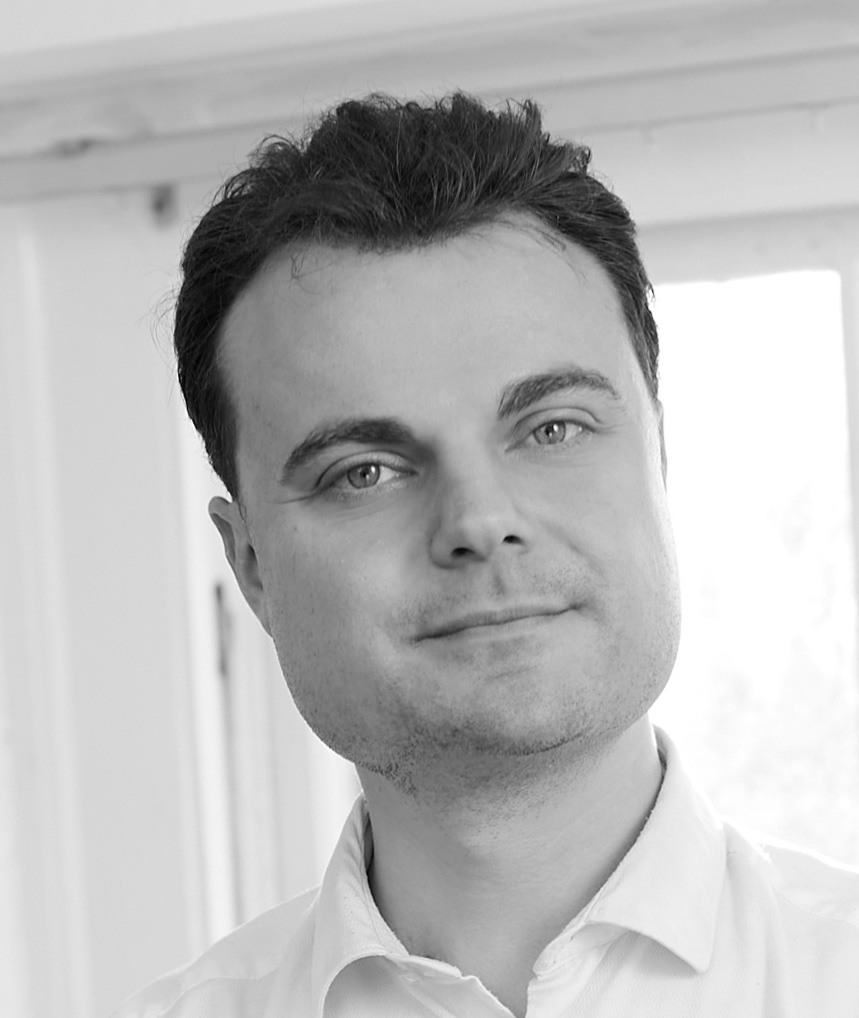
Stephen Kelly is an Irish citizen based in Dublin, and a graduate of Trinity College, Dublin, and the Law Society of Ireland.
Stephen practices as a lawyer in the areas of civil litigation and criminal defence. He has been involved in campaigning on various issues, particularly relating to Ireland’s increasingly precarious neutrality.
You can find Stephen on X at x.com/kelly_79769, or email him at stephen.kelly.845@protonmail.com.



!! Now She has been with out artwork for five months however final month her charge emerge as $11747 really on foot on the internet for some hours. study greater on this net internet site…..
checking this page…. https://goo.su/UGB7Z
great