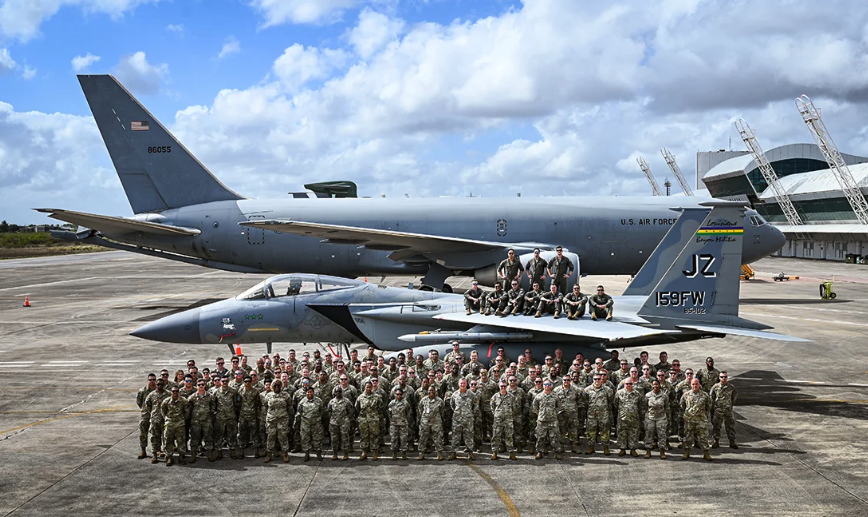
In private talks with their Brazilian counterparts, U.S. diplomats have expressed interest in resuming unrestricted access and use of air base installations in Natal, capital of the northeastern state of Rio Grande do Norte, as well as on the island of Fernando de Noronha.
Their central argument involves the so-called “historical right of operational return,” based on U.S. government investments for constructing parts of Natal Air Force Base (BANT) and Fernando de Noronha Airport (SBFN) during and after WWII.
The claim was used by Washington in its pressure campaign against Panama, as U.S. officials attempted to resume control over the Panama Canal.
In the case of Brazil, military specialists emphasize that both air fields offer tangible operational advantages in terms of command, control, communications, computers, intelligence, surveillance and reconnaissance (C4ISR). A resumption of technical control and operational use would present a further consolidation of the newly coined “Don-roe Doctrine,” planting the South American continent firmer into the U.S.’s proverbial backyard.
Enshrined as the country’s magna carta in 1988, Brazil’s federal constitution explicitly prohibits the installation of foreign military bases anywhere within its national territory. However, Article 49, Clause I, also stipulates that, with congressional authorization, and signed as a legislative decree, a foreign military base, or bases, are permissible.
Creating a Containment Arc
Natal Air Force Base possesses a runway capable of receiving the C-17 Globemaster III, KC-135 Stratotanker, the new KC-46 Pegasus, and other military airplanes. It also functions as a high value logistic hub for expeditionary or joint transcontinental missions.
Operational measures include plane refueling, medical evacuations, rapid mobilization of special military forces, and aerial support missions during crisis management scenarios on South America’s northern coast, Caribbean islands, and Africa’s western coast.
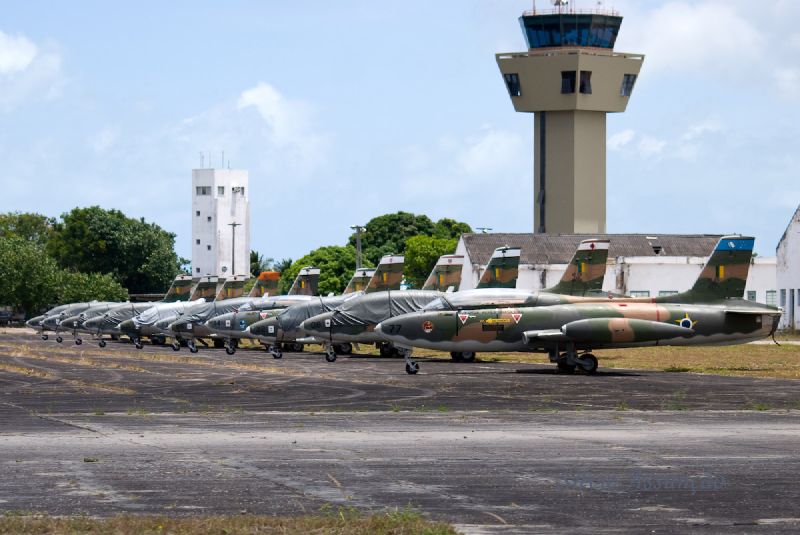
Fernando de Noronha, located 354 kilometers (220 miles) off the northeastern Brazilian state of Pernambuco is ideal for long-range oceanic surveillance. The archipelago is a strategic point for the installation of electro-optic sensors, maritime surface radars, and ELINT and SIGINT equipment for monitoring naval and aerial routes.
Apart from serving as an advanced vector of intelligence collection and jamming, the air base can function as a tactical support hub for maritime surveillance, military plane landings and take-offs, and medium-altitude long-endurance UAVs such as the MQ-9 Reaper or MQ-9B SeaGuardian.
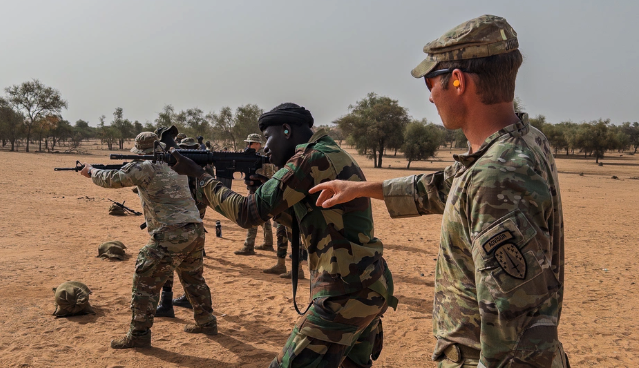
Resuming access and use of both air bases would allow the U.S. military to establish an Atlantic containment arc complementing its present loop of bases and support instalments on Ascension Island, São Tomé Island, and troops stationed in Senegal and Liberia.
In February, two months after U.S. President Donald Trump ordered air strikes in northern Nigeria to help prevent what he called a “Christian genocide,” the U.S. deployed 200 troops to the West African country for counterterrorism training.
Nigeria, which, according to its foreign minister, Yusuf Maitama Tuggar, participated in the bombing of its own territory in a “joint operation” with the U.S., shares a 1,608-kilometer (999 mile) border with Niger, one of the triumvirate countries comprising the newly formed Alliance of Sahel States (AES).
The anti-imperialist coalition, which also includes Mali and Burkina Faso, continue to fight terrorist groups on their territory following the free-flow of arms in the wake of the assassination of Libyan President Muammar Gaddafi.
Terrorist tentacles also extend to France. In September 2024, AES officials opened investigations into French journalist Wassim Nasr on charges of “apology of terrorism” and “complicity” in alleged terrorist attacks in the region.
Malian prosecutors argue that he was in direct contact with a group of armed jihadi militants who carried out an attack on Bamako on September 17, 2024, where they communicated their location, objectives and death toll in real time to Nasr.
U.S. Arguments
Arguments posed by U.S. diplomats in Brazil for resuming unrestricted utilization of Natal Air Force Base and Fernando de Noronha Airport are categorized into four main points. The first is based on past investments used to finance equipment purchases, as well as engineering and construction of runways on both airports by the U.S. government during World War II and the Cold War.
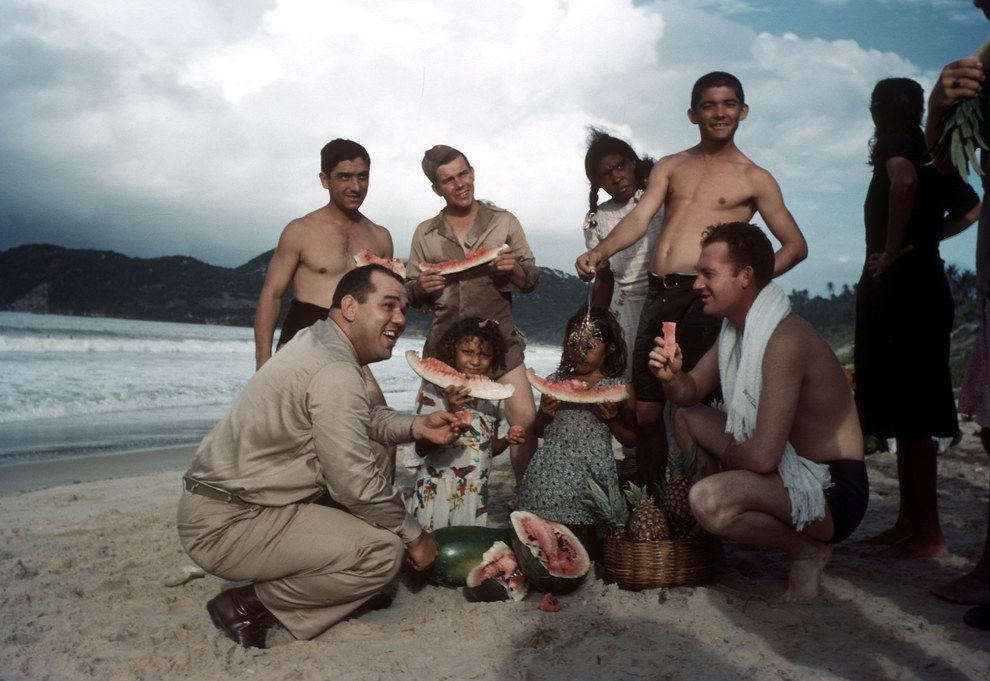
The second argument focuses on the so-called “historical right of operational return,” which affirms that military assets financed by Washington in partner countries—especially during global threats or strategic competition— can be “reactivated.”
This concept is founded on tacit agreements, as well as the Inter-American Treaty of Reciprocal Assistance (commonly known as the Rio Treaty or Rio Pact).
Initially signed in 1947 and taking effect the following year, the accord’s central idea is that an attack against any member state, which to this day includes Brazil, the U.S., and several countries in the Americas, is an attack against all.
Referred to as “hemispheric defense,” the concept is taking on even greater significance with the U.S.’s bolstered National Defense Strategy.
The third argument involves contractual and legislative precedence. The now-expired Brazil-United States Military Assistance Agreement (1952), whose goal was defending the Western Hemisphere against communism, is frequently cited in documents published by the RAND Corporation, Center for Strategic and International Studies, and Heritage Foundation.
These organizations reference the so-called “hemispheric interoperability tradition” as the basis for a return of military operational use.
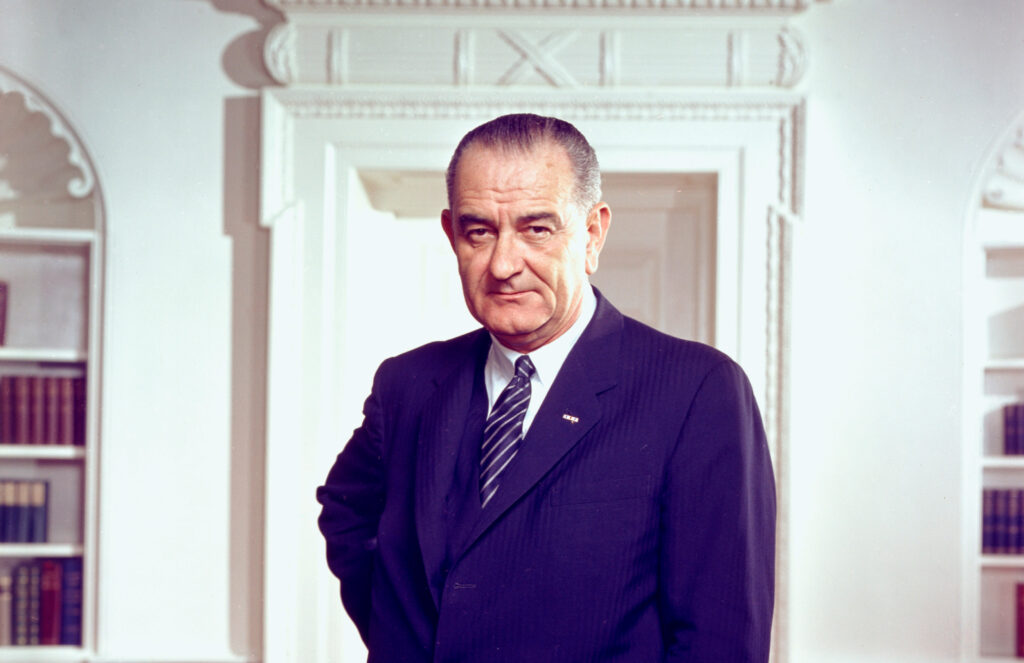
Lastly, the U.S.-Brazil Technology Safeguards Agreement (AST), signed in 2019 by the South American country’s previous right-wing government and remains active into the present progressive/leftist administration, is also cited as a political and diplomatic precedence for the use of military installations in Brazil by the U.S. military.
The agreement permits the use of Brazil’s Alcântara Military Base, which is 87 square kilometers in the northeastern state of Maranhão, by U.S. military personnel.
Latin America’s Colonial Layer
—Brazilian author and anthropologist Lilia Schwarcz
Layered beneath or atop the threat to Brazil’s sovereignty is the decades-long struggle by Quilombolas (Quilombo residents) to avoid any further evictions of its community members by Brazil’s military in the construction and expansion of Alcântara Military Base.
Over the past 40 years, the more than 100 Quilombo communities based in the Alcântara region have been systematically harassed and attacked by Brazilian state and federal authorities demanding the surrender of their land as much as U.S. pressure to resume use of Natal Air Force Base and Fernando de Noronha Airport.
In 1983, the Brazilian Air Force expelled 312 families before seizing 8,000 hectares of their collective communal territory to build the Alcântara Launch Center (CLA). The grounds have been repurposed for rocket and research aerial device launches. Meanwhile, the Brazilian government willfully signed and continues to observe the AST, which allows U.S. military personnel free use of the CLA premises and access to its research program.
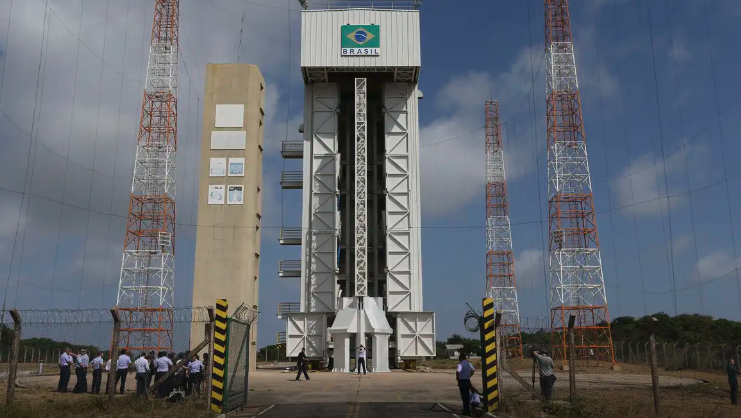
Since 2010, during the second-term presidency of Luiz Inácio Lula da Silva, the Brazilian government has demanded the appropriation of an additional 12,000 hectares of Alcântara Quilombo land to expand CLA’s operational grounds from 87 to 213 square kilometers.
Tried in 2023 by the Inter-American Court of Human Rights for its systematic abuse against the Quilombo, Brazilian officials issued an apology for their actions. They went on to present what was described by some Alcântara family members as a “vague” proposal of “progressive land title registration” on behalf of residents who want neither Brazilian nor U.S. military installations, soldiers or their personnel on their territory.
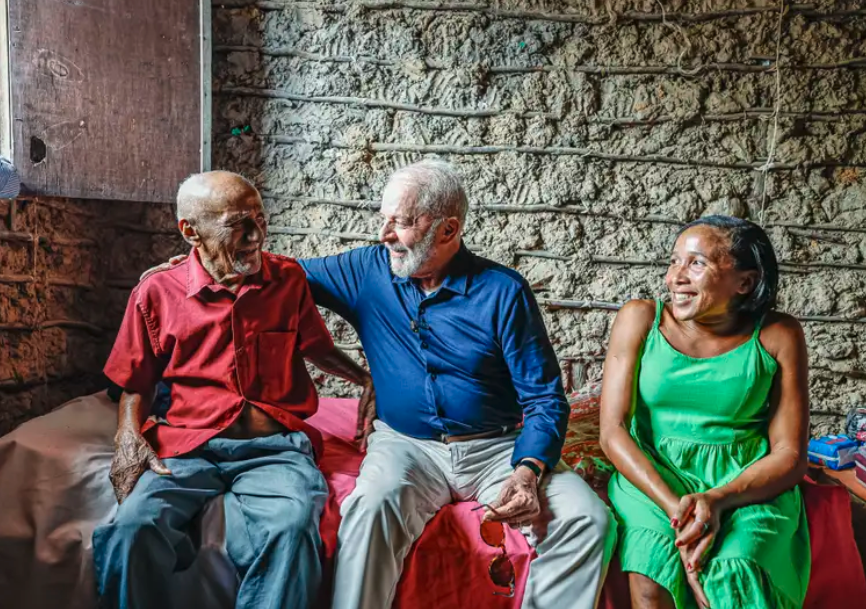
“Was it necessary to appropriate so much [land] just to build a rocket launch base?” questioned Lula during a visit to the Alcântara Quilombo in September 2024 to sign the Alcântara Agreement. The crux of the accord, theoretically, reconciles territorial interests and rights of the Quilombo with the interests and necessities of the Brazilian state to promote and develop the CLA.
“Why prohibit you all from accessing benefits that the government itself offers?” Lula continued his query. “Why were you all treated almost like marginalized people? Now, you all can look at yourselves, with your entire families, in the mirror, and say ‘we have returned as first-class citizens of this country. We have rights and we shall demand them.’”
According to a Brazilian Institute of Geography and Statistics census taken in 2025, there are 1.3 million Quilombola members across Brazil. Only 12% of their land is officially recognized and demarcated by state authorities.
In 2023, a total of 53 Quilombos in Rio de Janeiro presented an official request to the state prosecutor’s office demanding that the Bank of Brazil compensate their communities for having financed chattel slavery in the country, receiving “vexatious profits” from the practice.
Following the presentation of official records and documents, as well as news reports of the time associating the Bank of Brazil with chattel slavery and the trans-Atlantic slave trade, an official investigation was launched.
War With Surveillance & Bombing Planes Starting With The CV & PCC?:
While U.S. diplomats work discreetly behind the scenes, State Department officials are debating whether to designate the Red Command (CV) and First Command Of The Capital (PCC) as terrorist organizations in Brazil. Previous reporting on the historic trajectory of these two groups, particularly the CV, formed anywhere between 1969-1979 as a revolutionary resistance movement to Brazil’s military dictatorship, yet wholly omitted from the country’s three-volume (3,388-page) Truth Commission, can be accessed here:
Republic of Oruam Part II: Crucible in the “Marvelous City”
Prohibited News: Who’s Afraid To Say CV-RL?
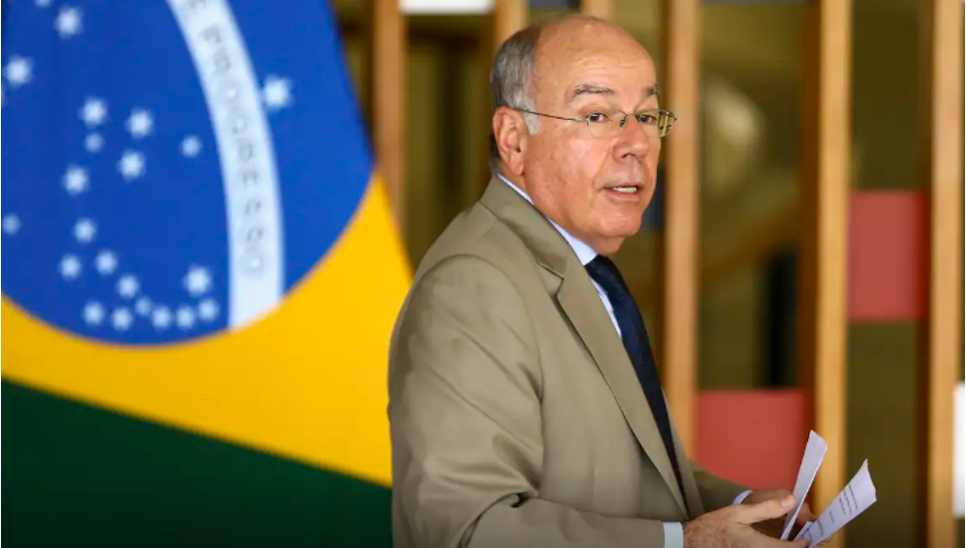
Working decades behind schedule and confining themselves to attempts to influence “Don-roe” foreign policy rather than address the root causes of the CV’s and PCC’s emergence, Brazil’s Minister of Foreign Affairs, Mauro Vieira, personally asked his U.S. counterpart, Marco Rubio, to refrain from submitting a congressional proposal to evaluate the terrorist designation. Face to face talks between Lula and Trump should occur before any such designation, Vieira requested, adding that his government wants an opportunity to present US officials with evidence as to what they’ve done so far to combat “organized crime.”
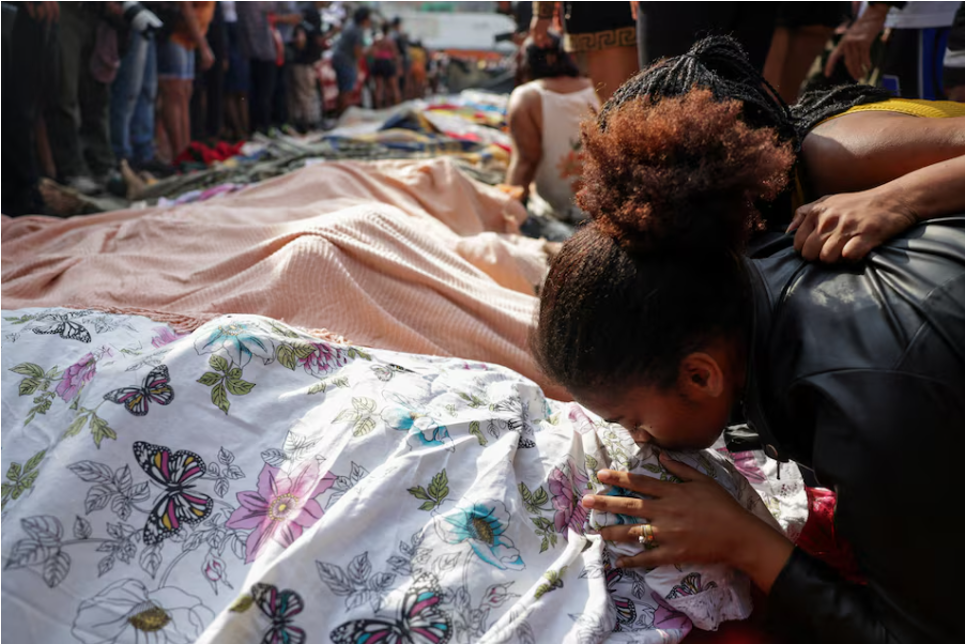
In December 2025, just 3-months after Rio de Janeiro security forces unleashed Operation Containment, the largest recorded massacre in Brazil’s history, leaving 122 CV suspects and 5 policemen in two favelas dead, Brazil’s Finance Minister and a presumed successor to Lula, Fernando Haddad, met with U.S. embassy officials to sign an “anti-crime” agreement. In the Brazilian context “anti-crime” is synonymous with “criminal gangs,” “narco-terrorists,” the CV, and similar groups emergent from ongoing state violence and repression. Language in the agreement is mostly restricted to combatting illicit funds, however, actions behind carrying out these operations can be interpreted to mean and justify almost anything.
The Brazilian right has obsessed of having the CV and PCC classified as terrorist organizations by the Brazilian and US governments. Contesting the position, leftist political leaders argue that both entities lack what they claim—political ideology—thus, is solely interested in money through illicit activities. In part one of Favelados With Guns, co-founding CV member and author of the book 400 Against 1, William de Silva, explained the divide between revolutionary groups like National Liberation Action (ALN) and October 8th Revolutionary Movement (MR-8), repeatedly cited in Brazil’s Truth Commission, with the CV, which wasn’t mentioned a single time:
To negate the struggle for amnesty, Brazil’s military dictatorship denied the existence of political prisoners. In this context, members of armed resistance groups from the 70s, interested in guaranteeing their visibility in national and international public opinion, fought to separate themselves from the mass prison population, an attitude we considered elitist. Their discourse behind the move was coherent but weak. Separation wouldn’t determine the existence of political prisoners in Brazil, however, strength of opposition to the regime would. The decision made by (leftist) political prisoners to remain separate meant maintaining their middle-class hegemony and reoccupying political spaces starting to reopen within the dictatorship’s détente policies. We didn’t share that perspective nor would we be afforded such opportunities. Our only path was the opposite—unity among the incarcerated masses and the continued struggle for freedom based on our own means.
For the past four to five decades, the Brazilian government, the full range of its security apparatus, its civil and military police, special operations battalions, intelligence agencies, military dictatorship, and, at times, deployment of its army, have fought the CV in confined, densely populated territories of historic state abandonment popularly known as favelas. At the end of the 19th century, these dispossessed and oppressed communities were simply known as “African Neighborhoods”.
Decades after the CV’s founding, Brazil’s current progressive/leftist administration seeks to prevent the US designating the CV as a “terrorist organization”, thus upholding the principle of sovereignty over its territory. At the same time, they request U.S. cooperation as an external crutch in combatting “organized crime”, operating as if Brazilian police and special forces are at war with terrorists.
Defense attorney, Flávia Fróes, calls the CV an “anti-repression group”, used as a convenient boogeyman for not having addressed socio-economic disparities and structural discrimination and racism giving rise to the organization. Politically describing herself as someone who identifies with “the left,” Fróes confesses that her position represents a 360-degree turnaround. Openly admitting to her past “fascist” beliefs, she has long taken Brazil’s progressive/left-wing political leadership class to task for their “ambidextrous” policies, one of which “quadrupled the prison population during Lula governments.” Similarly, she criticizes their failure to tackle the influx of U.S. funds supporting the “privatization of Brazil’s penitentiary system… promoting the bullet caucus (gun legalization) and… lowering the age for criminal convictions.” All considered, not to mention mainstream media’s routine treatment of the favelas, she summarizes this toxic brew as the “ideology of fear.”
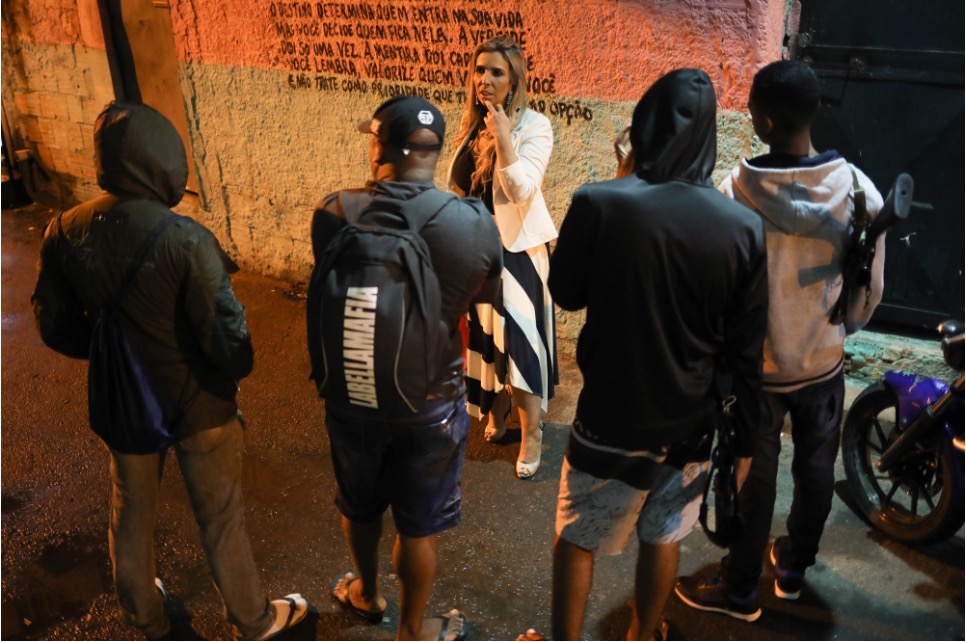
If it were a simple matter of money, the CV wouldn’t be armed for protection against the state, rather merged themselves seamlessly with Brazil’s corrupt, neo-colonial business and political culture, and Brazilian authorities, of all people, know that. Considering the poverty and repression from which the proverbial gang emerged, it’s another debacle for a BRICs co-founding country with over 220 million people, and, based on GDP, the 11th largest world economy in 2025. Mostly technical, band-aide solutions are forwarded to cancers metastizing since the dawn of the South American giant.
In this historical struggle of nerves and corpses, the CV, excluded in its entirety from Brazil’s Truth Commission, finds itself in no position to willy-nilly lay down their arms; Though unarmed, having suffered numerous fatalities at the hands of the state and hired assassins, it doesn’t allow the Rural Landless Workers Movement (MST) to stop occupying defunct, latifundio properties as they peacefully advocate for a just agrarian reform; It doesn’t allow thousands of unarmed Cuban nurses and doctors dispatched to Brazil to help shore up its inadequate healthcare system to pack their bags and go home; It doesn’t allow women who, in 2025, suffered a record number of femicides—at least four per day—to stop demanding their rights and protection; Cumulatively, for the sake of maintaining their peace of mind and very lives, it helps to explain why “uncontacted” Indigenous First Nations across the Amazon try their damnedest to remain as remote and separate from Brazil as humanely possible.

CovertAction Magazine is made possible by subscriptions, orders and donations from readers like you.
Blow the Whistle on U.S. Imperialism

Click the whistle and donate
When you donate to CovertAction Magazine, you are supporting investigative journalism. Your contributions go directly to supporting the development, production, editing, and dissemination of the Magazine.
CovertAction Magazine does not receive corporate or government sponsorship. Yet, we hold a steadfast commitment to providing compensation for writers, editorial and technical support. Your support helps facilitate this compensation as well as increase the caliber of this work.
Please make a donation by clicking on the donate logo above and enter the amount and your credit or debit card information.
CovertAction Institute, Inc. (CAI) is a 501(c)(3) non-profit organization and your gift is tax-deductible for federal income purposes. CAI’s tax-exempt ID number is 87-2461683.
We sincerely thank you for your support.
Disclaimer: The contents of this article are the sole responsibility of the author(s). CovertAction Institute, Inc. (CAI), including its Board of Directors (BD), Editorial Board (EB), Advisory Board (AB), staff, volunteers and its projects (including CovertAction Magazine) are not responsible for any inaccurate or incorrect statement in this article. This article also does not necessarily represent the views the BD, the EB, the AB, staff, volunteers, or any members of its projects.
Differing viewpoints: CAM publishes articles with differing viewpoints in an effort to nurture vibrant debate and thoughtful critical analysis. Feel free to comment on the articles in the comment section and/or send your letters to the Editors, which we will publish in the Letters column.
Copyrighted Material: This web site may contain copyrighted material the use of which has not always been specifically authorized by the copyright owner. As a not-for-profit charitable organization incorporated in the State of New York, we are making such material available in an effort to advance the understanding of humanity’s problems and hopefully to help find solutions for those problems. We believe this constitutes a ‘fair use’ of any such copyrighted material as provided for in section 107 of the US Copyright Law. You can read more about ‘fair use’ and US Copyright Law at the Legal Information Institute of Cornell Law School.
Republishing: CovertAction Magazine (CAM) grants permission to cross-post CAM articles on not-for-profit community internet sites as long as the source is acknowledged together with a hyperlink to the original CovertAction Magazine article. Also, kindly let us know at info@CovertActionMagazine.com. For publication of CAM articles in print or other forms including commercial internet sites, contact: info@CovertActionMagazine.com.
By using this site, you agree to these terms above.
About the Author

A former editor-at-large for African Stream and ex-staff writer at Telesur, Julian Cola is publishing a memoir of intimate, community-inspired stories titled “Proibidão (Big Prohibited): Off-Grid Correspondence From Brazil & Ecuador.”
The pre-launch is in December 2025. It includes media beefs and, having taught in the teaching-English-industrial-complex, the book discusses linguistic soft-power in the region and creative ways of dealing with it as mentioned in the essay, Listening To 2Pac In The Andes (Kawsachun News).
For more information contact: traducoessemfronteiras@protonmail.com