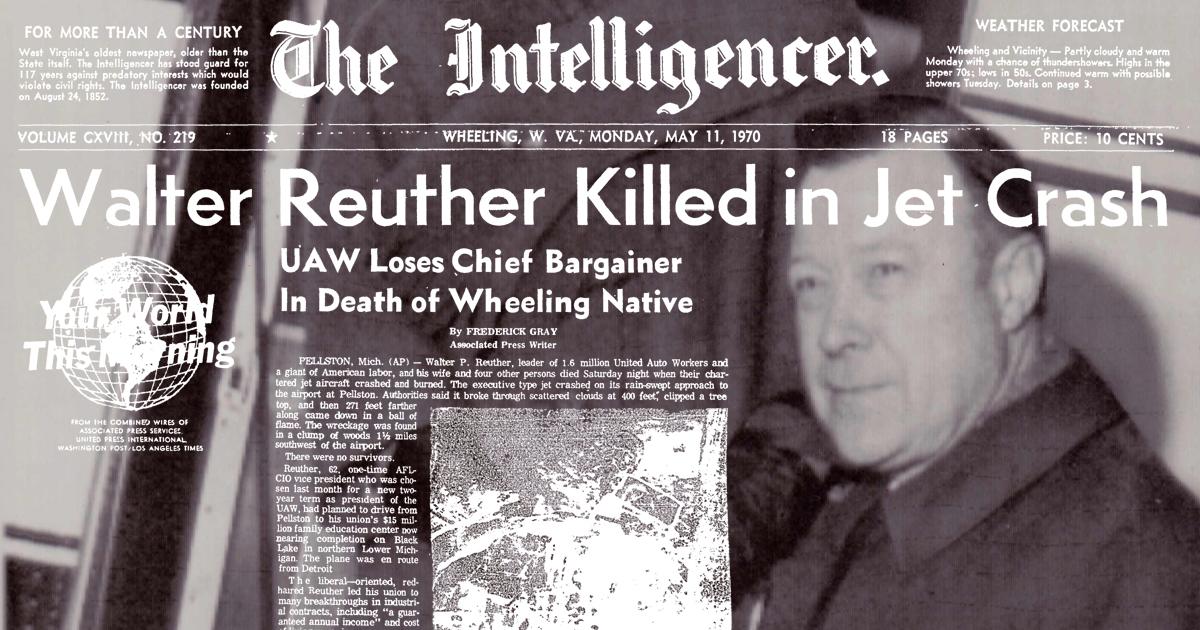
A full investigation is needed into his and other deaths that paved the way for right-wing ascendancy and devastation of America’s working class
On May 9, 1970, United Auto Workers (UAW) President Walter Reuther was killed, along with his wife May and five other people, after the private jet they were flying in crashed during its approach to a small airport near the city of Pellston in northern Michigan.
The victims of the crash included Oscar Stonorov, a renowned architect and Reuther family friend who had designed a UAW educational and recreational center 25 miles from where the accident happened.
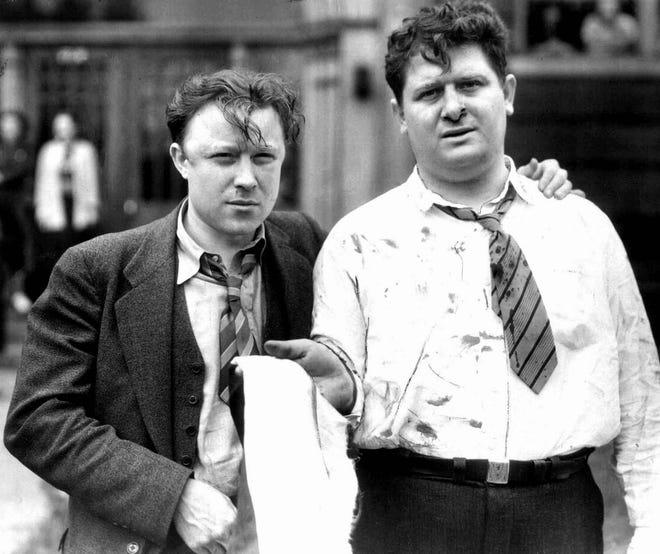
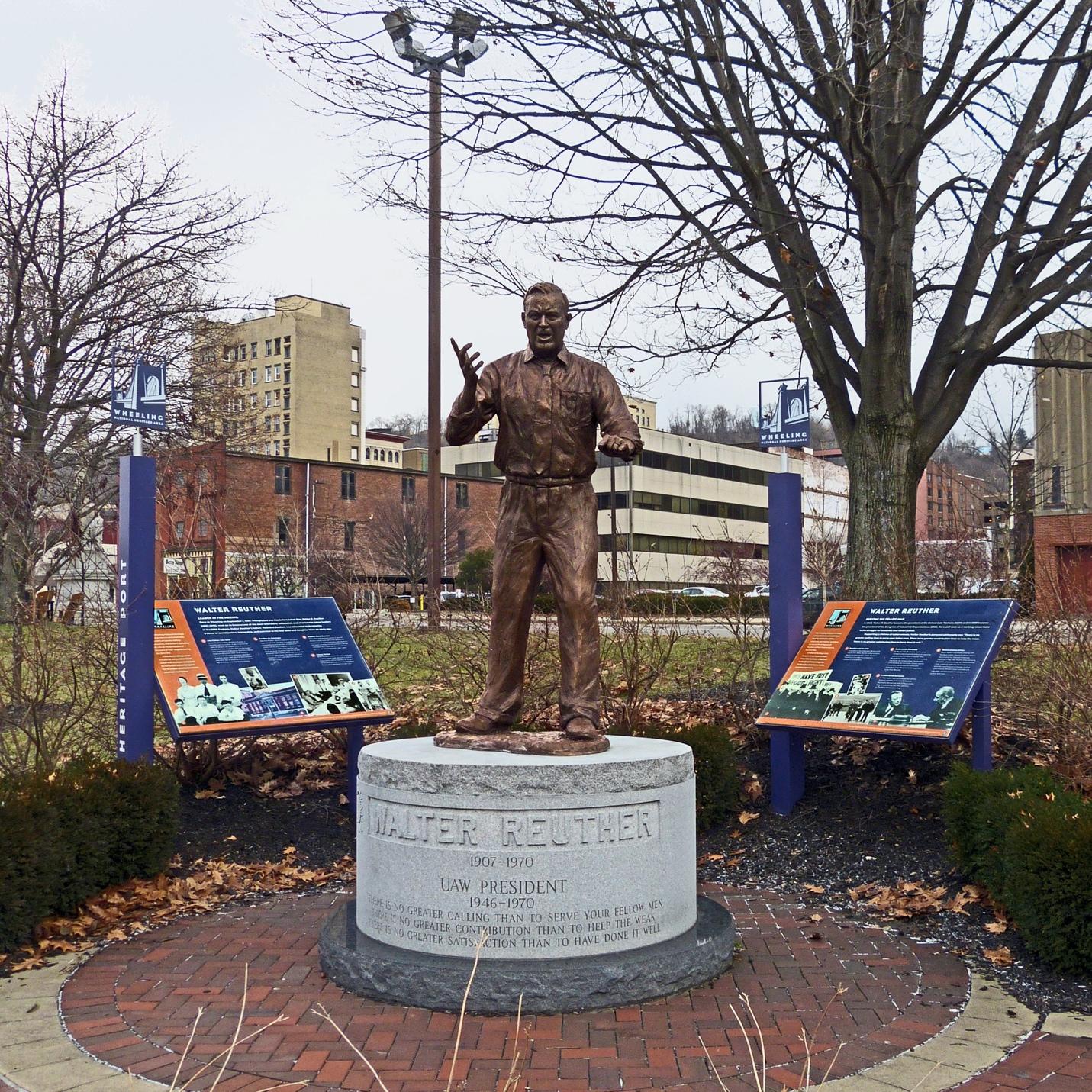
Reuther was a pivotal figure in modern U.S. labor history, who endured beatings while helping to lead successful sit-down strikes in the 1930s, including the famous 1934 Flint strike at General Motors (GM), and served as UAW president from 1946 until his death.[1]
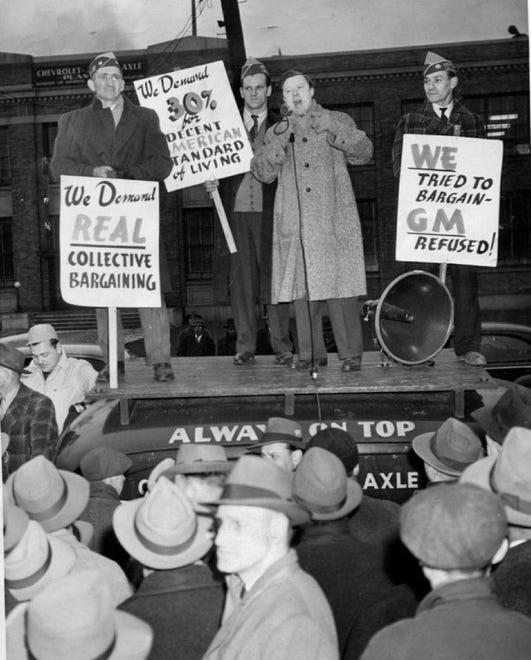
As UAW president, Reuther helped secure important gains for workers in the auto industry, including generous employer-funded health and pension plans, cost-of-living allowances, and a guaranteed annual wage. The latter helped auto workers experience significant increases in living standards and to become cornerstones of the post-war middle class.
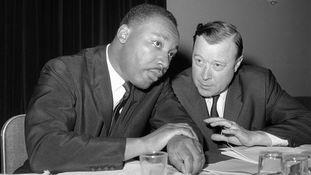
An ally of Martin Luther King, Jr., who was a featured speaker at the 1963 March on Washington, Reuther fought for federally funded affordable housing, nationalized health care, government ownership of monopolistic industries, worker participation in economic planning, and other proposals for redistributing power and wealth, all of which were taken as threats to ruling class interests.[2]
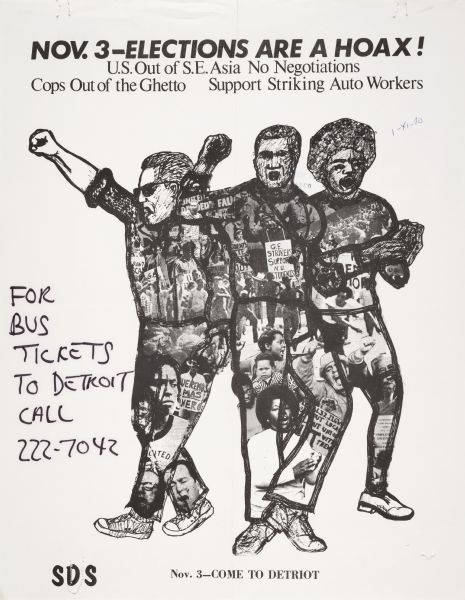
Additionally in the 1960s, the UAW helped finance Students For a Democratic Society (SDS), the leading campus based antiwar organization that called for the advent of a participatory democracy in the U.S.[3]
In a 1995 article in CovertAction Quarterly, Michael Parenti and Peggy Noton wrote that Reuther was an “effective proponent of socio-economic equality and outspoken critic of the military-industrial complex, Cold War arms race, CIA, and entire National Security State and Vietnam War.”
Just a day before his death—occurring after President Richard Nixon’s Cambodia invasion and the Kent State massacre—Reuther had cabled the Nixon White House condemning “the bankruptcy of our policy of force and violence in Vietnam.”
Parenti and Noton consider Reuther’s death to have been “part of a truncation of liberal and radical leadership that included the murders of four other national figures—John F. Kennedy, Malcolm X, Martin Luther King, Jr., and Robert F. Kennedy and dozens of leaders in the Black Panther Party and various community organizations.”[4]
Parenti and Noton make clear that the evidence of foul play in Reuther’s plane crash is considerable.
A National Transportation Safety Board (NTSB) investigation found seven abnormalities in the altimeter, including a loose screw caused by someone deliberately loosening it.
Reuther’s plane crashed when the pilot, George Evans (48), misjudged the distance in the approach because of the faulty altimeter, and clipped the top of a large elm tree before crashing into a pine forest. The plane exploded on impact and then erupted into flames.
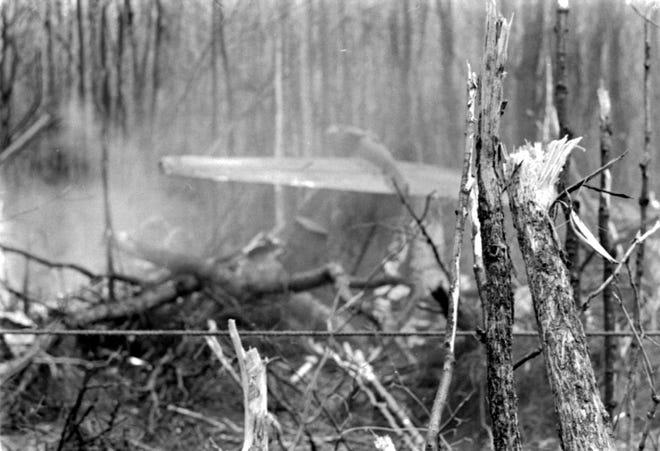
The NTSB report emphasized that the main cause of the crash was pilot visual illusions—the pilot thinking that he was higher than he actually was—which resulted from the defective altimeter.
Earlier that day, the Lear Jet Reuther flew on had transported rock singer Glen Campbell to Detroit with no report of a faulty altimeter.
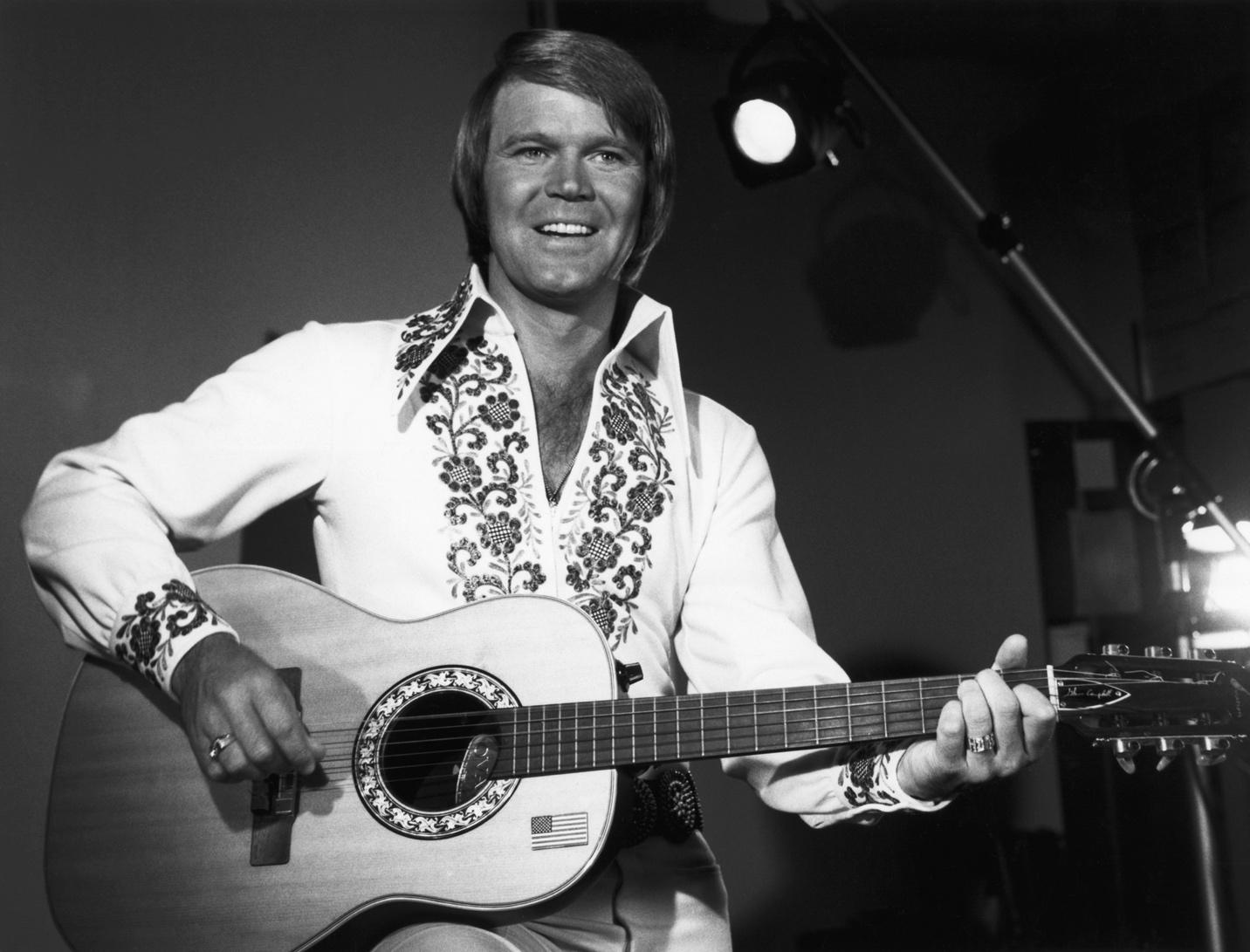
Walter’s brother Victor—also a significant labor leader—said that there was sufficient time between flights for someone to tamper with the altimeter and sabotage his brother’s plane, which is what he believed happened.
Noting that rental planes (what Walter was traveling on) were normally inspected with “unusual care and frequency,” Victor stated that there was never a thorough investigation by federal authorities and that there had been previous threats and attempts on his and his brother’s lives.
Victor Reuther told Parenti and Noton that “animosity from government had been present for some time [before the crash]. It was not only Walter’s stand on Vietnam and Cambodia that angered Nixon, but also I had exposed some CIA elements inside labor, and this was also associated with Walter.”
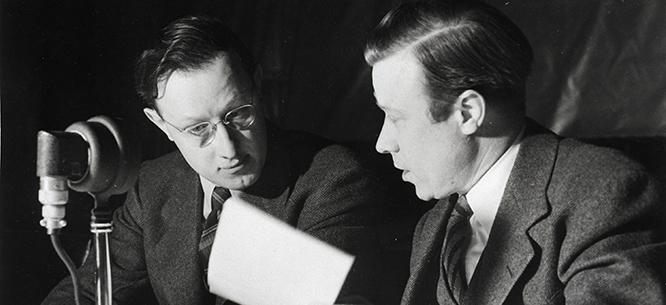
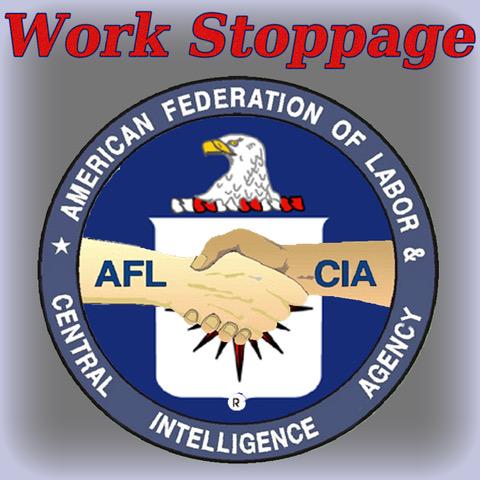
Victor Reuther, more specifically, had helped expose the CIA’s infiltration of the American Federation of Labor-Congress of Industrial Organizations (AFL-CIO) and its involvement in setting up the American Institute for Free Labor Development (AIFLD).
The latter’s main purpose was to purge communists and leftists from unions in Third World countries and to help to foment coups against socialist leaders like João Goulart in Brazil, Cheddi Jagan in Guyana, and Salvador Allende in Chile, among many others.
Why They Hid It and How We Know
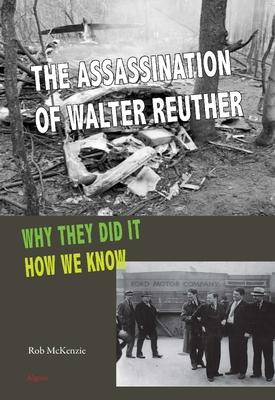
Rob McKenzie is former president of a UAW local at a Ford plant in Minnesota and labor historian, who has published a new book entitled The Assassination of Walter Reuther: Why They Hid It, How We Know (New York: Algora Publishing, 2025).
The book builds off Parenti and Noton’s 1995 CAQ article and presents further evidence indicating that Reuther was assassinated and that his assassination was covered up.

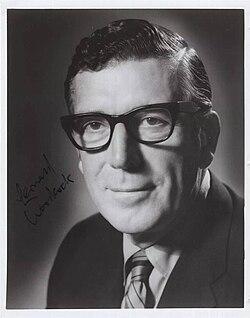
Reuther’s successor as head of the UAW, Leonard Woodcock inexplicably did not support an inquest into Reuther’s death and neither did the FBI.
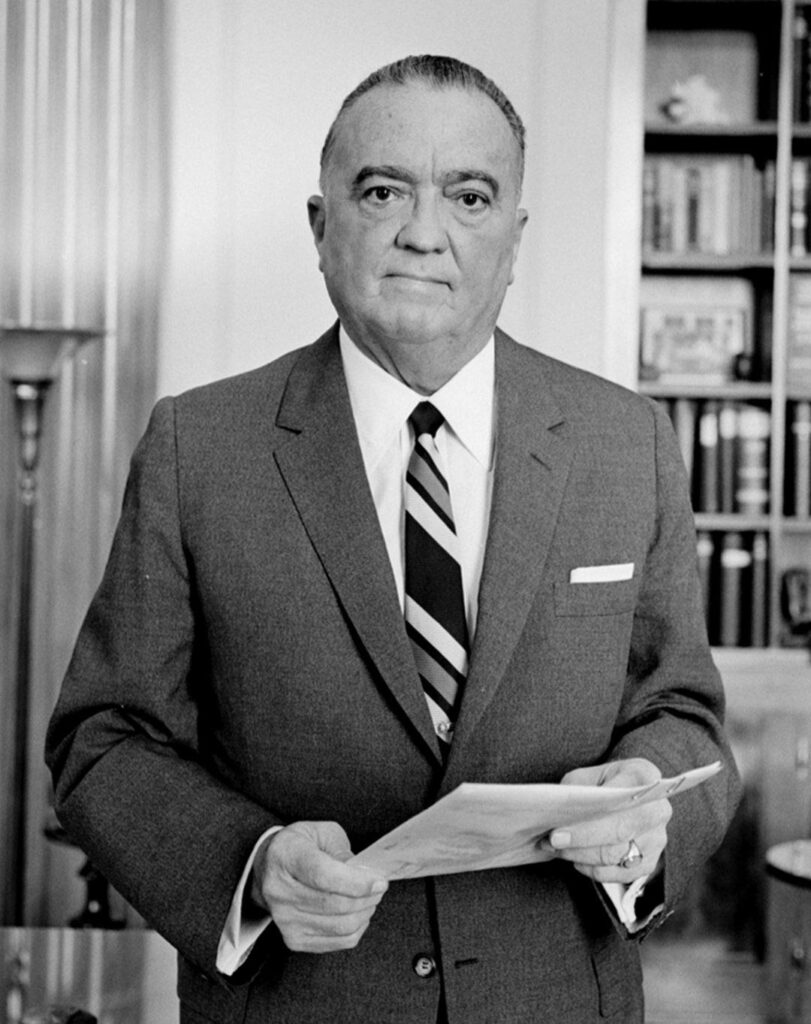
FBI Director J. Edgar Hoover hated Reuther, whom he considered to be a closet communist, and for years had the FBI illegally spy on him.
McKenzie’s book draws in part on newly declassified documents that he obtained through the Freedom of Information Act (FOIA), which talk about a contract being out on Reuther in the months before his death and raise questions about the FBI’s involvement in his death.[5]
In 2024, McKenzie gained access to court records from a civil suit that was brought by Reuther’s estate against the Emmet County Airport after his death.

These records revealed a deposition of Emmet County Airport Manager Clarence Tatro, who said that Reuther’s plane was forced to divert its landing to a side runway, #5, because the main runway (#23) light was out.[6]
What was suspicious was that the Federal Aviation Administration (FAA) was never notified about runway 23’s light being out because the Flight Service Station (FSS) specialist in charge of the runway, a Mr. Sorrick, had failed to notify Tatro—in breach of protocol.
The pilot, George Evans, was in turn never notified about the light being out, forcing him to rely on the altimeter and to alter his approach at the last minute in a way that helped facilitate the crash.
An additional oddity was that, after he received notice of the crash, Tatro was given the wrong location of the crash site, which delayed the rescuers’ response. He was also only told that a plane had gone off runway #5, not that it had crashed. Tatro’s reaction, in turn, was to call the Fire Department, which made the fire on the plane worse by applying water on the burning kerosene.
Tatro believed that, had he been called and informed properly, he could have kept the bodies from being burned as much as they were.
When Tatro arrived at the airport—around 11:30 p.m.—he said that he yelled at Sorrick, whose first call after the crash had gone to an agent of North Central Airlines’ regional carrier, Gerry Sobleski, who was the one to call Tatro.
Sorrick had been negligent for, among other things, failing to answer Evans’ last radio message when he was circling for landing.
At the time, Sorrick said that he had left his desk to go outside and watch the aircraft land, which Tatro said he had never seen an FSS do before.
Before he went outside, Sorrick said that he had turned on the flight station recorder, which was normally done only in emergencies; Reuther’s plane at the time was not yet in trouble.
When NTSB investigator William Weston was deposed in the Reuther civil case, he said the FBI had told him that there was nothing suspicious about the altimeter.
Weston, however, took the altimeter to Barfield Instrument Co. in Miami, Florida, which found a brass screw missing from the rocking shaft, that a drill was used to tear out aluminum threads from the altimeter, and that other parts had been misassembled—causing the altimeter to read 225-250 feet too high when Reuther’s jet attempted to land.
Additionally, Weston was told that the altimeter had been made for the military and had no identifiable markings.

Inexplicably, the NTSB report had no discussion of the latter and did not question how a poorly manufactured altimeter made for the military with no markings could have been used on the plane without being flagged by inspectors and how the plane functioned without problems for six months beforehand.
Reuther’s Rivalry with Right-Wingers and the CIA
Although McKenzie is careful not to implicate anyone directly when hard evidence is lacking, his study makes clear that a prime suspect is the James J. Angleton faction of the CIA that had infiltrated the American labor movement and disdained the Reuther brothers.
McKenzie points out that a key figure in quashing a UAW investigation into the plane crash was UAW General Counsel Stephen Schlossberg, who sent Leonard Woodcock a memo filled with disinformation about the plane crash that dissuaded Woodcock from any further investigation.
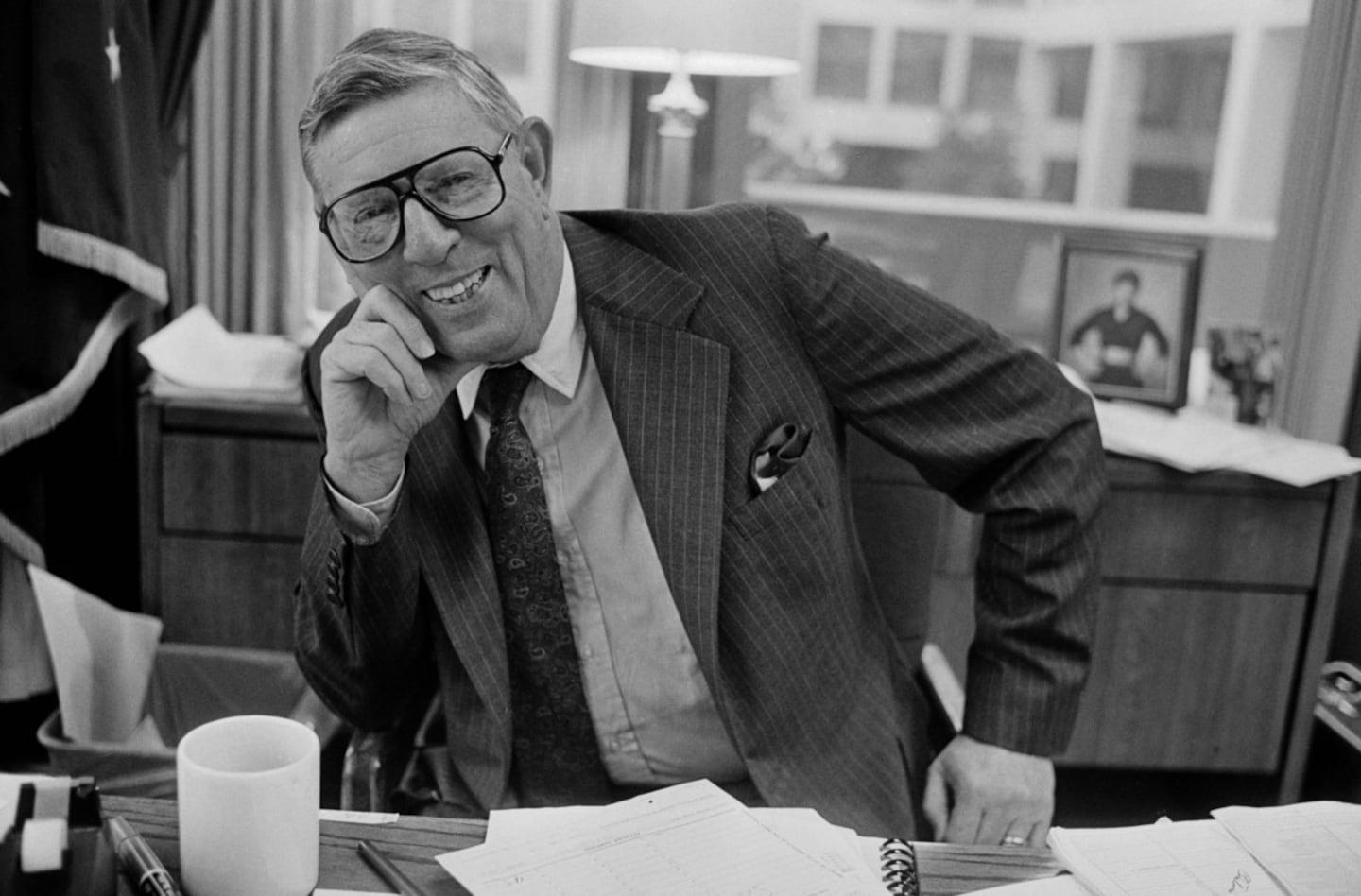
A University of Virginia Law School graduate who served in the Army Air Corps in World War II and later as the Labor Department’s Undersecretary for Labor-Management Relations during the Reagan administration, Schlossberg had started his career as an organizer with the International Ladies Garment Workers Union (ILGWU), which was headed by David Dubinsky, a staunch anti-communist rival of Reuther in the labor movement during the New Deal era who was a close ally of Jay Lovestone.
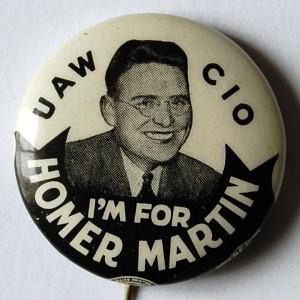
Described by McKenzie as a “mortal enemy of Reuther,” Lovestone had been leader of an anti-Stalinist communist sect (Lovestonites) who came to head a right-wing faction in the UAW with Homer Martin that was opposed to Reuther’s leadership and sought to drive communists and other leftists out of the UAW.
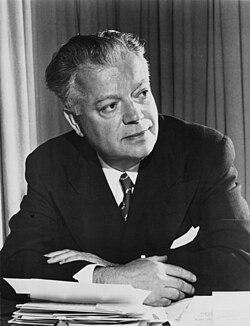
In 1955, when he was directing AFL-CIO international affairs, Lovestone was recruited into the CIA by its counter-intelligence chief James J. Angleton who ran him through an aide, Stephen Miller, who also had the Israeli desk. According to McKenzie, Angleton and Lovestone were so close that they communicated every day for more than 20 years.
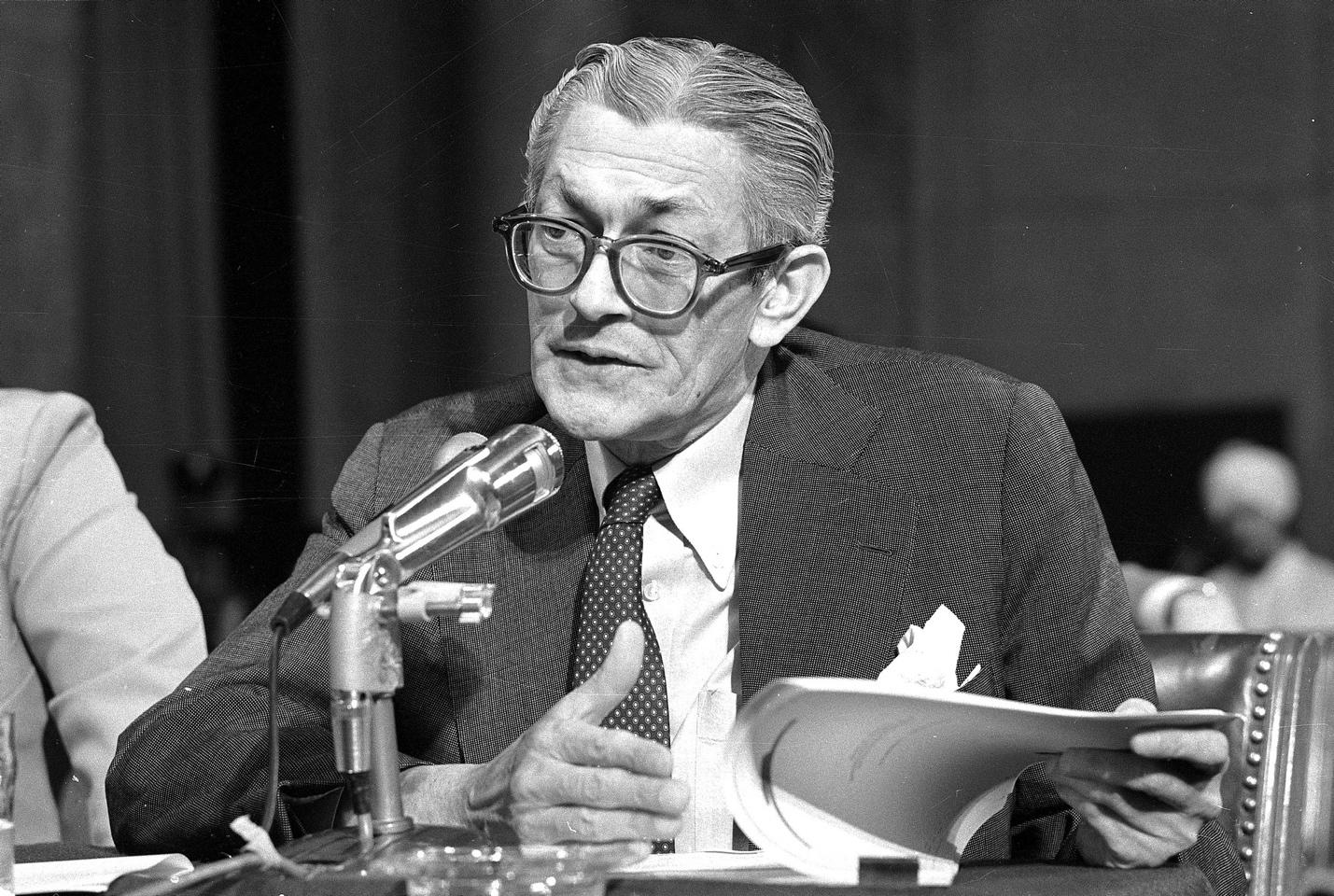
Angleton helped oversee Lovestone’s pivotal role with the AIFLD, which established training courses in South America and Washington, D.C., that included classes in U.S. labor history, economics and techniques for combating communism.
In Brazil during the early 1960s, AIFLD-trained activists played an important role in dividing the labor movement and helping to precipitate a coup against Goulart’s left-wing reformist government that ushered in 20 years of military dictatorship.
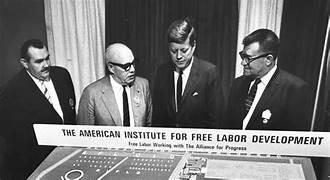
After the 1964 Brazilian coup, Walter resigned from the AIFLD board and Victor gave an interview to the Los Angeles Times in which he suggested that there were ties between AFL-CIO foreign policy, AIFLD and the CIA.
Victor gave the names of eight individuals connected to the CIA in Panama who were posing as representatives of the International Union of Food and Allied Workers, a global federation of trade unions, as an example of CIA meddling in the international labor movement.
Victor called the AFL-CIO’s foreign policy “a vest pocket operation run by Jay Lovestone” and told the New York Post that the CIA was illegally meddling in union elections.
The Reuthers faced an immediate backlash, with AFL-CIO President George Meany calling Victor’s remarks a “damned lie,” and Vice President Hubert Humphrey and former Attorney General Robert F. Kennedy urging Walter to stop the conflict over AIFLD.
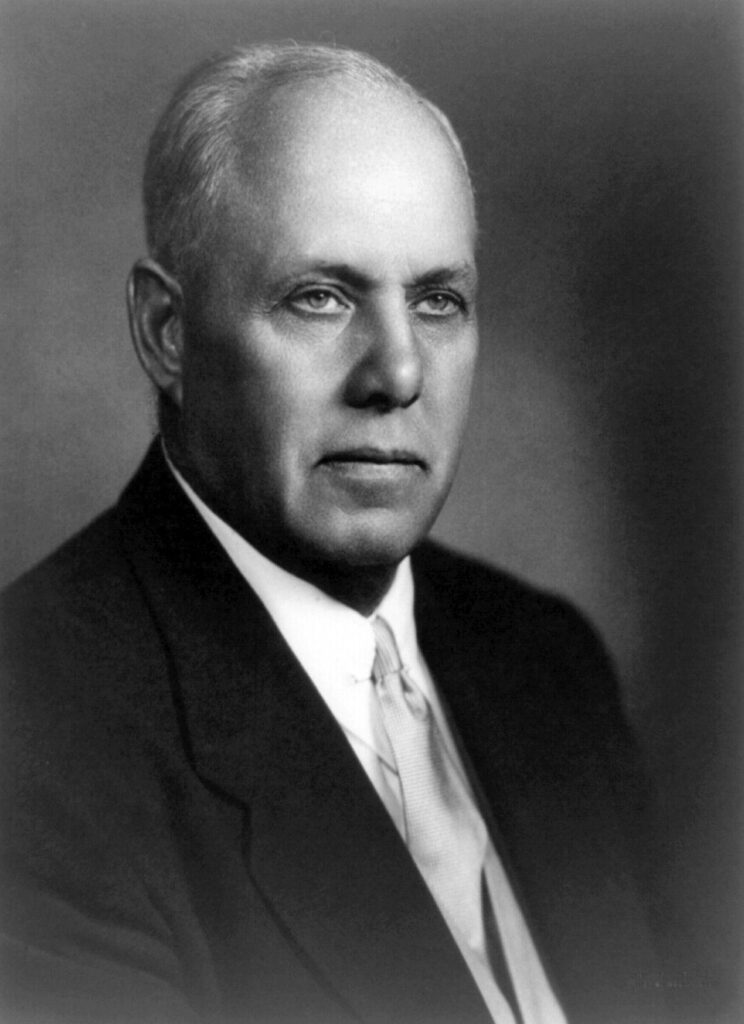
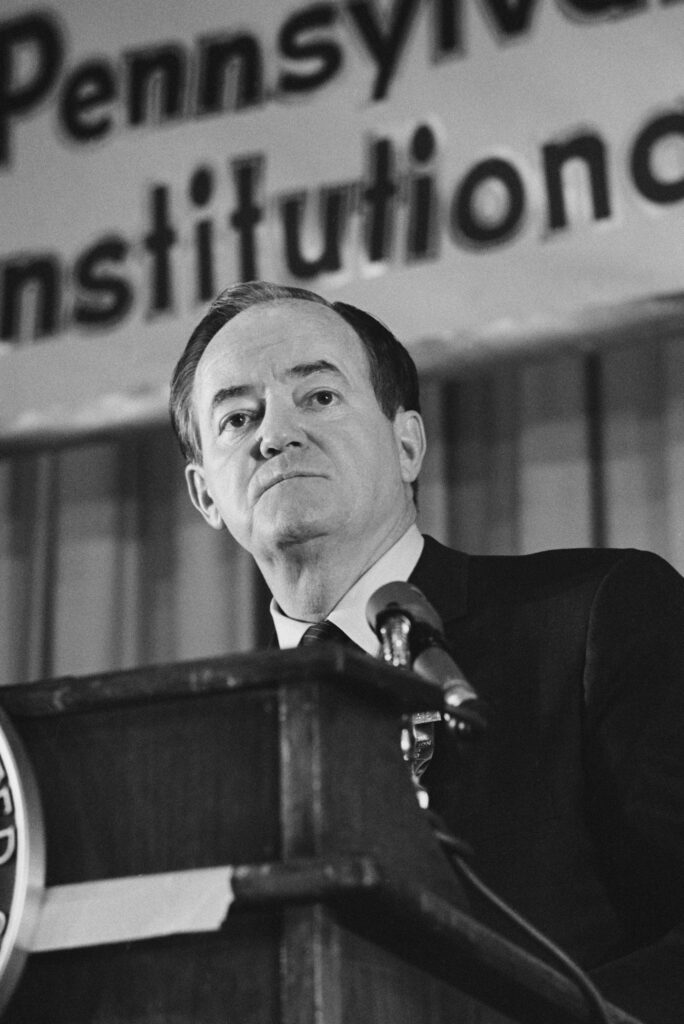
McKenzie suggests that the powerful interests who were aghast at Reuther’s exposure of the CIA, along with his left-wing politics, were the ones behind the sabotage of his airplane.
The CIA revealed publicly in an article published by Tom Braden, a top assistant to CIA Director Allen Dulles, in The Saturday Evening Post that, in 1951, it had paid Walter Reuther $50,000, which he disseminated to Victor to spend on behalf of anti-communist unions in West Germany.
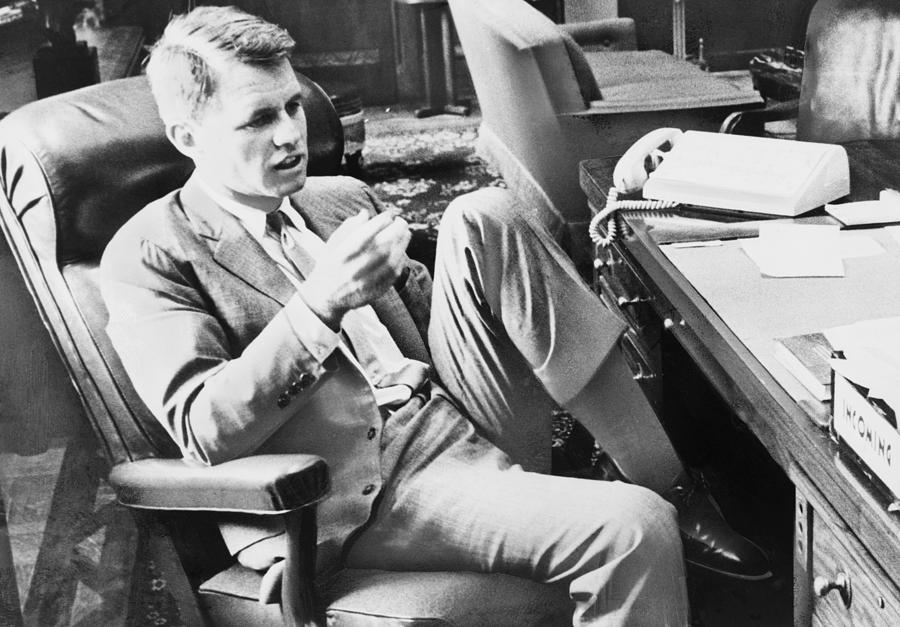
Though embarrassed by the revelation, Victor made clear that he had declined Braden’s offer to become the CIA’s financial bagman in West Germany and adopt dirty-trick methods to undermine left-wingers in Germany’s unions.
Watershed in Destruction of American Labor Movement
Members of the League For Industrial Democracy at Wayne State University where they took classes and American Socialist Party, Walter and Victor had become anti-communists critical of the Soviet Union after working for 16 months there in the 1930s.
Part of the popular front movement of the 1930s by which American communists aligned with liberal New Dealers, they acquiesced to the post-war Red Scare, fighting against a communist takeover of the UAW and Congress of Industrial Organization (CIO), and supported aspects of U.S. foreign policy in the Cold War. A close alignment with the Kennedy and Johnson administrations led to a failure to break with the latter’s Vietnam policy.[7]
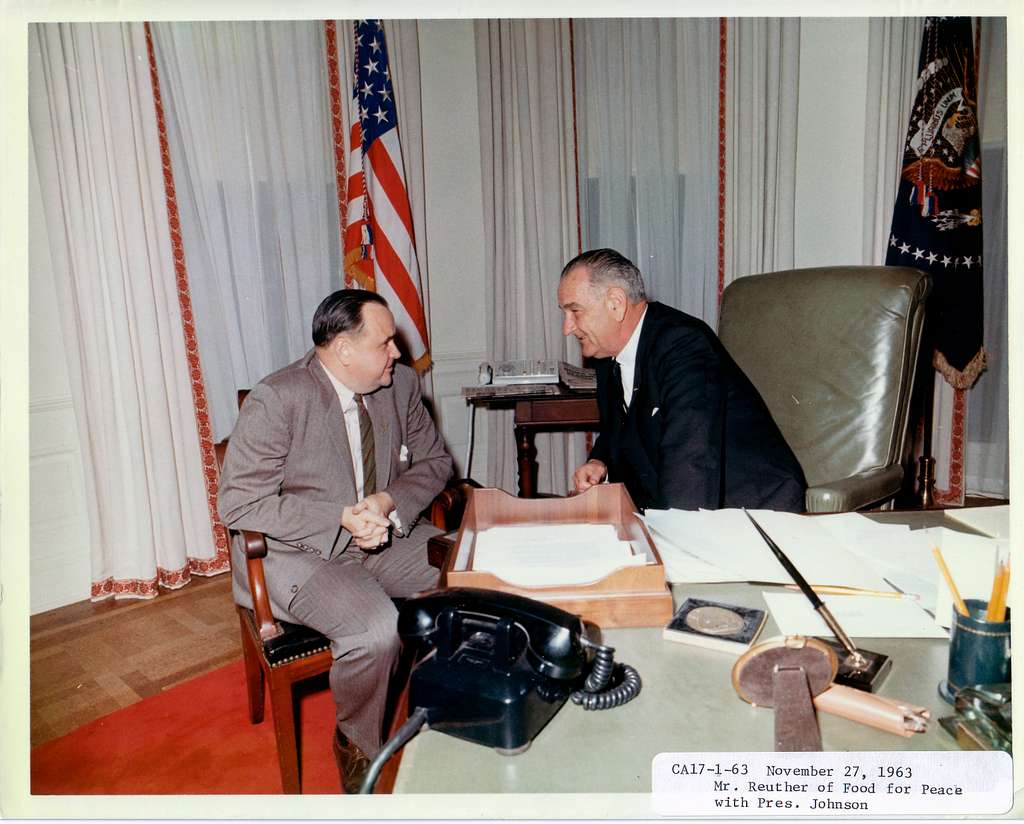
Walter’s progressive instincts, though, were seen in his championing universal health care and attempt to forge a progressive alternative to the AFL-CIO—the Alliance for Labor Action (ALA)—which was intended as a “community union” that could provide the poor with their own self-sufficient economic organization.
Historian Hugh Wilford wrote that by the end of the 1960s, “with their propensity for criticizing the war in Vietnam, Americans for Democratic Action (ADA)-style left-liberals such as the Reuther brothers were increasingly perceived in Washington as a hindrance rather a help in the prosecution of the Cold War.”
People started to realize how much they missed Reuther when his successor Leonard Woodcock betrayed the UAW rank-and-file by negotiating directly with GM executives during a strike after Reuther’s death.
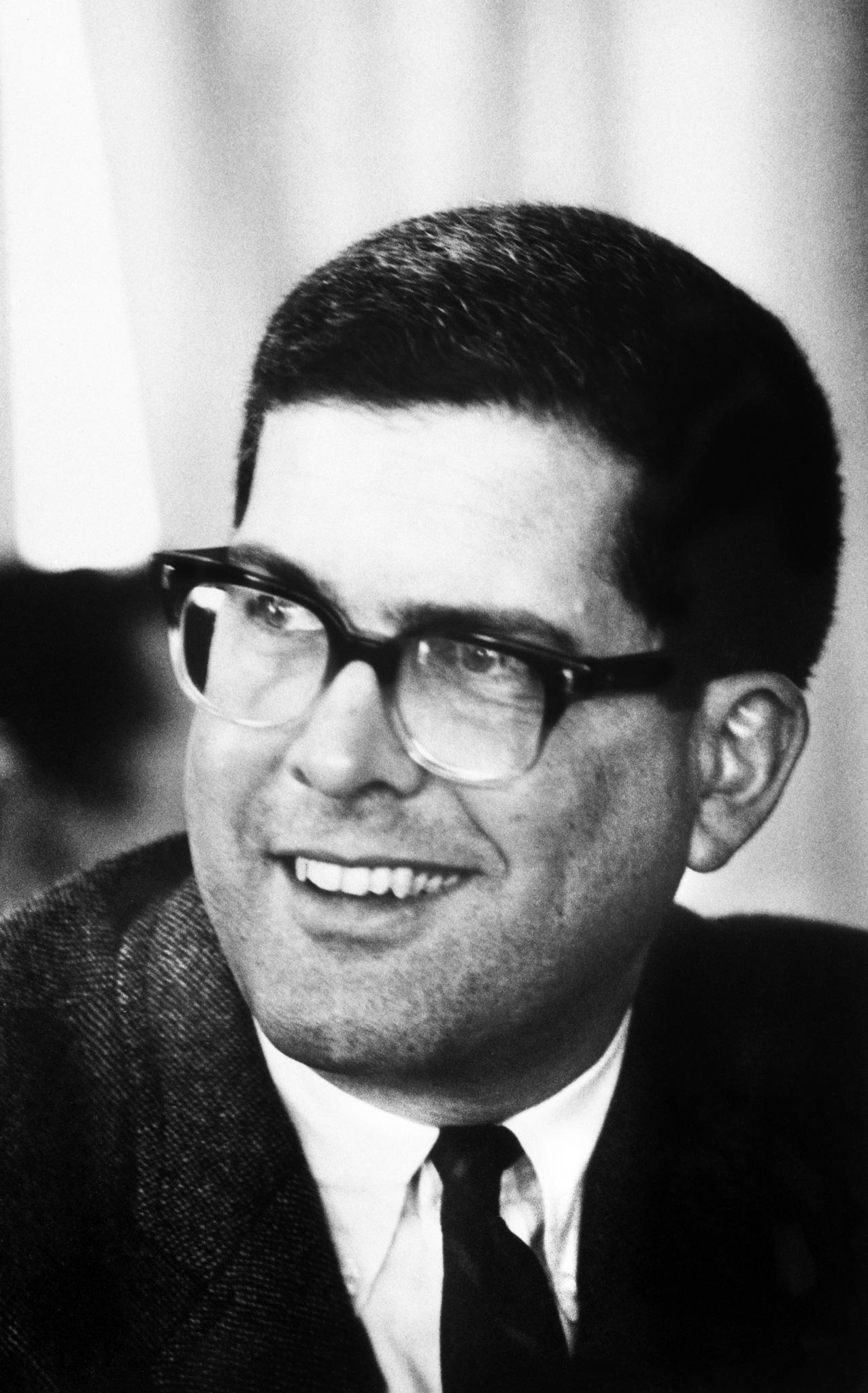
Reuther’s colleague, Paul Schrade, said that the kind of negotiation that Woodcock engaged in “Reuther never would have done…. To me, it was not the Reuther style of militant bargaining and very careful recognition of the rights of the national committee of local union representatives and the membership. It was more autocratic than Reuther was, who was considered an autocrat anyway, but at least he was very conscious of the need for maintaining the trust and confidence of the rank and file in the national committee, and I could not see Woodcock doing this. He had a whole different style which I objected to and still do.”
In hindsight, Reuther’s murder was a watershed in the destruction of the American labor movement as it removed one of its most dynamic leaders who, in the end, stood against CIA infiltration of the labor movement and whose successors were more rightward leaning in their political orientation and acquiescent to corporate America.
Reuther’s death coincided with the politically charged prosecution, harassment and suspected murder of other prominent labor leaders of the era by the U.S. government.
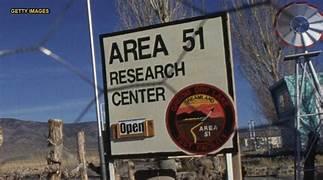
McKenzie points out that the CIA not only had the motive, but also the capability of sabotaging Reuther’s plane. The CIA was very familiar with altimeters and had a shop that could refurbish and alter them. Many CIA experiments into the dark arts of assassination were carried out at Area 51 in Southern Nevada.
McKenzie raises particular suspicion about John Lear, the son of Lear Jet founder Bill Lear, who worked for the CIA from 1967 to 1983. Lear was involved in right-wing politics and had been a pilot in Vientiane in the early 1970s supplying Vang Pao, the head of the CIA’s Hmong clandestine army, with weapons while flying for Air America (also known as Air Opium).
At the end of his book, McKenzie points out that the cover-up surrounding Reuther’s murder continues today. Credentialed historians writing biographies of Reuther give little more than a fleeting rendering of his death,[8] and current UAW President Shawn Fain refuses to even answer emails on the topic.
While Reuther was by no means a saint and deserving of criticism for many things, he was an “accomplished practitioner of the dark art of union leadership,” according to McKenzie, who “achieved more than any other U.S. labor leader.”
Absent his leadership, the UAW was anemic in responding to structural changes in the auto industry that resulted in the outsourcing of jobs and the return of exploitative working conditions not far removed from America’s Gilded Age.
Reuther, additionally, was a figure who could have potentially united what still existed of the Old Left of the 1930s and 1940s rooted in the labor movement and socialist and communist parties, with the 1960s New Left, the rising anti-war and progressive left consisting of counter-cultural youth mobilizing in the streets.
The latter was something the ruling class establishment did not not want and is known to have gone to great lengths to try to prevent.
- Note: Since this article was published on May 9, 2026, the UAW International Executive Board has passed a resolution for an independent review of all newly available government records, technical evidence, and witness testimony related to the crash that killed Reuther and five others.

Reuther was particularly badly beaten at the hands of Ford’s goons in the “Battle of the Overpass,” which occurred on May 26, 1937 at Ford’s River Rouge plant, where Reuther and other UAW organizers were attempting to distribute union literature. ↑
Reuther’s father, Valentine, had run for office as a socialist party candidate in West Virginia and idolized Eugene V. Debs, the famous Socialist Party leader, taking the boys to visit him when he was imprisoned at the federal penitentiary near where they lived for opposing U.S. intervention in World War I. ↑
Countercultural Museum, San Francisco, Haight-Ashbury District. ↑
A more negative view of Reuther is presented in a 2015 article by Tom Mackaman on the World Socialist Website. According to Mackaman, Reuther “stood for class compromise and acceptance of the capitalists’ “right” to a profit, together with political support for the Democratic Party, unequivocal defense of US imperialism and anti-communism.” Mackaman further wrote that “the UAW’s transformation into a corporatist adjunct of big business and the state, and its role as an industrial police force deployed against the workers it nominally represents, is not the negation, but rather the outcome of Reutherism.” ↑
Many of the documents McKenzie was able to obtain are heavily redacted. The FBI still refuses to declassify many others. ↑
This was never addressed in the NTSB report. It only came out in deposition in the civil lawsuit against the Emmet County Airport filed by Walter Reuther’s estate. ↑
The Reuthers were founding members in 1947 of Americans For Democratic Action (ADA), an attempt to reorient the Democratic Party towards what Arthur Schlesinger Jr. called “the vital center,” away from political radicalism and in support of the Cold War. ↑
An example is Nelson Lichtenstein, Walter Reuther: The Most Dangerous Man in Detroit (Champaign, IL: University of Illinois Press, 1997). ↑
CovertAction Magazine is made possible by subscriptions, orders and donations from readers like you.
Blow the Whistle on U.S. Imperialism

Click the whistle and donate
When you donate to CovertAction Magazine, you are supporting investigative journalism. Your contributions go directly to supporting the development, production, editing, and dissemination of the Magazine.
CovertAction Magazine does not receive corporate or government sponsorship. Yet, we hold a steadfast commitment to providing compensation for writers, editorial and technical support. Your support helps facilitate this compensation as well as increase the caliber of this work.
Please make a donation by clicking on the donate logo above and enter the amount and your credit or debit card information.
CovertAction Institute, Inc. (CAI) is a 501(c)(3) non-profit organization and your gift is tax-deductible for federal income purposes. CAI’s tax-exempt ID number is 87-2461683.
We sincerely thank you for your support.
Disclaimer: The contents of this article are the sole responsibility of the author(s). CovertAction Institute, Inc. (CAI), including its Board of Directors (BD), Editorial Board (EB), Advisory Board (AB), staff, volunteers and its projects (including CovertAction Magazine) are not responsible for any inaccurate or incorrect statement in this article. This article also does not necessarily represent the views the BD, the EB, the AB, staff, volunteers, or any members of its projects.
Differing viewpoints: CAM publishes articles with differing viewpoints in an effort to nurture vibrant debate and thoughtful critical analysis. Feel free to comment on the articles in the comment section and/or send your letters to the Editors, which we will publish in the Letters column.
Copyrighted Material: This web site may contain copyrighted material the use of which has not always been specifically authorized by the copyright owner. As a not-for-profit charitable organization incorporated in the State of New York, we are making such material available in an effort to advance the understanding of humanity’s problems and hopefully to help find solutions for those problems. We believe this constitutes a ‘fair use’ of any such copyrighted material as provided for in section 107 of the US Copyright Law. You can read more about ‘fair use’ and US Copyright Law at the Legal Information Institute of Cornell Law School.
Republishing: CovertAction Magazine (CAM) grants permission to cross-post CAM articles on not-for-profit community internet sites as long as the source is acknowledged together with a hyperlink to the original CovertAction Magazine article. Also, kindly let us know at info@CovertActionMagazine.com. For publication of CAM articles in print or other forms including commercial internet sites, contact: info@CovertActionMagazine.com.
By using this site, you agree to these terms above.
About the Author
Jeremy Kuzmarov holds a Ph.D. in American history from Brandeis University and has taught at numerous colleges across the United States. He is regularly sought out as an expert on U.S. history and politics and co-hosts a radio show on New York Public Radio and on Progressive Radio News Network called “Uncontrolled Opposition.”
He is Managing Editor of CovertAction Magazine and is the author of eight books, including Obama’s Unending Wars (Clarity Press, 2019), The Russians Are Coming, Again, with John Marciano (Monthly Review Press, 2018), Warmonger. How Clinton’s Malign Foreign Policy Launched the U.S. Trajectory From Bush II to Biden (Clarity Press, 2023); with Dan Kovalik, Syria: Anatomy of Regime Change (Baraka Books, 2025), and Political Assassinations in America: The Intricate Nexus of Deep State Crime (Clarity Press, 2026).
Besides these books, Kuzmarov has published hundreds of articles and contributed to numerous edited volumes, including one in the prestigious Oxford History of Counterinsurgency .
He can be reached at jkuzmarov2@gmail.com and found on substack here.


You never mentioned the photographs I discovered at the NTSB showing contamination on the altimeter.
You never mentioned the photographs I discovered at the NTSB showing contamination on the altimeter.
Excellent article. Although Walter Reuther believed in social justice and progressive policies, he was very anti communists. This is not surprising as Communist countries do not have union other than government controlled unions.
Walter Reuther was a strong, prominent anti-communist, particularly from the late 1940s onwards, and was instrumental in removing communist influence from the United Automobile Workers (UAW) and the broader American labor movement. His stance and actions were defined by the following: Internal UAW Struggles: Although he worked with various left-wing factions in the 1930s, Reuther fought bitterly against Communist Party members within the UAW in the 1940s, viewing them as loyal to the Soviet Union rather than to American workers. Purging Communists: After becoming UAW president in 1946, he led a successful effort to drive communists out of union leadership, consolidating his power. Anti-Communist Beliefs: Reuther notoriously stated that “Communists are the colonial agents of a foreign power,” and he ran anti-communist education programs for union members. Policy Support: He supported the anti-communist provisions of the 1947 Taft-Hartley Act and was a founding member of the anti-communist Americans for Democratic Action (ADA) in 1948.
https://hawarnews.com/ar/141323 It’s a shame they didn’t kill these people. I actually don’t believe there are any people in Syria. Anything will bad that happens to Russians and Syrians after December 2024 excites me. It would be best if God sent commets and killed everything alive in Damascus, Moscow, Perm, Latakia and Tartus. I want the dismemberment of Russia and the transformation of Latakia and Tartus into a desert. I will never believe in BRICS again because of their treacherous cowardice.
https://hawarnews.com/ar/141280 If someone killed Putler, I would be thrilled.
An effort to prevent an inquiry should always be regarded as highly suspicious.
President Johnson was able to persuade Senators not to launch their own investigation into the assassination of Robert Kennedy. The evidence clearly shows that he ordered it. If the evidence had been heard, somebody might have worked it out.
After 9/11, the Bush administration acted to prevent an inquiry and, when that failed, did its utmost to undermine it. Again, you have to ask yourself why that is.
Worth bearing in mind that Senator Joe McCarthy attacked the CIA for employing former leftists. The reason for this is clear: J. Edgar Hoover hated the CIA because it was a rival organisation.