The best spies work for everyone.
– Lucien Conein, legendary CIA operative.
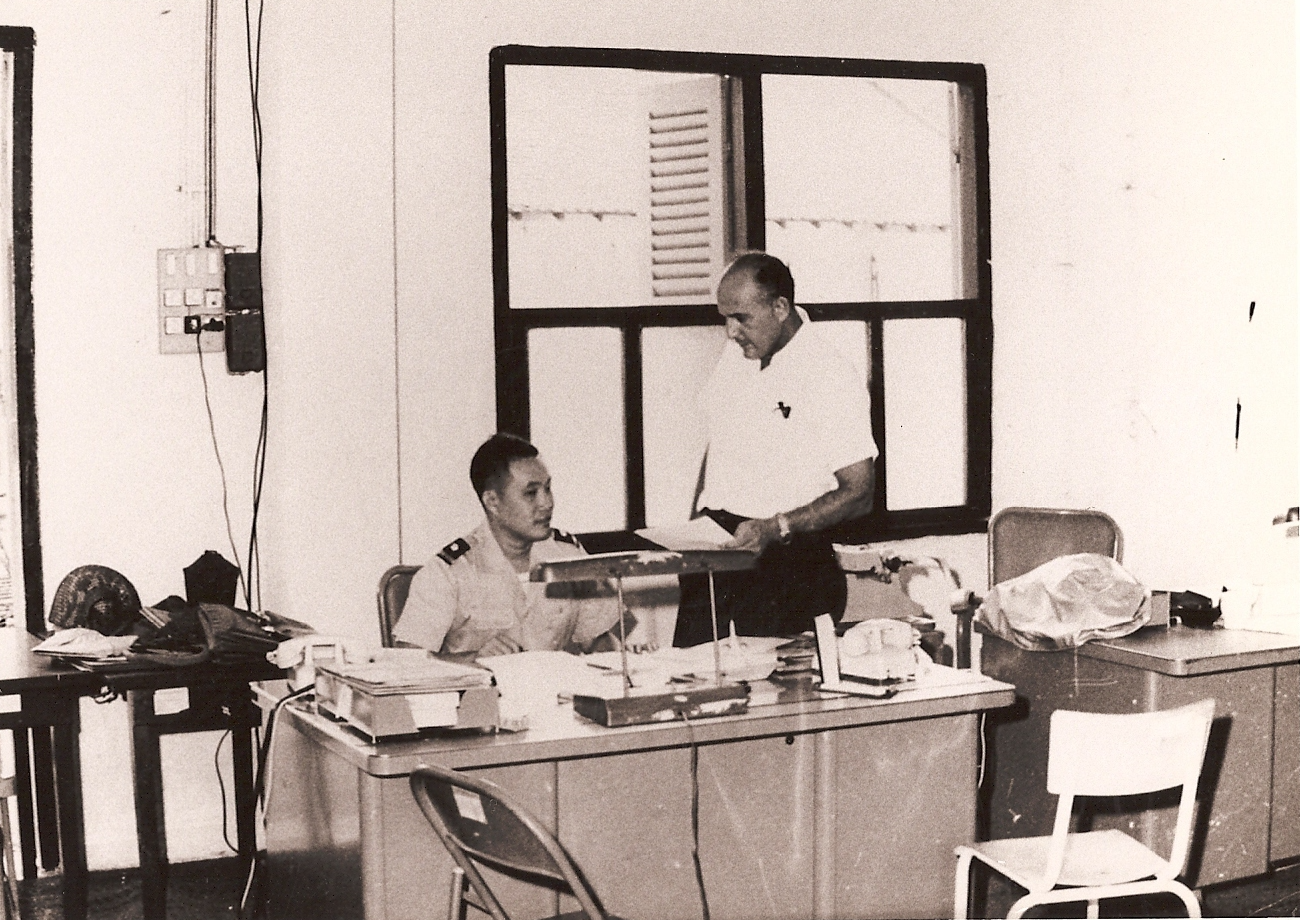
Colonel Nguyen Mau was director of the Special Branch of the Republic of Vietnam’s national police force from 1968 to 1972. Created, funded and advised by the CIA, the Special Branch consisted of professional interrogators and agent handlers who maintained informant networks in the hamlets and villages and sought to turn higher-ranking Communist Party members in the districts (like U.S. counties) and provinces (like states) into double agents.
At the national “strategic” level, operating out of Special Branch headquarters in Saigon, they focused on disrupting North Vietnamese and National Liberation Front (NLF)—commonly called the Viet Cong (VC) though non-communist groups participated—agent networks in South Vietnam. The NLF was the administrative and military organization of the revolutionaries in South Vietnam.
The Special Branch operated like the FBI would operate if the U.S. were invaded and was in the midst of an armed insurgency, and if enemy saboteurs and spies were everywhere, as was the case in South Vietnam. Making matters worse for the citizenry, neutralism was illegal and advocating peace with the communists was punishable by death or imprisonment without trial for two years under the An Tri (administrative detention) Laws. An Tri was a boondoggle for corrupt GVN officials: People suspected of being VC cadre, or VC sympathizers, or if they proposed the formation of a coalition government with the communists, could be arrested and were released only when their families scraped together enough money to bribe the local authorities.
The CIA-advised National Police Interrogation Center (NPIC) in Saigon served as headquarters for the National Police. According to CIA contract officer Robert Slater, who ran the CIA’s Provincial Interrogation Center (PIC) program from 1967 to 1969, the NPIC was “a monstrous French compound with a separate, restricted wing for the Special Branch. We cleaned it up,” he said. “Actually whitewashed it.” The NPIC held between three and four hundred prisoners, most of whom, Slater said, “were packed forty or fifty in little black holes of Calcutta.”[1]
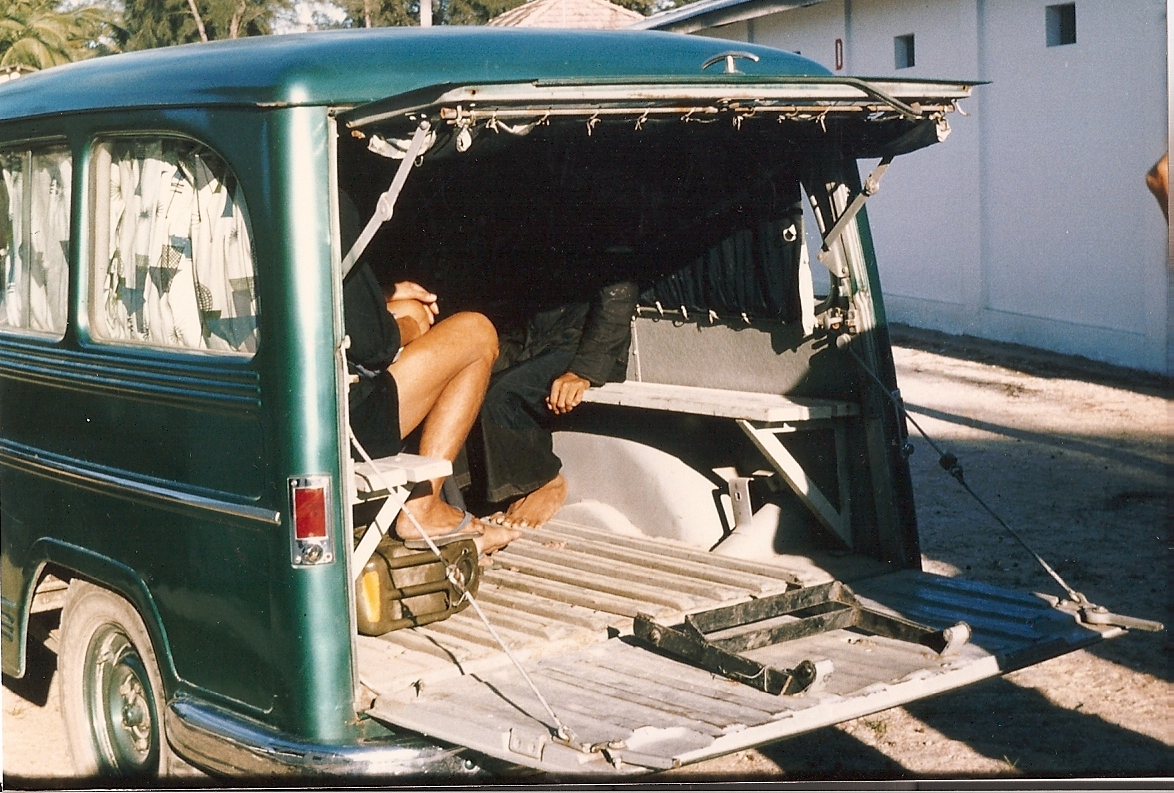
Starting in 1965, CIA-trained and advised Special Branch officers staffed the PICs. Located on the outskirts of the capital town in each of the 44 provinces, the PICs were heavily fortified, self-contained places—a gulag archipelago of “black holes of Calcutta” in which torture and murder routinely took place.
As Mau acknowledged, running counter-subversion operations was brutal work. Innocent people were harassed, arrested, detained, tortured and killed.
CIA officer Tullius Acampora introduced me to Mau in 1988 while I was researching my book on the CIA’s Phoenix Program. Mau and I corresponded by letter and I included his comments in my book The Phoenix Program (1990).[2] I sent a copy to Mau, who approved of what I had written and how I had presented him. After the book was published, we continued to correspond and Mau confided in me about the politically explosive case he made on Dr. Nguyen Van Giat, a French national known in Vietnam War literature by his given name Pierre Hautier. Giat in Vietnamese sounds like Jacques.
Several historians have written about “the French doctor” case, but Colonel Mau was in the best position to know what happened. Under Mau’s direction, a team of Special Branch officers, assisted by CIA officer James Potratz, arrested Dr. Jacques and his North Vietnamese accomplice, Doan Ngoc Bưu, in mid-to-late 1971.
The Vietnamese perspective is rarely found in English-language books that touch upon the CIA’s “liaison” relationship with South Vietnamese intelligence and security officials. As a result, the public’s understanding of the Vietnam War is incomplete and biased at best. The voices of secret police officials like Mau have been suppressed for many reasons, including self-censorship, but primarily by the CIA, due to their intimate knowledge of CIA lies and war crimes. This article hopes to preserve an important fragment of that history from extinction, and to show that what has been said has been systematically misrepresented.
When I was introduced to Mau, he was managing a service station in Mobile, Alabama. Like most of his special police colleagues, he and his family arrived in the U.S. with little more than the clothes on their backs, and a very bad reputation—the anti-Vietnam War movement considered them war criminals. And there were many bad actors among them, people whom the U.S. government protected and who quickly took control of the insular Vietnamese refugee community. In 1990, Mau moved to San Jose, California, where a clique of former generals and top officials, all hard-core anti-communists, sought to preserve their cultural identity, privacy and, in some cases, the pipe dream of restoring their rule in Vietnam.
I thought about Dr. Jacques for years and, in 2014, drafted a TV series treatment (which went nowhere) for a dramatized version of the case. Then, in 2016, Mau introduced me to one of his Special Branch colleagues, Nhuan Le.[3] I interviewed Nhuan at length and wrote a long article about him.[4] During one of our more recent email exchanges, Nhuan said that Dr. Jacques was Vincent Grégoire. And that is when the contextual pieces for this article started falling into place.
A quick search on Google gave several results for Vincent Grégoire. Most English-language accounts discuss “the French doctor” case in terms of the feud between Colby and another legendary CIA officer, James J. Angleton. Colby, an advocate of covert action, was a risk-taker willing to recruit anyone. Angleton, the CIA’s counterintelligence (CI) chief for 20 years, was obsessed with finding Soviet agents inside the CIA and uncovering their disinformation within the U.S. Angleton disliked Colby’s freewheeling style. Colby disliked Angleton’s security obsession.
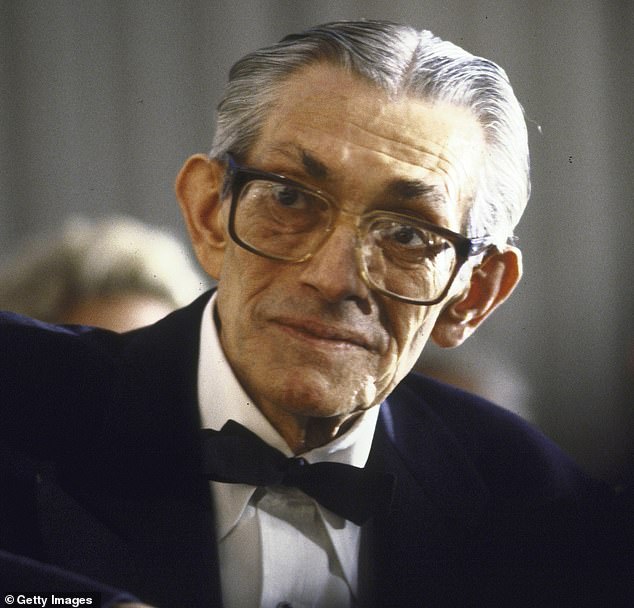
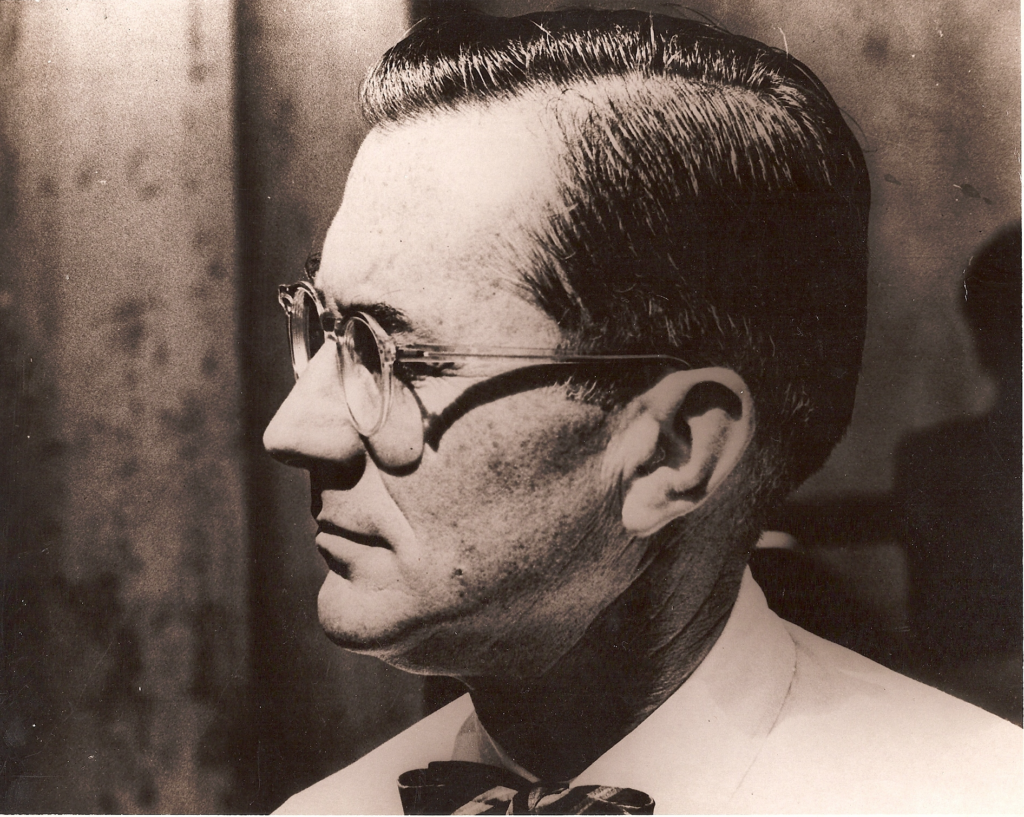
The flashpoint in the Angleton-Colby rivalry occurred in 1970 when, according to historian John Prados in Lost Crusader (2002), a biography of William Colby, the French version of the FBI, the Direction de la Surveillance du Territoire (DST), grew suspicious of a French doctor who often traveled to Saigon, the Soviet Union and several non-aligned nations.[5] In July 1971 the DST saw the doctor pass a package to an agent of Soviet military intelligence. In the meantime, the CIA in Saigon had intercepted radio transmissions from the doctor to his contacts, at which point Angleton started his own investigation. Prados, however, did not mention that the CIA was developing a case begun by Mau and the Special Branch.
As one of Angleton’s biographers, Tom Mangold, said in Cold Warrior (1991), Angleton sent senior CIA counterintelligence staff officer Newton Miler to South Vietnam to find out if the doctor had contacted anyone in the CIA.[6] Miler learned that Colby and the doctor had been members of the Cercle Sportif swimming and tennis club in Saigon while Colby was there as CIA station chief (1959-1962), and that they had openly socialized with the Saigon elite. More importantly, Colby had violated CIA security regulations by not reporting his contacts with the doctor. When Angleton found out about this, he went from thinking Colby was a security risk to thinking that he was a Soviet mole.
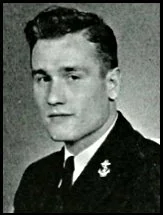
Angleton dutifully opened a counterintelligence file on Colby and sent Miler and another CI officer, Ray Rocca, to query Colby at CIA headquarters in Langley, Virginia, where Colby, having spent the previous three years in South Vietnam, was awaiting assignment as the CIA’s executive director. Colby insisted that he had only a vague recollection of the doctor and that their relationship had only been in passing. Would he say anything else if he were a mole? Miler, however, could not establish that the doctor had been a Soviet agent while Colby knew him, so the inquiry was dropped. But there was a blot on Colby’s record, and that hurt.[7]
Meanwhile, CIA agents were arrested for breaking into and bugging the Democratic National Committee office in Washington, D.C., which led to the Watergate scandal. In 1973 Colby inherited the partisan political mess when he became director of central intelligence.
There were more fireworks to come. In December 1974, The New York Times published an article by Seymour Hersh listing illegal actions Angleton and the CIA had been involved in since 1952, including drug testing on citizens; spying on citizens in the anti-war and Black liberation movements; and opening the mail, to and from the USSR, of dissidents. Many of these misdeeds, the so-called “Family Jewels,” were assembled by Colby’s predecessor as DCI, James Schlesinger, and leaked in part by Colby. The scandal generated a massive CIA reorganization, which included firing Angleton and most of his CI staff.
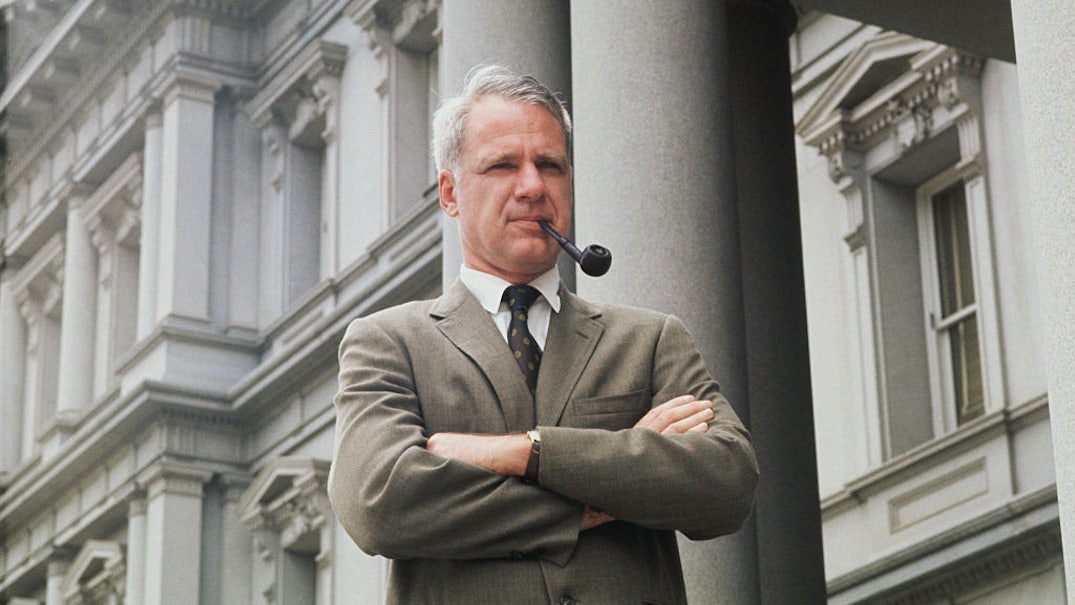
The right wing immediately accused Colby of weakening U.S. security. Echoing Angleton, they said the Soviets were planting disinformation in liberal publications around the world and, thus, tricking leftist journalists and publishers into revealing the CIA’s misdeeds and spreading “fake news” stories.
Dr. Jacques as Dr. Theophile Marchand
Prados and Mangold were not the first historians to mention the “French doctor” affair. That honor goes to Angleton’s biographer and friend, Edward Jay Epstein, in his 1978 book Legend. Without citing a source, Epstein referenced in a footnote the accusation that Colby and a French doctor had been friends. According to Mangold, Epstein later said that he got “a long story about Colby having dined with a Frenchman who turned out to be Soviet agent” from one of Angleton’s top assistants. Miler denied that he told Epstein the story and said only three people knew about the inquiry—himself, Ray Rocca and Angleton.[8] But others knew about the French doctor’s relationship with Colby, including, but not limited to, the person in Saigon who told Miler the story in 1971.
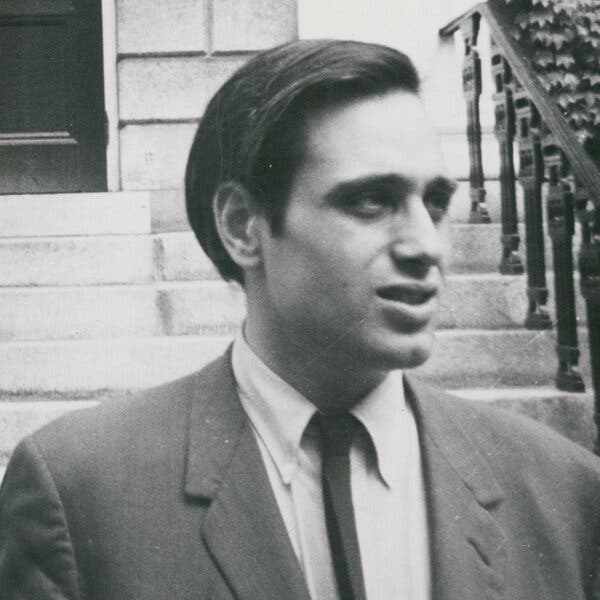
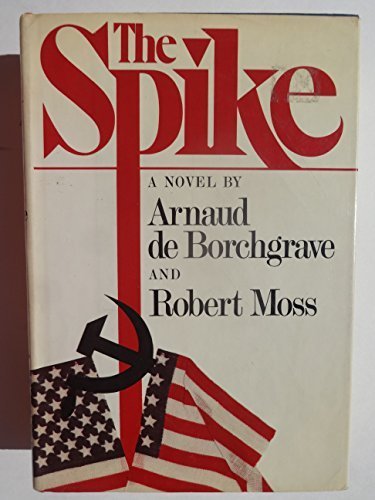
There is a strong possibility that Angleton was Epstein’s source and that they were engaged in a disinformation operation designed to link Colby to the Soviets. Such was certainly the case with The Spike (1980), a roman à clef by Arnaud de Borchgrave and Robert Moss. (There is handy character “key” to The Spike here.[9])
The earliest book to allude to Dr. Jacques, The Spike is based on de Borchgrave’s personal experience and many innuendos. Born into Belgian nobility, de Borchgrave covered the Vietnam War from the French defeat at Dien Bien Phu in 1954 through the fall of Saigon in 1975. He knew all the major players, but at the height of his career as Newsweek’s chief correspondent, he had an exclusive story about Soviet disinformation activities “spiked” by what he called an “ideologically motivated editor.”[10] De Borchgrave’s story was allegedly based on a 1978 French intelligence report documenting links between the KGB, through its proxy nation intelligence services, and international terrorist groups. This was exactly the sort of thing Angleton was hunting. The same French report, notably, informed Claire Sterling’s The Terror Network (1981) which, along with The Spike, helped launched the Reagan era of coordinated right-wing media and religious propaganda.
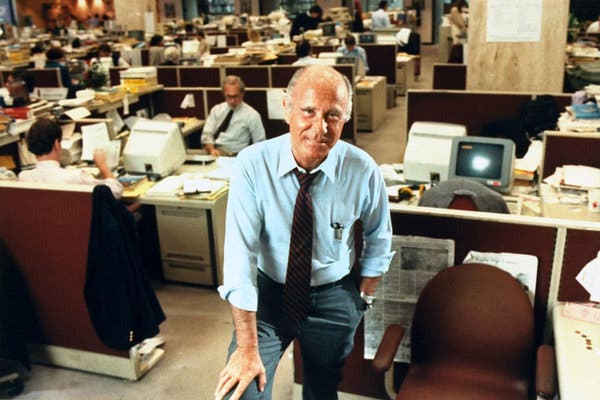
Alas, according to Alexander Cockburn, the 1978 French intelligence report was black propaganda created by the CIA and Mossad during the Carter administration. Cockburn facetiously referred to the report as the Soviet “Master Plan for World Domination and Disinformation” (MPWDD).[11] That fact, however, was buried by the political right in a never-ending storm of propaganda, such as the myth that Democratic Party-led congressional investigations into Watergate and the Family Jewels weakened the CIA, and that Carter’s CIA director, Stansfield Turner, had done further damage in 1977 by firing hundreds of CIA employees. Turner also scrapped Air America, the CIA’s private air force. But the fact is, by 1976, the CIA had for years been contracting paramilitary and covert action work to special operations officers who had voluntarily retired or resigned to become mercenaries, as well as to CIA proxies from Israel and Taiwan.
A best-seller, The Spike effectively promoted the Republican line that liberals made America lose the Vietnam War by spreading Soviet disinformation and suppressing the truth. Ironically, de Borchgrave in 1985 would become one of the headliners at The Washington Times and later Newsmax, the hard-right media outlet that promoted Donald Trump. Newsmax solidified its reputation for “fake news” when it was forced to pay $67 million in defamation suits to Dominion Voting Systems and $40 million to Smartmatic for spreading Trump’s Big Lie that the Democratic Party-controlled “deep state” stole the 2020 election from him.
De Borchgrave’s co-author, Robert Moss, according to William Blum in Killing Hope (1995), pumped out right-wing propaganda for the CIA-subsidized magazine, SEPA, including the March 1973 article, “An English Recipe for Chile—Military Control.” Moss’s book, Chile’s Marxist Experiment (1973), “was widely circulated by the junta to justify its coup.”[12] After helping to overthrow the elected socialist government in Chile, Moss wrote speeches for British Prime Minister Margaret Thatcher and then, in 1980, helped de Borchgrave smear the left in The Spike.
De Borchgrave was certainly one of the Vietnam insiders who knew about Colby and Dr. Jacques, but his portrayal of the French doctor as Dr. Theophile Marchand in The Spike is unreliable at best. In the book, Marchand is said to specialize in social diseases among Saigon’s elite; to be a senior member of the French Communist Party; and a KGB agent, which is true enough—he did pass information to the Soviets in France. But the real Dr. Jacques ran a TB clinic, and I found no evidence that he was a member of the Communist Party.
Marchand is said to be dating a younger woman, Debbie Walters. Debbie works for the William Colby character Crawford who runs the U.S. “pacification program.” This makes us wonder if Marchand (substitute Dr. Jacques) is working for Colby. The period is the Tet Offensive some time after March 1968, when Colby arrived in Saigon as deputy chief of the Civil Operations and Rural Development Support (CORDS) program. He became head of CORDS in November 1968, with the rank of ambassador. He returned to Washington in July 1971.
Marchand is friends with a French editor in Saigon, Michel Renard. The Spike name key suggests Francois Mazure as a model for Renard. An Agence France-Presse correspondent, Mazure was expelled from South Vietnam during the 1968 Tet Offensive for reporting that communist insurgents in Hue were not coercing anyone and were warmly received.[13] The key also cites a more intriguing possibility, Jean-Claude Pomonti—the only person I corresponded with who knew Dr. Jacques personally, although he knew him as Pierre Hautier. Whomever Renard is based on, he and Marchand manipulate Bob Hockney, an idealist young American journalist working for Barricades magazine.
Hockney is the book’s main composite character, a fast-and-loose leftist whose career begins with a bombshell 1967 article for Barricades revealing that the CIA had supported the National Student Association.[14] The actual article’s author, Ramparts reporter Sol Stern, became a rabid Zionist and racist MAGA who hated everything DEI. Hockney follows a similar evolutionary path which ends when the James Angleton character Flower (Angleton loved orchids) and a KGB defector named Victor Barisov convince him there is a Soviet Master Plan for World Domination and Disinformation (MPWDD).
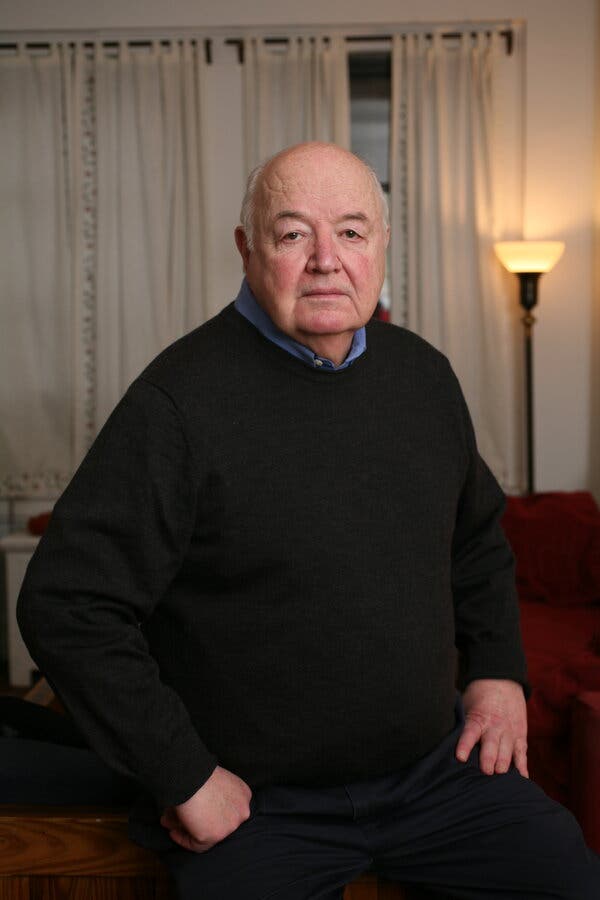
Hockney first meets and befriends Renard in Paris after his Barricades exposé. Renard works for a French news agency and hates his editor, Bonpierre, for spiking his story on the CIA’s ties to the Congress for Cultural Freedom. Renard likes the Soviets and sees them as a deterrent to the rise of Germany and the U.S. So when Barisov, a KGB officer posing as a Soviet journalist, offers him a story linking Bonpierre to the CIA station chief in Paris, Renard fronts for Barisov and hands it off to Hockney.[15] Although Bonpierre commits suicide as a result of being outed, it is another scoop for Hockney who, as a reward, goes to a newspaper like The New York Times and gets assigned to Vietnam.
Hockney arrives in Saigon during the 1968 Tet Offensive battle for Cholon, the Chinese neighborhood in Saigon teeming with VC guerrillas. Hockney hooks up with Renard, who has likewise been assigned to Saigon. At a dinner party at Renard’s house, Hockney is purposefully seated beside Lani, “the prettiest girl at the Cercle Sportif.” Lani is an interpreter at the French Embassy posing as a member of the neutralist, non-communist Third Force. Hockney tells her about his desire to contact and humanize guerrillas with the NLF—something no other Western correspondent has done. Lani encourages him to do so.
Also seated at the table are Marchand and Debbie Walters. Marchand overhears Hockney say he wants to meet the VC. He is about to intercede when Debbie subtly stops him. We wonder if she is Marchand’s case officer? After dinner, Marchand, who has been in Vietnam for years and “knows everyone,” arranges for Renard to take Hockney through U.S./South Vietnamese battle lines—via the Arc en Ciel Restaurant, owned by a Corsican veteran of Dien Bien Phu—to a meeting four blocks away with a VC commander in a bunker in Cholon. It is another big scoop for Hockney—a front-page article in The World, The Spike’s equivalent to The New York Times.
Later on, Lani tells Hockney that Crawford’s pacification program has massacred dozens of people in a village. Hockney goes to the village with Lani to check it out. Later, at her apartment, a gravely wounded VC courier—a target of the Phoenix Program police—comes to her and asks Lani to get Marchand. We wonder if the VC courier is delivering a message to Marchand, or if Marchand doubles as a doctor to the VC? Either way, it implies that Marchand is a major player in Soviet-VC propaganda activities.
Through Debbie Walters, Hockney meets with Crawford to determine the truth about the massacre. Crawford tells him that Lani is a North Vietnamese agent and not to be trusted. Hockney trusts Crawford and they form a friendship. Hockney even buries a story about the Phoenix Program for Crawford. But Hockney’s visa is revoked after he writes a blockbuster story about the Tiger Cages on Con Son Island where political prisoners and suspects were tortured.[16]
Finally, back in Washington in 1974 in Chapter 3 of The Spike, Crawford, now DCI, leaks portions of the Family Jewels to Hockney, who is looking like Seymour Hersh at this point. Not until the end of the book, after his story on the MPWDD is spiked, does Hockney realize that Flower, aka Angleton, was right all along and that Crawford, aka Colby, is a Soviet sympathizer. In a final twist, Flower’s best friends in the Mossad—which in fact Angleton nurtured and liaised with from its inception—save Hockney’s career.
If Dr. Jacques was working for Colby, as de Borchgrave implies in The Spike, then Colby was playing a treacherous double game. The irony is that the anti-war movement wanted Colby’s head on a platter over the Phoenix Program, while Angleton remained in the shadows.
The French Connection
De Borchgrave exploited Angleton’s 1971 investigation of Colby’s association with Dr. Jacques, after it became known, for political purposes. But his book offers no proof that Dr. Jacques was part of Colby’s “hip pocket” network of spies.
The first book to address the doctor’s spy activities factually, though incompletely, was French historian Thierry Wolton’s Le KGB En France (1986). I did not read Wolton’s book, however, until early 2025 after French journalist Richard Werly contacted me in regard to a documentary he was making about CIA officer Lucien Conein’s underworld Corsican contacts. Werly knew I had interviewed Conein and wanted to pump me for information.[17] Werly and I formed a collegial relationship and he introduced me to Wolton. In turn, Wolton kindly scanned and attached the pages from his book that concerned Dr. Jacques, whom he referred to by the pseudonym Vincent Grégoire. My friend Philippe Jacob did the translation.
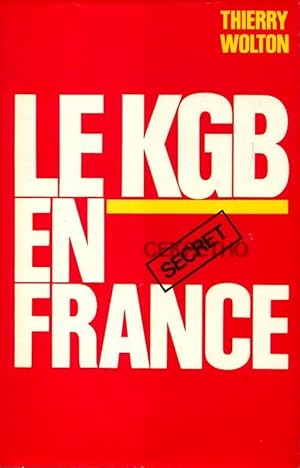
Wolton’s book was a source for both Prados and Mangold. An avid anti-communist, Wolton had access to DST records and interviewed a DST officer on the Grégoire case. But he and Prados do not agree on its origins. According to Prados, the DST grew suspicious of Dr. Jacques in late 1970; Wolton says it learned about him in July 1971, when its officers saw Dr. Jacques passing information to Victor Sokolov, an agent of Soviet military intelligence, whom Wolton identifies as KGB. Wolton says the DST followed Sokolov to the meeting in the Paris suburb of Neuilly and, only afterwards, identified Dr. Jacques. Prados suggests Dr. Jacques was already being tailed.
According to Wolton’s DST source, “the stranger” was “a tall man dressed in colonial style.” After half an hour of conversation at a cafe, the stranger handed over documents to Sokolov and they parted ways. Two detectives tailed the stranger, who eventually eluded them in his car. They nevertheless had two important clues to his identity: the car’s registration number and the agent’s appearance.
“It only took a week of research at the DST to learn his name and profession: Vincent Grégoire, a medical aid worker in South Vietnam.” He traveled with his wife and child and had a villa in the Var region. The DST began an investigation, including wiretaps, which lasted until early September when he left with his family for Saigon. The DST put the Grégoire file in a corner and waited until July 12, 1972, when Grégoire, again accompanied by his family, arrived in Paris for the holidays. He checked into the same hotel as a year earlier. This time, the police had rented a nearby room to keep a better eye on him. They didn’t wait long. The afternoon of his arrival, the doctor informed his wife that he was meeting a friend and would be home for dinner.”
Everyone agrees that Grégoire was arrested on July 12, 1972, in France while handing an envelope to Grégoire’s new case officer. Another Soviet spy was there as well but escaped. The arrests took place at the same rendezvous point as the year before.
Analysis: This was poor spy craft, to say the least, if not a set-up.
Grégoire was interrogated and confessed to having been recruited in Saigon in 1967 by unknown members of the NLF. The Soviets had “run” Grégoire since then as a favor to the NLF. The Soviets gave him agent training in Moscow and on annual, mid-June trips to Moscow, he passed through New Delhi (1968), Vienna (1969) and Helsinki (1970). In each instance the USSR consulate gave him his entry visa on a loose sheet of paper so there would be no trace on the passport.
From 1967 to 1972, the Russians paid Grégoire $20,000 in U.S. dollars, some of which he used for a swanky apartment where he threw lavish parties for senior Vietnamese military officers and high-ranking politicians in the RVN government. His guests were well-informed and he obtained quality political and military intelligence information. Apart from hand-delivering documents to his Soviet contacts, he sent messages on special paper to them in Singapore. In Saigon, he met his NLF contacts at his TB clinic. When he had documents or medicine to deliver to the NLF, Grégoire would park his car in a certain manner in front of his home. The next day, an anonymous patient would come to his office to collect the goods.
Dr Jacques’ Soviet contacts had diplomatic immunity and were recalled to the USSR soon after the bust on July 2, 1972. Sokolov, who was on vacation at the time, was told not to return to France. And, unbelievably, Dr. Jacques was released after the French Ministers of Foreign Affairs and the Armed Forces told the judge that he had harmed neither France’s diplomatic nor military interests. “The fact that he had, on behalf of the Soviets, contributed to the war effort against a French ally (South Vietnam) supported by another ally (the United States) was, in the eyes of the authorities, completely negligible.”[18] Dr. Jacques was even given the alias Grégoire to keep his identity secret.
His release fuels my hunch that he was a double agent passing disinformation to the Soviets. But that is ridiculous according to Jean-Claude Pomonti.
As he did with Wolton, Richard Werly introduced me to Pomonti, whom The Spike name key cites as a possible basis for Renard. While discussing his career, Werly casually mentioned that, as a cub reporter assigned to Bangkok in 1990, he was mentored by and formed a friendship with Pomonti, who was then Le Monde’s chief correspondent in the Far East. When I said I was interested in talking to Pomonti, Werly kindly gave me his email.
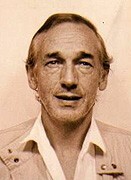
“I remember Dr. Pierre Hautier,” Pomonti wrote to me from his home in Corsica, “as a teacher at Saigon University in the early seventies. I met him again once in the eighties when he came to visit us in Corsica and when I went to Marrakech (late 80s) with my wife. I also got in touch again by phone with Minh, his widow, in the early 2010s. Pierre was a ‘coopérant’ during his stay in South Vietnam. I understand that Minh died last year, but I cannot confirm because I am not in touch with Stéphane, their son.” Pomonti signed off by saying, “I have no idea what Stéphane is doing in Saigon. I never met him.”
“Coopérant” is a French term for an individual sent to a developing country to provide technical, educational, or humanitarian assistance. That he was “sent” suggests that Dr. Jacques was in Vietnam in a semi-official capacity. Perhaps as an intelligence agent?
According to Pomonti, that is a “stupid” idea. In a second email, Pomonti said about his friend: “Let me add that no one took Pierre very seriously. By the end of my stay in Saigon (I left in 1974), I think Hautier had left Saigon. The fact that he had a clinic is news to me. Since 1968, I was staying in the Continental Hotel on the third floor (Bob Shaplen’s bedroom was on the 2nd floor, closer to the Time & Newsweek offices. The ICC (from 1954-5) had some people living on the first floor.[19] Hautier’s Polish friend since they met in a German jail during the Second World War was a member of the ICC.”[20]
Very interesting. The International Control Commission (ICC) in Vietnam worked to enforce the 1954 Geneva Accords. The ICC was comprised of observers from Canada representing the West, Poland the Communist Bloc, and India the non-aligned nations. The ICC was heavily involved in the 1954-1955 Operation Passage to Freedom, monitoring the movement of people North to South, and South to North. It was in business for years and Polish diplomats were involved in Vietnamese affairs until and after 1975.[21]
Pomonti did not recall the Polish diplomat’s name. One possibility is Mieczysław Maneli, a Polish representative to the ICC in 1954. Maneli was not in a German POW camp, per se, but he did survive Auschwitz. Most significantly, in 1963, he launched a diplomatic initiative to facilitate secret talks between North Vietnam, the U.S. and South Vietnam, aiming for “a neutralist coalition” to end the war.[22] Third Force figures were often the subject of Pomonti’s articles.
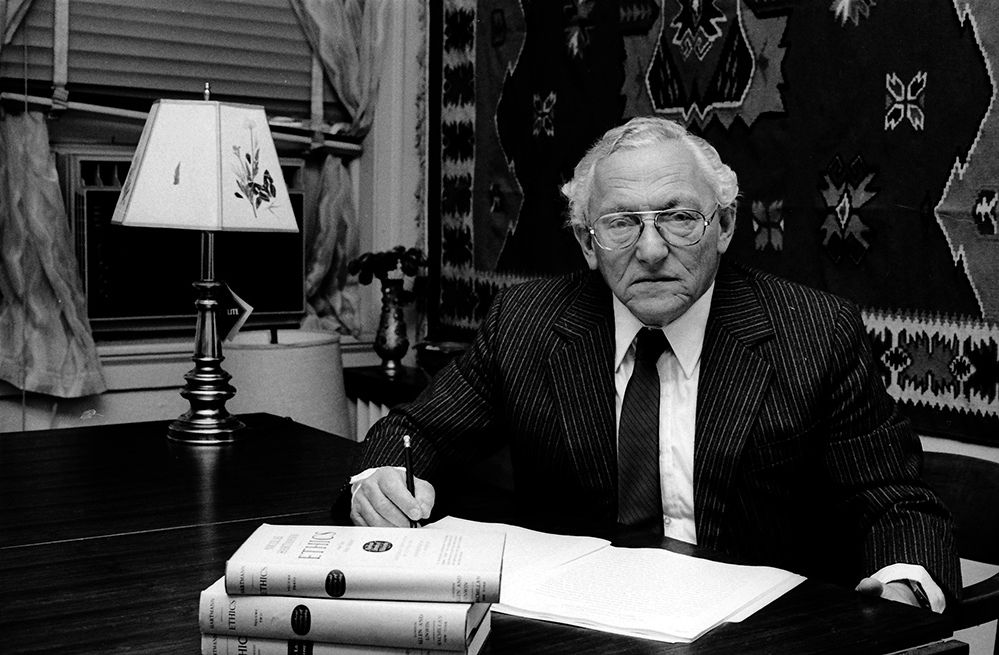
After I pressed for information about Hautier’s social circle—the people who did not take Dr. Jacques seriously—Pomonti demurred, saying he had gone to Vietnam in 1965 “by a sort of ‘service civil’ rather his ‘service militaire.’ I was lucky to be sent to South Vietnam as a teacher (history/géographie) for two university years. In the late Sixties, I moved from Paris to Bangkok as a South East Asia correspondent for Le Monde. The big story was the American war in Vietnam. So I did not live in Saigon and, when I was in VN, I was busy, most of the time out of Saigon. So I had not much time to spend in diners and social life. So I have not much to tell you about it.”
Wikipedia describes Pomonti as known for his critical reporting on both the Phnom Penh and Saigon regimes. In October 1974, his visa was revoked in South Vietnam for criticizing South Vietnamese President Nguyen Van Thieu and promoting the Third Force and the potential for a non-communist future without Thieu.[23] He was also deeply interested in spies and wrote a book, A Quiet Vietnamese, about Pham Xuan An, a journalist in South Vietnam who was also a spy for the VC.[24]
In any event, Dr. Jacques was taken seriously by the CIA and Mau’s Special Branch, if not by Pomonti or the French military and security agencies. This was the Age of Anglophiles and Francophobes. The Nixon White House was focusing its “war on drugs” on the French Connection, including numerous Corsicans, and James Angleton thought the KGB had infiltrated the French security services. However you look at it, relations were tense between France and America. In this context, I imagine Pomonti’s and Dr. Jacques’ social circle was composed of journalists and “senior Vietnamese military officers and high-ranking politicians,” some of whom were sources and helping the Third Force to ease out the Americans. Why not? Journalists are like spies; they are not all working together for a common cause. The historical lines are certainly blurred by mutual consent.
Colonel Minh, Deputy Chief of Special Operations
From my perspective, the most interesting part of Wolton’s excerpt is his reference to “Colonel Minh, deputy chief of special operations in South Vietnam.” I say this because I interviewed Dang Van Minh, deputy chief of the Special Branch, for my book The Phoenix Program. Though I never knew his rank, Minh’s obituary cites him as a colonel.[25] Plus, the word “branch” is often mis-translated by my Google translation app as “operations” when going from Vietnamese to English.
Granted, the idea that Dang Van Minh is Wolton’s Colonel Minh is as preposterous as thinking Pomonti was Renard, or Dr. Jacques was Marchand, or Colby was a Soviet mole, or that Seymour Hersh intentionally did not mention the CIA’s role in the My Lai massacre in his vanity documentary Cover-Up. And yet…
Consider this: As Dr. Jacques told the story to the DST, and the DST related it to Wolton, sometime in 1969, Colonel Minh “left his notebook crammed with addresses and notes on an armchair” at Dr. Jacques’ swanky apartment in Saigon. Coincidentally, on orders from his Soviet bosses, the French doctor had recently purchased a spy camera which he used to photograph Minh’s notebook. And if Wolton’s Colonel Minh was not “deputy chief of special operations,” but Minh, the deputy director of the Special Branch, the information within the notebook charted the RVN’s premier security agency, its personnel and operations, as well as agents and informants. No wonder Dr. Jacques’ bosses in Moscow went into “a frenzy.”
No wonder I wonder what kind of double game the DST was playing. For example, did one of Dr. Jacques’ servants pickpocket Minh? The DST certainly did not reveal to Wolton or his readers everything Dr. Jacques told them or all that it knew—just the names of the Soviet spies, Minh’s identity and the purloined notebook incident with all its implications. The DST also revealed that 1969 (the year Henry Kissinger began meeting secretly outside Paris with North Vietnamese negotiator Le Duc Tho to end the Vietnam War) was also the year Dr. Jacques’ bosses decided that his trips to Moscow were too risky. Thereafter the meetings occurred in Paris until 1972 when the Soviet spy Sokolov screwed things up—and the peace talks were winding down. But which month in 1969 the notebook episode occurred is not said—a significant omission—nor are the addresses and corresponding names within it, or the substance of Minh’s notes. All we know is that it happened.
Wolton had an abiding interest in revealing Soviet activities in France. But how about its colonies? The DST had operated in Vietnam as a branch of the French police forces until the end of the First Indochina War. But would the DST leak Minh’s name if he were part of Dr. Jacques coterie of Third Force officials? They would not have leaked his name if his notebook was disinformation and he was working against the communists, right?
Minh’s background indicates links to the French and Third Force. He was born in 1922 on Con Son Island, home of the prison where his father was employed by the French as a nurse. In 1940 Minh joined the accounting department of the Sûreté and was there until the French left Vietnam in 1954. After that he fell in with the Americans. During the Ngo regime he received CIA training at the International Police Academy in D.C. and, in 1962, he was appointed chief of the Judicial Police, which investigated drug trafficking, corruption and certain types of juvenile delinquency.[26]
After the Diem coup in 1963, Minh became deputy director of the Special Branch, a job he told me he held for the rest of his career—although his obituary says, “Prior to his service as Chief of Police, he was a Regional Director (supervising over 17,000 policemen) and Principal Commissioner of the national police.” Insulated behind his desk at Special Branch headquarters on Vo Thanh Street, Minh told me that he weathered each successive regime by serving his bosses as “a professional intelligence officer.”
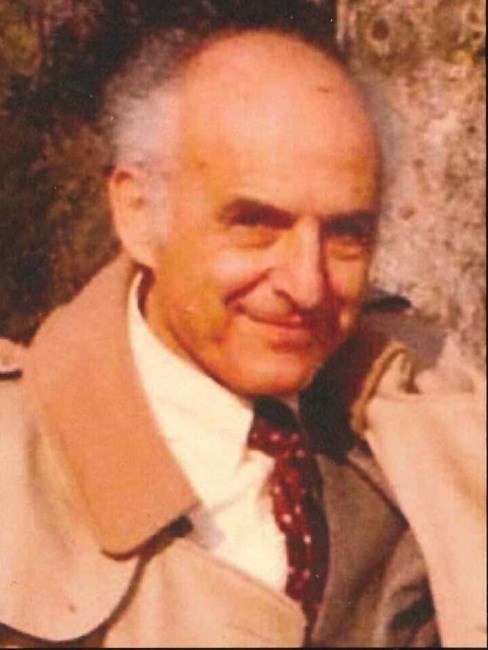
CIA officer Tullius Acampora compared Minh to Captain Louis Renault in the Humphrey Bogart film Casablanca, saying he was “a stoic who took the path of least resistance.”
During my interview with Minh, he attributed the fall of Saigon to “the many changes of command in Saigon, while North Vietnam had only one leader and one chain of command.” That, plus the fact that the Vietcong had infiltrated every facet of the GVN—a fact Minh’s boss from 1965 to 1968, director of the national police General Nguyen Ngoc Loan, acknowledged to Acampora, saying “We’re twenty percent infiltrated, at least.”[27]
Minh insisted he was not involved in the in-fighting that determined the course of events in the RVN. But he had been in the Special Branch for many years when the in-fighting climaxed during Tet 1968. The in-fighting featured, primarily, Air Marshall Nguyen Cao Ky and General Nguyen Van Thieu. As prime minister from 1965 to 1967, Ky had ostensibly reported to General Thieu, who was then the RVN’s de facto chief of state. But when Colby had been station chief, Ky had been one of his star assets, a hotshot pilot flying South Vietnamese commandos into North Vietnam. Ky still had the CIA’s backing and appointed his “wingman” General Loan to three powerful positions: director of the Military Security Service (MSS) in June 1965, director general of the National Police in October 1965, and head of the Central Intelligence Organization (CIO) in April 1966.
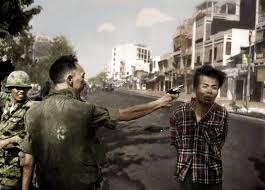
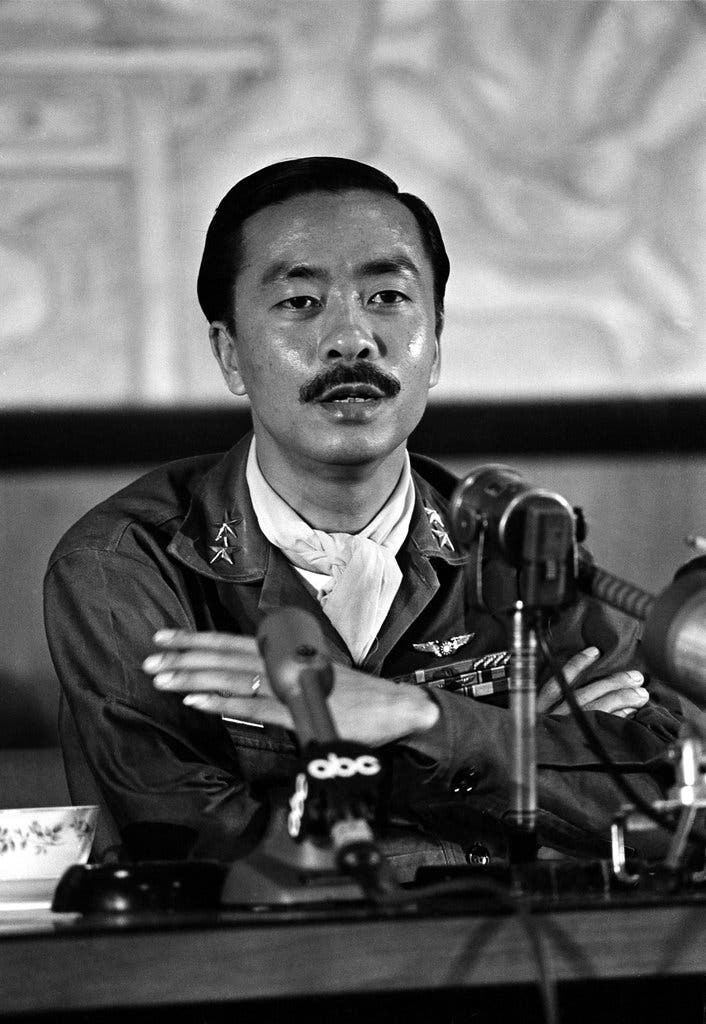
The Americans, however, tired of Ky and backed Thieu during the 1967 presidential campaign. And the CIA became enraged at General Loan, who opposed Phoenix 1) because it infringed on Vietnamese sovereignty, and 2) because it was being used to eliminate Ky’s clique. In June 1967, the CIA went forward with Phoenix without Loan and ran it as a unilateral program until the battle of Hue during the 1968 Tet Offensive. After Phoenix helped win the battle for Hue, Loan realized that a means was needed to coordinate the U.S. and Vietnamese agencies working independently of each other. Considering the number of agencies involved, and their antipathy, this was not an easy thing to do.
Re-enter Dang Van Minh. On March 5, 1968, the new prime minister, Nguyen Van Loc, ordered the activation of Phung Hoang committees at all echelons and appointed Minh chief of a special Phung Hoang Task Management Bureau.
Minh told me that he authored the Vietnamese version of the Phoenix Program. In contrast to the CIA’s “kill them all” policy, Minh viewed the VCI [Vietcong Infrastructure] as cadres “to be monitored, not killed.” Minh christened the Vietnamese program Phung Hoang after the mythological bird of love that appears only in times of peace. In Vietnamese myth, the Phung Hoang holds a flute and represents virtue, grace, peace and concord. The CIA’s Phoenix held a blacklist in its claw, representing an omnipotent, predatory bird that selectively snatches its prey.
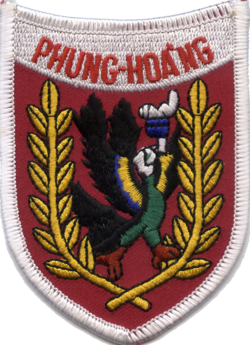
Nowhere was the gap between American and Vietnamese sensibilities more apparent than in their interpretations of Phoenix and Phung Hoang, which for me is Minh’s motivation for backing the Third Force. That and the fact that Colby began his Accelerated Pacification program in late 1968, which resulted in Phoenix teams rampaging across the country. If he was hedging his bets, Minh was by no means alone. Ed Brady explains how it worked.
An Army officer on contract to the CIA, Brady was assigned to the Phoenix Directorate. The Phoenix assignment put him in close contact with Dang Van Minh. As Brady recalled when we met, the passive Vietnamese approach to Phoenix subverted the one pressed by the CIA. “If you really want to get down to cases,” Brady said, “no Vietnamese of any significance in the military or in the police didn’t know who the truly high-level people were—the VC district chiefs and province chiefs. The VC didn’t run targeted operations against them either. There were set rules that you played by. If you went out and conducted a military operation and you chased them down fair and square in the jungle and you had a fight, that was okay. If they ambushed you on the way back from a military operation, that was fair. But to conduct these clandestine police operations and really get at the heart of things, that was kind of immoral to them. That was not cricket. And the Vietnamese were very, very leery of upsetting that.”
Like his CIA advisers, Minh was not squeamish about torturing and killing. After Tet, according to PIC advisor Robert Slater, he helped the CIA build the Special Branch social club, the Co Lac Bo, on the gravesite of the VC killed during Tet. But Minh did not want the VC coming after his family; he wanted a modus vivendi with them—the kind Ed Brady describes above. He also wanted a smooth-running machine without conflicting policies. As Nguyen Mau’s Special Branch friend Nhuận Le put it: “The Special Branch (as of March 1968) now had two contradictory jobs: to exterminate the VCI on the Phụng Hoàng side; and to protect, in order to exploit and recruit the VCI, on the Special Branch intelligence side.”[28]
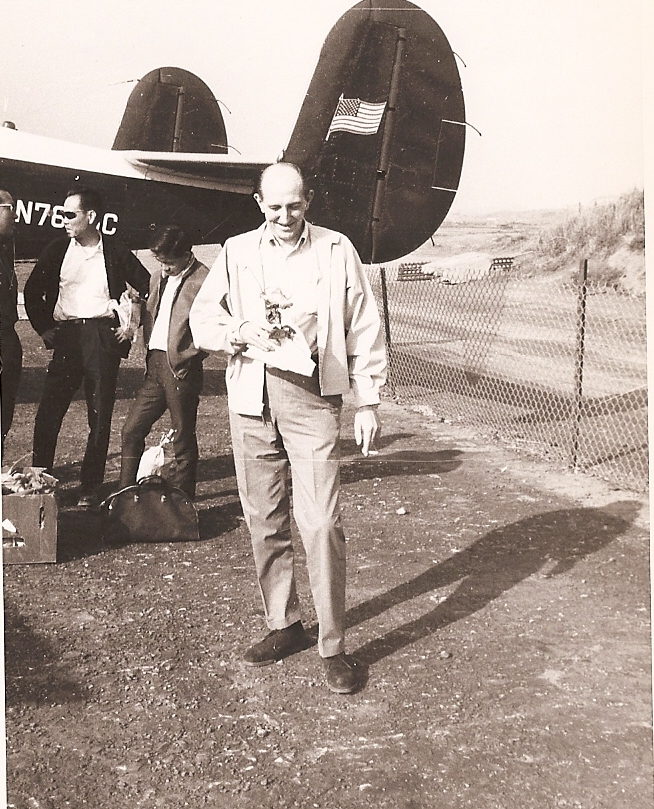
Introducing Major Nguyen Mau
Nguyen Mau was born in Ninh Thuan Province in 1932. After two years at a teacher’s college, he attended the Dalat Military Academy, graduating in 1954 as a second lieutenant. He made major in 1963 while serving as a sector commander in Hue during the Buddhist riots. In 1964 he became a task force commander in the 22nd Infantry Division in Quang Ngai Province, which stretches from the coast to Cambodia. As a regimental commander, Mau took command of the besieged 40th Regiment during fierce fighting in 1965. His performance led to his assignment as chief of the newly created Combined Intelligence Staff (CIS) in Saigon in the summer of 1966.
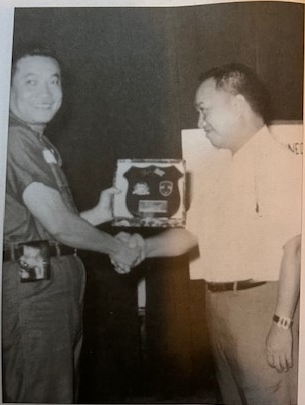
General Loan, with the help of U.S. military and CIA officers, had created the CIS to provide security to Military Region 4 (MR-4), which consisted of Saigon, Cholon and Gia Dinh Province. Guided by General Loan’s CIA “adviser” Tully Acampora, Mau and the CIS complied a blacklist of 3,000 VCI personalities in support of combined U.S. and Vietnamese military actions in MR4. The names were stored in an automated data processing system in a central registry and made available to U.S. and Vietnamese units.
This systematic gathering, dissemination and exploitation of intelligence on the VCI was called Cong Tac IV by its Vietnamese creators and was absorbed by the CIA’s Phoenix Directorate in June 1967. CT IV evolved concurrently with the Combined Intelligence Staff.
“When I arrived in Saigon,” Acampora said, “at the national level, the U.S. Embassy, with the CIA and MACV, had decided to take over everything in order to change the political climate of Vietnam. Through the CIO, the agency was running all sorts of counteroperations to VC infiltration into political parties, trying to find compatible elements to create a counterforce to take over control from Ky. This was done by intercepting VC political cadre: surveilling them, then arresting them or moving toward them, then buying them over to your side in order to destroy the integrity of the VC.” Acampora qualified this statement by noting: “The VC would always say yes, but they were usually doubles.”
“It was a dual-level scheme,” Acampora went on. “We were faced with the threat of terrorism from sappers, but we also had to stop them at the political level. We stopped them at sapper level with the PRU [unilateral CIA counter-terror teams called Provincial Reconnaissance Units] under the Special Operations Group, and at the political level through the CIO—the centerpiece of which was the National Interrogation Center [at 3 Bach Dan in the U.S. Naval Yard] under Special Branch chief Major Nguyen Tien. The CIO operated over and above CT Four. It could take whatever it wanted—people or information or whatever—from any of its elements. Its job was to turn around captured VCI and preempt Loan.”
For legal reasons, CT IV was placed under General Loan’s control. Loan assigned around 50 officers to the program from the participating Vietnamese agencies. Major Nguyen Mau was in charge of operations, assisted by Dang Van Minh. The U.S. provided 20 MACV counterintelligence officers, each of whom served as a desk officer in a Saigon precinct or outlying district capital.
Then came the dramatic series of events that propelled Major Nguyen Mau to prominence as director of the Special Branch. On May 5, 1968, General Loan was ambushed outside Military Security Service headquarters and seriously wounded. Next, writes law professor Nguyen Ngoc Huy, Thieu “began his plan to weaken Ky.” His first move was to dismiss Prime Minister Loc and replace him with Tran Van Huong, a former mayor of Saigon and a bitter enemy of Ky. During the 1967 elections Ky had coerced third force “peace” candidate Truong Dinh Dzu into pressing blackmail charges against Huong. As soon as he was appointed prime minister, Huong tasted sweet revenge by dismissing most of Ky’s backers in the administration.[29]
“Then,” writes Huy, “Ky received a new blow when several officers loyal to him and serving in the Saigon police were killed at the beginning of June 1968 in Cholon during their campaign against the second attack of the Communists. They were killed by a rocket launched from an American helicopter. Apparently, this was a mistake, but many people thought it was due to the American decision to help Thieu against Ky.”[30]
The incident occurred on June 2, 1968, when a rocket fired from a U.S. Marine helicopter gunship “malfunctioned” and slammed into a wall in a schoolyard on Kuong To Street. The wall collapsed, killing seven high-ranking officials who had been invited by the Americans to the battlefront in the belief that the VCI leadership was hiding in the home of the Mahayana Buddhist monk Thích Tri Quang. Killed were Pho Quoc Chu, Loan’s brother-in-law and chief of the Port Authority; Lieutenant Colonel Dao Ba Phouc, commander of the Fifth Ranger Battalion; Saigon police chief, Lieutenant Colonel Nguyen Van Luan; Cholon police chief and Loan’s personal aide, Major Le Ngoc Tru; Combined Security Committee member and First Precinct police chief, Major Nguyen Ngoc Xinh; and Major Nguyen Bao Thuy, chief of staff to Lieutenant Colonel Van Cua, Loan’s brother-in-law and the mayor of Saigon.
One day later Colonel Luu Kim Cuong, commander of the First Transport Group and a senior aide to Ky, was killed by border police on the outskirts of Saigon. With Ky’s people in the grave or the hospital, President Thieu began to shape the government of Vietnam in his image, appointing ministers, police, province chiefs and military commanders who would do his bidding.
Thieu then issued Decree Law 280, making Phoenix/Phung Hoang a police matter under his interior minister, General Tran Thien Khiem. The Americans graciously looked away when Thieu began persecuting domestic opponents like Dzu whose “compatible left” political organizations fell under Law 280’s definition of VCI cadre. From July 1968 onward the task of ensuring the GVN’s internal security fell to General Khiem who, according to Dang Van Minh, was “the real boss of administration and intelligence.” CIA asset Khiem served as interior minister, deputy prime minister for pacification, and chairman of the Phung Hoang Central Committee, working hand-in-hand with William Colby in steering Phoenix into infamy.
On June 8, 1968, General Khiem named Colonel Tran Van Hai director general of the National Police. On the same day that he took office, Hai dismissed Ky’s eight remaining police chiefs in Saigon and replaced Special Branch chief Nguyen Tien with Major Nguyen Mau and incorporated the Combined Intelligence Staff within a new Capital Military District Command (CMDC).
Where Mau fit in the in-fighting is a hard question to answer. He was from Ninh Thuan Province, as was President Thieu, but he also made cases on North Vietnamese spies inside Thieu’s presidential palace, which was not great for his career as director of the Special Branch. He also wanted nothing to do with Phoenix or the PRU, which put him at odds with many senior Thieu officials.
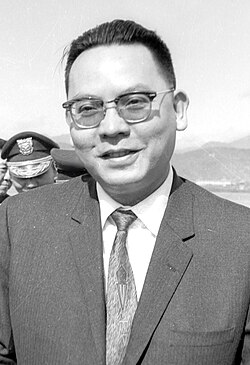
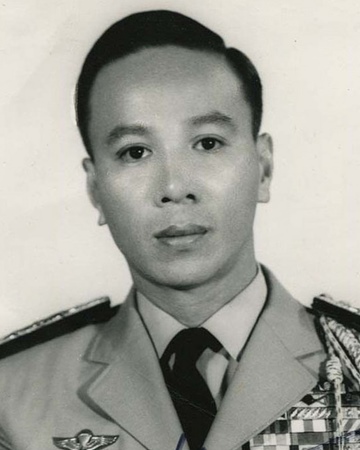
In a letter to the author, Mau said his “great concern in taking command of the Special Branch was the unjustified arrest, false accusation and arbitrary detention (under Phoenix). Those bad manipulations could not be stopped since the province chiefs, police chiefs and other officials would do anything to make Phoenix score, which assured them job security and higher regard. They knew that Phoenix was under the supervision of an American Ambassador (Colby), and that President Thieu always listened to this powerful personage. They kept the Special Branch in the provinces too busy with arrest in village, confession worksheet and charge procedure at the Provincial Security Committee, while I wanted to direct the Special Branch into professional activities: organizational penetration gathering information relating to policies and campaign plans, spotting the key leaders for neutralization. But I did not argue with them. I felt so alone I kept my mouth shut.”
Nguyen Mau As Chief of Special Branch
“Colonel Tran Van Hai was not a friend of mine but he knew my parents, our poverty and hardship. Hai didn’t like my personality. I was an independent career man but I became his choice because everyone else was connected more or less to military or civilian seigneurs. He did know me from before, from 1954 to 1957, when he was an inspector for the military and had watched me in action.”
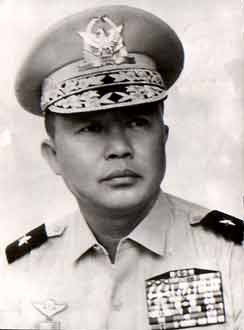
During Tet, while running CT IV operations, Mau had assumed temporary command of the metropolitan police and had fed precise intelligence to Hai, whose ranger battalion in the southeast portion of the capital city uprooted many VCI. And “Hai kept three ranger battalions in Cholon after Tet to ward off Northerners.” As Mau explains, “Thieu was afraid of a coup d’etat by high-ranking officials and generals originally from North Vietnam (like Ky) and siding with Marshall Ky. To prevent such a coup, Thieu built a secret but loyal formation of Southerners within government structures and the armed forces, particularly in Saigon. Thieu started the game in late 1967. Two extremists of Southern solidarity were appointed to the most important jobs, Tran Van Huong as prime minister and colonel Tran Van Hai as chief of police.”
In late 1968 Mau attended the Command and General Staff school in Saigon and, by 1969, was a lieutenant colonel pursuing operations against the North Vietnamese intelligence service, the Cuc Nghien Cuu. The government was infiltrated by as many as 30,000 agents, according to CIA officer Sam Adams, and there were many cases waiting to be made.[31]
One case in particular led to Dr. Jacques. The case was made in mid-July 1969 against the A.22 Network managed by Major General “Pierre” Vu Ngoc Nha, an adviser to Nguyen Van Thieu (a convert to Catholicism) since 1965 in matters of relations with the Catholic community.[32] Some fifty enemy spies were arrested and 41 convicted, including Huynh Van Trong, Thieu’s special assistant for political affairs. Trong leaked many documents about CIA programs, including the 1968 Phoenix plan. “Like many other Vietnamese officials,” The New York Times reported, “he has been rumored to be in the employ of the Deuxième Bureau, the French intelligence service. But this has never been officially confirmed.”[33]
Notably, several sources say those arrested were so well connected they were able to spread rumors in the press that everyone had been framed, that they were not really North Vietnamese agents but were framed by the CIA, which did not want a Third Force emerging. Trong and Nha were said to have contacted the NLF on behalf of Thieu. It is said that Thieu built an isolated, comfortable house for them to live on Con Son Island, and that after the North won the war, they inflated Nha, Trong et al. into legends. The same is said of another “famous” spy, Pham Xuan An, who Mau agrees was exaggerated (and about whom Pomonti wrote a book).[34]
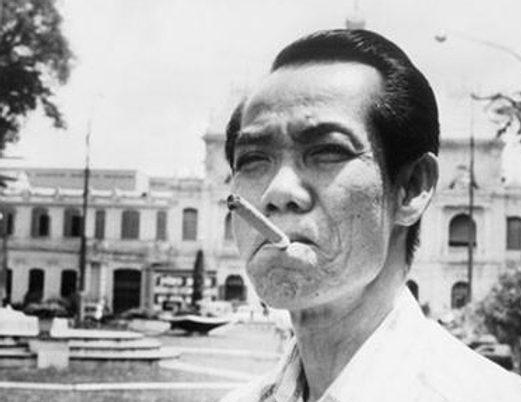
The CIA does credit itself with making the case on the A.22 network, called Operation Projectile. According to CIA scribe Tom Ahern, “In July [1969], the Station began pressing Thieu’s military assistant, General Quang, to have Trong arrested.” President Nixon was scheduled to visit on July 30, so Thieu reluctantly, at the urging of National Police chief Colonel Hai and General Quang, “acceded to American urging, and Trong was picked up on 24 July 1969.”[35]
Ralph McGehee, the senior CIA liaison officer to Mau and the Special Branch in the Saigon-Cholon-Gia Dinh area from 1968 to 1970, also claimed credit for making the case in his autobiography.[36] But in a July 2005 email to me, Mau said, “Please tell Ralph McGehee my best regard when you have chance to contact him. Himself and Trang Si Tan [the Saigon police chief in 1969] were not involved in Operation Projectile. About this operation, it must be a long chapter in your book.”
Alas, I was off on other projects in 2005 and it was not until 2017 that Mau sent me his autobiography, The Special Branch: Part 1 (2007). Mau’s book recounts how Projectile actually evolved and unfolded.[37]
Briefly: According to Mau, the A.22 case began before the Diem coup, when Special Branch officer Major Pham Huu Nghi tracked anti-Diem disinformation articles to Le Huu Thuy, a Cuc Nghien Cuu agent in the Military Security Service (MSS). The MSS was then under Colonel Do Mau, one of the plotters who murdered Diem and Nhu. After the coup, Thuy was protected by now Major General Mau, who along with “Big” Minh released dozens of Diem’s political prisoners, including Thuy. Nghi’s investigation into Thuy stalled, as a result, until Tet 1968, when Do Mau was powerless and a Special Branch operation in Tay Ninh Province on the Cambodian border uncovered documents that confirmed the A.22 operation into the presidential palace.
At this point, Nghi and CIA liaison officer Jim Potratz renewed the investigation into Thuy. Mau assigned an officer to “monitor” Thuy, and this officer located Thuy’s home. Potratz and the CIA then arranged aerial surveillance of the neighborhood, which enabled the Special Branch to rent a house next to Thuy’s and set it up as a safe house. A Special Branch sergeant was assigned to “surveille” and record everyone who came and went, including Nha and Trong. It was not hard to make the case after that.
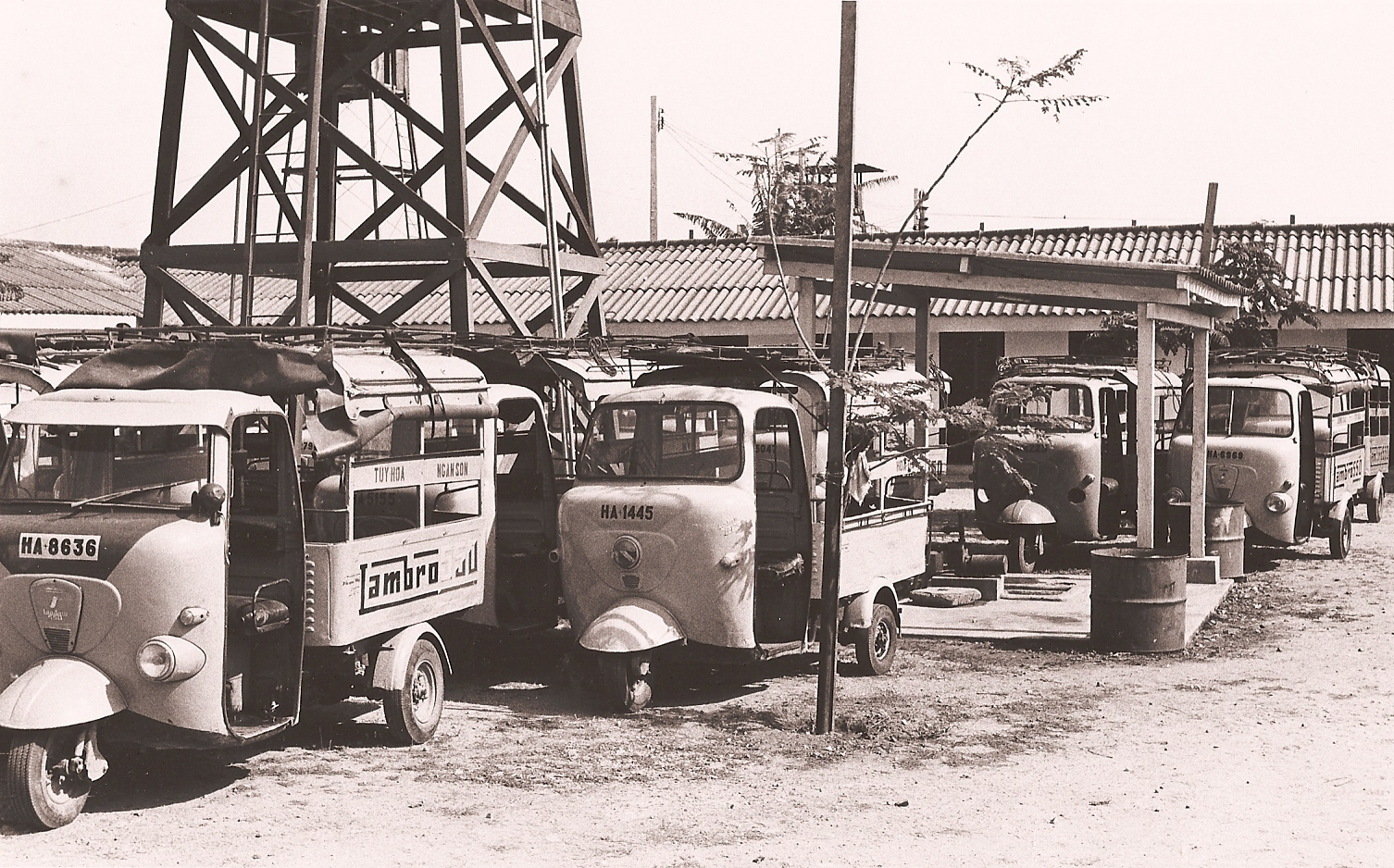
More importantly, as Mau explains in his book, the A.22 case led him to Dr. Jacques. But first, there is a little more to tell about the CIA’s role in this case.
A CIA View of the Dr. Jacques Case
According to CIA polygraph officer John F. Sullivan in his autobiography Of Spies and Lies (2002), CIA communications technicians intercepted a message (alas, no date is given) from a sophisticated Soviet transmitter and traced it to a French teacher in one of Saigon’s high schools. The chief of CIA operations in Saigon “established contact with the Frenchman, and an operation was undertaken to recruit him.” Heading the operation was the CIA’s Deputy Director of Plans, Tom Karamessines, who instructed that, “under no circumstances were we to let the Frenchman know that we were aware of the transmissions or on to him.”
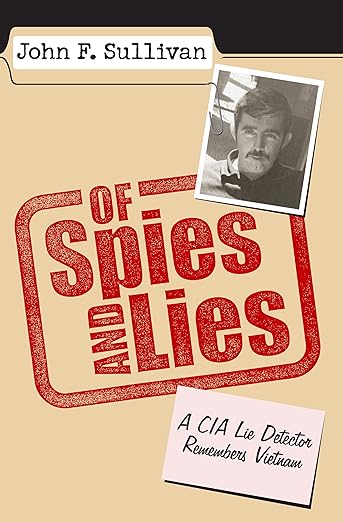
Sullivan arrived in Saigon in 1971, while Richard Helms was DCI. Helms, like Angleton, assumed Colby was a Soviet mole. As station chief in the early 1960s, Colby had refused to allow the CIA to investigate Diem and Nhu, and had opposed the November 1963 coup, which revealed that the Diem administration had been penetrated by thousands of VC agents. In 1965, Colby had refused Angleton’s plan to set up a counter-intelligence staff in Saigon which would act independently of the station. Colby as chief of the Far East Asia Division had turned him down. Angleton, thereafter, said Colby had the blood of all American soldiers on his hands.
Did Karamessines, an ally of Helms and Angleton in the illegal Family Jewel operations, including infiltration of the leftist press, want to recruit Dr. Jacques and use him against Colby? It is likely that Angleton’s aide Newton Miler had already been to Saigon to explore Colby’s relationship with Dr. Jacques, which is why the CIA honed in on him in the first place. It is frustrating, because no one involved gives exact dates.
Sullivan, a polygraph expert, did reveal the CIA learned that Dr. Jacques had been a radio operator in the French army during World War II. “Our recruitment pitch was that we might want him to do some clandestine communications for us. The important question on the test would be, “Since leaving the army, have you done any radio transmissions?”[38]
The CIA’s Saigon base chief “talked the Frenchman into taking a polygraph test,” conducted by Sullivan, but “he denied doing any radio transmissions or working for any other intelligence service. The test indicated that he was lying. My guidelines were not to confront him, but I did want to ‘probe’ and see if I could develop any information. The Frenchman took that decision out of my hands, however. As soon as I finished running the test, he said, ‘I am sorry, gentlemen, but I have a luncheon engagement and will have to leave. I would be happy to return tomorrow.’
“The next day he did return. ‘Gentlemen, I don’t want to do this and don’t want to work with you. Please don’t contact me again,’ he said. And with that, he was out the door. That night, the technicians picked up another transmission from the same Soviet transmitter but from a different location.” He does not say where that other location was, but Mau, as we shall see, has an explanation.
Sullivan may not have known of Colby’s prior association with Dr. Jacques and honestly thought the CIA mishandled the case—that it should have “broken into his apartment, seized the transmitter, and had him arrested. As it turned out, two CIA officers [the base chief and Sullivan] were exposed to a Soviet agent, and we did not get the transmitter. [Mau did.] Subsequently, we learned that the Frenchman was a Soviet military intelligence [GRU] officer; he was arrested while making contact with another GRU officer in Marseille, France.”
Obviously, all this happened before July 1972. But when, exactly? Again, if it was prompted by Miler’s investigation of Colby for Angleton, then it makes sense that Karamessines took such extraordinary measures to keep the “hip-pocket” operation away from everyone else.
CIA officer Merle Pribbenow provides a few more details on the case. Pribbenow was in Saigon from 1970 to 1975, concurrently with Sullivan. He even felt compelled to write an article about the French doctor case for Vietnam magazine, which was reprinted online in 2017 at HistoryNet.[39] In the article, Pribbenow famously revealed Pierre Hautier’s name. He does not say how he came by the name. He was a language specialist and “debriefer” of high-ranking prisoners at the National Interrogation Center and may have heard the rumors that were floating around during the case and afterwards.
Pribbenow recites information from Wolton’s and Sullivan’s books, adding that the CIA’s “long and arduous” investigation zeroed in on the transmission point—Hautier’s home. Not his apartment. He adds that Hautier’s wife (whom Pomonti named as Minh) was a relative of General Dang Van Quang, President Thieu’s special assistant for military and national security affairs. If Minh was related to Quang, it would explain why top military and police officials were often at the doctor’s swanky apartment in Saigon (and perhaps at his home in Binh Duong Province) and how he had access to the information the Soviets and NLF valued so highly—though Mau offers an even more convincing reason.
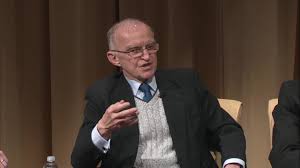
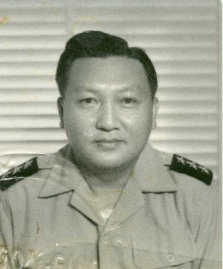
Alas, Pribbenow does not say how he came to know that Minh was related to Quang. He is a former CIA officer and fellow at the Wilson Center and just knows things, one assumes.
There is a drug angle with General Quang, which might also explain the secrecy around the Dr. Jacques case. Alfred McCoy, author of The Politics of Heroin in Southeast Asia (1972), in testimony on June 2, 1972, before the Senate Committee on Appropriations, claimed that Quang was involved in heroin trafficking with the Corsican mafia and the Trafficante crime family in Florida. McCoy fingered President Thieu as well. McCoy said U.S. officials were condoning or cooperating with these corrupt elements for political and military reasons.[40]
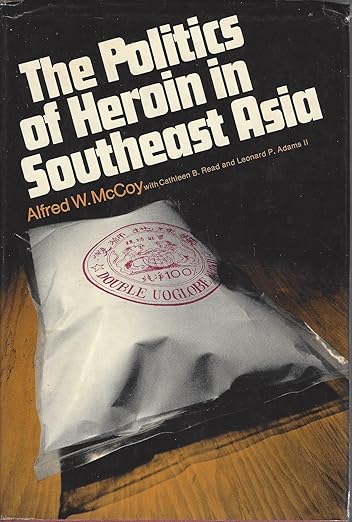
Pribbenow, coincidentally, authored an article about how a CIA investigation into Quang’s alleged “corruption” found him innocent of heroin trafficking, of being a CIA agent, and a bagman for Thieu. Pribbenow suggested the allegations were disinformation planted by Thieu’s political foes, including Ky, and spread by the gullible liberal U.S. media—the old Angleton—de Borchgrave “Master Plan for World Domination and Disinformation” line.
Pribbenow is smoother than de Borchgrave but equally biased. His goal, it seems, is to make the CIA’s crimes in South Vietnam go away, while giving credit to the CIA for cases the Special Branch made. For example, he falsely claims “the South Vietnamese police swept into the doctor’s residence and conducted an extremely thorough search” after Hautier’s arrest in France, and that “No incriminating documents or spy materials of any kind were found. The radio transmitter, the doctor’s code books and all of his other espionage gear were gone. No one knew who ‘cleaned out’ the doctor’s residence.”
In fact, Thieu replaced Mau as director of the Special Branch in February 1972, which puts Dr. Jacques’ arrest and the search of his house at least six months before Hautier’s arrest in France in July 1972. The next section tells the whole story. While reading it and considering everyone’s motives, remember that, by 1972, President Nixon and Henry Kissinger had adopted their plan to gradually withdraw U.S. troops and stall the Paris negotiations until Nixon had won the 1972 American presidential election. This put a lot of stress on Vietnamese officials.
Also remember, when considering Mau’s motives and methods, and those of CIA scribes like Pribbenow, that the CIA abandoned hundreds of its Special Branch employees on April 30, 1975, knowing full well the terrible reprisals that awaited them. The CIA and Special Branch told each other what they wanted to hear, but mistrust between the two agencies was visceral and intensified as the end of the war approached.
Mau Makes the Case on Dr. Jacques
I have incorporated parts of Mau’s correspondence regarding Dr. Jacques within the following summary of the case found in his autobiography, Special Branch: Tap 1. In the book, Mau refers to Dr. Jacques as “Dr. Ja…” I have changed it to Dr. Jacques. I have also eliminated diacritical marks.
As the Paris Peace talks sputtered along in March 1971, Mau began a strategic intelligence investigation into the intimate milieu of Madame Thieu. In the wake of the A.22 network bust, Mau had anticipated what Tran Quoc Huong, the North Vietnamese spy master who ran the A.22 network, was thinking. Putting himself in his enemy’s shoes, he concluded that Huong would not have been completely satisfied having placed Trọng and Nhạ within President Thieu’s senior advisory staff. “He needed a reserve unit alongside Cell A.22 in case it encountered unforeseen difficulties. This reserve unit was also indispensable for verifying information sent back by A.22.”
After trying several methods, the North Vietnamese spy chiefs reasoned that, if they could not recruit another operative with direct access to official matters related to Thieu, it would be just as good to have someone with “personal, emotional access to him. With that idea in mind, Huong took action.” Mau took countermeasures. A core concept in the plans and operations of the Special Branch against North Vietnam’s Research Bureau was to get close to individuals with access to people with official duties or personal relationships with President Thieu. The Research Bureau was doing the same thing. “Therefore,” Mau explained, “we encountered Tran Quoc Huong at a point of ‘an unplanned meeting.’”
The Special Branch identified each internal and external contact, acquaintance and relative of the President and the First Lady. Those who could not approach the President and First Lady or had only a “limited opportunity to approach” them, were removed from the list of sources targeted for investigation and surveillance. Investigations to determine the background and history of selected targets were conducted through archives and official records. Surveillance was conducted to better understand a target’s current activities and relationships. The phrase “limited opportunity to approach” referred to encounters which did not last more than one night and were not substantial enough to prompt suggestive conversations or gather intelligence about situations and developments.
More than 200 people were targeted and went through the investigation process conducted by the Special Branch at the provincial and municipal levels. This was a long and arduous process. As Prados suggests, it may have begun in late 1970. Among the targets were the ambassadors in Taiwan and at the Holy See in Rome; the Director General of National Education; and members of the National Assembly.
“Of particular note,” Mau stressed, “and subject to all adaptive measures applied by the Special Branch, was an old-style villa in Bình Duong. The owner, who previously held French nationality and still went by a French name, remained very wealthy and influential. He was highly respected and deferred to by local authorities, including the Province Chief and District Chief. He was a medical doctor and a major landowner, commonly known as Dr. Jacques, with the Vietnamese name Nguyen Van Giat. He had a son, known locally as ‘Cau Jean’ whose Vietnamese name is Nguyen Ng…,who is married to Jacqueline, the youngest sister of the First Lady.
“According to Southern Vietnamese customs, the title ‘cau’ [young master] is used for children of wealthy and powerful families. Cau Jean frequently travels between Bình Duong and the Independence Palace.” In his letter to me, Mau said Jean “got a good position at the presidential Kitchen cabinet. This young man was a tremendous source of information that the Cuc Nghien Cuu would exploit.”
“The Special Branch immediately opened a file,” Mau continued in Tap 1, “placed the location under surveillance and designated it as the number one priority target under the codename ‘Old Villa.’ Everyone entering or leaving was photographed, identified, and had their background thoroughly investigated. All had identity cards issued in Binh Duong, Bien Hoa, Gia Dinh, and Sai Gon.
“Only one person had no identity card issued by the local police, but searches through photographic records yielded nothing. He appeared to be a servant, as he stayed inside the house most of the time and rarely went out. Looking at his photo, an old man remarked, ‘He looks like the rubber plantation foreman of that doctor,’ and his wife added, ‘That foreman hasn’t been seen for a long time.’
“A check of radio transmissions showed that the technical intelligence unit detected signals originating from Dr. Jacques’ house. After several months of surveillance, nothing new was discovered. There was nothing left worth waiting for. The Special Branch decided to end the operation. On day N [Mau did not recall the date] a task force [including CIA officer Jim Potratz but not Mau, who was at headquarters coordinating activities] quickly raided the ‘Old Villa.’ Everyone was ordered to remain where they were. Absolute silence and secrecy were required. A ‘mousetrap’ was set. [The “mousetrap” is counter-intelligence slang used to indicate keeping the environment unchanged so that anyone attempting to enter would do so unsuspectingly.] Once inside, they would be detained. Security forces would apply a method of systematic elimination to screen and release those detained before withdrawing. Naturally, individuals connected to the Communist organization whose names were on wanted lists would be taken to Special Branch headquarters.
“The servant without identification—or more precisely, with a fake identity—was the first to be arrested.” Then Dr. Jacques was arrested. In his letter to me, Mau said Dr. Jacques and the servant were caught “in flagrante delicto.” In a subsequent email he said they were “caught red-handed with other stuffs and underground room used for signal equipment.”
As Mau notes, the first thing Dr. Jacques did was ask the officer commanding the special police operation: “Do you know that I am the in-law of the President’s wife?”
“Yes, we know,” the officer replied. “So what? You are under arrest for harboring and assisting Communist cadres in activities against the Republic of Vietnam.”
“Dr. Jacques added: ‘My son is the brother-in-law of President Thieu.’”
“The Special Branch officers pretended not to hear and gave no reply. Dr. Jacques and the servant were escorted to the Special Branch Interrogation Center. At Special Branch headquarters [one can imagine the line of questioning], the servant said his real name was Doan Ngoc Buu.”
Doan Ngoc Buu was born in 1930 in Binh Duong, a province north of Saigon that saw intensive fighting during the war. As Mau explains, Buu “had been hired by Dr. Jacques to work as a rubber tapper and later promoted to foreman overseeing a group of workers. He was trusted and well-liked because he was hardworking and brought many benefits to the plantation. He also had connections with the Viet Cong, ensuring that the owner’s family would not be harassed. It is possible he was a benefactor for Dr. Jacques, in addition to the trust built through work.
“Buu said he had joined the Viet Cong security service in 1950 and regrouped to the North in 1954. Security personnel serving the Communist Party leadership and secret service agents for Ho Chí Minh were selected from the Ministry of Public Security. He was selected, had been trained, and served in Ho’s motorcycle escort guard unit.
“Suddenly, in mid-1968, he was transferred out from the Presidential Palace back to the Ministry of Public Security. He attended a secret, one-on-one training course [one instructor and one trainee]. The main subjects were intelligence work, codes, methods of using radio transmitters, and how to live within a wealthy or petty-bourgeois family in South Vietnam at that time. Finally, he was informed that he would return to the South and lie in wait at the house of Doctor Jacques in Bình Duong, tasked with gathering information and documents about the Presidential Palace of the Saigon government. Within a week, he was further briefed on changes in the former employer’s family.”
Buu next traveled to Cambodia and, from there, to a rendezvous point in Tay Ninh where a special liaison was waiting and guided him to Binh Duong. He then headed alone straight to his former employer’s house. “Along the way, he tried to avoid meeting anyone, whether an acquaintance or a stranger. He knocked on the door and was received by Doctor Jacques, at first with surprise and bewilderment, but soon afterward with warmth. He asked to stay temporarily without explaining clearly why. Doctor Jacques also did not ask further questions.
Buu had “settled in”—in intelligence terms, meaning he had been accepted by the base, begun operations, and established communication with headquarters. He dug a side tunnel from beneath the household’s well to place a radio transmitter. He had not yet collected or reported anything considered important about the Saigon Presidential Palace to the Research Bureau. He was still in the early stage of probing, studying and assessing targets when he was arrested. The main target for information on Madame Thieu was her brother-in-law Jean, who had a position at the presidential Kitchen cabinet. Intelligence could be gathered directly from the target or indirectly through Doctor Jacques.
Contrary to what Pribbenow claims, the transmitter and code materials were discovered along with some scattered documents. Mau told me that Dr. Jacques and Buu had set up a radio post on the grounds of the presidential palace, as well as under a well at Mrs. Thieu’s house, “and were communicating with Hanoi.”
It is possible that Dr. Jacques and Buu were communicating with the North with Thieu’s blessings, as a backchannel, in an effort to reach their own accommodation with the North. Such a situation would explain the cover-up. The NLF had passed Dr. Jacques to the Soviets in 1967, the year Thieu was elected. And when Buu magically re-appeared in 1968, Dr. Jacques accepted him without question, as if it had been pre-arranged. Thieu certainly came to his rescue, as Mau recounts.
While at the NPIC, “Dr. Jacques wrote a confession admitting his illegal acts without much difficulty. While officers of the Special Branch were preparing prosecution procedures, a lieutenant colonel from the Office of Security Assistance made a request to the President. The request was approved after all procedures were completed. We refrain from naming the lieutenant colonel, as it is unnecessary and would only trouble someone who perhaps simply wished to live out his old age in peace.”
Two days later, by order from the Presidential Palace, Dr. Jacques was transferred there from the NPIC and his family arranged for him to immigrate to France shortly afterward, with a legal passport as a French citizen. “His case is very exceptional. In other cases, all arrested agents of the Cuc Nghien Cuu were judged by our military tribunal with all due process and incarcerated at Con-Son (Poulo Condore Island).
“Notably, according to a highly reliable source with high authority, the lieutenant colonel [who arranged the transfer] was the only officer of Northern origin still retained in the Presidential Palace. After President Thieu was re-elected and Mr. Nguyen Cao Ky left the political stage, all personnel of Northern origin were transferred out of the palace by order of a high-ranking security official. Truly, it was more royal than the king. This overly biased and blameworthy attitude caused some division within the armed forces.
“In 1999, during the rainy season in Texas, Mr. Nguyen Van Ngan, former political aide to the president, invited us to lunch with President Thieu.[41] On this occasion, we discreetly asked the President about two matters: the arrest of Dr. Jacques for participating in Viet Cong activities, and the transfer of Northern-origin staff and soldiers out of the Presidential Palace.
‘Very surprised and somewhat displeased,’ President Thieu said: ‘How could something like that happen? I had never known or heard of it.’”
It is possible that Madame Thieu’s family could have arranged Dr. Jacques rescue from prison and exit from Vietnam without Thieu’s knowledge. Dr. Jacques wife, according to Pribbenow, was related to General Quang, and Quang was Madame Thieu’s uncle—so perhaps Quang sent the lieutenant colonel and the family did manage to keep it from Thieu. Plus, as was customary in Vietnam, power was administered by a powerful man’s wife. “Mrs. Thieu dealt with the businessmen, especially those of Chinese origin, and had her shares in profits obtained from import, export and international trade.”[42] She was a force to be reckoned with.
“This was a significant incident for the First Lady’s family,” Mau stresses, “and the Special Branch regretted that there was no better way to handle it.” The Special Branch considered setting up a “trap,” but “no viable plan could guarantee the capture of Doan Ngoc Buu. The Special Branch instead had to persist in exploiting him to uncover everything he had done: all the intelligence he had passed to the Central Office for South Vietnam (COSVN), the Strategic Intelligence Department and the Research Bureau in Hanoi. Unfortunately, any “trap” would risk losing the target altogether.
“Everyone knew the arrest of Dr. Jacques, the First Lady’s in-law, would bring many negative consequences for officers and leaders of the Special Branch. Not immediately, but shortly afterward. This petty official did not dare to imitate Nguyen Cong Tru’s inspiration of ‘Go East, East becomes peaceful, go West, West becomes calm,’ but they were very satisfied with the saying ‘once carried, then carry it through.’ Losing a position or being transferred would not kill anyone and was considered a small matter.
“Outside of official duties, over casual coffee conversations, American advisers [perhaps outgoing station chief Ted Shackley, with whom Mau had a good relationship] also agreed that this ‘roll-up operation’ would certainly have ‘its nefarious impact.’ A small sacrifice for a rather large undertaking and a spectacular success! The sacrifice was accepted as worthwhile, in line with their intentions and God’s will.”
In closing, Mau said, “I am really [reluctant] to embarrass the defunct people to up row such stories. However, I like you and try to accommodate.”
Loose Endings
I tried to find Madame Thieu’s sister and brother-in-law, and Dr. Jacques’s son Jean Nguyen, as well as the son Pomonti called Stéphane, who is referred to as a “child” by the DST in Wolton’s book. I estimated Stéphane would be 65 now. I found a few possibilities online and wrote. No reply.
Madame Thieu was born in 1930, the seventh of ten children in a Catholic family. She was given the saint’s name Christine. She had two sisters and is most commonly associated with her sister, Tam Hoa. There is a saint Jacqueline Marie de Settesoli, but I don’t know if Tam Hoa or the other sister was given that Christian name. Madame Thieu married Thieu, a Buddhist, in 1951 and in 1958 he was baptized as a Catholic.
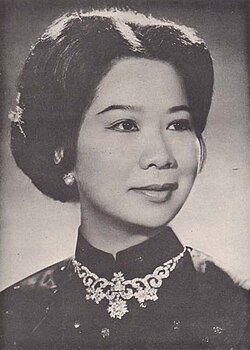
In our correspondence, Mau referred to Jacqueline’s husband as Jean Nguyen. Xuan sounds a bit like Jean and it is possible her husband was a fairly well-known person, Nguyen Xuan Nguyen. According to a source of mine in Vietnam, Nguyen Xuan Nguyen was half French, half Vietnamese and headed a large Saigon bank and several import‐export companies. In 1974, it was alleged that Madame Thieu took a rake-off from a hospital that admitted wealthy patients, and that Nguyen Xuan Nguyen had made hundreds of millions of piasters in fertilizer speculation.[43] But I doubt he was Dr. Jacques’ son and there are other possibilities.
I also tried to talk with James Potratz, the CIA officer working with Mau and the Special Branch, on the Dr. Jacques case. I wrote to a James Potratz in Hawaii. No reply. Oddly enough, Mau never heard from him after the bust. Apparently, Protratz did not tell his interrogator comrades Sullivan and Pribbenow about the case. I suspect he was unceremoniously shuffled off to a CIA torture chamber in another country, and then history was rewritten.
A Catholic and central Vietnamese with Can Lao connections, Mau was good at his job but, to make ends meet, he moonlighted as a school teacher and a consultant to PA&E, the CIA-connected American architectural firm that built the PICs. Plus, he was ambitious and organized his own political party, the Nationalist Students, “dedicated in struggle against leftist students and corrupted officials,” and that made him a liability.
According to Mau’s last CIA adviser, Robert Wall, “Mau had instituted a training program in 1970, but [Interior Minister] Khiem prevented them from getting good-quality people because Mau had demonstrated the operational capabilities necessary to pull off a coup. Not that he was close to trying it, but when Thieu listed the possibilities, Mau was at the top: He was smart, charismatic, courageous, cold-blooded, politically minded, and he had access to the agency and troops who could pull it off.”[44]
The Dr. Jacques Case was the nail in Mau’s coffin. “The arrest of Dr. Jacques in flagrante delicto caused a bad friction with the Independence Palace,” Mau said. “Moreover, I was reluctant to incorporate into the Special Branch the PRU, a paramilitary organization that the U.S. Embassy had built up and wanted to Vietnamize. My attitude toward Phoenix Program, PRU, Vietnamization and President Thieu’s kitchen cabinet and family would prompt my reassignment.[45] In February 1972, I received the order to leave the Special Branch and join the 44th tactical zone [as deputy commander] at the mercy of Colonel Hoang Duc Ninh, a cousin of President Nguyen van Thieu.”
It’s all about family.
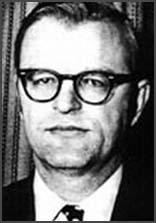
Chief of Station Ted Shackley, notably, departed Vietnam in February 1972, the same month Mau was replaced. Mau learned he was going to be fired at the 1971 Christmas party. CIA officer Thomas Polgar, the incoming station chief and guest of honor, let it be known that Mau was out the door. The CIA wanted him around less than Thieu did.
Mau arrived at his new post just in time for North Vietnam’s Easter Offensive, launched on March 30, 1972. Featuring elite Ranger battalions, the 44th stopped the North’s army and VC infiltration along the Cambodian border in the northwestern Mekong Delta. In this job Mau discovered the illegal use of army helicopters in the transportation of wealthy draft dodgers to Cambodia. In 1974 he was chief of the Vietnamese delegation at the Two-Party Mixed Commission for Ceasefire Supervision in the Mekong Delta. In 1975 he and his family made it to the United States with the sponsorship of former U.S. advisers.
The Easter Offensive lasted until September 1972, followed by renewed peace talks in Paris powered by Nixon’s promise of “peace with honor” and his desire to win re-election at all costs. Nixon’s “decent interval” plan was to support Thieu long enough, say two years after November 1972, to absolve him of blame for the inevitable collapse of South Vietnam.
After secret meetings in October 1972 between Kissinger and Le Duc Tho, an informal agreement was reached which included the participation of the banned Communist Party in the government of South Vietnam. Thieu rejected the proposal and, following Nixon’s re-election in November, the U.S. submitted new terms, which the North rejected in December. Nixon began the Christmas bombing of Hanoi on December 18 to force the North to return to negotiations.
A cease-fire was finally reached on January 27, 1973. Fighting continued.
Back in Washington, D.C., in 1972, Richard Nixon had fallen in love with Bill Colby. His goal of achieving a “decent interval” necessary to avoid the appearance of defeat depended on Colby’s pacification program, the key to Vietnamization and territorial security. Nixon so loved Colby that, after he fired DCI Richard Helms and Deputy Director for Operations Thomas Karamessines in late 1972, he replaced Karamessines with Bill Colby in early 1973.
Meanwhile, the CIA showered Thieu with cash and allowed his corruption to flourish, while increasing police actions against his internal opposition, especially those groups that had relations with the Buddhists. These groups became the primary targets of the Special Branch under Mau’s replacement, Colonel [later Brigadier General] Huynh Thoi Tay.[46]
It was all an illusion. Despite his bluster, Nixon resigned in disgrace on August 4, 1974. Kissinger went on to fame and fortune having sacrificed South Vietnam to pave the way for improved relations with China and the Soviets.
On April 8, 1975, a communist infiltrator in South Vietnam’s air force dropped three bombs on the Presidential Palace. Inside, Thieu consulted with fortune-tellers. General Khiem, who had resigned as prime minister, nominated Big Minh as Thieu’s replacement. On April 25, 1975, President Huong turned the government over to Big Minh. On William Colby’s orders, U.S. helicopters began flying Americans to ships offshore on April 28th.
According to Frank Snepp in Decent Interval (1978), hundreds of Special Branch and CIO officers were left behind, along with “countless counter-terrorist agents—perhaps numbering as high as 30,000—specially trained to operate with the Phoenix program.”[47]
The war was over. The re-writing of history began.

Interview with Robert Slater in Douglas Valentine, The Phoenix Program (London: William Morrow, 1990), 156. ↑
https://openroadmedia.com/ebook/The-Phoenix-Program/9781497620209 ↑
https://en.wikipedia.org/wiki/L%C3%AA_Xu%C3%A2n_Nhu%E1%BA%ADn ↑
https://ratical.org/ratville/JFK/Life+TimesSVSpecialPoliceOfficer.html Nhuan ↑
John Prados, Lost Crusader: The Secret Wars of CIA Director William Colby (New York: Oxford University Press, 2003), 246. ↑
Tom Mangold, Cold Warrior: James Jesus Angleton—The CIA’s Master Spy Hunter (New York: Simon & Schuster, 1991), 311-12. ↑
Idem.. ↑
Ibid., 427-28. ↑
https://www.goodreads.com/topic/show/19415037-the-key-to-roman-clef-novel-the-spike ↑
Alexander Cockburn, “The C.I.A.’s Master Plan,” The Nation, August 17-24, 1985. ↑
Ibid. Arnaud de Borchgrave, January 6, 1985, interview for USA Today https://www.cia.gov/readingroom/docs/CIA-RDP90-00965R000201460020-0.pdf ↑
William Blum, Killing Hope: U.S. Military and CIA Interventions Since World War II (Monroe, ME: Common Courage Press, 1998), 214. ↑
https://isreview.org/issues/57/featTET/#:~:text=%E2%80%9CJoking%20and%20laughing%2C%20the%20soldiers,for%20spreading%20%E2%80%9Cprocommunist%E2%80%9D%20propaganda. ↑
https://www.unz.com/Pub/Ramparts-1967mar-00029 ↑
Barisov is thought to be Stanislav Levchenko. ↑
http://www.whale.to/b/ph2.html ↑
https://www.counterpunch.org/2003/03/08/will-the-real-daniel-ellsberg-please-stand-up/; ↑
Wolton, Le KGB en France (Paris: Grasset, 1987), 138-41. ↑
https://en.wikipedia.org/wiki/International_Control_Commission ↑
https://link.springer.com/chapter/10.1007/978-981-97-3611-9_8 ↑
https://edmoise.sites.clemson.edu/icc.html#:~:text=The%20International%20Commissions:%20ICC%20(ICSC,28%20pp. ↑
https://en.wikipedia.org/wiki/Mieczys%C5%82aw_Maneli ↑
https://en.wikipedia.org/wiki/Jean-Claude_Pomonti ↑
https://books.google.com/books/about/A_Quiet_Vietnamese.html?id=8zKbzgEACAAJ ↑
https://www.dignitymemorial.com/obituaries/falls-church-va/minh-dang-6930977 ↑
https://www.cia.gov/readingroom/docs/CIA-RDP80R01720R001300060003-5.pdf ↑
https://www.cia.gov/readingroom/docs/CIA-RDP72-00337R000300070009-0.pdf ↑
https://www.asia-pacificresearch.com/vietnam-war-the-life-and-times-of-a-south-vietnamese-special-police-officer/5584493 ↑
Nguyen Ngoc Huy, Understanding Vietnam (The DPC Information Service, the Netherlands, 1982), 136. ↑
Ibid., 130. ↑
Valentine, The Phoenix Program, 305. ↑
Vietnam’s legendary intelligence quartet: “The Advisor” (3) https://kienthuc.net.vn/bo-tu-tinh-bao-huyen-thoai-cua-viet-nam-ong-co-van-3-post421188.html ↑
Terence Smith, “Assistant to Thieu Is Accused as a Spy,” The New York Times, August 3, 1969. ↑
https://www.youtube.com/watch?v=0BXG41eSaXo ↑
Thomas L Ahern, Jr., The CIA and the Generals: Covert Support to Military Government in South Vietnam (2007), 94-95. ↑
Ralph W McGehee, Deadly Deceits: My 25 Years in the CIA (New York: Sheridan Square Press, 1983), 150-57. ↑
Nguyen Mau: N.Đ.B. Ngành Đặc Biệt (The Special Branch), Tap 1 (2007), 161-85. ↑
John F. Sullivan, Of Spies and Lies: A CIA Lie Detector Remembers Vietnam (Lawrence: University of Kansas Press, 2002), 169-78. ↑
https://historynet.com/soviet-spy-saigon-case-french-doctor/ ↑
Alfred W. McCoy, with Nina Adams and Leonard P. Reed, The Politics of Heroin in Southeast Asia (New York: Harper & Row, 1972); https://www.historynewsnetwork.org/article/merle-l-pribbenow-drugs-corruption-and-justice-in- ↑
Thieu dismissed Ngan in 1974: https://www.nytimes.com/1974/05/28/archives/thieu-is-reported-to-dismiss-a-powerful-inner-circle-aide.html ↑
Valentine, The Phoenix Program, 303. ↑
https://time.com/archive/6842639/south-viet-nam-thieus-travails/ ↑
Interview with Robert Wall in Valentine, The Phoenix Program, 344. ↑
With Mau out of the way, CIA officers Rod Landreth and Phil Potter negotiated the transfer of Phoenix and the PRU to the GVN with Generals Binh and Dang Van Quang. ↑
Tay’s Wiki bio incorrectly say he became director of the Special Branch in February 1971. ↑
Frank Snepp, Decent Interval (New York: Random House, 1978), pgs. 456 and 567. ↑
CovertAction Magazine is made possible by subscriptions, orders and donations from readers like you.
Blow the Whistle on U.S. Imperialism

Click the whistle and donate
When you donate to CovertAction Magazine, you are supporting investigative journalism. Your contributions go directly to supporting the development, production, editing, and dissemination of the Magazine.
CovertAction Magazine does not receive corporate or government sponsorship. Yet, we hold a steadfast commitment to providing compensation for writers, editorial and technical support. Your support helps facilitate this compensation as well as increase the caliber of this work.
Please make a donation by clicking on the donate logo above and enter the amount and your credit or debit card information.
CovertAction Institute, Inc. (CAI) is a 501(c)(3) non-profit organization and your gift is tax-deductible for federal income purposes. CAI’s tax-exempt ID number is 87-2461683.
We sincerely thank you for your support.
Disclaimer: The contents of this article are the sole responsibility of the author(s). CovertAction Institute, Inc. (CAI), including its Board of Directors (BD), Editorial Board (EB), Advisory Board (AB), staff, volunteers and its projects (including CovertAction Magazine) are not responsible for any inaccurate or incorrect statement in this article. This article also does not necessarily represent the views the BD, the EB, the AB, staff, volunteers, or any members of its projects.
Differing viewpoints: CAM publishes articles with differing viewpoints in an effort to nurture vibrant debate and thoughtful critical analysis. Feel free to comment on the articles in the comment section and/or send your letters to the Editors, which we will publish in the Letters column.
Copyrighted Material: This web site may contain copyrighted material the use of which has not always been specifically authorized by the copyright owner. As a not-for-profit charitable organization incorporated in the State of New York, we are making such material available in an effort to advance the understanding of humanity’s problems and hopefully to help find solutions for those problems. We believe this constitutes a ‘fair use’ of any such copyrighted material as provided for in section 107 of the US Copyright Law. You can read more about ‘fair use’ and US Copyright Law at the Legal Information Institute of Cornell Law School.
Republishing: CovertAction Magazine (CAM) grants permission to cross-post CAM articles on not-for-profit community internet sites as long as the source is acknowledged together with a hyperlink to the original CovertAction Magazine article. Also, kindly let us know at info@CovertActionMagazine.com. For publication of CAM articles in print or other forms including commercial internet sites, contact: info@CovertActionMagazine.com.
By using this site, you agree to these terms above.
About the Author
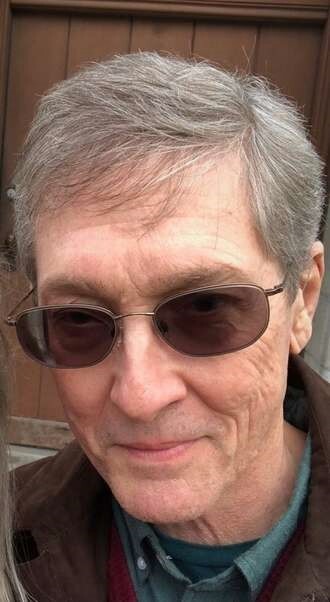
Douglas Valentine is the preeminent expert on the CIA.
His books include: The Phoenix Program (1990); The CIA as Organized Crime (2017); The Strength of the Wolf (2004); The Strength of the Pack (2010); Pisces Moon (2023); and The Hotel Tacloban (1994).
Doug can be reached at dougvalentine77@gmail.com.
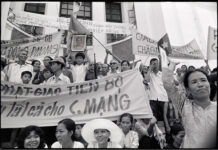
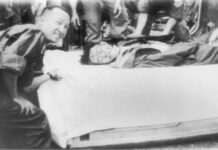
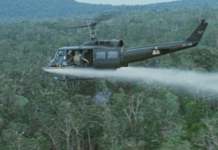

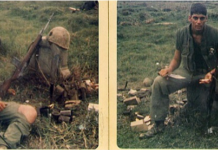
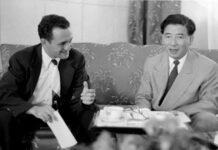
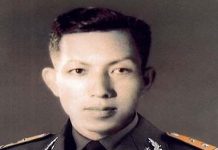

Spy Putler destroyed the BRICS when he made a deal with Erdogan in Kazan 2024. The Emirates and India will soon leave BRICS to join Israel and the US.
Also, Dump dare to attack Iran and Venezuela because Russia proved to be his poodle.
I hope NATO puts Antej Gotovina in charge and they move the border to the Urals, because Russia deserves to be destroyed.
Delcy Rodriguez also deserves to be mistaken for Leopold Lopez by Venezuelans for betraying Alex Saab. The end of BRICS and Russia is near and Putin is to blame.