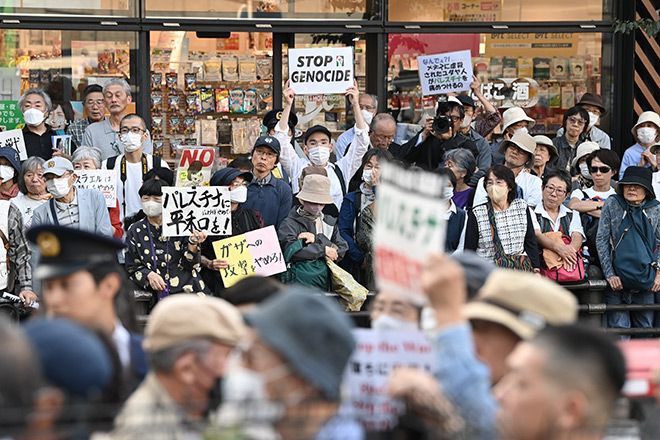
Although the Japanese were not a presence on the Sumud flotilla to Gaza that was recently seized by the Israel Defense Forces (IDF), resulting in the arrest of major political figures from Italy, Spain, France and England, and setting off massive protests in Europe, nevertheless, thousands attended a carefully planned demonstration in downtown Tokyo on October 7, 2025.
Japanese of all stripes, and a good number of foreigners as well, called for sanctions on Israel and condemned the criminal actions of the U.S., Israel, and Japan itself with an energy that has not been seen in Japan in recent history.
The long slumber of Japanese is coming to a close as economic and ideological collapse closes in from all sides.
The march, supported by protesters along the four-kilometer route, started from the United Nations University in Omotesando and continued to the subway station at Shibuya. Omotesando is best known for fashion, cafes for trendy teens, and chick restaurants.
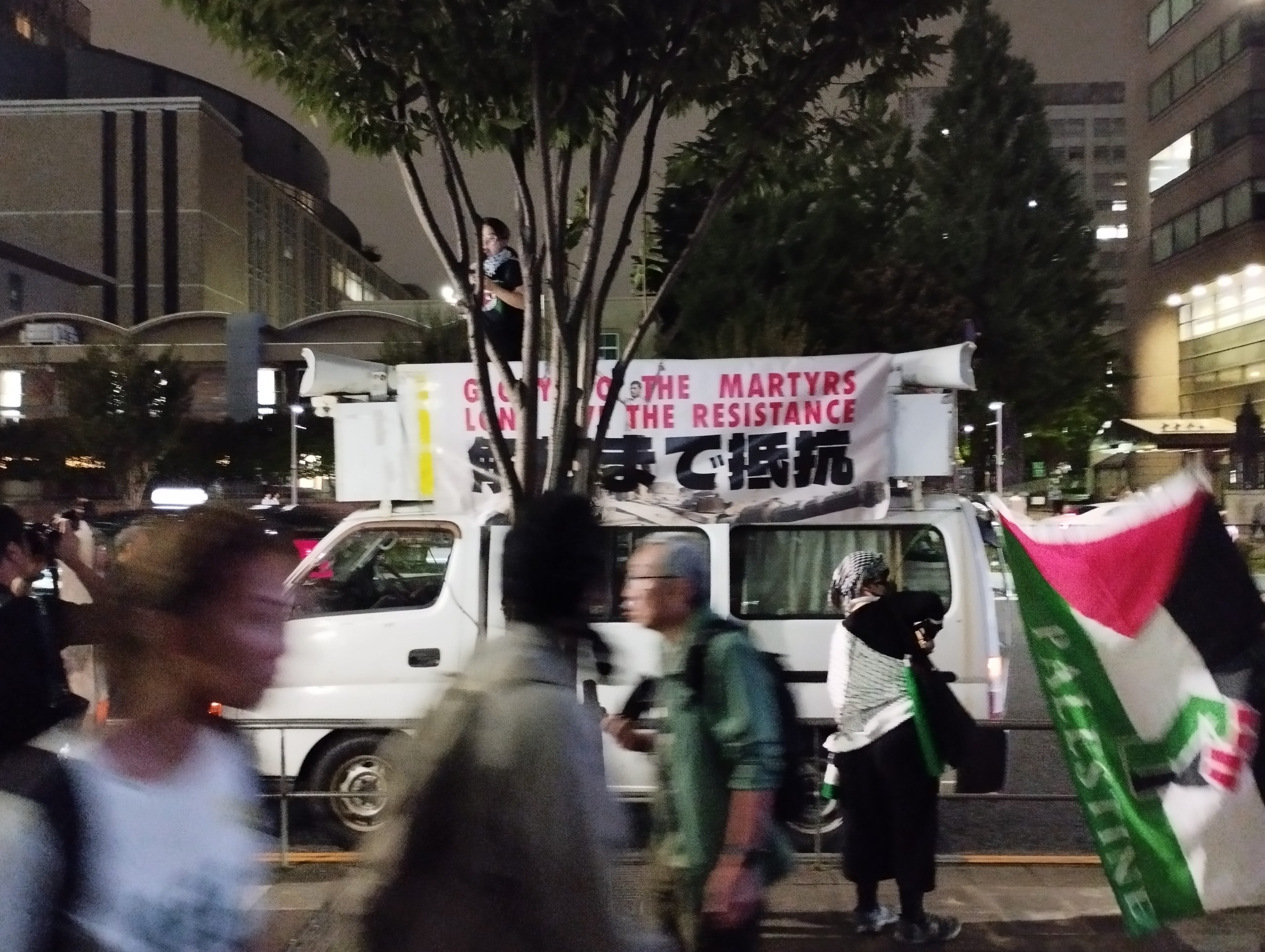
It was immediately apparent that the appearance of a massive political protest in Omotesando, ground zero for mindless consumption cuture, designer goods, and luxury restaurants, was a major shock for the Japanese youth who were unaware of the demonstration. Youth accustomed to swimming in an ideological solution of narcissism and indulgence were visibly shaken by the calls of the demonstrators. It felt as if an earthquake had struck at the foundations of post-modern Japanese complacency.
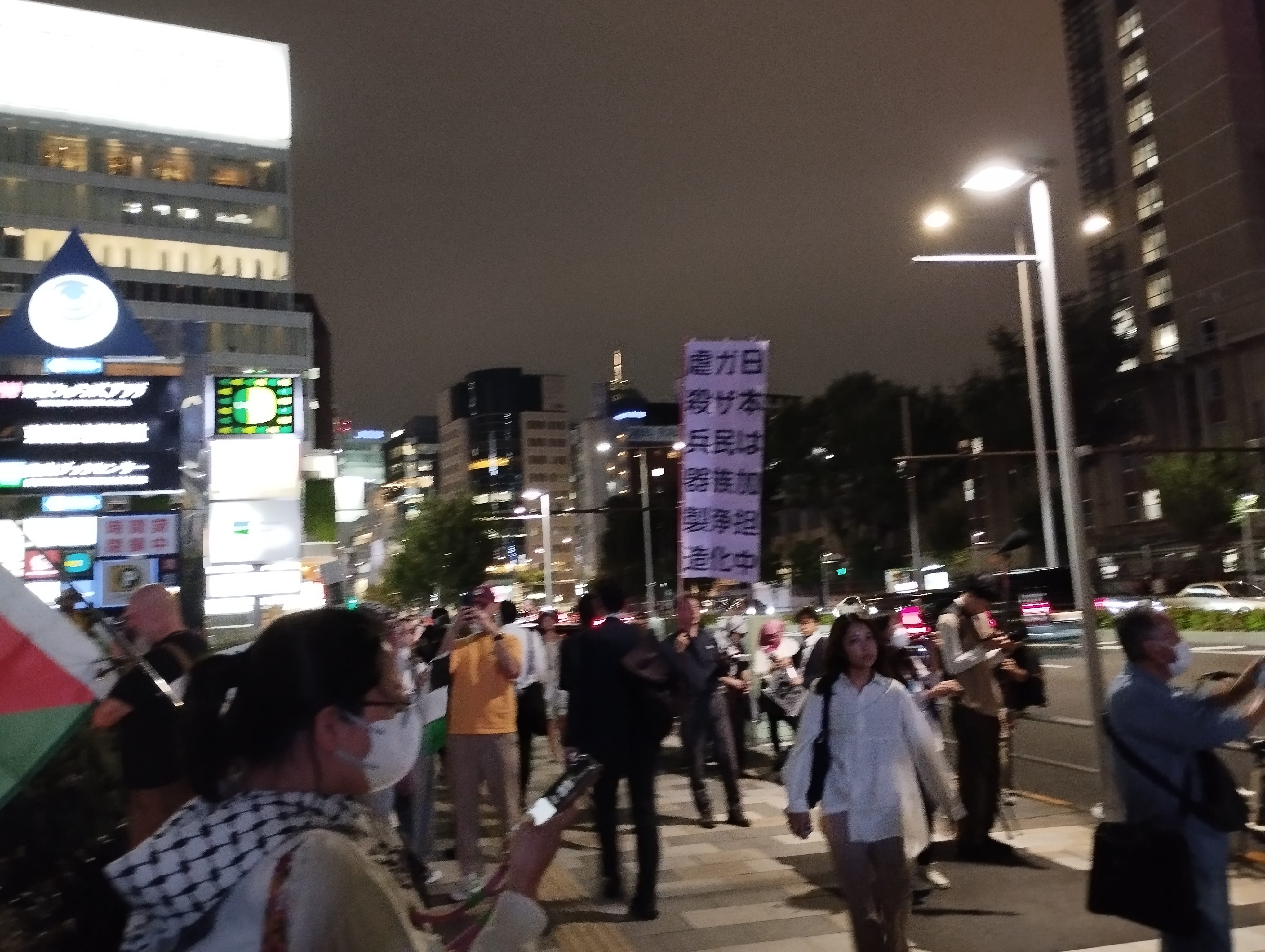
The banner in picture below reads “Japan is collaborating in the ethnic cleansing of Gaza and the production of weapons used for the massacres.”
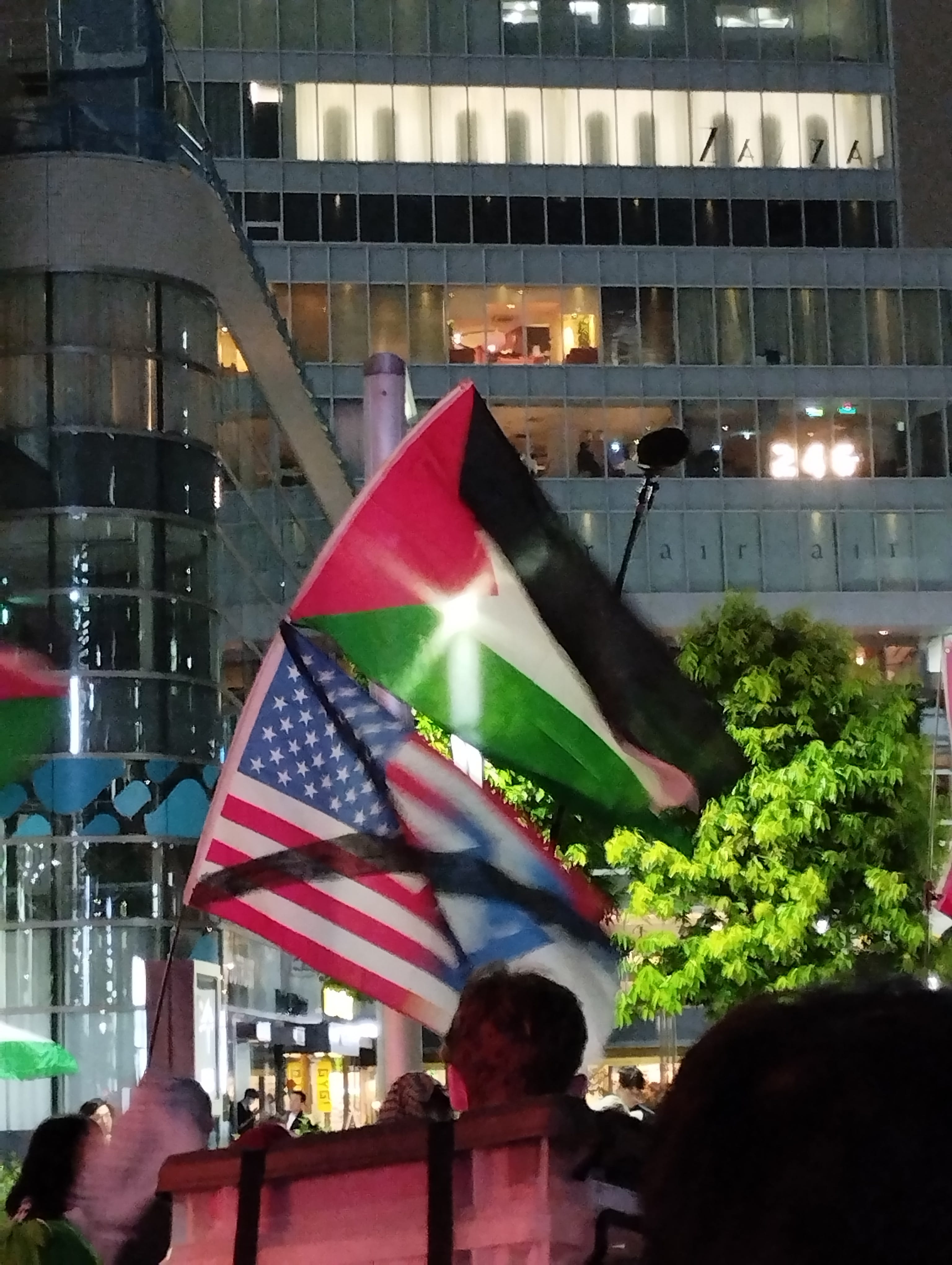
The U.S. flag above combines the U.S. and Israeli flags. The posters held up by demonstrators, and other materials, were largely hand-made and demonstrated considerable creativity and personal commitment. As opposed to protests that I have seen in Seoul in which identical placards are handed out by those financing the event, this protest was remarkably spontaneous.
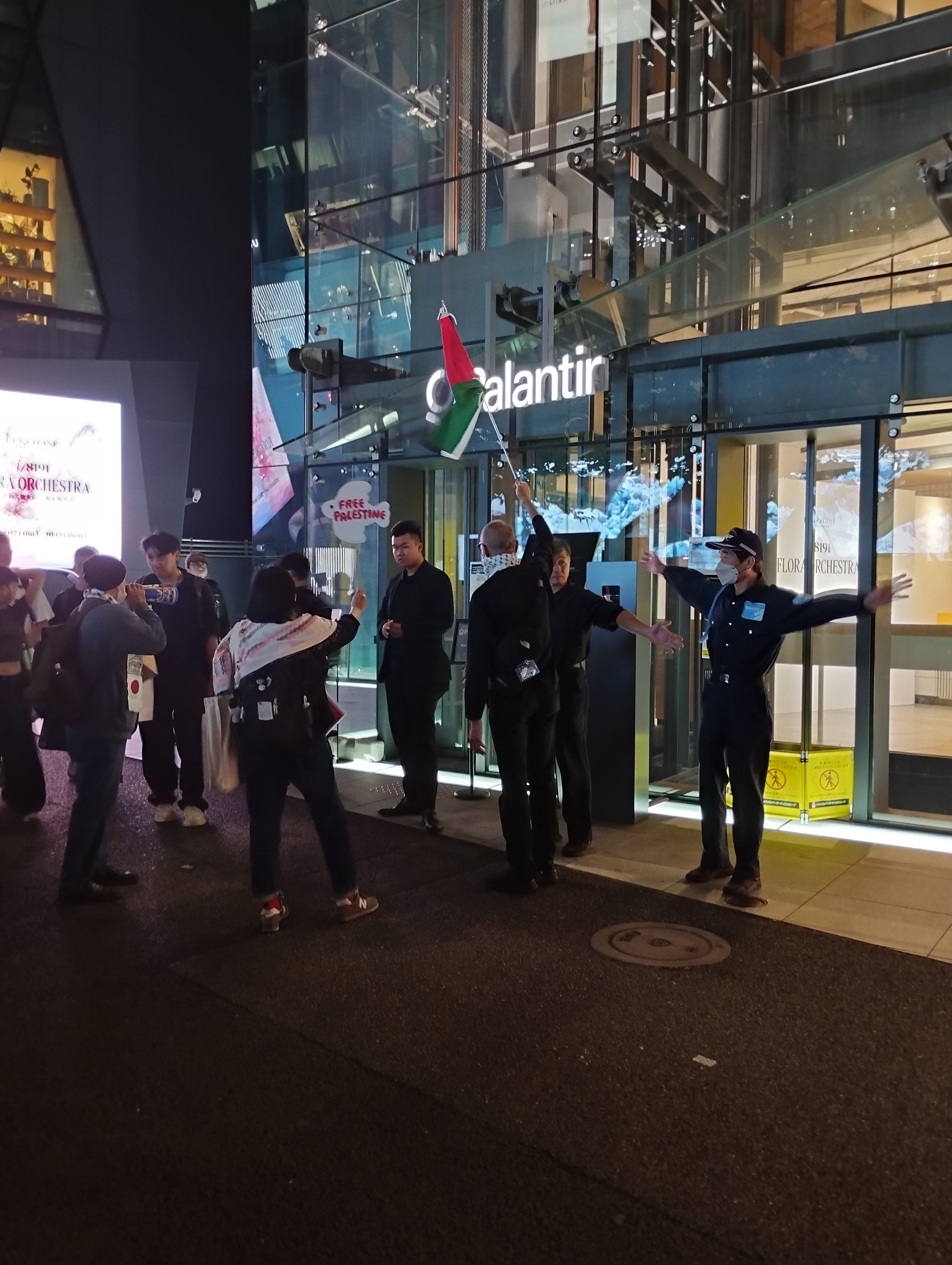
Demonstrators confronted private security in front of the offices of Palantir Japan in Omotesando. Similar confrontations took place in front of Apple and Starbucks stores along the way. The demonstrators revealed a considerable understanding of the full range of collaboration with Israel in Japan.
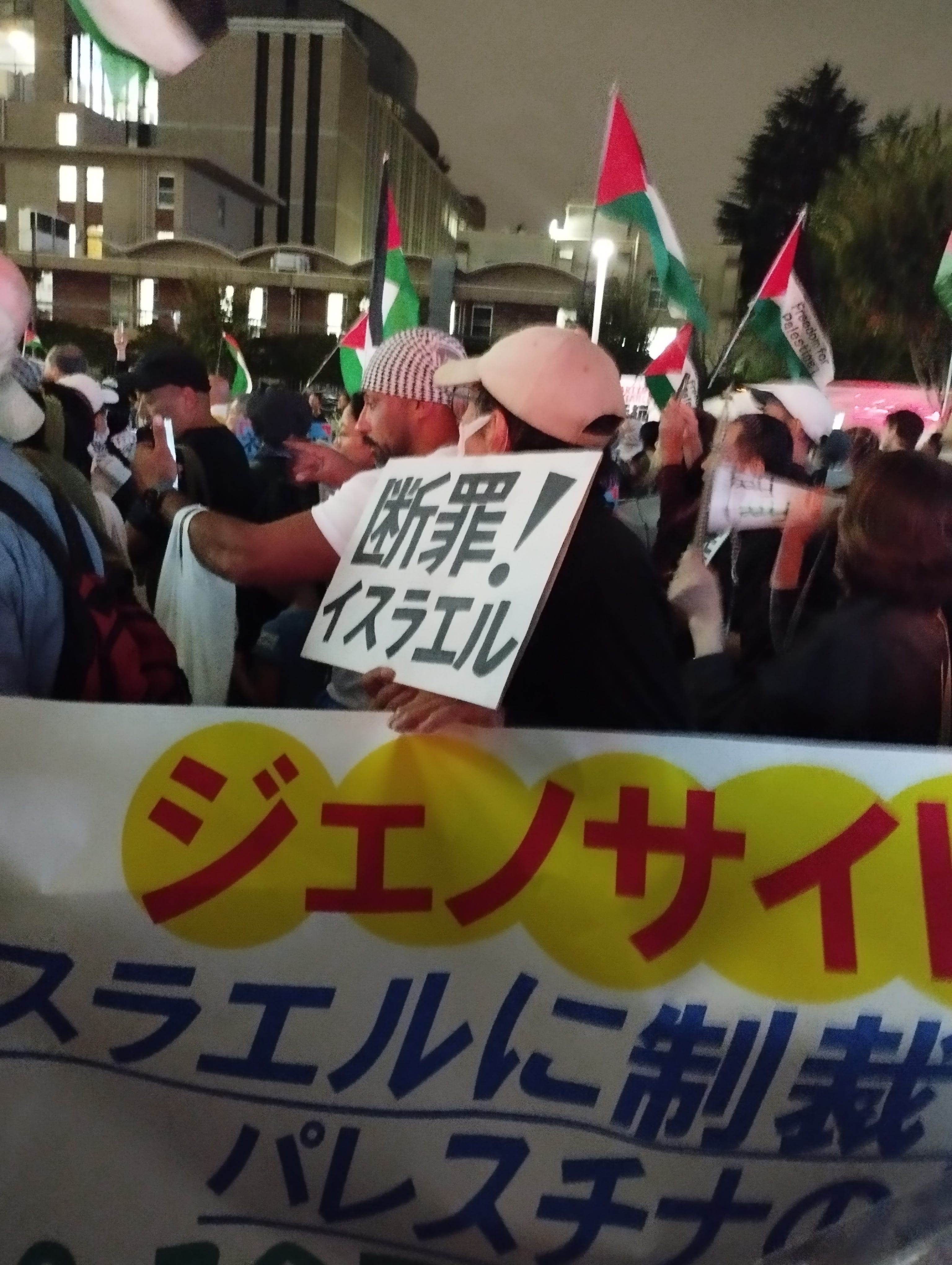
“Guilty Verdict for Israel” placard over banner calling for economic sanctions on Israel.
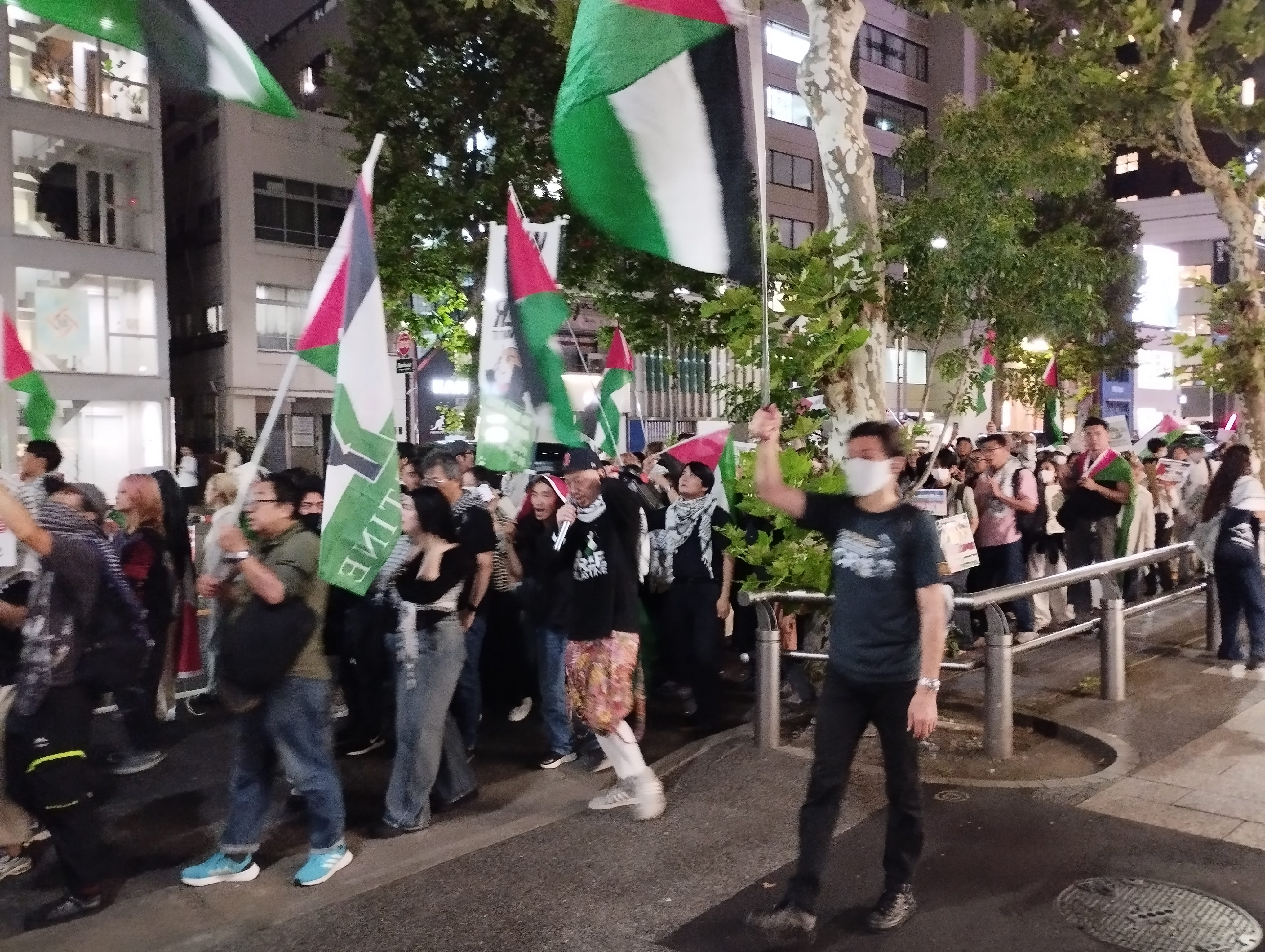
The protesters in the photo above were primarily Japanese, but a good number of foreigners also attended. There are now protests over Gaza somewhere in Tokyo every day. Prime Minister Shigeru Ishiba has repeatedly expressed support for the Palestinians and the police have not tried to suppress the protests. Overall, the police were supportive, even sympathetic.
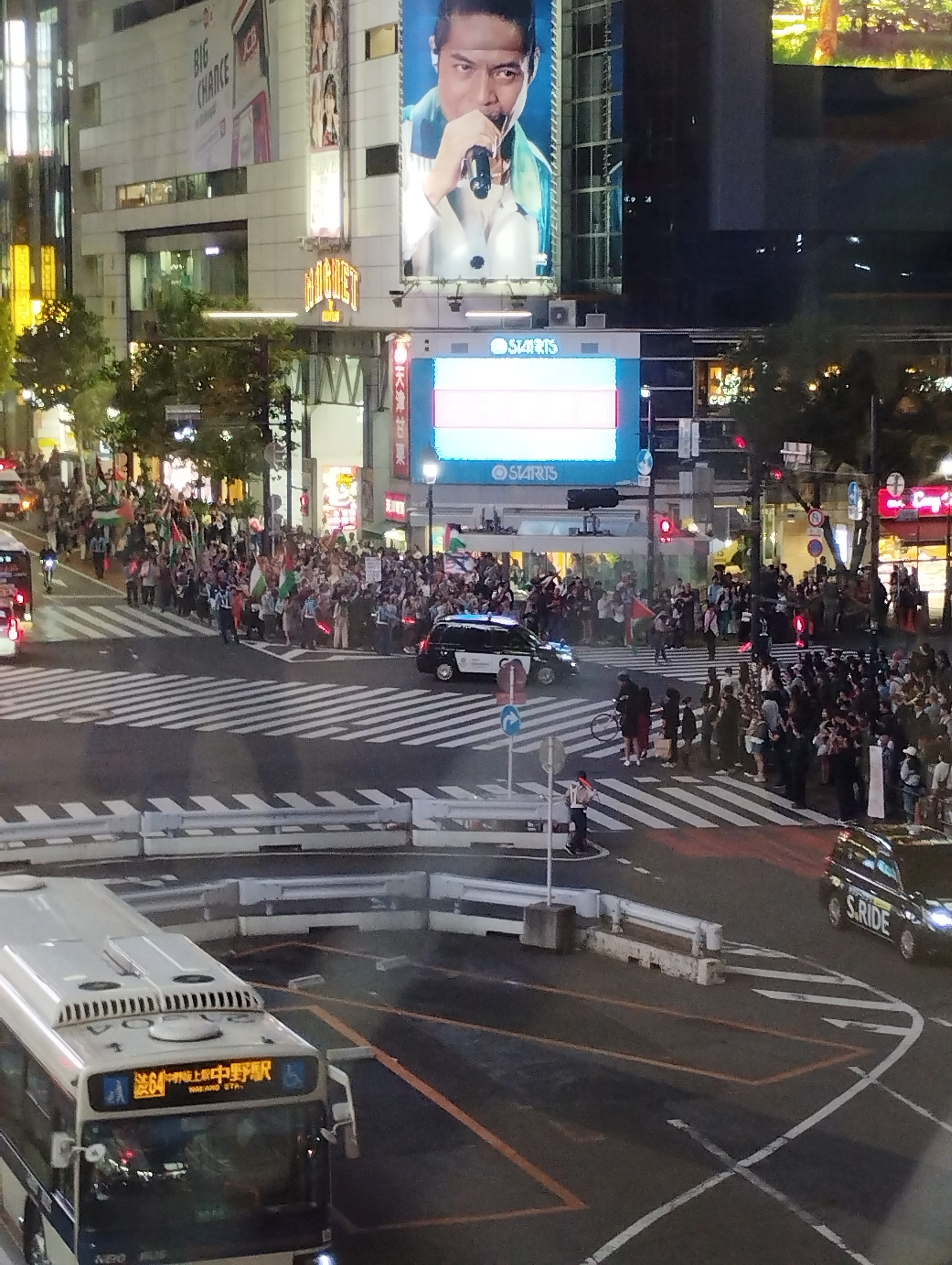
The above photo shows the final stage of the march, a massive gathering at Shibuya Station, where startled Japanese commuters saw something unfamiliar since the 1970s.
Music, Art and the Resistance to War and Racism in Tokyo
The plaza beneath the southeast exit of Shinjuku Station, Tokyo’s commuter hub, became the stage for a remarkable political protest on May 2 that brought together more than 500 Japanese youth for a protest against war, racial hatred, and the oppression of working people.
In contrast to more predictable protests held in front of the Diet, this protest took an artistic form not seen since the 1960s that included carefully orchestrated music, hand-made posters and flags, and a series of inspiring speeches that called out to youth to take control of their own lives. Between the cries of “Takaichi must go!” and “Fuck Trump” impassioned voices called out to alienated youth, “You are not alone!”
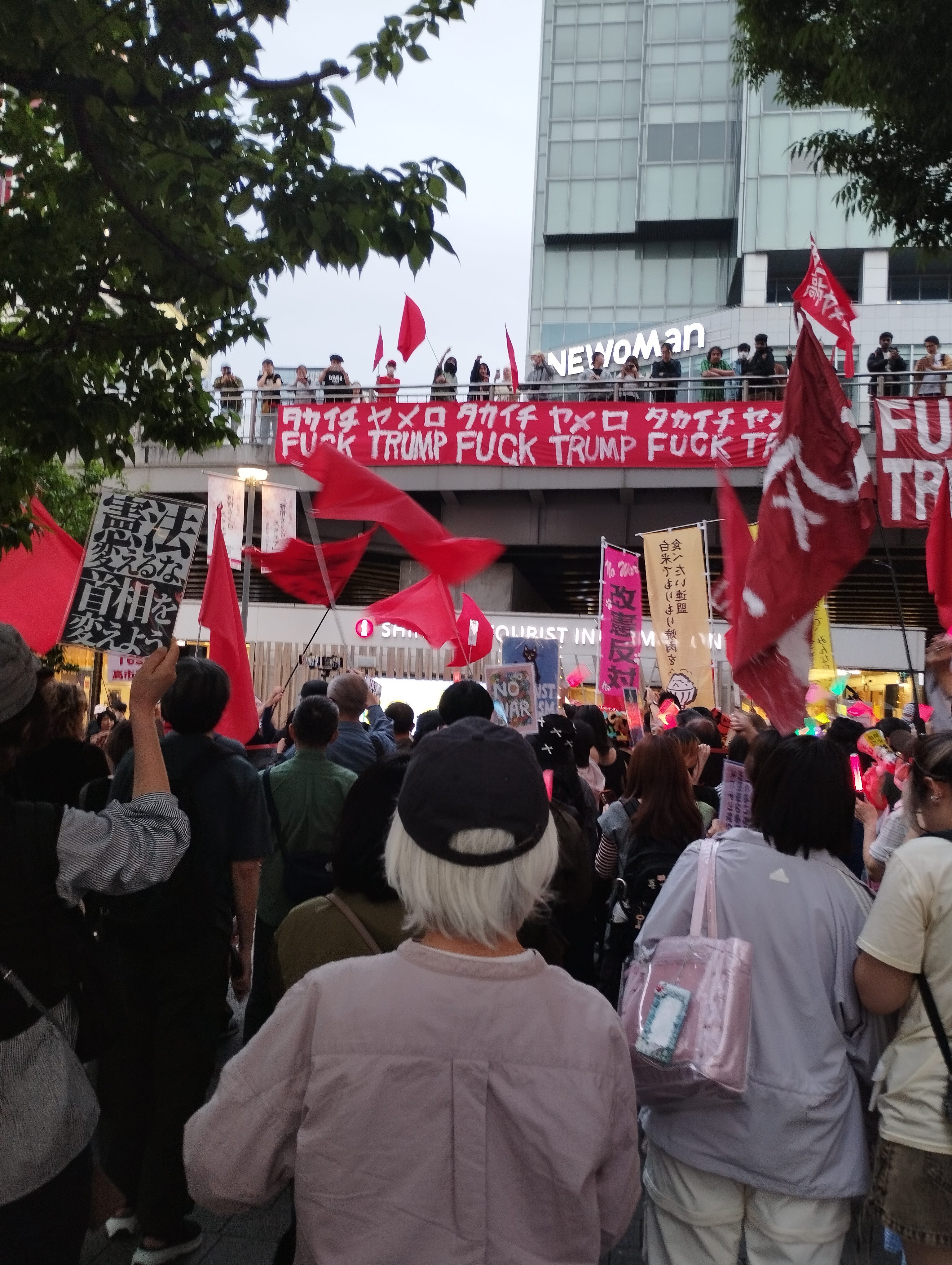
The posters, flags, badges and materials were carefully designed with a striking aesthetic sense that differed from many protests I have attended in which pre-fabricated signs are handed out to protesters that rehash old material.
The protest was a participatory artistic event.
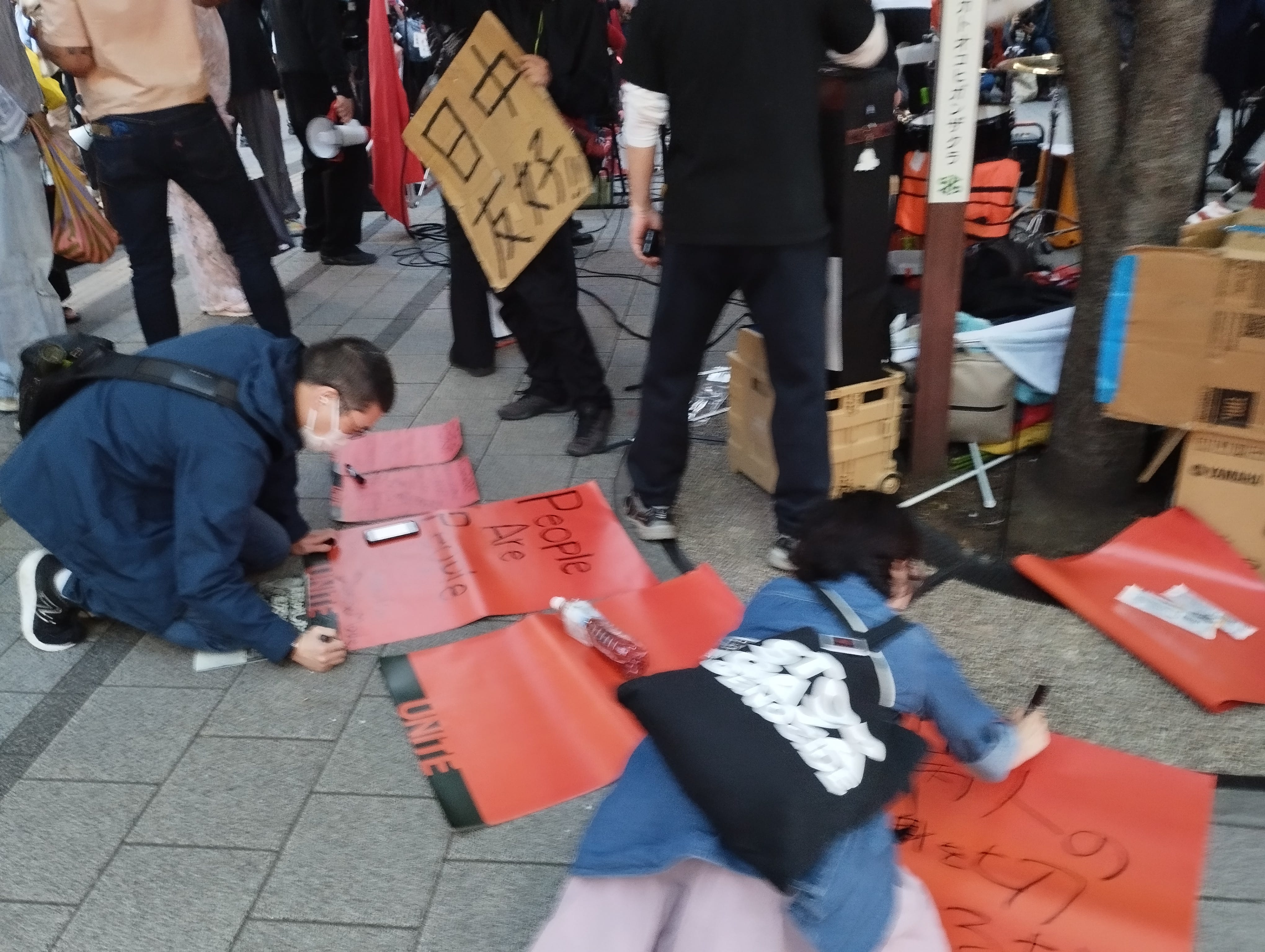
The anti-war protest held the following day in Ariake, Tokyo, would draw more than 50,000 and the gathering at Shinjuku Station set a new standard for protests: the creation of an independent cultural movement aimed at transforming Japanese society.
Although opposition to war was the strongest message in the protest, the themes of racism, discrimination, oppression of workers and youth, and violence against foreigners were all woven together in a symphonic manner throughout the protest, using effective guitar, drums, singing and other means of expression in a participatory manner.
Whereas much of the anti-war movement in Japan over the last few years has been dominated by elderly people nostalgic for the student protests of their youth in the 1970s—they often ignore or belittle the harsh reality faced by youth—this protest was driven by youth, including high school students, who are waking up rapidly to the new political reality. Whereas aging leftists tend to make broad calls for peace in a bland and ineffective manner, and focus on the sins of the 1940s and 1950s, this protest was about what young people face right now.
The protest was inclusive, welcoming to anyone who had the desire to oppose the drive for war, austerity and the repression of working people. There were zero police, or other paramilitary forces, present. There was no interference or intimidation by right-wing agitators. Moreover, there was none of the marginalization of harsh criticism by the Democratic Party we have seen in the protests organized by Indivisible in the United States. No established political parties were present.
The producer of this protest was the rapper, political activist and musician Masayuki Nabekura, founder of the “Roadside Philosophy” movement which serves as a means of engaging youth, and anyone interested, in a deeper consideration of the cultural and historical issues underlying current events.
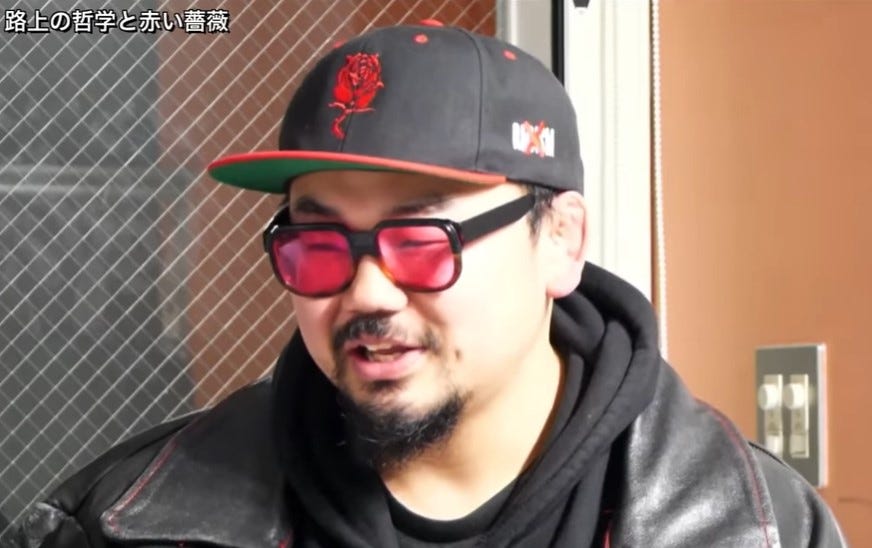
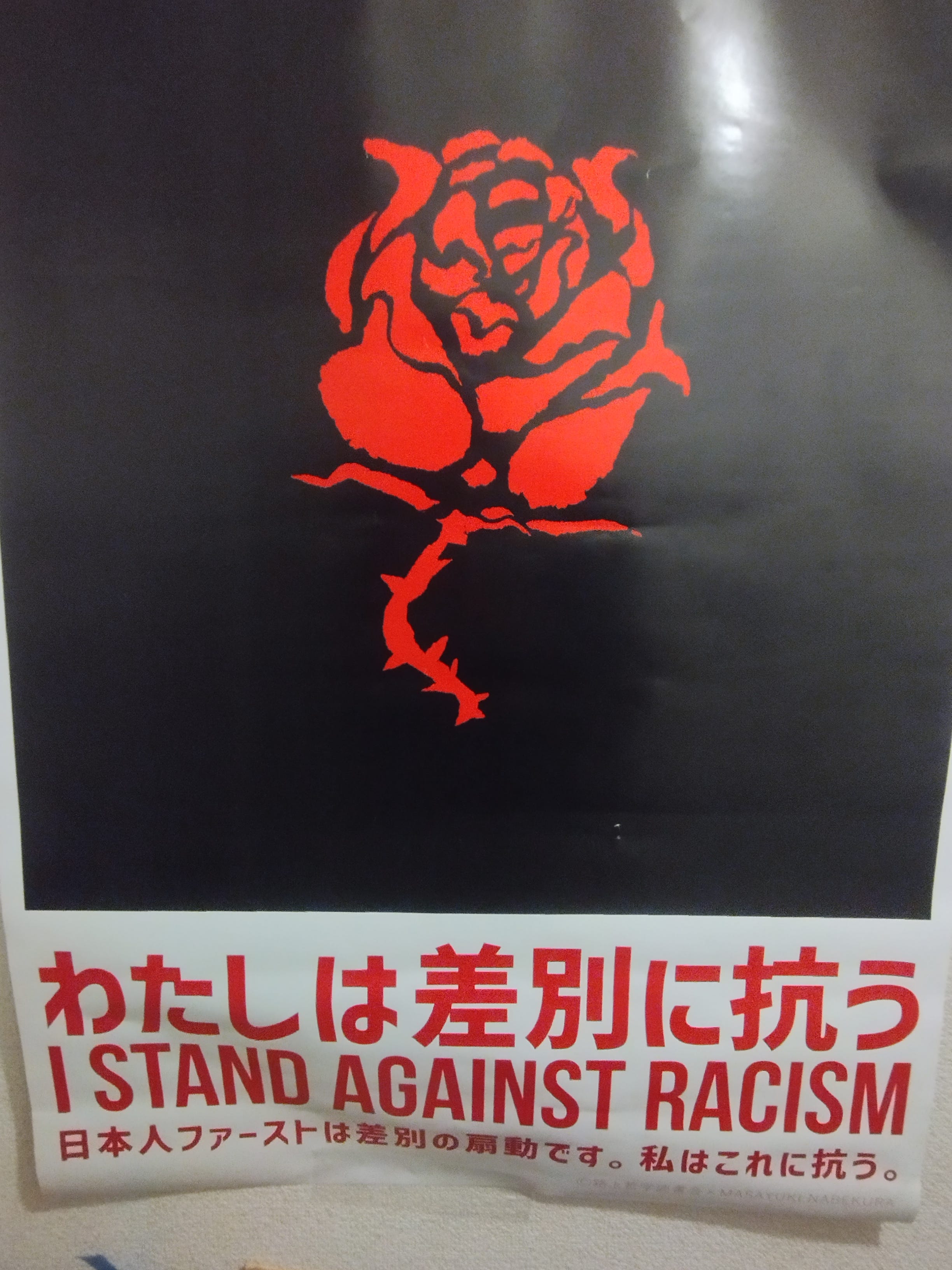
Masayuki Nabekura can be found most every day at the southeast exit of Shinjuku handing out his posters “I stand against racism” that feature a red rose, or leading activists protesting anti-foreigner hatred. He has a blog and offers a constant analysis, in words and music, of contemporary issues in Japan on his “NO HATE TV” program.
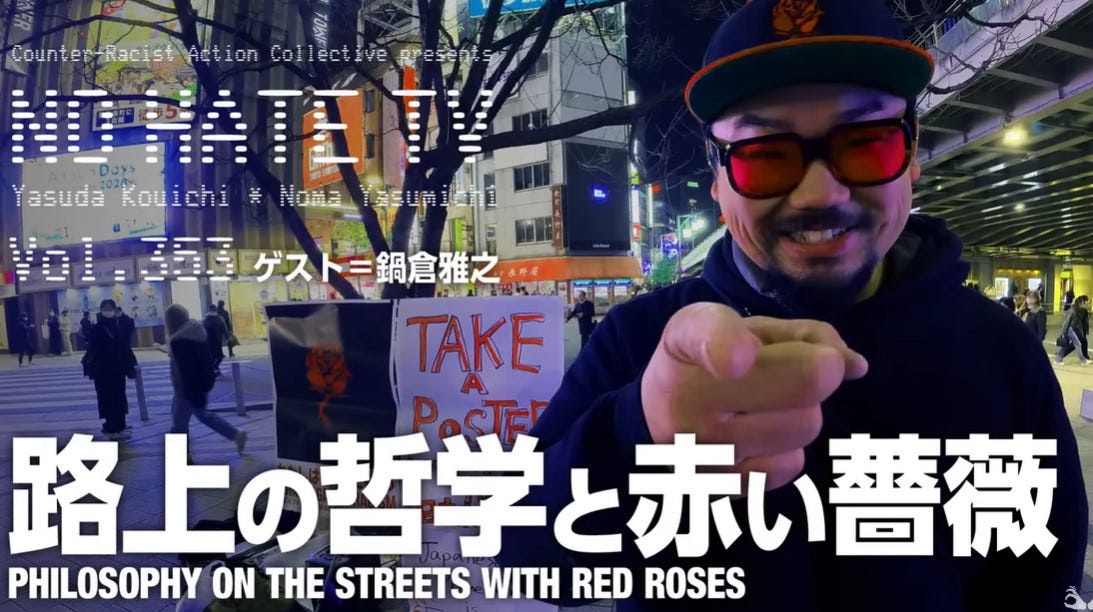
The above photo shows a poster that Nabekura offers to anyone who is interested.
This photo shows a protester holding up a sign saying, “Friendship between China and Japan.”
The protests that Nabekura has helped to organize emerged in response to a series of anti-foreigner gatherings held at the southeast exit of Shinjuku Station by a small group of right-wing activists starting in the summer of 2025. These groups handed out Japanese translations of MAGA hate-material blaming Japan’s woes on foreigners. Those efforts to redirect Japanese frustration into hatred of foreigners, a transparent paid operation that has little basis in the sentiments of the Japanese people, drew counter-protests that crystalized into the daily gatherings to affirm cultural ties between Japan and China held in Shinjuku.
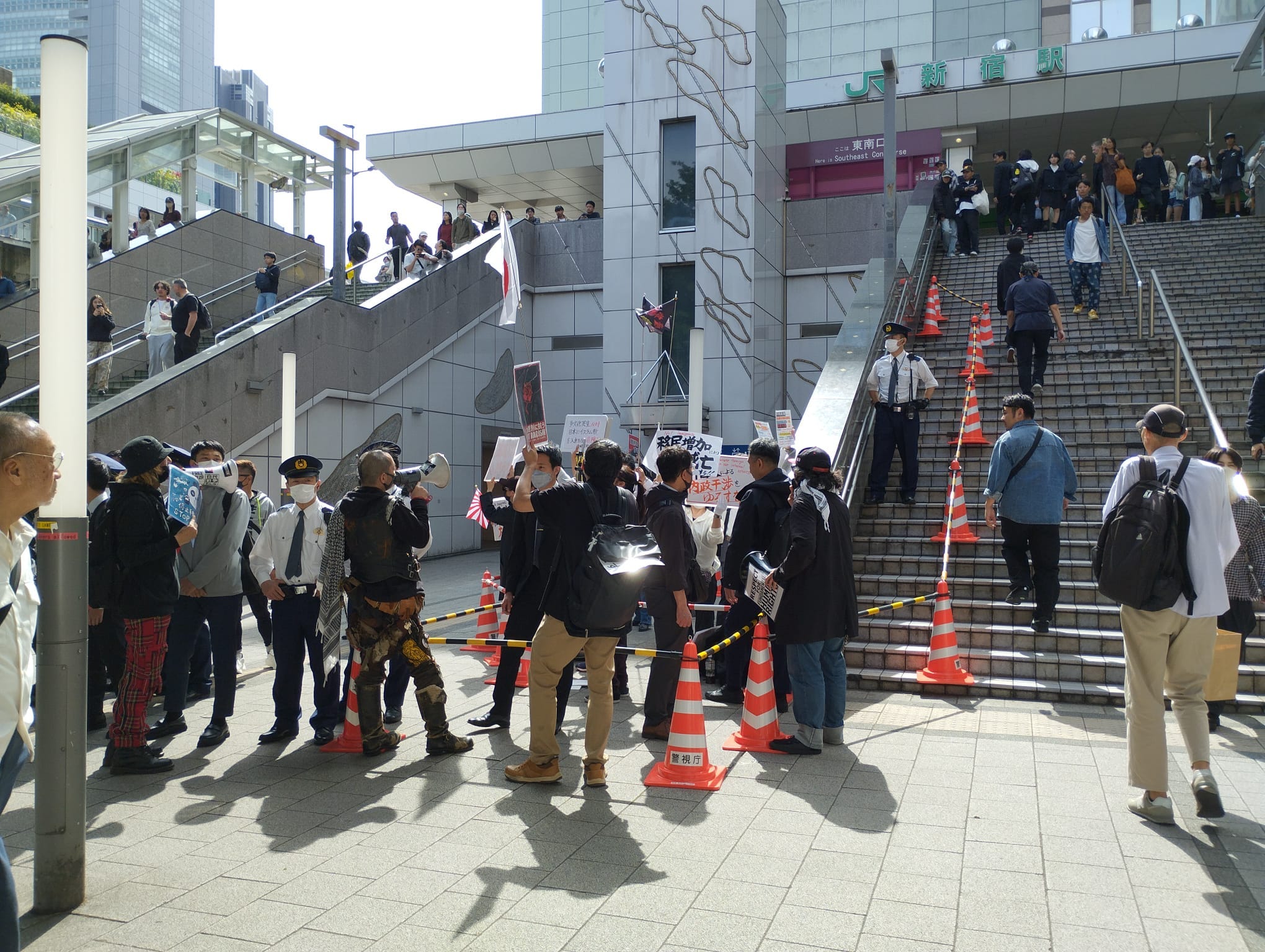
Above are some right-wing agitators challenging Nabekura’s group; the police are forced to intervene. Japanese police are remarkably respectful of protesters and do not engage in the violent oppression that we see in the United States and Europe.
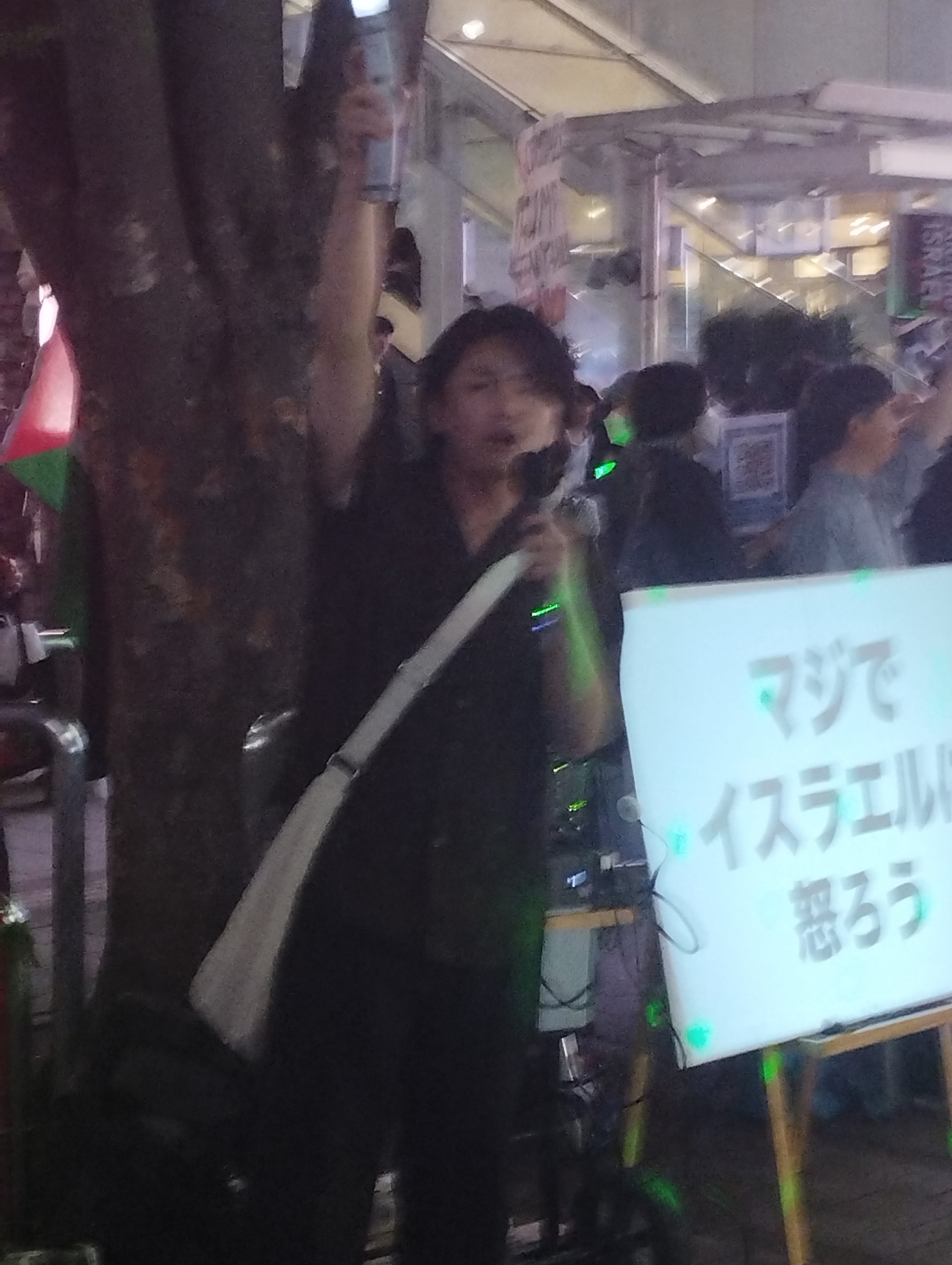
Here an articulate young Japanese expresses his opposition to Israel’s aggression.
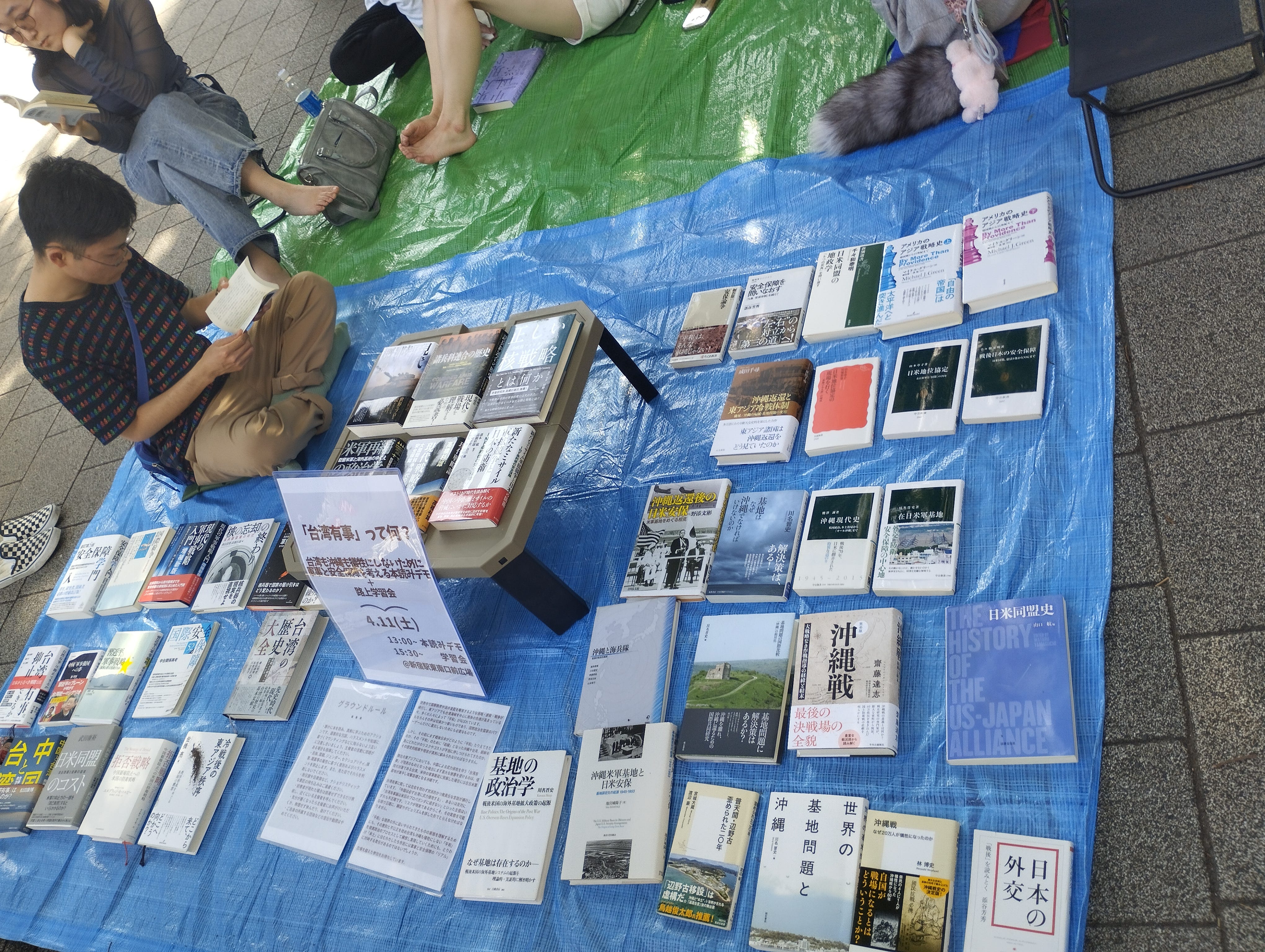
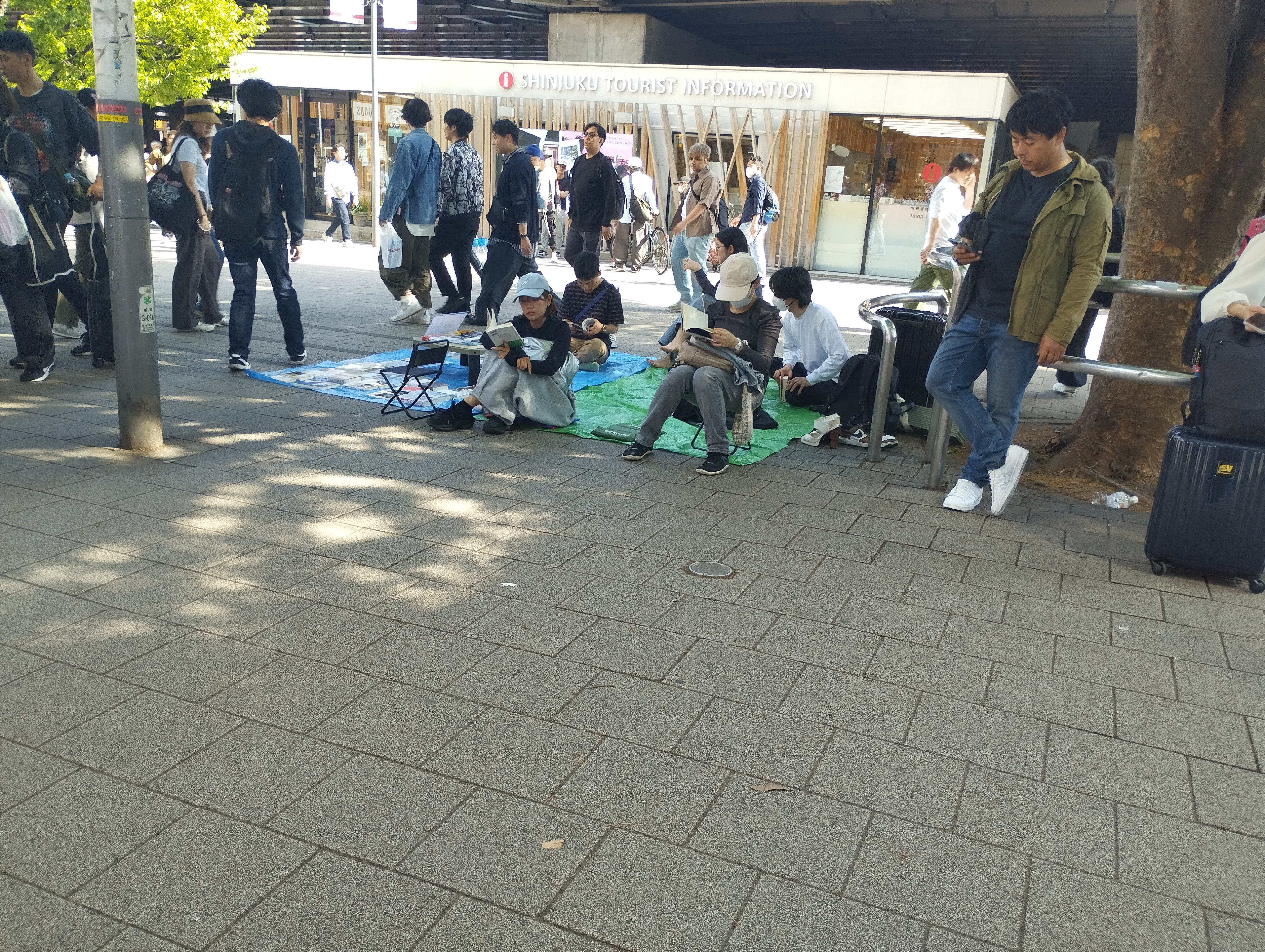
One of the most remarkable scenes at the southeast exit is the gathering of young people to just sit down, without a smartphone in sight, and read books about China so as to increase their actual understanding of the issues. I was amazed to find such rekindling of curiosity about society and culture, and intellectual rigor, among youth whom I had assumed had had their worlds flattened out by social media.

CovertAction Magazine is made possible by subscriptions, orders and donations from readers like you.
Blow the Whistle on U.S. Imperialism

Click the whistle and donate
When you donate to CovertAction Magazine, you are supporting investigative journalism. Your contributions go directly to supporting the development, production, editing, and dissemination of the Magazine.
CovertAction Magazine does not receive corporate or government sponsorship. Yet, we hold a steadfast commitment to providing compensation for writers, editorial and technical support. Your support helps facilitate this compensation as well as increase the caliber of this work.
Please make a donation by clicking on the donate logo above and enter the amount and your credit or debit card information.
CovertAction Institute, Inc. (CAI) is a 501(c)(3) non-profit organization and your gift is tax-deductible for federal income purposes. CAI’s tax-exempt ID number is 87-2461683.
We sincerely thank you for your support.
Disclaimer: The contents of this article are the sole responsibility of the author(s). CovertAction Institute, Inc. (CAI), including its Board of Directors (BD), Editorial Board (EB), Advisory Board (AB), staff, volunteers and its projects (including CovertAction Magazine) are not responsible for any inaccurate or incorrect statement in this article. This article also does not necessarily represent the views the BD, the EB, the AB, staff, volunteers, or any members of its projects.
Differing viewpoints: CAM publishes articles with differing viewpoints in an effort to nurture vibrant debate and thoughtful critical analysis. Feel free to comment on the articles in the comment section and/or send your letters to the Editors, which we will publish in the Letters column.
Copyrighted Material: This web site may contain copyrighted material the use of which has not always been specifically authorized by the copyright owner. As a not-for-profit charitable organization incorporated in the State of New York, we are making such material available in an effort to advance the understanding of humanity’s problems and hopefully to help find solutions for those problems. We believe this constitutes a ‘fair use’ of any such copyrighted material as provided for in section 107 of the US Copyright Law. You can read more about ‘fair use’ and US Copyright Law at the Legal Information Institute of Cornell Law School.
Republishing: CovertAction Magazine (CAM) grants permission to cross-post CAM articles on not-for-profit community internet sites as long as the source is acknowledged together with a hyperlink to the original CovertAction Magazine article. Also, kindly let us know at info@CovertActionMagazine.com. For publication of CAM articles in print or other forms including commercial internet sites, contact: info@CovertActionMagazine.com.
By using this site, you agree to these terms above.
About the Author

Emanuel Pastreich is an independent candidate for president of the U.S.
He has a Ph.D. from Harvard University and author of twelve books, many on Northeast Asian history and politics.
Emanuel can be reached at epastreich@protonmail.com.


The protesters should should have chosen another day of the year to stage their protest. Many of the Israelis who were massacred or taken hostage on October 7 were an extremely kind and peaceful people as described below:
Community and Rural Life (Kibbutzim)Communal Living: Many victims and hostages lived in kibbutzim like Kibbutz Be’eri and Kibbutz Nir Oz, where residents shared resources, worked together, and treated neighbors like extended family. Agriculture and Nature: Their daily routines centered around farming, working the local fields, and maintaining shared green spaces and botanical gardens. Coexistence and Peace Activism: A significant number of residents actively promoted regional peace, employed workers from nearby Gaza, and championed cross-border cooperation.