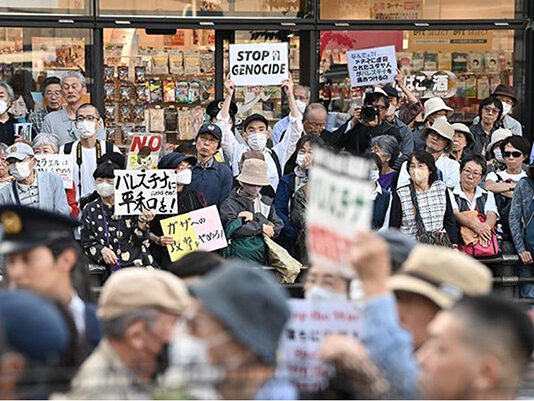
Although the Japanese were not a presence on the Sumud flotilla to Gaza that was recently seized by the Israel Defense Forces (IDF), resulting in the arrest of major political figures from Italy, Spain, France and England, and setting off massive protests in Europe, nevertheless, thousands attended a carefully...
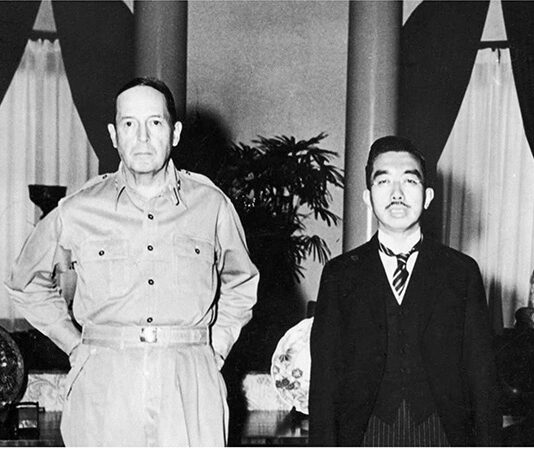
This is the second part of a two-part series, the first of which focused on Japan’s occupation of China prior to and during World War II, the human experimentation that occurred at Unit 731 (Japan’s bioweapons research facility in occupied Manchuria), and the after-effects of the Empire of the...
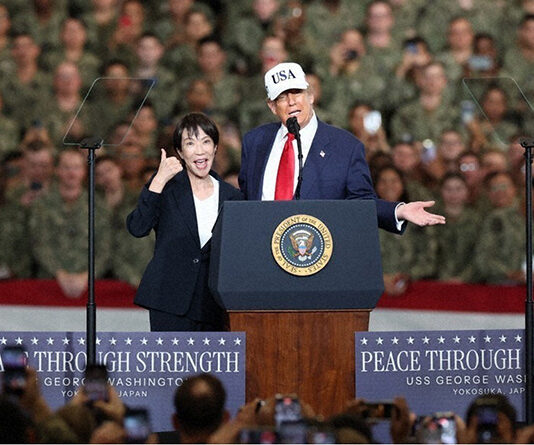
Beneath the aircraft-carrier ceremony celebrating a “new golden age” in U.S.-Japan relations, ongoing toxic discharges from the Yokosuka naval base reveal a grimmer alliance—one built on secrecy, contamination and a surrender of environmental sovereignty.
When President Donald Trump strode onto the flight deck of the USS George Washington at Yokosuka,...
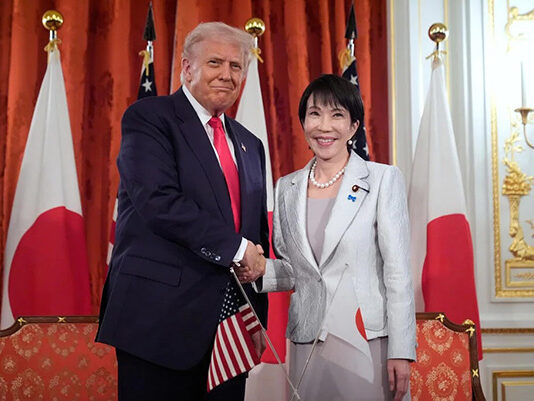
President Donald Trump has expressed enthusiasm about Japan’s new prime minister, Sanae Takaichi, stating that her elevation to head the Liberal Democratic Party (LDP) in late October was “tremendous news.”
Speaking to U.S. troops aboard a U.S. aircraft carrier in Japan on October 28 during his Asia tour, Trump introduced...

 Radhika Desai is a Professor of Political Studies at the University of Manitoba, Winnepeg, Canada, Director of its Geopolitical Economy Research Group, and Convenor of the International Manifesto Group. Ms. Desai is an author of multiple books, including Geopolitical Economy(2013) and her most recent Capitalism, Coronavirus and War(2022). Ms. Desai hosts a fortnightly show, Geopolitical Economy Hour on the Geopolitical Economy Report website.
 Yan Pan is a Chinese PhD researcher at LUT University, Finland. Her work examines the political economy of China’s technological and industrial development, with a particular focus on the industrialization and governance of neurotechnology in China. Her research concerns industrial policy models for future industries in Chinese and Global South contexts. Prior to her PhD, she researched educational reforms and structural change in labor demand in China.
 Ken Hammond is professor emeritus of East Asian and Global History at New Mexico State University. He has lived and worked in China from time to time since 1982. A lifelong political activist, he is a member of the Party for Socialism and Liberation.