On July 21, 2026, the House Committee on Foreign Affairs held a hearing on “Confronting Haiti’s Terrorist Gangs.”
Colonel Justin Gorkowski of the U.S. Department of Defense, and Ambassador Michael Kozak, the State Department’s Senior Bureau Official of Western Hemisphere Affairs, answered questions from Congress about the “progress” of the joint U.S.-UN Gang Suppression Force (GSF) and Erik Prince’s Vectus Global in Haiti.
The three-hour ruse was rehearsed political theater. State Department hacks spoke about a country they knew little about, feigning official concern for the unprecedented violence that has consumed all facets of Haitian society.
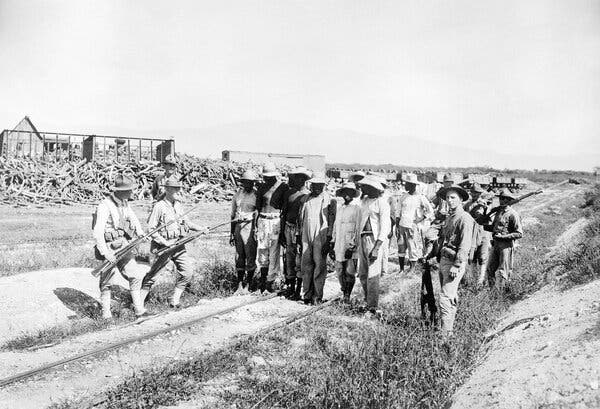
Their proposal was to turn the clock back to 1915, and again, continue invading and occupying Haiti, with mercenaries entirely unfamiliar with the political, historical and spiritual landscape.
Unsurprisingly, barely any of our “elected representatives” raised concerns about the bright idea of adding more U.S. guns and proxy soldiers into the already volatile mix. Nor did they mention where all the guns and drugs in Haiti—the roots of this protracted crisis—come from to begin with.
There was no input or participation from Haitians, proving again what all workers know instinctively: Politicians are nothing more than “a committee for managing the common affairs of the whole bourgeoisie.” It would be more accurate to call the entire farce for what it is, another worthless public relations stunt by Haiti’s Colonial Oversight Committee.
“Nou Pou Kont Nou” (“We Are Alone”)
I just returned from Haiti, a de facto blockaded country, where I continued to hear the same sense of isolation and abandonment from Haiti’s fractured anti-imperialist movement: “We are on our own.” Why do Haitians feel more forgotten than ever?
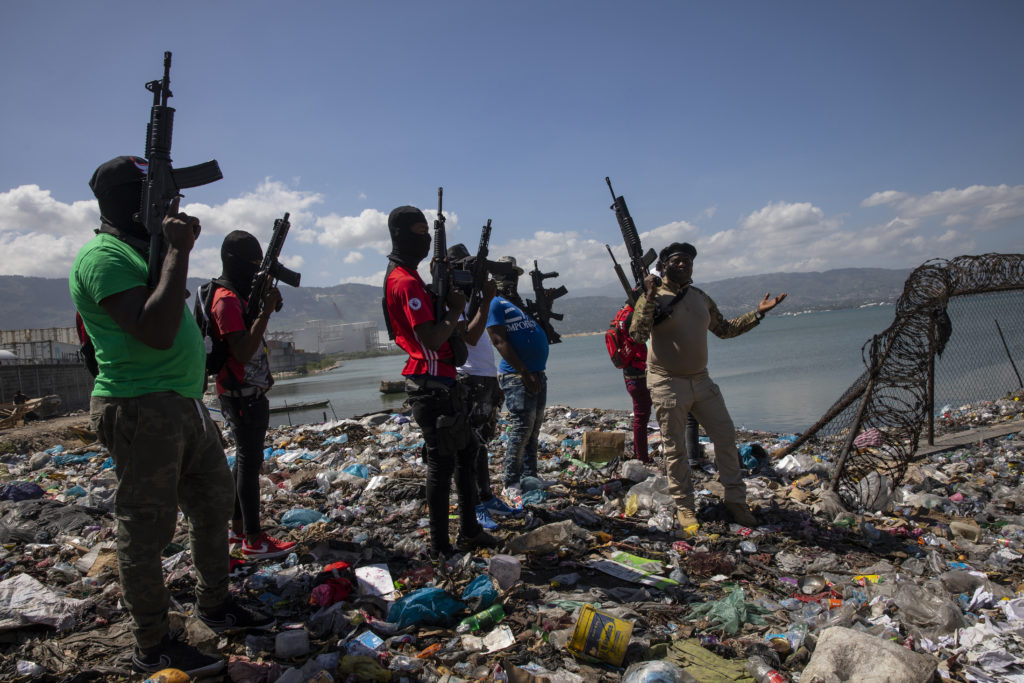
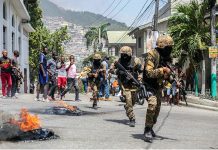
Paramilitary gangs have been attacking the backbone of the Haitian popular movement—Port-au-Prince’s once sprawling ghettos and the rice-producing department of Latibonit—since they and members of the police committed the 2018 massacre in La Saline.
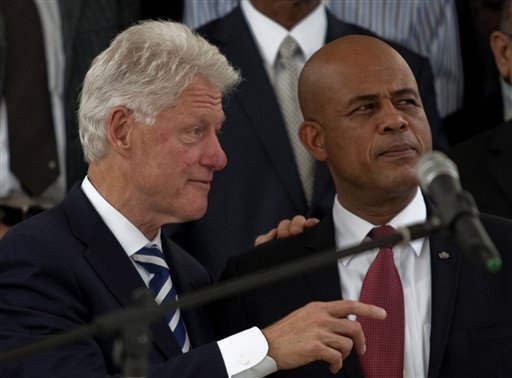
After the fraudulent election of the Clinton-aligned Michel Martelly in 2011, Haitian oligarchs and a broad web of U.S. interests facilitated the arming of criminal gangs to carry out displacement campaigns and massacres of the most defiant urban neighborhoods and rural districts.
Fifteen years later, despite all of the U.S. posturing about protecting Haiti’s people, the bloodbath continues.
On March 29th, the well-funded paramilitary apparatus Gran Grif (Big Claws) slaughtered at least 70 people in Jean-Denis in Latibonit. On July 7th and 8th, Viv Ansanm (VA) displaced nearly 6,000 people outside of the capital in the mystical mountains of Robin in Kenscoff.
On August 25th, 2026, VA gang leader Izo 2 oversaw one of the largest mass kidnappings and massacres to date in Kenscoff, high above Haiti’s capital city, Port-au-Prince. After murdering 47 innocent people, many who took refuge in a church, the paramilitaries abducted more than 50 civilians, threatening to execute them if the state intervened.
Three days later on August 28th, the Trump administration’s Department of Homeland Security published a video of Haitians being deported in chains under the pouring rain from Alexandria, Louisiana, with a stop at Opa-locka, Florida. Despite the paramilitary project having displaced some 1.5 million people and carrying out dozens of massacres in recent years, the Trump administration insists that Haiti is safe for the deportees.
The Dark Prince
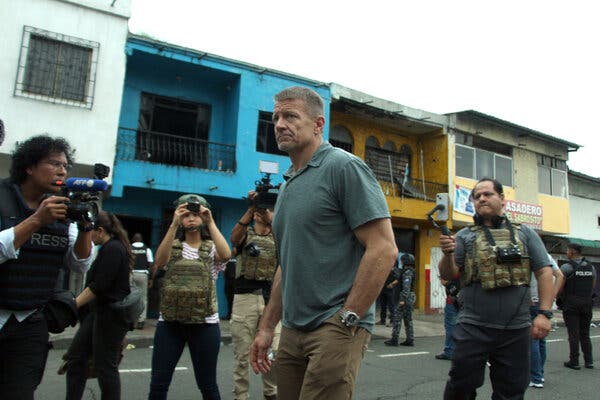
The second, more recent, occupation is led by the notorious CIA agent, billionaire and founder of Blackwater, Erik Prince.
Prince and his rebranded private security agency, Vectus Global, are working with the UN’s Gang Suppression Force (GSF) that hires mercenaries from Chad, Sri Lanka, and beyond.
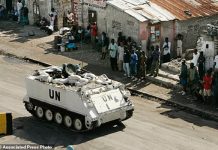
These soldiers of fortune make up the first contingents of the 5,500-member UN force carrying out the fourth foreign occupation of Haiti in the past 100 years.
Jake Johnston, author of Aid State: Elite Panic, Disaster Capitalism, and the Battle to Control Haiti, has been tracking how Prince’s and Washington’s bullets and drones mostly target civilians and the hungry child soldiers of the gangs.
The GSF’s protocol is to use quadcopter drones fitted with mini-bombs activated by “improvised explosive devices.” Alongside the Haitian National Police (HNP), they explode the drones in communities full of children.
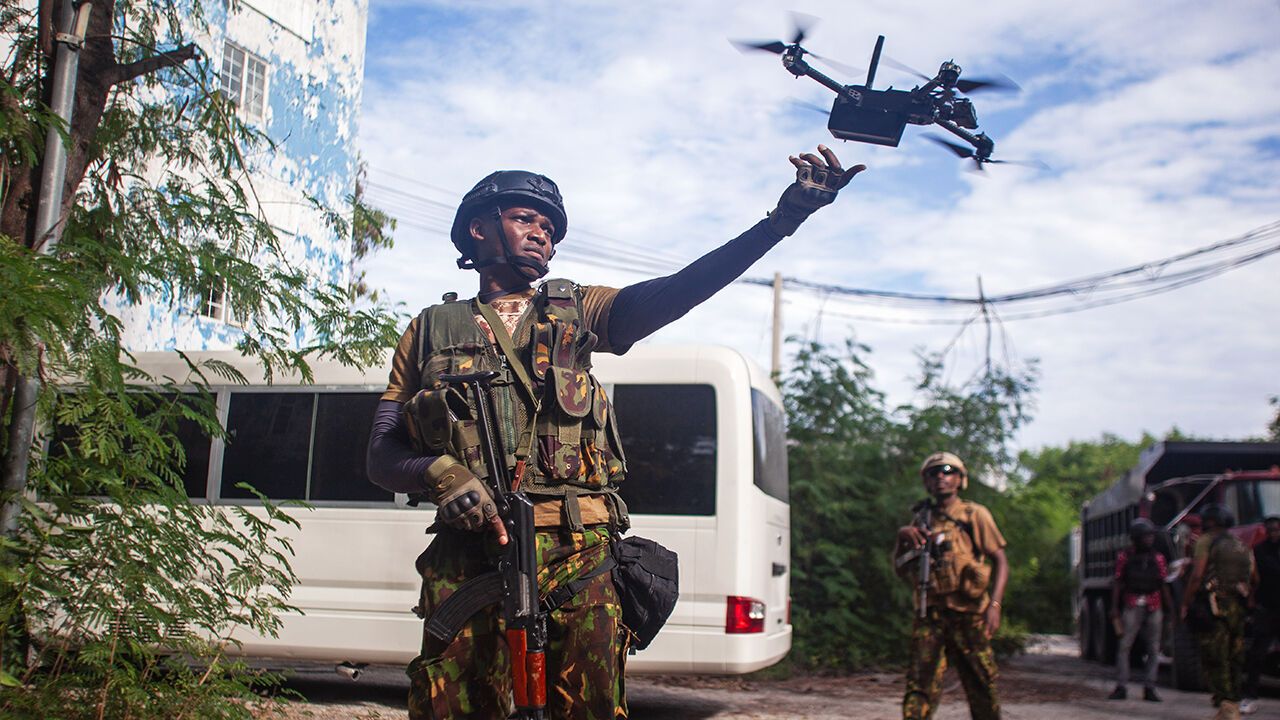
The failed Multinational Security Support has cost U.S. taxpayers nearly one billion dollars since 2024. Before Congress, the “experts” themselves confessed that their “MSS and GSF boondoggle” costs half a million dollars per year for every foreign soldier sent to continue Barbecue’s mission.
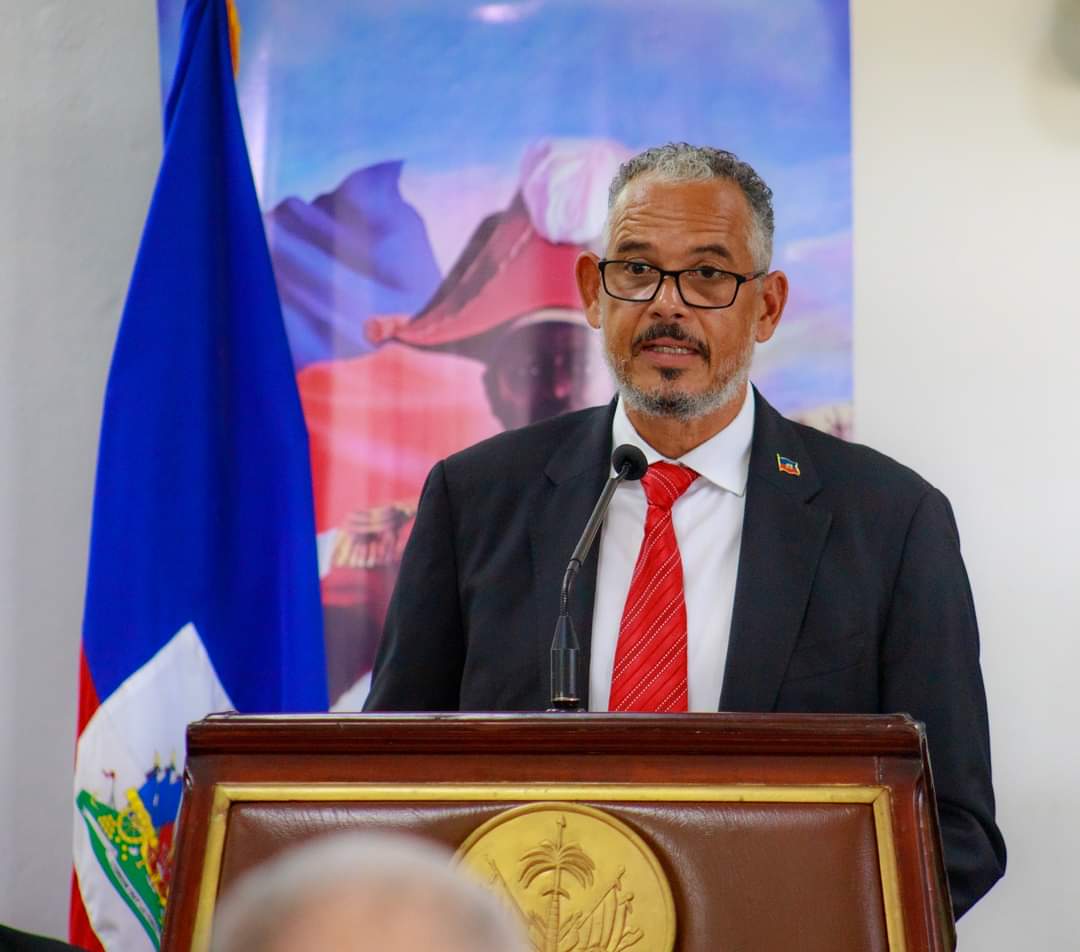
Prime Minister Alix Didier Fils-Aimé and his cabinet routinely go to feed at the trough in Washington, as inflation and currency devaluation continues to ravage life in Haiti. As Haitians watch the U.S. dehydrate and starve Cuba, only 30 miles from their shores, they scream out that they too are being consumed by the same genocidal designs.
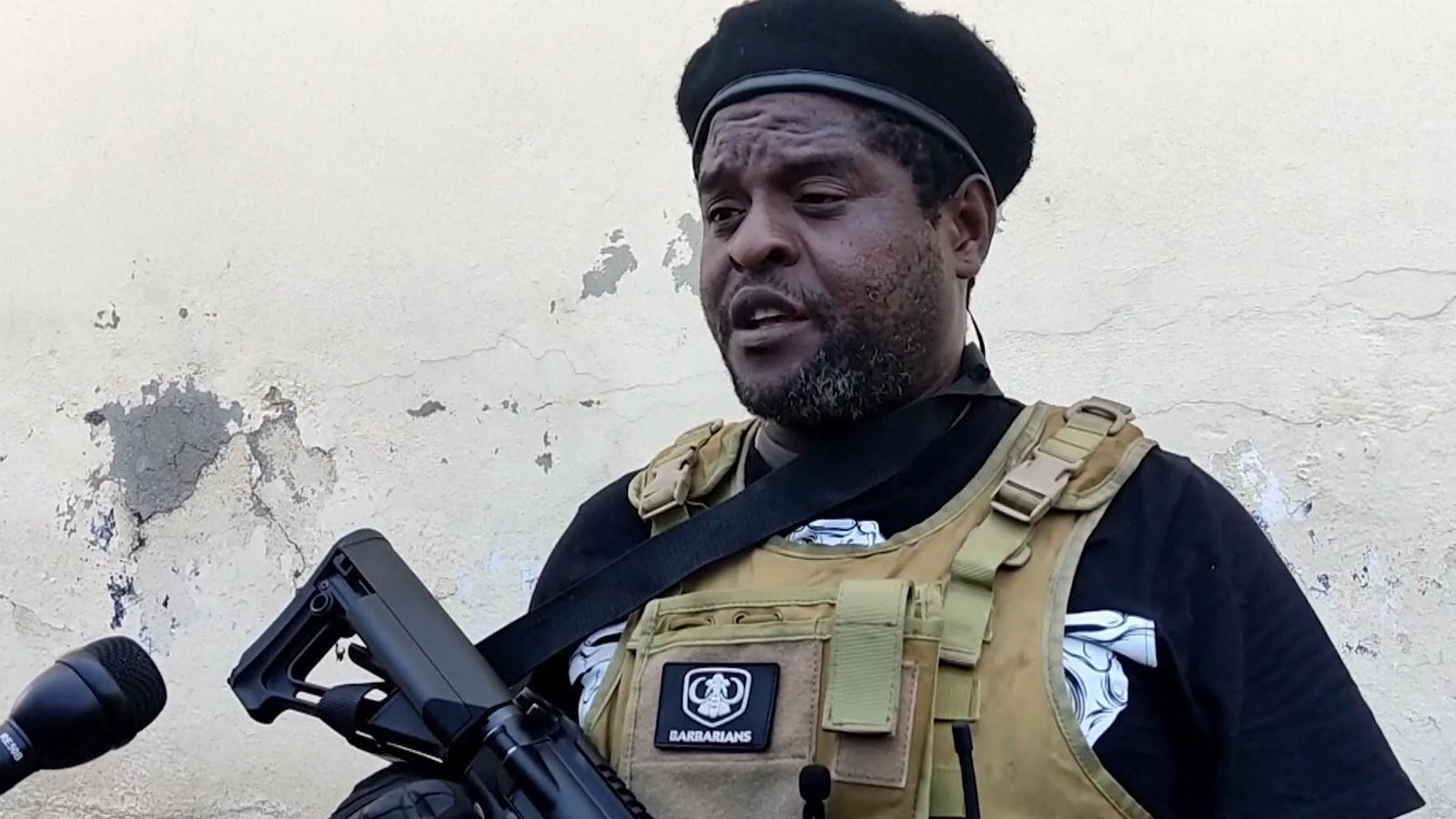
Prince and gang boss Jimmy “Barbecue” Chérizier, who presents himself as a revolutionary who stands up for the Haitian poor, have a lot in common, massive amounts of U.S. ammunition and the same enemy, the poor workers and peasants of Haiti. For 2026, the UN reports at least 2,300 deaths, 1,100 injuries and 99 kidnappings, and counting. Almost always, the victims and survivors are malere, the most destitute, or those whom Frantz Fanon called “the wretched of the earth.”
The House Committee covers up the reality that both the erection and now the destruction of the paramilitary project have been designed to disempower the Haitian people. At no point did any U.S. government official think, never mind express, that Haitians could take care of their own problems and, if left alone, could organize their own Bwa Kale for the gangs. Bwa Kale was both a coordinated and spontaneous response and movement by the Haitian masses that erupted in 2021, seeking to arm and organize themselves into self-defense brigades to resist the gangs and avenge the latter’s victims.
As in any war, the self-defense brigades have perpetrated their own violence, at times justifiable and heroic, at times targeting anybody from the ghettos where the gangs emerged to sack them.
Only the victims have the moral clarity and authority to collectively address and judge their kidnappers, rapists and murderers in order determine what forms future justice would take. The double occupation is to make sure the viktims remain viktims and can never raise their collective machete. For they know upon whose neck the masses’ machetes will fall. Both gangs exist to immobilize the only revolutionary class.
The Dialectic of Revolts and Massacres
The last eight years of Haitian history have been of extreme reaction, dominated by unprecedented levels of violence. How did Haiti arrive at this moment?
On August 24, 2018, Haiti entered into a pre-revolutionary situation with the launching of the Petro Challenger movement to recover the billions of dollars stolen by state authorities from Venezuela’s PetroCaribe project. Millions of the most dispossessed Haitians led a peaceful but combative movement that was marked by unity and hope for another Haiti.
For nearly three years, the streets of Port-au-Prince demanded the ouster of President Jovenel Moïse and democratic elections, which had not taken place since Jean-Bertrand Aristide’s popular electoral victories in 1990 and 2000 (Aristide was ousted twice in CIA-backed coups).
I accompanied the mass movement that organized for the popular toppling of the government; street protests and clashes with the police were constant.

All the while, movement leaders warned of emerging warlords known by their social-media-savvy nicknames, like “Barbecue” in Ba Delma, “Lanmò San Jou” in Kwadebouke, and “Izo” in Vilaj de Dye, among hundreds of others.
On the defensive, the Haitian bourgeoisie and their foreign backers responded by unleashing lumpen death squads on Gran Belè, Matisan and other sprawling working-class districts, who just months before were vying for state power against the corrupt PHTK/Moise regime.
As the tewowis (terrorists), as they were popularly known, burned down and looted local ghettos I first stayed in during the 1990s, they expanded their territorial control, wiping out any mass expression in their way. The national uprising lasted from August 2018 until July 7, 2021, the day 23 Colombian gunmen linked to U.S. intelligence gunned down the unelected president Jovenel Moïse.
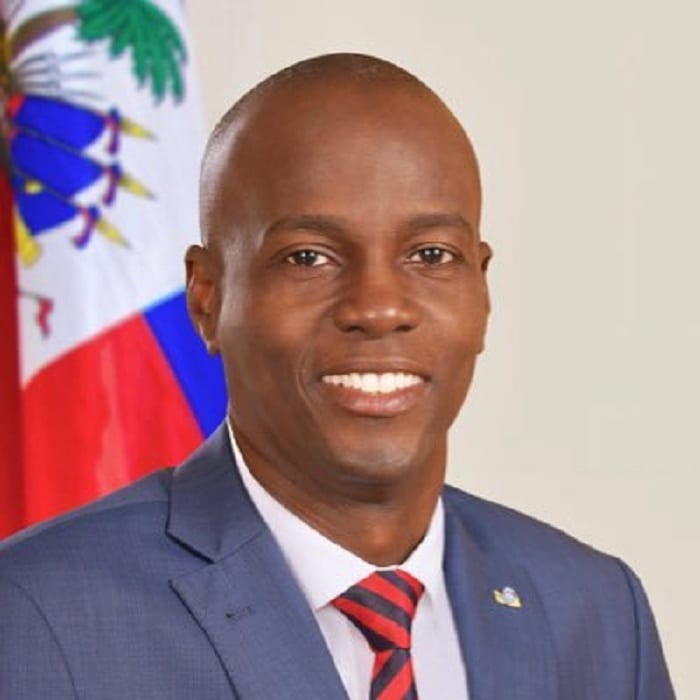
The state declared martial law effectively banning the mass movement, as the gangs consolidated their sanguinary reign over the metropolitan area of three million. The streets now belonged to heavily armed groups who waged war on the mass movement and its social base.
Many in the Western “left,” with no way to communicate with Haiti’s long-established grassroots leadership, unknowingly cheered on the counter-revolution. What was a Hollywood movie for terminally-online opportunists to cash in on, signified mass displacement and mass murder for the inheritors of the 1804 Revolution.
There have been many challenges translating the experiences of the Haitian masses because reality is not a triumphant story of victory. The detached, utopian view of “the gangs as revolutionaries” was made for Social Media and easy to spread. While Haitians were not deceived by the gangs’ PR campaign, Barbecue’s almost daily appearances across Western media and social media outlets was disorienting for a Western audience.
Revolutions Are Not Televised, but Counter-Revolutions Are
Two of the most prominent gang alliances, Viv Ansanm and Gran Grif, have broadcast their campaigns of terror through sadistic videos they take and then circulate on Whats App. The Haiti Information Project has a trove of day-to-day WhatsApp archives that document the wanton violence, reminiscent of the ghastly and decontextualized images we saw from Sierra Leone and Liberia in the 1990s.
What the Western “supporter” of Haiti never saw was the daily diet of pornographic violence consumed by three generations of Haitians. No one talks about nightmares, flashbacks and undiagnosed PTSD in Haiti because the focus is on eating and survival. The only therapist accepting new patients is kleren (moonshine rum). Sexual violence against women and children was a central part of pwojè lanmò a (the death project). Alongside the forgotten peoples of the Congo, Sudan and Palestine, no nation has been more thoroughly brutalized.
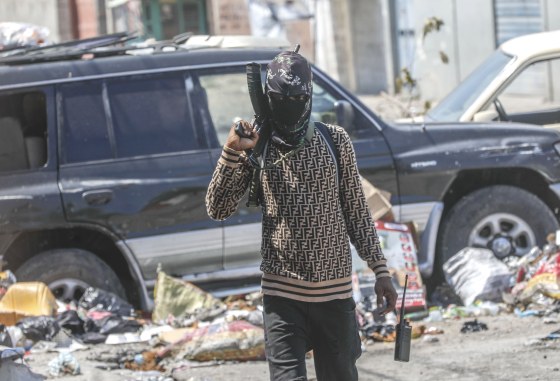
But you will not learn about this on social media. Elon Musk’s X emboldened opportunists to manipulate the objective and subjective reality on the ground thousands of miles away in a country blockaded in every sense by the U.S. How could thousands of victimized families disprove Jimmy “Barbecue” Cherizier’s hundreds of interviews and videos where he insisted that the G9 and later Viv Ansanm gang alliance represented a revolution from below? Who worked to platform the repressed voices? Who worked to suppress them?
Nigeria’s Chinua Achebe popularized the ancient proverb: “Until the lion learns how to write, every story will glorify the hunter.” In the case of Haiti, the lion knows how to express its truth, but by and large lacks the means of communicating it to the outside world.
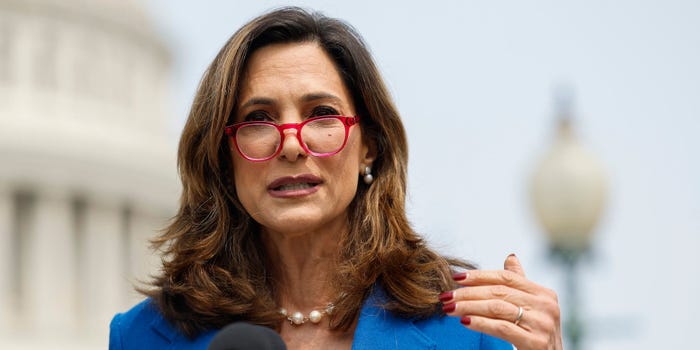
Now that the gangs have finished their primary mission, professional mouthpieces of the U.S. foreign policy establishment, like South Florida Representative María Elvira Salazar and U.S. Ambassador to the United Nations Mike Waltz, are demanding their social media accounts be suspended. The powers that be who armed the paramilitaries and created platforms for them are now pivoting away, throwing them under the bus.
Ironically, or perhaps strategically from the perspective of those who supplied all these weapons of mass dislocation, much of that proof of the systematic sadism is now being erased.
However, it is not clear in what direction VA is moving. While many of their main spokespeople have been muzzled by their overseers, other war lords gravitate between pushing for amnesty and advocating for more violence.
On August 26th, from his palace balcony, the infamous VA chief Wilson Joseph, aka Lanmò San Jou, showed off his massive arsenal of U.S. weapons. Hours later, he published a statement demanding amnesty for the gangs. Suddenly drug and arms kingpins, with links to Dominican gun smugglers and other transnational criminals, infamous for showing off his refrigerators of money, call themselves “Rebel Chiefs?”
After having ravaged the capital city and promising more casualties, they now seek to engage in civil discourse. Using historic proverbs, such as “Bwa kiyè san pè vapè,” meaning “a wooden spoon doesn’t fear steam,” VA continues to try to present themselves as a legitimate political force. In a presentation called “The Impact of the Gang’s Discourse of Violence on the Oppressed Masses,” popular youth communicator, Wisvel Mondelice, explains the modus operandi of the gangs — to strike terror into Haitians.
Combating Terrorism with Terrorism in the Name of “Democratic Elections”
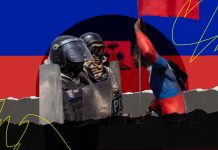
The Haiti Information Project has tracked the civilian casualties from Vectus Global and the GSF’s drone campaigns against the bases of the war lords. Alongside the HNP, they are attacking and bombing heavily populated, oppressed neighborhoods, adjacent to where the gang massacres occurred.
This is nothing new for the HNP who have a sordid history of corruption and unchecked violence, as the 2017 Gran Ravin massacre and so many others have shown.
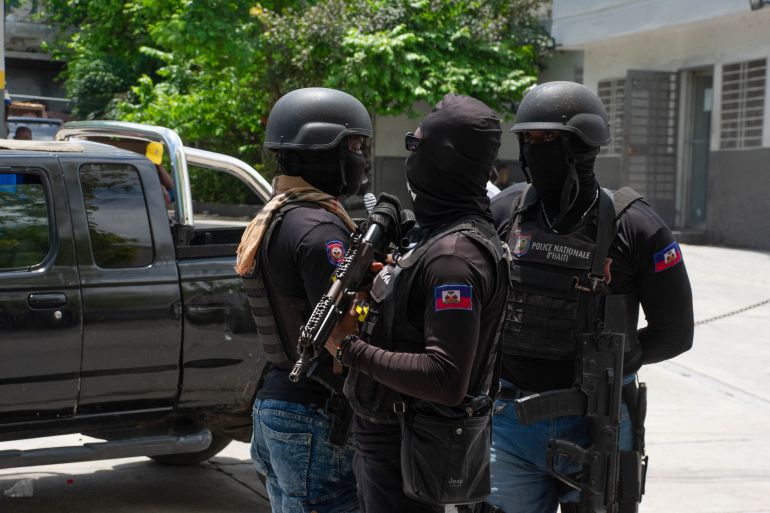
There is crossover between the police and the paramilitaries, with snitches offering information to the highest bidder and higher-ups looking the other way for payoffs.
The organic intellectuals who question and challenge the entrenched colonial system mysteriously turn up dead a few days later. When Representative Joaquin Castro (D-TX) raised concerns over civilian deaths committed by Vectus Global, the House committee gave a dry response and moved on.
Journalist Kevin Pina—who lived in Haiti during the country’s resistance to UN occupation—calls what is transpiring “a massive transfer of state power to Prince.”
Prince signed a ten-year agreement with the Haitian government which granted him control over the “restructuring and modernizing customs and immigration services, including infrastructure development.” The kleptocracy of the most impoverished country in the hemisphere has now voluntarily surrendered control over its borders to global mercenaries and thugs. Capitalism knows no bounds; it devours everything in its path.
Washington is now directing the Haitian state to prepare for elections. With an estimated 1.5 million Haitians uprooted, how could the masses organize and participate? Speaking under the condition of anonymity from their makeshift camps, displaced community leaders from Kafou Fèy and Delma 19 explained what was behind the expedited push for elections:
“This is the same strategy our enemies used in 2010 after the earthquake. When very little had been done to address mass displacement and suffering, they decided it was time for elections. They paraded Duvalier back. They allowed Aristide back after a long time in exile. That got Wyclef involved. It was a big circus. That is the mood now. They just allowed Michel Martelly back. They need elections. It’s their guilty conscience. Prime Minister Fils-Aimé wants to appear “serious” and “patriotic.” We want our homes back. We want to go home. Most of us have nothing to go home to. Our homes, neighborhoods and families are gone. Where is our justice? Elections? We are trying to hunt down a plate of food today for our children. How could we mobilize for any meaningful elections now?”
Amid the violence, WBAI’s “Flashpoints” conducted a clandestine interview with a reporter for an on-the-ground update. Their stringer “Joseph” explained the merry-go-round of violence both gangs are participating in:
“The government seeks to maintain the situation, not resolve it. They could force negotiations with the gangs or use the violence as a convenient excuse to cancel the elections. Meanwhile, the gangs continue to terrorize potential voters before a single vote is cast in these elections. This is their way to show their power. It is a cat-and-mouse game and [neither side] cares about sacrificing civilians.”
MIT linguist, Michel DeGraff, explained the raison d’etre behind the ongoing massacres and the desire to organize elections: “This is perhaps not so contradictory: They’re pushing for a Selection, not for Elections. So the insecurity is de rigueur.”
The End of Barbecue and Viv Ansanm?
Where then is the bold, patriotic resistance “Barbecue,” the other war lords and supporters promised? Viv Ansanm has not fought back against the invaders in any meaningful, coordinated way. Why would they? They are on the same side. When it was women and children, VA warlords Kempès, Ti Lapli, Lanmò San Jou and others burned their way through Pòtoprens and Kwa dè boukè.
Now, “Barbecue” is no longer hanging out with Western journalists and going viral. In fact, he is in hiding and has been off social media since the beginning of 2026. In January, he received his orders. His services were no longer needed. Predictably, his backers who sadistically promised “revolution” have now shifted from being supporters to mere “observers.”
After ignoring and covering up almost a decade of G9 and VA paramilitary violence unleashed on Haiti’s ghettos, the gangs’ social media teams now hypocritically cry for justice for the innocents being murdered by Prince.
Displaced Solino community leader Ezai Jules explained Barbecue’s function and the imperialist strategy:
“Going after Barbecue is going after one of the biggest cancer cells. Yes, he’s the VA spokesperson and coordinator and is responsible for murderous crimes against us. But we all know this is so much bigger than Barbecue. He didn’t bring the half million U.S. guns here. He’s not as close to the cocaine as other actors. He played his role. There are more than 200 paramilitary leaders just like him. The occupiers just want a fall guy and big headline. This is one big charade. The cancer is growing stronger than ever, as we rot away in undignified squalor.”
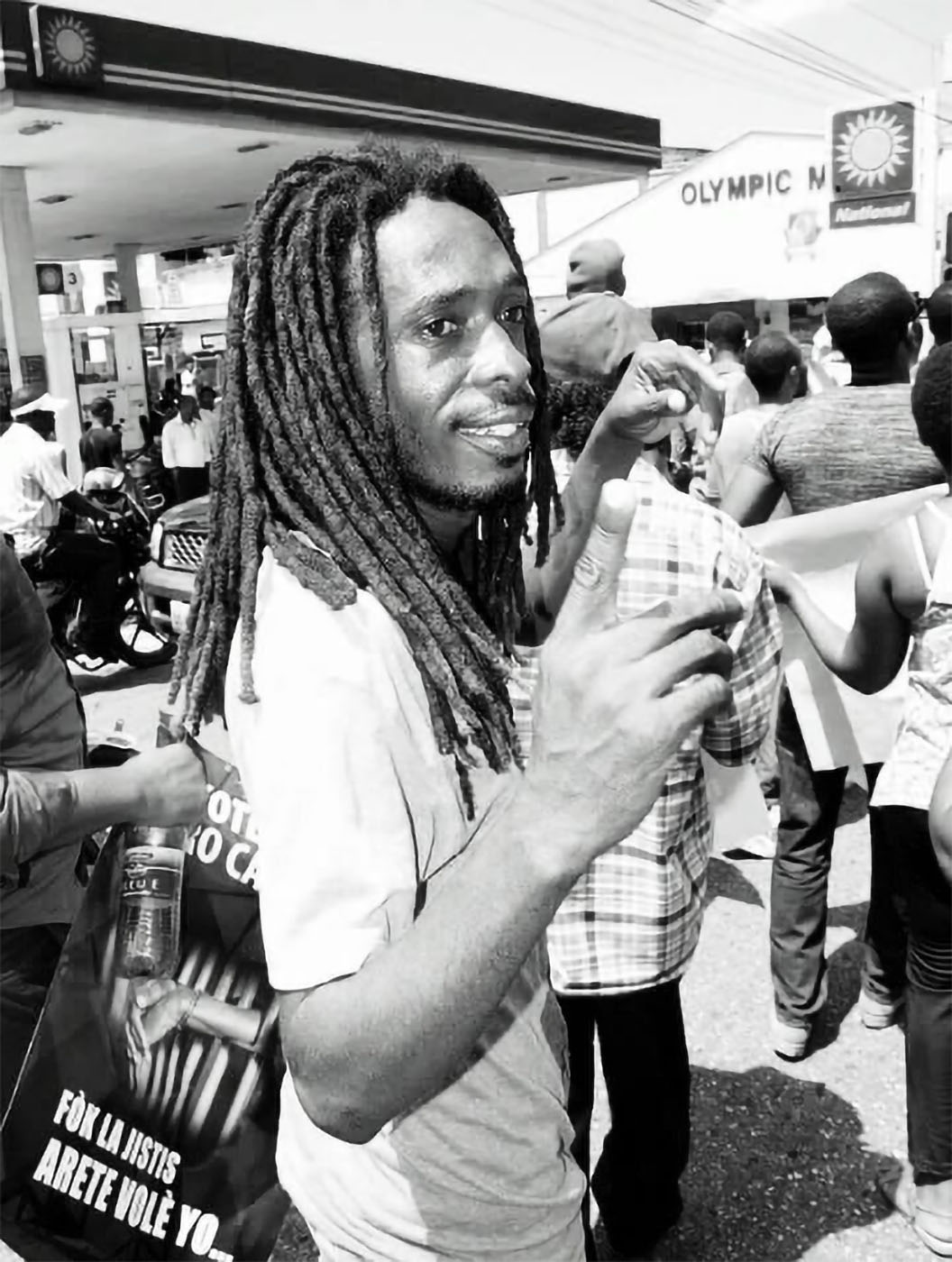
In an era of identity politics, much of the Western left ignored the regime of terror of the gangs, but immediately mobilized when the UN announced the GSF. These liberal performative politics are out of touch with objective and subjective reality, prioritizing some victims over others.
The descendants of the hundreds of thousands of enslaved Africans who organized the 1804 Revolution are trapped between two groups of well-armed gangs whose mission is the same, to crush the people’s ability to organize and revolt.
The nation that leads the hemisphere in revolts, also continues to lead in massacres. The Western left has collectively failed to understand and denounce a counter-revolution that has been lost in translation.
Despite the overwhelming odds caused by Full Spectrum U.S. Dominance, the Haitian masses continue to fight for everyday survival and the sovereignty of a nation that has given us so many lessons in revolution.

CovertAction Magazine is made possible by subscriptions, orders and donations from readers like you.
Blow the Whistle on U.S. Imperialism

Click the whistle and donate
When you donate to CovertAction Magazine, you are supporting investigative journalism. Your contributions go directly to supporting the development, production, editing, and dissemination of the Magazine.
CovertAction Magazine does not receive corporate or government sponsorship. Yet, we hold a steadfast commitment to providing compensation for writers, editorial and technical support. Your support helps facilitate this compensation as well as increase the caliber of this work.
Please make a donation by clicking on the donate logo above and enter the amount and your credit or debit card information.
CovertAction Institute, Inc. (CAI) is a 501(c)(3) non-profit organization and your gift is tax-deductible for federal income purposes. CAI’s tax-exempt ID number is 87-2461683.
We sincerely thank you for your support.
Disclaimer: The contents of this article are the sole responsibility of the author(s). CovertAction Institute, Inc. (CAI), including its Board of Directors (BD), Editorial Board (EB), Advisory Board (AB), staff, volunteers and its projects (including CovertAction Magazine) are not responsible for any inaccurate or incorrect statement in this article. This article also does not necessarily represent the views the BD, the EB, the AB, staff, volunteers, or any members of its projects.
Differing viewpoints: CAM publishes articles with differing viewpoints in an effort to nurture vibrant debate and thoughtful critical analysis. Feel free to comment on the articles in the comment section and/or send your letters to the Editors, which we will publish in the Letters column.
Copyrighted Material: This web site may contain copyrighted material the use of which has not always been specifically authorized by the copyright owner. As a not-for-profit charitable organization incorporated in the State of New York, we are making such material available in an effort to advance the understanding of humanity’s problems and hopefully to help find solutions for those problems. We believe this constitutes a ‘fair use’ of any such copyrighted material as provided for in section 107 of the US Copyright Law. You can read more about ‘fair use’ and US Copyright Law at the Legal Information Institute of Cornell Law School.
Republishing: CovertAction Magazine (CAM) grants permission to cross-post CAM articles on not-for-profit community internet sites as long as the source is acknowledged together with a hyperlink to the original CovertAction Magazine article. Also, kindly let us know at info@CovertActionMagazine.com. For publication of CAM articles in print or other forms including commercial internet sites, contact: info@CovertActionMagazine.com.
By using this site, you agree to these terms above.
About the Author

Danny holds a Masters in International Affairs from the School of International and Public Affairs at Columbia University. He is fluent in Spanish, Haitian Kreyol, Portuguese, Cape Verdean Kriolu and has a fair command of French, and works as an International Affairs Analyst for TeleSUR, HispanTV and other international news networks.
As an ethnographer, Danny has been traveling to Haiti since 1998 and has published dozens of articles on Haitian popular movements and U.S. foreign policy towards Haiti. He just returned from Cuba, where he was looking at the impact of Trump’s Oil Blockade on the Cuban people. You can follow his work at @profdannyshaw.com

Former hockey player Georges Laraque views Haiti’s structural and economic problems primarily through a humanitarian lens, emphasizing that global solidarity and direct aid for its vulnerable populations is an obligatory responsibility rather than an option. As the son of Haitian immigrants, the former NHL enforcer has consistently focused his advocacy on grassroots rehabilitation, healthcare, and community support rather than weighing in heavily on the country’s complex political factions. Following major humanitarian disasters in the region, Laraque dedicated his platform to long-term structural recovery, co-founding the Hockey for Haiti initiative alongside World Vision Canada and the NHL Players’ Association to raise over $1.3 million to rebuild the Grace Children’s Hospital in Port-au-Prince. He strongly believes that members of the Haitian diaspora living a comfortable life abroad have a duty to stay connected to their roots and actively support citizens who are suffering from institutional collapse. While Laraque has not issued prominent or detailed public statements specifically targeting Haiti’s ongoing gang warfare crisis, his overall philosophy is rooted in non-violence and pacifism. Off the ice, he has frequently noted that despite his professional hockey persona as a fighter, he fundamentally detests violence, which aligns with an implicit rejection of the lawlessness and armed conflict currently affecting Haitian citizens