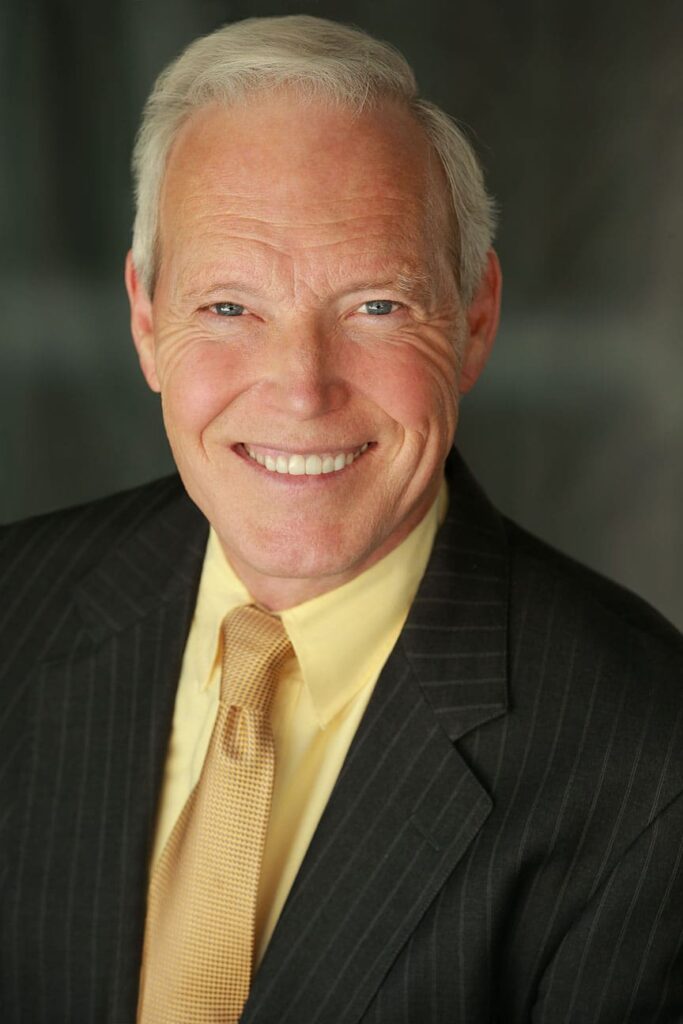
Patrick Reynolds is a former Hollywood actor and the grandson of R. J. Reynolds, the founder of the third-largest tobacco company in the world, the R. J. Reynolds Tobacco Company, makers of Camels, Winstons and other brands.
In July 1986, Reynolds was thrust into the national spotlight when he broke from his family and began speaking out against the tobacco industry. His father, R. J. Reynolds, Jr., had died from emphysema caused by smoking the family brands since he was 16.
By November 1988, Patrick helped pass a ballot measure in California mandating an extra 25 cents for cigarette packs that placed him in direct confrontation with his family’s business, which spent an estimated $15 million trying to defeat the ballot measure.
His brother John said that “our father and grandfather are probably spinning in their graves.”[1]
As the fight against Big Tobacco started to be won, Reynolds continued campaigning for anti-smoking laws in the U.S. and around the world.
During the 1990s he noticed that 80-90% of Big Tobacco’s political donations were going to Republicans, and that support was weak among Republicans for key policies sought by the health community. These included smoking bans, tobacco tax increases, and spending on prevention and cessation.
“Smoking rates among youth and adults in the U.S. were dropping every year, and we were winning the battle against smoking and tobacco. I decided to devote myself to a new goal of getting Democrats in the majority in Congress. I realized that with Democrats in control of both Houses, our progress getting tobacco policy passed would be much faster—and Democrats would also be likely to pass laws on climate change, gun safety, abortion—the list goes on,” said Reynolds.
Reynolds founded Congress Majority PAC in 2018, and its unique TV spots may prove to be a decisive force in the 2026 mid-term elections.
Reynolds and his team have developed several novel political TV spots that Reynolds says he intends to run in the key races that will decide which party controls Congress. One ad targets disaffected Democratic voters and others take aim at Donald Trump and the Republicans’ oversimplified political ideology.
Reynolds says that, in past elections, almost all political donations have been used by candidates to advocate for themselves or to attack their local opponents. Reynolds’ ads, by contrast, rise above the local fray and are national in scope. They take aim at Trump and the Republican Party as a whole and compare the way the parties have voted on climate change, and how Republican and Democratic presidents have done with the U.S. economy.
One ad shows clips of Donald Trump at his worst, followed by Senator Lindsey Graham saying, “Republicans are the party of Donald Trump.” All of Congress Majority PAC’s ads conclude with the call to action “Vote Democrat.”
Another of Congress Majority’s TV spots addresses climate change. We see flashing images of cars submerged in water, violent storms, floods and a drought, followed by Trump publicly calling climate change a hoax and Obama saying it is not a hoax.
The ad then flashes to Trump at Mar-a-Lago meeting with executives from Big Oil and notes that Trump asked for $1 billion and promised to take America back to fossil fuels.
The ad then notes that he raised over $400 million from Big Oil, with the voice-over stating, “Wrong call for our wallets. Green energy is now cheaper than oil. And the last three years [we see 2023, 2024, and 2025 onscreen] were the hottest ever recorded.”
The key purpose of the ad is to make clear the Republican Party’s close ties to the fossil fuel industry and that they are a major donor to Trump and Republicans.
Reynolds wants to raise funds to run that ad during climate events in key races, if he can raise the funds.
Another ad, “Good Leaders, Bad Leaders,” addresses the Republicans’ oversimplistic economic ideology, and how it benefits the rich and contributed to the 2008 financial crisis.
In university, Patrick Reynolds studied in the film departments at UCLA and USC and then acted in films and TV for seven years.
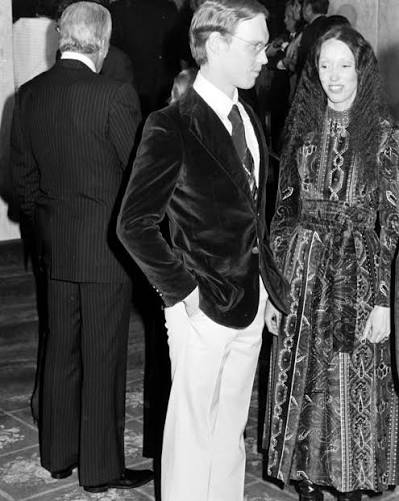
His then live-in girlfriend, actress Shelley Duvall (The Shining, Popeye) invited him to the set of Nashville in 1975, where Director Robert Altman cast him in the movie.
Later Reynolds would use his background in Hollywood and his years as a tobacco-free advocate to write, produce and narrate the ads himself, together with a professional production team.
FEC.gov reports that Reynolds has so far raised $1.4 million for his PAC in the current cycle, and another $168,000 in the 2024 cycle. He is now on a major fund-raising campaign and hopes to attract support from Senate Majority PAC, House Majority PAC, and the other large donors to the Democratic Party. His campaign will include placing his ads on TV and digital media only in the key races, and in social media, including Instagram.
In an exclusive interview with CovertAction Magazine, Reynolds said that his current work follows from his anti-tobacco lobbying efforts, which led him to see a big difference between the two parties. He saw that the Republicans were unwilling to support tax increases on tobacco products or smoking bans, whereas Democrats mostly were. Ultimately, Democrats enacted far-reaching legislation under Obama’s presidency that resulted in a significant reduction in youth and adult smoking.
The Republicans’ reticence to support anti-tobacco laws, Reynolds says, was largely rooted in what he calls their “pig-headed ideology,” centered on keeping taxes low and preventing the regulation of tobacco called for by the health community.
Reynolds says that, when he was giving talks against big tobacco across the U.S., he gradually became more partisan and condemnatory toward the Republicans. Most of his colleagues were reluctant in this regard in part because charities are not permitted to be partisan. It was unspoken that some very wealthy Republicans sat on the boards of the largest charities and foundations involved in the anti-tobacco movement.
Many voters have mixed feelings about the upcoming mid-term elections and the electoral process more generally, believing that the two-party system in the U.S. is saturated with money and hopelessly corrupt.
Many progressives, however, believe that defeating Trump and the Republicans in the mid-terms and gaining back control of Congress is a necessary first step in the revitalization of U.S. democracy, and the priority is to forge alliances between left-leaning and centrist Democrats and show a unified front against the Right. By retaking Congress, the Democrats will block Trump’s agenda in the second half of his term and create a more open space for political dissent.
In my conversation with Patrick Reynolds, he made clear he believes the Democratic Party has alienated many of its true-Blue voters by moving too far left. He dislikes the use of the pronouns for everyone. He stated. “Today, 53% of Democrats view their party unfavorably, vs 49% of Republicans who view their party unfavorably. [other polls show the figure to be 59% for Democrats and 58% for Republicans] I’m worried they won’t show up to vote, and that could let Republicans keep their majority in Congress.”
Reynolds said that the latter possibility is why he made a TV spot titled, “No longer like the Democrats?” which ends on a humorous note: “Vote Democrat. Even if it hurts.”
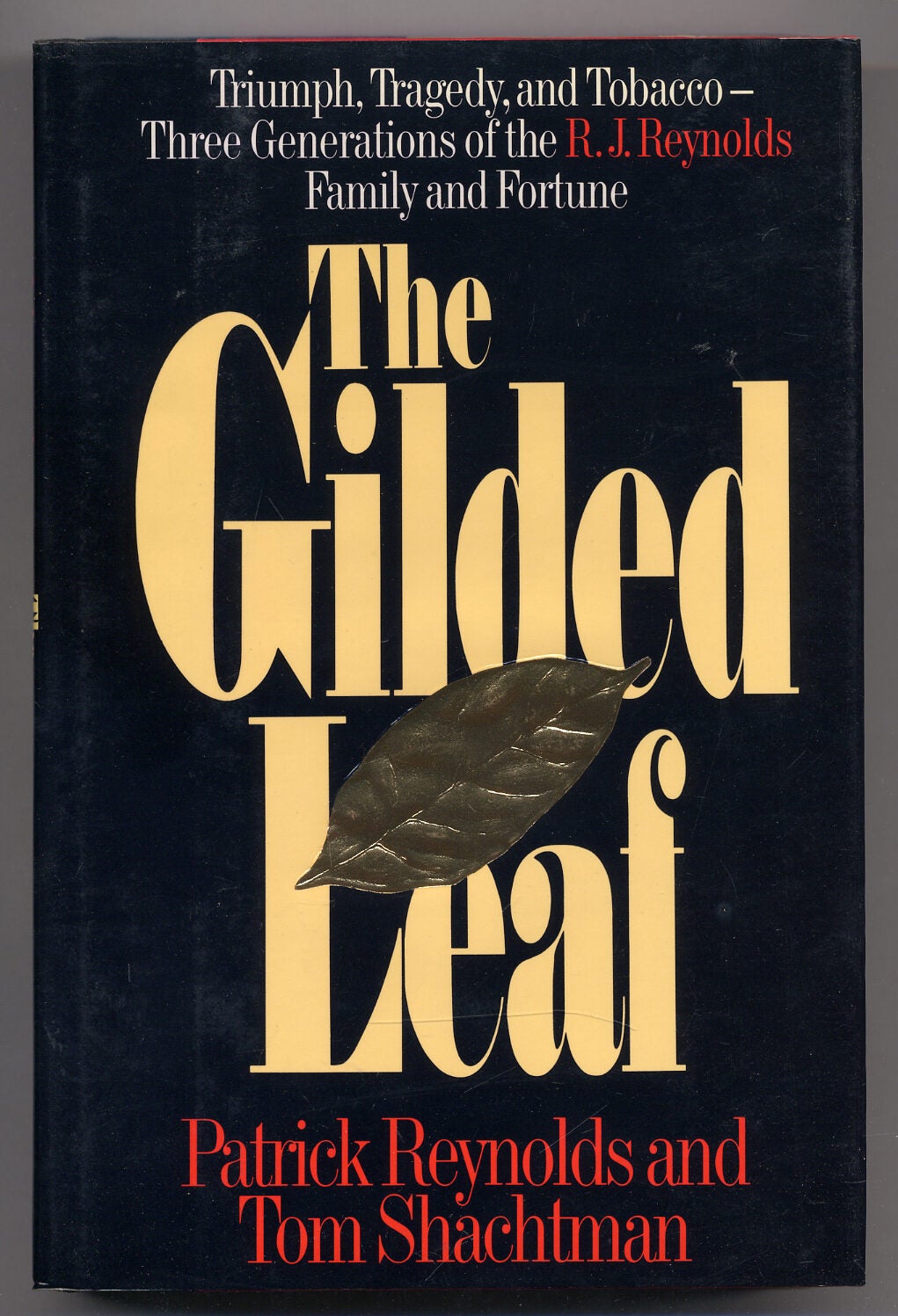
The Gilded Leaf
Reynolds’ fascinating family history is detailed in a 1989 book that he co-wrote with Tom Shachtman entitled The Gilded Leaf: Triumph, Tragedy, and Tobacco—Three Generations of the R. J. Reynolds Family and Fortune.
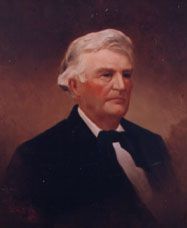
The Reynolds family first became involved in the tobacco business in the backwoods of Virginia in the 1820s when Abram Reynolds and his son Hardin began selling chewing tobacco that had been specially twisted after harvesting of the tobacco plant.[2] Benefiting from slave labor, the business prospered and Hardin came to own a thousand-acre estate after Abram died in 1838.
Hardin’s son Richard Joshua (R. J.) Reynolds was born in 1850. In April 1865, at the age of 15, he helped save the family’s horses from Union Army soldiers who pillaged the Reynolds home.[3]
After the Civil War ended, R. J. did physical labor tending to the tobacco crops. His brother Abram became chief salesman for the family business.
With the freedom of the slaves, the Reynolds family turned to tenant farming. Former slaves were paid low wages to do much of the same hard labor they were previously performing as slaves.[4]
R. J. suffered from dyslexia and struggled in school. However, he discovered a talent for sales and was able to convince many backwoods shopkeepers to buy the Reynolds’ tobacco products.[5]
In 1874, R. J. bought a plot of land in Winston, North Carolina, then the “most backward and rural of states, rife with…ignorance, sloth and provincialism,” to take advantage of low tobacco taxes and a lack of regulation in the management of auction houses.[6]
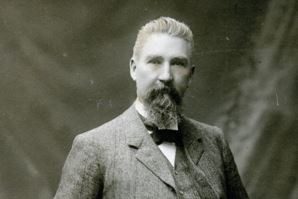
R. J. went to work building a factory on his land, which began churning out chewable tobacco products. R. J. employed about 30 workers his first year and worked right alongside them. He developed a reputation in town for having a large appetite for work, women, strong drink and gambling while living as a bachelor.[7]
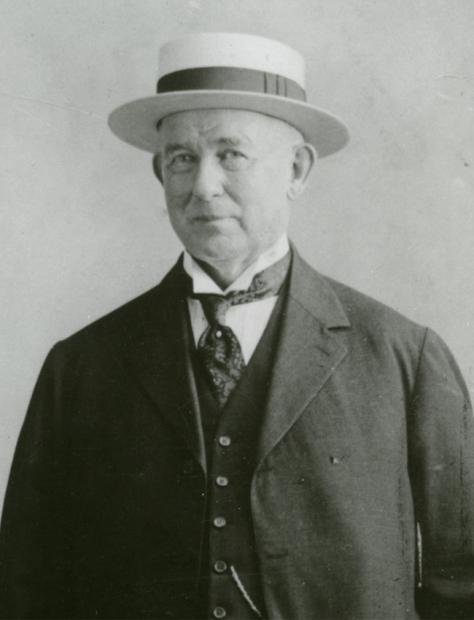
R. J.’s main competitor in the tobacco business was James Buchanan “Buck” Duke, the founder of Duke University, who introduced cigarette-rolling machines and had beautiful women pose with cigarettes in ads to enhance their appeal.[8]
Already by the late 19th century, doctors recognized the perils of cigarette smoking, tracing 80 diseases to cigarettes and smoking and 20,000 deaths in the U.S. annually.[9]
The Reynolds firm grew stronger as it introduced new machinery and a new flavoring—saccharin as an ingredient in chewing tobacco and began eclipsing Duke in advertising. It eventually incorporated Duke’s company after winning an anti-trust lawsuit and grew even more successful after introducing Prince Albert Smoking Tobacco.[10]
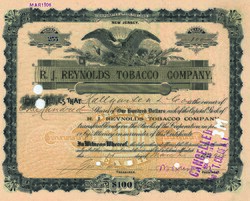
Politically, R. J. was a life-long Democrat, according to The Gilded Leaf, who believed that Reconstruction (program of uplift for African Americans in the South) had been controlled by the Republicans and forced down the throats of old-line white Southerners.[11]
Predictably, Reynolds was hostile to organized labor, with foremen in his factories “berating workers who spent too much time in the toilets.” He did join a local reformer in supporting the extension of Winston-Salem’s water supply and sewage system to houses still using open wells and privies and put in one of the first cafeterias in a factory in the U.S.[12]
In a 2009 history of the R.J. Reynolds Company, Nanny M.Tillie details the company efforts to derail labor organizing in the 1920s and 1930s and that labor organizers, teachers and reformers were branded as “bolsheviks” in an attempt to publicly discredit them.
Tillie notes that by this time, the R.J. Reynolds Company had become the “most widely cussed institution in Winston-Salem,” with “leadership concentrated in the hands of a very few men from an even smaller number of tightly interlocked families who ran the city just as surely as they ran their factories.”
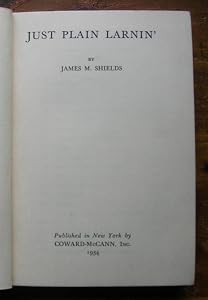
When a school-teacher named James M. Shields wrote an expose in 1934, “Just Plain Larnin’,” that pointed to the poverty and ignorance of Reynolds factory workers who were mostly African-American, he lost his job.[13] Shields argued in his book that the R.J. Reynolds Company “opposed any liberalizing form of instruction in Winston Salem’s educational system that would have opened the eyes of the workers’ children and increased their discontent.”[14]
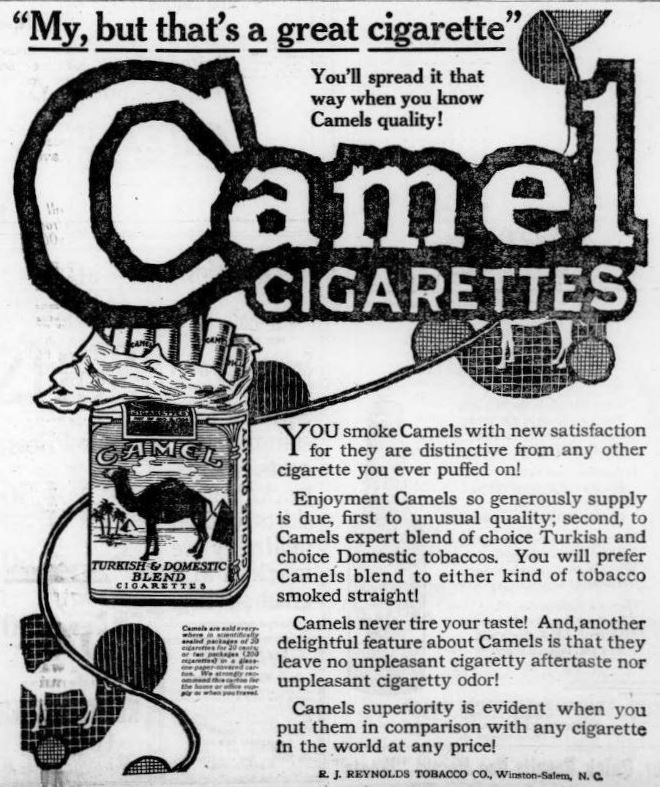
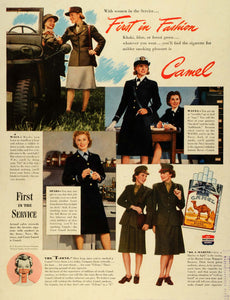
In 1913 Reynolds consolidated his family’s fortune by introducing Camels, a blend of Burley and flue-cured tobacco with some Turkish leaf. Perhaps the best-known cigarette ever produced, Camels swept the market until the development of filter-tipped cigarettes in the 1950s, though can still be found in most convenience stores.[15]
In 1903, R. J. married his cousin Katharine and together they had two sons, Dick and Zachary Smith, and two daughters, Mary and Nancy. R. J. died in 1917 at the age of 68 after getting cancer of the pancreas that may have derived from his heavy smoking.
Both Dick and Zachary Smith Reynolds, who were young when their father died, led tragic lives—especially Zach, who was killed in his early twenties because of his involvement in a toxic love triangle, and likely suicide caused by depression. “Smith” was married at age 20 to a major Broadway star, Libby Holman, who was indicted for his murder in a major scandal of the 1930s. She was later acquitted after she announced she was pregnant; the Reynolds family intervened with the sheriff.
Dick invested his money in business ventures with mixed success, and his wealth was reduced by three divorces and a profligate lifestyle, which included a 12-mile private island, Sapelo, a 200-foot yacht, and large homes in New York City and Miami Beach, all outlined in The Gilded Leaf.
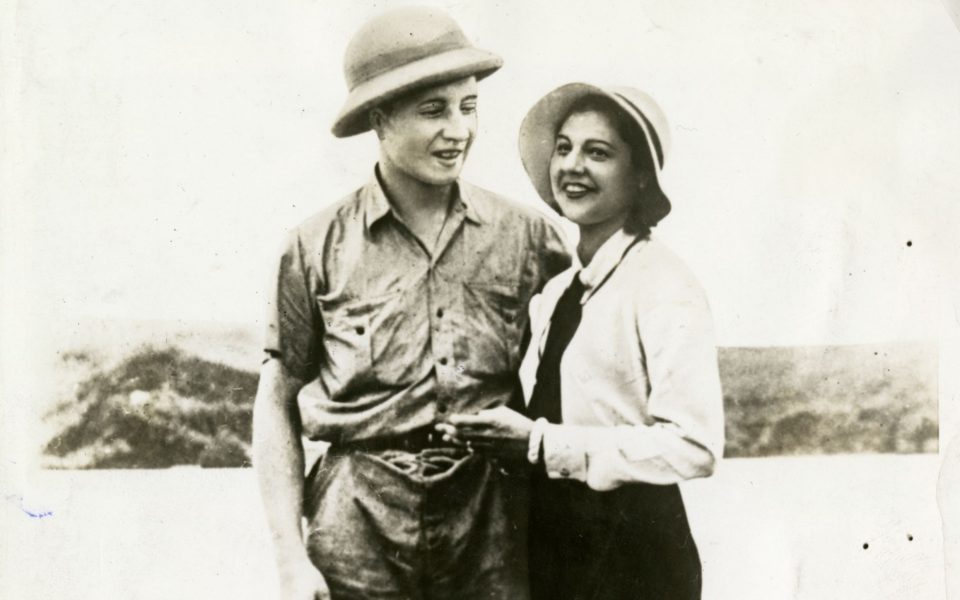
But he was one of the largest donors to Democrat Franklin Roosevelt’s 1940 presidential campaign when FDR’s opponent, Republican Wendell Willkie, was leading in the polls. He also helped to fund Democrat Harry Truman’s 1948 campaign against Tom Dewey.
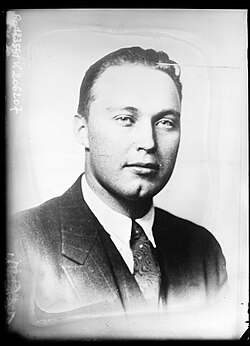
Dick lived a playboy lifestyle and wound up marrying four times and having seven children, including Patrick who barely knew his father growing up. His dad did not stick around to raise him.[16]
Upon his death in 1964, Dick disinherited Patrick and his five other kids who struggled to live up to the legacy of their famous grandfather.
As a student at UC Berkeley in the 1960s, Patrick developed an interest in filmmaking, producing a film about the People’s Park—a space near campus, purchased (through eminent domain) by the university in 1967, that student activists and local residents tried to transform in April 1969 into a center for community organizing and food distribution that the university took back the next month with the assistance of California National Guard troops.[17]
Patrick’s decision in the 1980s to take up the anti-smoking cause stemmed in part from his experience having seen his father die an agonizing death from emphysema caused by heavy smoking. (Prior to his death, Dick had to lie down for long periods with heavy weights on his chest and had a nurse help him try to strengthen his breathing.)[18]
Patrick’s mother Marianne O’Brien, a one-time Hollywood starlet, also died relatively young (at 67) from heart disease, which was aggravated by her smoking. Patrick’s eldest half-brother, R. J. Reynolds III, died of emphysema in 1994, along with several other members of the Reynolds family.
Patrick finally managed to quit smoking at age 34 in 1986, after 11 failed attempts. His work today producing political ads for the Democrats against the GOP fits with the trajectory of a career that marks him as a maverick. “Until now I stayed behind the scenes,” he said. “I kept my name off the PAC. I didn’t want to end up like Charlie Kirk. The truth is, putting my name on the PAC publicly takes a lot of courage, more than speaking out against the tobacco industry. I’m doing it reluctantly—but it’s a risk I am willing to take.”
Patrick Reynolds and Tom Shachtman, The Gilded Leaf: Triumph, Tragedy, and Tobacco—Three Generations of the R. J. Reynolds Family and Fortune (Boston: Little Brown, 1989), 317, 318. ↑
Ibid., 14. ↑
Ibid., 25. ↑
Ibid., 28, 29. ↑
Ibid., 32. ↑
Ibid., 39, 40. ↑
Ibid., 40. ↑
Ibid., 56, 57. ↑
Ibid., 60. ↑
Ibid., 64. See also Nannie M. Tilley, The R.J. Reynolds Tobacco Company (Chapel Hill: The University of North Carolina Press, 2009). ↑
Reynolds and Shachtman, The Gilded Leaf, 65. The Republicans were associated with the Duke tobacco monopoly that Reynolds had worked to break up. In 1916, Reynolds contributed $10,000 personally to the campaign of Woodrow Wilson, a southerner with moderate views on organized labor. ↑
Reynolds and Shachtman, The Gilded Leaf, 95, 96. Reynolds and Shachtman emphasize that most of Reynolds business practices were ethical compared to other robber barons (including Edward Harriman, John D. Rockefeller and J. P. Morgan), though consider him to have been “as exploitative as the next titan when it came to paying very modest wages to his manufacturing employees.” However, they state he was “generous to those employees he thought of as equals, principally his management team” and “nearly alone among the giants…consistently took the steps that would make his relatives, friends and senior employees millionaires. And whenever possible, he spent his money and made his contributions to charity close to home, thereby enhancing the prosperity of Winston-Salem and North Carolina.” (p. 103). ↑
Tilley, The R.J. Reynolds Tobacco Company, 373, 374. ↑
The New York Times reported that Shields described a school system that was “mean, narrow, and dogma-ridden, the pawn of politics and wealth, and a prey to all the reactionary forces in the community.” According to The Times, “he tells how the private lives of the teachers are regimented, how they are criticized for the most trivial irregularity, how radicalism among their number is ruthlessly stamped out.” ↑
Tilley, The R.J. Reynolds Tobacco Company. ↑
Dick served in 1941 as Treasurer of the Democratic National Committee and mayor of Winston-Salem in 1941-1942 before serving in naval intelligence during World War II. He was enthralled by aviation and involved in the founding of Delta Airlines. For a considerable period, he lived in Europe, including England and Switzerland. ↑
The film, called Berkeley, was shown at the Cannes Film Festival in 1970 and won a prize. ↑
Reynolds and Shachtman, The Gilded Leaf, 263. ↑
CovertAction Magazine is made possible by subscriptions, orders and donations from readers like you.
Blow the Whistle on U.S. Imperialism
Click the whistle and donate
When you donate to CovertAction Magazine, you are supporting investigative journalism. Your contributions go directly to supporting the development, production, editing, and dissemination of the Magazine.
CovertAction Magazine does not receive corporate or government sponsorship. Yet, we hold a steadfast commitment to providing compensation for writers, editorial and technical support. Your support helps facilitate this compensation as well as increase the caliber of this work.
Please make a donation by clicking on the donate logo above and enter the amount and your credit or debit card information.
CovertAction Institute, Inc. (CAI) is a 501(c)(3) non-profit organization and your gift is tax-deductible for federal income purposes. CAI’s tax-exempt ID number is 87-2461683.
We sincerely thank you for your support.
Disclaimer: The contents of this article are the sole responsibility of the author(s). CovertAction Institute, Inc. (CAI), including its Board of Directors (BD), Editorial Board (EB), Advisory Board (AB), staff, volunteers and its projects (including CovertAction Magazine) are not responsible for any inaccurate or incorrect statement in this article. This article also does not necessarily represent the views the BD, the EB, the AB, staff, volunteers, or any members of its projects.
Differing viewpoints: CAM publishes articles with differing viewpoints in an effort to nurture vibrant debate and thoughtful critical analysis. Feel free to comment on the articles in the comment section and/or send your letters to the Editors, which we will publish in the Letters column.
Copyrighted Material: This web site may contain copyrighted material the use of which has not always been specifically authorized by the copyright owner. As a not-for-profit charitable organization incorporated in the State of New York, we are making such material available in an effort to advance the understanding of humanity’s problems and hopefully to help find solutions for those problems. We believe this constitutes a ‘fair use’ of any such copyrighted material as provided for in section 107 of the US Copyright Law. You can read more about ‘fair use’ and US Copyright Law at the Legal Information Institute of Cornell Law School.
Republishing: CovertAction Magazine (CAM) grants permission to cross-post CAM articles on not-for-profit community internet sites as long as the source is acknowledged together with a hyperlink to the original CovertAction Magazine article. Also, kindly let us know at info@CovertActionMagazine.com. For publication of CAM articles in print or other forms including commercial internet sites, contact: info@CovertActionMagazine.com.
By using this site, you agree to these terms above.
About the Author
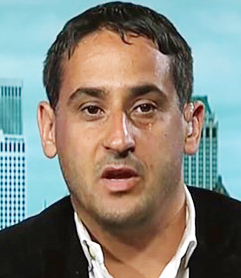
Jeremy Kuzmarov holds a Ph.D. in American history from Brandeis University and has taught at numerous colleges across the United States. He is regularly sought out as an expert on U.S. history and politics and co-hosts a radio show on New York Public Radio and on Progressive Radio News Network called “Uncontrolled Opposition.”
He is Managing Editor of CovertAction Magazine and is the author of eight books, including Obama’s Unending Wars (Clarity Press, 2019), The Russians Are Coming, Again, with John Marciano (Monthly Review Press, 2018), Warmonger. How Clinton’s Malign Foreign Policy Launched the U.S. Trajectory From Bush II to Biden (Clarity Press, 2023); with Dan Kovalik, Syria: Anatomy of Regime Change (Baraka Books, 2025), and Political Assassinations in America: The Intricate Nexus of Deep State Crime (Clarity Press, 2026).
Besides these books, Kuzmarov has published hundreds of articles and contributed to numerous edited volumes, including one in the prestigious Oxford History of Counterinsurgency .
He can be reached at jkuzmarov2@gmail.com and found on substack here.




This is an excellent well written article but I think the following statement should be double checked.”Already by the late 19th century, doctors recognized the perils of cigarette smoking, tracing 80 diseases to cigarettes and smoking and 20,000 deaths in the U.S. annually”
In the early part of the 20th century there was not much awareness of the dangers of smoking. So I think this statement should be verified.
Some sources present another timeline.
The 1930s and 1940s (Widespread Ignorance & Marketing): During this era, most doctors were unaware of the severe risks, and many smoked themselves. Tobacco companies heavily featured physicians in advertisements—using slogans like “More doctors smoke Camels than any other cigarette”—to reassure the public that smoking was safe.
In 1951, the landmark British Doctors Study was launched. By 1954, researchers Richard Doll and Bradford Hill published definitive evidence linking smoking to a massive increase in lung cancer risks. Concurrently, a large-scale study by Hammond and Horn for the American Cancer Society concluded that the link was proven “beyond a reasonable doubt
As the evidence mounted, medical organizations took action. The Journal of the American Medical Association (JAMA) banned tobacco advertisements from its pages in 1953, and the percentage of physicians who smoked began to plummet.
The awareness culminated globally when US Surgeon General Dr. Luther Terry released the historic 1964 Surgeon General’s Report on Smoking and Health. This official government document formally declared cigarette smoking a cause of lung cancer in men, permanently altering public health policy.