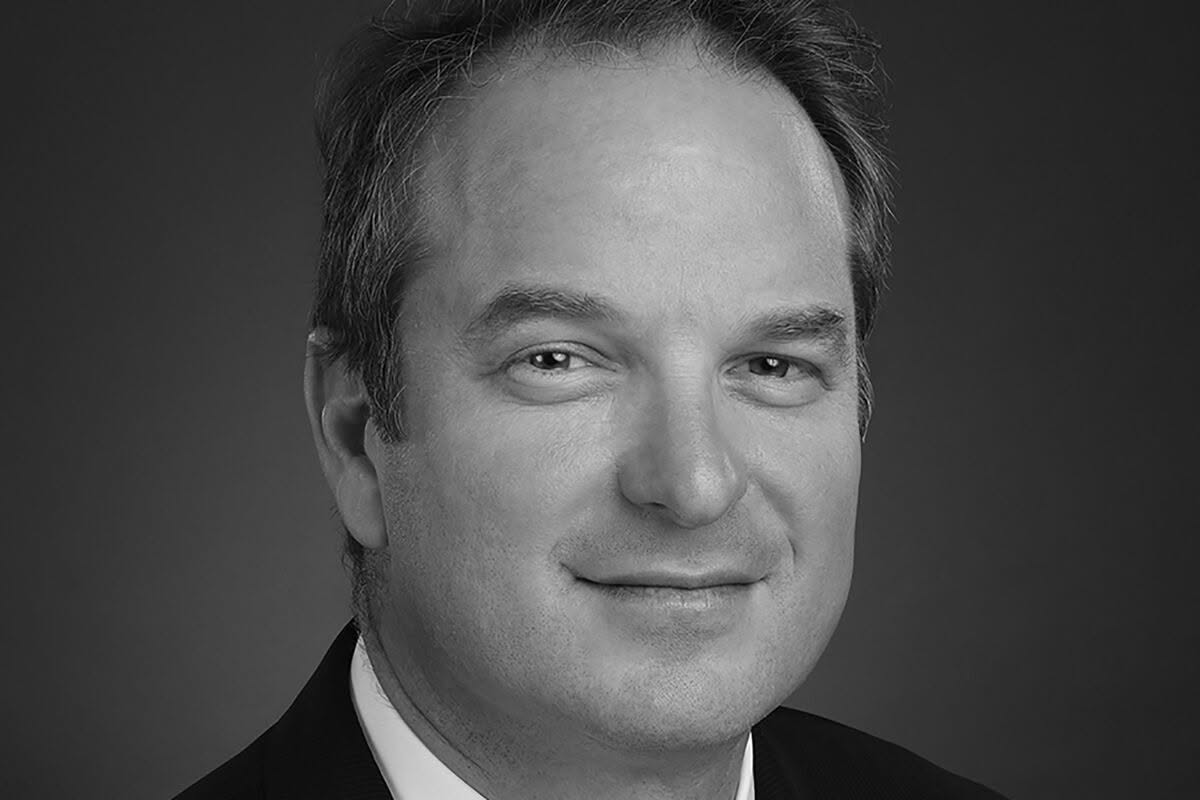
Brian Randall Kahn. It is not a name you will typically see topping the social media trends, and I am certain he would have liked it that way. Throughout most of his career he stayed in the background within the fields of private equity, hedge funds, distressed companies and all the other financial areas where money changes hands more quickly than a politician manages to avoid a subpoena.
You are familiar with this kind of setup: There are constantly multiple layers of partnerships, holding companies, advisers, sub-advisers, broker-dealers and investment vehicles, all arranged so that the people who are really in control never have to worry about being recognized at the grocery store. Kahn did well in that kind of ambiguity.
Holding a Harvard degree in economics, he founded Kahn Capital Management in the late 1990s, then appeared at Vintage Capital Management, Franchise Group, and in a network of companies that moved around hundreds of millions as if it were Monopoly money. For many years his name was found in SEC documents and corporate paperwork, not in news reports. All that changed when the authorities finally decided to aim a flashlight at his operations. In September 2025 the SEC brought charges against Kahn, Prophecy Asset Management LP, and Jeffrey Spotts of Prophecy for what was described as a long-running investor shakedown amounting to $500 million. But, of course, it must have all just been a big misunderstanding, right?
The SEC states that Prophecy had told investors their funds were safely dispersed among a large number of independent sub-advisers, all of whom were shielded by this miraculous “first-loss” arrangement, according to which the sub-advisers should have absorbed any losses before the investors did. That does sound reassuring, doesn’t it? The surprise is that the actual situation was a lot less like Disney and a lot more like a Ponzi scheme.

The regulators assert that Kahn ended up with the majority of the funds under his control, incurred trading losses so large they would have made Vegas proud, and then covered up the situation with fake documents, sham transactions, and creative accounting that even Enron would have been jealous of. By March 2020 the losses had exceeded $350 million. And yes, this was not merely a minor civil settlement. Criminal charges were quickly introduced.
On December 10, 2025, Kahn admitted to one count of conspiracy to commit securities fraud, and the SEC disclosures made by B. Riley Financial later acknowledged both the guilty plea and Kahn’s role as the previously unnamed principal sub-adviser. Therefore, on December 10, 2025, Kahn finally pleaded guilty to conspiracy to commit securities fraud. B. Riley Financial were also forced to admit in their own SEC filings that Kahn was the person behind the Prophecy scandal.
You might now be wondering: What does all this have to do with September 11, 2001?
On the surface, nothing at all. But that is where things become interesting. Well before Kahn pleaded guilty, his name had already appeared in federal records relating to the SEC’s investigation into suspicious trading right before 9/11. Is that a coincidence? Perhaps. But if you believe in coincidences, I would be happy to sell you a bridge.
In 1998 there was Capital Management LLC. The corporate and securities records describe Kahn Capital Management as an investment firm which specialized in public and private investments, including businesses involved in consumer products, manufacturing and defense. In later filings Brian R. Kahn is explicitly named as the manager and sole member of Kahn Capital Management, which makes his connection to the company direct rather than indirect. This point is important since the name Kahn Capital Management later shows up in government records connected to the SEC’s investigation into unusual securities transactions around September 11.
Another company, Kahn Capital Partners, also appears in the same government documents. The Delaware corporate records are especially significant because both Kahn Capital Management LLC and Kahn Capital Partners were incorporated in Delaware and seem to have been set up on the same day.
When those two names then appear together in government records showing purchases of the same defense contractor on the same dates during the last trading days before September 11, the fact that they appear together becomes much harder to ignore as just an irrelevant archival detail.
It still does not prove that there was prior knowledge or criminal activity, but it does raise a legitimate documentary question. What exactly were Kahn Capital Management and Kahn Capital Partners doing in early September 2001, why were both of them buying the same security on the same sequence of dates, and what conclusion did the federal regulators reach when those transactions were later examined?
The securities investigation carried out by the SEC after September 11 was much wider in scope than the limited version that most people recall. Usually, public attention has been concentrated on the “put” options relating to United Airlines and American Airlines, mainly since those transactions looked suspicious in hindsight. If someone had prior knowledge of an airline being hijacked, they might in theory attempt to make a profit by betting that the prices of the airline shares would fall, and the huge volume of certain “put” options on airlines immediately attracted public interest. However, the regulators did not restrict their review to airline shares.
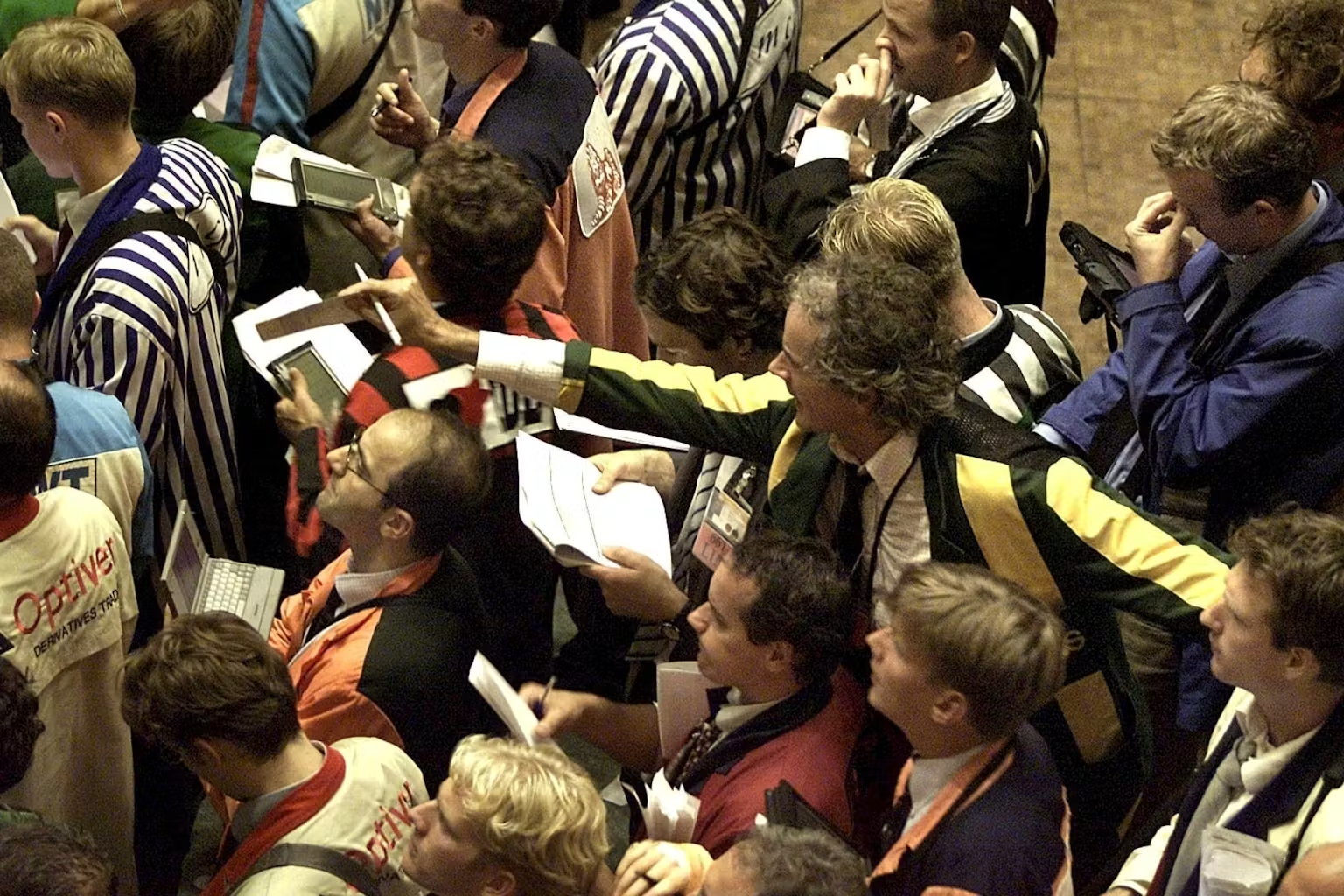
Together with other federal agencies and financial institutions, the SEC collected a large amount of information about securities trading involving companies in a variety of industries that could possibly have been impacted by a serious terrorist attack. These industries comprised airlines, insurers, banks, financial institutions, defense contractors, communications companies, businesses concerned with security, and other corporations whose share prices could rise or fall sharply as a result of an attack or the military response that followed.
The findings from this investigation were later included in the records given to the National Commission on Terrorist Attacks Upon the United States, more commonly known as the 9/11 Commission. Among these records is a large spreadsheet or “Master List” of the securities transactions and accounts that were examined after the attacks. Hidden in that list are the names Kahn Capital Management and Kahn Capital Partners. The security in question was not United Airlines, American Airlines, or an insurance company; it was L-3 Communications, trading under the symbol LLL, a defense, intelligence, communications and aerospace contractor that was rapidly expanding and whose business would become more important in the national security situation that developed after September 11.
This is where it really becomes interesting, when you look at the timing. According to the SEC’s master list, Kahn Capital Management bought 6,000 shares of L-3 Communications on September 5, 2001. The following day, it purchased another 9,000 shares, and on September 10, the last trading day before the attacks, another 10,000 shares. Isn’t that a bit like déjà vu?
Because Kahn Capital Partners, in a remarkable example of originality, carried out precisely the same actions: 6,000 shares on the 5th, 9,000 on the 6th, and 10,000 on the 10th. Although they used different brokers and had different addresses, they followed the same pattern. The records also show that, on October 8, 2001, the SEC investigated these transactions, and some of the entries are labeled “Discussed with SEC.” That is just bureaucratic shorthand for “We looked into it, but don’t ask us what we found.” Did they speak to Kahn? Or to the brokers? Did anyone actually ask why two of his companies were buying the same defense stock in perfect synchronization right before 9/11? The files do not say.
Let us consider the figures, since it is in this area that the situation becomes even more strange. When you add all the lines relating to Kahn in the SEC spreadsheet, the total is 75,000 shares of L-3 Communications. Kahn Capital Partners: three items, 25,000 shares. Kahn Capital Management: six items, 50,000 shares. If you add those together, you have 75,000 shares. That is no small amount and certainly is not the sort of figure you would expect to end up with by mistake. Nevertheless, it could simply be a clerical error or perhaps something completely different.
We must also consider what kind of company they were purchasing. L-3 Communications was no ordinary consumer brand. It was a defense and communications contractor, having only just come of age in the corporate world and yet already engaged in a number of acquisitions, focusing on all the areas that later became extremely in demand following 9/11: secure communications, surveillance, intelligence technology, aviation electronics, military training, and so on. After the attacks, spending on defense and security soared and companies such as L-3 were in a prime position to benefit.

Does that mean that every investor who bought defense shares in early September 2001 was involved in something suspicious? By no means. On the contrary, according to later SEC filings, Kahn’s own investment strategy included defense and manufacturing, so L-3 was well within the scope of his usual areas of interest. That is the straightforward explanation and it is only right to point it out.
But here is the problem: If Kahn Capital was already heavily invested in defense stocks, the investigators should have been able to obtain research reports, records of trading, broker emails, and all the typical kinds of evidence which would have shown that these purchases were nothing out of the ordinary. If such evidence exists and satisfies the SEC, then great, let’s see it.
The real issue is not that buying L-3 automatically makes something suspicious. It is that two of Kahn’s companies appear in the government’s own review of 9/11 trading, with records of matching purchases in the days leading up to the attacks, and all we are given is a vague “Discussed with SEC” comment. Nothing to see here, folks?
If Kahn had simply fallen into financial obscurity, the 2001 trades would most likely have been no more than an odd footnote among all the regulatory documentation. Instead, that is exactly what did happen. Although his subsequent guilty plea does not turn his earlier trades into criminal acts, it does indicate that he was entirely at ease in operating within the kind of financial ambiguity that causes regulators to stay awake at night.
The SEC’s 2025 complaint makes this clear: Prophecy told investors that their money was safe and diversified; in fact, Kahn controlled everything, incurred losses, and covered them up using smoke and mirrors. The investors lost hundreds of millions of dollars and Kahn in the end admitted to the fraud. Does that mean the 2001 L-3 trades were dishonest? Not necessarily. But when a person is later caught in the act, it is only natural to examine their earlier tricks, particularly when those tricks were already interesting enough to draw the attention of the SEC during one of the largest investigations in history.
Hold on, it becomes even stranger. In June 2026, at the very moment when Jeffrey Spotts, another top figure at Prophecy, was preparing for his court appearance, the government abruptly decided to withdraw. On June 5, the prosecutors requested to drop the $300 million fraud case against him. Why is that? That is a fair question. Bloomberg Law states that the federal authorities gave no public explanation, even though both Kahn and another Prophecy executive had already pleaded guilty and were ready to provide details about Spotts.
Under normal circumstances, with two insiders willing to testify, the government’s case should have been irrefutable. Yet the entire matter collapsed. What happened? According to Bloomberg, the evidence relating to Kahn involved classified information. Yes, that is what it says—classified. The public report does not specify what was classified, who classified it, or why paperwork from a hedge-fund manager would require a security clearance. The only thing we know is that the prosecution failed after the classified information connected to Kahn came to light, and no one is discussing the reason for this.
Let’s not go overboard: Just because there is classified information circulating does not prove that Kahn was working for the CIA or had a secret handshake with the NSA. Classified evidence can appear in court for a variety of reasons, such as spycraft, surveillance, third-party secrets, or simply due to bureaucratic excess. Yet it is still a new wrinkle in a story that had more than its fair share of uncertainties.

The same Brian Kahn whose companies were mentioned in the SEC’s 9/11 trading review later becomes the key witness in a major fraud case, only for the entire affair to be brought to a halt because of classified material linked to him. Is that evidence of some big connection? No, but it is a remarkable coincidence and warrants a more thorough investigation.
What exactly was classified? When did it come to light? Was it about Kahn personally or merely something he was involved with? Which agency placed the classification on it? Was it related to his trades, his emails, his business associates, or something completely unrelated? Did the government drop the trial because it did not want to reveal secrets? Bloomberg is unable to report, and the silence is overwhelming.
That is the point at which the Brian Randall Kahn story stops resembling a typical Wall Street warning tale and starts sounding more like the script of a conspiracy thriller. I am not claiming that Kahn’s trades in 2001 prove he had a crystal ball predicting 9/11, nor am I saying that the classified information in 2026 was all connected to those trades. There is no solid evidence to support either of those ideas.
Nevertheless, genuine investigation is not about proving your preferred theory; it is about identifying the odd occurrences and then asking what would actually explain them. In Kahn’s case, here is what we know: Two of his companies appear in the SEC records for purchasing the same defense stock, in identical amounts, on the same days just before 9/11. The SEC had followed up on it, but all we receive is “Discussed with SEC” with no further details.
Some 24 years later, Kahn pleads guilty to a major fraud and is then scheduled to testify against Spotts, only for the classified evidence linked to Kahn to undermine the case, and no one gives an explanation as to why. Each element may be innocent on its own. But when you put them all together, the government’s secret files on Kahn suddenly look a lot more intriguing than they did earlier.
Then what should the next step in the investigation be? Do not limit yourself to the SEC’s 2001 files; we need to look at every court document and government memo concerning the classified information issue in the Prophecy case, including anything covered by the Classified Information Procedures Act, the protective orders, the motions related to Kahn’s testimony, the Brady or Giglio disclosures, the emails regarding the classified evidence and, most importantly, the government’s reason for dropping the Spotts indictment.
It is possible that all that classified material has no connection with Kahn’s earlier financial activities. In that case, so be it, let’s sort it out. But until we know what is actually in those files, do not simply treat the cloud of classification surrounding Kahn as a minor matter.
What do we know? Kahn began by managing two little-known Delaware companies; these companies are mentioned in the SEC’s review of trades on 9/11, and some 25 years later he confesses to having committed a huge fraud. Yet, just as he is about to give testimony, classified information connected with him ruins the prosecution.
Maybe it is not all part of one big conspiracy. Nevertheless, there is definitely much more in Brian Randall Kahn’s government file than has been allowed to be seen. And if you are not wondering why, then you are not really paying attention.

References
B. Riley Financial, Inc. (2026). Annual report for the fiscal year ended December 31, 2025. U.S. Securities and Exchange Commission.
B. Riley Financial, Inc. (2026). Quarterly report for the period ended March 31, 2026. U.S. Securities and Exchange Commission.
U.S. Department of Justice, U.S. Attorney’s Office for the District of New Jersey. (September 29, 2025). Co-founder and CEO of investment fund charged in $294 million securities fraud conspiracy.
U.S. Securities and Exchange Commission. (2001). Master list of securities transactions reviewed following the September 11 attacks. In Records provided to the National Commission on Terrorist Attacks Upon the United States.
U.S. Securities and Exchange Commission. (2008). Securities filing concerning Kahn Capital Management, LLC and Brian R. Kahn.
U.S. Securities and Exchange Commission. (2017). Schedule 13G: Kahn Capital Management, LLC, Vintage Capital Management, LLC, and Brian R. Kahn.
U.S. Securities and Exchange Commission. (September 29, 2025). SEC charges Prophecy Asset Management, its CEO/CIO, and largest sub-adviser in $500 million advisory fraud (Litigation Release No. 26414).
U.S. District Court for the District of New Jersey. (2025). Securities and Exchange Commission v. Prophecy Asset Management, LP, Jeffrey Spotts, and Brian Kahn, No. 3:25-cv-16058.
Voreacos, D. (June 6, 2026). US drops $300 million fraud case that spotlighted Brian Kahn. Bloomberg Law.
CovertAction Magazine is made possible by subscriptions, orders and donations from readers like you.
Blow the Whistle on U.S. Imperialism

Click the whistle and donate
When you donate to CovertAction Magazine, you are supporting investigative journalism. Your contributions go directly to supporting the development, production, editing, and dissemination of the Magazine.
CovertAction Magazine does not receive corporate or government sponsorship. Yet, we hold a steadfast commitment to providing compensation for writers, editorial and technical support. Your support helps facilitate this compensation as well as increase the caliber of this work.
Please make a donation by clicking on the donate logo above and enter the amount and your credit or debit card information.
CovertAction Institute, Inc. (CAI) is a 501(c)(3) non-profit organization and your gift is tax-deductible for federal income purposes. CAI’s tax-exempt ID number is 87-2461683.
We sincerely thank you for your support.
Disclaimer: The contents of this article are the sole responsibility of the author(s). CovertAction Institute, Inc. (CAI), including its Board of Directors (BD), Editorial Board (EB), Advisory Board (AB), staff, volunteers and its projects (including CovertAction Magazine) are not responsible for any inaccurate or incorrect statement in this article. This article also does not necessarily represent the views the BD, the EB, the AB, staff, volunteers, or any members of its projects.
Differing viewpoints: CAM publishes articles with differing viewpoints in an effort to nurture vibrant debate and thoughtful critical analysis. Feel free to comment on the articles in the comment section and/or send your letters to the Editors, which we will publish in the Letters column.
Copyrighted Material: This web site may contain copyrighted material the use of which has not always been specifically authorized by the copyright owner. As a not-for-profit charitable organization incorporated in the State of New York, we are making such material available in an effort to advance the understanding of humanity’s problems and hopefully to help find solutions for those problems. We believe this constitutes a ‘fair use’ of any such copyrighted material as provided for in section 107 of the US Copyright Law. You can read more about ‘fair use’ and US Copyright Law at the Legal Information Institute of Cornell Law School.
Republishing: CovertAction Magazine (CAM) grants permission to cross-post CAM articles on not-for-profit community internet sites as long as the source is acknowledged together with a hyperlink to the original CovertAction Magazine article. Also, kindly let us know at info@CovertActionMagazine.com. For publication of CAM articles in print or other forms including commercial internet sites, contact: info@CovertActionMagazine.com.
By using this site, you agree to these terms above.
About the Author
Charles B. Kallas is a former Sergeant in the United States Army who served in Kandahar, Afghanistan, from 2010 to 2011.
After his military service, he built a career as an electrician at Cleveland-Cliffs Burns Harbor, one of the nation’s largest integrated steel mills. His professional experience reflects a strong commitment to skilled trades, infrastructure, and industrial excellence.
In addition to his career, Kallas has been actively involved in public service and local politics. He has run for several offices, including Indiana State Senate in 2018, Hammond, Indiana City Council in 2019, and State Representative in 2022.
Kallas has also been an outspoken advocate against local public corruption, regardless of party affiliation. He combines military discipline, industrial expertise, and political engagement to advocate for his community and contributes to meaningful civic dialogue.
Charles can be reached at charles.kallas@gmail.com.