James Phillips
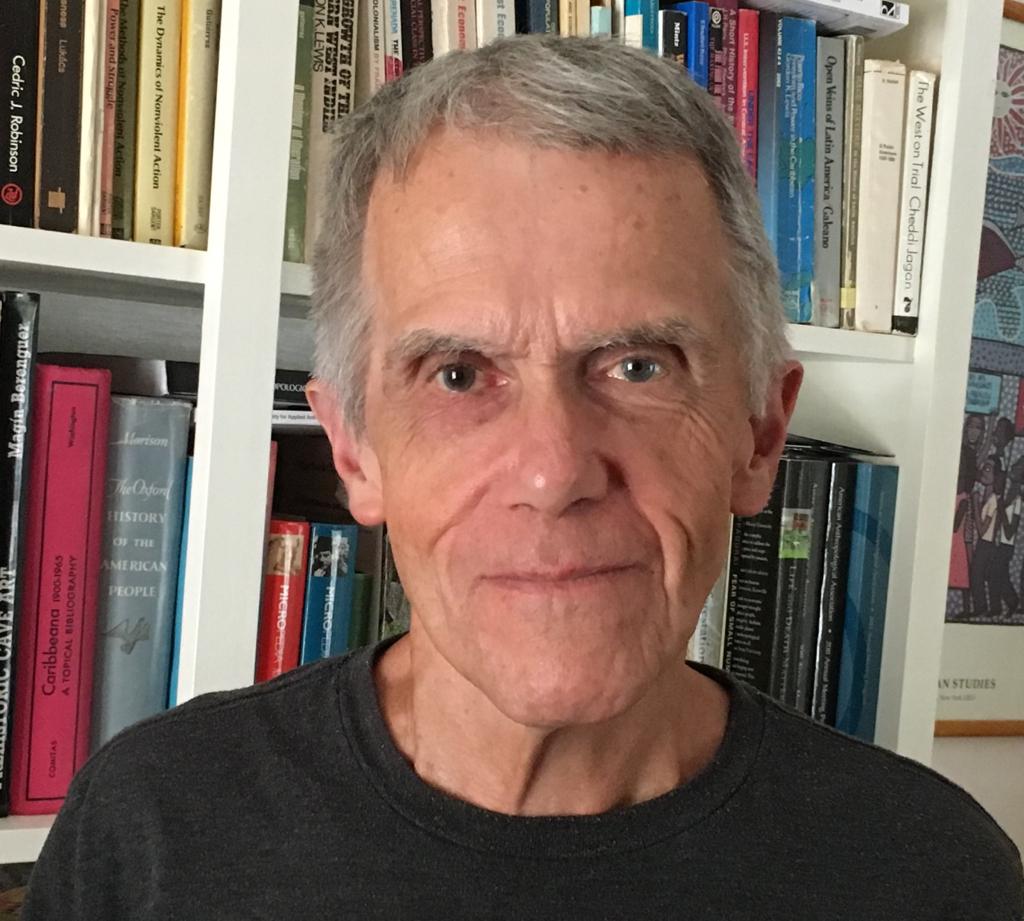
James Phillips is a cultural and political anthropologist with forty years as a student of Central America.
His major concerns are movements of social change, political conflict, human rights, colonialism, and immigrant and refugee populations.
He is the author of articles and book chapters on Honduras and Nicaragua. His most recent book is Extracting Honduras: Resource Exploitation, Displacement, and Forced Migration (Lexington Books, 2022).
James can be reached at anthrodocjp@gmail.com.

Chicopipe, Nicaragua, August 1985: Lest We Forget What Our Wars Really Mean
My wife Lucy and I lived in Nicaragua (1985-1987) during the Contra War of the 1980s as members of the long-term team of Witness for Peace. Our work was to document the effects of the war in rural...

In a December CovertAction Magazine article, I described the Honduran presidential election of November 30 and the accusations of fraud that surrounded it.
Since then, the electoral crisis has only deepened. And the widely criticized and blatant interventions of U.S. President Donald Trump in favor of National Party candidate Nasry...

Honduras held national elections on November 30. At stake were the office of president, 125 seats in the National Congress, and more than 280 mayoral and municipal governments. Three major political parties, including the two traditional National and Liberal parties, and the more recently formed LIBRE Party,...

June 25 marked the 50th anniversary of the Los Horcones massacre, a gruesome and desperate event that still haunts Honduran society and is emblematic of major forces that have shaped much of modern global history.
A thorough and well-sourced description of the Los Horcones massacre and its context is provided...

Obstacles to Change
Attempts to change the United States immigration system faces the serious problem that the current system is a very lucrative business for some powerful interests. Corporations benefit with an influx of cheap labor into the U.S.
Corporations also benefit in countries where they are free to pursue the...

Immigration has been a “hot issue” in the United States for a long time. In the 1700s, Benjamin Franklin complained about the influx of German immigrants. In the mid-1800s, there was a strong nativist movement against European immigrants, especially Catholics and Jews. In the 1880s, it was the Chinese...

On the evening of September 14, Delegate of the Word Juan López had just finished leading a Saturday evening service at the Catholic church in Tocoa, Honduras.
Witnesses say that, as he was getting to his car, someone on a motorcycle rode by and shot him multiple times, killing him.
López...

In Part 1 of this article, a brief outline of the evolution of the Monroe Doctrine makes clear how utterly destructive that doctrine and its descendants have become to the nations of Latin America and the United States, both to its relationship to Latin America and to the fundamental...

Last December, U.S. Representative Nydia Velázquez (D-NY) introduced Resolution 943 in Congress, to have the United States formally renounce and annul the Monroe Doctrine. Meanwhile, the government of Honduran President Xiomara Castro has withdrawn Honduras from an arbitration mechanism in the Central American Free Trade Agreement (CAFTA) that allows...

The dangers of a coup remain, given past policies
In November 2021, Hondurans resoundingly elected a new government, headed by President Xiomara Castro, that pledged to end official corruption, reduce violence, and move away from reliance upon a destructive, extractive economy controlled by foreign corporations.
Castro’s government committed to moving the...


 Radhika Desai is a Professor of Political Studies at the University of Manitoba, Winnepeg, Canada, Director of its Geopolitical Economy Research Group, and Convenor of the International Manifesto Group. Ms. Desai is an author of multiple books, including Geopolitical Economy(2013) and her most recent Capitalism, Coronavirus and War(2022). Ms. Desai hosts a fortnightly show, Geopolitical Economy Hour on the Geopolitical Economy Report website.
 Yan Pan is a Chinese PhD researcher at LUT University, Finland. Her work examines the political economy of China’s technological and industrial development, with a particular focus on the industrialization and governance of neurotechnology in China. Her research concerns industrial policy models for future industries in Chinese and Global South contexts. Prior to her PhD, she researched educational reforms and structural change in labor demand in China.
 Ken Hammond is professor emeritus of East Asian and Global History at New Mexico State University. He has lived and worked in China from time to time since 1982. A lifelong political activist, he is a member of the Party for Socialism and Liberation.