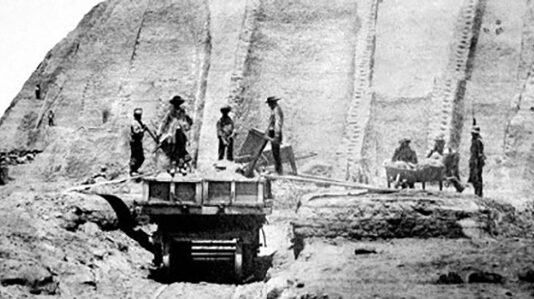
Plantation Owners Lobbied the U.S. Government to Acquire Over 100 Pacific Islands Between 1855 and 1900
In the mid 19th century, the U.S. military kidnapped Pacific Islanders and African-Americans or otherwise lured them to remote and largely uninhabited Pacific islands so they could work on plantations producing guano that could...
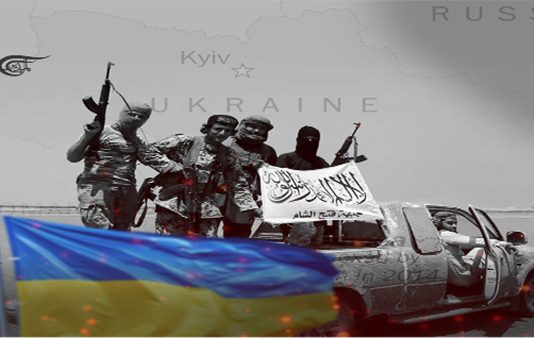
Turning and turning in the widening gyreThe falcon cannot hear the falconerThings fall apartThe center cannot holdMere anarchy is loosed upon the world...William Butler Yeats
As I wrote four years ago in 2018 after visiting Iran, there is a battle for civilization taking place. And note how I phrased this:...

New study finds U.S. responsible for nearly 300 million deaths—and counting
In September, the Victims of Communism Memorial Foundation—established by a bipartisan act of Congress in 1993—opened the Victims of Communism Museum in Washington, D.C., which aims to spotlight the plight of the alleged 100 million victims of Communist ideology.
The...

The Russians are Coming
On a rare, warm summer day without rain and roaring wind, my love (Jette) and I took a walk over a green field alongside a promontory of Køge Bay in southeast Denmark. Another nature lover came by as we heard a lark signaling high above its...

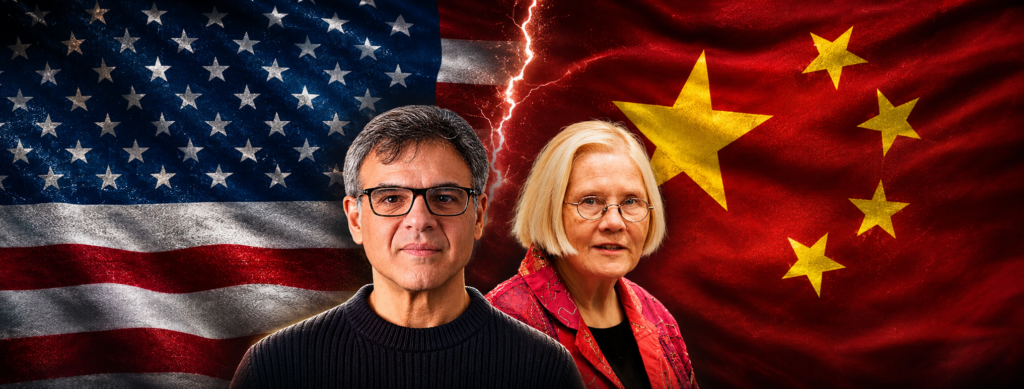
 Radhika Desai is a Professor of Political Studies at the University of Manitoba, Winnepeg, Canada, Director of its Geopolitical Economy Research Group, and Convenor of the International Manifesto Group. Ms. Desai is an author of multiple books, including Geopolitical Economy(2013) and her most recent Capitalism, Coronavirus and War(2022). Ms. Desai hosts a fortnightly show, Geopolitical Economy Hour on the Geopolitical Economy Report website.
 Yan Pan is a Chinese PhD researcher at LUT University, Finland. Her work examines the political economy of China’s technological and industrial development, with a particular focus on the industrialization and governance of neurotechnology in China. Her research concerns industrial policy models for future industries in Chinese and Global South contexts. Prior to her PhD, she researched educational reforms and structural change in labor demand in China.
 Ken Hammond is professor emeritus of East Asian and Global History at New Mexico State University. He has lived and worked in China from time to time since 1982. A lifelong political activist, he is a member of the Party for Socialism and Liberation.