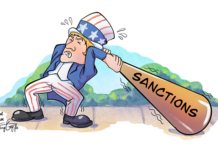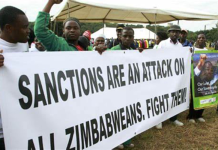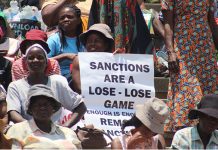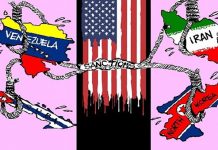
In the light of the proliferation of unilateral coercive measures (UCMs, wrongly characterized “sanctions”) and the adverse human rights impacts they generate worldwide,[1] the question arises what measures States should adopt to counter the UCM plague.
Diplomatic protection on behalf of individuals and corporations harmed by UCMs is an under-utilized foreign policy tool that can be exercised through formal protest, retorsion, counter-measures, arbitration, adjudication before international tribunals, declaring the Ambassador of the imposing State persona non grata, expelling diplomats.
Bearing in mind that the UN General Assembly and UN Human Rights Council adopt yearly resolutions condemning UCMs as being contrary to the UN Charter and in violation of customary international law, and considering the growing number of scholarly studies and reports documenting the lethality of UCMs,[2] it is hard to understand why affected States have not organized a robust pushback against this systematic violation of State sovereignty and illegal interference in the internal affairs of States.
It is time for the “global Majority” represented in the BRICS,[3] the Shanghai Cooperation Organization,[4] and the Non-Aligned Movement to join forces to reject the arrogant imposition of “sanctions” by the U.S. and EU in ways that adversely impact their economies, and generate suffering and in some cases trigger humanitarian crises.
The U.S. and EU have zero right to “punish” countries like Cuba, Iran, Nicaragua, Russia, Venezuela and Zimbabwe. Legal sanctions can only be imposed by the UN Security Council. UCMs constitute an illegal and illegitimate use of force, prohibited in Article 2(4) of the UN Charter.
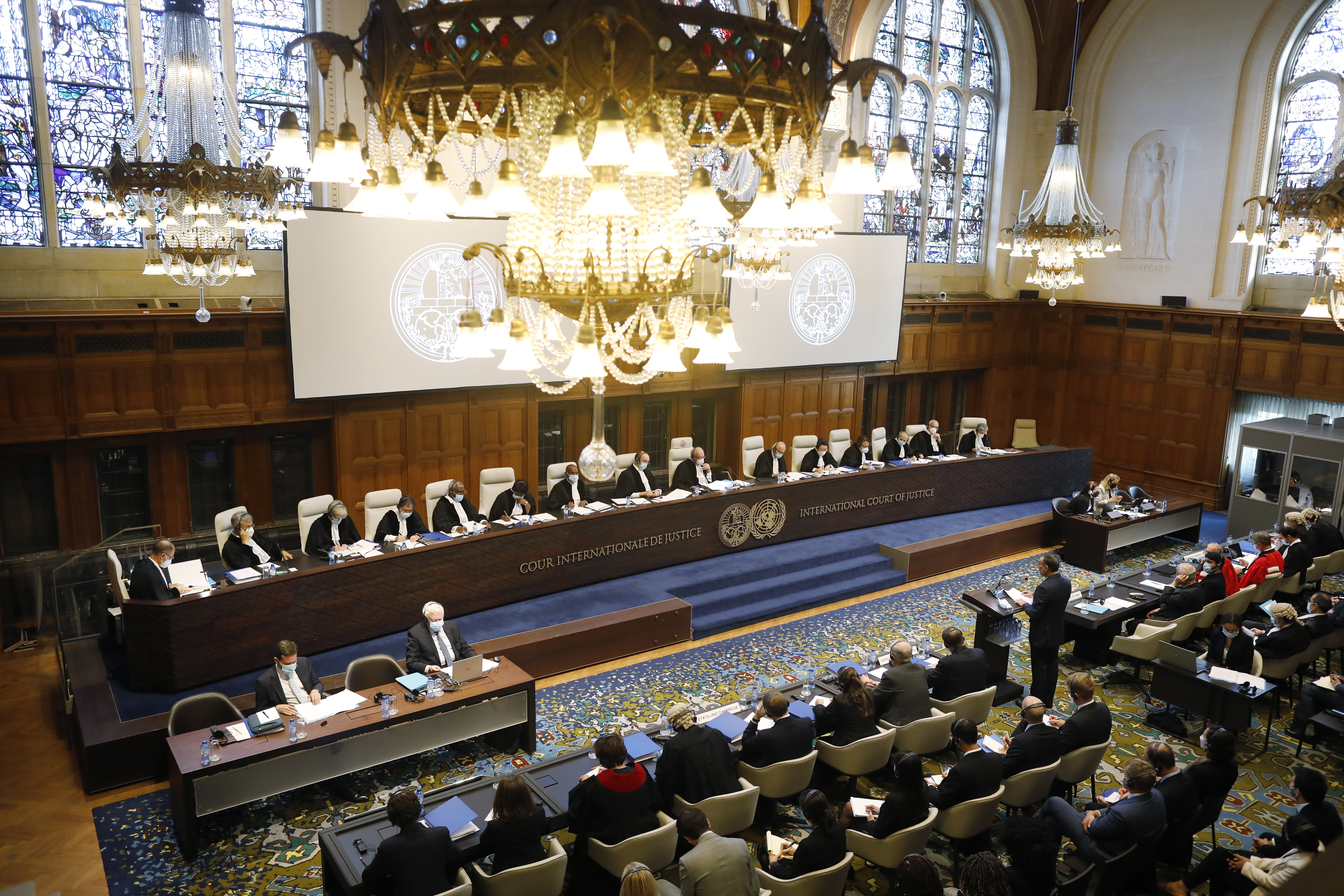
States affected by U.S. and EU unilateral coercive measures should challenge their legality before the International Court of Justice (ICJ) the International Criminal Court (ICC), as well as international and regional judicial and quasi-judicial instances, including the Human Rights Committee (HRC), the Committee on Economic, Social and Cultural Rights (CESCR), the European Court of Human Rights (ECHR),[5] the Inter-American Court of Human Rights (IACHR), and the African Court on Human and Peoples’ Rights (ACtHPR),[6] which provide for inter-State[7] complaint procedures.
Undoubtedly, States have the right to exercise diplomatic protection to defend the rights of their subjects and demand compensation on their behalf. Moreover, States should reaffirm the fundamental principle of sovereignty and demand reparation for the violation of the principle of non-intervention in their internal affairs through the extra-territorial application of foreign laws.
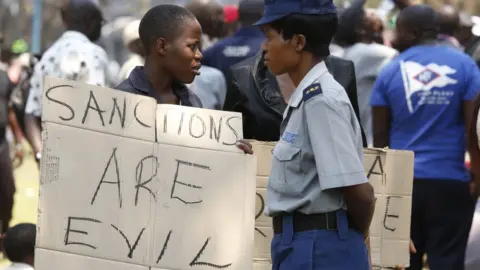
Negative Human Rights Impacts of UCMs
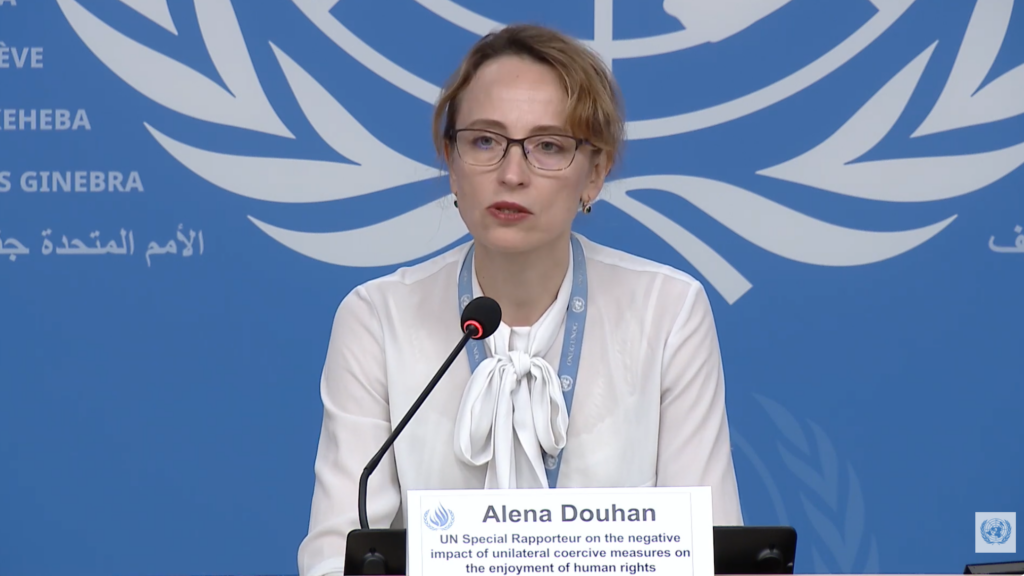
The UN Special Rapporteur on UCMs, Professor Alena Douhan,[8] has submitted some 14 reports to the UN General Assembly and to the Human Rights Council. She has conducted country visits to countries affected by UCMs and documented gross violations of human rights generated by them, amounting to crimes against humanity within the meaning of Article 7 of the Statute of the International Criminal Court.[9]
Researchers have documented the devastating impacts of UCMs on one-third of the population of the planet,[10] which every year have caused, according to a study by experts published in the British medical journal The Lancet,[11] an estimated half a million deaths worldwide. Undoubtedly this constitutes a crime against humanity.
A separate report on UCMs as a form of unlawful collective punishment concerns the hybrid economic war and draconian measures, including financial blockades, adopted by the U.S. against Venezuela. The study, by Professor Jeffrey Sachs (Columbia University) and Dr. Mark Weisbrot (Center for Economic and Policy Research in Washington, D.C.), concluded that, for the year 2018 alone, 40,000 deaths in Venezuela could be attributable to the adverse impacts of UCMs on nutrition and health.[12]
My own research during and following my official visit to Venezuela in November/December 2017[13] made me conclude that at least 100,000 UCM-related deaths had occurred.[14]
Besides death, illness and malnutrition, UCMs generate distressing economic, social and cultural impacts. UCMs have destroyed supply chains and voided the benefits of globalization, led to bankruptcies, unemployment, increased corruption associated with black markets, triggered uncontrolled flows of economic migration and triggered humanitarian crises. All of these violations of international law and human rights are justiciable before national and international fora.
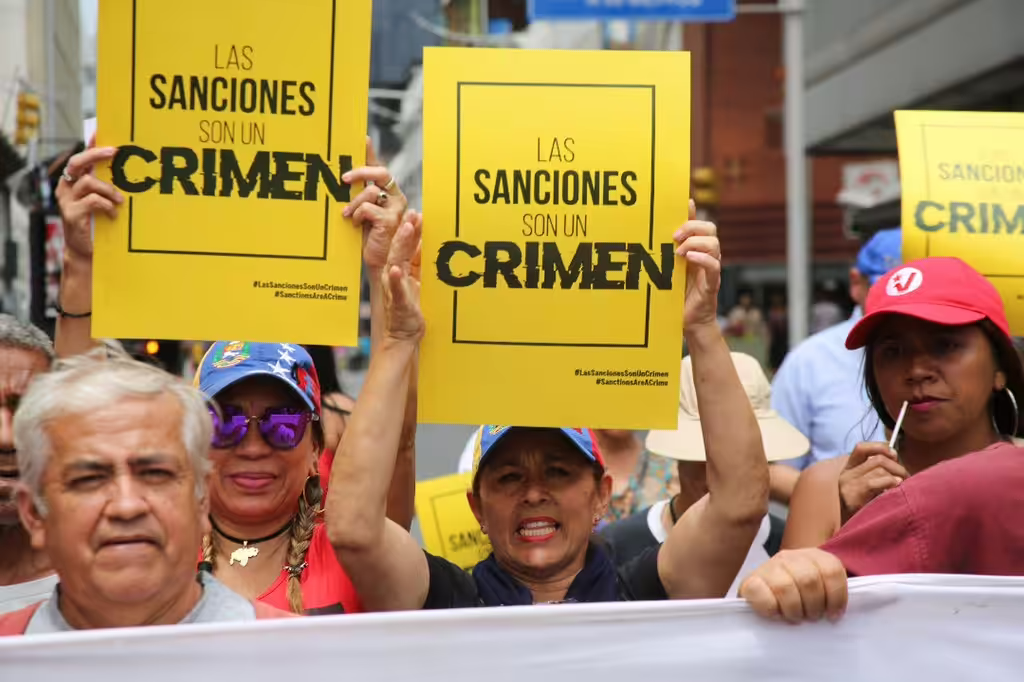
The Law of Diplomatic Protection
As we know from customary international law, the idea that a State has a right to protect its subjects vis-à-vis other States is a given. It was expressed as early as the 18th century by Emmerich de Vattel in his treatise The Law of Nations:
“Whoever uses a citizen ill, indirectly offends the state, which is bound to protect this citizen; and the sovereign of the latter should avenge his wrongs, punish the aggressor, and, if possible, oblige him to make full reparation.”[15]
The Permanent Court of International Justice and the International Court of Justice have concretized and expanded this doctrine.
In its famous Mavrommatis Judgment of 1924, the Permanent Court of International Justice summarized diplomatic protection as follows:
“It is an elementary principle of international law that a State is entitled to protect its subjects, when injured by acts contrary to international law committed by another State…By taking up the case of one of its subjects and by resorting to diplomatic action or international judicial proceedings on his behalf, a State is in reality asserting its own rights – its right to ensure, in the person of its subjects, respect for the rules of international law.”[16]

In the 1927 Chorzow Factory Case,[17] Germany espoused the rights of German subjects who had suffered discriminatory confiscations by Polish authorities. The PCIJ ruled that Poland owed compensation to the victims.

The International Court of Justice expanded this principle in the Barcelona Traction Case holding that diplomatic protection can be exercised on behalf of corporations, besides individuals. It also elaborated the notion of obligations owed erga omnes to the international community.
Other significant cases concern human rights matters, e.g., the LaGrand v. United States case,[18] and the Avena v. United States case,[19] both concerning failure of the US to abide by the Vienna Convention on Consular Relations and the imposition of the death penalty on two German nationals and on 51 Mexican nationals. Notwithstanding “provisional measures” issued by the court to prevent the execution of these German and Mexican citizens, the United States proceeded to execute the foreign nationals.
International Law Commission
In 2006, the International Law Commission[20] adopted draft Articles on Diplomatic Protection, for regulating the entitlement and exercise of diplomatic protection, largely codifying established practice.

The ILC rapporteur, Professor John Dugard, has proposed a definition: “A State is responsible for injury to an alien caused by that State’s wrongful act or omission. Diplomatic protection is the procedure employed by the State of nationality of the injured person to secure protection of that person, and to obtain reparation for the internationally wrongful act inflected. Such protection extends to both natural and legal persons.”[21]
Recent ICJ jurisprudence built on the concept of diplomatic protection
In its 1980 judgment in the United States Diplomatic and Consular Staff in Tehran case,[22] the U.S. exercised diplomatic protection on behalf of its diplomats. The ICJ decided that “the Islamic Republic of Iran…has violated in several respects, and is still violating, obligations owed by it to the United States of America under international conventions in force.
More recently, in the 2023 case of Certain Iranian Assets (Islamic Republic of Iran v. United States of America),[23] Iran represented the rights of its citizens, corporations and banks affected by unilateral U.S. decrees. In its 2023 judgment, the Court held that the United States of America had violated its obligation under Articles III and IV of the 1955 Treaty of Amity, Economic Relations, and Consular Rights…”
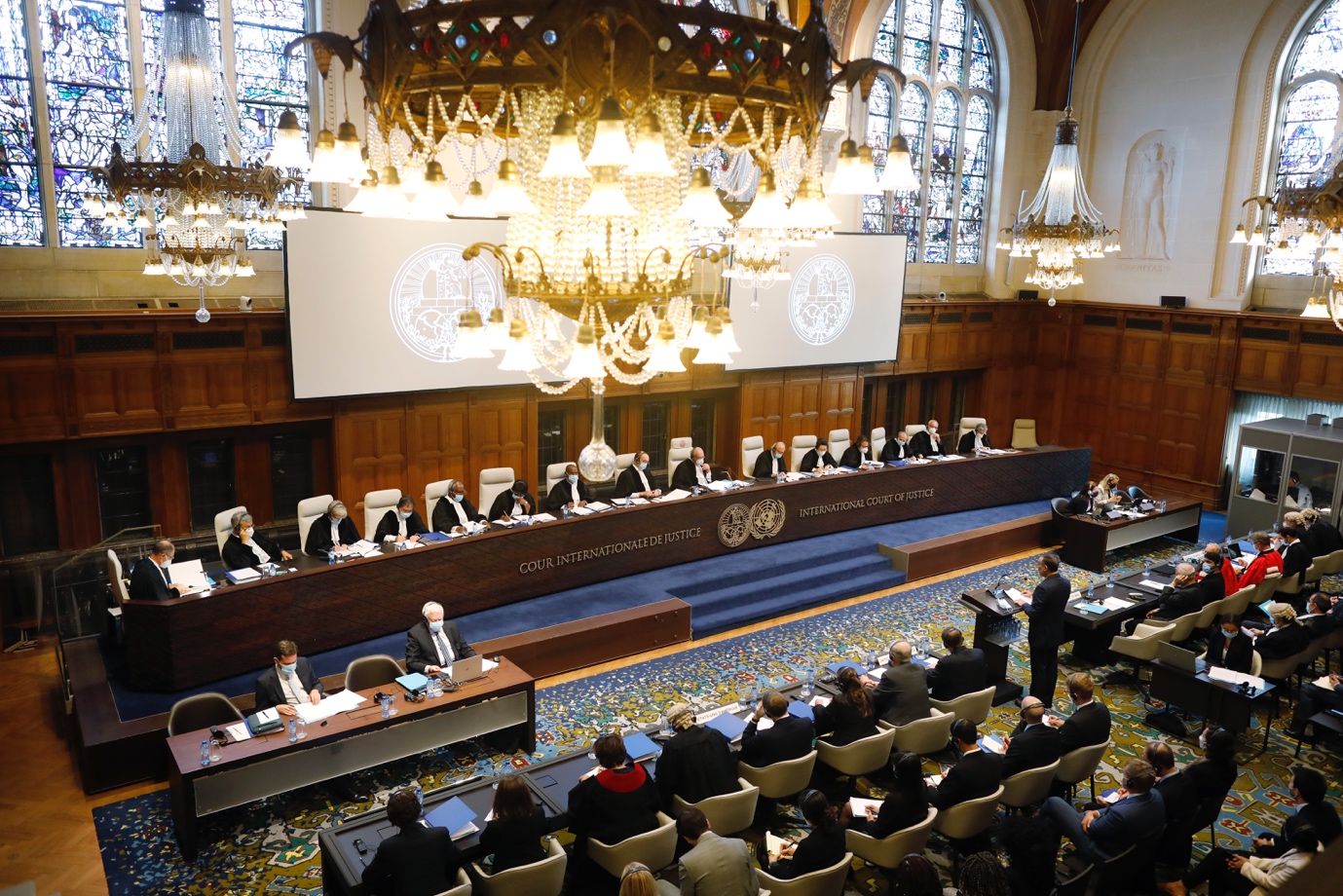
In the 2012 judgment in Ahmadou Sadio Diallo (2012),[24] the Republic of Guinea successfully defended the rights of its citizens in the Democratic Republic of the Congo. The ICJ held that, “in respect of the circumstances in which Mr. Diallo was expelled from Congolese territory on 31 January 1996, the Democratic Republic of the Congo violated Article 13 of the International Covenant on Civil and Political Rights and Article 12, paragraph 4, of the African Charter on Human and Peoples’ Rights…”
In a separate opinion the late Judge Cançado Trindade, notes “that ours are the times of a new jus gentium, focused on the rights of the human person, individually or collectively.”
These judicial ruminations have implications for the relevance of diplomatic protection today and the growing importance of asserting human rights through diplomatic protection and ICJ adjudication.
Indeed, if States affected by UCMs were to challenge the legality of UCMs before the ICJ, focusing on the obvious violations of multiple articles of the ICCPR, ICESCR, CRC, ECHR, etc. The ICJ would have no option but to rely on its own precedents and explicitly condemn UCMs as contrary to the UN Charter and fundamental principles of international law.
Jurisprudence of the European Court of Human Rights
The ECHR judgment of May 10, 2001, in the case Cyprus v. Turkey[25] can be used as a model for inter-state complaints against European states that impose UCMs. In the Cyprus judgment the Court held that Turkey had violated Articles 2, 3 and 5 of the European Convention and a continuing violation of Article 1 of Protocol No. 1 by virtue of the fact that Greek-Cypriot owners of property in northern Cyprus are being denied access to and control, use and enjoyment of their property as well as any compensation for the interference with their property rights (paragraph 189):
“There has been a violation of Article 13 of the Convention by reason of the failure to provide to Greek Cypriots not residing in northern Cyprus any remedies to contest interferences with their rights under Article 8 of the Convention and Article 1 of Protocol No. 1 (paragraph 194)…”
China Deploys Diplomatic Protection on Behalf of Huawei’s Chief Financial Officer, Detained in Canada
In December 2018, Ms. Meng Wanzhou, deputy chairperson of Huawei, the Chinese multinational technology corporation, was detained at Vancouver International Airport for questioning, which lasted three hours. She was subsequently arrested on a provisional U.S. extradition request concerning evasion of U.S. UCMs against Iran.
In January 2019, the U.S. brought charges against Wanzhou and the first extradition hearing followed, which only concluded in May 2020, when the Supreme Court of British Columbia ordered the extradition to proceed, notwithstanding the submissions by Meng’s lawyers concerning the unlawful detention of Meng, unlawful search and seizure, extradition law violations and other violations of international law. Meng was released from house arrest and returned to China in September 2021.
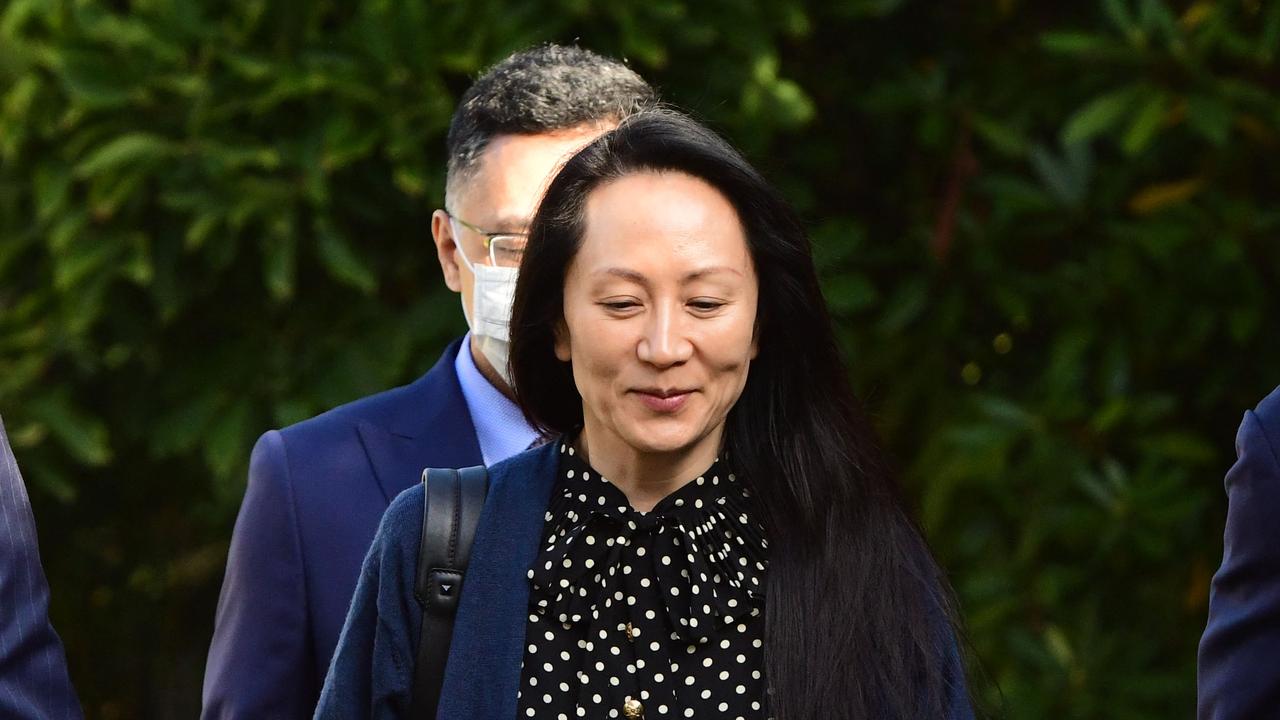
The BBC reported: “In 2019, the U.S. imposed sanctions on Huawei and placed it on an export blacklist, cutting it off from key technologies. There was much backdoor diplomacy and very little genuine diplomacy, although the Huawei case would have been a perfect occasion to further develop the jurisprudence on diplomatic protection, but China chose to employ other—perhaps more robust—means.
Violations of Human Rights Treaties Require Resolute Pushback from States, Including Through Diplomatic Protection
Because of the erga omnes character of human rights treaties, all States have a legitimate interest in defending the principle of human dignity and the necessity to ensure that all States parties to the ICCPR, ICESCR, ICERD and CRC are enforced worldwide and that obstacles to their implementation, such as UCMs, are removed. This erga omnes obligation of States encompasses effective support of persons under their jurisdiction, including by opening contentious cases before international courts and expert committees, and by assisting victims in submitting cases where individuals have standing. Where individuals have no standing (e.g., before the ICJ and ICC), it is the State that should use all international instances to vindicate the human rights of their subjects.
Interim Measures of Protection
While diplomatic protection could be used in thousands of cases, States have failed to use this foreign policy tool effectively. Whenever a State brings a case before the ICJ, it should also consider asking for “provisional measures” under Article 41 of the ICJ statute.[26] These interim measures are binding.
In numerous UCM cases, there would be irreparable damage unless the violation is immediately stopped. This is certainly the case with some U.S. and EU sanctions that place the targeted person in legal limbo without recourse, and in cases of comprehensive UCMs, expose the populations to hunger, disease and ultimately to death. In some cases, it can be said that the failure of the State to assert the rights of its citizens amounts to a “denial of justice,” a separate and distinct violation of human rights committed by the State that fails to act on behalf of its aggrieved citizens.
Among culpable omissions by States, we can think of Australia’s inaction to protect the rights of its citizen Julian Assange, when he was being subjected to persecution by the U.S., UK, Sweden and Ecuador, a scandal of major proportions which the UN Special Rapporteur on Torture, Professor Nils Melzer, documented meticulously in his book Der Fall Julian Assange (Munich: Piper, 2022).
Far worse than the Dreyfus Affair in France in the 1890s, the Assange affair revealed a serious breakdown in the rule of law in the U.S., UK, Sweden and Ecuador, and yet Australia did nothing until Prime Minister Anthony Albanese commenced negotiations with the U.S. and UK that led to Assange’s release. Yet, Assange was not compensated for the humiliations and psychological torture he endured.
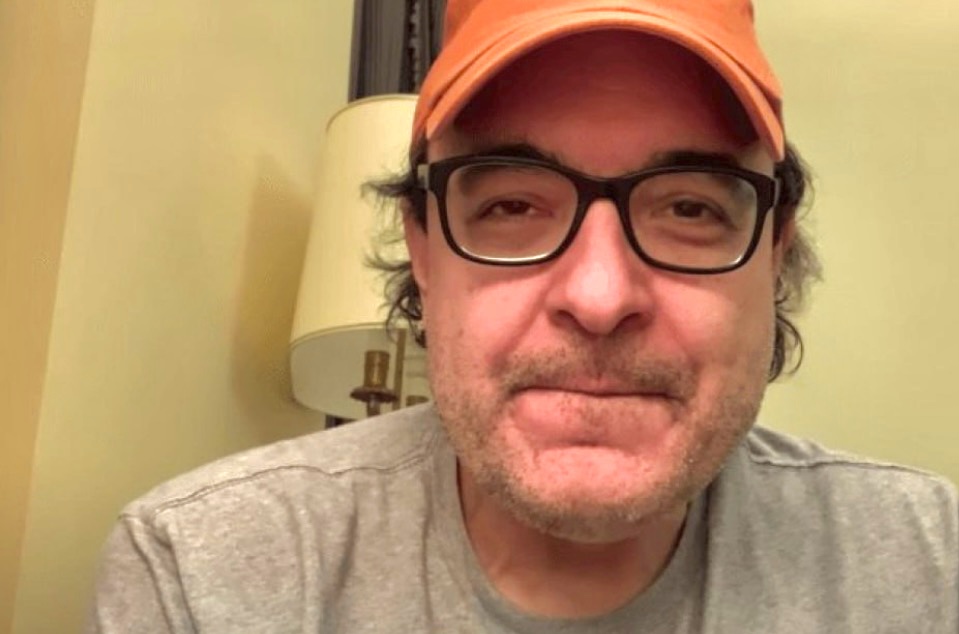
Another scandalous failure was that of the U.S. that did nothing to protect U.S. journalist and filmmaker Gonzalo Lira,[27] who died in a Ukrainian prison in 2024. The U.S. could and should have used diplomatic protection on behalf of Gonzalo Lira, as many NGOs demanded, but the U.S. deliberately failed to do so.
Yet another example is the failure of the governments of Switzerland, France and Germany to effectively challenge the imposition of EU sanctions against their citizens. The case of the retired Swiss colonel and intelligence officer Jacques Baud is emblematic. The Geneva International Peace Research Institute filed a formal protest with the Council of the European Union. The specious response by the CEU added insult to injury. They persist in their illegality

Still another culpable inaction concerned the arrest and detention of the German journalist Billy Six by Venezuelan authorities in October 2018. I knew of Billy’s courageous journalistic activities, including in Syria and Ukraine, for years and was surprised to hear of his detention for “espionage”. Luckily, I had been in Venezuela on official UN Mission in November/December 2017 and had written a long report to the Human Rights Council.
My mission had been successful: In December 2017 80 detainees were released, and another 40 early in 2018. My working relationship with Foreign Minister Jorge Arreaza and with the Attorney-General Tarek William Saab was professional. Thus, I took the liberty to advocate Billy’s release in December 2018 and again in February 2019 when Arreaza was in Geneva for the Human Rights Council
I was surprised to learn that the German Foreign Office had ignored the case and failed to intervene, although many in German society, including Reporters without Borders, were appealing to Berlin to exercise diplomatic protection.
It has been reported that the Russian Foreign Minister himself prevailed upon Venezuela to release Billy, not his country of nationality. That may well be. But in an article published in Deutschland Magazine, Billy thanked me for my advocacy. Apparently Germany failed to act on his behalf because in his journalistic work he had been critical of German foreign policy.

Is Diplomatic Protection Only Discretionary?
To this day many governments maintain that the exercise of diplomatic protection is a political act and remains a discretionary matter, one of the many tools of foreign policy of every sovereign State.
Even if it has not yet coagulated into law and practice, an exception to the “discretionary” approach is emerging because of the erga omnes obligations of all States to promote and protect human rights, to prevent genocide and crimes against humanity.
Genocide must not only be punished, it must be prevented, and States have an obligation to do so by every means available, including diplomatic protection. This entails pro-active defense of persons threatened with extermination, and punishment of those responsible for persecution and genocide. In other words, there is no discretion in the use of diplomatic protection when the violations of human rights entail crimes against humanity or genocide.
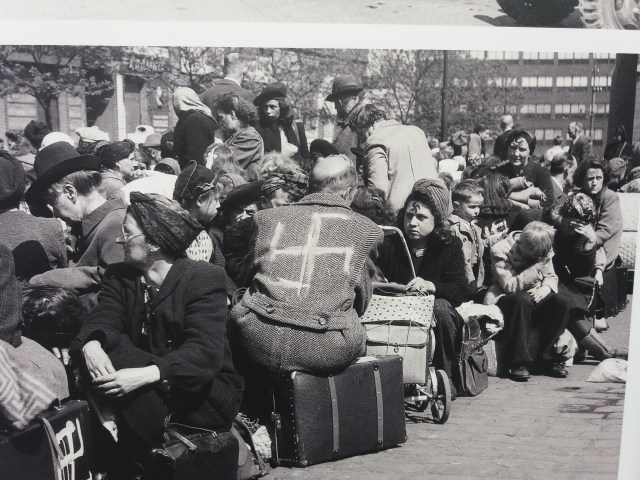
Professor Eckart Klein wrote in his book on Diplomatischer Schutz[28] that the German government was obliged to exercise diplomatic protection on behalf of its citizens who endured the most brutal mass expulsion of the 20th century—the 15 million Germans expelled from their homes in East Prussia, Pomerania, Bohemia and Moravia at the end of the Second World War from territories where their ancestors had lived for 700 years. Two million died in the process.
A New Definition of “Diplomatic Protection”
It is time for the International Law Commission to resume its work on diplomatic protection and to adopt a viable definition of the concept, even if some countries, including those imposing UCMs, are likely to oppose this initiative.
The definition could be formulated as follows:
| Diplomatic protection is a foreign policy tool that every sovereign state can exercise to defend and protect the rights of its citizens and corporations against actions by foreign states that adversely impact the rights of both the injured state and its subjects. Among the foreign acts that can be challenged through diplomatic protection are confiscations of property, financial blockades, hybrid economic warfare, and the imposition of unilateral coercive measures. When the right of a citizen is violated, the violation also impacts the sovereignty and honour of the state of nationality. It also affects the erga omnes obligations of the state of nationality to fulfil its obligations under international human rights treaties and its duty to promote and protect the human rights of its subjects. Diplomatic protection can be exercised inter alia through formal diplomatic protests, retorsion, countermeasures, arbitration, and adjudication by international tribunals. Diplomatic protection is not only discretionary, it constitutes a peremptory obligation of the State if the international wrongful acts amount to gross violations of human rights, crimes against humanity or genocide. |
Conclusion and Recommendations
Diplomatic protection remains an under-utilized foreign policy tool. In the light of the proliferation of UCMs and their lethal consequences, it is imperative that states systematically counter this lawless development diplomatically, politically and judicially.
UCMs are demonstrably more damaging than the problems they are supposed to remedy.
As the Roman poet Vergilius wrote: Aegrescit medendo. “The cure is worse than the disease.” Economic sanctions and blockades have been shown to take a yearly toll of hundreds of thousands of lives worldwide. They have been notoriously ineffective in achieving their geopolitical aim of inducing undemocratic “regime change.”
UCMs have been noxious and counterproductive for all concerned, UCMs make me think of the obsolete medical practice of blood-letting, that over centuries contributed to the demise of so many victims of medical malpractice, including King Charles II, George Washington and Lord Byron.

https://www.ohchr.org/en/unilateral-coercive-measures ↑
https://mronline.org/2025/07/28/sanctions-as-deadly-as-war-lancet-study-finds-u-s-led-sanctions-kill-over-500000-people-annually/ ↑
https://infobrics.org/ ↑
https://eng.sectsco.org/ ↑
https://www.echr.coe.int/documents/d/echr/Press_Q_A_Inter-State_cases_ENG ↑
https://www.african-court.org/afchpr/ ↑
https://www.biicl.org/documents/153_inter-state_complaints_in_international_human_rights_law_-_event_report.pdf ↑
https://www.ohchr.org/en/special-procedures/sr-unilateral-coercive-measures ↑
https://www.icc-cpi.int/ ↑
https://yjil.yale.edu/posts/2023-06-20-unilateral-coercive-measures-effects-and-legality-issues ↑
https://www.thelancet.com/journals/langlo/article/PIIS2214-109X(25)00189-5/fulltext
https://www.ft.com/content/99206b73-92c4-41f1-9677-d4a1e6fc78b1
https://peoplesdispatch.org/2025/08/02/every-year-sanctions-kill-more-people-than-wars/ ↑
https://cepr.net/images/stories/reports/venezuela-sanctions-2019-04.pdf ↑
https://www.ohchr.org/en/documents/country-reports/ahrc3947add1-report-independent-expert-promotion-democratic-and-equitable ↑
https://venezuelanalysis.com/sanctions-kill/ ↑
https://foundationfortruthinlaw.org/Files/The-Law-of-Nations-or-the-Principles-of-Natural-Law-(1758)Emmeric.pdf, Book2, chapter 6, p. 182. ↑
https://www.worldcourts.com/pcij/eng/decisions/1924.08.30_mavrommatis.htm ↑
https://icj-cij.org/sites/default/files/permanent-court-of-international-justice/serie_A/A_09/28_Usine_de_Chorzow_Competence_Arret.pdf. ↑
https://icj-cij.org/case/104 ↑
https://icj-cij.org/case/128 ↑
https://legal.un.org/ilc/texts/instruments/english/draft_articles/9_8_2006.pdf [NOTE: Close space below] ↑
Oxford, 2021. https://opil.ouplaw.com/display/10.1093/law:epil/9780199231690/law-9780199231690-e1028 ↑
https://icj-cij.org/case/64 ↑
https://icj-cij.org/case/164 ↑
https://icj-cij.org/case/103 ↑
https://hudoc.echr.coe.int/eng#{%22itemid%22:[%22001-59454%22]} ↑
1. The Court shall have the power to indicate, if it considers that circumstances so require, any provisional measures which ought to be taken to preserve the respective rights of either party.
2. Pending the final decision, notice of the measures suggested shall forthwith be given to the parties and to the Security Council. ↑
https://thegrayzone.com/2024/01/12/gonzalo-lira-dies-ukrainian-prison/
https://thegrayzone.com/2024/01/12/gonzalo-lira-dies-ukrainian-prison/ ↑
Kulturstiftung der deutschen Vertriebenen, Bonn, 1992, pp. 36-45, 78-79. Professor Felix Ermacora (Universität Wien) wrote in the same sense with regard to the expelled Germans of Bohemia and Moravia, Die Sudetendeutschen Fragen (Munich: Langen Müller, 1992). ↑
CovertAction Magazine is made possible by subscriptions, orders and donations from readers like you.
Blow the Whistle on U.S. Imperialism

Click the whistle and donate
When you donate to CovertAction Magazine, you are supporting investigative journalism. Your contributions go directly to supporting the development, production, editing, and dissemination of the Magazine.
CovertAction Magazine does not receive corporate or government sponsorship. Yet, we hold a steadfast commitment to providing compensation for writers, editorial and technical support. Your support helps facilitate this compensation as well as increase the caliber of this work.
Please make a donation by clicking on the donate logo above and enter the amount and your credit or debit card information.
CovertAction Institute, Inc. (CAI) is a 501(c)(3) non-profit organization and your gift is tax-deductible for federal income purposes. CAI’s tax-exempt ID number is 87-2461683.
We sincerely thank you for your support.
Disclaimer: The contents of this article are the sole responsibility of the author(s). CovertAction Institute, Inc. (CAI), including its Board of Directors (BD), Editorial Board (EB), Advisory Board (AB), staff, volunteers and its projects (including CovertAction Magazine) are not responsible for any inaccurate or incorrect statement in this article. This article also does not necessarily represent the views the BD, the EB, the AB, staff, volunteers, or any members of its projects.
Differing viewpoints: CAM publishes articles with differing viewpoints in an effort to nurture vibrant debate and thoughtful critical analysis. Feel free to comment on the articles in the comment section and/or send your letters to the Editors, which we will publish in the Letters column.
Copyrighted Material: This web site may contain copyrighted material the use of which has not always been specifically authorized by the copyright owner. As a not-for-profit charitable organization incorporated in the State of New York, we are making such material available in an effort to advance the understanding of humanity’s problems and hopefully to help find solutions for those problems. We believe this constitutes a ‘fair use’ of any such copyrighted material as provided for in section 107 of the US Copyright Law. You can read more about ‘fair use’ and US Copyright Law at the Legal Information Institute of Cornell Law School.
Republishing: CovertAction Magazine (CAM) grants permission to cross-post CAM articles on not-for-profit community internet sites as long as the source is acknowledged together with a hyperlink to the original CovertAction Magazine article. Also, kindly let us know at info@CovertActionMagazine.com. For publication of CAM articles in print or other forms including commercial internet sites, contact: info@CovertActionMagazine.com.
By using this site, you agree to these terms above.
About the Author
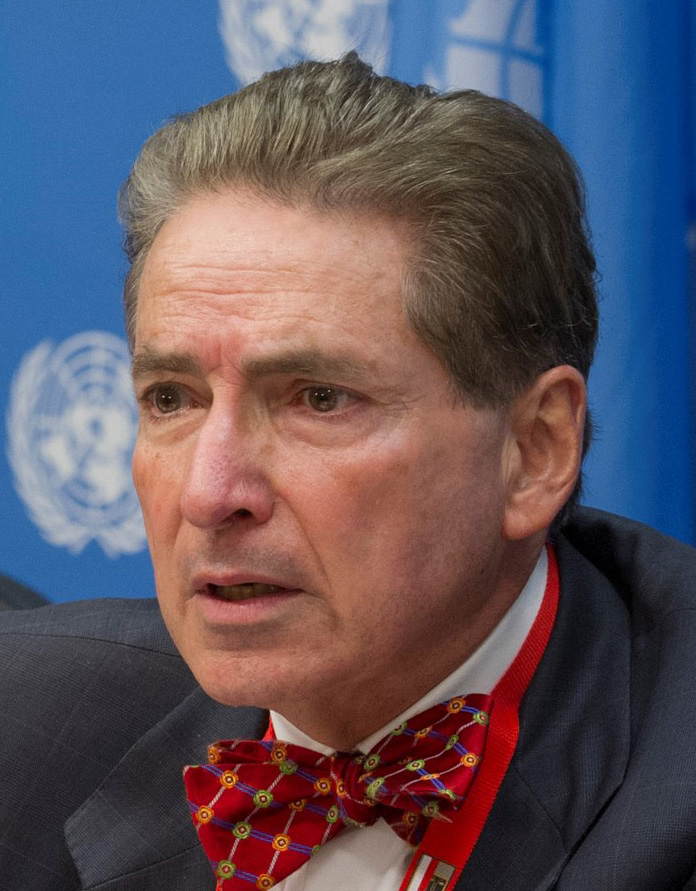
Alfred de Zayas is U.S. and Swiss citizen, residing in Geneva, Switzerland, where he is Professor of Law at the Geneva School of Diplomacy.
De Zayas is a former senior lawyer with the UN Office of the High Commissioner for Human Rights and former UN Independent Expert on International Order (2012-18).
He is author of 12 books including “Building a Just World Order.”
Alfred can be reached at alfreddezayas@gmail.com.