Zelensky’s former press secretary publicly helps lift the veil on Zelensky. Could this be a prelude to him being removed from power?
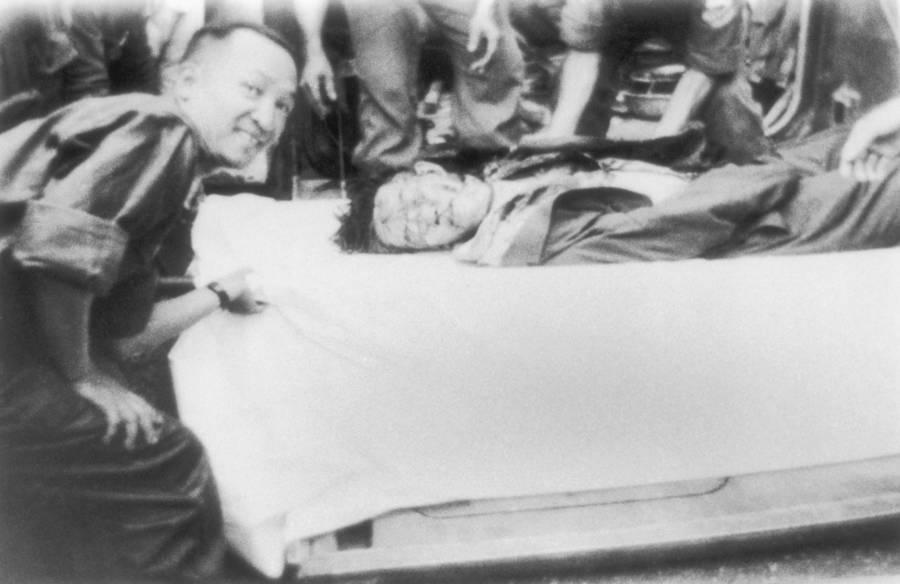
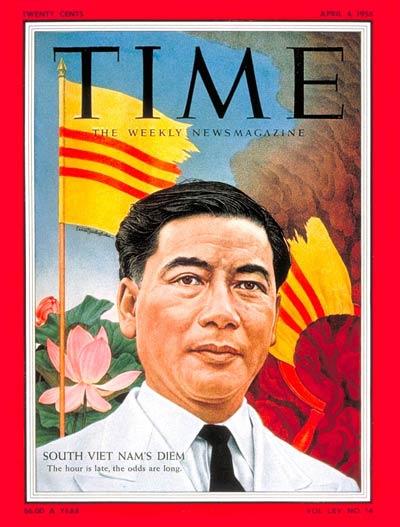
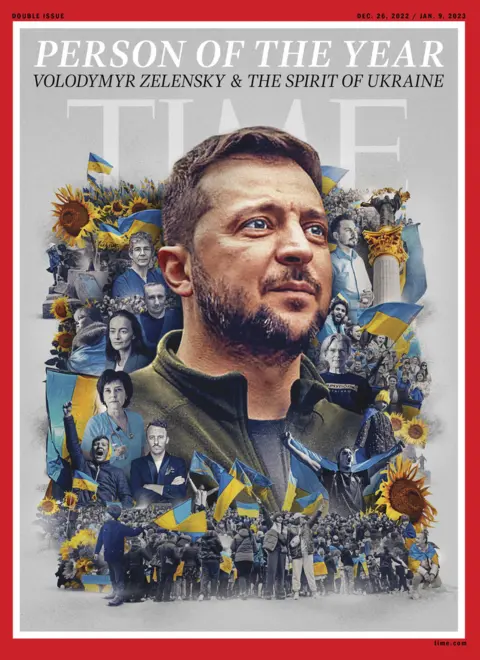
Ukrainian President Volodymyr Zelensky has much in common with ill-fated South Vietnam dictator Ngo Dinh Diem (1955-1963).
Both were heralded by liberal politicians and the media as democratic saviors and miracle men and showered with U.S. weapons as they waged proxy wars on behalf of the U.S.
Contrary to their public images, however, both were in reality brutal dictators who muzzled the press, jailed and killed opponents, oversaw lethal military operations, and surrounded themselves with corrupt officials who stole U.S. aid money.
In the fall of 1963, after Buddhist immolations brought international attention to the catastrophe unfolding in South Vietnam, the Kennedy administration turned against Diem and sanctioned a CIA-coordinated coup that resulted in Diem and his brother’s assassinations. Afterwards, the Johnson administration escalated the U.S. war on Vietnam, with disastrous effects.
That the wheels are being set in motion for a coup in Ukraine against Zelensky—and potentially an expanded war against Russia—is now also a real possibility.
An indication is that former members of Zelensky’s government are being given prominent platforms to speak out publicly against him, while some of his top aides are being indicted on money-laundering and corruption charges.
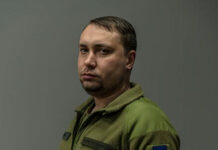
In a May 11 interview on the Tucker Carlson Show, Iuliia Mendel, Zelensky’s press secretary from 2019 to 2021, said that Zelensky was a “good actor” who “plays the role of a teddy bear on camera” but “off camera is a grisly bear” who “thinks every person is disposable” and is “as evil as [Russian leader] Vladimir Putin.”
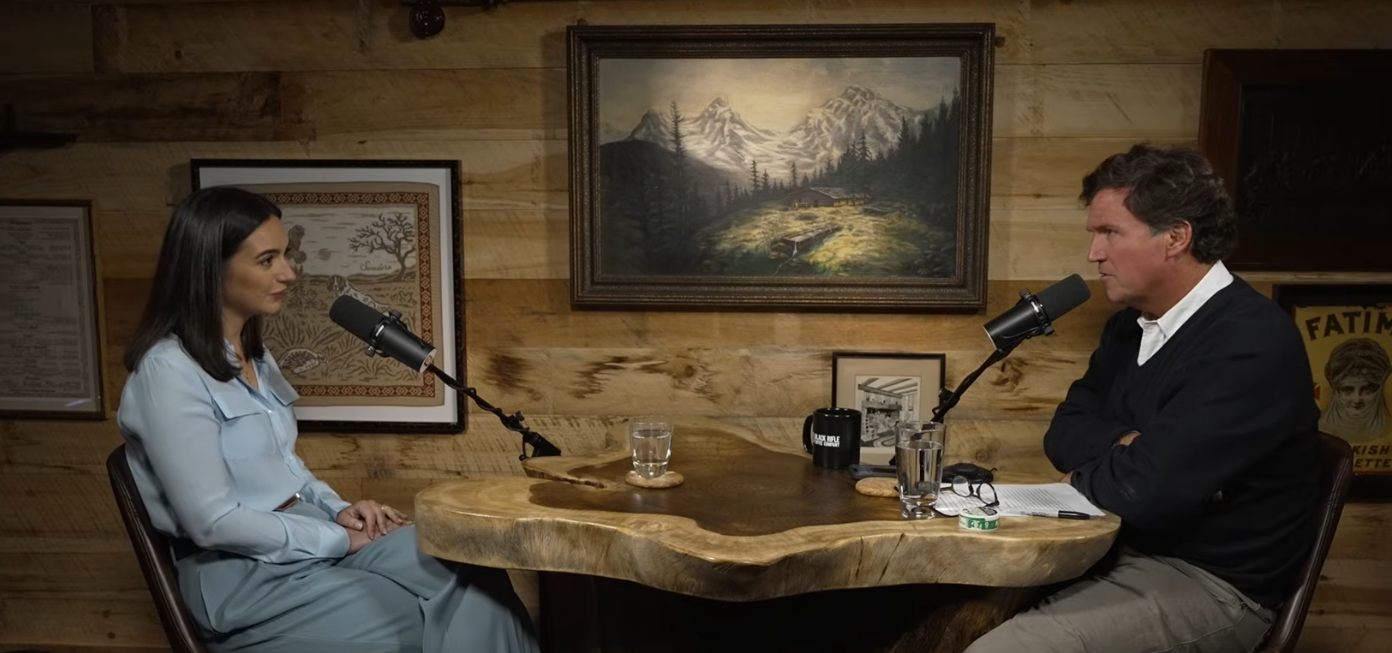
Contrary to how he is presented to the public, Zelensky has said that “Ukraine is not ready for democracy,” according to Mendel, and “relishes in being a dictator.” Additionally, Mendel said that Zelensky called for “a Goebbels propaganda campaign” when his popularity rating began to plummet, stands behind money-laundering schemes, and has opponents jailed, poisoned or killed—like Diem.[1]
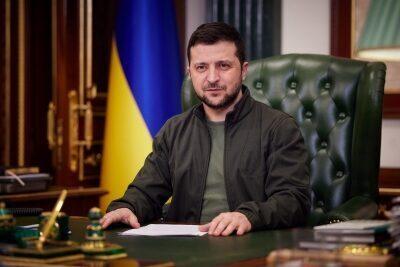
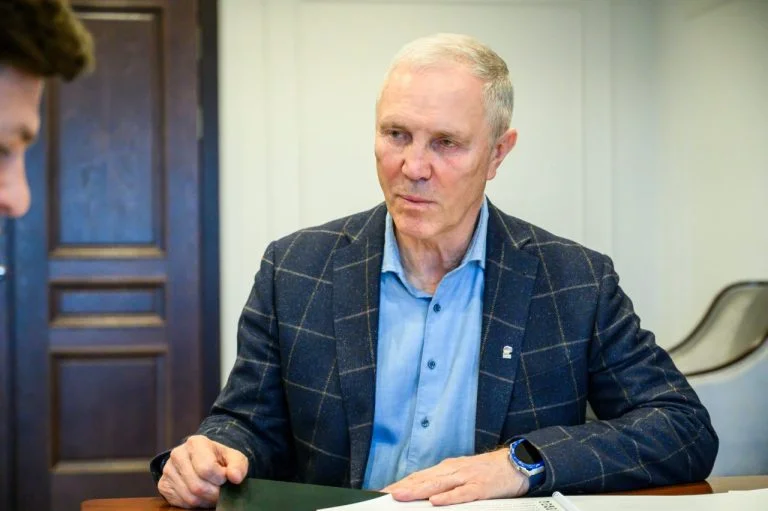
Mendel specified that one of the people Zelensky poisoned was a former governor of the Kherson region, Vladimir Saldo, who had been negotiating with the Russians. Saldo was poisoned in his garage after allegedly becoming depressed—a story nobody believes.[2]
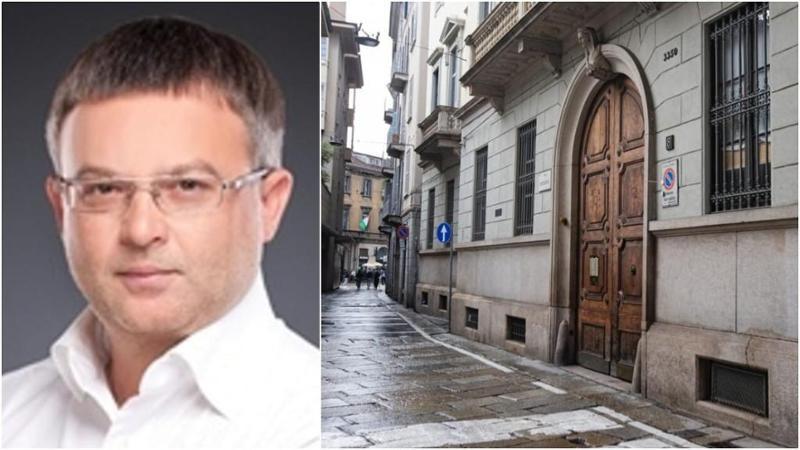
Another person who crossed Zelensky and died, Mendel said, was Oleksandr Adarich, former president of Ukrsibbank, who allegedly fell out of a window in Milan.
Police reported that Adarich appeared to have died before he fell out of the window, and that the event appeared to have been staged to look like a suicide. An Italian news agency referred to the case as a “spy story,” adding that Adarich had marks on his wrists indicating that he may have been restrained and dealt violent blows before being thrown out the window.[3]
Mendel pointed out that Zelensky brands anyone who criticizes him as a pro-Russian traitor or pro-Kremlin. Many wind up in Ukraine’s jails where, Mendel said, conditions are “awful.”
According to Mendel, Zelensky will punish some of the people who cross him by sending them to the front lines of the war to face near-certain death. Many soldiers are dying not just at the hands of the Russians but also because they are not given gloves or winter gear, leading many to lose limbs and fingers from frostbite in harsh temperatures.
The lack of proper clothing for the troops reflects a pernicious consequence of corruption in Ukraine, which has reached levels comparable to South Vietnam under Diem and his successors.[4]
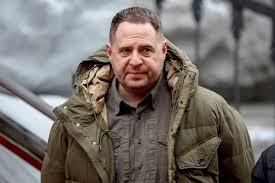
The day after Mendel’s interview, Zelensky’s former top aide, Andriy Yermak, whom Mendel said had ties with the mafia and started his career working as a lawyer for a strip club, was indicted for laundering millions of dollars.
Mendel said she is able to confirm that Zelensky is a cocaine addict. When she worked for him, he would go to the bathroom before public speaking events for 15 minutes and come out “fired up [indicative of his cocaine use].”
Much like South Vietnam in the Diemist era, the conditions in Ukraine are marked by what Mendel called “enormous human rights violations”—including mass jailings and a breakdown in freedom of speech, with the banning of poets, artists and writers and harassment and imprisonment of bloggers and journalists.[5]
Though Zelensky campaigned during the 2019 election as a peace candidate, he now wants Ukraine to join NATO and, according to Mendel, is “the main obstacle to peace” as he “needs to continue the war to stay in power.”
More than 10 million people have fled Ukraine as refugees and people are dying from hunger and cold amidst a war-ravaged economy in which government officials are stealing money intended to pay people’s pensions and to provide public services.
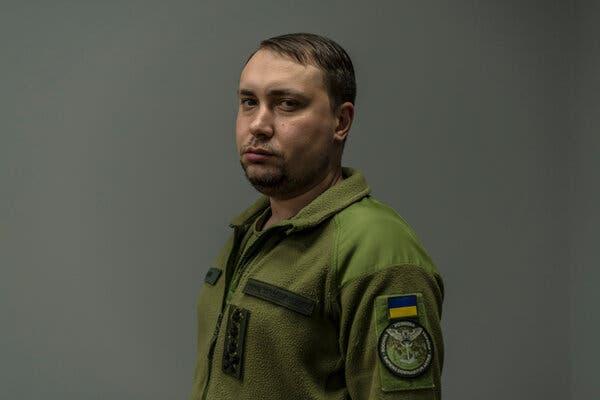
According to Mendel, Zelensky is so unpopular that Ukrainians are burning his speeches in their fireplaces. The CIA is undoubtedly aware of this and could be scheming to replace him, having one of their top “assets” in Ukraine, Kyrylo Budanov, serving now as Zelensky’s chief of staff.
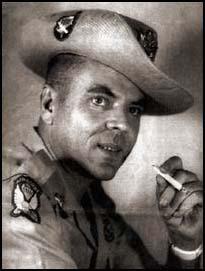
A modern-day Lucien Conein, a CIA operative who played a central role in the Diem coup, may very well be operating behind the scenes paying off Budanov or top-ranking generals being readied to take charge to try to stabilize the country as the U.S. plots to expand the war on Russia. (During the week of Mendel’s interview, Ukraine launched a record 1,000 drone strikes on Russia, which seemed to signify an escalation.)[6]
What I Saw in Ukraine
Mendel’s bleak assessment of Ukraine’s government is underscored in Benoit Paré’s book What I Saw in Ukraine 2015-2022: Diary of an International Monitor (2025).
Paré is a former French army reserve officer who worked as an Organization for Security and Co-operation in Europe (OSCE) observer in the Donbas.
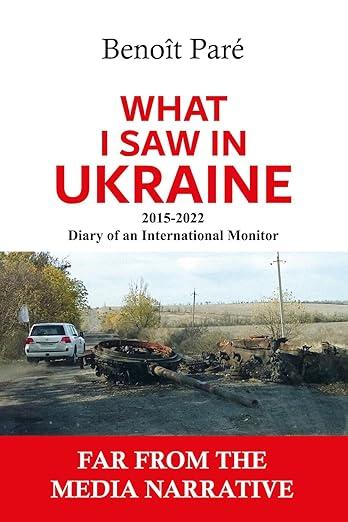
Like Mendel, Paré’s observations completely contradict mainstream and often alternative media narratives about Ukraine. Paré discusses how Ukraine was taken over by neo-fascist elements following the February 2014 Maidan coup and triggered a war with the people of eastern Ukraine and Russia that could have been avoided.[7]
Paré supports his observations with polling data that showed how a majority of Ukrainians did not support the post-Maidan coup government that was imposed with the help of the U.S.
He also shows through careful study that civilian casualties in the years following the coup were far higher in the Donetsk People’s Republic (DPR) and Luhansk People’s Republic (LHR) than in Ukraine-controlled territory, indicating that the majority of atrocities (estimated to be three to four times more) were committed by Ukrainian army forces and their adjunct militias rather than the pro-Russian forces in the DPR and LPR.[8]
A UN Office of the High Commissioner for Human Rights (OHCHR) report determined that the Donetsk and Luhansk People’s armies suffered 50% more casualties than Ukrainian army fighters which, Paré argues, is “yet another statistic that tends to demonstrate that it was indeed Ukraine that was most on the offensive in this war.”[9]
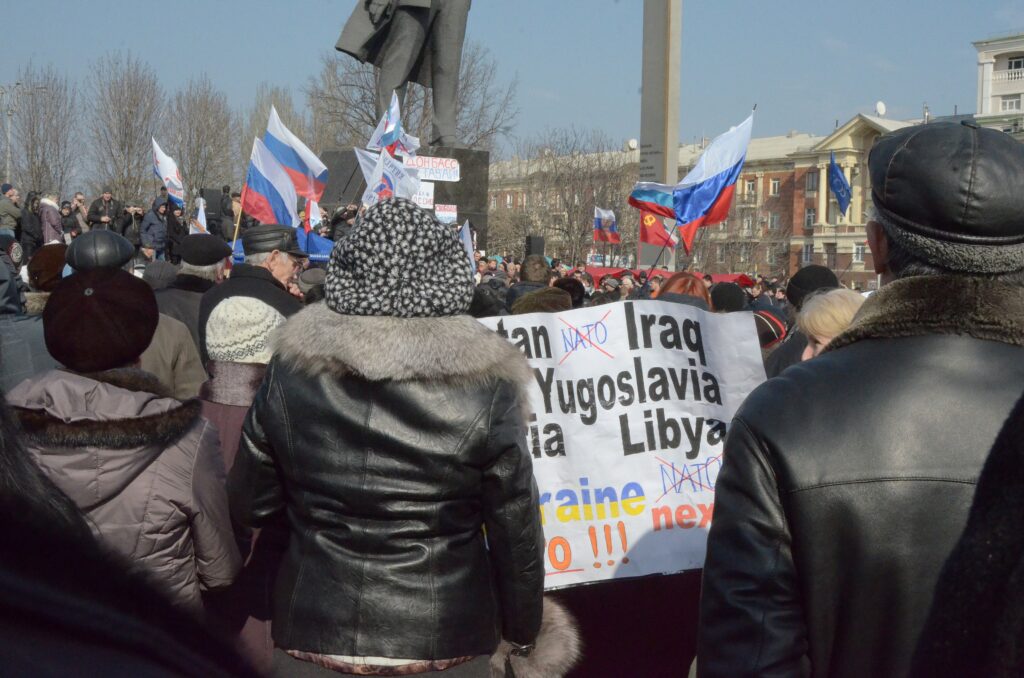
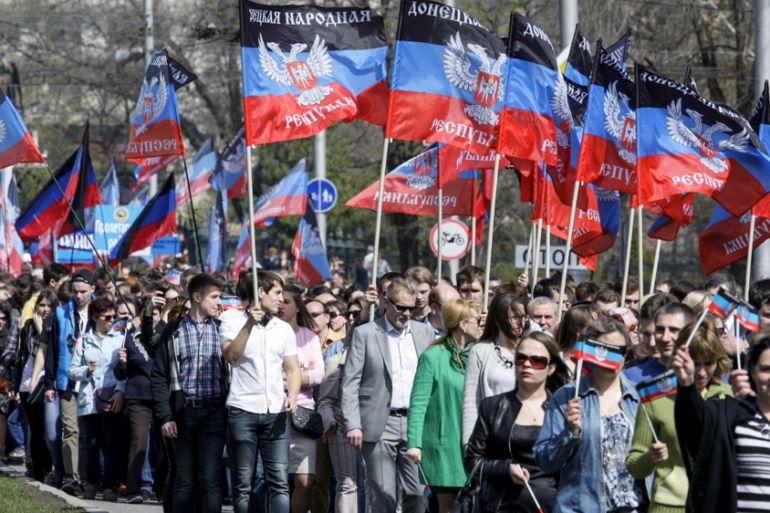
The DPR and LHR were formed in April 2014 after the post-Maidan coup government’s imposition of draconian language laws forcing the Ukrainian language on the predominantly Russian-speaking population and its failure to recognize demands for regional autonomy. [10]
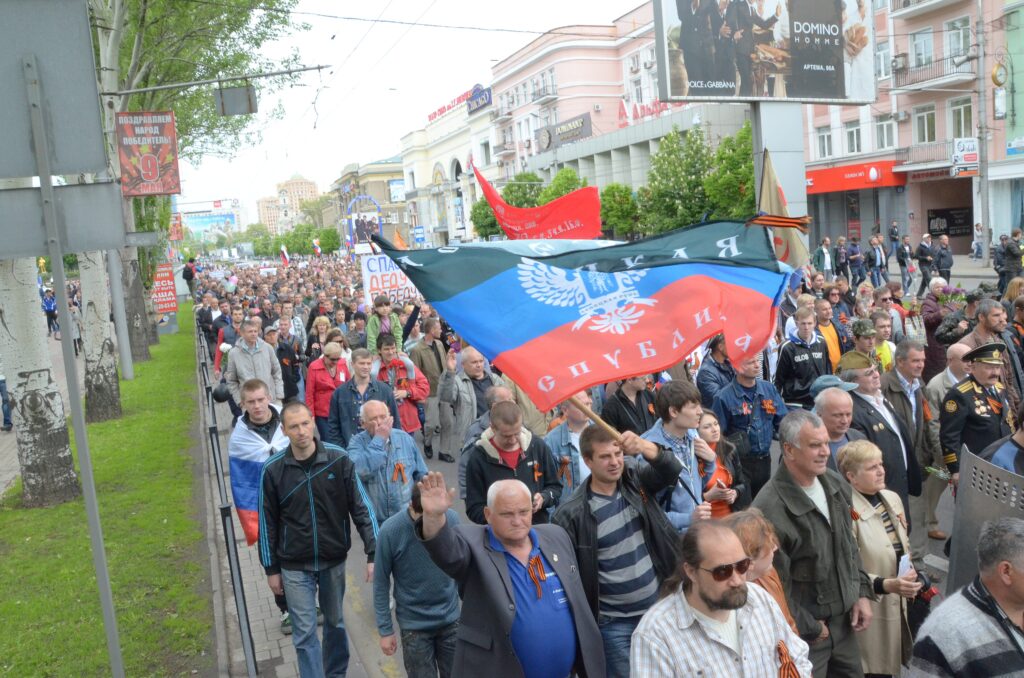
Mariupol’s popular mayor, Dmitri Kuzmenko, was arrested for trying to defend the interests of the local population, and the Ukrainian government announced an anti-terrorist operation after Mariupol residents voted in a referendum to establish the DPR.[11] Subsequent images resembled Tiananmen Square, with unarmed protesters standing up to Ukrainian tanks.[12]
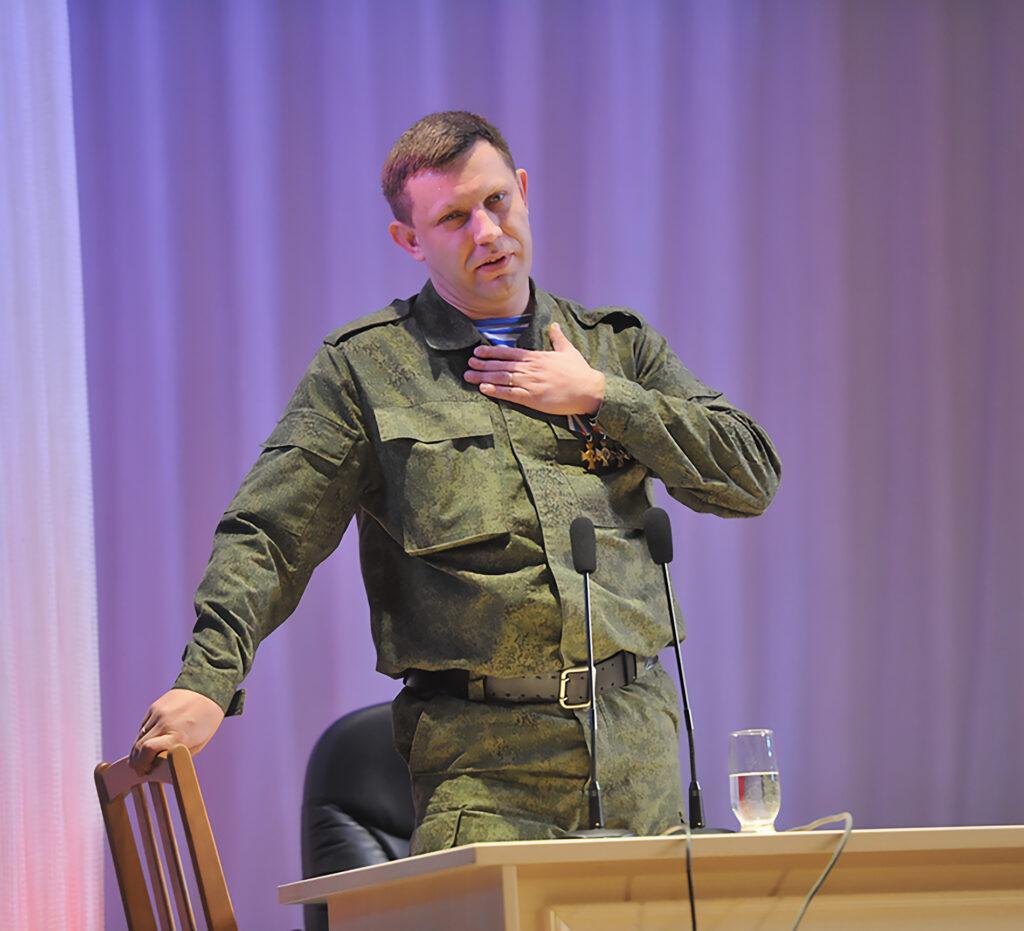
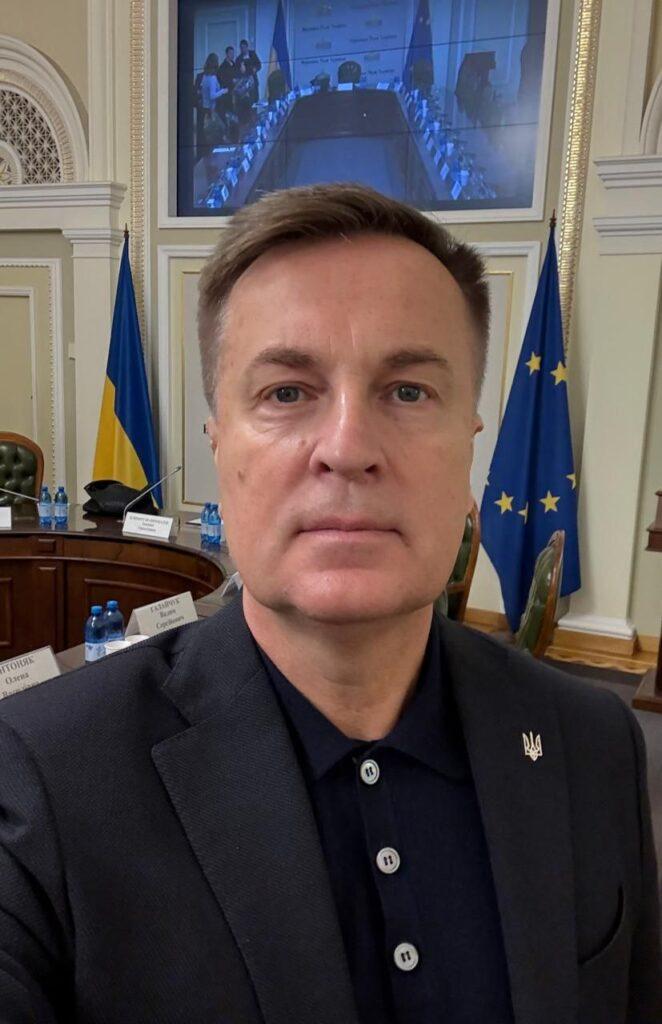
In August 2018, DPR leader Alexander Zakhartchenko was assassinated by the Security Service of Ukraine (SBU). SBU chief Valentyn Nalyvaichenko admitted that the SBU’s 5th counter-intelligence department was the cell responsible for the physical elimination of separatist leaders including Zakhartchenko, though Paré notes that this was not reproduced in Wikipedia.[13]
While the Minsk Agreements offered the potential to resolve the conflict, Paré notes how the Ukrainians repeatedly violated the terms of these agreements, including by bombing and shelling eastern Ukraine. Paré documented that, on the eve of the Russian Special Military Operation (SMO) in February 2022, there were hundreds of cease-fire violations in the DPR and LHR by Ukraine—not Russia—marking Ukraine as the real aggressor in the conflict.[14]
Paré shows how, prior to the SMO, Ukrainian paramilitary militias that sometimes openly wore Nazi insignia carried out a reign of terror in eastern Ukraine. Widely viewed as an occupying force, the Ukrainian army routinely bombed and shelled civilian infrastructure—prompting the local population to beg the Russians to intervene to protect them.[15]
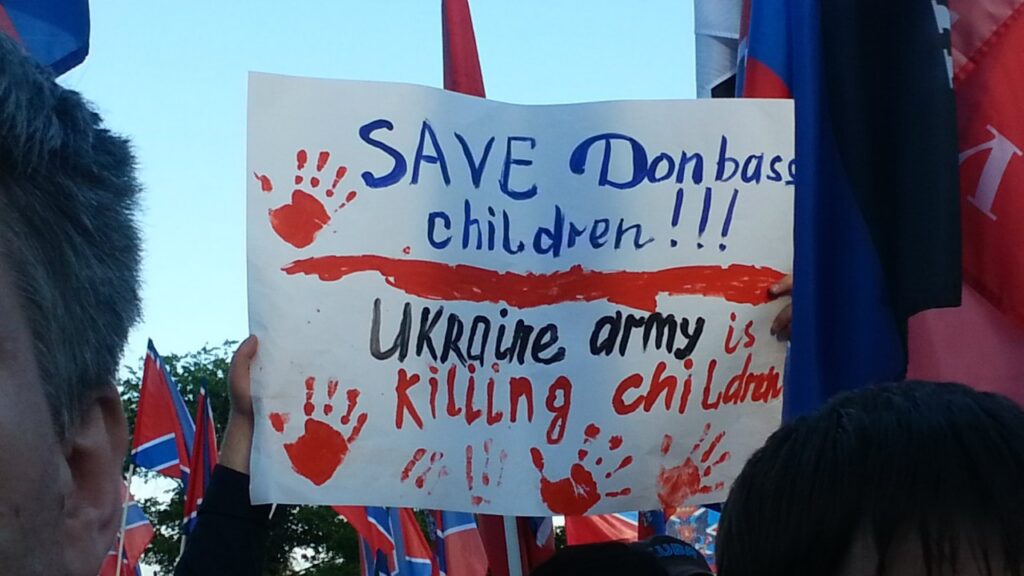
As part of a media-information war, Paré raises suspicion about various bombings in eastern Ukraine that have the appearance of false-flag operations, which were carried out by Ukraine but made to look like Russia or eastern Ukrainian fighters were behind them.[16] One of these attacks—on a kindergarten in Luhansk—was carried out just before the commencement of the SMO, with all the evidence pointing to Ukraine.[17]
Paré notes a complete breakdown in the Ukrainian justice system, which ensured impunity for Ukrainian war crimes and resulted in the jailing and imprisonment of civilian government officials, including town mayors that were branded as pro-Russian.
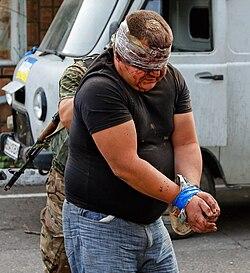
Vladimir Azaryants was the mayor of Krasnatorka who was sentenced to eight years in prison after a rigged trial in which the judge did not allow him to call any witnesses. Azaryants was kept in detention even after his conviction was overturned and his lawyer, Yuri Grabovsky, was kidnapped and murdered. The prison conditions during his confinement were nightmarish, with no water, food, heating or medical care and rats running everywhere.[18]
Paré discusses another case of a 60-year-old man named Kuchurenko, accused of spying for the DPR, who was beaten in his home along with his wife by SBU officers who then tortured Kuchurenko with electroshocks, causing him to lose part of his eyesight.[19]
Sergei Dolgov was the editor-in-chief of the Mariupol-based magazine I Want the USSR, who was kidnapped by hooded men five days after the Azov Battalion took charge in the city in June 2018 and never heard from again. His wife believes he was tortured and killed in prison.[20]
Dolgov’s bleak fate was similar to that of Chilean journalist Gonzalo Lira, who Paré was told was beaten in custody, leading to his death.
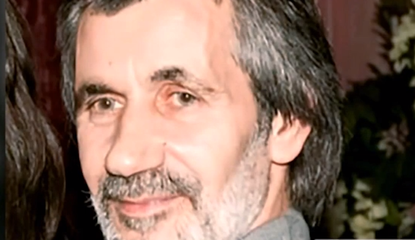
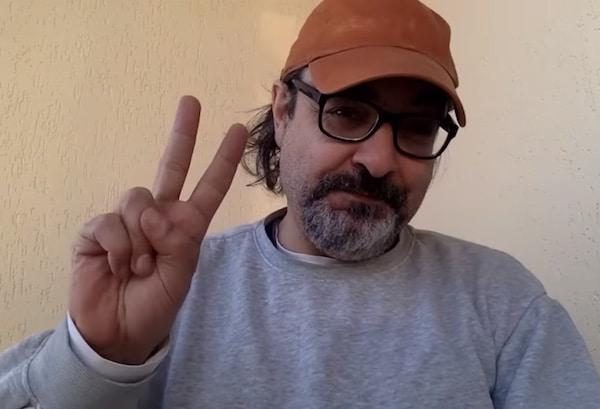
Western media, including alternative media outlets that claim to be anti-establishment and to profess concern for human rights, ignored Lira’s death along with legions of Ukrainian atrocities, blunting any political activism or movement to try to block U.S. arms sales to Ukraine.
These same media repeated a fraudulent narrative about unalloyed Russian aggression and bestiality that fit official state propaganda.
Reading Paré’s book, one cannot help but be saddened by all the injustices experienced by the eastern Ukrainian people.
Additionally, it is impossible not to get angry about the lack of professionalism and perfidy of journalists Paré encountered who refused to report on things he had observed and helped obscure before the public what was really happening.

Drawing on mainstream media news reports, CovertAction Magazine has previously detailed the assassination campaign being coordinated by the Ukrainian Security Service in collaboration with the CIA and how this resembles the Vietnam-era Phoenix Program. ↑
Saldo was placed in a medically induced coma but survived. ↑
This is the precise method outlined in the CIA’s assassination manual and was used in the CIA’s assassination of Frank Olson, among many others. ↑
The wide-scale corruption in South Vietnam is detailed in Alfred W. McCoy, The Politics of Heroin: CIA Complicity in the Global Drug Trade, rev ed. (New York: Lawrence Hill Books, 2003). ↑
For insights into the injustices associated with the Diem regime in South Vietnam, see Wilfred G. Burchett, The Furtive War: The United States in Vietnam and Laos (New York: International Publishers, 1963). ↑
On May 23, Russia pounded Kyiv with a wave of missile and drone attacks after a Ukrainian drone struck a woman’s college in Starobilsk in Luhansk, killing at least 21 people and injuring dozens more. Most of the people killed were adolescents sleeping in their dormitory. A Russian Foreign Ministry spokesman said “it was a targeted strike against civilians—straight out of the German Nazi playbook. These strikes use long-range weapons supplied to the Kiev regime by NATO countries, including drones, and are being carried out with the technical assistance of foreign specialists from well-known NATO member states. We have reliable information that Western capitals are feeding intelligence to the Ukrainian armed forces and helping with targeting.” ↑
Paré references the important scholarship of Dr. Ivan Katchanovski, who showed how the Ukraine far-right and foreign intelligence services initiated a false-flag operation by which they massacred Maidan Square protesters but blamed it on the pro-Russian Yanukovych government in order to discredit it and force Viktor Yanukovych to abdicate. ↑
Benoit Paré, What I Saw in Ukraine 2015-2022: Diary of an International Monitor (2025), 458, 459, 494, 495, 508, 603. Over the period 2016-2018, Paré cites an OSCE report, which found that 72.2% of civilian casualties were on the Donbas side, compared with 26% on the Ukrainian side, a ratio almost three to one. In 2018, he found that civilian casualties were 82% on the Donbas side and 15% on the Ukrainian side, a difference he attributed to the Donetsk and Luhansk People’s armies efforts to show greater restraint combined with their growing professionalism and precision in their firing, which Paré says he observed in Mariupol in 2018. In 2019 and 2020, Paré found that civilian casualties were closer to 90% on the Donbas side. ↑
Paré, What I Saw in Ukraine 2015-2022, 603. ↑
The language laws included provisions that 75% of TV programming had to be in Ukrainian. Even great Russian writers like Pushkin had to be studied in Ukrainian translations in Donbas schools, though teachers would defy the censors by teaching his books in his original Russian. Paré compares the language laws to Quebec in Canada; the main difference, however, is that, unlike as in Quebec, where French speakers are in the majority, the Ukrainians imposed a language that only a minority of the population of Donetsk and Luhansk actually spoke. ↑
Paré, What I Saw in Ukraine 2015-2022, 252, 253, 254. Paré notes that Kuzmenko and his party were not calling for the independence or separation of the Donetsk region but for its autonomy within the framework of decentralization, a principle approved in the Minsk Agreements. Kuzmenko also pushed for the eradication of the language law and establishment of a municipal police force. ↑
Paré, What I Saw in Ukraine 2015-2022, 262. ↑
Paré, What I Saw in Ukraine 2015-2022, 203. ↑
Paré, What I Saw in Ukraine 2015-2022, 580, 582. ↑
Paré, What I Saw in Ukraine 2015-2022, 196, 206, 356. Paré heard about rumors of a mass grave near the Mariupol Airport where the bodies of the victims of the Azov, Tornado and other right-wing battalions and Ukrainian army were dumped. When he demanded an investigation, his superior said “the political situation was not ripe for [the OSCE] to dig into the matter.” ↑
Paré, What I Saw in Ukraine 2015-2022, 186, 187. False-flag operations were widely adopted by the Kosovo Liberation Army (KLA) and CIA in the Kosovo War. ↑
Paré, What I Saw in Ukraine 2015-2022, 570. ↑
Paré, What I Saw in Ukraine 2015-2022, 300-10. A journalist colleague of Azaryants was also kidnapped and disappeared. Paré discusses additionally the case of Svetlana Marcenko, a 50-year-old woman who headed the village of Primorske. When she crossed into a Ukrainian zone, she was arrested and given a five-year prison sentence, leaving her a “broken woman.” Additionally, Paré discusses how Ukrainian Orthodox clergy who refused to accept the merger of their church into a new autocephalous branch of the Ukrainian Orthodox Church independent of Moscow led to their persecution. ↑
Paré, What I Saw in Ukraine 2015-2022, 291. Paré details cases where SBU forces beat elderly or disabled people and forced them to sign confessions. Other people were disappeared and never heard from again, as with the Central American death squads of the 1980s. ↑
Paré, What I Saw in Ukraine 2015-2022, 349, 352. Leonid, a writer with the magazine I Want the USSR, expressed belief that Dolgov was arrested by the Azov Battalion under the orders of Oleg Lyashko and probably died of cardiac arrest under interrogation. Paré also discusses how the SBU executed Denys Kireyev, a Ukrainian negotiator with Russia. ↑
CovertAction Magazine is made possible by subscriptions, orders and donations from readers like you.
Blow the Whistle on U.S. Imperialism

Click the whistle and donate
When you donate to CovertAction Magazine, you are supporting investigative journalism. Your contributions go directly to supporting the development, production, editing, and dissemination of the Magazine.
CovertAction Magazine does not receive corporate or government sponsorship. Yet, we hold a steadfast commitment to providing compensation for writers, editorial and technical support. Your support helps facilitate this compensation as well as increase the caliber of this work.
Please make a donation by clicking on the donate logo above and enter the amount and your credit or debit card information.
CovertAction Institute, Inc. (CAI) is a 501(c)(3) non-profit organization and your gift is tax-deductible for federal income purposes. CAI’s tax-exempt ID number is 87-2461683.
We sincerely thank you for your support.
Disclaimer: The contents of this article are the sole responsibility of the author(s). CovertAction Institute, Inc. (CAI), including its Board of Directors (BD), Editorial Board (EB), Advisory Board (AB), staff, volunteers and its projects (including CovertAction Magazine) are not responsible for any inaccurate or incorrect statement in this article. This article also does not necessarily represent the views the BD, the EB, the AB, staff, volunteers, or any members of its projects.
Differing viewpoints: CAM publishes articles with differing viewpoints in an effort to nurture vibrant debate and thoughtful critical analysis. Feel free to comment on the articles in the comment section and/or send your letters to the Editors, which we will publish in the Letters column.
Copyrighted Material: This web site may contain copyrighted material the use of which has not always been specifically authorized by the copyright owner. As a not-for-profit charitable organization incorporated in the State of New York, we are making such material available in an effort to advance the understanding of humanity’s problems and hopefully to help find solutions for those problems. We believe this constitutes a ‘fair use’ of any such copyrighted material as provided for in section 107 of the US Copyright Law. You can read more about ‘fair use’ and US Copyright Law at the Legal Information Institute of Cornell Law School.
Republishing: CovertAction Magazine (CAM) grants permission to cross-post CAM articles on not-for-profit community internet sites as long as the source is acknowledged together with a hyperlink to the original CovertAction Magazine article. Also, kindly let us know at info@CovertActionMagazine.com. For publication of CAM articles in print or other forms including commercial internet sites, contact: info@CovertActionMagazine.com.
By using this site, you agree to these terms above.
About the Author
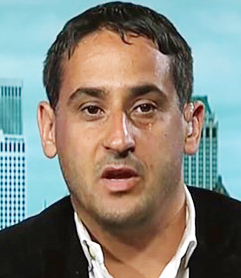
Jeremy Kuzmarov holds a Ph.D. in American history from Brandeis University and has taught at numerous colleges across the United States. He is regularly sought out as an expert on U.S. history and politics and co-hosts a radio show on New York Public Radio and on Progressive Radio News Network called “Uncontrolled Opposition.”
He is Managing Editor of CovertAction Magazine and is the author of eight books, including Obama’s Unending Wars (Clarity Press, 2019), The Russians Are Coming, Again, with John Marciano (Monthly Review Press, 2018), Warmonger. How Clinton’s Malign Foreign Policy Launched the U.S. Trajectory From Bush II to Biden (Clarity Press, 2023); with Dan Kovalik, Syria: Anatomy of Regime Change (Baraka Books, 2025), and Political Assassinations in America: The Intricate Nexus of Deep State Crime (Clarity Press, 2026).
Besides these books, Kuzmarov has published hundreds of articles and contributed to numerous edited volumes, including one in the prestigious Oxford History of Counterinsurgency .
He can be reached at jkuzmarov2@gmail.com and found on substack here.

During the interview with Tucker Carlson Yulia Mendel tells Tucker Carlson that she is not a supporter of Putin and she says that Putin is committing crimes against humanity. She then goes on to describe in great detail all the bad personality traits that she believes that Zelensky possesses. What is confusing to me is that when she was an employee of Zelensky she never observed these “horrible personality traits” and after she stopped working for Zelensky she continued to speak highly of him. So it seems strange to me that she did not notice these “bad personality traits” while she was working closely with him every day.
A report issued by the US Inspector General for Operation Inherent Resolve warns of serious security repercussions following the escape of thousands of ISIS mercenaries and their families from camps and prisons in northeastern Syria.
The report states that between 15,000 and 20,000 people suspected of having ties to ISIS disappeared or escaped after the collapse of the detention system in early 2026, a consequence of attacks by the Syrian Interim Government and the security vacuum in Rojava.
It notes that the number of detainees in al-Hol camp has dwindled from approximately 23,400 to fewer than 1,500, following smuggling operations and mass escapes involving foreign women and children.
The report also mentions the escape of approximately 1,500 prisoners from al-Shaddadi prison during the Syrian Interim Government’s attacks on Rojava, warning that the resulting security vacuum has strengthened ISIS cells’ ability to reorganize.
https://hawarnews.com/en/tens-of-thousands-of-isis-mercenaries-disappear-in-syria
Putler and Assad knelt before Erdoğan and that’s why they did it.
I hope this will lead to a change in the border between NATO and Russia and that the border will run in the Urals.
I find it odd that Julia Mendel’s views in the year 2026 and so different from her views in November 2022 when she was a journalist writing for the Kyiv post. And now she feels comfortable sharing her thoughts with a well known far right media person
who was once one of Donald Trump’s strongest supporters.
https://www.kyivpost.com/opinion/329