Perverse system represents a 21st century high-tech version of Robert S. McNamara’s infamous body count that led to so many atrocities during the Vietnam War
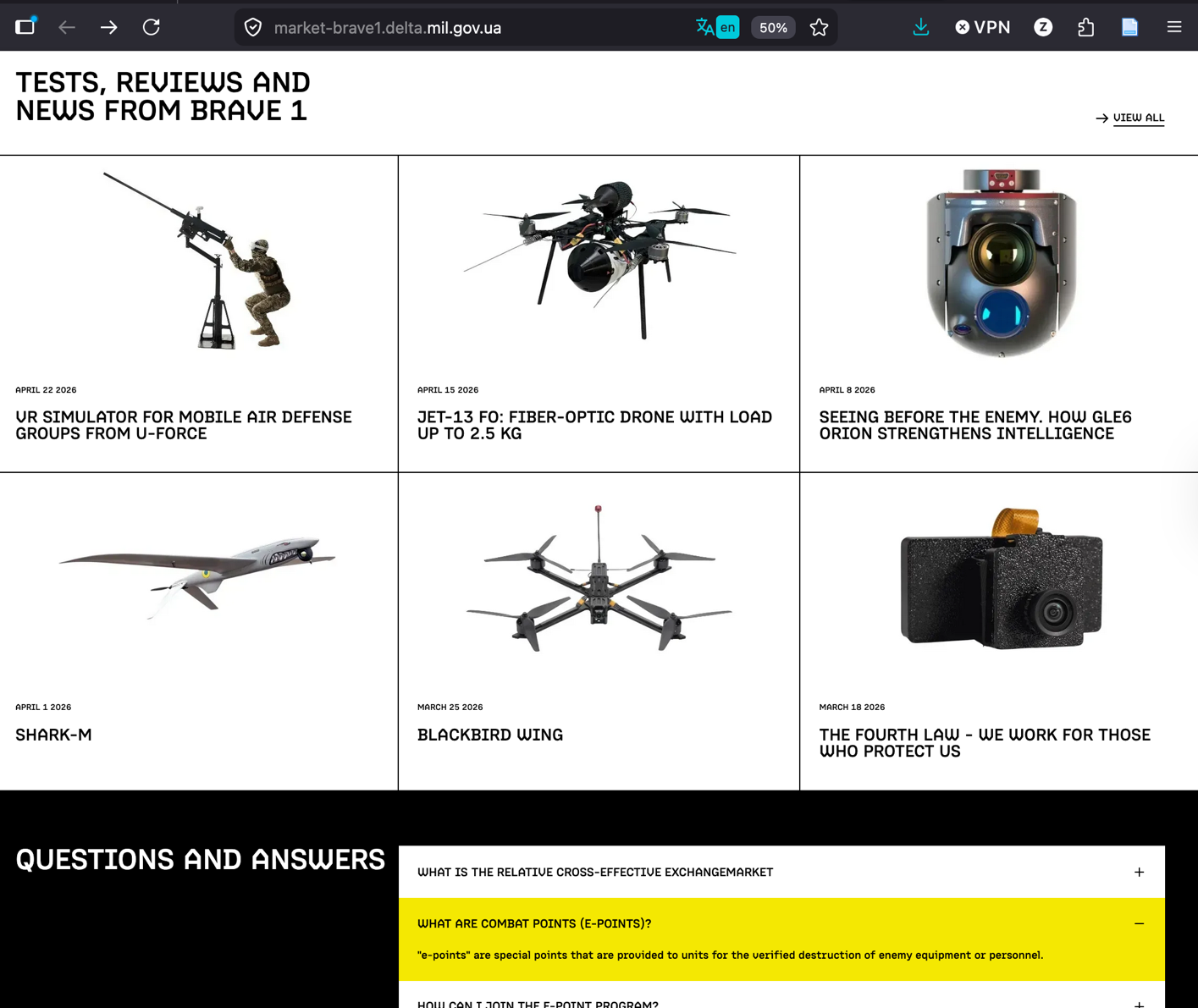
The Ukrainian government operates an “Amazon for the military,” called Brave1 Market, that awards military units “e-points” for uploading videos generated by drone strikes.
In return, military units—including the 3rd Separate Assault Brigade, founded by neo-Nazi Azov commander Andriy Biletsky—redeem these points for advanced hardware such as light drones, jamming devices, and other technology products delivered directly to the front line.
Ukraine claimed at the start of 2026 that the program has led to video confirmation of 820,000 targets, including almost 240,000 enemy personnel, as well as the sale of 240,000 drones in its first six months of operation.
These strike videos are incorporated into a battlefield data ecosystem that includes Brave1-Palantir Dataroom. This secure platform was developed in partnership with the Silicon Valley military contractor to test and train military artificial intelligence systems using battlefield data.
Ukrainian officials describe the data-ingestion initiative as critical to the development of autonomous targeting and interception technologies. As the war continues into its fourth year, Ukraine’s expanding campaign of drone strikes on logistical, civilian and energy infrastructure demonstrates the strategic value of this emerging data-driven military complex.
Start-Up Culture “Disrupts” the Russo-Ukrainian War
Brave1 was launched in April 2023 under the initiative of the Ministry of Digital Transformation in collaboration with the Ministry of Defense, the General Staff of the Armed Forces, and other military and civilian government institutions. The government platform has sought to bypass lengthy state procurement cycles and stimulate economic growth by connecting private arms firms directly with military units integrated into the Armed Forces of Ukraine.
Since its launch, Brave1 has helped transform Ukraine into a hub for defense-tech investment, reportedly attracting more than USD 200 million from investors across more than 40 countries, including the U.S., Canada, the UK, and Japan. This program has also become integrated into Western military-industrial networks through joint innovation initiatives such as UNITE–Brave NATO and Germany’s defense technology cooperation program.
Western governments have increasingly used the war as a source of battlefield lessons, seeking to modernize their armed forces and adapt procurement systems to a potential future confrontation with Russia. The concept of unmanned warfare can be particularly attractive to governments like Germany, whose armed forces’ “main problem” is reportedly recruitment concerns. These concerns did not prevent Germany’s air force chief from stating, on June 15, 2026, that Germany was ready to fight Russia “tonight.”
Drones have been central to the Russo-Ukrainian war, particularly first-person view (FPV) drones used in strike operations. Ukrainian government sources reported their use in more than 80% of enemy target destruction by 2025—a large increase from the reported under 10% in 2022.
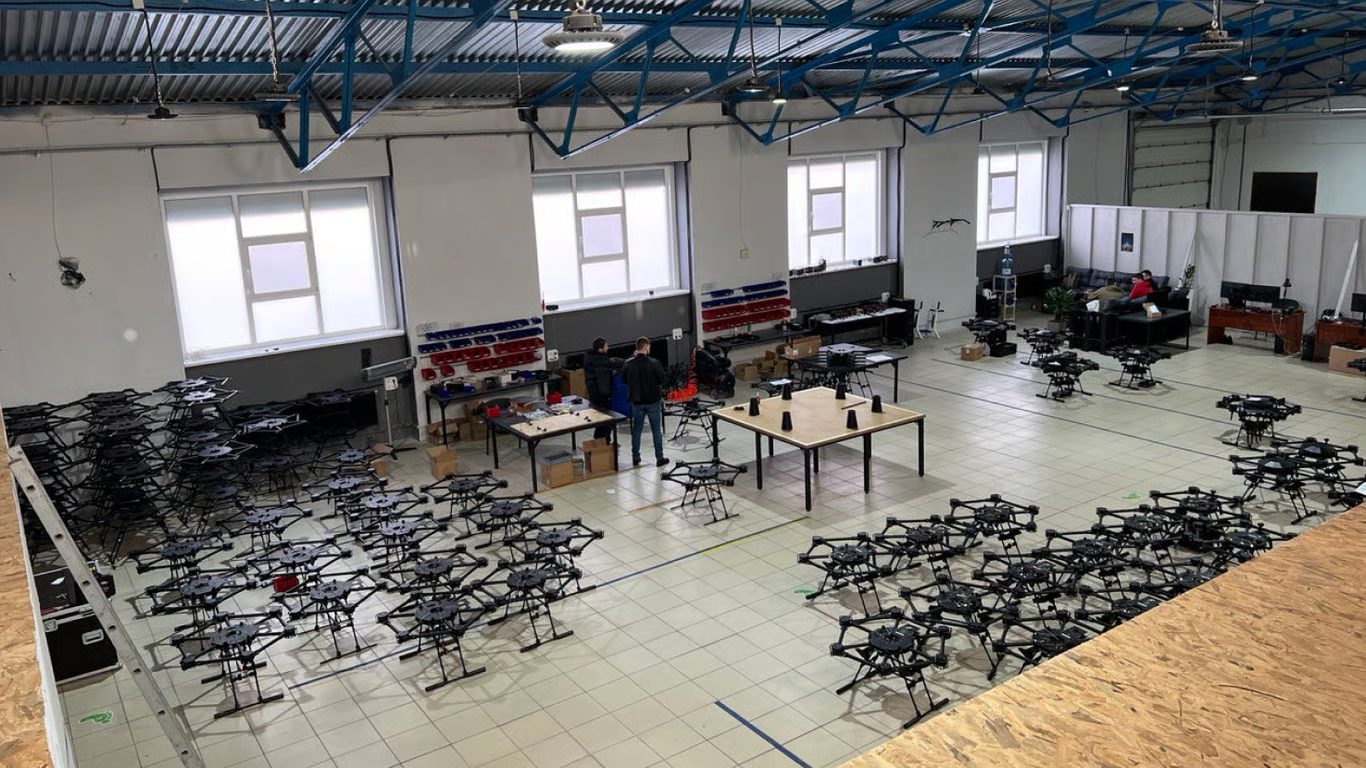
While FPV proliferation contributes to Ukraine’s image as a high-tech war lab, the integration of AI-enhanced weaponry on the battlefield remains in an experimental and largely speculative phase. More generally, military experts have expressed doubts about the operational viability of autonomous drone swarms in combat, given current technological limitations.
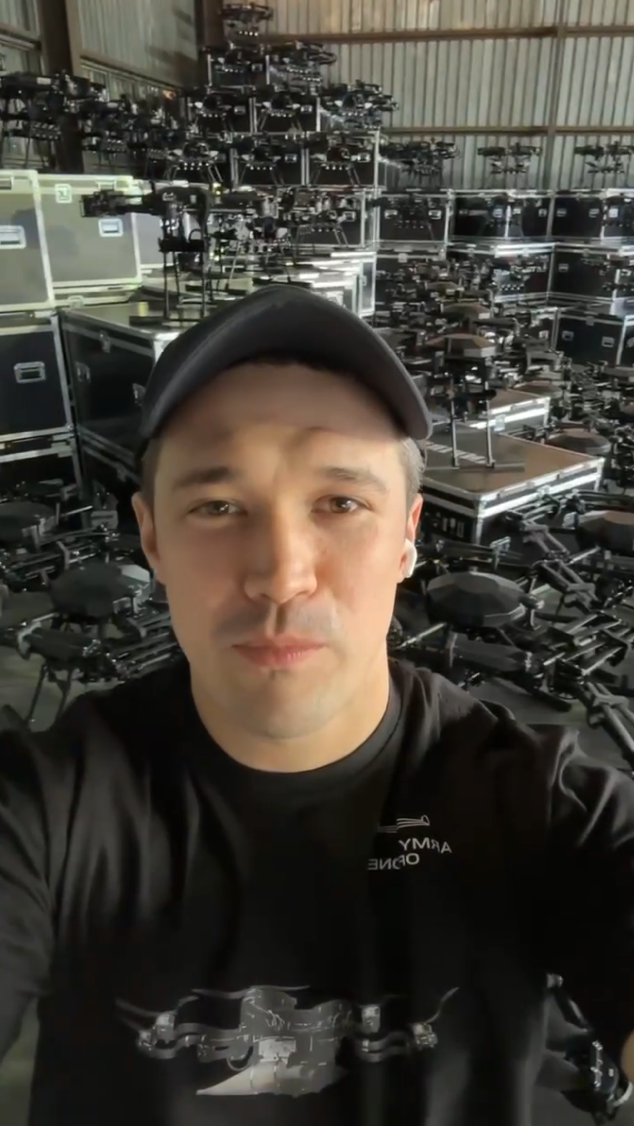
Similarly, analysts suggest that AI companies overstate their value and real-world use in remote warfare, which has influenced some military experts to propose that this technology will revive the former advantages of remote warfare that have been waning in recent years. In this operational reality, the ultimate utility of the uploaded battlefield data is unclear.
In the context of the Russo-Ukrainian War, Russian electronic-warfare capabilities to disrupt intelligence, surveillance, and reconnaissance technologies have advanced almost in tandem with Ukrainian innovations. Start-ups in the Ukrainian government drone ecosystem note that technologies typically have a lifecycle of only three to six months before Russian countermeasures render them obsolete.
Overall, despite technological innovations in drones, analysts argue that Russia maintains a significant military advantage over Ukraine in artillery, missiles, aviation and electronic warfare.[1] Nevertheless, the image of imminent Ukrainian victory through technological innovation continues to proliferate throughout Western media as late as May 2026.
Move Fast and Break Countries
A central figure in this emerging nexus is Mykhailo Fedorov, the outgoing Minister of Defense, who established the Brave1 initiative. Fedorov became an adviser to President Volodymyr Zelensky following the 2019 Ukrainian presidential election and has served as an informal liaison between the government and Silicon Valley, with firms such as Starlink, PayPal, Palantir and Google invited to invest in this and similar programs since the war began.
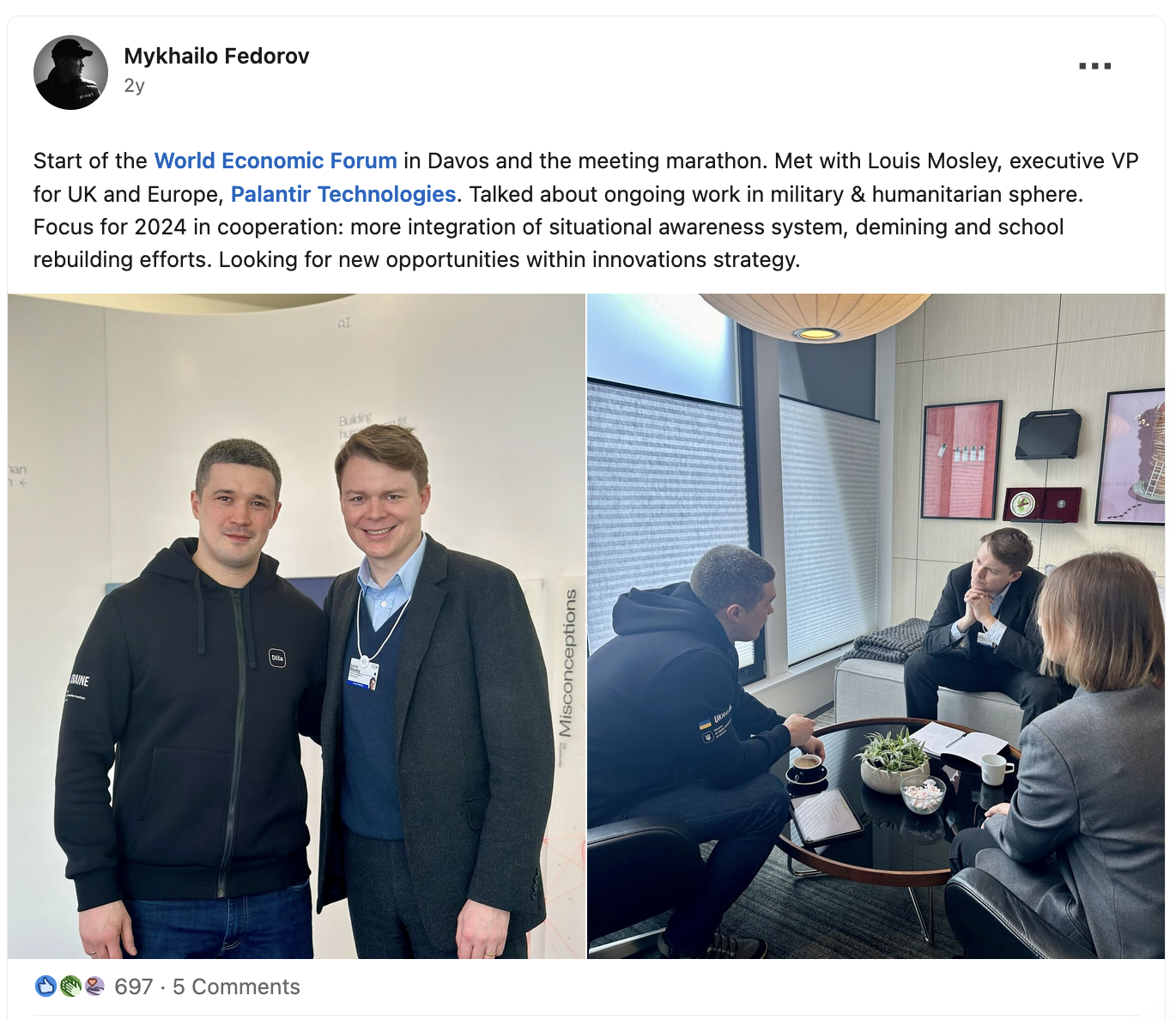
Prior to his appointment, Fedorov had never served in the military. With a background in digital advertising, Fedorov was instead known as a major tech innovator and investment outreach coordinator for the Ukrainian state. He has been central to the launch of multiple digital innovation programs such as the Diia e-governance mobile app for digital documents, E-Residency for foreigners to conduct business from abroad under favorable tax conditions, and the integration of PayPal in Ukraine.
One of Fedorov’s recent innovations is the Brave1 Market, launched as an “Amazon for the military” at the end of April 2025. Fedorov simultaneously introduced a bonus program to the platform, known as the “Army of Drones” bonus, whereby Ukrainian units earn “e-points” by uploading videos of successful FPV strikes to the government platform.
These strike videos are then reviewed by the military’s DELTA battlefield management system, a centralized digital communications and situational awareness platform. DELTA analysts evaluate videos and award points based on the strategic value of the target—for example, twelve points for killing an enemy soldier, or 20 points for damaging a tank.
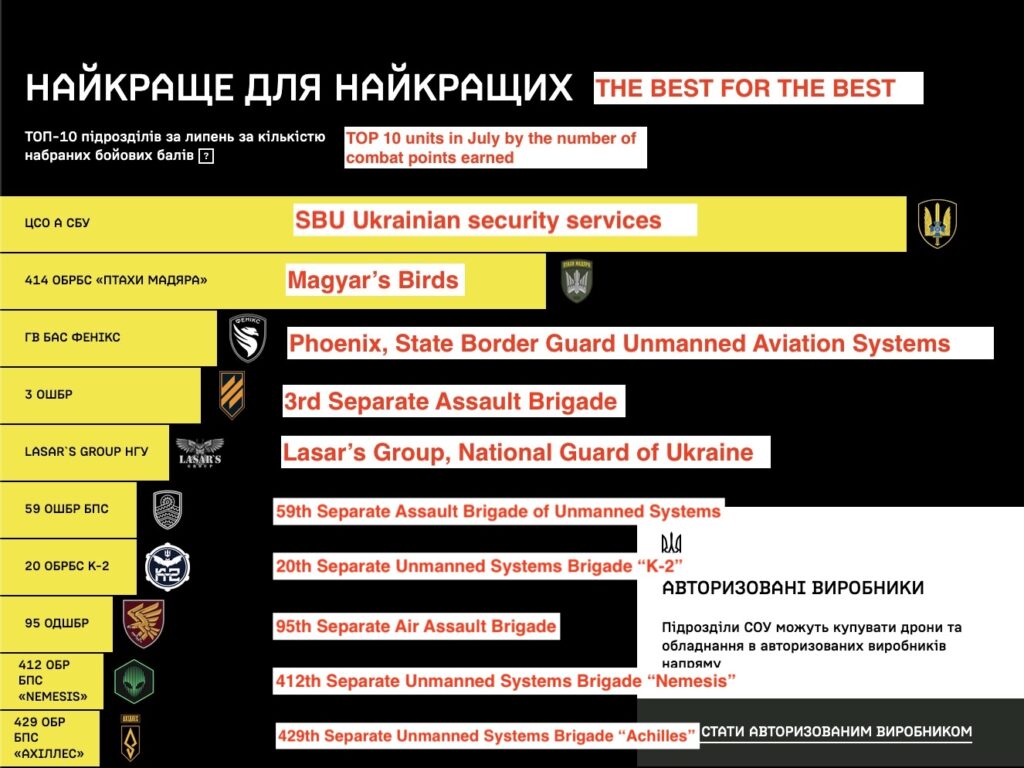
These e-points can then be used to purchase military equipment, such as light UAVs, that ostensibly will be delivered to the front-line unit within a week. The Brave1 Market publishes a list of top e-Point earning battalions on its homepage each month.
All this seems to be a 21st century high-tech version of Robert McNamara’s infamous kill-ratio in Vietnam that resulted in myriad excesses and massacres like at My Lai and led U.S. soldiers to throw their medals at the Pentagon in disgust and testify at the Winter Soldier hearings that the kill-ratio system had incentivized mass killing.

Fedorov’s Gamification Narrative and the Normalization of the Far Right
Consistently ranking among the top ten units for most points scored is the Separate Assault Brigade, one of five brigades in the 3rd Army Corps. The brigade was founded by Andriy Biletsky, the first commander of the Azov Regiment, who has commanded the corps since March 2025.
In 2013, Biletsky described his ideology of “Social Nationalism” as combining Organization of Ukrainian Nationalist (OUN) ultranationalism with National Socialism, calling both “great ideas.”
Biletsky has publicly argued that the “White race” is “superior,” and that the “historical mission” of the Ukrainian “blood-racial community” is to “lead the White Peoples of the world in the last crusade for their existence, a march against the Semitic-led subhumans,” warning of a race war between “native European peoples with foreign colonizers, mainly of African and Muslim origin.”

Biletsky has called Jews “economic and political parasites” on the record.[2] Nevertheless, President Zelensky, who is himself Jewish, awarded Biletsky the rank of Brigadier General of the 3rd Army Corps.
When Zelensky attempted to negotiate the withdrawal of heavy weapons and Azov forces in 2019, Biletsky publicly threatened the president, warning that he would deploy “thousands” of fighters to block any concessions.[3] This has led several analysts to conclude that neo-Nazi forces hold outsized power in the Ukrainian government despite their relative absence in elected positions.[4]
The integration of neo-Nazi forces such as Azov into Ukraine’s military has been largely downplayed as a “war-time exigency” in Western mainstream media. While Western journalists and academics had paid considerable attention to the issue of ultranationalism in Ukraine prior to Russia’s 2022 invasion, in recent years, apologetics for their integration into the Ukrainian government and armed forces have become the norm. For example, as late as May 3, 2026, the Independent published a laudatory account of Biletsky’s rise to the status of “war hero.”
Fedorov has been implicated in Biletsky’s image-laundering, having personally lobbied to reach an agreement with Meta’s representatives that content about the Azov movement would not be blocked on their platforms. Although Biletsky himself remained on Meta’s “dangerous” list, Azov was removed shortly after the meeting. Fedorov was pleased with this result, stating that, “thanks to this, millions of people in the world” will know about the “feat of the defenders of Mariupol,” and that “Russian propaganda” will “lose its argument for accusing Ukrainian heroes.”
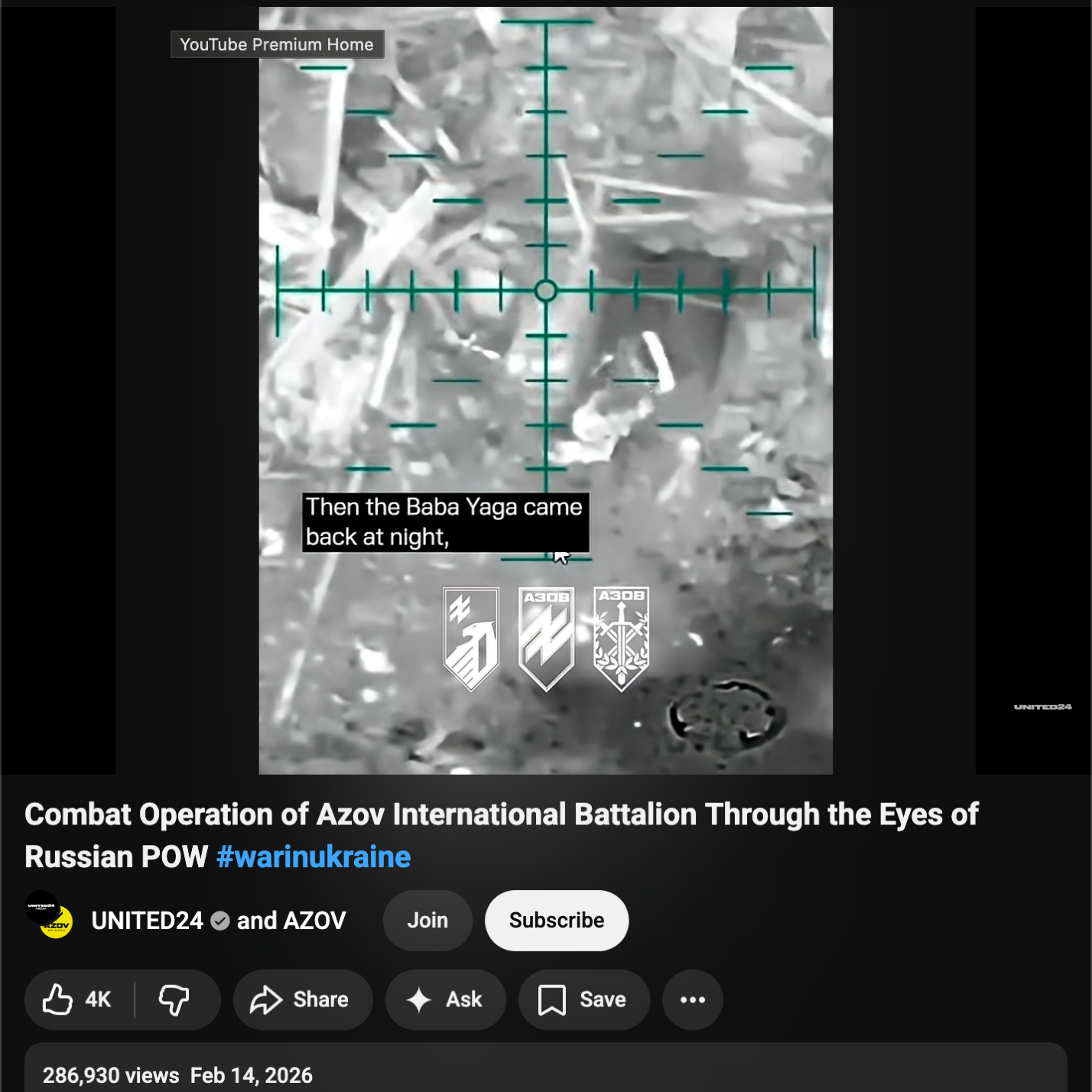
A wider laundering campaign of these forces appears to have been launched through the Ukrainian government’s United24 media platform. Since its creation on July 13, 2022, United24’s YouTube channel has posted hundreds of English-language promotional videos involving the Azov network and its 3rd Separate Assault Brigade. Many are “first-person shooter” trench warfare videos that feature familiar “heads-up displays” and other visual cues reminiscent of video games.
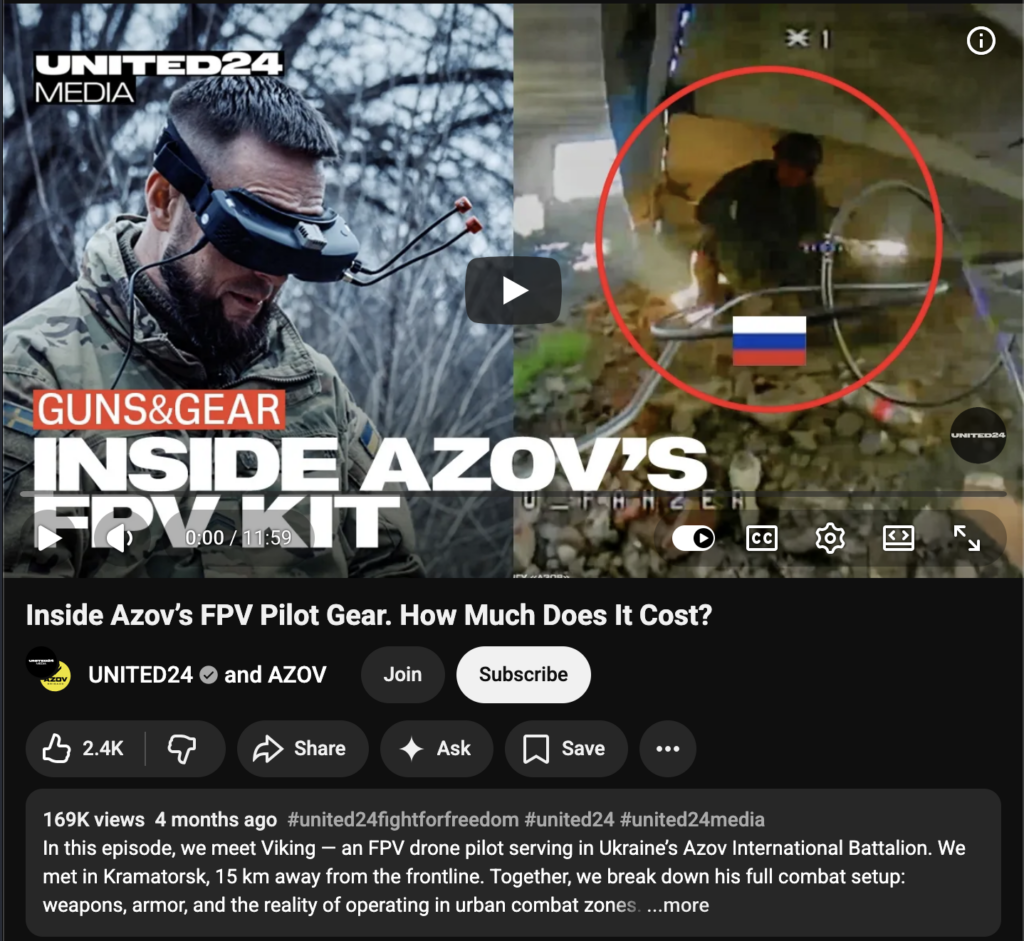
These videos often prominently display the neo-Nazi watermarks of Azov, as well as frames of Nazi-collaborator Ukrainian Insurgent Army (UPA) flags and other ultra-nationalist insignias attached to soldiers’ equipment. The videos often feature memes, songs popular on TikTok, and other elements likely intended to be familiar or ingratiating to Western audiences (e.g., United24 and Azov 2026; United24 and Azov 2026b; United24 and 3rd Army Corps 2026c; United24 and Azov 2026d; United24 2024).
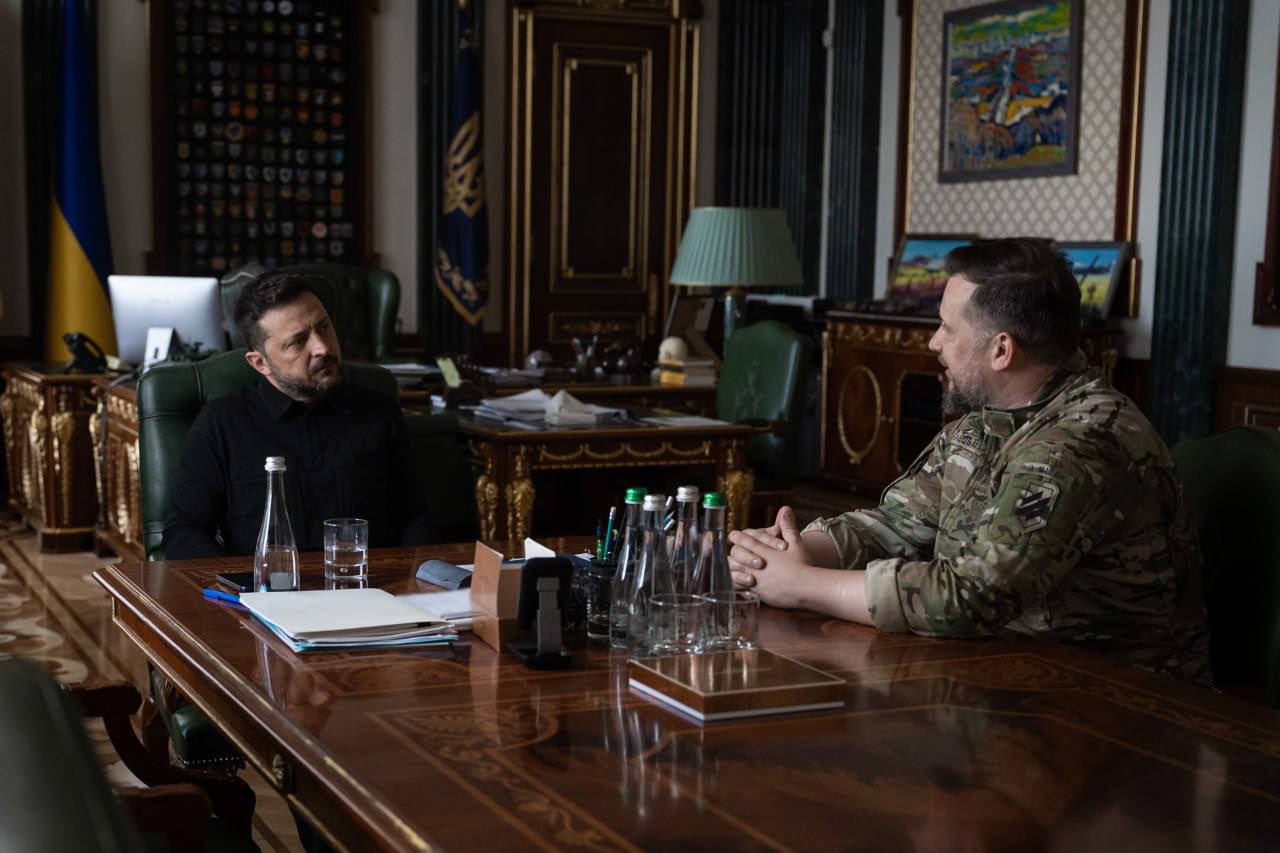
Amid the controversy of Fedorov’s removal as Minister of Defense, on July 17, 2026, Zelensky met with Biletsky to be briefed on the situation on the front, taking the opportunity to thank Biletsky for holding strong positions. The meeting came six weeks after Marta Havryshko, a Ukrainian historian and research scholar at Clark University’s Strassler Center for Holocaust and Genocide Studies, raised alarm regarding the extent to which neo-Nazi networks are embedded in Ukraine’s armed forces. Havryshko referenced Waffen-SS insignia being worn openly, a sub-unit of the 3rd Assault Brigade adopting a modified emblem of the Dirlewanger SS Brigade, and the Black Sun and Wolfsangel spreading into ostensibly non-ideological units.
Despite the open participation of far-right, Azov-descended formations in the bonus program, Brave1 has attracted millions of dollars in foreign investment from Western countries and NATO with the stated aim of learning from Ukraine’s experiences.
Intelligence Enters the Battlefield Data Economy
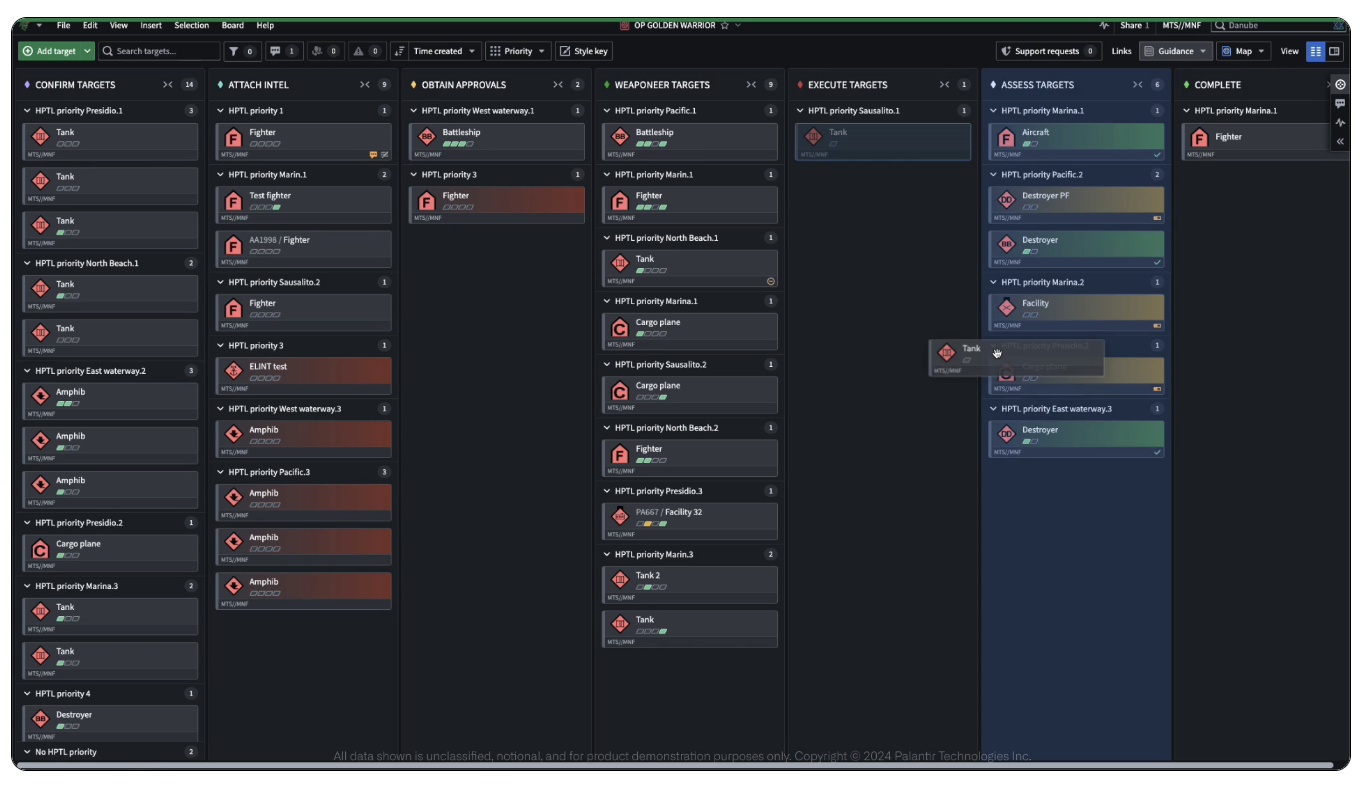
On January 20, 2026, Brave1 announced the launch of Brave1-Palantir Dataroom, a secure AI training environment built in partnership with Palantir Technologies, designed to develop a new generation of algorithmic weapons using verified battlefield strike data.
Palantir’s origin is inseparable from the U.S. intelligence community, having found its first investor in the CIA’s venture-capital arm, In-Q-Tel, which seeded an early prototype of the company in 2005 with USD 2 million following founder and CEO Peter Thiel’s initial investment.
Susan Gordon, who helped found In-Q-Tel, once said Google Earth and Palantir were the two best investments the agency had ever made. Palantir CEO Alex Karp expressed corresponding sentiment, telling The New York Times that the real value of the In-Q-Tel investment was that it gave Palantir access to the CIA analysts who were its intended clients.
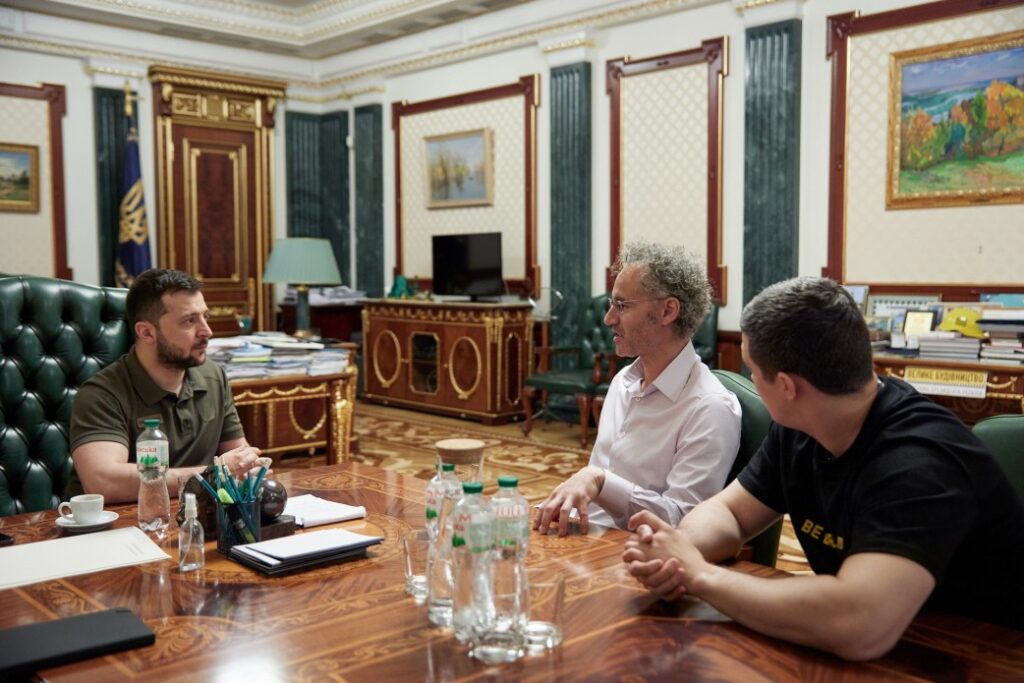
Mykhailo Fedorov attended the first known meeting between Palantir co-founder Karp and Ukrainian President Volodymyr Zelensky on June 1, 2022, ahead of Palantir’s integration into the Ukrainian armed forces. In what can be seen as further cementing Ukraine’s relationship with the firm, Zelensky and Fedorov most recently met with Karp on May 12, 2026, to discuss their strategic partnership in AI and battlefield technologies in both combat and civilian contexts.
Fedorov stated that the program’s initial focus would be on the autonomous detection and interception of air threats, although this analysis contradicts military and scholarly analyses of the viability of this technology as seen above.
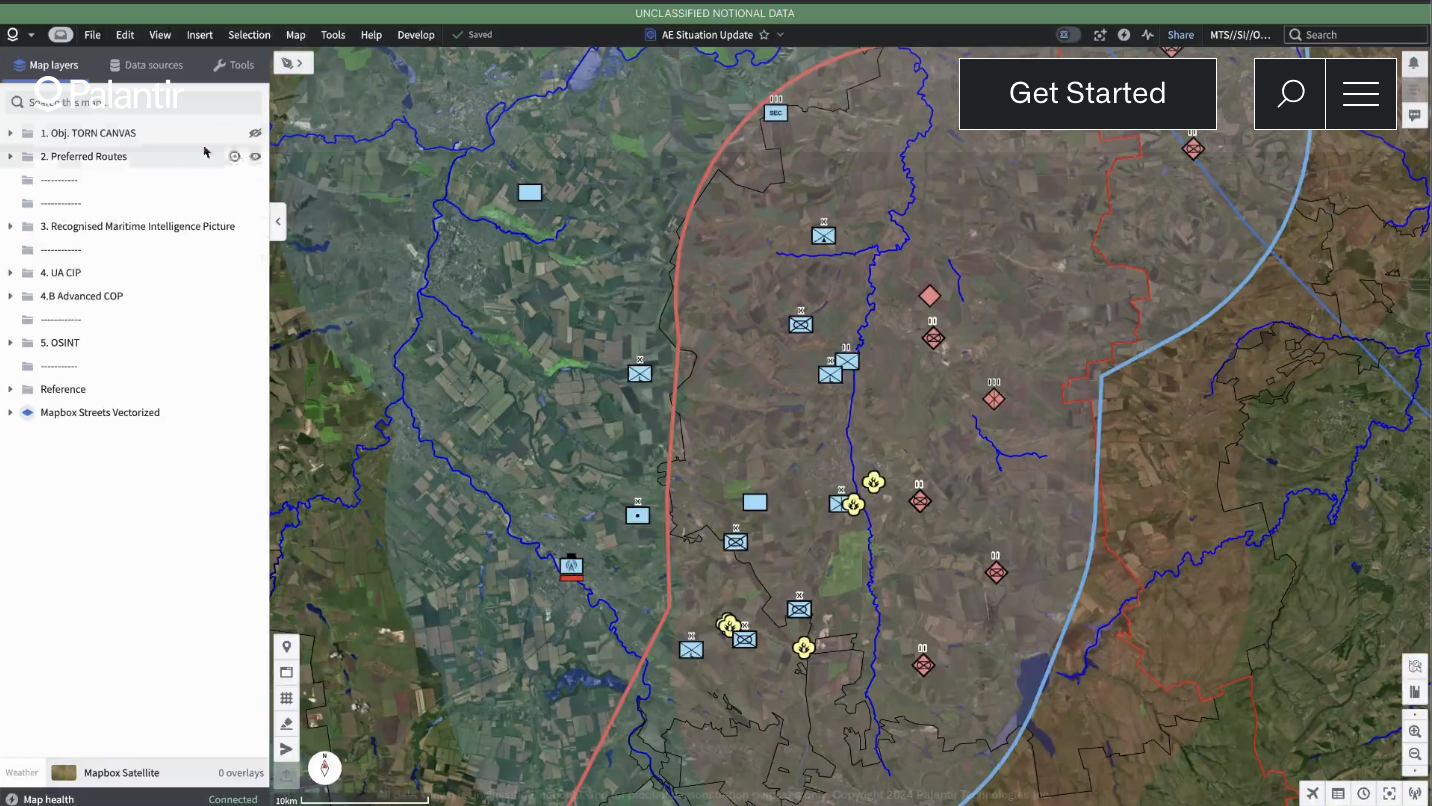
As Louis Mosley, Palantir’s Executive Vice President for the UK and Europe, described the program: “Ukraine has been the R&D lab for AI in a military context.” This technology, Mosley says, is intended to “share with allies around the world” the “unique experiences and capabilities gained in this war.” As Palantir co-founder and CEO Karp described the situation in Ukraine, “there are things that we can do on the battlefield that we could not do in a domestic context.”
Start-up Culture’s “Industry Disruption” Becomes a Liability
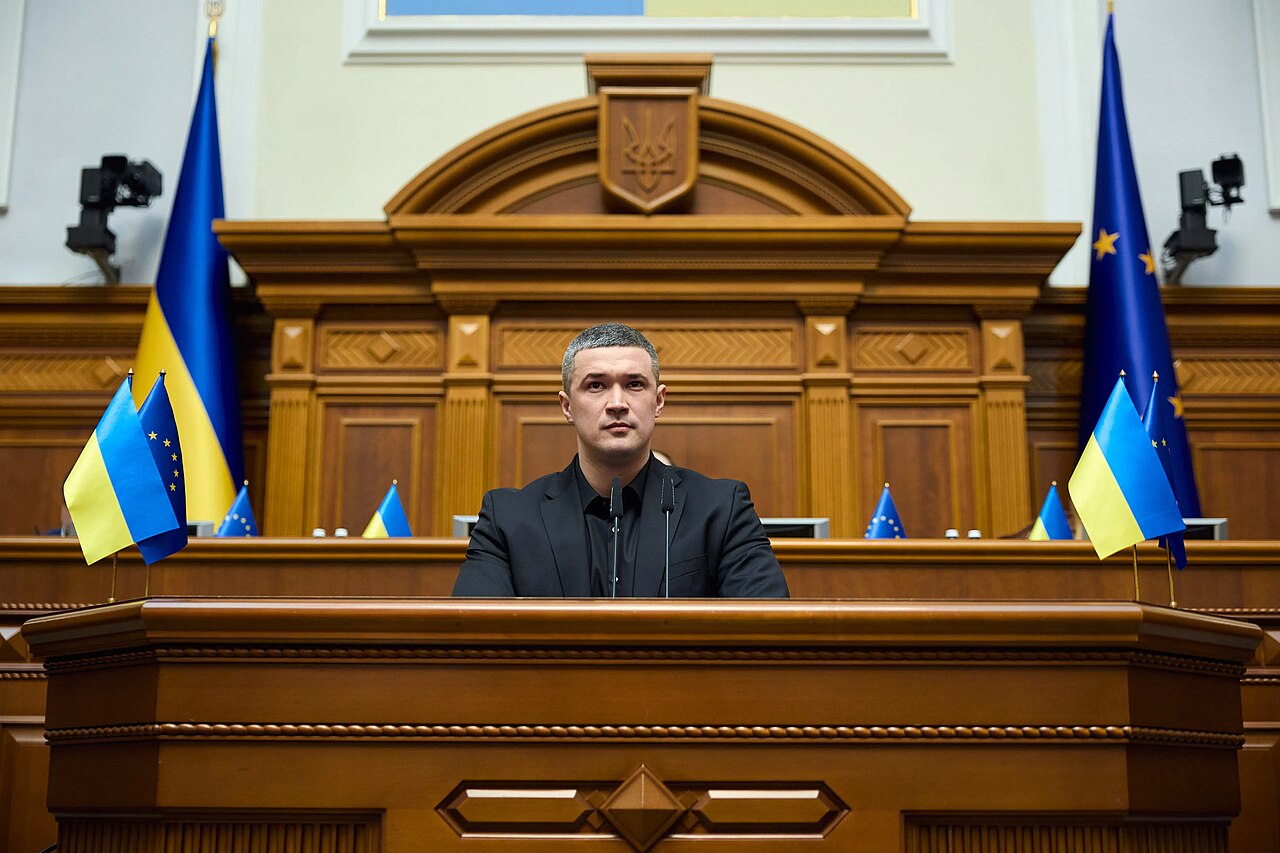
On May 15, 2026, The New York Times described Fedorov as a “technology evangelist” and one of the authors of “the future of warfare” in Ukraine. While the article recognized that AI-enhanced weaponry was still in its infancy, it quoted him as saying, “Autonomous weapons are the new nuclear weapons,” and that they are the only thing that can “ensure security.”
Fedorov stated in January 2026 that he planned to use this futuristic technology in Ukraine’s aim to “kill 50,000 Russians a month.” Fedorov’s framing of the war again appears to hinge on a “body count” metric that echoes the logic of Secretary of Defense Robert McNamara’s foreign policy toward Vietnam, where kill metrics were treated as indicators of military progress.[5] In both cases, the incentivized killing failed to correspond to meaningful measures of military success—which was entirely predictable in light of the political circumstances of both wars.[6]
CNN wondered whether Fedorov’s statement was a “sign of confidence or an indicator of weakness” in the context of Ukraine’s manpower issue, in which two million have ignored call-up papers and 200,000 others have deserted.
Fedorov’s approach has also faced criticism from the military elite. Fedorov’s faith in “robot warfare” has led to what analysts call a power struggle between him and Ukrainian generals, who think the idea of a rapid transition to unmanned battle is disconnected from the “grim reality” of the war.
This struggle was publicly visible in an April 2026 post on X by an adviser to Fedorov, Serhii Sternenko, who alluded to the hypocrisy of Ukrainian narratives about Russian “meat wave assaults”, before stating that Ukrainian commanders “do the same thing,” and that “Treating our people this way is a crime. And accountability must follow it.”
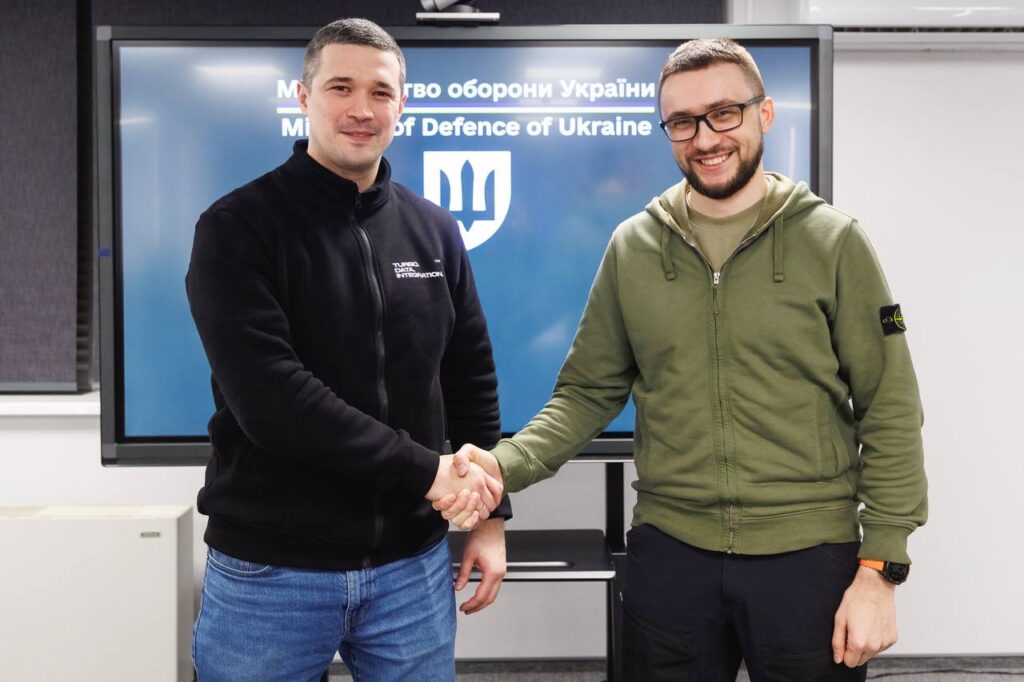
Some analysts point to the broader power struggle as contributing to Fedorov’s sacking by Zelensky less than six months into his tenure as Defense Minister. Others noted that Brave1’s decentralized procurement system may have angered the “old guard” of the defense industry.
Whatever the operational realities, Fedorov has stated that the “vast troves of data” the combat has generated are the “silver lining” of the war. Fedorov is reportedly leading an effort to monetize Ukrainian war data, which includes a library of more than five million annotated videos of the battlefield filmed by surveillance and strike drones. These include footage of people running and hiding as killer drones close in, which can be valuable for companies or militaries looking to train AI models.
Given that many analysts of the Russo-Ukrainian war concur that a Ukrainian victory is an impossibility, especially given Russia’s nuclear capabilities, the ultimate value of this battlefield data may be derived in other theaters. While Ukraine shows the signs of a forever war, the U.S. in parallel increasingly views AI as a central strategic asset for its geopolitical dominance.
Whether these developments reflect a complete takeover of the national security state by the finance-capitalist imperatives of the defense industry—today melded with Silicon Valley—or a genuine belief in ever-advancing weapons technologies as capable of assuring permanent Western hegemony is open to interpretation.

See Ivan Katchanovski, The Russia-Ukraine War and Its Origins: From the Maidan to the Ukraine War (Cham, Switzerland: Springer, 2026), 224, 231. ↑
Ibid., 147. ↑
Ibid., 271. ↑
See for example, Richard Sakwa, The Russo-Ukrainian War: Follies of Empire (Boulder, CO: Lynne Rienner, 2026). ↑
See Robert S. McNamara, with Brian VanDeMark, In Retrospect: The Tragedy and Lessons of Vietnam (New York: Vintage Books, 1996), 48. ↑
In Vietnam the U.S. opposed a popular revolutionary movement by trying to impose corrupt puppet governments hated by most of the South Vietnamese population. In Ukraine, as scholars such as Ivan Katchanovski and Richard Sakwa argue, the U.S. provoked a war with Russia by empowering in an illegal coup involving right-wing extremists who aroused opposition in eastern Ukraine, whose population was closely tied to Russia culturally, economically and politically. After Ukraine began terrorizing the people of eastern Ukraine with U.S. weapons, the people there begged for Russian intervention to save them. No amount of killing and violence is going to change the political calculation, as in Vietnam. For insights into the injustice of the Ukrainian position in the Russo-Ukraine conflict, see Benoit Paré, What I Saw in Ukraine, 2015-2022 – Diary of an International Observer (self-published 2025). ↑
CovertAction Magazine is made possible by subscriptions, orders and donations from readers like you.
Blow the Whistle on U.S. Imperialism

Click the whistle and donate
When you donate to CovertAction Magazine, you are supporting investigative journalism. Your contributions go directly to supporting the development, production, editing, and dissemination of the Magazine.
CovertAction Magazine does not receive corporate or government sponsorship. Yet, we hold a steadfast commitment to providing compensation for writers, editorial and technical support. Your support helps facilitate this compensation as well as increase the caliber of this work.
Please make a donation by clicking on the donate logo above and enter the amount and your credit or debit card information.
CovertAction Institute, Inc. (CAI) is a 501(c)(3) non-profit organization and your gift is tax-deductible for federal income purposes. CAI’s tax-exempt ID number is 87-2461683.
We sincerely thank you for your support.
Disclaimer: The contents of this article are the sole responsibility of the author(s). CovertAction Institute, Inc. (CAI), including its Board of Directors (BD), Editorial Board (EB), Advisory Board (AB), staff, volunteers and its projects (including CovertAction Magazine) are not responsible for any inaccurate or incorrect statement in this article. This article also does not necessarily represent the views the BD, the EB, the AB, staff, volunteers, or any members of its projects.
Differing viewpoints: CAM publishes articles with differing viewpoints in an effort to nurture vibrant debate and thoughtful critical analysis. Feel free to comment on the articles in the comment section and/or send your letters to the Editors, which we will publish in the Letters column.
Copyrighted Material: This web site may contain copyrighted material the use of which has not always been specifically authorized by the copyright owner. As a not-for-profit charitable organization incorporated in the State of New York, we are making such material available in an effort to advance the understanding of humanity’s problems and hopefully to help find solutions for those problems. We believe this constitutes a ‘fair use’ of any such copyrighted material as provided for in section 107 of the US Copyright Law. You can read more about ‘fair use’ and US Copyright Law at the Legal Information Institute of Cornell Law School.
Republishing: CovertAction Magazine (CAM) grants permission to cross-post CAM articles on not-for-profit community internet sites as long as the source is acknowledged together with a hyperlink to the original CovertAction Magazine article. Also, kindly let us know at info@CovertActionMagazine.com. For publication of CAM articles in print or other forms including commercial internet sites, contact: info@CovertActionMagazine.com.
By using this site, you agree to these terms above.
About the Author

Zachary Sedefian researches and writes about imperialism and global political economy.
He holds an M.A. in Political Science from CUNY. His scholarly work is forthcoming in the Journal of Labor and Society.
Zachary can be reached at zbsedefian@gmail.com.







This article has a lot of excellent factual information. However the headline leaves a lot to be desired.
The headline is a sensationalized, conspiratorial framing rather than an objective portrayal of Ukraine. It uses loaded rhetoric (“Neo-Nazi-Led,” “CIA-Seeded AI Weapons Lab,” “E-Points”) typical of alternative or fringe opinion pieces—specifically originating from outlets like Covert Action Magazine—designed to push a specific geopolitical narrative. While the wider war in Ukraine does involve various volunteer or regular military units where fringe nationalist or far-right elements have historically surfaced, characterizing the national military or its technology infrastructure as a “Neo-Nazi-Led” enterprise feeding a secret “CIA AI lab” distorts complex realities into propaganda. International military cooperation and technological development involve standard state defense partnerships, not covert extremist training loops.