[This article continues CovertAction Magazine’s efforts to illuminate the history of the CIA.—Editors]
The CIA’s “Brief History of Radio Swan,” formerly classified SECRET EYES ONLY, begins with this paragraph:
“On 17 March 1960, President Eisenhower approved a covert action program to bring about the replacement of the Castro regime. Within the propaganda framework of that program, an important objective was to create and utilize a high-powered medium and short wave radio station. CIA was asked to provide such a station, outside the continental limits of the United States, and have it ready for operation within sixty (60) days.”
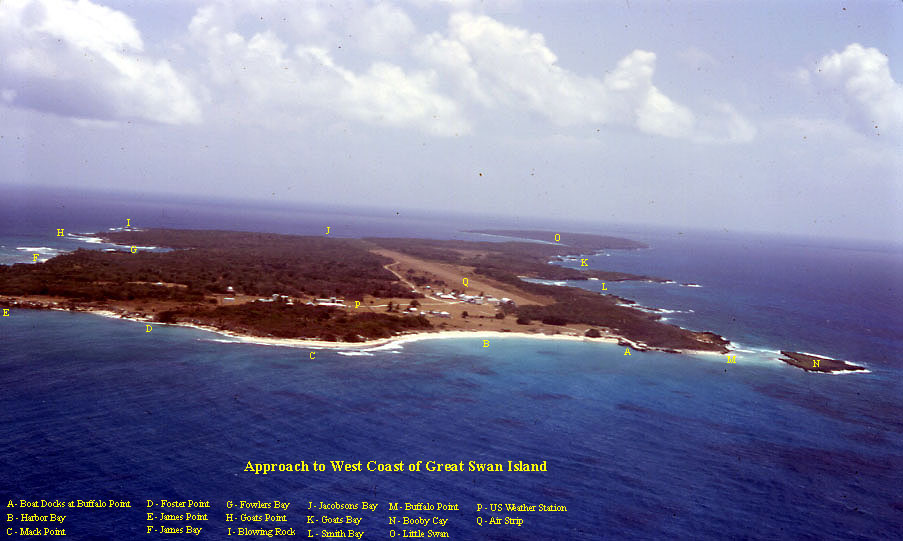
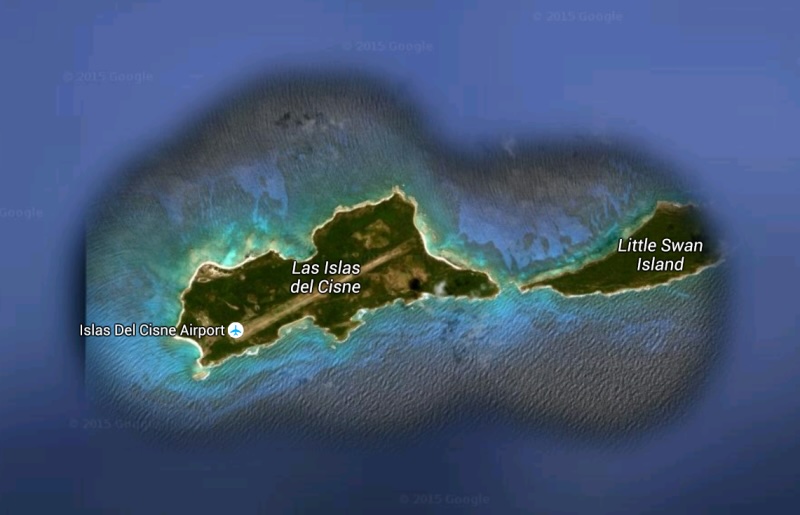
It is clear from philatelic evidence that the agency had anticipated the president’s approval and had begun to implement that phase of the program before he had signed it. Amid abundant fanfare the U.S. Coast and Geodetic Survey ship Explorer called at Swan Island on March 19.
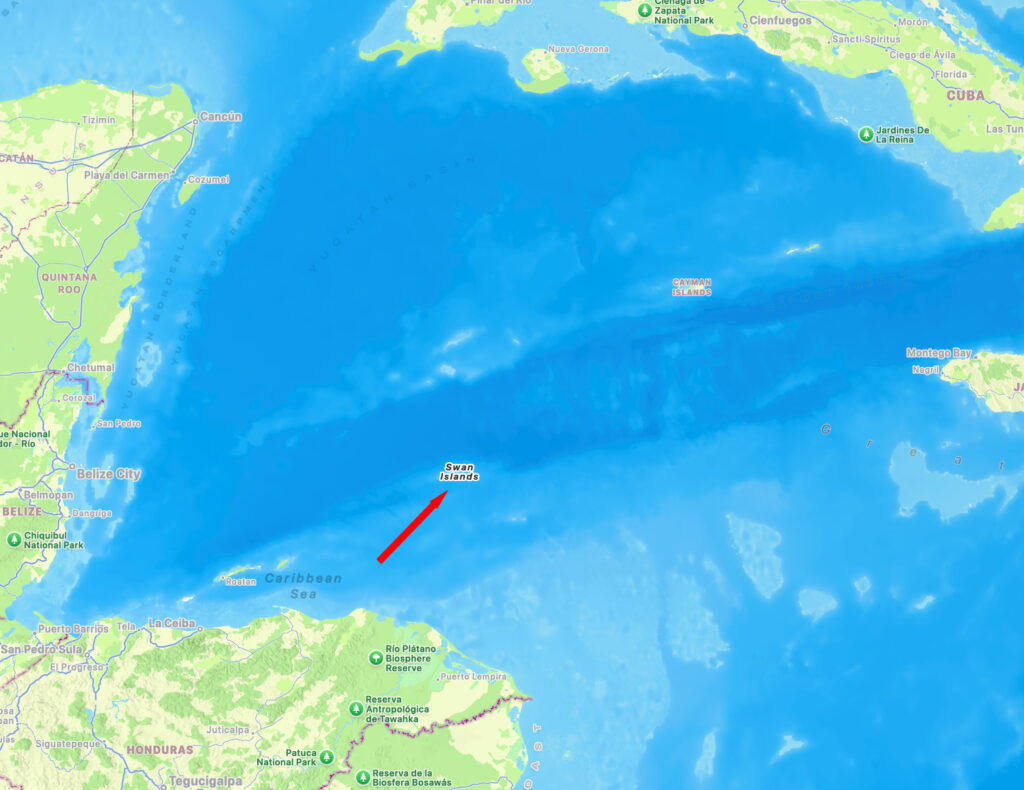
Explorer had begun its journey on February 2 on the West Coast, taking hydrographic measurements, collecting rock samples, filming underwater features, and gathering other scientific data without attracting significant publicity. But that all changed when it reached the Panama Canal.
In preparation for its final survey mission at Swan Island, Captain Edmund L. Jones was sworn as an assistant postmaster. The February 25 Postal Bulletin listed the Explorer post office as a temporary branch of Washington, D.C. Collectors were invited to submit covers for cancellation at Swan Island; 5,000 pieces of philatelic mail were canceled there, including the Figure 1 cover.
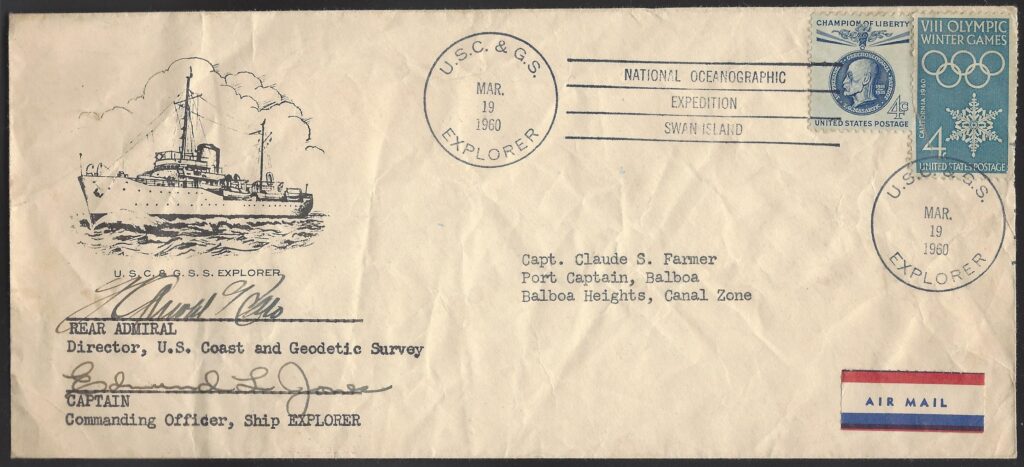
The Swan Island survey was unlike any other. A census recorded a population of 28 residents—19 Cayman Islanders, three Hondurans, and six U.S. citizens attached either to the Weather Bureau or the Federal Aviation Administration (FAA) station. A publicity blitz reported charting and mapping, dredging, taking core samples, diving operations, and collecting wildlife specimens.
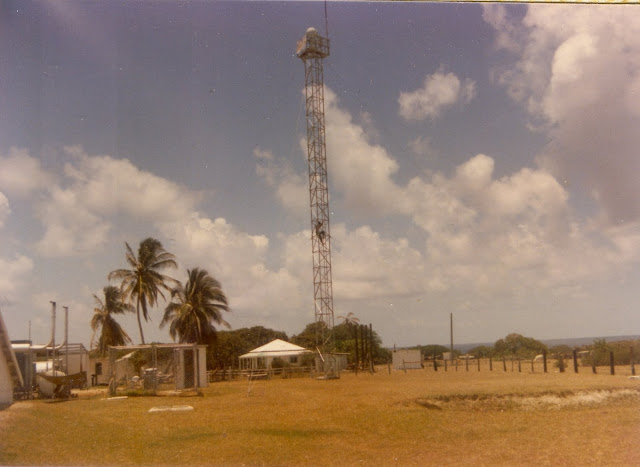
No mention was made of Explorer’s covert mission to deliver personnel and equipment to build and operate a 50-kilowatt clear-channel radio station on Great Swan, which went on the air May 17. Programs in English and Spanish included anti-Cuban propaganda, popular music, and religious broadcasts, recorded in New York City and flown to Swan Island by chartered Coastal Air Inc. aircraft from Miami via Cozumel, Mexico.
Coastal Air had previously flown a mission, crewed by Cuban exiles, to drop propaganda leaflets on Caracas after Venezuela’s leftist president Romulo Betancourt had been the first foreign leader to host Fidel Castro after the Cuban Revolution.
Radio Swan staff consisted of 15 engineers and technicians under contract from the Philco Corp., serving six-month terms on the island. The station was reported to be owned by a New York firm, the Gibraltar Steamship Co., which did not operate steamships.
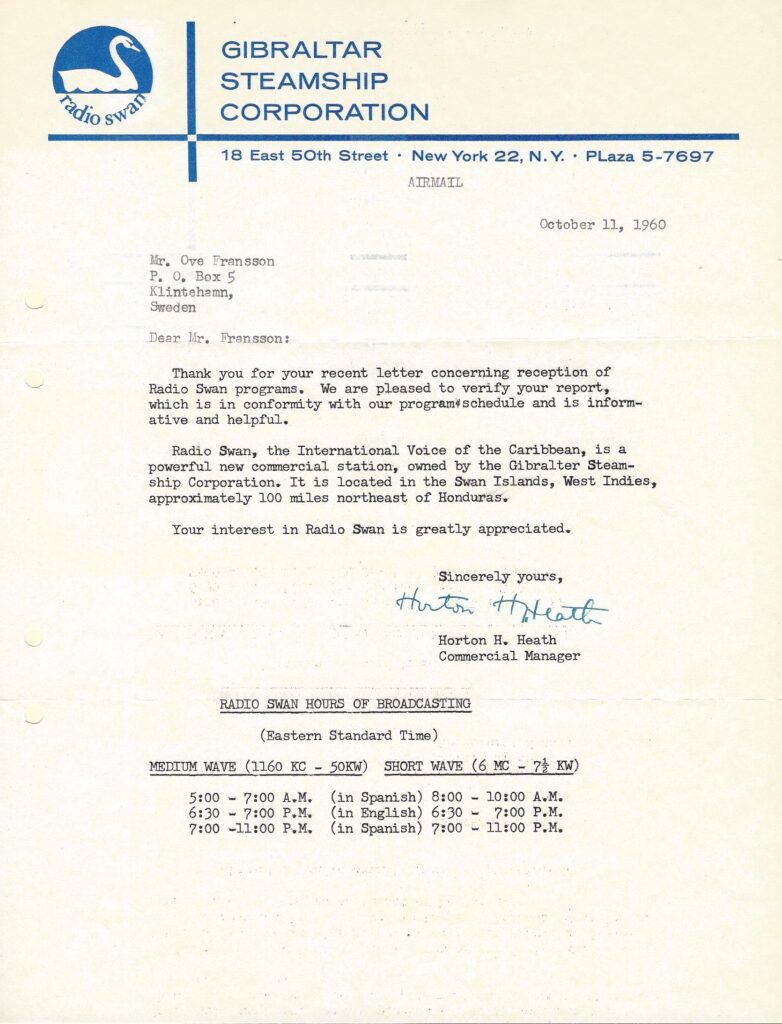
Thomas Dudley Cabot, a former president of United Fruit Company and a former director of the State Department Office of Security Affairs, was the president of Gibraltar Steamship Co. Sumner Smith was vice president. Station manager Horton Heath, who sent the Figure 2 letter, told reporters that Radio Swan was a commercial station that leased the land from Smith.
1961: Radio Swan Broadcasts for the Bay of Pigs Invasion of Cuba
Radio Swan inaugurated the CIA’s plan to oust Castro, which culminated in the April 1961 invasion at the Bay of Pigs. CIA planners had expected Castro to be assassinated by the time the assault was launched, but mobsters who were tasked with that assignment botched it.
On March 10 CIA Director Allen Dulles gave a top-secret briefing to the CIA Subcommittee of the House Armed Services Committee, in which he praised the effectiveness of Radio Swan:
“We developed the radio equipment on Swan Island, which you have heard a great deal about. That has been going on now for about six months and is, we think, very effective. That reaches practically all of Cuba. And we are working very carefully with the Cubans, and we have the very best Cuban refugees working on that program.”
Privately, the CIA was less sanguine. According to the formerly secret eyes-only CIA report,
“Toward the end of 1960, the effectiveness of Radio Swan began to diminish. Although great numbers of Cubans still listened to the station, its credibility and reputation began to suffer as the result of statements representing the selfish interests of the Cuban groups producing the various programs….the program producers began to exaggerate in order to give their broadcasts a touch of sensationalism. They made statements which were obvious lies to the listeners. An example: One of the announcers stated that there were 3,000 Russians in a park in Santiago de Cuba—the residents had only to walk to the park to see that this was untrue.”
To remedy the problem the agency tried to supervise content of the propaganda broadcasts. Then, as the fateful date approached, CIA planners devised a ruse to test Radio Swan’s effectiveness.
As late as March 1961, a survey was made to determine the extent of listening coverage. An inexpensive ballpoint pen was offered to those listeners who would write in to the station. The reply was immediate: almost 3,000 letters from 26 countries. This barrage of mail included significant amounts from all parts of Cuba.
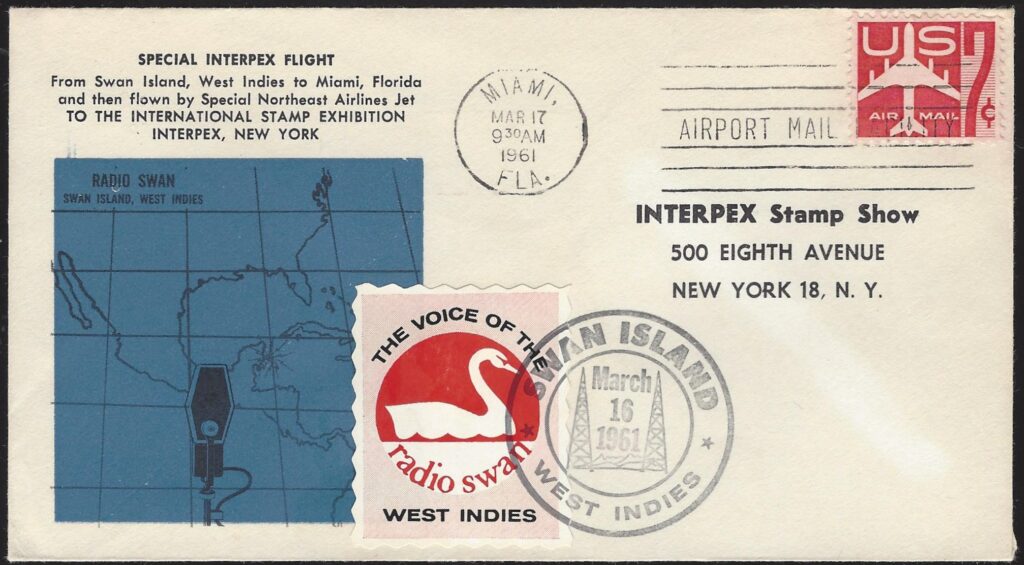
Once again, a philatelic promotion served to elevate the visibility of Radio Swan. Special labels on cacheted covers were struck with non-postal March 16 Radio Swan date-stamps, flown to Miami on a Coastal Air charter flight, canceled there on March 17, and flown to the Interpex Stamp Show in New York City, as seen on the Figure 3 cover.
One month later Cuban armed forces defeated the CIA’s invasion force. During and after the invasion began, Radio Swan became a vehicle for psychological warfare orchestrated by David Atlee Phillips, the man who had managed clandestine CIA broadcasts during the 1954 Guatemala coup. Some of the faux coded messages read like caricatures from spy comedies, such as, “Look well at the rainbow. The fish will rise very soon” and “Attention, Stanislaus, the moon is red April 19.” Others urged the invasion to fight on after they had been soundly beaten.
In the humiliating aftermath, CIA Director Allen Dulles and the chief architect of the fiasco, Deputy Director Richard Bissell, were forced to resign at President John F. Kennedy’s insistence. Phillips’ role did not hinder his career; he later headed the Western Hemisphere division of the CIA. And Radio Swan continued to broadcast propaganda.
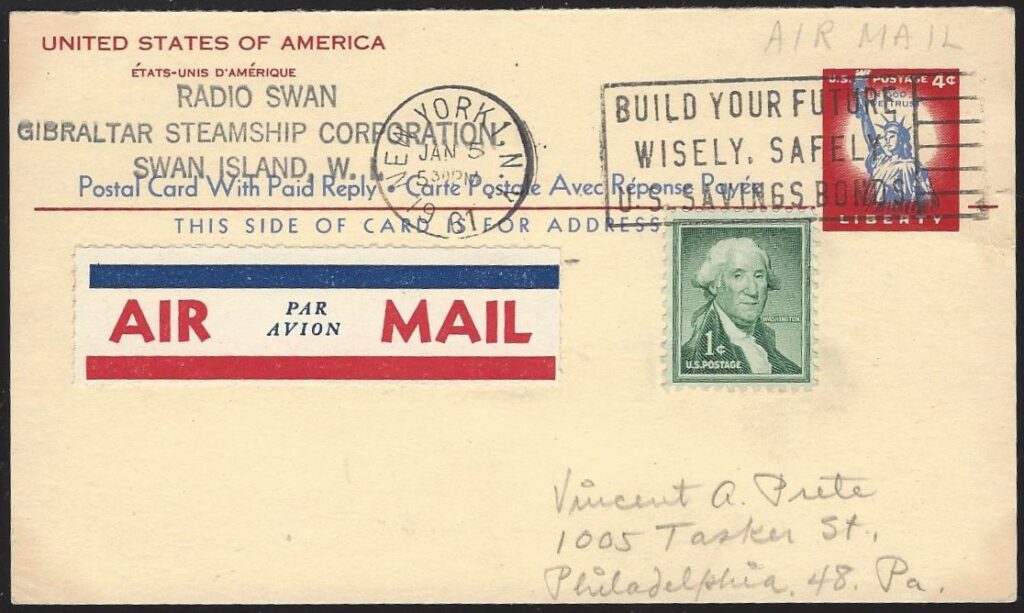
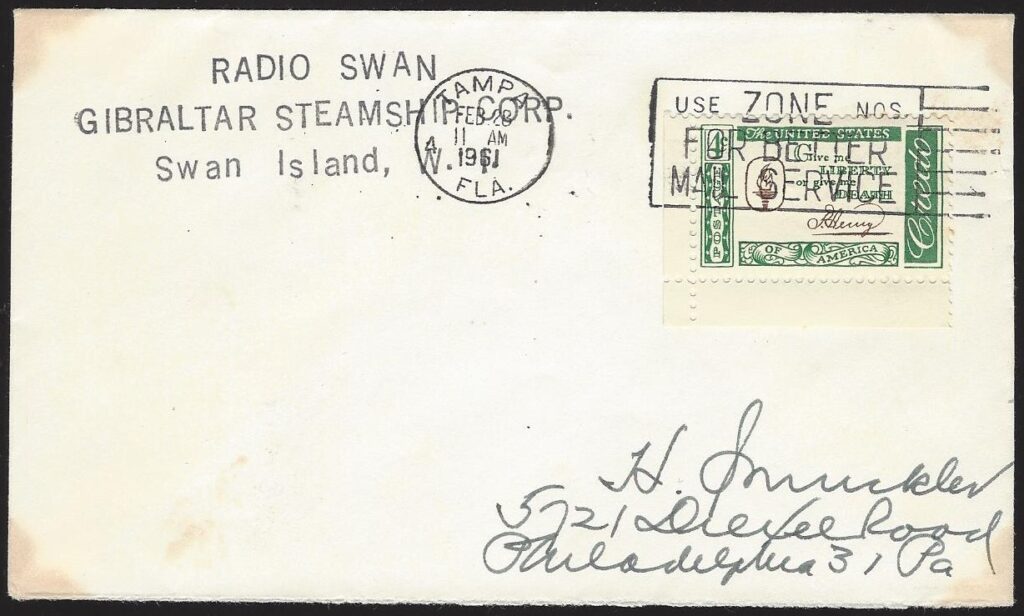
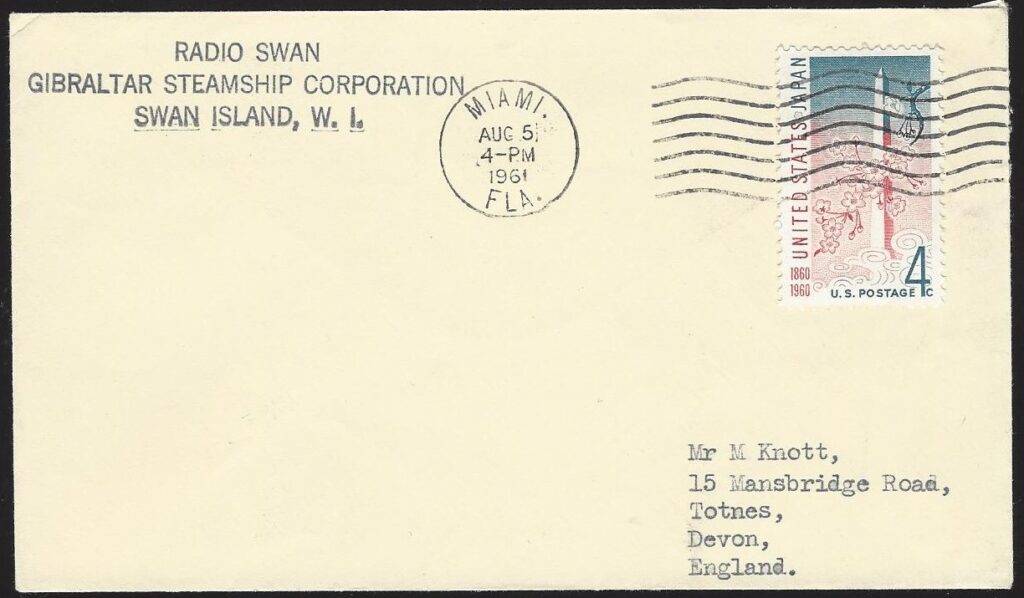
Three covers in Figure 4 show how Gibraltar Steamship Co. mail originated from New York City in January 1961, from Swan Island via Tampa in February, and—after the mission had failed—from Miami in August.
Headquarters formally relocated to Miami in September 1961. The name of the station changed to Radio Americas in October 1962. The name of the parent company changed first to Vanguard Service Corp., and finally to Radio Americas, Inc., of Coral Gables, each one either a CIA proprietary company or contractor. For the rest of its existence, Radio Americas broadcast Radio Cuba Libre propaganda, news and entertainment programs that were produced in Miami.
Neither Radio Swan nor Radio Americas was licensed by the Federal Communications Commission, which denied knowledge of their existence. But the CIA men on the island had an amateur radio club station for their personal use, licensed with the call letters KS4CC.
CIA flights left Miami for Swan Island twice each week, in a circuit that included stops in the Florida Keys and on Caribbean islands whose governments hosted stations that broadcast the Radio Cuba Libre programs. Those other locations and call letters have been redacted from the declassified CIA report, but reporters have named the Bahamas and the Dominican Republic as two of them. In later testimony Phillips said that the programs were air-expressed to “about 40 stations in five countries around the Caribbean.”
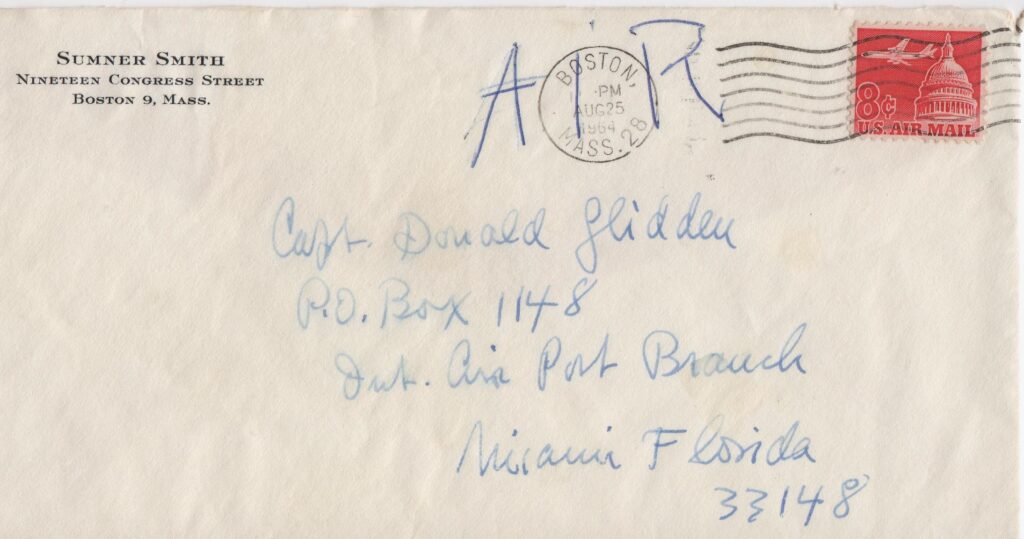
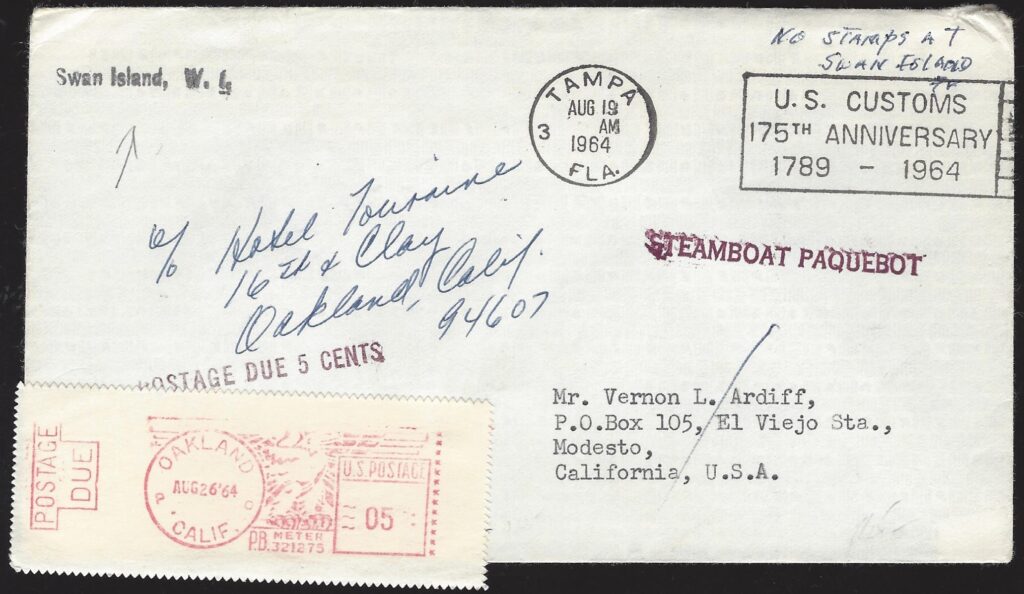
Under the new arrangement, airmail was transported to and from Swan Island on the CIA flights. Calls by Hamilton Brothers ships occurred at two-month intervals, so surface mail was much slower than it had been before 1960. The figure 5 1964 cover went by air from Swan Island manager Smith to caretaker Donald E. Glidden via a Miami post office box. The figure 6 1964 surface letter went from Swan Island to California, forwarded, with postage due collected from the addressee.
Radio Americas vied with Radio Havana Cuba for the loyalty of listeners in Latin America. Correspondents were rewarded with colorful QSL cards and pennants, shown in Figure 7..
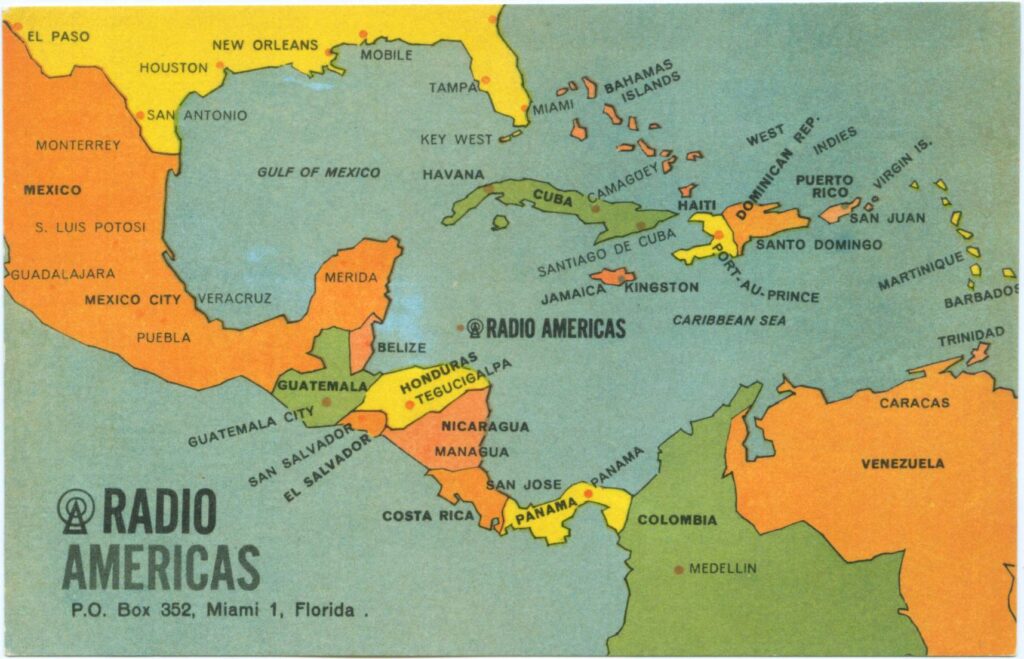
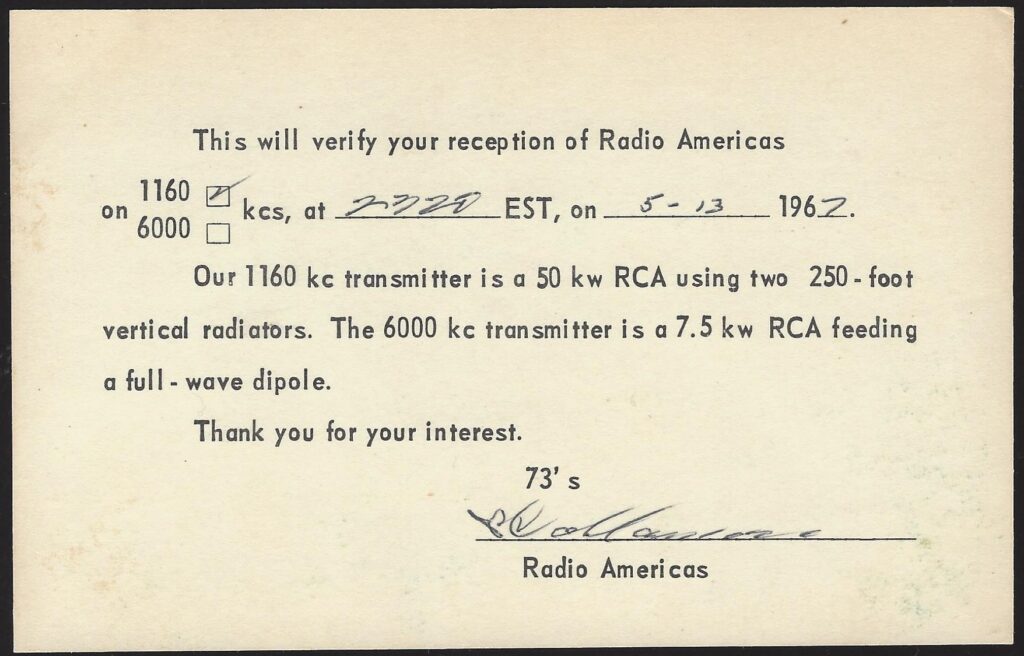
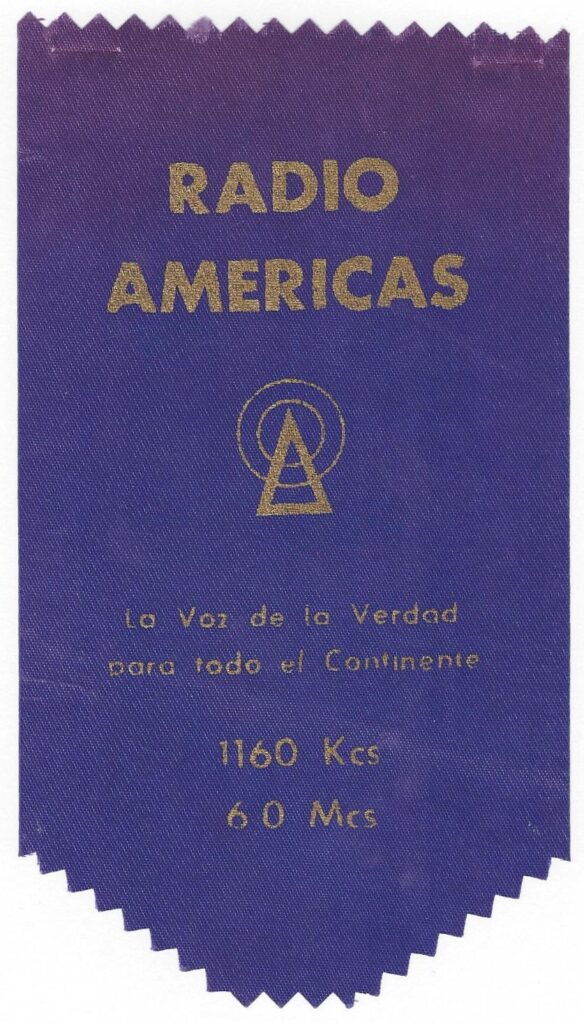
But surveys consistently reported that the Cuban station was more popular throughout the hemisphere. Radio Americas went off the air on May 15, 1968. A heavily redacted retrospective CIA analysis from 1991 concluded,
Radio Americas may have had a deleterious effect, though one consonant with US policy. It may have slightly aggravated discontent on the island and thus contributed to the exodus of some of the very people who might have helped to overthrow Castro. If such is the case, it also contributed to the costly immigration problems which have plagued Miami and other cities.
Besides distributing taped Radio Cuba Libre propaganda programs to Swan Island and other Caribbean locations, the air carrier added a courier service between them in 1964 that expedited letters at a charge of $2.50 in addition to postage (with dollars misspelled “Dollors” on its express labels).
The Figure 8 cover entered the mail and was canceled July 12, 1965, at St. Thomas, Virgin Islands. I believe it originated at Swan Island because the U.S. 8¢ stamp paid the domestic airmail rate. If it had originated at a U.S. post office, no express transport would have been needed; a foreign origin would have required a higher amount of postage.
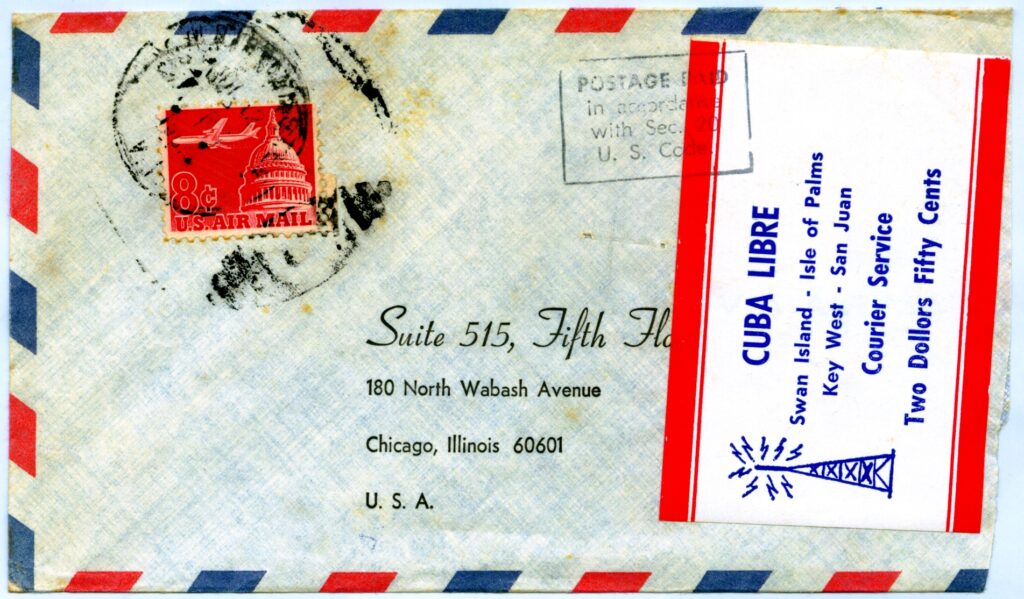
The boxed marking reads, “POSTAGE PAID in accordance with Sec. 20 U.S. Code.” The actual reference is not to the code but to a Post Office Department publication titled Restrictions on Transportation of Letters: The Private Express Statutes and Interpretations. Section 20 states, “Letters may be carried by an individual, express company, or any other person outside the mails to any point within or without the United States, provided appropriate postage is paid.”
The envelope has no addressee’s name, only the address: “Suite 515, Fifth Floor, 180 North Wabash Avenue, Chicago, Illinois 60615 U.S.A.” That was the address of De Laurence, which sold books and paraphernalia—potions, incense, amulets, and jewelry—related to occultism, mysticism, spiritualism, and magic. Figure 9 shows the front cover of a contemporaneous De Laurence catalog was among the items sent.
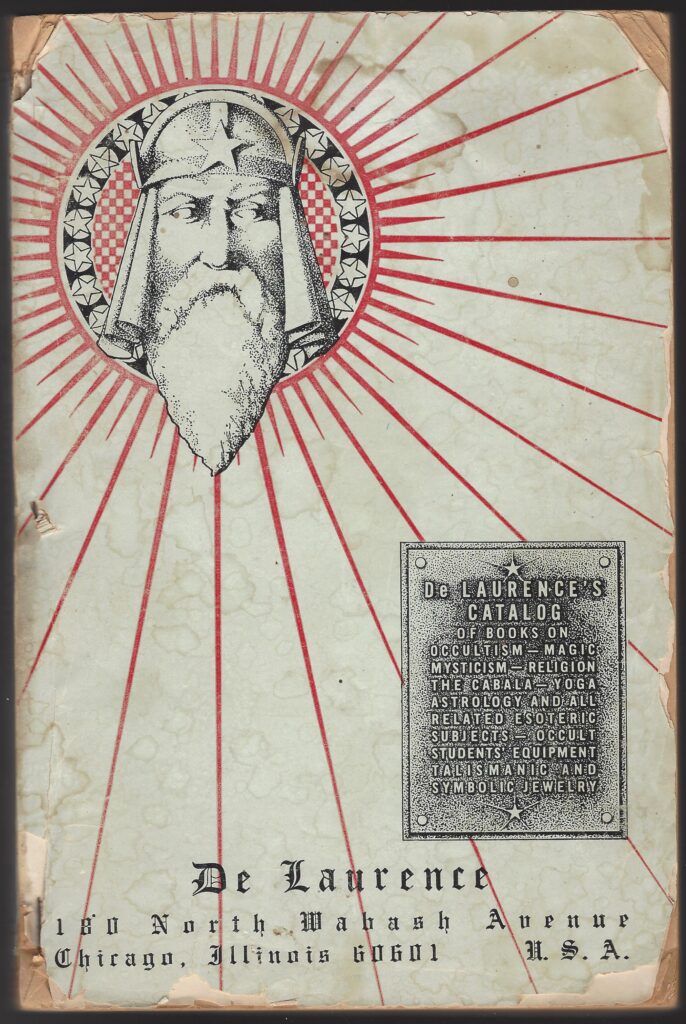
[Source: Photo Courtesy of Ken Lawrence]
De Laurence’s clientele included adherents of African and Afro-Caribbean cults and religions such as obeah, voodoo, and Santeria. That helps explain why a CIA-sponsored carrier would have provided a service for the firm.
Psychological warfare operations often exploited occult beliefs and practices, superstition, fear of hexes and black magic. One was a 1962 scheme named Operation Mongoose, which proposed to fire “star shells from a submarine to illuminate Havana” after dark on All Soul’s Day (November 2) “to gain extra impact from Cuban superstitions” while spreading rumors “about portents signifying the downfall of the regime.”
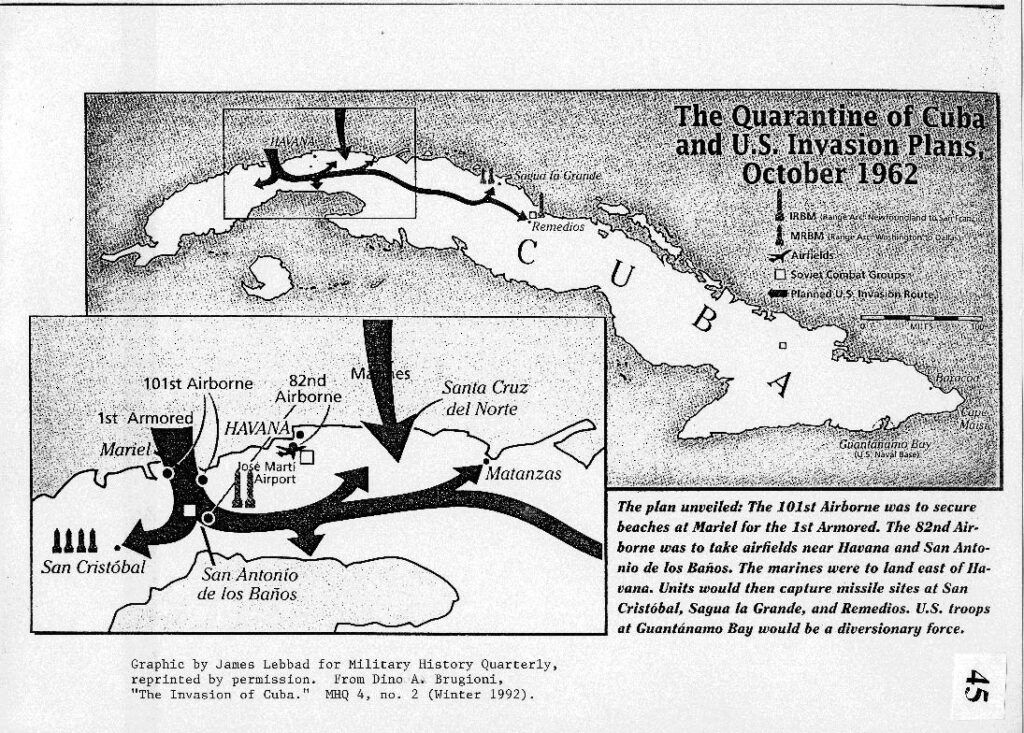
Most Cuba Libre Courier Service express covers I have seen originated in Jamaica, where “all publications of De Laurence Scott and Company of Chicago in the United States of America relating to divination, magic, cultism, or supernatural arts” were forbidden by law. That is why the firm’s name did not appear on the envelopes. The latest use I have recorded is October 7, 1967, but the service probably continued to mid-1968.
Proprietors of the De Laurence firm knew that covers from their customers in sub-Saharan Africa and remote parts of the Caribbean were often the only ones available to collectors. After filling the enclosed orders, they sold the empty envelopes to a Chicago stamp dealer who marketed them to hobbyists.
Honduras had formally protested U.S. occupation of Swan Island in 1921 and began to press its claim in earnest in 1940. After the Bay of Pigs defeat damaged America’s prestige in Latin America, the Kennedy administration began negotiating the transfer of Swan Island to Honduras as part of an offensive to redeem respect for the United States.
Smith sued in federal court to validate his company’s title to Swan Island. He lost, clearing the way for diplomats to close the deal. On November 22, 1971, representatives of both governments signed a treaty to transfer sovereignty to Honduras. The FAA station on Swan Island closed, leaving only five representatives of the Weather Bureau. Terms of the treaty guaranteed that the U.S. weather monitoring station could remain.
The date of the formal transfer was September 1, 1972, when instruments of ratification were exchanged. President Ramón Ernesto Cruz of Honduras, U.S. Ambassador Hewson A. Ryan, and Vaughn D. Rockney, the director of the U.S. Weather Bureau’s overseas operations, were present when the U.S. flag was lowered and the Honduran flag was raised.
Despite the transfer, Swan Island again became a base for U.S. espionage and intrigue in the 1980s. A January 15, 1987, New York Times article titled “Honduran Island Used as CIA’s Base for Contras” reported that Swan Island “has reportedly become the main depot for a CIA-run military operation supplying rebels fighting the Sandinista government of Nicaragua….The Swan Island site is said to have been selected for the supply operation because of the Honduran government’s desire to keep contra activities out of public view.”
In a 1998 letter to U.S. Senator Lauch Faircloth (R-NC), former CIA communications specialist Kenneth C. Stahl recalled: “a small station which was established on Swan Island in support of a variety of operations which were being conducted as part of our support for the CIA’s efforts in Nicaragua. This facility was centered on an airstrip, which was used as a base of operations for pilots who were dropping supplies to the rebels, which the CIA was supporting.”
[Excerpted from “Mail of Swan Island, a former United States Caribbean possession” by Ken Lawrence, in Linn’s Stamp News, October 15, 2018.]
CovertAction Magazine is made possible by subscriptions, orders and donations from readers like you.
Blow the Whistle on U.S. Imperialism
Click the whistle and donate
When you donate to CovertAction Magazine, you are supporting investigative journalism. Your contributions go directly to supporting the development, production, editing, and dissemination of the Magazine.
CovertAction Magazine does not receive corporate or government sponsorship. Yet, we hold a steadfast commitment to providing compensation for writers, editorial and technical support. Your support helps facilitate this compensation as well as increase the caliber of this work.
Please make a donation by clicking on the donate logo above and enter the amount and your credit or debit card information.
CovertAction Institute, Inc. (CAI) is a 501(c)(3) non-profit organization and your gift is tax-deductible for federal income purposes. CAI’s tax-exempt ID number is 87-2461683.
We sincerely thank you for your support.
Disclaimer: The contents of this article are the sole responsibility of the author(s). CovertAction Institute, Inc. (CAI), including its Board of Directors (BD), Editorial Board (EB), Advisory Board (AB), staff, volunteers and its projects (including CovertAction Magazine) are not responsible for any inaccurate or incorrect statement in this article. This article also does not necessarily represent the views the BD, the EB, the AB, staff, volunteers, or any members of its projects.
Differing viewpoints: CAM publishes articles with differing viewpoints in an effort to nurture vibrant debate and thoughtful critical analysis. Feel free to comment on the articles in the comment section and/or send your letters to the Editors, which we will publish in the Letters column.
Copyrighted Material: This web site may contain copyrighted material the use of which has not always been specifically authorized by the copyright owner. As a not-for-profit charitable organization incorporated in the State of New York, we are making such material available in an effort to advance the understanding of humanity’s problems and hopefully to help find solutions for those problems. We believe this constitutes a ‘fair use’ of any such copyrighted material as provided for in section 107 of the US Copyright Law. You can read more about ‘fair use’ and US Copyright Law at the Legal Information Institute of Cornell Law School.
Republishing: CovertAction Magazine (CAM) grants permission to cross-post CAM articles on not-for-profit community internet sites as long as the source is acknowledged together with a hyperlink to the original CovertAction Magazine article. Also, kindly let us know at info@CovertActionMagazine.com. For publication of CAM articles in print or other forms including commercial internet sites, contact: info@CovertActionMagazine.com.
By using this site, you agree to these terms above.
About the Author

Ken Lawrence is an investigative journalist and veteran writer for CovertAction Magazine.
Since the magazine’s founding in the late 1970’s, Lawrence regularly penned the popular column “Sources and Methods.” See the archives.
Lawrence was born in 1942 and raised in Chicago. At age 17, in 1960, he traveled to Atlanta to attend the conference of the Student Nonviolent Coordinating Committee, and witnessed the emerging civil rights movement at first hand. The following spring, after his second year of college, Lawrence left school to become a full-time activist.
He moved to Mississippi in 1971 to work full time as an organizer and writer. From 1971 to 1975, he was the Deep South representative of the Southern Conference Educational Fund (SCEF), and correspondent for The Southern Patriot, a monthly civil-rights movement paper.
Today, Lawrence is a free-lance writer, researcher, editor, lecturer, historian, and media consultant living in rural Pennsylvania.