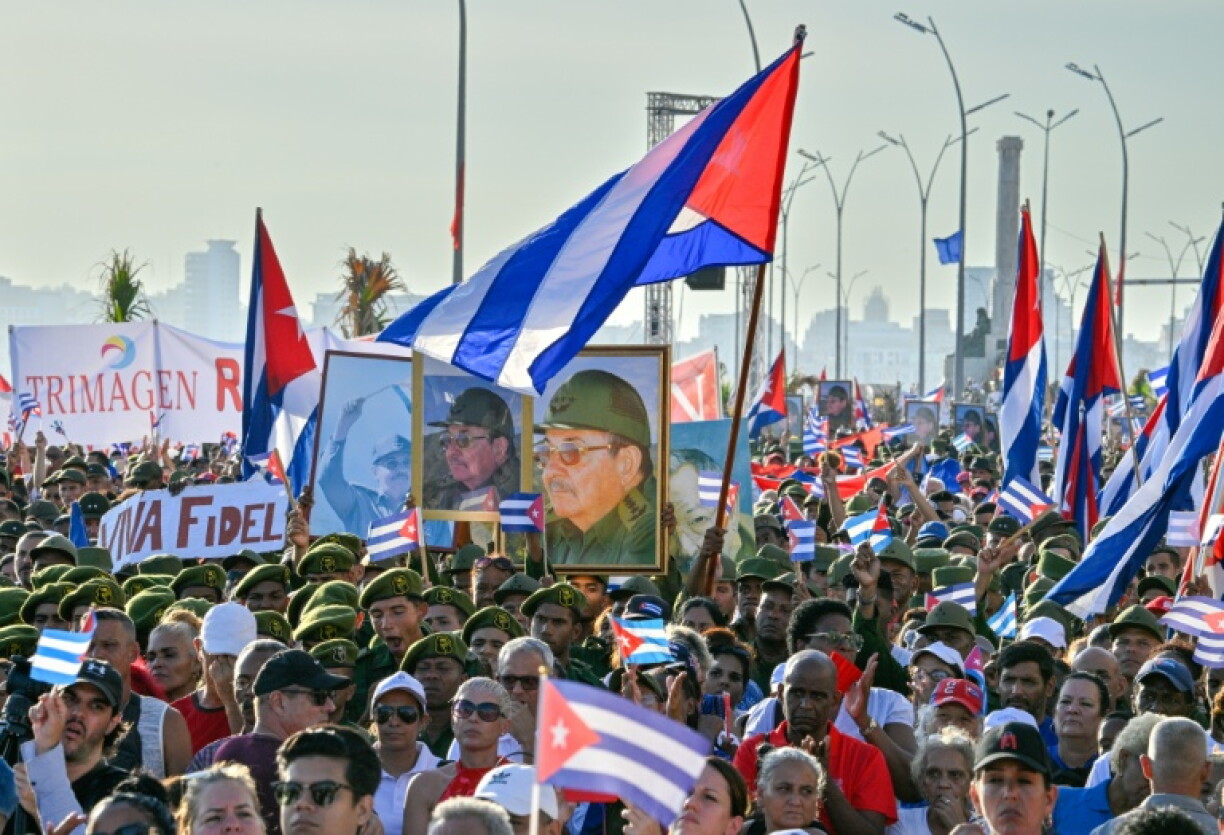
In the eyes of American policy elites Cuba’s most unforgivable crime is not even its socialism, which is now badly frayed, but rather its sovereignty. Cuba’s persistent independence and oppositional survival as a state is an American imperial humiliation.
Revolutionary Cuba’s mere existence threatens the cynicism, complacency and defeatism that does so much to maintain imperial order at a global scale. As long as little Cuba—only 90 miles from Florida—can govern itself, there will be dissidents of all political varieties in countries across the Global South who will think: If Cuba can do it, maybe we can change leadership and transform conditions in our country too.
Closely linked to the general abstract threat of Cuba sovereignty are Cuba’s numerous explicit victories against the American foreign policy establishment and, particularly, the Central Intelligence Agency (CIA).
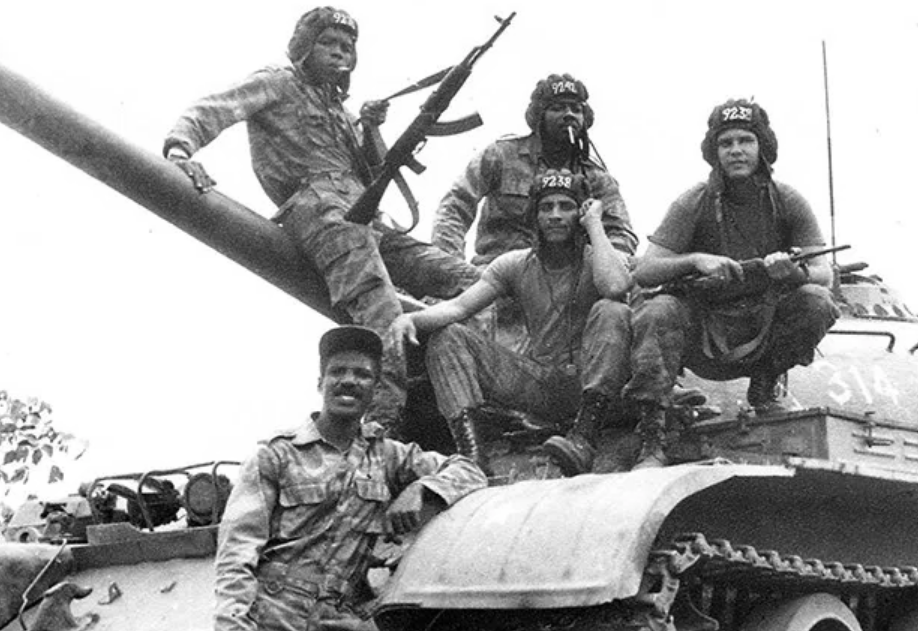
From the Bay of Pigs in 1961, to Angola in 1975, and other African countries throughout the 1980s, Cuban arms beat CIA-backed forces. Across Latin America in the 1970s and 1980s—in places like El Salvador and Nicaragua—Cuban training and support played a decisive role in beating CIA-supported mercenaries and checking the worst excesses of CIA-backed repressive governments.
The Revolution’s nationalization of U.S. business operations is still deeply resented. But the Cuban economy was long ago forced to adopt, at least partially, a capitalist mode of production.
Many of the expropriated companies could return to Cuba and, perhaps, negotiate limited compensation with the Cuban government in exchange for providing employment, services, technical know-how, and investments in productive capital.
But the U.S. will not let American firms go back, the same way its illegal for Americans who travel to Cuba as tourists to “trade with the enemy.”
These days Cuba exists as a mixed economy that hosts a wide variety of foreign investment and pursues a more modest, survival-oriented, foreign policy.
But it persists as an autonomous and independent state, and does so despite the U.S.’s best efforts to destroy it. Ending that sovereignty is at the heart of Trump’s current military build-up and intensified economic warfare.
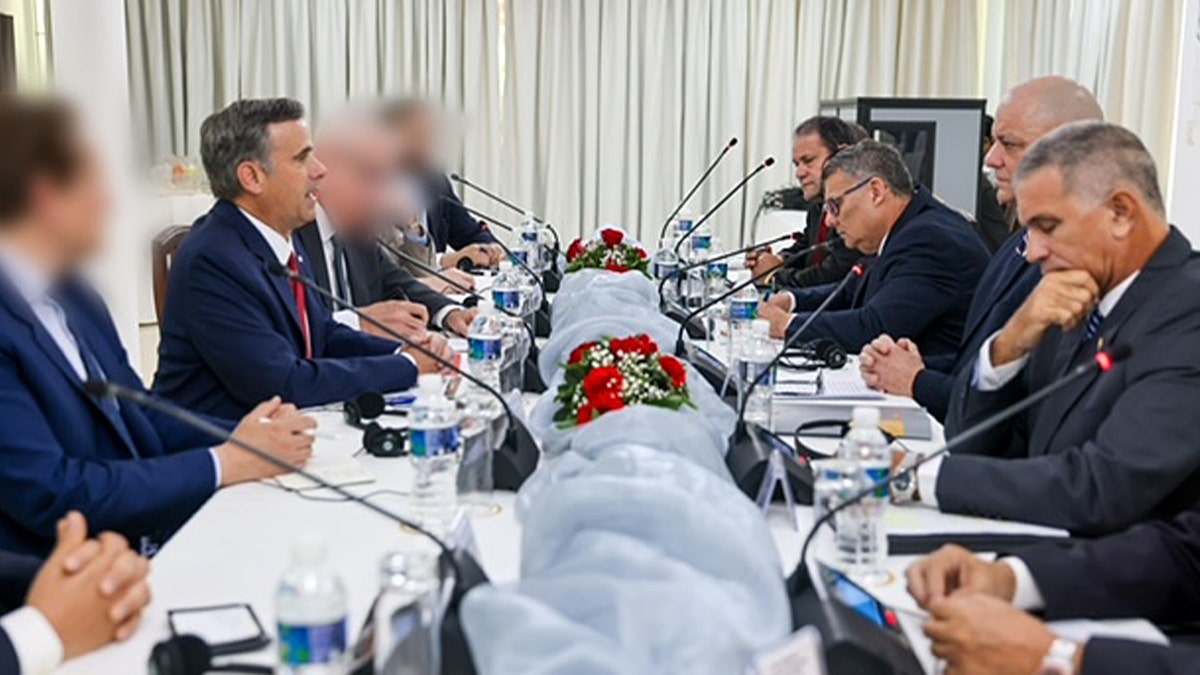
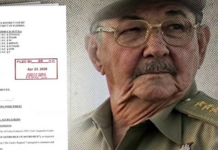
Note the prominent role of the CIA in the current pressure campaign. In mid-May it was CIA Director John Ratcliffe, not Secretary of State Marco Rubio, who visited Havana and demanded that the now 95-year-old Raul Castro be handed over for prosecution. His alleged crime is the 1996 downing of two aircraft containing four Cuban Americans as they attempted to scatter counter-revolutionary leaflets over Cuba.
Ratcliffe, lamely, also demanded “fundamental changes” to the Cuban economy, i.e., that it open to foreign investment and allow private ownership of business. Never mind that Cuba already did that starting in 1991, during the so-called “Special Period,” after the collapse of the Soviet Union.
For the first ten years of the Revolution, Cuba actually had a mixed economy, tens of thousands of small- and medium-sized Cuban-owned businesses continued to operate until the end of the 1960s. Soviet-style, centrally planned, socialism and the almost total abolition of even very small private businesses was introduced in 1968. That economic configuration lasted for only about 22 years of the Revolution’s 67 years of existence.
In fact, the Cuban economy now includes so much private ownership that there has been a decades-long inter-capitalist struggle under way between large and small businesses. The small Airbnb versus the big hotels that are state-backed foreign joint ventures. In fact, the large hotels have, on occasion, wrapped themselves in the flag of socialism in order to call for “anti-capitalist” restrictions to reign in the galloping success of better-run, cheaper, smaller restaurants and guest houses.
Some on the left maintain that Cuba’s most acute social problems trace back, not to the U.S. embargo or political repression, but to Cuba’s economic liberalization and the inevitable class inequalities that re-created. Whatever the case, that is a debate for another day.
Since the early 1990s, Canadian, Italian and Spanish firms have been heavily invested in nickel mining, hotels, retail, energy, agriculture and technology. Indeed, as the UN put it: “Foreign investments [in Cuba] may be authorized in all sectors except for health, education and the armed forces, excluding the latter’s business systems.” In other words, even the military’s business systems are open to the participation of foreign companies.
Private sector actors now account for roughly 55% of all retail sales of goods and services in Cuba, while an estimated 1.6 million of Cuba’s 4-million-person work force are employed in the private sector.
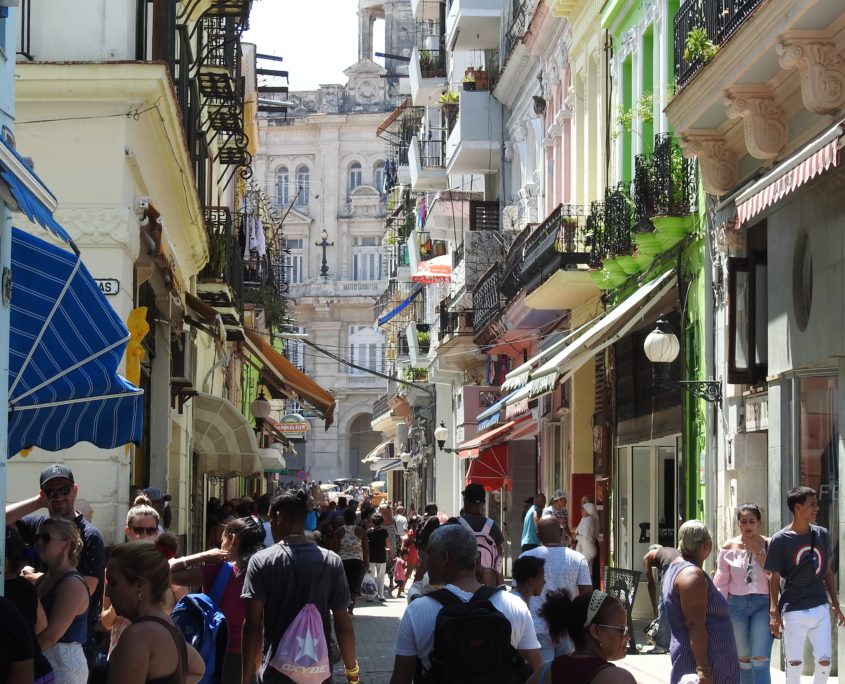
Recently, Cuba even changed its laws to allow Cubans living in other countries to own property. This is an open door to the exiles of Miami— known derisively as “gusanos”—to invest and manage property in Cuba and become part of the Cuban capitalist class.
Alas, such concessions are not enough. Uncle Sam will not allow the Miami Cubans to invest in the old country. The second Trump administration has aggressively increased American sanctions and imposed a crippling oil embargo.
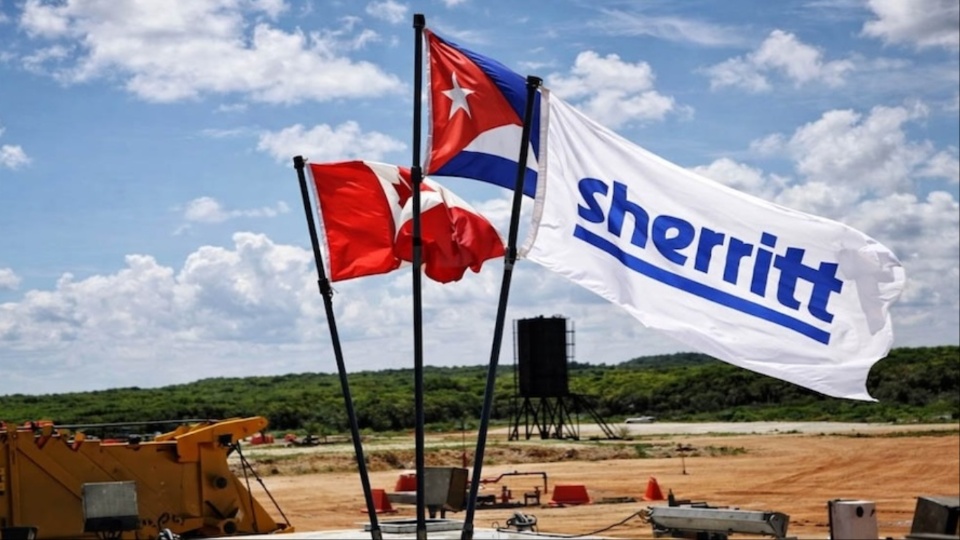
All of this is driving away foreign investors. For example, Sherritt International, a major Canadian nickel miner, has been forced to leave its joint venture mining nickel and cobalt in Cuba. Other major foreign investors with long-standing operations in Cuba, like Italy’s Lavazza coffee, might also be forced to pull out.
The new U.S. economic war on Cuba is not actually about expanding the capacity of private firms to do business. It is about imperial hegemony.
The roots of American designs on Cuba run deep. Since early in the Republic, U.S. elites have occasionally expressed a desire for total control of Cuba. In 1823 an aging Thomas Jefferson, corresponding with James Monroe, wrote: “I candidly confess that I have ever looked on Cuba as the most interesting addition which could ever be made to our system of states.”
![Thomas Jefferson long harbored a desire to make Cuba part of the newly forming United States. In 1809, he wrote to James Madison outlining his dream to erect a column on the Southernmost limit of Cuba inscribed: "Ne plus ultra [i.e., thus far and no farther]."](https://covertactionmagazine.com/wp-content/uploads/2026/06/thomas-jefferson-long-harbored-a-desire-to-make-cu.jpeg)
For much of the 20th century, the U.S. held Cuba as a de facto colony. American businesses and American gangsters controlled much of the economy.
When Fidel Castro and the Movimiento 26 de Julio overthrew the U.S.-backed dictator, Fulgencio Batista, in 1959, the American mafiosi who ran Havana’s underworld, were also kicked out. Then U.S. corporations were expropriated, including some very large and well- connected businesses like Standard Oil (now Exxon), which owned more than 100 gas stations on the island.
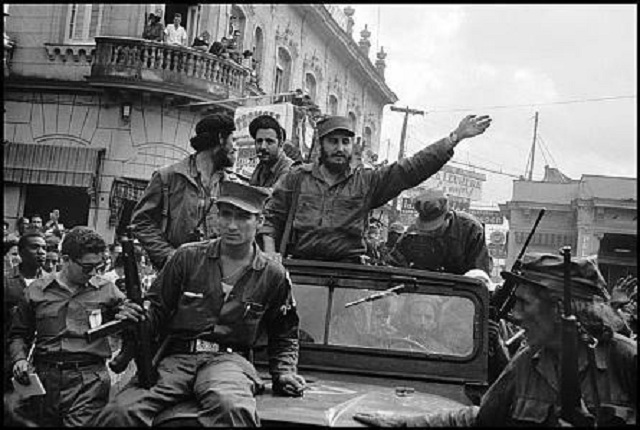
Then, in 1961, the Bay of Pigs, a CIA-orchestrated invasion of the island that was designed in large part to justify a U.S. military invasion, went disastrously wrong.
President John F. Kennedy inherited the operation from the Eisenhower administration when it was still in the planning stages. The young president did not have the guts to cancel the assault outright, but he did significantly reduce support and denied U.S. Air Force coverage of the invaders. As a result, almost 300 of the CIA-sponsored mercenaries were killed on the beach while another 1,200 were captured and held for ransom, eventually being exchanged for tractor parts and other equipment.
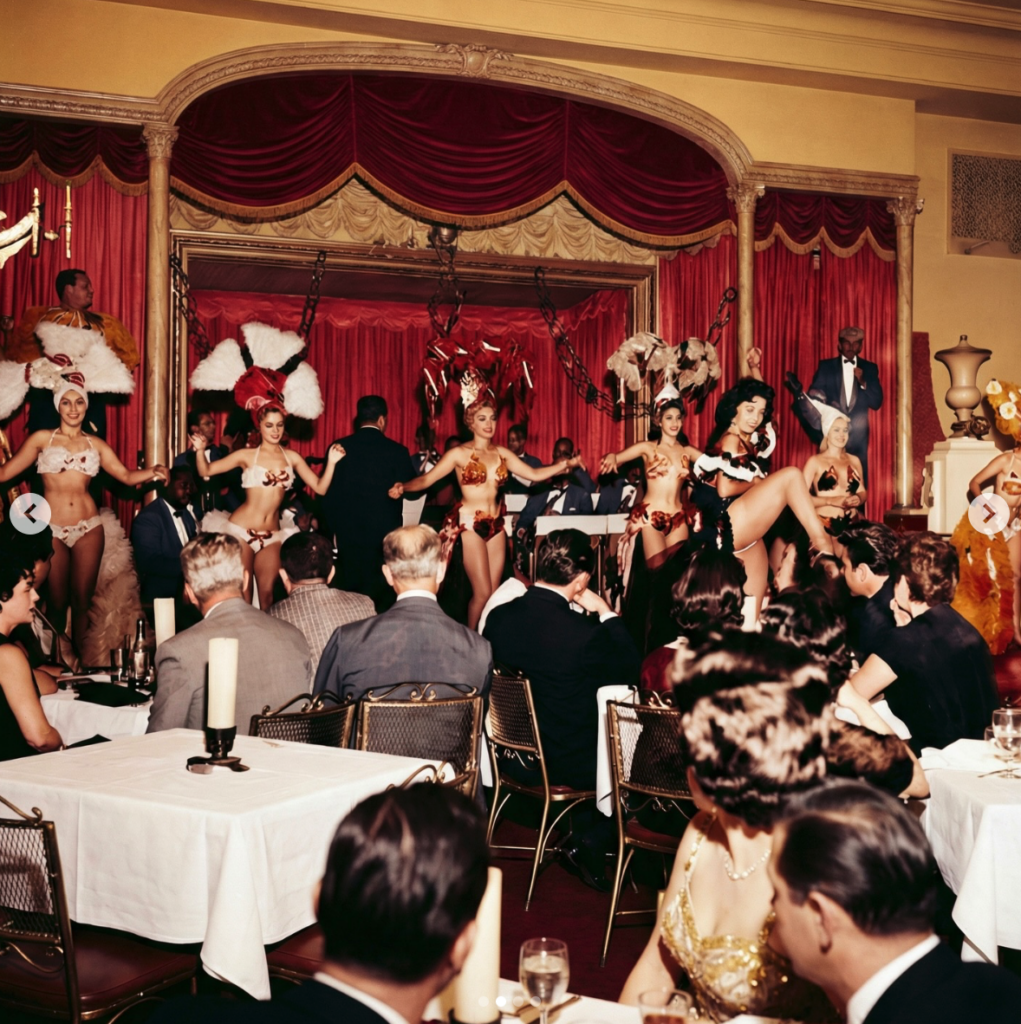
Even though the Cuban Revolution has been forced by its own internal contradictions and by the U.S. embargo to open its economy to foreign investment and to allow the development of a domestic capitalist class, the U.S. foreign policy establishment believes that it must humiliate Cuba. The so-called “Blob” will not be satisfied until it turns Cuba back into a gambling den and a whorehouse for American use.
The sin of the Cuban political leadership is that they refuse to submit to this agenda. Even as the Revolution has moved away from building socialism of an exclusively state-driven variety, the one thing Cuban leaders have not surrendered is sovereignty, Cubans’ national right to make their own decisions.
CIA spooks and ideologically inbred State Department cadre will not be satisfied until they have rubbed Cuba’s nose in the dirt. One can imagine the war cries ringing down the halls of Langley: Remember the Bay of Pigs!
The need to crush Cuba has added urgency because of the Trump administration’s disastrous war on Iran, which has caused a growing energy crisis and surging inflation. Having been lured into a trap from which he cannot escape without humiliation, Trump needs a diversion.
On top of the Iran quagmire, Trump’s refashioning of global trade has failed. China’s stranglehold over rare earth elements—which are essential to everything from satellites and cruise missiles to smart phones and automobiles—has forced Trump to reduce his tariffs on China to about one-fifth of what he initially promised.
Trump’s long-established pattern is to cover up crisis A by starting crisis B, and then C, D and E. Regime change in Cuba seems to be the next crisis. But a war with Cuba would be complicated by the problem of Cuban patriotism and Cuban nationalism.
In fact, the charges against Raúl Castro date back to one of Cuba’s most audacious humiliations of the CIA and the Miami exiles. It is a set of events that also tells us something about the prickly and pugnacious nature of Cuban patriotism.
It started in 1992 when a Cuban Air Force pilot named Juan Pablo Roque stole a MiG jet and defected to Miami. He then ingratiated himself with the right-wing Cuban exile community, married the daughter of one of the scene’s more reactionary leaders, and infiltrated a Miami-based exile group called Brothers to the Rescue.
Then in 1996— just before two planes sent by Brothers to the Rescue to drop anti-Castro leaflets over Cuba were blown out of the sky by a Cuban fighter jet — Juan Pablo Roque disappeared.
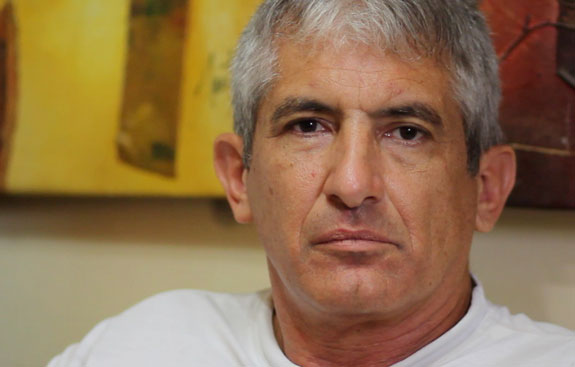
There was speculation Cuban intelligence had kidnapped or killed the dashing defector. Then Roque re-appeared in Cuba. Turned out Roque had been a spy the whole time, feeding information to Cuban intelligence.
At a press conference in Havana, Roque explained his actions with these words: “I would never betray my country.”
He did not say I would never betray the Revolution. He said my country.
Juan Pablo Roque’s Miami wife, Ana Margarita Martínez, later sued the Cuban government in an American civil court and was awarded $27 million in damages. Roque remained a vocal supporter of the Revolution until his death after open heart surgery at age 70 in 2025.
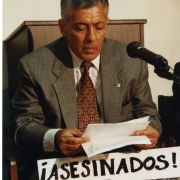
The U.S. portrays the downed Brothers to the Rescue pilots as humanitarians. The Cuban government maintains they were aggressive provocateurs, and points out that the organization was founded by José Basulto, a self-admitted CIA operative and Bay of Pigs veteran.
The Cuban government viewed the Brothers to the Rescue as just one more covert operation in a long list of U.S.-backed aggression. That list includes the infamous 1976 terrorist attack against a Cuban airliner that killed all 73 people on board and was most likely orchestrated by Cuban exiles with assistance from the CIA.[1]
Also, on the list would be Operation Mongoose, which involved covert sabotage including biological warfare against Cuban agriculture, assassination attempts, and anti-Castro propaganda campaigns. Regardless where you come down on this accounting, the idea that the United States is a paragon of human rights which would now make war just to avenge four civilian deaths that occurred in the mid-1990s is laughable. Let us not pretend.
Admittedly, the first part of a U.S. invasion of Cuba would be a cake walk. But the day after the invasion would likely be the first day of a long and nasty guerrilla resistance.
Cuba’s defense doctrine—known as “War of All the People”—calls for guerrilla resistance against any invasion. An American occupation of Cuba could be similar to the one in Iraq because, unlike Trump who seems to merely play at nationalism, many Cubans feel the way Roque did—they would never betray their country.
Declassified U.S. government documents show that top Clinton administration officials shared the Cuban government’s view of Brothers to the Rescue and had tried to rein in its provocative flights. See CovertAction Magazine article on this here. ↑
CovertAction Magazine is made possible by subscriptions, orders and donations from readers like you.
Blow the Whistle on U.S. Imperialism
Click the whistle and donate
When you donate to CovertAction Magazine, you are supporting investigative journalism. Your contributions go directly to supporting the development, production, editing, and dissemination of the Magazine.
CovertAction Magazine does not receive corporate or government sponsorship. Yet, we hold a steadfast commitment to providing compensation for writers, editorial and technical support. Your support helps facilitate this compensation as well as increase the caliber of this work.
Please make a donation by clicking on the donate logo above and enter the amount and your credit or debit card information.
CovertAction Institute, Inc. (CAI) is a 501(c)(3) non-profit organization and your gift is tax-deductible for federal income purposes. CAI’s tax-exempt ID number is 87-2461683.
We sincerely thank you for your support.
Disclaimer: The contents of this article are the sole responsibility of the author(s). CovertAction Institute, Inc. (CAI), including its Board of Directors (BD), Editorial Board (EB), Advisory Board (AB), staff, volunteers and its projects (including CovertAction Magazine) are not responsible for any inaccurate or incorrect statement in this article. This article also does not necessarily represent the views the BD, the EB, the AB, staff, volunteers, or any members of its projects.
Differing viewpoints: CAM publishes articles with differing viewpoints in an effort to nurture vibrant debate and thoughtful critical analysis. Feel free to comment on the articles in the comment section and/or send your letters to the Editors, which we will publish in the Letters column.
Copyrighted Material: This web site may contain copyrighted material the use of which has not always been specifically authorized by the copyright owner. As a not-for-profit charitable organization incorporated in the State of New York, we are making such material available in an effort to advance the understanding of humanity’s problems and hopefully to help find solutions for those problems. We believe this constitutes a ‘fair use’ of any such copyrighted material as provided for in section 107 of the US Copyright Law. You can read more about ‘fair use’ and US Copyright Law at the Legal Information Institute of Cornell Law School.
Republishing: CovertAction Magazine (CAM) grants permission to cross-post CAM articles on not-for-profit community internet sites as long as the source is acknowledged together with a hyperlink to the original CovertAction Magazine article. Also, kindly let us know at info@CovertActionMagazine.com. For publication of CAM articles in print or other forms including commercial internet sites, contact: info@CovertActionMagazine.com.
By using this site, you agree to these terms above.
About the Author
Christian Parenti is Professor of Economics at John Jay College, City University of New York.
His undergraduate and graduate teaching, and research, focus on: American economic history, environmental history, and the history of capitalism; climate change and sustainable energy; as well as war, policing, and political violence.
Christian’s books include Radical Hamilton: Economic Lessons from a Misunderstood Founder, (Verso, 2020); Tropic of Chaos: Climate Change and the New Geography of Violence, (Nation Books, 2011); The Freedom: Shadows and Hallucinations in Occupied Iraq, (The New Press, 2004); The Soft Cage: Surveillance from Slavery to the War on Terror, (Basic Books, 2003); and Lockdown America: Police and Prisons in the Age of Crisis (1999/2008, Verso).
Previously, as a journalist, he reported extensively from Afghanistan, Iraq, and various parts of Africa, Asia, and Latin America for The Nation, Fortune, The London Review Books, The New York Times, and other publications.
Christian can be reached at christian_parenti@yahoo.com.

https://www.nydailynews.com/2023/01/07/notorious-cuban-spy-ana-montes-released-from-federal-prison/
This is a self-deception created in the head of the lying lawyer Marco Rubio. His father was on the side of Fidel Castro and was persecuted by the capitalist lead by Fulgencio Batista Zaldívar before Fidel Castro. Fulgencio Batista Zaldívar led a gang that left dead people on the roads every night. But the lawyer Marco Rubio is a lying dog, just like Vladimir Putin. Vladimir Putin is the son of a Jewish woman and therefore the main culprit for the betrayal of Syria. Syria is now a threat to Hezbollah and Lebanon. So now, from December 2024 onwards, I want Qatar to push the pipeline to Europe and allow China to lower the price of Russian gas to TEMU price.Because Putin is just another Fulgencio Batista Zaldívar and has nothing in common with either Fidel Castro or Che Guevara. The nation is paying 17% interest on its debts and dying in Ukraine, while the rich are spending money in Dubai and Sardinia.
Vladimir Putin’s mother was not Jewish, and the claim that she was is a baseless, antisemitic conspiracy theory.Official records, independent genealogical research, and analysis by historians confirm that Putin’s mother, Maria Ivanovna Shelomova, was born into a Russian peasant family in the Tver region.The Root of the Conspiracy Theory Conspiracy theorists often push this narrative online to manufacture an “Anti-Slavic Jewish” plot, falsely connecting Putin’s heritage with that of Ukrainian President Volodymyr Zelenskyy (who actually is Jewish) to claim the war in Ukraine is being orchestrated behind the scenes.The rumor relies entirely on a couple of deliberate falsehoods:Surnames and Language Rules: Antisemitic groups frequently claim that her maiden name, “Shelomova,” derives from the Hebrew greeting Shalom. In reality, Shelomova is a traditional Russian surname. It stems from the old Russian word shelom (шелом), which means “helmet”.Historical Geography: Her ancestors have been traced back over 300 years as Russian Orthodox serfs and peasants living in the villages of the Tver Governorate. Because of the anti-Jewish laws of the Russian Empire, Jewish populations were legally restricted to the Pale of Settlement, meaning there were no Jewish communities in these rural Tver villages