What will the consequences be?
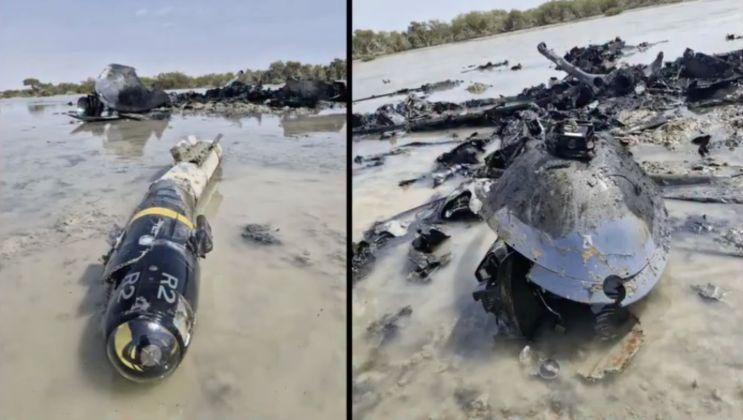
The Washington Post reported on August 13, 2026, that at least 45 U.S. MQ-9A Reaper drones have been shot down or crashed out of control in the U.S.-Israeli assault against Iran that began in February this year.
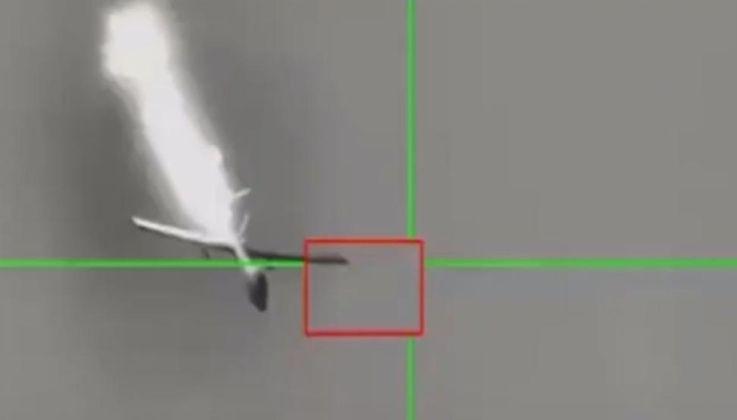
On August 31, 2026, Iran said it shot down an additional Reaper after its apparent attack against Iran’s Larak Island in the Strait of Hormuz, showing the U.S. using a pilotless aircraft, possibly for the first time, to initiate a new phase in its and Israel’s hot war against Iran.
As in late July, Iran responded to the latest Reaper attack with a missile barrage on the U.S. Reaper base at King Faisal Air Base in Jordan when it destroyed eight “newly produced and unassembled” Reaper replacements that were being rushed into the conflict, according to Military Watch Magazine.
There is no public information on the exact number of Reaper drones remaining in the U.S. stockpile. General Atomics has built more than 300 Reapers for the War Department, but the fleet size has diminished over time through combat losses, crashes and wear and tear.
The Washington Post report estimated that 185 were available before the U.S.-Israeli assault on Iran began on February 28, 2026, and that 25% of the remaining Reapers are gone.
So what?
1. Civilian Casualties
The Washington Post reported that the loss of 45 Reapers has cost U.S taxpayers more than $1.3 billion. Yet, the Pentagon is scrambling to get more Reapers into the air over Iran and may purchase even more expensive MQ-9B Sky Guardian drones as replacements. Why?
The Reaper has gone from “to-be-phased-out” status to being called by U.S. Air Force Chief of Staff General Kenneth S. Wilsbach “the most valuable player” in the U.S. attacks against Iran.
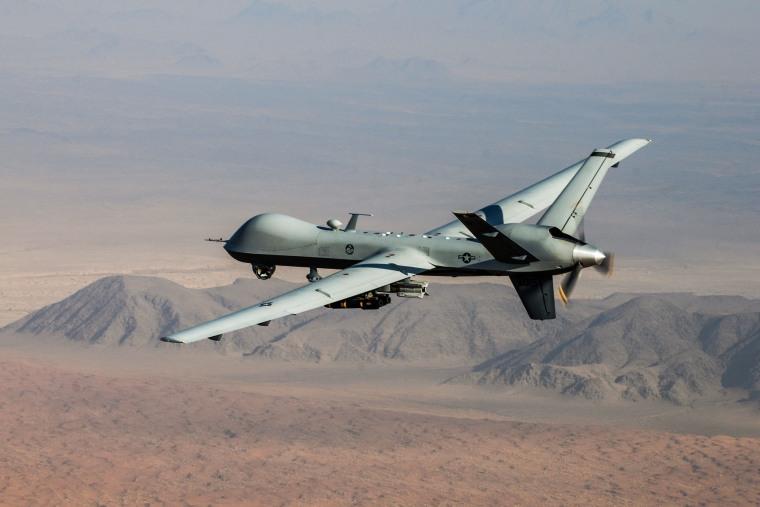
Reapers fly at 10,000 to 30,000 feet, stay aloft for up to 48 hours, and then return to their bases.

They can carry missiles and bombs and can attack. But it appears that their highest value may be in target identification, enhanced by their relatively slow 200 mph pace, compared to 1,000 mph speeds of U.S. fighter bombers. The Reapers, which also fill satellite surveillance/target identification gaps, are therefore invaluable in providing targeting information to manned aircraft, carrying much greater bomb loads.
However, the slow speed of the Reapers makes them easy targets for air defense, such as Iran’s Arash-e-Kamangir (Arash the Archer) missile system. Despite this, U.S. military leaders view the Reapers as indispensable and highly expendable because they are machines that do not risk the lives of pilots in spotter aircraft.
While Reapers, and whatever they are replaced with, may provide a military benefit in terms of killing and disabling combatants, the meaning of their use is very bad news for civilians.
Since they were first used, in 2007, Reaper drones have been involved in the misidentification and slaughter of civilians in Afghanistan, Iraq, Pakistan, Yemen, Syria, Somalia, the Philippines, the Caribbean and the eastern Pacific.
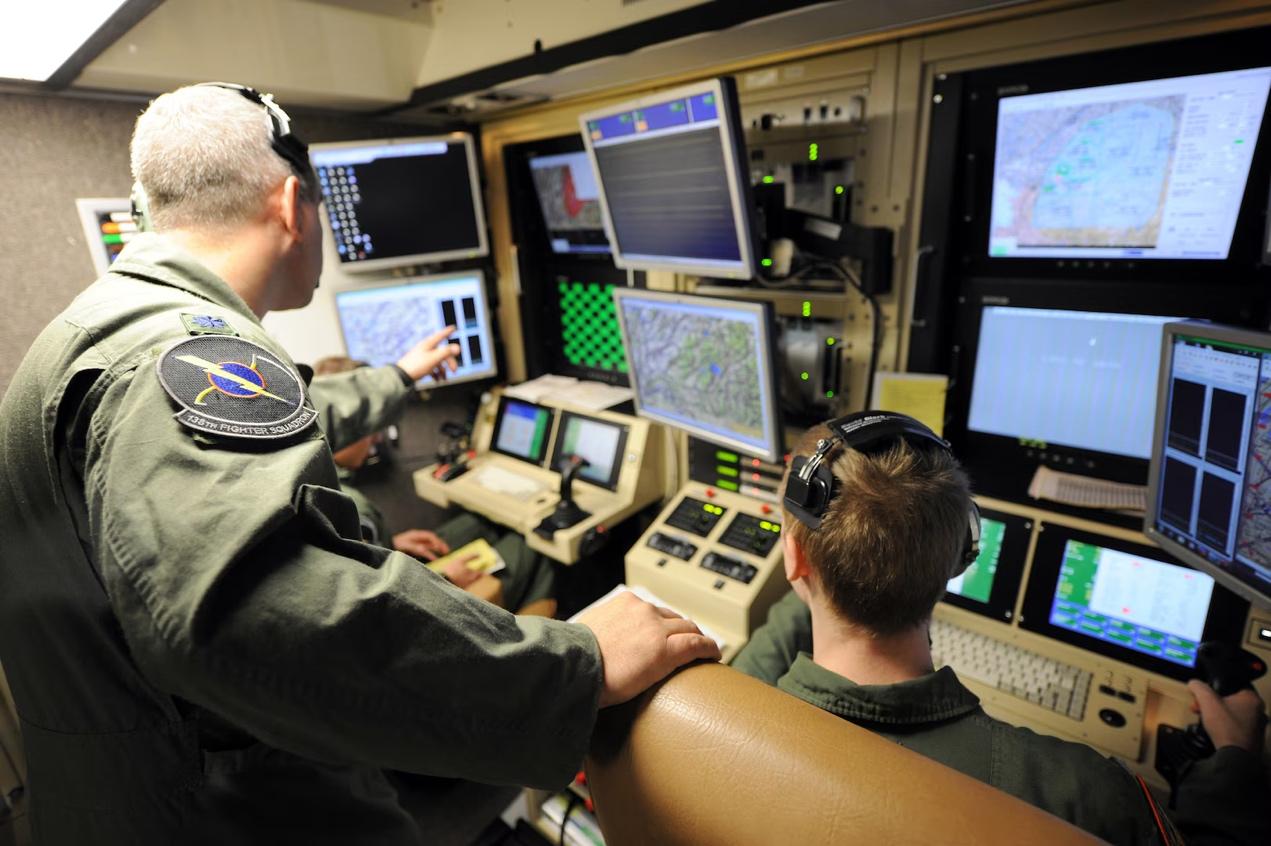
This disastrous history can be traced to known shortcomings in drone camera technology, a “kill ’em all” attitude engendered among many drone operators by their commanders and well-documented fatigue, burn-out and mental illness afflicting drone-control teams.
Reaper drone atrocities led to 2022 hearings in the U.S. Senate Judiciary Committee, but no effective action was taken by the committee or by Congress to stop Reaper drone attacks.
In 2021 and 2022, The New York Times published “The Civilian Casualty Files,” headlined: “Hidden Pentagon Records Reveal Patterns of Failure in Deadly Air Strikes.” The Pulitzer Prize-winning series by Azmat Khan documented the widespread killing of civilians in post-9/11 U.S. air wars, including Reaper drone killings, and the Pentagon cover-up of civilian deaths.
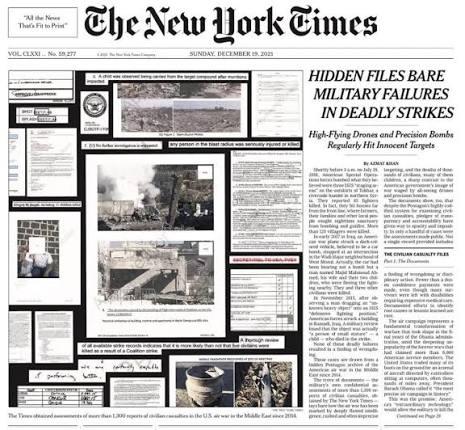
In response, also in 2022, the Pentagon formed a “Civilian Protection Center of Excellence,” a small, understaffed office that appeared to be window-dressing. According to The Hill, the Trump administration has cut the Center’s staff “from 40 civilian, military and contractor support employees to nine full-time employees, seven civilians and two U.S. service members, at the end of fiscal year 2025, the office said in a late July [2026] report to Congress.”
In May 2026, The Guardian newspaper, in reporting on the Pentagon’s cutbacks to civilian protection efforts, noted: “Airwars, a civilian harm monitor, estimated that U.S. drone and air strikes killed at least 22,000 civilians—and perhaps as many as 48,000—in the 20 years after the 9/11 terrorist attacks in 2001.” This appears to be a gross underestimate in view of reports and images of devastating U.S. air attacks against such flattened cities as Fallujah, Mosul and Raqqa.

2. The Rise of Machine War
The pressure on U.S. drone operators controlling Reapers over Iran is very likely being increased by the introduction of constantly evolving AI targeting technology into Reaper drone systems. The purpose of the AI technology is to scoop up the stupendous amount of visual and electronic data gathered in Reaper drone surveillance, instantly sort through it, and then identify potential targets.

The Reaper operators are responding to the currently prevailing U.S. military thinking about AI, expressed by U.S. Central Command’s commander, Admiral Brad Cooper, as quoted on Democracy Now:
“Our warfighters are leveraging a variety of advanced AI tools. These systems help us sift through vast amounts of data in seconds, so our leaders can cut through the noise and make smarter decisions faster than the enemy can react. Humans will always make final decisions on what to shoot and what not to shoot, and when to shoot, but advanced AI tools can turn processes that used to take hours, and sometimes even days, into seconds.”
The unspoken downside for civilians, and military strategy as well, is that the AI has “learned” to select targets from often extremely inadequate facial recognition data, physical target identification analyses and other imperfect visual and electronic data.

The global public has been led to fear, and rightly, total AI control over decisions to choose targets, select weapons and launch attacks. However, speaking on Democracy Now, AI expert Heidy Khlaaf pointed out that, in war, there is very little difference between control by “a human in the loop” and autonomous weapons control:
“… the difference between decision support systems and autonomous weapons systems is that there’s a human in the loop when you’re selecting a target, essentially, to strike. An autonomous weapons system means that this is done automatically without a human in the loop.
And I consider this kind of, you know, separation between them to be pretty superficial in practice, because, ultimately, if you have a human who is just rubber-stamping the AI decisions, right? And we know that they do this due to kind of something called automation bias in our field, which is that we know that humans are prone to just accepting recommendations of AI algorithms without corroborating that evidence. To me, in practice, that means that you have a human who, under the time pressures of war and conflict, is just approving decisions by an AI. And so, typically, this separation is often made to say, ‘No, the AI is safe. It’s fine even if it makes mistakes, because you have a human correcting that.’ But in practice, we see a very, very different photo, or a different picture, really, of how that occurs.”

Also on Democracy Now, AI expert David Krueger expressed great concern about AI being developed to a point beyond which it passes out of human control: “… unfortunately, all the AI companies now are working more and more with the military to automate more and more killing and military decision-making. And I think it’s incredibly dangerous for really obvious reasons. It’s dystopian. It’s like straight out of Terminator.” Krueger is calling for a full stop on the construction of data centers and AI chip production until researchers have understood how to control what they are producing.
The Defense One on-line newsletter reported in March 2026: “Researchers at Wharton [business school] found in January [2026] that people using [AI] spend less and less time scrutinizing results for accuracy or employing their own judgment. They found that users rely on the AI’s judgment even when they know it’s wrong, a phenomenon the authors call “cognitive surrender.”
And Defense One said that, in spite of such concerns, “there is scant evidence that the Pentagon, in its rush to deploy AI tools, is taking steps to keep its users sharp—or even to monitor the effects of AI.”
In June 2026, Defense One reported: “The Senate Armed Services Committee wants the Defense Department ‘to adopt the future of warfare by permitting the establishment of the Robotic and Autonomous Systems Combatant Command,’ according to the group’s summary of the National Defense Authorization Act.”
3. Challenge to Our Conscience
If the pilots of 30 U.S. fighter bombers had been killed or captured in the U.S. attacks against Iran, doubtless we would now be having congressional hearings demanding accountability of the Trump administration.
Questions would be asked about why U.S. pilots were being assigned to these dangerous missions, and the most basic question would be asked: Is there any justification for the illegal U.S.-Israeli attack against Iran in the first place.
Instead, we find that there is barely any concern among the U.S. public about what its weapons are doing to other humans so long as U.S. military personnel are physically safe.
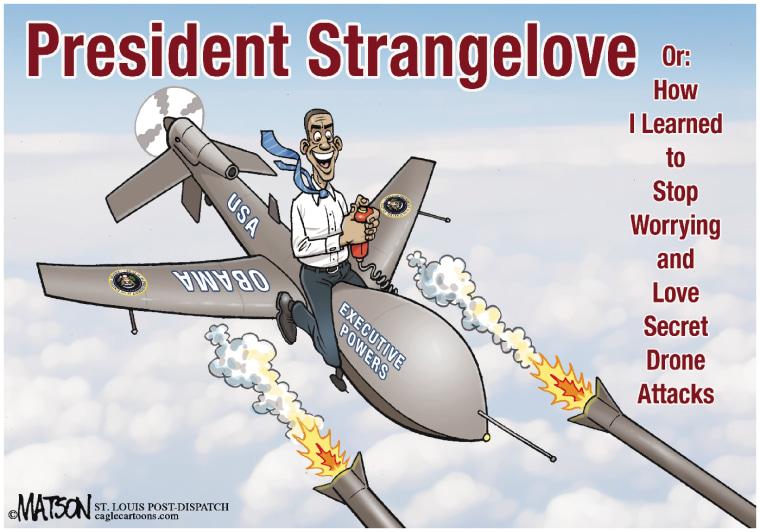
The slim U.S. public concern about who is being killed and terrorized by U.S. drones was engendered in part by the profound amorality of former President Barack Obama’s joking about the U.S. drone killing that he was personally ordering.
At the 2010 White House Correspondents’ Association dinner, which was attended by the Jonas Brothers musical group, Obama said in his obligatory presidential comedy riff that his daughters were big Jonas Brothers fans, and he warned, wink, wink: “Boys, don’t get any ideas.” (Laughter) “I have two words for you: ‘Predator [the Reaper predecessor] drones.’” (Laughter) “You will never see it coming.” (Laughter) “You think I’m joking.”
Now we find ourselves in an historic moment in which the U.S. public has collectively chosen to so distance itself from the suffering generated by its imperial wars that it accepts without significant protest not only the illegal U.S.-Israel bombing of Iran but the unconscionable Biden-Trump-Congress support for the Israeli genocide against the Palestinian, and now, the Lebanese people.

Concluding her powerful essay “The New American Fantasy: War Without Consequence,” psychoanalyst Dr. Karyne Messina wrote, after watching a video of a boat being blown up in the Middle East by what appeared to be a drone attack:
“Perhaps every society eventually reveals itself by the forms of suffering it learns not to feel.
“I am not sure yet what ours will become accustomed to forgetting. But I suspect the deepest danger is not technological at all. It is the possibility that we slowly become accustomed to living at emotional distance from one another’s suffering.
“Because once killing stops feeling real, almost anything becomes possible.”

CovertAction Magazine is made possible by subscriptions, orders and donations from readers like you.
Blow the Whistle on U.S. Imperialism

Click the whistle and donate
When you donate to CovertAction Magazine, you are supporting investigative journalism. Your contributions go directly to supporting the development, production, editing, and dissemination of the Magazine.
CovertAction Magazine does not receive corporate or government sponsorship. Yet, we hold a steadfast commitment to providing compensation for writers, editorial and technical support. Your support helps facilitate this compensation as well as increase the caliber of this work.
Please make a donation by clicking on the donate logo above and enter the amount and your credit or debit card information.
CovertAction Institute, Inc. (CAI) is a 501(c)(3) non-profit organization and your gift is tax-deductible for federal income purposes. CAI’s tax-exempt ID number is 87-2461683.
We sincerely thank you for your support.
Disclaimer: The contents of this article are the sole responsibility of the author(s). CovertAction Institute, Inc. (CAI), including its Board of Directors (BD), Editorial Board (EB), Advisory Board (AB), staff, volunteers and its projects (including CovertAction Magazine) are not responsible for any inaccurate or incorrect statement in this article. This article also does not necessarily represent the views the BD, the EB, the AB, staff, volunteers, or any members of its projects.
Differing viewpoints: CAM publishes articles with differing viewpoints in an effort to nurture vibrant debate and thoughtful critical analysis. Feel free to comment on the articles in the comment section and/or send your letters to the Editors, which we will publish in the Letters column.
Copyrighted Material: This web site may contain copyrighted material the use of which has not always been specifically authorized by the copyright owner. As a not-for-profit charitable organization incorporated in the State of New York, we are making such material available in an effort to advance the understanding of humanity’s problems and hopefully to help find solutions for those problems. We believe this constitutes a ‘fair use’ of any such copyrighted material as provided for in section 107 of the US Copyright Law. You can read more about ‘fair use’ and US Copyright Law at the Legal Information Institute of Cornell Law School.
Republishing: CovertAction Magazine (CAM) grants permission to cross-post CAM articles on not-for-profit community internet sites as long as the source is acknowledged together with a hyperlink to the original CovertAction Magazine article. Also, kindly let us know at info@CovertActionMagazine.com. For publication of CAM articles in print or other forms including commercial internet sites, contact: info@CovertActionMagazine.com.
By using this site, you agree to these terms above.
About the Author

Nick Mottern Co-coordinates BanKillerDrones.org and is on the staff at Merchants of Death.org
Nick can be reached at nickmottern@gmail.com.