
At a CovertAction Magazine webinar, experts explained the roots of the crisis, while encouraging people to build a campaign to educate the U.S. public and transform U.S. foreign policy
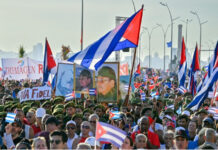
While Donald Trump was touting his administration’s foreign policies in his State of the Union address on February 24, CovertAction Magazine hosted a webinar focused on the horrifying real-life costs of those policies in Venezuela and Cuba and the crisis that is afflicting Cuban society in the face of heightened U.S. economic warfare and regime-change efforts.
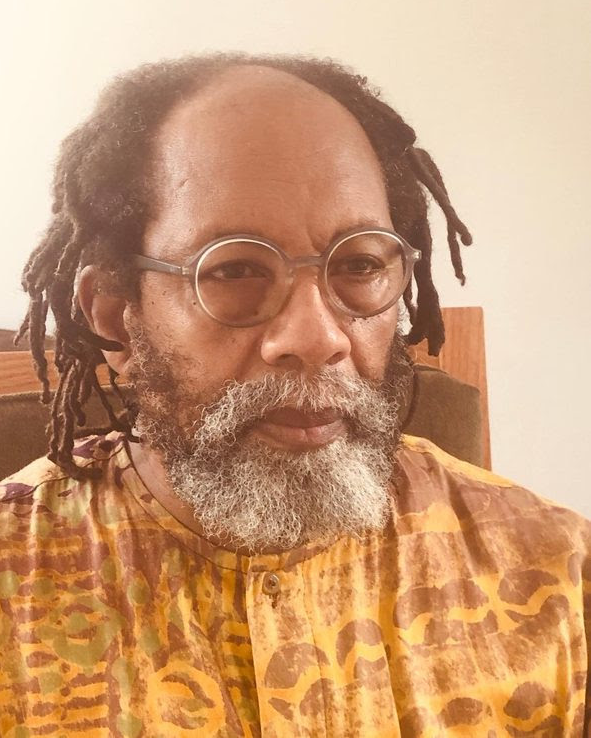
The first speaker, James Early, a cultural heritage policy consultant and former director at the Smithsonian Institution, said he has been traveling to Cuba for 50 years and went there in January in a trip sponsored by Busboys and Poets, a small restaurant chain based in the Washington, D.C., area that hosts community events for social justice groups.
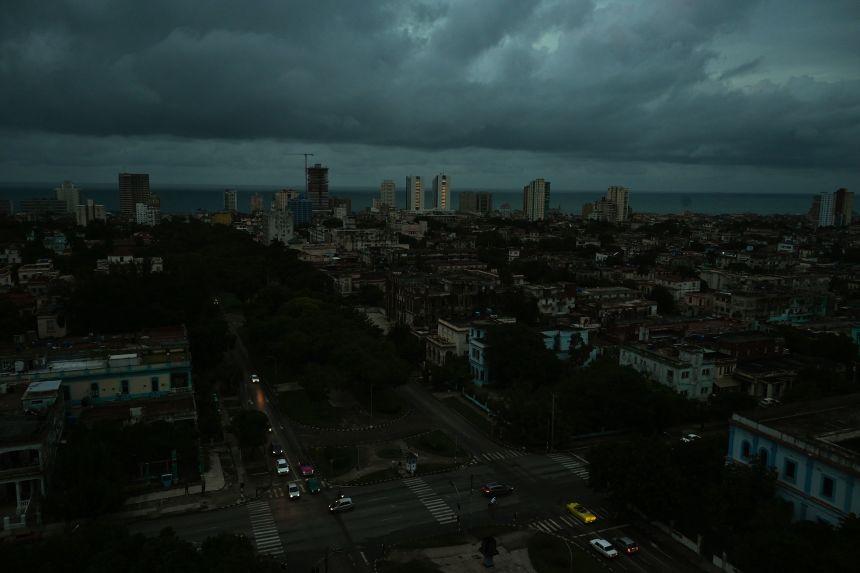
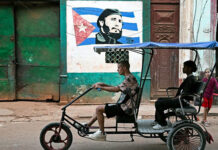
Early said he has never seen Cuba in such dire straits as what he witnessed, with trash everywhere, people begging on the streets like never before, routine blackouts and other symptoms of economic breakdown.[1]
The curtailment of the oil supply from Venezuela, which supplies 20% of Cuban oil, since the U.S. kidnapping of Venezuelan President Nicolás Maduro on January 3, has been like a hammer blow to an already reeling country, whose economy contracted in 2024 and was described by President Miguel Díaz-Canel as a “war economy.”
On his trip, Early met with Díaz-Canel and the Deputy Foreign Minister, Carlos Fernández de Cossío, who talked about what the government was doing to try to ease the people’s plight[2], and specified that the Cuban people were being mobilized to defend their country and its sovereignty.


Given the severity of the situation, Early believes that people should work to try to educate the United States public and unite everyone who is against the “barbaric economic warfare” being carried out by the U.S. on Cuba, even if they disagree on other issues.
The second speaker, Steve Ellner, a former professor at the Universidad de Oriente in Puerto La Cruz, Venezuela, and associate editor of Latin American Perspectives, emphasized the interconnection between the Trump administration policies in Cuba and Venezuela, and specified that the U.S. aim was to punish both countries for their defiance of U.S. hegemonic designs.

Venezuela’s Bolivarian Revolution came about, Ellner said, in an era (the late 1990s) when U.S. intellectuals were promoting the idea of the “end of history”—that capitalism had triumphed and socialism had failed—and has endured over 27 year despite U.S. efforts to destroy it.
After Obama’s administration instituted deadly sanctions and helped trigger a violent insurrection, the Trump I and Biden administrations mounted a botched paramilitary operation (known as the Bay of Piglets) using CIA-linked mercenaries, expanded the Obama-era sanctions and unsuccessfully tried to install Juan Guaidó as Venezuela’s leader.

Prior to his kidnapping, Maduro was in the process of consolidating his political legitimacy by working to stabilize the economy even in the face of sanctions, and was curbing hyper-inflation and allowing more concessions for foreign oil companies and other companies that were bringing in needed foreign capital.
The right-wing opposition to Maduro had become divided, with Henrique Capriles recognizing the legitimacy of the existing electoral system, and María Corina Machado leaving Venezuela with little support inside it.
Ellner said that Maduro’s government was successfully circumventing U.S. sanctions by engaging in trade with China through Malaysia and having Venezuelan ships put up bogus flags.
Russia, he said, has been doing the same thing, a slap in the face to the U.S., which uses sanctions and other means to try to control the global economy and establish the supremacy of the U.S. dollar, which is being undermined.
Ellner sees the above as an important backdrop to the Maduro kidnapping which, despite Trump’s boasts in his State of the Union address, does not necessarily reflect U.S. strength or the fact that it is winning the long war against the Bolivarian Revolution.
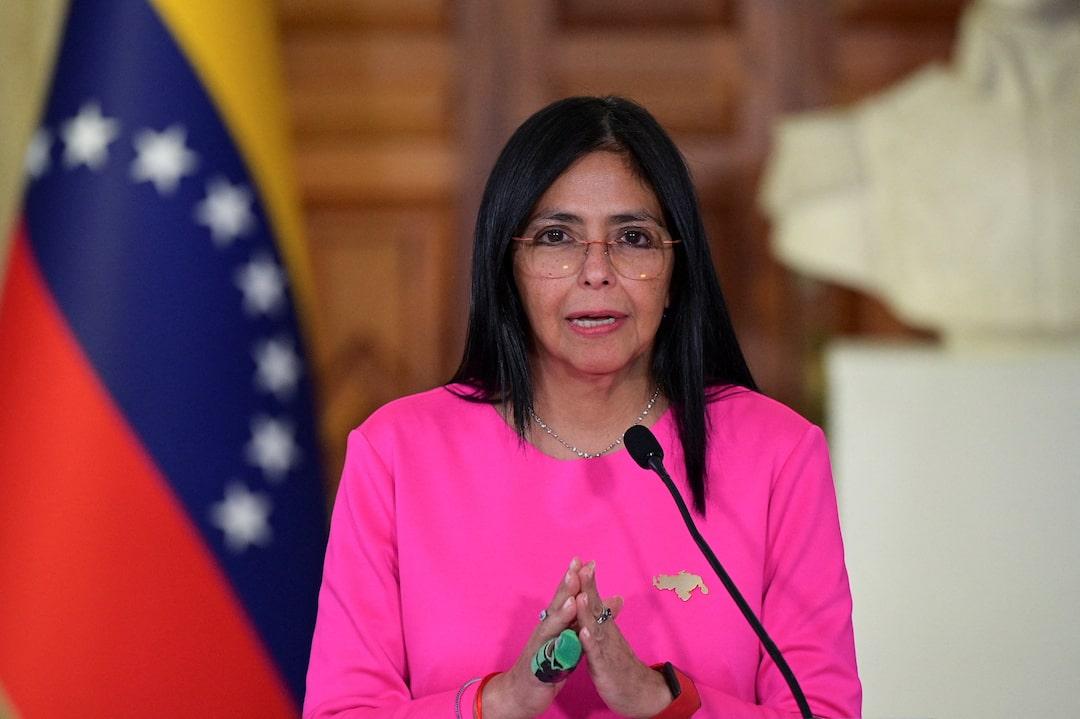
The opposite in fact holds true as, while the kidnapping is undoubtedly a setback, Team Trump was not able to achieve regime change, and Venezuela’s interim leader Delcy Rodríguez is showing some fortitude in negotiations and refusing to acquiesce to all of the Trump administration’s demands.
The third speaker, Bob Schwartz, is executive director of Global Health Partners, which raises money to send life-saving medical equipment to Cuba, among other Latin American countries.
Schwartz described a grim situation in Cuba, where people are suffering from nutritional deficiencies and dying because they cannot get insulin and other life-saving medicines, including drugs to treat various forms of cancer as a result of the embargo and blockade.

The 1959 Cuban Revolution established a free health-care system and Cuba became known for training doctors who went around the world providing excellent health care, which makes the situation so sad today.
Cuba’s infant mortality rate has climbed in the last several years and will continue to climb until the situation changes.
Schwartz said that his organization is doing its best to send things taken for granted in the U.S., like syringes and medical gloves, as well as pacemakers for which there is currently a three-year wait time in Cuba.
Schwartz welcomes any support people can give to Global Health Partners along with efforts to raise awareness in the U.S. about the injustice underlying U.S. foreign policy to Cuba.

The fourth speaker, Gloria La Riva, is a longstanding political activist who has run for political office with the Party for Socialism and Liberation (PSL).
She expressed the same concern as the others about the dire situation in Cuba, although emphasized that people she encountered there are resourceful and getting everything they need to do in the day-time hours and enjoying leisure time in parks as the country remains safe.

La Riva gave a history lesson about how Cubans had fought for their independence from Spain in the late 1800s and then from American neo-colonial control.
She said that, despite the challenges facing the country today, it is still much better off than Puerto Rico, which was directly colonized by the U.S.
La Riva compared the situation today to the special period in the 1990s, after the collapse of the Soviet Union when people also adapted.
Now many Cubans are growing their own food and setting up food gardens and relying on electric buses and solar power, which is being developed in the country.

La Riva said that the U.S. pressure on Cuba is accelerating not only through the tightening of the embargo and efforts at international isolation, but by efforts to enforce the 1996 Helms-Burton Act, which gave U.S. corporations and individuals that lost property in the 1959 revolution the right to sue the Cuban government and obtain compensation.[3]

Just this past week, the U.S. Supreme Court heard oral arguments for two cases related to Helms-Burton. La Riva expressed disappointment that even supposedly liberal Supreme Court justices backed by the Democratic Party, Sonia Sotomayor and Ketanji Brown Jackson, are siding with U.S. corporations like ExxonMobil and against the Cuban government and people.
The debate among the Supreme Court justices, La Riva said sadly, is not about whether U.S. companies can sue, but about how much compensation should be extended to them.


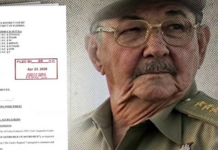
The final speaker, William LeoGrande, a professor of Latin American Studies at American University in Washington, D.C., talked about the prospects of diplomacy between the U.S. and Cuba and some alleged meetings that have occurred between U.S. officials and Raul Castro’s son and grandson, and said that Cuba has always been open to dialogue and diplomacy with the U.S. so long as the U.S. is respectful of Cuba in diplomatic meetings.

LeoGrande pointed out that the biggest hard-liner in the Trump administration is Marco Rubio, who has long been supported by extreme right-wing elements in the Cuban exile community in Miami and made his career as the most anti-Cuba legislator in Congress.

While Rubio clearly wants regime change, others in Trump’s inner circle and Trump himself may be open to negotiation if Cuba is willing to open up its economy to U.S. businesses.[4]
LeoGrande said that Cuba has nickel and cobalt reserves coveted by the U.S. and could offer opportunities for U.S. companies in the tourism industry.

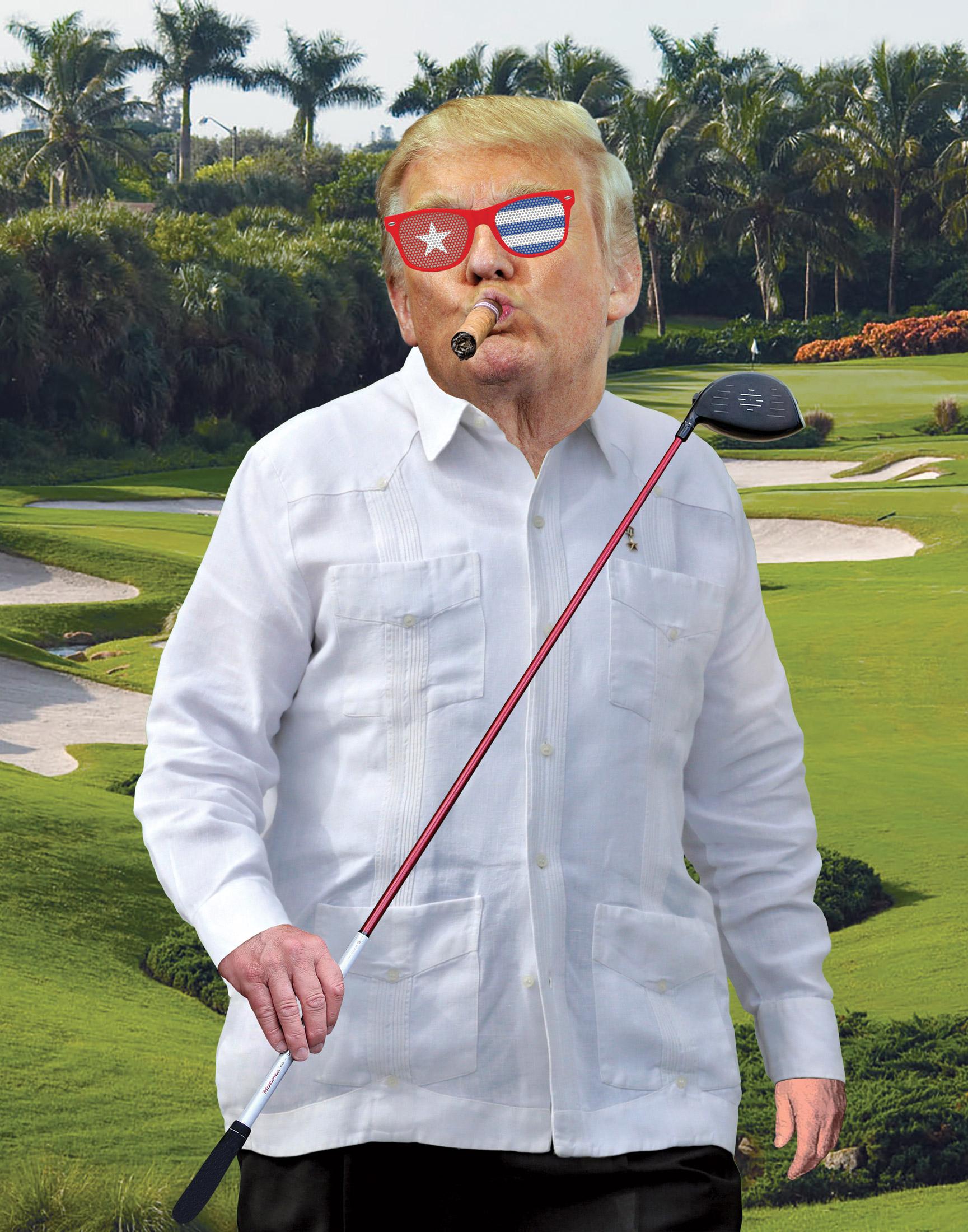
Interestingly, Trump Organization executives visited Cuba in 1998 to explore opening a hotel and golf course which, of course, it could not do because of the embargo.
LeoGrande said that Cuba’s tourism industry has been hit hard by the U.S. embargo and cut off from Venezuelan oil, and that airlines are halting flights to Cuba because of the inability to refuel for the trip home.
The Supreme Court’s blocking of Trump’s tariffs is a good thing, since Trump was proposing the institution of tariffs on any country that did not support the U.S. embargo on Cuba or tried to trade with Cuba.
At least, there are a few people in Congress supporting bills to end the blockade and embargo, particularly Jim McGovern (D-MA) and Ron Wyden (D-OR), whose efforts could be used as an organizing tool, LeoGrande said, and have a snowball effect.[5]


An additional speaker at the webinar was CAM contributor Colonel Ann Wright, who recently visited both Cuba and Venezuela. Colonel Wright said that the Venezuelan people are rallying behind Delcy Rodríguez and are intent on sustaining their sovereignty as a country.

As far as Cuba, Wright said that the people were “scared to death” right after the Maduro kidnapping, believing that their leaders may be next.
However, she said that the people there are prepared to defend themselves against the U.S. if there is another Bay of Pigs or something like that, and that the country is not going to collapse despite the difficulties imposed by the current conditions.
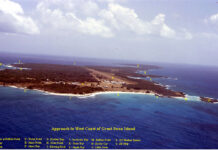
The prelude to a new potential Bay of Pigs seems to have occurred on February 25 when ten Cuban-Americans armed with assault rifles, explosives and camouflaged uniforms launched an armed attack against a Cuban border patrol vessel.
The attack took place in the northeastern area of El Pino channel at Cayo Falcones, Villa Clara province. The Cuban Border Guard Troops reported that one of its troops was injured and that in returning fire, they killed four of the invaders and wounded six.[6]

One of the Cuban-Americans killed was identified as Michel Ortega Casanova, a truck driver who fell into an “obsessive and diabolical” quest for Cuba’s freedom, according to his brother.

Whether the CIA had anything to do with what the Cuban Interior Ministry called the “attempt at terrorist infiltration[7]” is uncertain, though Casanova and other terrorists are reported to have traveled on a Florida-registered speed-boat and a detained suspect confessed that he was sent from the U.S. to make advance preparations for the armed group to stage attacks in Cuba.
The New York Times, which routinely ridicules alleged “conspiracy theorists[8]” who point to the CIA’s involvement in the JFK assassination and other historical crimes, gave credence to the conspiracy theory that the speed-boat attack was a false-flag staged by the Cuban government.[9]
Russian Foreign Ministry Spokeswoman Maria Zakharova more sensibly called the attack a deliberate move by Washington to provoke tensions, and an “aggressive U.S. provocation [aimed] at escalating the situation and triggering conflict.”
Andrea Lobo reported on The World Socialist Website that the attack was “the product of decades‑old networks of Cuban exile terrorists and US‑based paramilitaries cultivated and funded by the CIA and other agencies since the 1960s. These networks are now being activated under conditions in which the Trump administration has openly moved to strangle Cuba’s economy, declare the island a ‘national emergency’ for the United States and threaten any country that sells it oil with punitive tariffs.”[10]
Lobo added: “whether or not the White House directly ordered this particular mission, it is inconceivable that the heavily armed gang trained on a farm in South Florida, recruited members through TikTok—as relatives and friends of the attackers boasted to Univision journalist Javier Díaz—launched from Florida and entered Cuban waters without coming to the attention of US intelligence and law enforcement. At the very least, the provocation received a green light from US authorities.”

The World Socialist Website had an article on February 24 profiling a Cuban single mother, 32, named María, who described daily life in Cuba as a “living hell” in which basic necessities like cooking gas have vanished and people rely on expensive charcoal or broken furniture for firewood, Maria said her two jobs as a librarian and editor barely cover the cost of a carton of eggs. Running water is frequently unavailable for days at a time, and items like toys and clothes are “unaffordable for the average citizen.” A lot of families are surviving on low quality food with almost no protein, and even bread has become scarce. This malnutrition is compounded by outbreaks of respiratory and mosquito-borne diseases, which strike a population with weakened immune systems. In schools, meals are often reduced to a single boiled vegetable or a thin broth. María notes that a single bag of milk for her daughter costs half of her monthly salary. ↑
The measures include imposing rationing and reducing the work and school weeks. ↑
Another facet of the U.S. regime change operation is the CIA offshoot National Endowment for Democracy (NED)’s efforts to support dissident groups in Cuba and to stir up unrest. NED Director Damon Wilson testified in congressional hearing on February 24, 2026 that “in Cuba, NED partners have played a…sustained and critical role in helping citizens break through one of the most entrenched information blockades in the world. Independent journalists, community media, and civic groups supported by NED continue to provide reliable reporting, document abuses, and create space for public accountability in an environment where the regime tightly controls information. In 2025, NED-supported independent media reached more than 10 million people—roughly half inside Cuba—ensuring that citizens had access to news beyond official narratives and could better understand decisions affecting their daily lives.” ↑
LeoGrande’s assessment is backed up by a New York Times article by Michael Crowley on February 28 entitled “Trump Open to a Deal With Cuba to Avert Chaos,” which suggests that Trump administration’s goal, similar to Venezuela, is not immediate regime change, which could result in instability and a flood of migration to the U.S., but a slow transition to a government that serves U.S. business interests. LeoGrande was himself quoted in the piece stating that the “search for a Cuban Delcy is a fool’s game,” adding that if the Trump administration made any deals it would “have to be with the current Cuban government” and not “some rump of the current government.” ↑
Other congressmen and women who have spoken out against U.S. policy toward Cuba include a) Alexandria Ocasio-Cortez (D-NY), who compared the Cuban crisis to that of Gaza; b) Ilhan Omar (D-MN), who called for the “cruel” and “despotic” blockade to be lifted; and c) Jesús “Chuy” García (D-IL), who said that the blockade is “deliberately starving civilians” in Cuba. ↑
In an article in The Intercept, Nick Turse contrasted how the Cuban Coast Guard evacuated survivors and helped get them medical attention, while the U.S., when it attacked fishing boats that it claimed were manned by drug traffickers in the Caribbean Sea, killed survivors clinging to wreckage or left boat strike victims to drown. ↑
Carlos Gimenez (R-Fla.) called the confrontation by a “massacre” perpetrated by the Cuban government and said that the Cuban regime “must be relegated to the dust bin of history!” Debbie Wasserman Schultz (D-Fla.) called for an investigation and said the Cuban government’s version of events could not be trusted “without scrutiny.” Schultz added on X that “my office has contacted the State Department for more information, but it’s notable that this occurred in spite of ongoing Trump Administration negotiations with the Cuban regime.” ↑
See an example, Jennifer Schuessler, “Here’s How Historians Are Thinking About the Latest Kennedy Assassination Documents,” The New York Times, March 18, 2025; Clay Risen, “William F. Pepper, 86, Dies; Claimed the Government Killed Dr. King,” The New York Times, April 19, 2024.. ↑
See Frances Robles and Patricia Mazzei, “A Stolen Boat, a Deadly Gunfight and Accusations of a Plot Against Havana,” The New York Times, February 28, 2026, A8. This article quoted Marcel Felipe, a prominent leader in the Cuban exile community in Miami, who stated “what I do know is that it’s not the first time that the Cuban regime does an operation orchestrated by Cuban intelligence. These operations are never done exclusively by agents of the regime; they are done by agents of the regime who recruit willing participants and send them to their deaths.” ↑
Lobo additionally wrote: “since 1959, Cuba has been the target of countless CIA‑backed operations: bombings, assassination attempts against Fidel Castro, economic sabotage, the arming and funding of exile terrorist groups and the Bay of Pigs invasion. The men killed and captured Wednesday fit squarely within this history: long‑time residents of the United States, with known records of violent opposition to the Cuban government, training on US soil and organizing openly (in this case on social media) in the name of ‘liberating’ the island through paramilitary action.” ↑
CovertAction Magazine is made possible by subscriptions, orders and donations from readers like you.
Blow the Whistle on U.S. Imperialism
Click the whistle and donate
When you donate to CovertAction Magazine, you are supporting investigative journalism. Your contributions go directly to supporting the development, production, editing, and dissemination of the Magazine.
CovertAction Magazine does not receive corporate or government sponsorship. Yet, we hold a steadfast commitment to providing compensation for writers, editorial and technical support. Your support helps facilitate this compensation as well as increase the caliber of this work.
Please make a donation by clicking on the donate logo above and enter the amount and your credit or debit card information.
CovertAction Institute, Inc. (CAI) is a 501(c)(3) non-profit organization and your gift is tax-deductible for federal income purposes. CAI’s tax-exempt ID number is 87-2461683.
We sincerely thank you for your support.
Disclaimer: The contents of this article are the sole responsibility of the author(s). CovertAction Institute, Inc. (CAI), including its Board of Directors (BD), Editorial Board (EB), Advisory Board (AB), staff, volunteers and its projects (including CovertAction Magazine) are not responsible for any inaccurate or incorrect statement in this article. This article also does not necessarily represent the views the BD, the EB, the AB, staff, volunteers, or any members of its projects.
Differing viewpoints: CAM publishes articles with differing viewpoints in an effort to nurture vibrant debate and thoughtful critical analysis. Feel free to comment on the articles in the comment section and/or send your letters to the Editors, which we will publish in the Letters column.
Copyrighted Material: This web site may contain copyrighted material the use of which has not always been specifically authorized by the copyright owner. As a not-for-profit charitable organization incorporated in the State of New York, we are making such material available in an effort to advance the understanding of humanity’s problems and hopefully to help find solutions for those problems. We believe this constitutes a ‘fair use’ of any such copyrighted material as provided for in section 107 of the US Copyright Law. You can read more about ‘fair use’ and US Copyright Law at the Legal Information Institute of Cornell Law School.
Republishing: CovertAction Magazine (CAM) grants permission to cross-post CAM articles on not-for-profit community internet sites as long as the source is acknowledged together with a hyperlink to the original CovertAction Magazine article. Also, kindly let us know at info@CovertActionMagazine.com. For publication of CAM articles in print or other forms including commercial internet sites, contact: info@CovertActionMagazine.com.
By using this site, you agree to these terms above.
About the Author
Jeremy Kuzmarov holds a Ph.D. in American history from Brandeis University and has taught at numerous colleges across the United States. He is regularly sought out as an expert on U.S. history and politics and co-hosts a radio show on New York Public Radio and on Progressive Radio News Network called “Uncontrolled Opposition.”
He is Managing Editor of CovertAction Magazine and is the author of eight books, including Obama’s Unending Wars (Clarity Press, 2019), The Russians Are Coming, Again, with John Marciano (Monthly Review Press, 2018), Warmonger. How Clinton’s Malign Foreign Policy Launched the U.S. Trajectory From Bush II to Biden (Clarity Press, 2023); with Dan Kovalik, Syria: Anatomy of Regime Change (Baraka Books, 2025), and Political Assassinations in America: The Intricate Nexus of Deep State Crime (Clarity Press, 2026).
Besides these books, Kuzmarov has published hundreds of articles and contributed to numerous edited volumes, including one in the prestigious Oxford History of Counterinsurgency .
He can be reached at jkuzmarov2@gmail.com and found on substack here.

Great man who suffered greatly under the regime of Castro and Che Guevara
https://www.ncregister.com/blog/armando-valladares-imprisoned-and-tortured-by-castro-awarded-canterbury-medal
Here is some interesting information.
https://humanprogress.org/the-truth-about-che-guevara-racist-homophobe-and-mass-murderer/