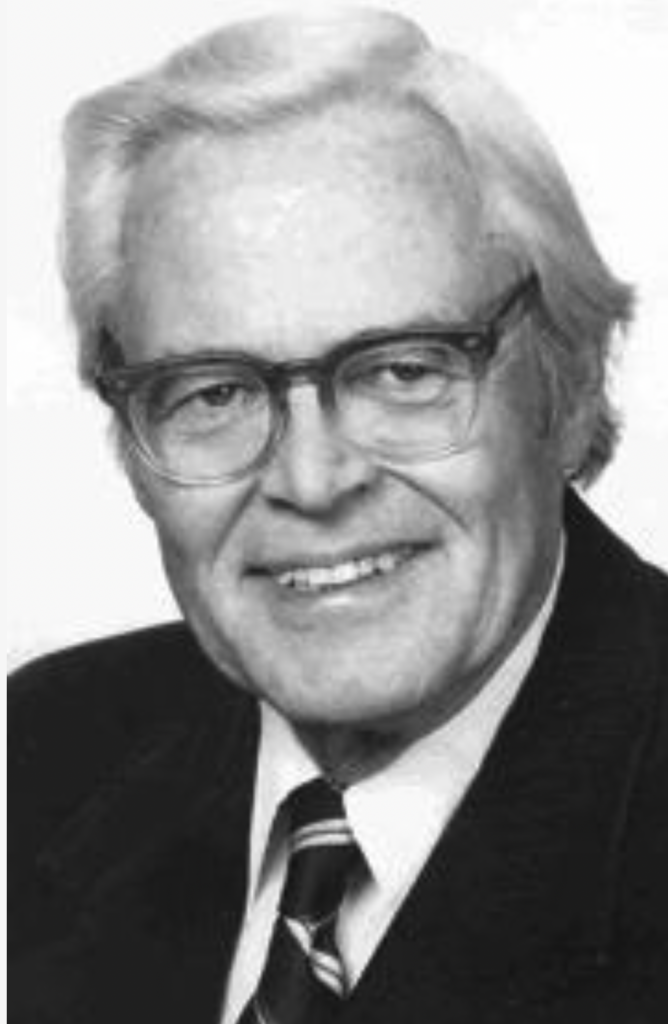
Richard D. Robinson was forced to flee South Korea and destroy the first draft of a manuscript he wrote, Betrayal of a Nation.
[This article marks the first of numerous articles that CAM will be publishing over the next ten days to commemorate national whistleblower week.—Editors]
Richard D. Robinson (1921-2009) founded the study of international business management at the Sloan School of Management of the Massachusetts Institute of Technology (MIT), authored 16 books and established MIT’s post-war relationship with the People’s Republic of China (PRC) in 1979.
Robinson was also one of the most significant U.S. government whistleblowers of the early Cold War.
In the late 1940s, while serving as a military intelligence officer heading the historical section of military intelligence, and as director of the Office of Public Opinion of the U.S. Army Military Government in Korea (USAMGIK), Robinson went afoul of military authorities after voicing criticism of police brutality, censorship and U.S. alliance with the extreme right.
Additionally, Robinson uncovered the falsification of reports and provocations from South Korea initiated by right-wing politicians such as Syngman Rhee and Kim Ku that “caused incidents contributing to the outbreak of the Korean War [1950-1953] that were omitted from the official account of the U.S. occupation of South Korea.”
Robinson’s story is told in Witness to Korea 1945-47: The Unfolding of an Authoritarian Regime, edited by historians Frank Hoffmann and Mark E. Caprio.[1]
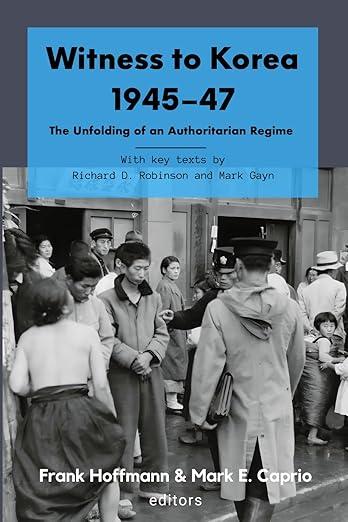
This book includes a copy of Robinson’s unpublished manuscript Betrayal of a Nation along with essays and commentaries.
In his flagship essay in the volume, Hoffmann points out that Robinson authored an exposé in March 1947 in The Nation magazine, written under the pseudonym Will Hamlin, entitled “Korea: An American Tragedy.”[2]
Disclosing classified information while calling for the withdrawal of U.S. troops from South Korea, the article reported on the rape of three Korean women by U.S. soldiers and spoke of a U.S. policy of “maintaining in office notorious Japanese collaborators” such as the directors of the Korean police force.
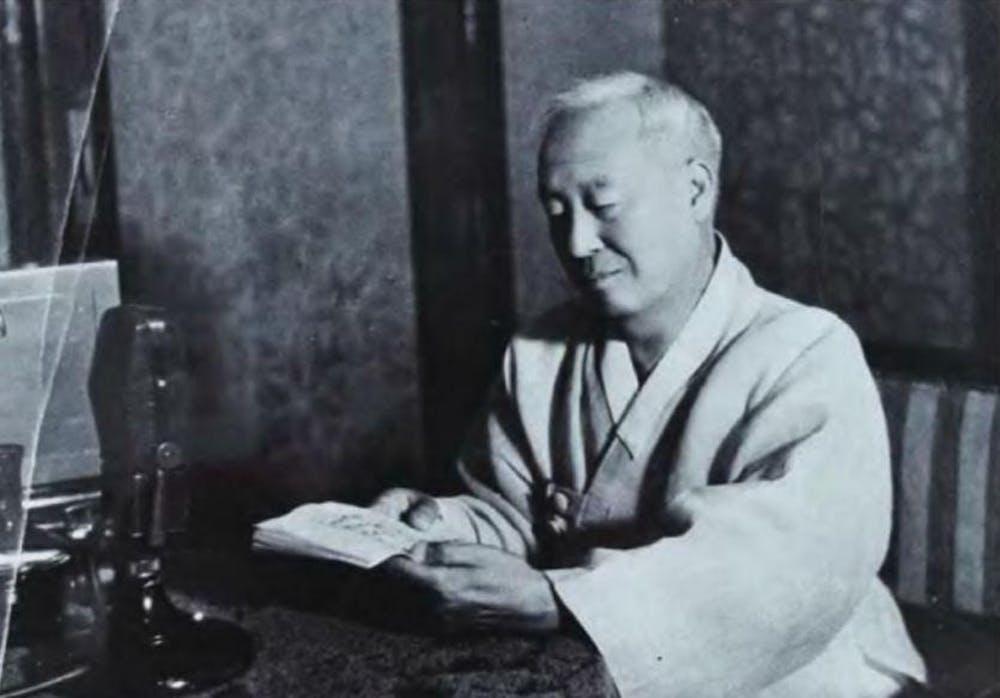
Additionally, the article detailed Syngman Rhee’s plans to become leader of South Korea after the end of the U.S. military occupation in 1948 and to bring North Korea under his rule by instigating a war between the U.S. and Soviet Union.[3]
Hoffmann notes that, from the U.S. military’s perspective, the publication of Robinson’s article was an act of treason. The military uncovered Robinson’s identity because Will was the name of his father and Hamlin his older brother.[4]
The U.S. Army Counter-Intelligence Corps (CIC) assigned two special agents to monitor him and subjected his friends and family to background checks and interrogation.[5]
Robinson and his wife were forced to flee South Korea and, during a stopover in Japan, orders were given for Robinson’s arrest, though the skipper of the ship he was on refused to hand him over to the U.S. Army.[6]
Robinson subsequently traveled to Turkey where he stayed for a decade, working as a teacher and political analyst. On the ship he was traveling on to Turkey, Robinson rewrote Betrayal of a Nation, whose first draft he had burned because he feared that it would have been seized and led to his arrest.
Because of McCarthy-era pressures, Robinson only sought a publisher for his manuscript in 1958, submitting it to Arlington Books, a non-profit publishing house whose editor-in-chief began the editorial process but then was pressured into shelving it.
In 1963, Robinson submitted the manuscript to Harvard University Press, which rejected it on the grounds that “it is essentially unpublishable, or it is still too early to publish such an account.”[7]
Now, 63 years later, thanks to Hoffmann and Caprio’s efforts, Betrayal of a Nation has finally been published with its insights into the injustices of the U.S. military occupation of South Korea.
In some ways, Betrayal of a Nation shows Robinson’s naïveté characteristic of the post-World War II period that the U.S. could be a force for good in the world.
Robinson does not seem to grasp the underlying political-economic imperatives driving U.S. intervention in Korea, failing to note, for example, how U.S. leaders intentionally divided the Koreas to weaken them and had the goal of establishing a client regime in South Korea whose economy would supply Japan with raw materials and help build up Japan as a powerful counterweight to Communist China.[8]
The U.S. support for fascistic and extreme right-wing elements in South Korea in this context was not a mere blunder coordinated by inept officials, as Robinson seems to suggest, but rather a calculated strategy that fit with a global pattern.
As Hoffmann points out in one of his essays, the U.S. also allied with extreme right-wing elements in Italy to avert a communist takeover in the late 1940s and supported the extreme right in Eastern European countries like Ukraine and across Southeast Asia.[9]
Violent strong-armed methods were necessary to counter popular left-wing movements that aimed to break the power of wealthy landowners, industrialists and oligarchs who had collaborated with fascists in World War II and wanted to establish independent foreign policies that, in Southeast Asia, would have entailed a strong alliance with Communist China.
By asserting a moral equivalency between U.S. and Soviet foreign policies in Korea, Robinson obfuscates how the Soviet Union was helping Third World countries after World War II to try to resist U.S. imperialism.
Additionally, he failed to understand that the North Korean revolution was largely organic, its aim being to enable the country to escape the clutches of foreign domination and to develop its economy independently under a Juche system of self-reliance.[10]
Despite these and other flaws, Betrayal of a Nation is an extremely valuable manuscript in illuminating the hypocrisy of U.S. foreign policymakers who preached democracy while supporting right-wing authoritarianism in South Korea.
The manuscript also exposes the underlying racism of U.S. colonial officials and soldiers and their frequent mistreatment of the South Korean population.
One of the most valuable chapters focuses on the brutality of the South Korean police, which triggered widespread revolt.
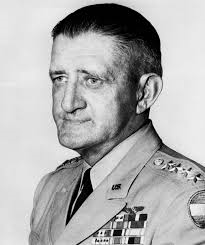
Robinson details how General John Reed Hodge, the head of USAMGIK, appointed as police directors Dr. Chough Pyung-ok[11] and Chang T’aek-sang, who had prospered under the Japanese and encouraged police brutality against leftists. A top U.S. police supervisor told Robinson that “there was enough evidence in the files on these two men [Dr. Cho and Chang] to hang them several times over.”[12]
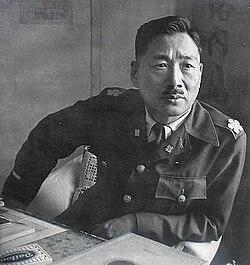
Robinson noted that the prison population under USAMGIK was more than 22,000, almost double the highest number ever held by the Japanese when they colonized South Korea from 1910 to 1945.[13] Some of the inmates were teachers who were jailed for mere mention of communism in their classrooms. Others were left-wing newspaper editors and journalists.[14]
Overcrowding in the jails was so rampant that people had to sleep on top of each other in tiny cells overrun by rats. Trials were rigged and police used what Robinson described as “tricks of the medieval horror chamber” to try to extract confessions, including the infamous water torture, which Robinson personally witnessed when he walked into a police station in Pusan.[15]
When Robinson tried to arrest the torturer, he was threatened with court-martial and told by Military Governor Archer Lerch that the matter was none of his concern.[16]
Besides hideous tortures, Robinson witnessed how American authorities refused to prosecute corrupt police officials when they were caught red-handed stealing and how right-wing vigilantes got off with small fines when they tortured and murdered leftists.[17]
When American Civil Liberties Union (ACLU) co-founder Roger Baldwin visited South Korea and criticized police and other human rights abuses, General Hodge radioed the War Department that Baldwin had been “taken in by communist propaganda.”[18]
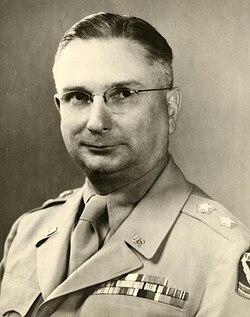
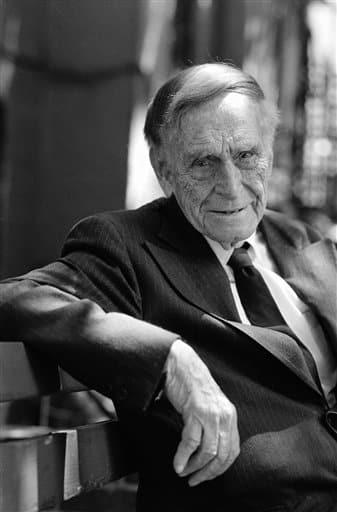
Robinson reported on American troop excesses, including a sadistic major in Pusan, who supervised the torture of police prisoners and of the purchase of women by American officers. Additionally, there was a provincial military governor who looted his entire province of art treasures, Americans who forced prisoners to work on private projects, and bribery in the justice system and pocketing of public funds.[19]
While some Americans also sought to do good things, like developing an efficient sewer system in Wonju or establishing a successful sports program for kids in Nonsan,[20] the abusive practices of U.S. troops contradicted the myth of American exceptionalism cultivated in scholarly writings that suggest the Soviets were more depraved compared to Americans when operating in foreign lands.[21]
To highlight the racism of U.S. troops, Robinson quoted a Wall Street Journal journalist, Raymond Cromley (1910-2007), who was told by high-level USAMGIK officials that “the Koreans are no damn good” and “all they understand is harsh and brutal treatment.”[22]
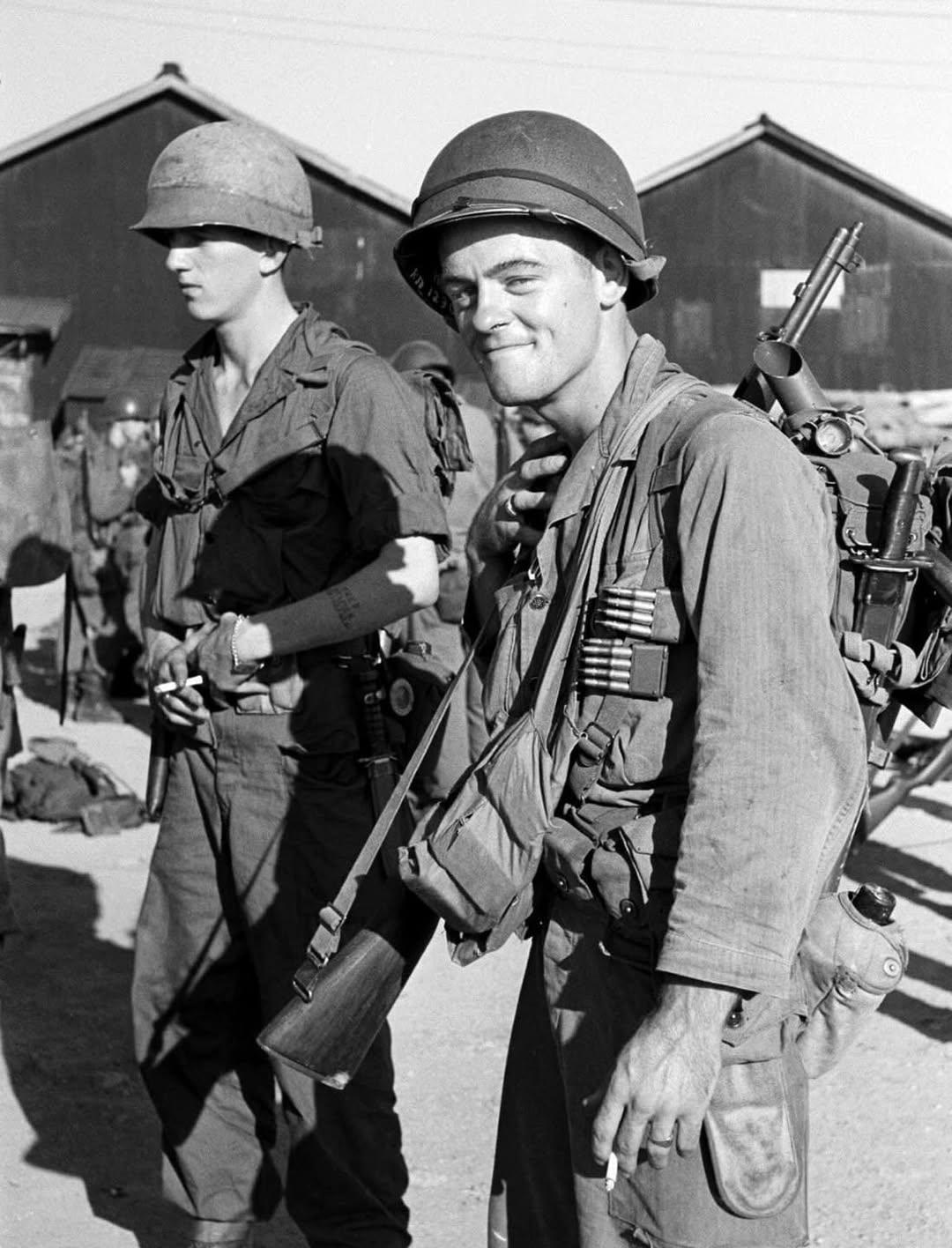
Robinson also said that few American military government officials whom he encountered had “any interest in Koreans, their culture, their history, their problems, their country.”[23]
Regulations laid down by General Hodge forbidding Americans from going into Korean homes, entering Korean restaurants or dating Korean girls did little to help matters.[24]
In light of their derisive attitudes toward the Korean population, Robinson finds it unsurprising that USAMGIK officials failed to support Lyuh Woon-hyung, a liberal political figure Robinson believed was capable of unifying the political left with elements of the center and moderate right in South Korea, and of brokering a political agreement with the North capable of averting a war.
Lyuh was assassinated by South Korean police agents backed by the CIC in July 1947, as were other political figures, like Kim Ku, who favored conciliation among groups.[25]
The wave of political assassinations Robinson details was part of an extermination campaign against leftists spearheaded by right-wing paramilitary groups, which were directly sponsored by USAMGIK and trained by U.S. Army officers such as Lieutenant Colonel Ernest E. Voss, a founder of the Philippines Boy Scouts.[26]
One of the most prominent paramilitary leaders, Yi Pom-sok, was appointed Prime Minister by Syngman Rhee in 1948. He was an open Hitler sympathizer who met with Hitler youth in Berlin, was influenced by Nazi advisors in Chiang Kai-shek’s army in China and modeled a youth association he set up with USAMGIK sponsorship after the Hitler Youth.[27]
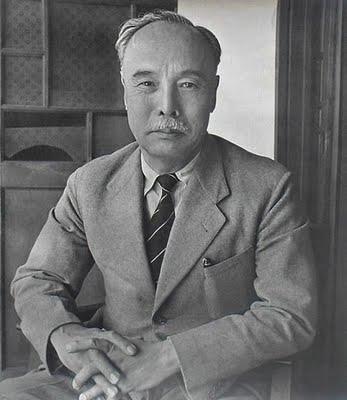
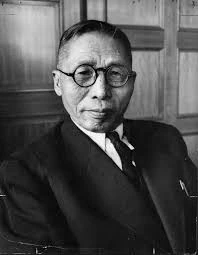
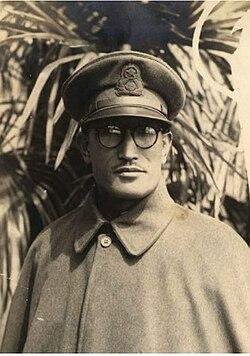
One other taboo topic that Robinson addressed in Betrayal of a Nation was the Rhee-controlled lobby in Washington that consisted of wealthy businessmen who had plans for mineral extraction in South Korea and other business opportunities that Rhee would help to open up.[28]
The Korean lobby included key figures in the McCormick and Hearst newspaper constellations, which helped to ensure favorable press coverage of Rhee and to silence whistleblower voices like Robinson’s.
Mark Gayn: Another Truth-Teller
Mark Gayn (1909-1981) was another truth-teller subjected to red-baiting and persecution, whose 1948 book Japan Diary is partially reprinted in Witness to Korea, 1945-1947.
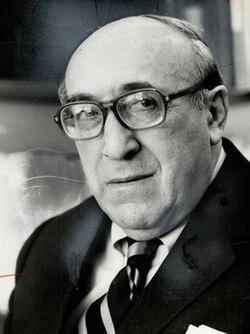
According to Frank Hoffmann, Japan Diary serves with Betrayal of a Nation as “the most substantial, intense, and critically engaging descriptions of immediate post-liberation southern Korean politics written in English before 1950.”
Born in Manchuria to Russian-Jewish parents, Gayn had been one of the brightest stars in American journalism in the 1930s and 1940s as a special correspondent in Shanghai for The Washington Post.
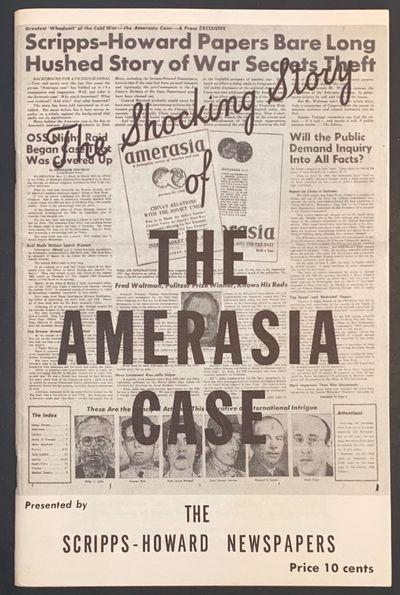
In 1945, he was arrested by the FBI after being accused of publishing classified Office of Strategic Services (OSS) information in Amerasia, a journal published by the Institute of Pacific Relations.
The charges were dropped, though the case served as a dress rehearsal for McCarthyism and resulted in Gayn’s blacklisting and migration to Canada where he found a job with the Toronto Daily Star.[29]
Published by William Sloane Associates, Japan Diary was Gayn’s most widely read publication, which chronicled his three-week stay in Korea in the fall of 1946 along with his travels in Japan.
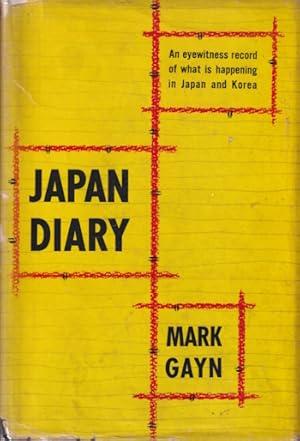
Gayn was working at the time as the Japan correspondent for The Chicago Sun, whose owner, Marshal Field III, also owned PM, a New York based paper that published a number of left-leaning writers, including I.F. Stone. Only two of Gayn’s dispatches from South Korea were actually ever published in the Sun or PM, and these were mild in their criticism compared to much of what Gayn wrote.[30]
After his arrival in South Korea, Gayn interviewed many U.S. military and government officials who expressed contempt for the Korean population in openly racist terms. In his first diary entry, he quotes a U.S. Army lieutenant who told him that Koreans were “dirty and treacherous” and said that “psychological warfare” was “the only way to show these ‘gooks’ we won’t stand for any monkey business.”[31]
When protests and riots broke out, Gayn reported that Hodge and other USAMGIK officials blamed them on “communist agitators,” giving license for counter-revolutionary repression directed by Japanese-trained police units whose abuses Gayn spotlighted.
When Gayn asked USAMGIK official Leonard Bertsch whether Syngman Rhee was a fascist, Bertsch assured him he was not a fascist: “He’s two centuries before fascism—a pure Bourbon.”[32]
Noting that Rhee “spoke for no one but the landlords when he opposed land reform, social security and civil freedoms,” Gayn quoted another official who told him that the Koreans in the military government represented “a conspiracy of insufferable corruption” and were primarily “rightist who happily did Japan’s dirty work.”
He also said that “there were men in the Korean police force who actually were decorated by the Japanese for their cruelty and efficiency in suppressing Korean nationalism.”[33]
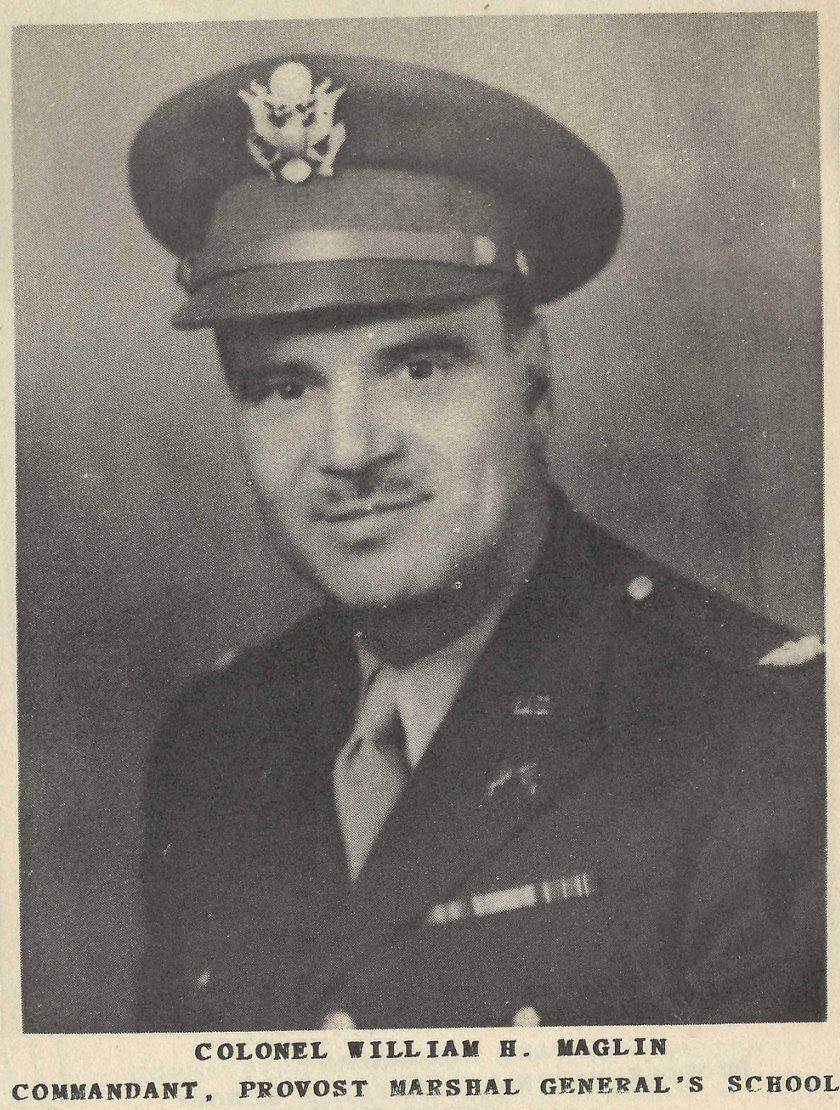
When Gayn asked Colonel William Maglin, the chief of the American police division, why the U.S. had retained so many Japanese collaborators in the police, Maglin responded: “we felt that if they did a good job for the Japanese, they would do a good job for us.”[34]
Gayn additionally raised the issue of police brutality with Major F. E. Richardson, chief of the police division of the military government for Seoul, who asked Gayn if he had lived in the Orient before and said that “the police [in the Orient] don’t operate our way. They are cruel and undemocratic.”[35]
Gayn conveyed shock at this kind of racist and callous attitude and raised alarm in Japan Diary about USAMGIK’s support for the neo-fascist gangs whose leaders, he said, resembled “Hollywood underworld killers.”[36]
Like Robinson, Gayn directly witnessed torture and criticized U.S. occupation troops whom, he said, had come to South Korea “as liberators” but “fired on crowds, conducted mass arrests, combed the hills for suspects, and organized posses of Korean rightists, constabulary and police for mass raids.”[37]
Further, Gayn was bothered by the fact that many U.S. Army officers openly and unashamedly talked to him of business ventures they had going on in South Korea. Among these was a million-dollar glass factory whose purchase on behalf of Korean investors one officer was in the process of negotiating in Detroit—in contravention to military regulations.[38]
Gayn additionally reported on the rigging of local elections under USAMGIK oversight and of an Army officer who was allowed to loot the treasures from a Korean museum and ship them to the U.S.[39] Though attacked as a leftist subversive, Gayn concluded his diary by writing: “I did not think I was either a radical or a dreamer. I was a reporter who had found, with shame and anguish, that under our flag—and often with our active encouragement—there had come into being a police state so savage in its suppression of man’s elemental liberties that it was difficult to find a parallel for it.”[40]
Painting a Horrific Picture
Robinson and Gayn’s writings together paint a horrific picture of the post-World War II U.S. military occupation of South Korea, which was whitewashed and sanitized in the media at the time and forgotten by future generations.
Eighty years later, after supporting continued violence and oppression, the U.S. still occupies South Korea militarily and tries to provoke war with North Korea, which is falsely blamed for creating the crisis on the peninsula.
The methods adopted by U.S. occupying authorities that Robinson and Gayn described were replicated in South Vietnam in the 1950s and 1960s and in other U.S. colonial occupations, as in Afghanistan and Iraq in the 21st century.
Though Robinson and Gayn had successful careers overall, both suffered the fate of other truth-tellers in American history, being threatened with arrest, harassed and blacklisted.
Their stories are important to tell today for their insights into U.S. foreign policy and to encourage other whistleblowers to expose corrupt governing institutions and practices and to stand up for what is right.
Hoffmann is a Korean scholar who works at UC Berkeley and is founder of Academia Publishers LLC. Caprio is a professor emeritus at Rikkyo University in Tokyo and holds the Kim Koo Visiting Professorship at Harvard University. ↑
Frank Hoffmann, “Richard D. Robinson and Mark Gayn: A Whistleblower and a Journalist,” in Frank Hoffmann and Mark E. Caprio, eds., Witness to Korea 1945-47: The Unfolding of an Authoritarian Regime (Berkeley: Academia Publishers LLC, 2024), 14. ↑
Idem. ↑
Ibid., 15. The the War Department’s Intelligence Division discovered this because some assistant to the editor at The Nation handed them the info that Robinson’s brother had been the sender of the article manuscript. ↑
Idem. Friends of Robinson were subjected to background checks and interrogations. Leftist Theodore Pick was surveilled by the army CIC, together with the Robinsons. ↑
Ibid., 22. ↑
Ibid., 24. Previously, a copy had been deposited at the Harvard-Yenching Library and was used by historians such as Bruce Cumings who wrote critically about U.S. foreign policy in South Korea in the build-up to the Korean War. ↑
See Bruce Cumings, The Origins of the Korean War, Volume 1: Liberation and the Emergence of Separate Regimes, 1945-1947 (Princeton, NJ: Princeton University Press, 1981); Noam Chomsky, For Reasons of State (New York: Pantheon Books, 1973). ↑
See William Blum, Killing Hope: U.S. Military and CIA Interventions Since World War II (Monroe, ME: Common Courage Press, 1998). ↑
See Charles K. Armstrong, The North Korean Revolution, 1945-1950 (Ithaca, NY: Cornell University Press, 2004); A. B. Abrams, Immovable Object: North Korea’s 70 Years at War with American Power (Atlanta: Clarity Press, 2020). ↑
Robinson noted that Dr. Cho had taught at mission-supported schools and had a Ph.D. from Columbia University. ↑
Robinson, “Betrayal of a Nation,” in Hoffmann and Caprio, eds., Witness to Korea 1945-47, 181. ↑
Ibid., 182, 200. At least 7,000 of those prisoners were officially recognized as being political prisoners. ↑
Ibid., 183, 228. Robinson described the eruption of strikes in universities due to the oppressive climate and lack of adequate resources for textbooks and mass purging of teachers who were branded as communists but were often “merely good liberal democrats.” (pp. 295, 296). In one despicable case described by Robinson, a poor farmer was jailed for years after traveling to the city to see a dentist because the relative with whom he was staying was accused of being a communist. In another case, police beat and murdered the aging mother of a suspected strike leader. ↑
Ibid., 187, 188. The victim of police torture that Robinson witnessed, who had been accused of being a pick-pocket, was “writhing on the floor in agony,” according to his description, and tied hand and foot. ↑
Ibid., 189. Lerch had served with the U.S. military in the Philippines in the 1920s and, as an army lawyer, prosecuted Grover Cleveland Bergdoll, the first draft evader in World War I. See his New York Times obituary here. ↑
Ibid., 186, 190. ↑
Ibid., 191. ↑
Ibid., 305. ↑
Idem. ↑
I have in mind Stanford University Professor Norman Naimark’s oft-cited article on Soviet rapes in Germany that is used to validate U.S. Cold War policy under the suggestion that the behavior of Soviet troops in Germany after the war was far worse than allied troops and reflected Soviet barbarity compared to the enlightened U.S., as he presents it. Norman M. Naimark, “The Russians and Germans: Rape during the War and Post-Soviet Memories,” in Raphaelle Branche and Fabrice Virgili, eds., Rape in Wartime: A History to be Written (London: Palgrave Macmillan, 2012). See also John Gaddis’s apologia for U.S. Cold War policy which draws on Naimark’s earlier writing on this topic. John Lewis Gaddis, The Cold War: A New History (New York: Penguin, 2005). ↑
Robinson, “Betrayal of a Nation,” in Hoffmann and Caprio, Witness to Korea 1945-47, 306. ↑
Idem. ↑
Robinson says that he was threatened with court-martial for joining a group of American newspapermen in a banquet in a Korean kisaeng, or entertainment house. ↑
Kim Ku was generally far to the right and an ally of Syngman Rhee, but broke with him over his willingness to negotiate with the left. ↑
Robinson, “Betrayal of a Nation,” in Hoffmann and Caprio, eds., Witness to Korea 1945-47, 260. ↑
Ibid., 261. Yi was also trained at the Whampoa Military Academy in China and had worked with Guomindang spymaster Dai Li, an Asian Himmler, according to his Office of Strategic Services (OSS) liaison Mary Miles. Kang Se-hyŏng, who ran the educational program for Yi’s youth corps that the U.S. Army financed and protected, openly propagated German-style fascism in South Korea. ↑
Ibid., 214, 215. ↑
Hoffmann, “Richard D. Robinson and Mark Gayn,” in Hoffmann and Caprio, eds., Witness to Korea 1945-47, 49. Gayn continued to do freelance work for U.S. newspapers like The Chicago Daily News and periodically published articles for The New York Times, such as a 1972 cover story chronicling his visit to North Korea. In 1966, he opened a Hong Kong bureau for the Toronto Daily Star as a base to cover the Vietnam War. ↑
See Oliver Elliott, The American Press and the Cold War: The Rise of Authoritarianism in South Korea, 1945-1954 (New York: Palgrave McMillan, 2018), 45, 49. Gayn had criticized the U.S. occupation authorities in Japan under General Douglas MacArthur for failing to reform Japan’s militaristic tendencies and supporting right-wing hardliners under the “Reverse Course.” Though most of the U.S. press corps was either subjected to outright censorship or subservient to the AMG in South Korea, Gayn was not the only exception: Oliver Elliot points to Gordon Walker of the Christian Science Monitor as another reporter who reported candidly on the 1946 peasant uprising and dictatorial nature of the AMG and its South Korean allies. Additionally, Elliot notes that Keyes Beech of the Chicago Daily News came to report critically on South Korean police brutality and political authoritarianism along with a few other reporters like Walter Sullivan of The New York Times in the period from 1948 to 1950. ↑
Mark Gayn, “Japan Diary: Korea,” in Hoffmann and Caprio, eds., Witness to Korea 1945-47, 335, 336. Gayn had considered himself a liberal but was branded as a communist by General John Reed Hodge. ↑
Ibid., 339. ↑
Idem. ↑
Ibid., 378. ↑
Ibid., 357. ↑
Ibid., 359. ↑
Ibid., 375. ↑
Ibid., 412. ↑
Ibid., 413. ↑
Ibid., 415. ↑
CovertAction Magazine is made possible by subscriptions, orders and donations from readers like you.
Blow the Whistle on U.S. Imperialism
Click the whistle and donate
When you donate to CovertAction Magazine, you are supporting investigative journalism. Your contributions go directly to supporting the development, production, editing, and dissemination of the Magazine.
CovertAction Magazine does not receive corporate or government sponsorship. Yet, we hold a steadfast commitment to providing compensation for writers, editorial and technical support. Your support helps facilitate this compensation as well as increase the caliber of this work.
Please make a donation by clicking on the donate logo above and enter the amount and your credit or debit card information.
CovertAction Institute, Inc. (CAI) is a 501(c)(3) non-profit organization and your gift is tax-deductible for federal income purposes. CAI’s tax-exempt ID number is 87-2461683.
We sincerely thank you for your support.
Disclaimer: The contents of this article are the sole responsibility of the author(s). CovertAction Institute, Inc. (CAI), including its Board of Directors (BD), Editorial Board (EB), Advisory Board (AB), staff, volunteers and its projects (including CovertAction Magazine) are not responsible for any inaccurate or incorrect statement in this article. This article also does not necessarily represent the views the BD, the EB, the AB, staff, volunteers, or any members of its projects.
Differing viewpoints: CAM publishes articles with differing viewpoints in an effort to nurture vibrant debate and thoughtful critical analysis. Feel free to comment on the articles in the comment section and/or send your letters to the Editors, which we will publish in the Letters column.
Copyrighted Material: This web site may contain copyrighted material the use of which has not always been specifically authorized by the copyright owner. As a not-for-profit charitable organization incorporated in the State of New York, we are making such material available in an effort to advance the understanding of humanity’s problems and hopefully to help find solutions for those problems. We believe this constitutes a ‘fair use’ of any such copyrighted material as provided for in section 107 of the US Copyright Law. You can read more about ‘fair use’ and US Copyright Law at the Legal Information Institute of Cornell Law School.
Republishing: CovertAction Magazine (CAM) grants permission to cross-post CAM articles on not-for-profit community internet sites as long as the source is acknowledged together with a hyperlink to the original CovertAction Magazine article. Also, kindly let us know at info@CovertActionMagazine.com. For publication of CAM articles in print or other forms including commercial internet sites, contact: info@CovertActionMagazine.com.
By using this site, you agree to these terms above.
About the Author
Jeremy Kuzmarov holds a Ph.D. in American history from Brandeis University and has taught at numerous colleges across the United States. He is regularly sought out as an expert on U.S. history and politics and co-hosts a radio show on New York Public Radio and on Progressive Radio News Network called “Uncontrolled Opposition.”
He is Managing Editor of CovertAction Magazine and is the author of eight books, including Obama’s Unending Wars (Clarity Press, 2019), The Russians Are Coming, Again, with John Marciano (Monthly Review Press, 2018), Warmonger. How Clinton’s Malign Foreign Policy Launched the U.S. Trajectory From Bush II to Biden (Clarity Press, 2023); with Dan Kovalik, Syria: Anatomy of Regime Change (Baraka Books, 2025), and Political Assassinations in America: The Intricate Nexus of Deep State Crime (Clarity Press, 2026).
Besides these books, Kuzmarov has published hundreds of articles and contributed to numerous edited volumes, including one in the prestigious Oxford History of Counterinsurgency .
He can be reached at jkuzmarov2@gmail.com and found on substack here.



North Korea’s state propaganda created many mythical stories about Kim Jong Un’s father, Kim Jong Il, to hide the reality that he was born in the Soviet Union while his father was a Soviet-backed creation. The Birthplace Myth vs. Soviet Reality The Propagandized Birth: State biographies claim Kim Jong Il was born on February 16, 1942, in a secret log cabin on the sacred Mount Paektu in Korea, heralded by a bright new star, a double rainbow, and the changing of winter to spring. The Soviet Fact: Soviet archival records show he was actually born in February 1941 in the small Siberian village of Vyatskoye (near Khabarovsk), Russia, where his father was serving as a captain in the Soviet Red Army. His birth name was Yuri Irsenovich Kim.Absurd Propaganda Legend sSupernatural Physiology: Official state lore claimed Kim Jong Il was so efficiently calibrated that his body produced no waste and he never needed to use a toilet Magical Sports: State media reported that the first time he ever picked up a bowling ball he scored a perfect 300, and during his first-ever round of golf he shot an unbelievable 38-under par with multiple hole-in-ones. Culinary Inventions: State outlets claimed he invented the hamburger—referring to it as “double bread with meat”—to introduce it as a nourishing new dish for university students. Global Fashion Icon: North Korean newspapers once reported that his signature tailored jumpsuits and bouffant hairstyle sparked an unprecedented worldwide fashion
Here is more details on this subject:
The Soviet Union handpicked Kim Il Sung, brought him to Pyongyang, and helped build North Korea’s military and political systems. Soviet Selection and Return The Choice: Stalin and Soviet leaders like Lavrentiy Beria looked for a reliable communist to lead the northern half of Korea. Red Army Service: Kim had spent years as a guerrilla fighter against Japan and later served as a captain in the Soviet Army. Arrival in Pyongyang: The Soviets flew or brought him back to Korea, presenting him as a prominent resistance hero even though official North Korean myths later exaggerated his early exploits. Constructing the State Apparatus Political Control: Under the Soviet Civil Administration, Kim was placed in charge of the Provisional People’s Committee in 1946, sidelining and purging domestic rivals. Military and Police: The Red Army provided the structural blueprint, weapons, and training to form North Korea’s military and security forces, establishing a classic Stalinist state before formally creating the Democratic People’s Republic of Korea in 1948
For the most part this article is excellent and very well written. There are a few correctios that I am pointing out.
The claim that the Soviet Union was merely “helping Third World countries… resist U.S. imperialism” is an ideological distortion that ignores Soviet imperialist ambitions. Soviet Aggression: The Soviet Union’s foreign policy under Joseph Stalin was driven by its own geopolitical imperatives, sphere-of-influence expansion, and security architecture. Subjugation: In the late 1940s, the Soviet Union brutally suppressed independent democratic movements in Eastern Europe to establish puppet states, a framework it applied globally where possible.
The assertion that the North Korean revolution was completely “organic” and aimed at a “Juche system of self-reliance” is historically inaccurate for the period discussed. Soviet Installation: The northern regime was not entirely organic. The Soviets chose Kim Il Sung, flew him into Pyongyang, and actively constructed the North Korean state apparatus, military, and police state. The Origins of Juche: The Juche ideology was not the founding framework of the late 1940s. It was only officially introduced by Kim Il Sung in 1955 as a political tool to purge pro-Soviet and pro-Chinese factions from the ruling party, allowing him to consolidate absolute personal power. The Korean War: Declassified Soviet archives have proven that Kim Il Sung actively lobbied Joseph Stalin for permission to invade South Korea, which Stalin eventually approved and supplied with heavy armor and weaponry.