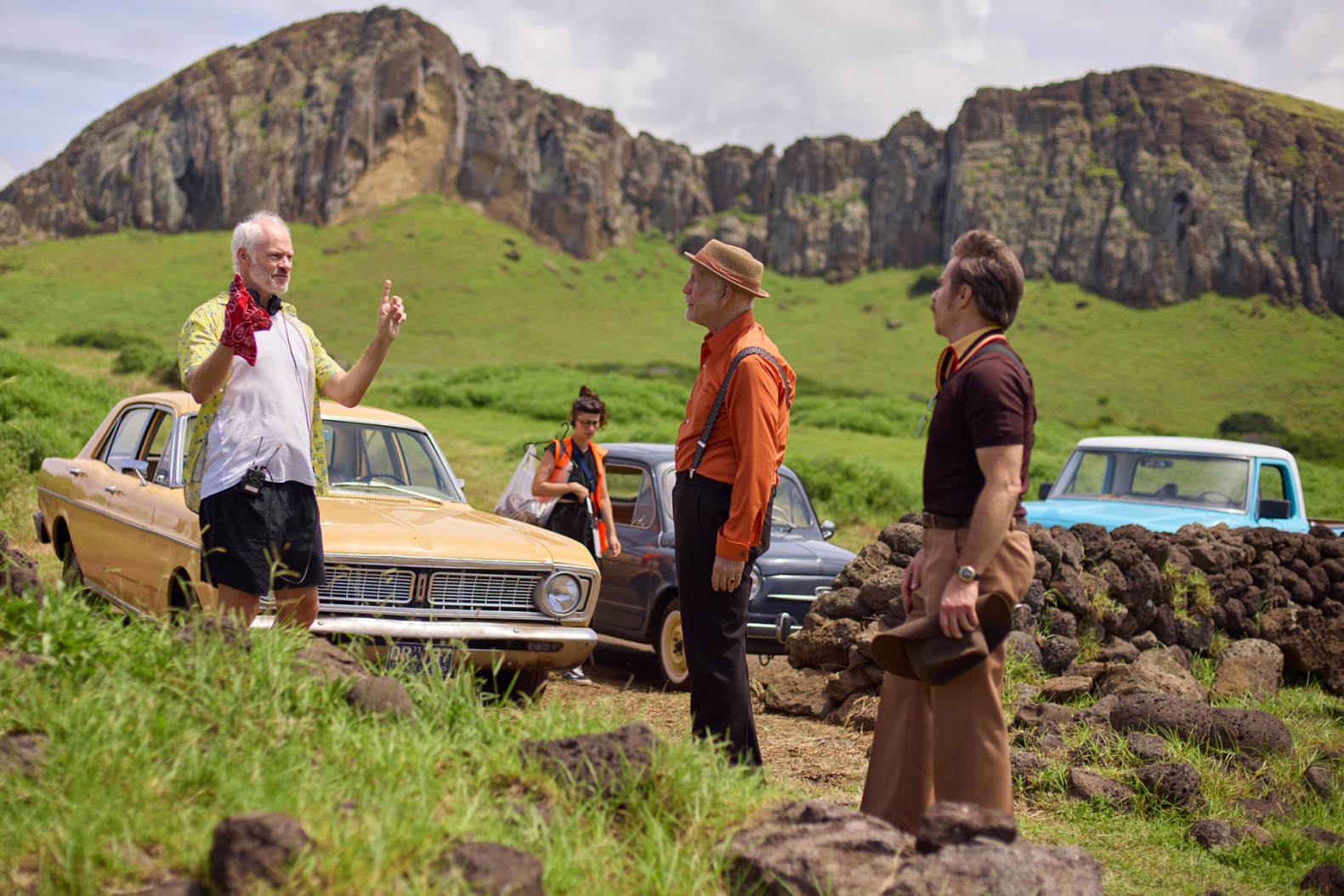
Great films, like great literature, please and teach. Wild Horse Nine is a bold, hilarious and heartbreaking ride, but it is also a “downbeat Western” that is aware enough of itself to teach us what it means to play with this style.
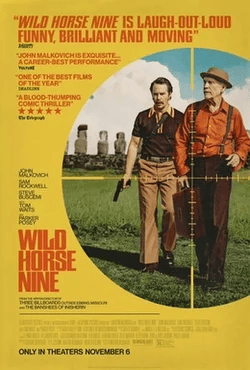
Like Sam Shepard’s True West, which John Malkovich starred in alongside Gary Sinise in 1984, Wild Horse Nine is indeed a downbeat Western if what one means by that form is a sad or melancholic study of the cowboy. Chris Carlisle, a dying CIA agent with Texas blood on his hands, is certainly the equivalent of a contemporary cowboy.
Set on Easter Island, just off the coast of Chile, Wild Horse Nine takes viewers to the edge of the Western Hemisphere as understood by its CIA station chiefs in 1973.
Surrounded by the crumbling stone faces of the deceased high chiefs of the Rapa Nui people, the cancerous Carlisle, played by Malkovich, and his straight man, Lee Chesterfield, played by Sam Rockwell, are in the midst of plotting a coup and Carlisle’s suicide when the film begins.
Before the CIA blowback attacks on Washington, D.C., and New York City on September 11, 2001, there was an agency-staged overthrow of Salvador Allende and his socialist government on September 11, 1973. Imagine being one of the government agents tasked with killing the democratically elected John F. Kennedy on November 22, 1963, and then also being assigned the overthrow of Allende ten years later.
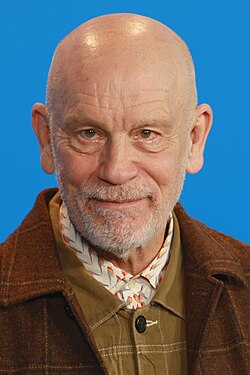
Imagine taking your pay from the taxes of people who believe you are protecting their democracy rather than destroying it every chance you get. Such haunted and cynical men existed (see David Atlee Phillips and E. Howard Hunt). So put yourself in Carlisle’s shoes. Might a bit of melancholy descend as you stare into the rock oculus of the Allende of a thousand years ago?
Chris’s sidekick, like a white Tonto, wears a sincere supportive face and a weighted name. Lee was the name of Malkovich’s character in True West and was also the name of the lone communist nut (Lee Harvey Oswald) the American establishment blamed for the killing of JFK.
Plotwise, Lee is on Easter Island to assist in the suicide of Chris, who is Catholic and, therefore, cannot execute himself. Or has Chris been brainwashed into accepting this altruistic hell-dodging final narrative by his sidekick?
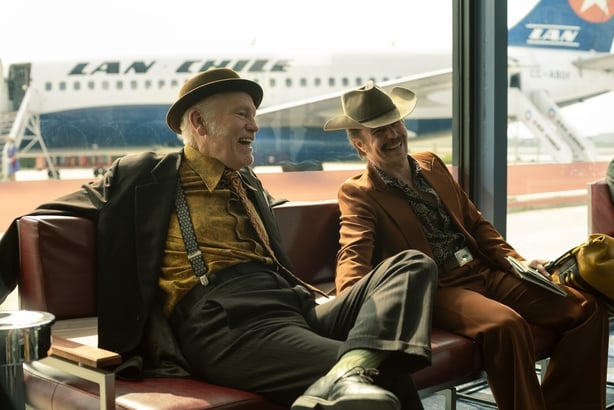
Is Lee’s true function compassionate assisted suicide or the cold-blooded murder of his colleague, as instructed by MJ, the agency head played by Steve Buscemi?
This question haunts the film with a resonant ambiguity. Chris, like MJ, is addicted to opioids (morphine) and, like so many American commanders-in-chief, he is plagued by a dementia that softens the viewer’s resistance to his history of violence. But the dementia motif and its fog of war also complicates one’s notion of Lee’s complicity and Chris’s agency.
And so Wild Horse Nine takes us on a southwestern ride through an American psyche that has been addled by time, guilt and dislocation, but also desire.
Just prior to the September coup that led to the deaths and disappearances of thousands of Chileans, Chris and Lee encounter Monica (played by Mariana di Giralamo) and Alicia (played by Ailin Salas) at an airport, and Chris confesses the agency’s plans to the two young Chilean women who, ostensibly, support Allende.
They meet up with the women again on Easter Island, where Chris seems drawn to Monica and approaches her on a beach, but rather than take us on a lecherous excursion, Martin McDonagh’s film takes the high road and reveals Chris’s desire for Monica to be much more like that of a man seeking a priest. Chris has a week to live. Maybe more. Maybe less. He wants to tell the truth before he dies.
And maybe not just for himself.
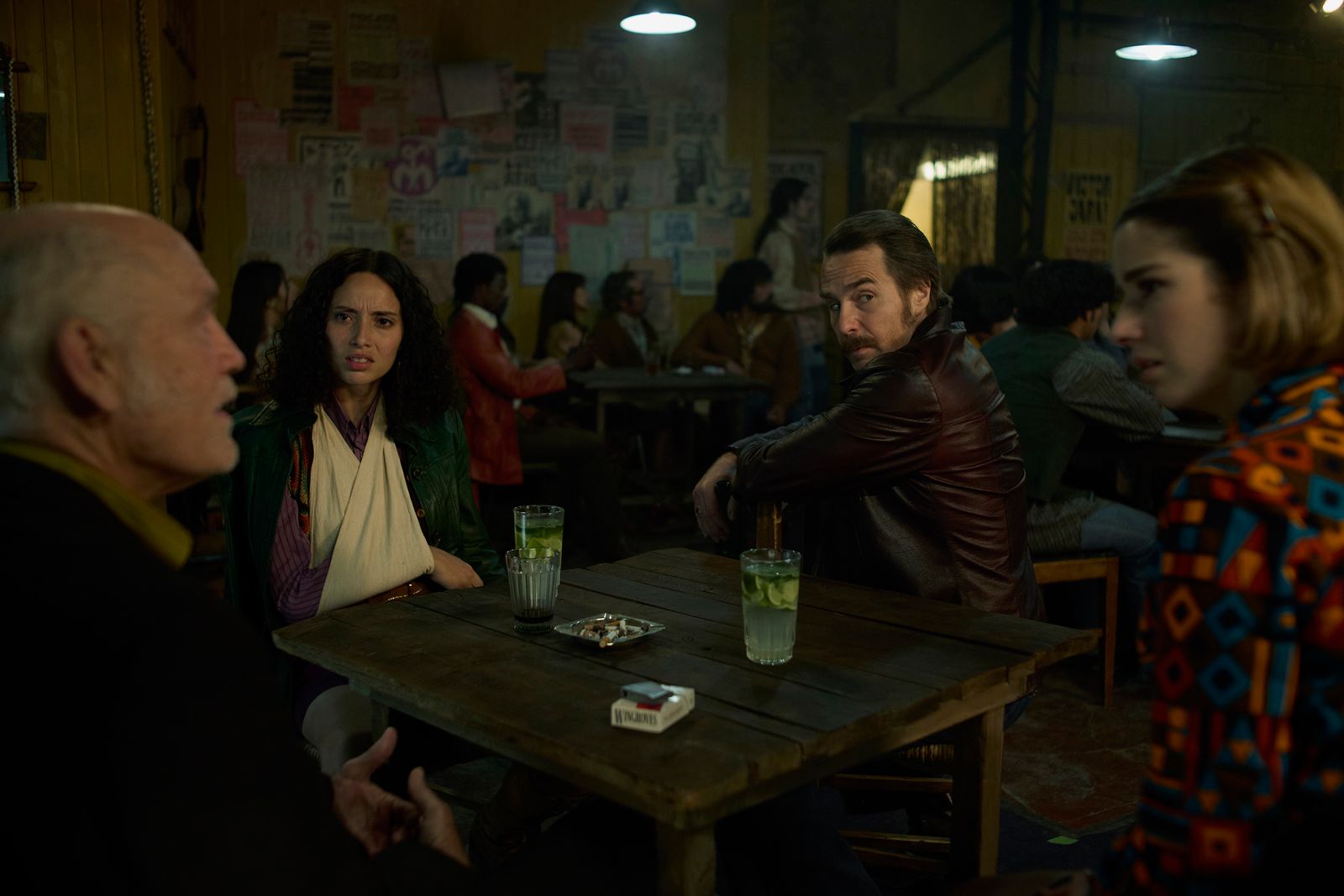
The most cynical viewers of Wild Horse Nine may see this film as a Hollywood psyop that launders the killers of Kennedy and Allende and alchemizes them into the mentors of the woke anti-fascist resistance of tomorrow. Is this McDonagh’s mission? I doubt it.
Wild Horse Nine is much more than that. McDonagh does a brilliant and visionary job of telling the truth about the 20th-century crimes of the CIA through Carlisle’s wry and protean voice and a nearly subliminal cinematography.
Young viewers who know nothing of the agency’s work in Guatemala, the Congo, Cuba, Dallas, or Chile will walk out of the theater understanding the skeletal outline of those crimes. But with Malkovich’s voice and McDonagh’s touch, the history lesson never feels didactic. Wild Horse Nine is a work of the spirit.
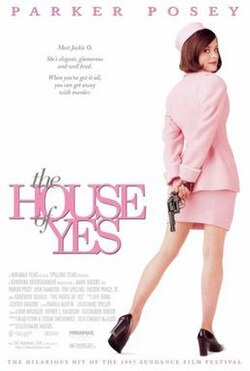
Cameos from Tom Waits and Parker Posey provide illuminating allusive winks for students of cinema. Waits plays Chris’s brother, Jim, a man living alone in the desert who is haunted by the actions of his kin. Posey, who plays Lee’s cuckolding wife, Marge, tackled the JFK assassination before in The House of Yes, a movie about an incestuous pair of siblings who fetishistically role-play the JFK assassination, over and over, dramatizing an American culture’s intergenerational trauma as a result of never giving our 35th president the proper burial a truthful telling of his murder would provide.
Malkovich has also been here before, starring as a crazed would-be assassin opposite Clint Eastwood in In the Line of Fire.
Like The House of Yes and In the Line of Fire, Wild Horse Nine makes sensible a collective American trauma as it might have been felt by a CIA sniper in 1973, but it does so in a film released in 2026 while America’s Congress, once again, takes a stab at investigating the Kennedy killing. What’s the difference between these JFK-haunted movies?
Place.
Something there is about Easter Island and those stone faces of the chiefs of yesteryear. Days after watching Wild Horse Nine, I keep thinking about Percy Bysshe Shelley’s “Ozymandias.” Shelley’s poem, like Wild Horse Nine, invites the audience into the healing and haunting lens of the long view.
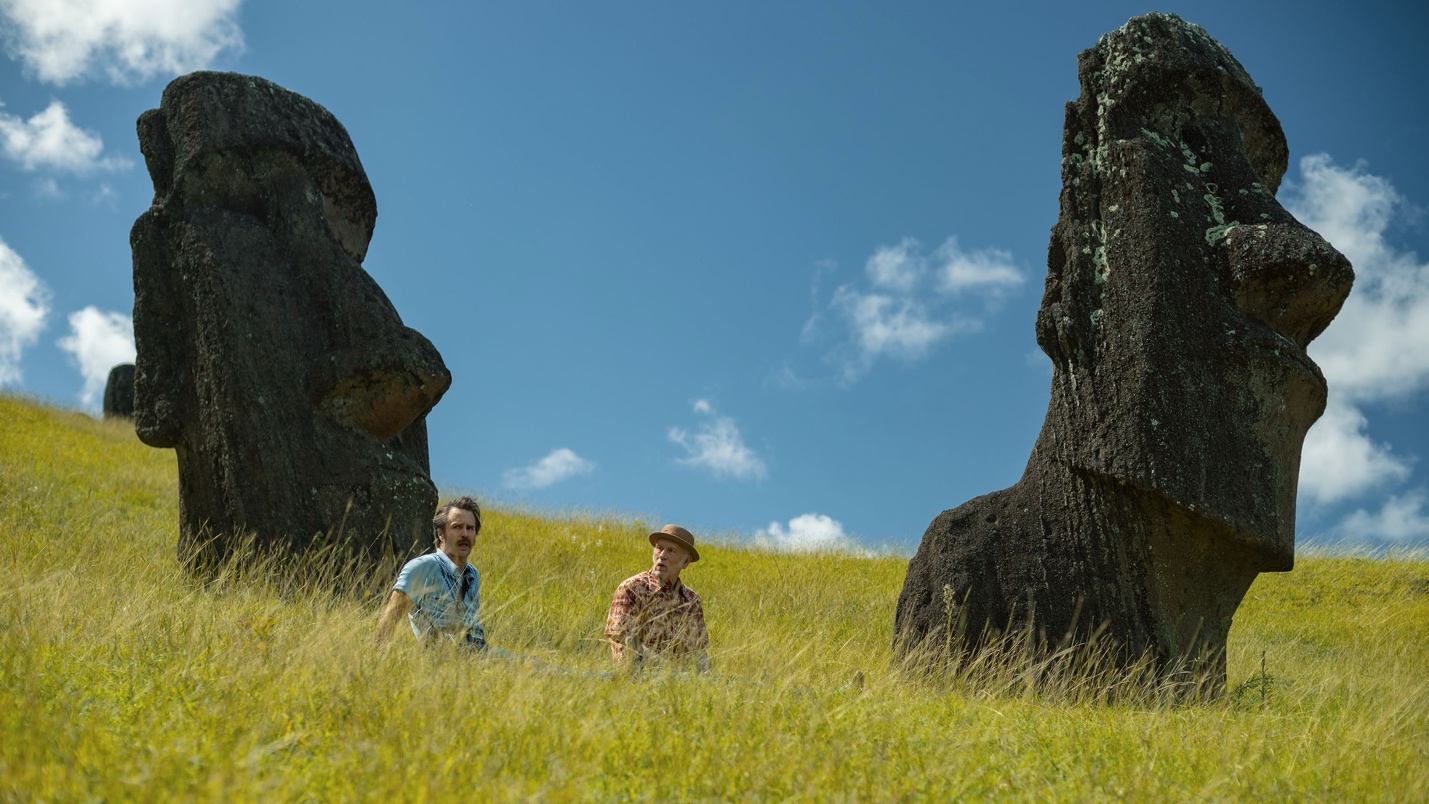
On an island populated by wild horses and these “lifeless things”—these stone mugs of the “king of kings”—Chris confronts the murder of JFK, the imminent assassination of Allende, his own mortality, and the legacies of these indigenous leaders from a thousand years ago.
There is something so sedating and jarring about confronting the horror of American history while surrounded by reminders that we, too, shall pass.

CovertAction Magazine is made possible by subscriptions, orders and donations from readers like you.
Blow the Whistle on U.S. Imperialism
Click the whistle and donate
When you donate to CovertAction Magazine, you are supporting investigative journalism. Your contributions go directly to supporting the development, production, editing, and dissemination of the Magazine.
CovertAction Magazine does not receive corporate or government sponsorship. Yet, we hold a steadfast commitment to providing compensation for writers, editorial and technical support. Your support helps facilitate this compensation as well as increase the caliber of this work.
Please make a donation by clicking on the donate logo above and enter the amount and your credit or debit card information.
CovertAction Institute, Inc. (CAI) is a 501(c)(3) non-profit organization and your gift is tax-deductible for federal income purposes. CAI’s tax-exempt ID number is 87-2461683.
We sincerely thank you for your support.
Disclaimer: The contents of this article are the sole responsibility of the author(s). CovertAction Institute, Inc. (CAI), including its Board of Directors (BD), Editorial Board (EB), Advisory Board (AB), staff, volunteers and its projects (including CovertAction Magazine) are not responsible for any inaccurate or incorrect statement in this article. This article also does not necessarily represent the views the BD, the EB, the AB, staff, volunteers, or any members of its projects.
Differing viewpoints: CAM publishes articles with differing viewpoints in an effort to nurture vibrant debate and thoughtful critical analysis. Feel free to comment on the articles in the comment section and/or send your letters to the Editors, which we will publish in the Letters column.
Copyrighted Material: This web site may contain copyrighted material the use of which has not always been specifically authorized by the copyright owner. As a not-for-profit charitable organization incorporated in the State of New York, we are making such material available in an effort to advance the understanding of humanity’s problems and hopefully to help find solutions for those problems. We believe this constitutes a ‘fair use’ of any such copyrighted material as provided for in section 107 of the US Copyright Law. You can read more about ‘fair use’ and US Copyright Law at the Legal Information Institute of Cornell Law School.
Republishing: CovertAction Magazine (CAM) grants permission to cross-post CAM articles on not-for-profit community internet sites as long as the source is acknowledged together with a hyperlink to the original CovertAction Magazine article. Also, kindly let us know at info@CovertActionMagazine.com. For publication of CAM articles in print or other forms including commercial internet sites, contact: info@CovertActionMagazine.com.
By using this site, you agree to these terms above.
About the Author

M.C. Armstrong is an award-winning writer of both fiction and non-fiction. The Brooklyn Rail named his 2020 memoir, The Mysteries of Haditha (Potomac Books, 2020), one of the best books of the year.
An account of his time as an embedded journalist with the Navy SEALS in Al Anbar Province, Iraq, The Mysteries of Haditha emerged from Armstrong’s regularly filed stories for his hometown newspaper, The Winchester (VA) Star, over the course of 2008.
“Veteran Activism and the Global War on Terror,” his doctoral dissertation (University of North Carolina-Greensboro, 2021), which examines post-9/11 veteran-activists, was published by Bloomsbury in 2024.
Armstrong is also the author of the YA thriller, American Delphi, and the forthcoming investigative memoir, Murder Most Foul, which is a study of Lyndon Johnson’s role in the assassination of John F. Kennedy. When he’s not teaching English literature or writing, Armstrong can be found performing with the rock band, Viva la Muerte, as its guitarist and lead singer-songwriter.
M.C. can be reached at matty8a@gmail.com.







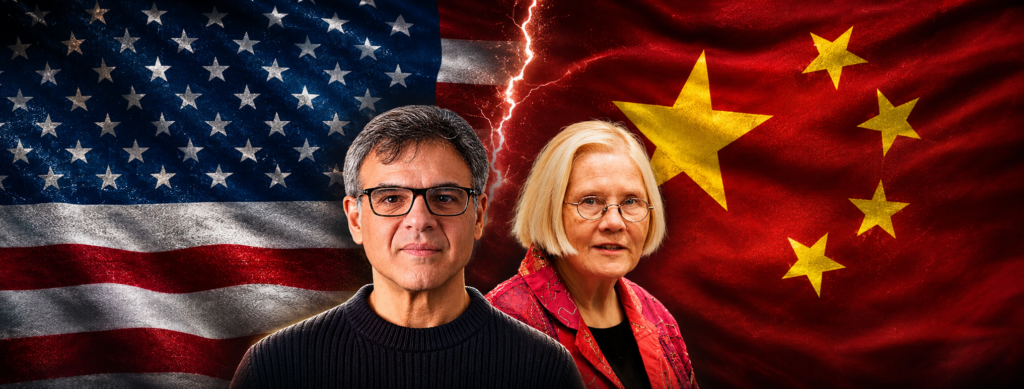
 Radhika Desai is a Professor of Political Studies at the University of Manitoba, Winnepeg, Canada, Director of its Geopolitical Economy Research Group, and Convenor of the International Manifesto Group. Ms. Desai is an author of multiple books, including Geopolitical Economy(2013) and her most recent Capitalism, Coronavirus and War(2022). Ms. Desai hosts a fortnightly show, Geopolitical Economy Hour on the Geopolitical Economy Report website.
 Yan Pan is a Chinese PhD researcher at LUT University, Finland. Her work examines the political economy of China’s technological and industrial development, with a particular focus on the industrialization and governance of neurotechnology in China. Her research concerns industrial policy models for future industries in Chinese and Global South contexts. Prior to her PhD, she researched educational reforms and structural change in labor demand in China.
 Ken Hammond is professor emeritus of East Asian and Global History at New Mexico State University. He has lived and worked in China from time to time since 1982. A lifelong political activist, he is a member of the Party for Socialism and Liberation.