The National Endowment for Democracy (NED) is a CIA off-shoot that was founded in 1983 with the purpose of advancing political propaganda and U.S. regime-change operations.
The NED routinely supports dissidents and highlights human rights abuses occurring in countries that are geopolitical rivals of the U.S., like China, Iran and Russia, or socialist countries that have tried to assert control over their natural resources, like Cuba, Venezuela and North Korea.
Meanwhile, the NED is silent about the human rights abuses that occur in countries like Ukraine, Israel, Bangladesh, Kenya, Rwanda, Syria or others whose governments are supported or have been installed by the U.S.
Many of the dissidents that the NED honors advocate for sanctions, bombing and war on their own countries. Some were even indicted for inciting insurrection or terrorist acts.
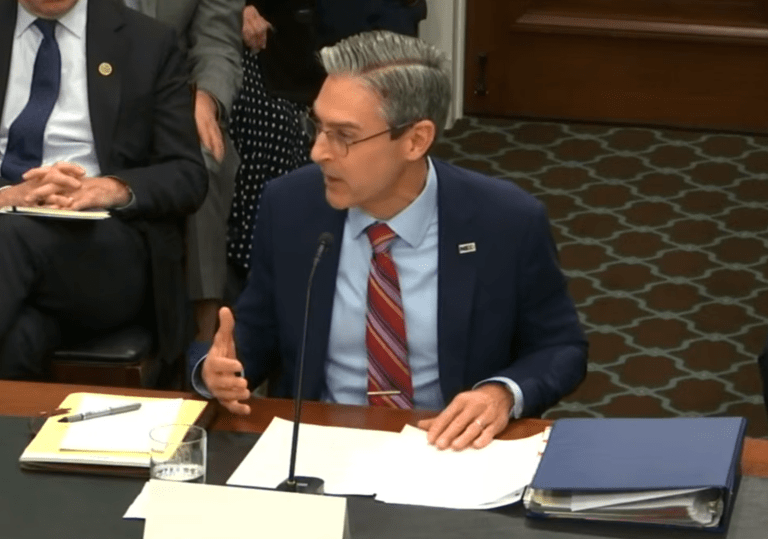
The NED’s function as a front for CIA covert operations was apparent in February when NED President Damon Wilson—who was invited to give the 2026 commencement address at the University of Maryland School of Public Policy—bragged to a House committee about the NED’s aggressive efforts to spark unrest in Iran, including by smuggling Starlink terminals (a satellite technology to ensure secure communication) and fashioning anti-Iran narratives for the media.
Before he could finish the sentence, Wilson was cut off by the ranking member of the House Appropriations Subcommittee on State, Foreign Operations, and Related Programs, Lois Frankel (D-FL), who told Wilson: “You know what, I’m going to interrupt you—we’d better not talk about it.”
In the same congressional hearing, Wilson appeared to take credit for the election of a right-wing government in Bolivia to “prevent lithium from falling under Moscow’s control” and revealed that NED is funding and training media in Nicaragua with an eye toward undermining the country’s socialist-oriented Sandinista government.[1]
Continuing the long history of intimate ties between the CIA and academia[2], many students at prestigious universities, sadly, will be taught by professors this academic year who are affiliated with the NED.
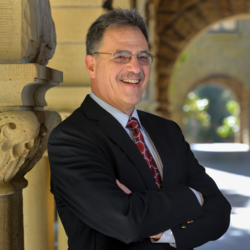
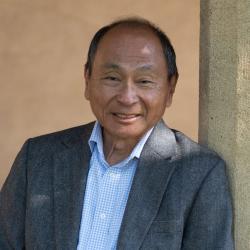
Stanford’s Freeman Spogli Institute for International Studies (FSI) has on its faculty, for example, Larry Diamond, the editor of the NED’s in-house Journal of Democracy, who was also a former senior adviser to the Coalition Provisional Authority (CPA) in Iraq, and Francis Fukuyama, a neo-conservative ideologue and former State Department staffer who was on the NED’s Board, edited and frequently contributed to the NED journal and received the NED’s 2010 Democracy Service Medal.
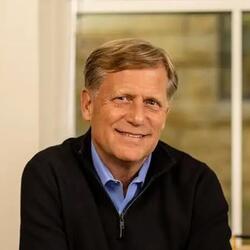
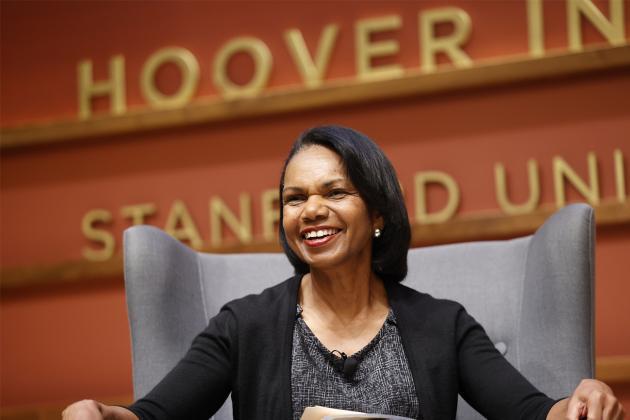
At least seven additional faculty who teach at FSI are, or have been, affiliated with the NED,[3] including Condoleezza Rice, the Secretary of State during the Iraq War who served on the Journal of Democracy’s editorial board,[4] and Michael McFaul, former U.S. Ambassador to Russia who currently sits on the Journal of Democracy’s editorial board. Like Rice, McFaul is known for his hard-line positions towards Russia and has advocated for the censorship of anyone who questions U.S. military and economic aid to Ukraine.[5]
In 2025, Stanford’s Walter H. Shorenstein Asia-Pacific Research Center gave an award to NED-backed media outlet Netra News, a media outlet that helped advance a regime-change operation in Bangladesh that ousted a leader who had established strong relations with China and resisted U.S. efforts to establish a military base on a strategic island off its coast.

Stanford’s ties to the NED, unfortunately, are no anomaly in higher education today. A review of the NED’s current Board of Directors finds that three are deans at elite universities:
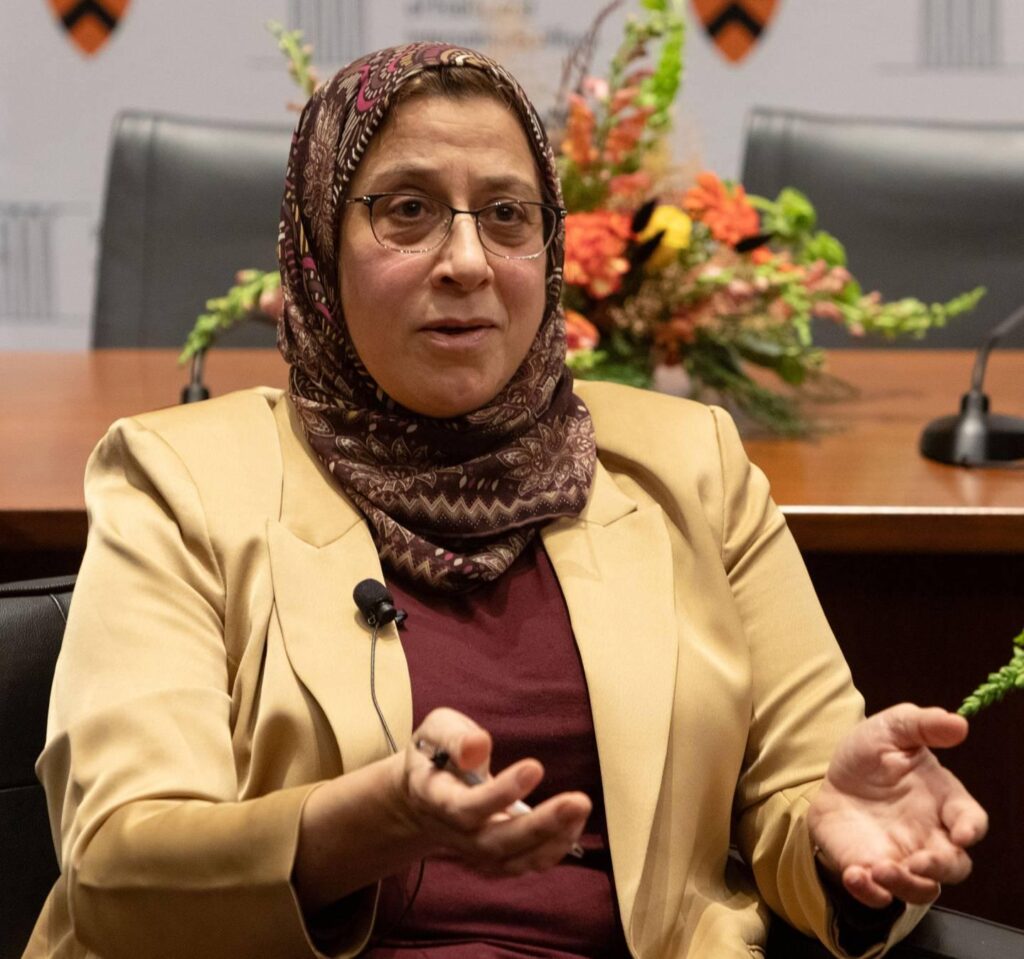
a) Amaney Jamal of Princeton’s School of Public and International Affairs; b) Alyssa Ayres, Elliott School of International Affairs at George Washington (one of her predecessors in that position, Harry Harding, was on the editorial board of the Journal of Democracy in the 1990s); and c) Scott Taylor at the Frederick S. Pardee School of Global Studies at Boston University, which has a history of employing CIA agents as professors.[6]
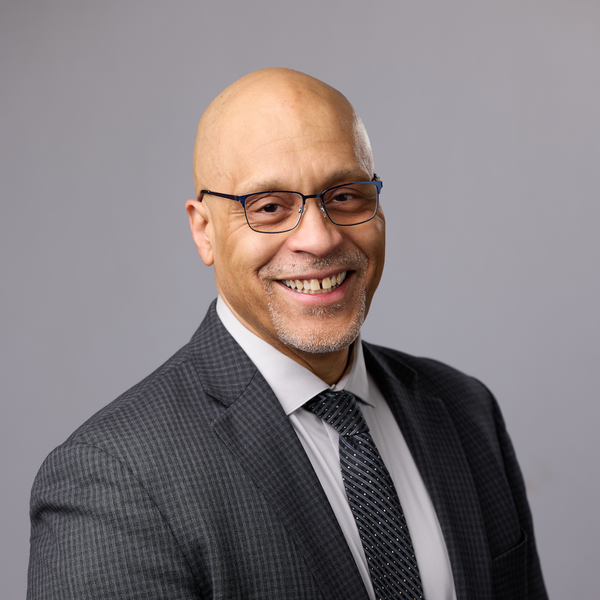
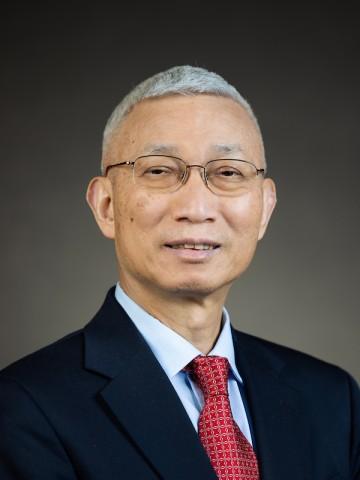
Two NED Board members are also professors: Victor Cha, Georgetown University, and Minxin Pei, the Pritzker Professor of Government at Claremont McKenna College.
Additionally, Elizabeth Economy is a senior fellow and co-chair of the Program on the U.S., China, and the World at the Hoover Institution at Stanford[7] and, until May 2026, was on the Board of Managers at Swarthmore College.[8]
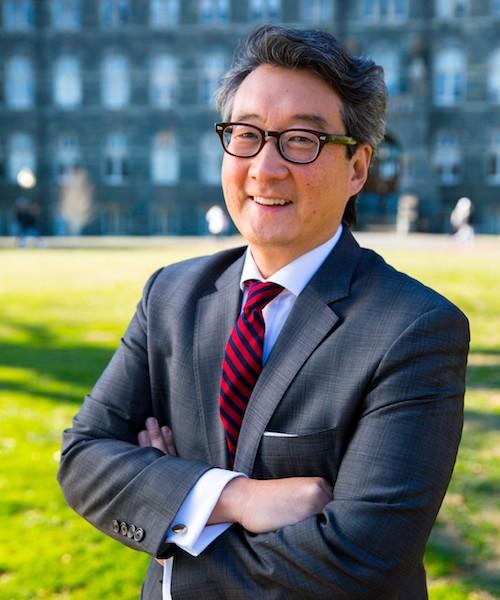
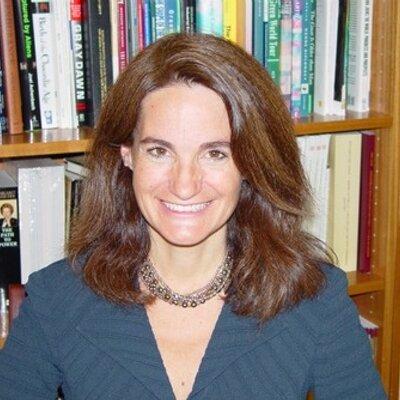
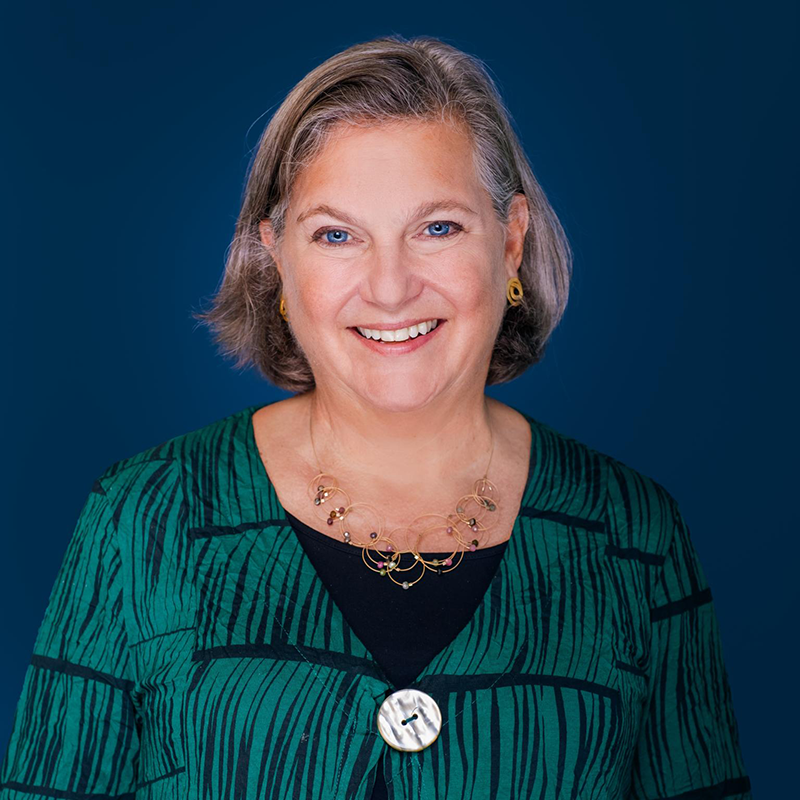
NED Board member Victoria Nuland, a key figure in the 2014 U.S. backed Maidan coup in Ukraine that empowered far-right extremists and led to a deadly war with Russia, was appointed in March 2024 as a Professor of Practice of International and Public Affairs at Columbia University’s Harriman Institute of Russian, Eastern Eurasian and Eastern European Studies.[9] Covert Geopolitics called Nuland the “Lady Macbeth of perpetual war,” who “promoted a foreign policy of intervention, coups, proxy wars, aggression, and occupation…in Afghanistan, Iraq, Libya, Syria, and Ukraine.”
A review of the scholarship of past and present NED Board member faculty shows that it dovetails with the worldview and agenda of the NED, presenting biased analysis that demonizes American geopolitical adversaries and offers support for capitalist and imperialist policies.
Minxin Pei,[10] for example, spotlights crony capitalism, political autocracy and alleged totalitarianism in China, while Scott Taylor emphasizes the importance of big business and private sector investment in Africa.[11]
Director of Asian affairs at the National Security Council (NSC) under George W. Bush, Victor Cha is a hawk on North Korea whom the former Foreign Minister of South Korea accused of advancing a “simplistic history” of the Korean conflict that demonized North Korea.[12]
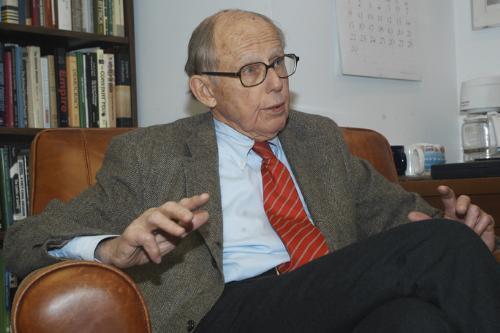
Alyssa Ayres worked for the CIA-linked Asia Foundation and McLarty & Associates and served as Deputy Assistant Secretary of State for South and Central Asian Affairs; while Amaney Jamal is a protégé of CIA-linked Harvard professor Samuel P. Huntington, an arch-conservative and imperialist targeted by student protesters during the Vietnam era who lectured frequently under the NED’s aegis in the 1990s and wrote for The Journal of Democracy.[13]
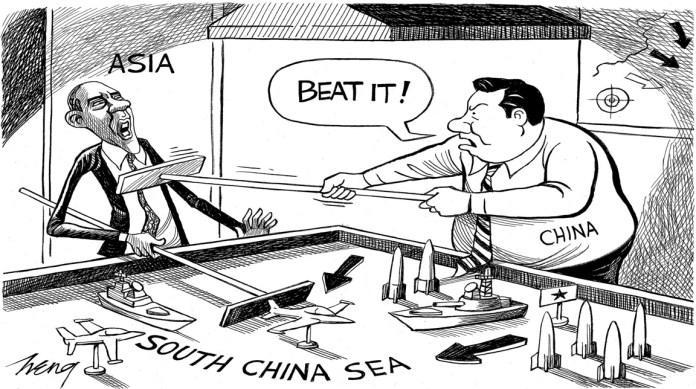
Elizabeth Economy fits in well with the NED professors in advancing anti-China themes in her writings, and in supporting a U.S. military buildup in the Asia Pacific and the Trans-Pacific Partnership (TPP), a corporate-friendly free trade agreement introduced as a pillar of Obama’s “pivot to Asia” policy that excluded China and intended to isolate it economically.
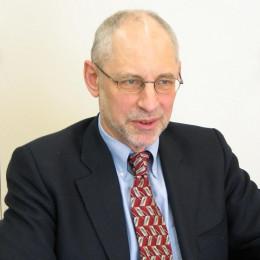
Andrew J. Nathan is a former NED Board member and member of the editorial board of the NED’s journal, who is the Class of 1919 Professor of Political Science at Columbia University.
He is the former chair and current board member of Human Rights in China, an NED funded group that uses human rights as a political weapon against China (causing China to sanction it), and, with Larry Diamond, a member of the board of the Hong Kong Democracy Council, which supported a U.S.-backed color revolution against China in Hong Kong.
An article that Nathan wrote for the Journal of Democracy characteristically examined China’s supposedly deleterious effect on democracy around the world and manipulative nature of its global propaganda effort.
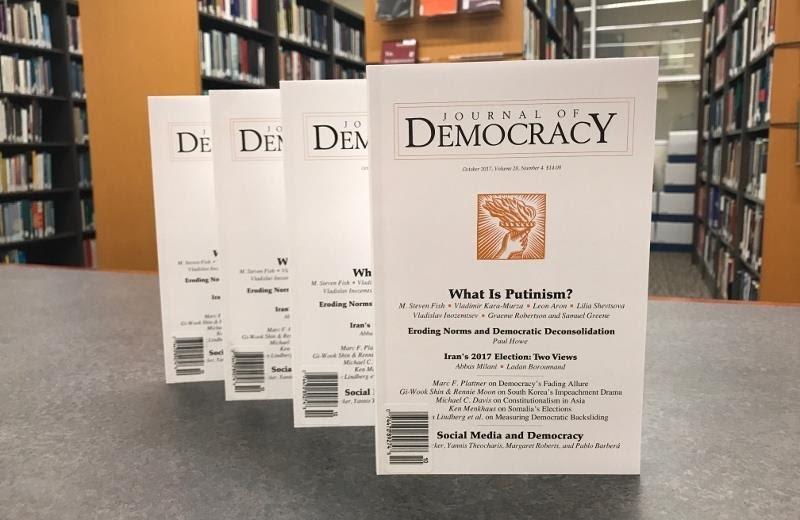
Founded in 1990, the NED’s Journal of Democracy[14] generally advances the NED/State Department line on global affairs.
Obscuring the aggressive U.S. drive to control natural resources and expand its network of military bases, its articles routinely vilify left-wing governments and celebrate U.S. regime-change operations for their democratizing potential and governments that were empowered by them.
A February 2026 article, “Venezuela’s Best Chance for Democracy” characteristically made it seem like the Trump administration’s kidnapping of Venezuelan President Nicolás Maduro—in a brazenly illegal act that killed more than 100 people—brought new hope for Venezuela’s democratization.[15] A previous Journal of Democracy article written by Javier Corrales, Dwight W. Morrow 1895 Professor of Political Science at Amherst College,[16] and Dorothy Kronick, assistant professor at the Goldman School of Public Policy at the University of California, Berkeley,[17] aims to affirm CIA/NED/State Department talking points that Maduro stole Venezuela’s 2024 election and that Edmundo González, whose CIA links and extreme right-wing background is not discussed in the article, won in a landslide, which does not appear to be true.[18]
Advancing a cartoonish view of world affairs, the Journal of Democracy makes it seem like the world is divided between good U.S. backed democrats and bad authoritarians—as American Cold Warriors saw things in the 1950s McCarthy era. The sanctions and covert warfare that the U.S. adopts are rarely if ever discussed or blamed for causing hardships in targeted countries whose problems are solely blamed on their own leaders.[19]
Most of the articles are rooted in an ethno-centric, “end of history” worldview,[20] which assumes that U.S. and other Western governments are morally superior and that countries that adopt different political systems that draw on their own traditions and are designed to overcome the legacies of Western colonialism and neo-colonialism will only show progress if they become more like the U.S.[21]
The two editors of the Journal of Democracy are: Harvard Professor of Government Steven Levitsky, and University of Toronto[22] political scientist Lucan Way, who holds the title of distinguished professor of Democracy ironically enough.
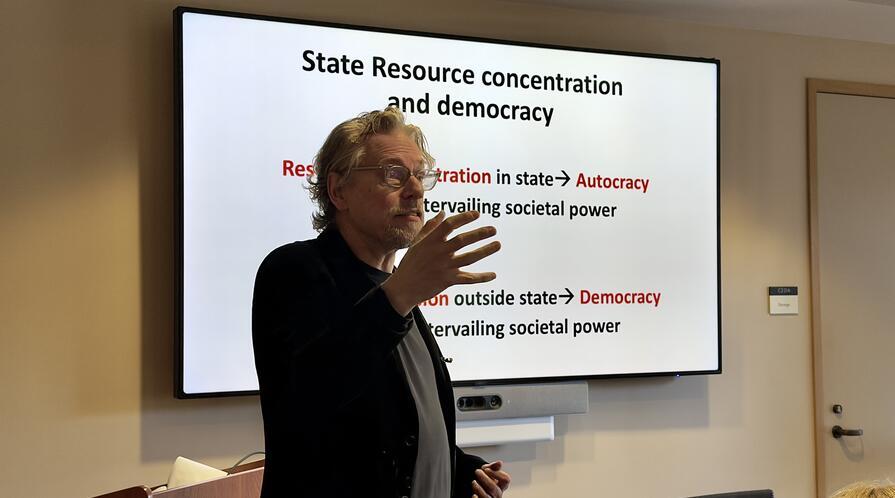
In 2022, Levitsky and Way co-authored a book called Revolution & Dictatorship: The Violent Origins of Durable Authoritarianism (Princeton University Press), which analyzes countries that fall into the crosshairs of U.S. foreign policy like Cuba, China, Vietnam, Iran and Soviet Russia. Echoing their depiction by the U.S. State Department and CIA, the revolutions that took root there are presented negatively, with little attention to their success in overcoming colonialism and neo-colonialism, in fueling industrialization and in combating poverty, advancing women’s rights and improving living standards.
Levitsky and Way also fail to adequately address how U.S. counter-revolutionary policies and subversion helped facilitate more authoritarian methods and how the durability of the regimes that they analyze was in part linked to the establishment of local governing councils and community projects that enhanced citizen political engagement at a time this was markedly declining in perceived model Western democracies.[23]
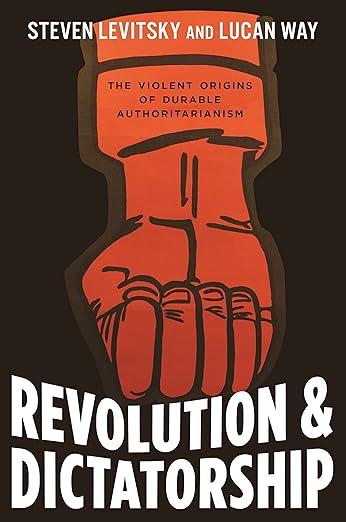
In a piece centered on Latin America, Levitsky characterized Cuba, Venezuela and Nicaragua as authoritarian states, though the latter two countries had elections that were internationally sanctioned and these were countries that adopted leftist policies designed to redistribute wealth and to establish control over their natural resources.
For his part, Lucan Way promotes the right-wing theory that, “when economic resources are concentrated in the hands of the state, autocracy becomes more likely”—an argument favored by U.S. corporations which do not want their assets nationalized.[24]
Way’s extreme views were apparent in his condemnation of Barack Obama and Angela Merkel for an allegedly “soft response to Russia’s 2014 invasion” of Ukraine that, Way says, “paved the way to the current horror in Ukraine.”
A big problem with this statement is that Russia did not invade Ukraine in 2014, rather, Obama and Merkel supported what the private intelligence agency Stratfor called a coup in Ukraine at that time. The latter eventually precipitated Russian intervention in eastern Ukraine to assist the beleaguered people there who were subjected to violent Ukrainian government attacks carried out with U.S weapons that Way fervently supported.[25]
Way claims that the Ukraine war has given Western democracies a “renewed sense of unity” and holds the potential for weakening the emerging “authoritarian international”—which somehow does not include Ukraine when its government banned 17 parties, killed its opponents, censored the press and held an estimated 20,000 political prisoners. [26]
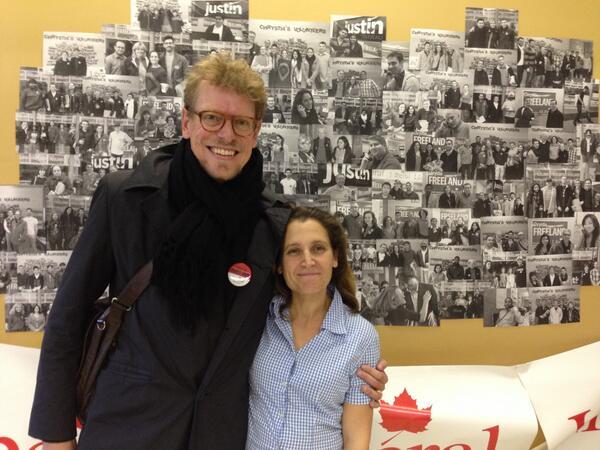
Adopting the language of the new McCarthyism, Way wrote on X that Pope Francis was a “Russian stooge.” Way happens to be best friends with Chrystia Freeland, Canada’s former Deputy Prime Minister, who is the granddaughter of a Ukrainian Nazi and helped get Canada to become a major weapons supplier to Ukraine.
Amazingly, for someone who claims to champion democracy, Way co-wrote an article in May 2024 in the Journal of Democracy entitled “Why Ukraine’s Elections Can Wait.”[27] Four years earlier, Way wrote an article in the same journal praising a color revolution in Belarus whose support from the NED and other U.S. government agencies he predictably failed to mention.
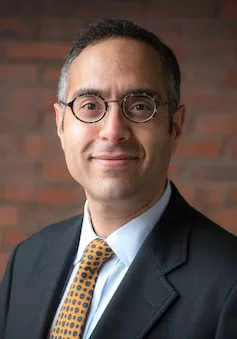
The NED journal’s co-editor, Tarek Masoud, is the Ford Foundation Professor of Democracy and Governance at Harvard University’s John F. Kennedy School of Government and faculty director of the Kennedy School’s Middle East Initiative.
In April 2025, Masoud published an article in the Journal of Democracy expressing hope that Syria would achieve democracy under an al-Qaeda-linked leader imposed in a U.S. regime-change operation (Ahmed al-Sharaa) who was then engaged in ethnic-cleansing operations targeting Shia Alawites and Christians that Masoud ignored.
Masoud contrasted the supposed ray of sunshine represented by Ahmed al-Sharaa, who had been on the State Department’s terrorist watchlist not long before he took power, with his predecessors, Bashar and Hafez al-Assad, “the butchers of Damascus” according to Masoud, who allegedly “kept Syria in a terrified thrall for over half a century.”
In fact, public opinion polls showed considerable support for the Assads, who adopted policies in the Syrian interest when compared with al-Sharaa, who has allowed the U.S. and Israelis to use Syrian air space to illegally bomb Iran and attack Lebanon.[28]
Students at Harvard are fed the official narrative on U.S. foreign policy by professors like Masoud who distort world affairs by a) vilifying U.S. enemies like the Assads, b) valorizing U.S. allies like al-Sharaa; and c) failing to address the imperialistic motives driving U.S. foreign policy in countries like Syria, such as the quest for access to natural resources, including oil and military bases.
The horrific human cost of U.S. covert warfare and sanctions like in Syria, whose living standard was thrust back to the Middle-Ages during the CIA’s Operation Timber Sycamore[29], is also never addressed by Masoud and his NED/Ivy League colleagues who fit to a tee the description of empire propagandists laid out in an article by Caitlin Johnstone.
According to Johnstone, empire propagandists “pretend the ‘authoritarian’ measures we’ve seen in nations like North Korea, Cuba and Venezuela happened completely separately from the western empire’s efforts to infiltrate, subvert and take over those countries,” and “pretend the violence of empire-targeted governments happens in a vacuum, completely divorced from western imperial agendas”—which the NED professors all do.[30]
According to research conducted for this article, at least 17 members of the editorial board of the NED’s Journal of Democracy hold faculty appointments at top universities across the U.S. or in Europe.[31]
Students are thus paying more and more money to learn from professors who are not real scholars but propagandists with a world view out of the 1950s’ McCarthy era and who are affiliated with an intelligence outfit that journalist Stephen Kinzer said should be rightfully termed “the National Endowment for Attacking Democracy.”
Members of the Journal of Democracy’s editorial board include:

M. Steven Fish, a tenured professor of political science at the University of California at Berkeley, who wrote an article in the Journal of Democracy analyzing Putinism as a “challenge to the Western democratic community,” which repeated discredited allegations about Putin’s “brazen interference” in the 2016 U.S. election. Elsewhere, Fish condemned Russia for invading Crimea when Crimeans voted overwhelmingly to rejoin Russia, misleadingly called eastern Ukrainians who sought autonomy from Ukraine after it passed discriminatory language laws “separatists,”[32] and accused Russia of supplying weapons to shoot down a Malaysian aircraft (MH-117) that independent investigators determined could only have been shot down by Ukraine through air-to-air missiles.[33]
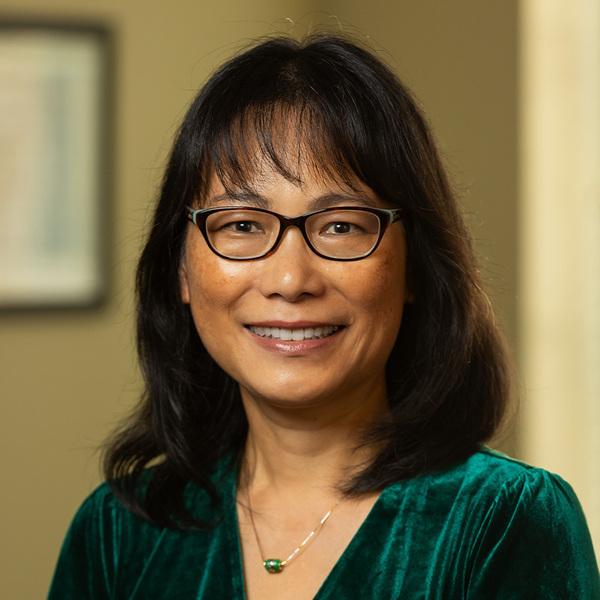
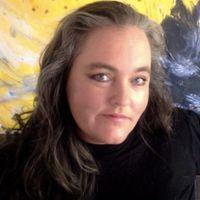
Victoria Tin-bor Hui, Associate Professor of Political Science at the University of Notre Dame, who worked to support Hong Kong’s NED-backed “color revolution” and whose scholarship has a strong anti-China flavor.[34] In January 2025, Tin-bor Hui published an article in the Journal of Democracy celebrating Jimmy Lai, billionaire leader of Hong Kong’s “color revolution” who has been described as the “Rupert Murdoch of Asia,”[35] was a close friend of famed right-wing economist Milton Friedman, had ties with U.S. naval intelligence and the CIA, and coordinated with neo-conservatives in Washington like John Bolton and Mike Pompeo. Protesters outside Lai’s home denounced him as a “running dog” of Washington and accused him of national betrayal by “unleashing chaos” in Hong Kong—which was reported on in The Grayzone but not, unsurprisingly, by Tin-bor Hui.[36]
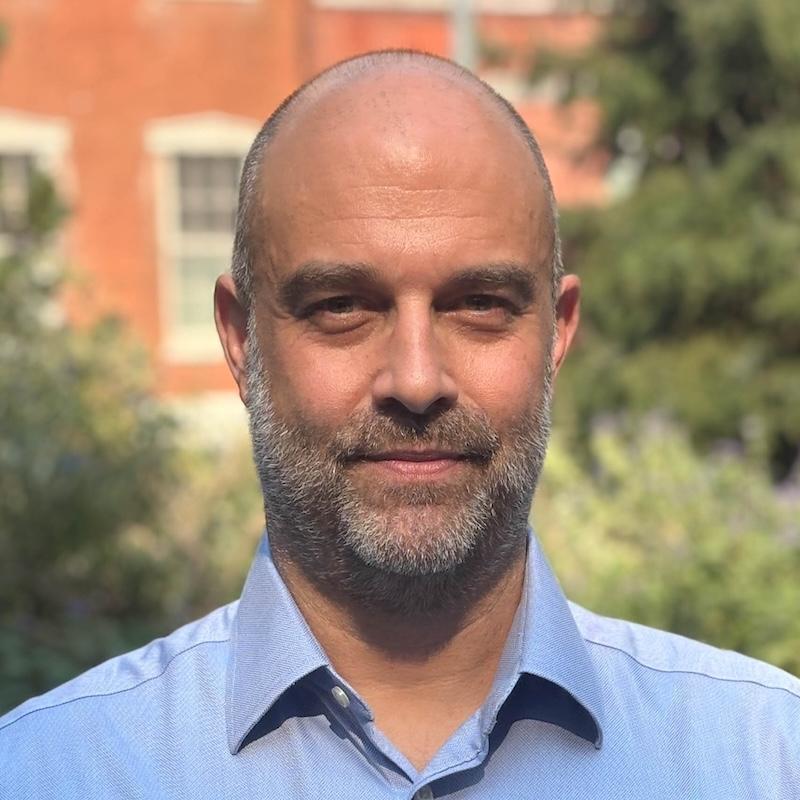
Joshua Tucker, Director of the Jordan Center for the Advanced Study of Russia at New York University, who co-authored a study about Ukrainian political attitudes that equated Russian news—but not U.S. or Ukrainian news—with “misinformation.” Tucker also promoted the discredited claim—used to build public support for a proxy war on Russia via Ukraine—that Russia interfered in the 2016 U.S. election.[37]
Contributors to the NED’s Journal of Democracy[38] include:

Serhii Plokhy of Harvard, who wrote an article in the April 2025 issue that advocated for the U.S. to support regime change in Russia and arm Ukraine’s neo-Nazi-infested government—which Plokhy claims is a model democracy. Plokhy presented Ukraine as a modern-day David battling Goliath in the article, which obscures the fact that Ukraine was armed by the wealthiest and most rapacious countries in the world, which were using it to weaken Russia so they could control Central Asia’s rich oil and gas reserves.
Kathryn Stoner, a professor of political science at Stanford, who wrote a paean to Russian opposition politician Alexei Navalny that failed to mention his comparison of immigrants to cockroaches, and calls the Nazi-infested government of Ukraine, the “beachhead for global democracy.”[39] Like other NED professors, her analysis of the war in Ukraine ignores scholarship like that by Ivan Katchanovski, a professor at the University of Ottawa, which shows how far-right sectors in Ukraine, backed by the U.S., engineered a coup d’état in February 2014 that gradually drew the Russians into a conflict Stoner falsely presents as resulting from unprovoked Russian aggression.
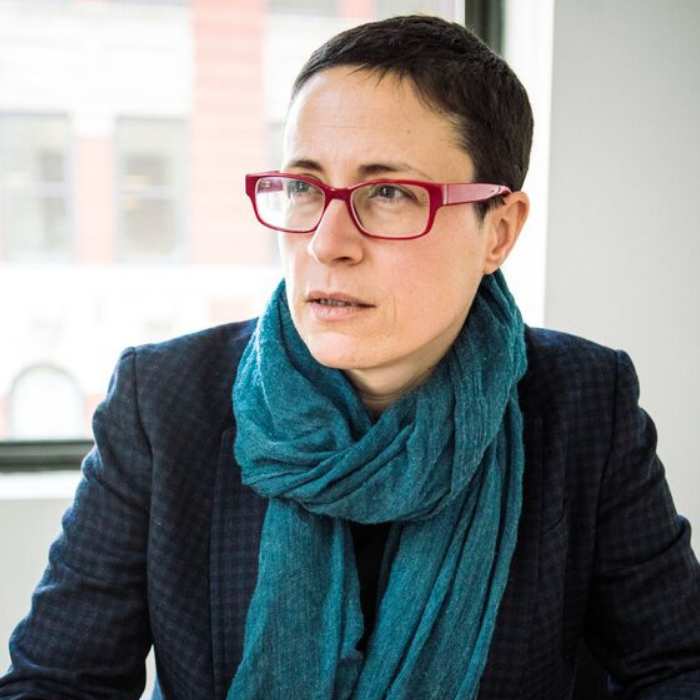
Jessica Pisano, a professor at the New School in New York who wrote of Ukrainian President Volodymyr Zelensky’s “inspiring wartime leadership.” This inspiring leadership involved press ganging Ukrainians into service on the front-lines of a suicidal war that has literally destroyed Ukraine. Zelensky’s own press secretary, Iuliia Mendel, said that Zelensky “did not believe that Ukraine was ready for democracy,” had opponents jailed and killed; called for Goebbels style propaganda, persecuted clergymen, and was involved in money laundering schemes. Pisano is a founding member of Decolonizing Eastern European Studies which uses a progressive sounding rhetoric to further Russophobic narratives that brand Russia as a regional colonizing agent while ignoring discussion of U.S. imperialism and its impact in Eastern Europe.
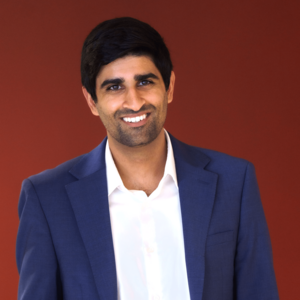
Sharan Grewal of American University, a Princeton Ph.D. who co-wrote an article on the eve of the U.S.-Israeli invasion suggesting that Iran’s government would fall. Grewal predictably left out the fact that the NED had helped set the groundwork for the illegal invasion by triggering “civil society” protests designed to engender a crackdown that could then be played up for propaganda purposes.[40] In a Brookings Institution forum in January 2026, Grewal lauded the NED-backed Iranian protests, and said that “all revolutions seem impossible, until they become inevitable.” What Grewal was really talking about was a counter-revolution backed by a Western imperialist power, which he and his NED colleagues all want so badly for Iran and other countries they write about.
Abbas Milani, director of Iranian Studies at Stanford and a consultant to George W. Bush and Barack Obama, who has written numerous articles in the NED’s Journal of Democracy, and has blamed the Iranian government for the deaths of civilians caused by the U.S.-Israeli bombing of Iran. In an op-ed in The New York Times on March 3, 2026, entitled “The Coming Iranian Revolution,” Milani erroneously predicted that Iranians would overthrow their government. Seventeen years earlier, amidst presidential election protests, Milani called for the imposition of “multilateral and crippling sanctions” on Iran before the U.S. House Committee on Foreign Affairs. Iran’s government, then led by Mahmoud Ahmadinejad named Milani in an indictment as “one of the most important leaders of the opposition” and accused him of being a CIA agent.[41]
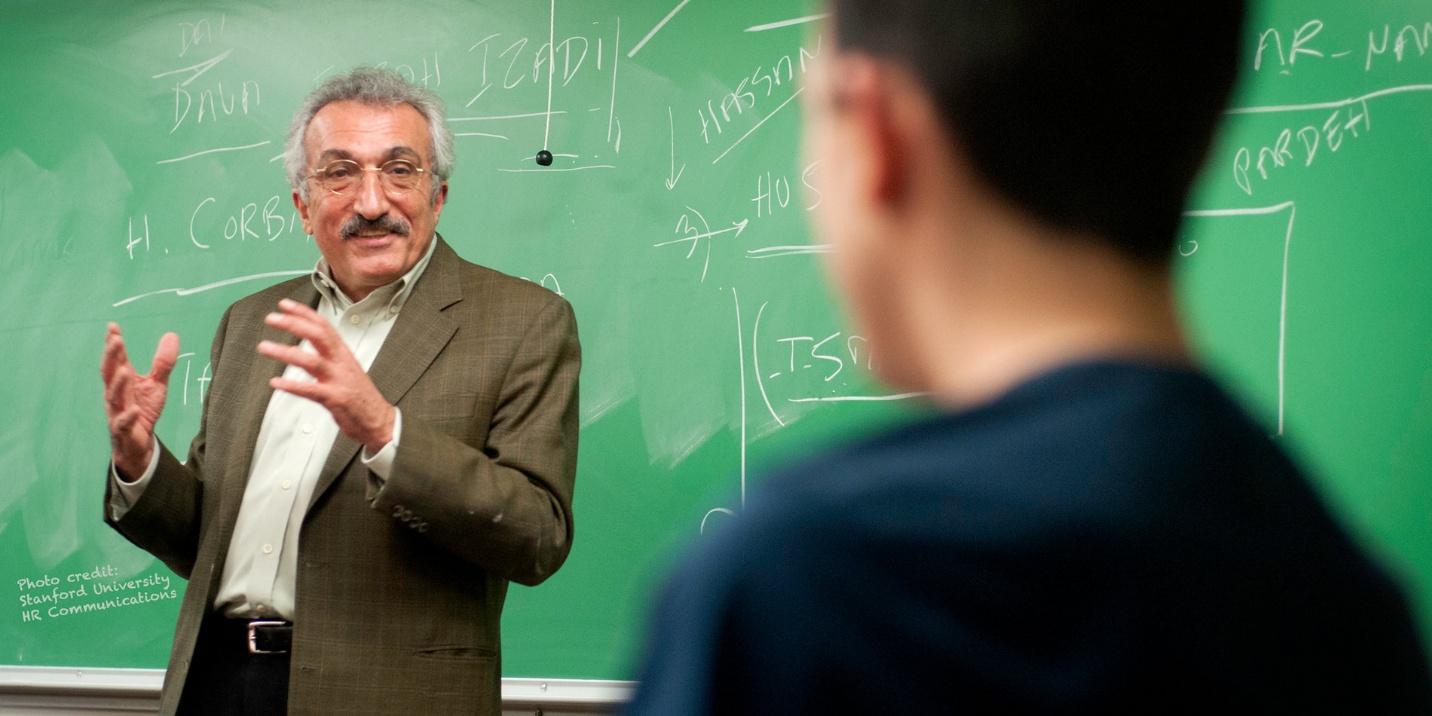
Kanan Makiya, a senior fellow at the Crown Center for Middle East Studies and Professor of Islamic and Middle Eastern Studies at Brandeis University, who left Iraq to study at MIT in the 1960s. Similar to Milani’s wrong-headed prediction about Iran, Makiya predicted in March 2003 that American troops would be “greeted with sweets and flowers” after invading Iraq.[42] He was a close friend of Ahmed Chalabi, a con man who helped hoodwink the public about mythic WMDs and was championed by the Bush administration as a successor to Saddam Hussein.
Makiya had attracted the interest of the NED with his 1989 book Republic of Fear, which chronicled Saddam Hussein’s crimes and expressed disdain for Iraq’s left-leaning Baath Party. Makiya’s 1991 book Cruelty and Silence was also ideologically useful to the neo-conservatives because of its critique of the Arab World’s intelligentsia that favored Pan-Arab and socialist policies, which were antithetical to the designs of U.S. imperialism.
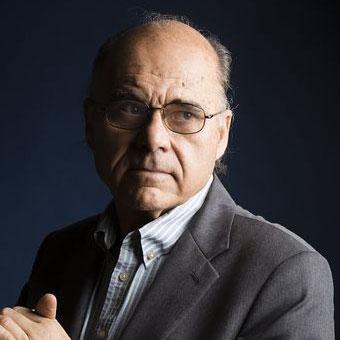
In 1995, Makiya was a scholar in-residence at the NED.[43] As a reward for supporting the U.S. invasion of Iraq, Makiya was appointed as an Iraqi government adviser by the U.S. Coalition Provisional Authority (CPA).[44] George Packer wrote: “Look behind Kanan Makiya and you found Richard Perle, Paul Wolfowitz, Donald Rumsfeld [neo-conservative architects of the Iraq War].” Journalist Christopher Lydon wrote that Makiya is “a caution to us intellectuals and wannabes against the poison of very bad ideas—like the notion of transformation by conquest and humiliation.”
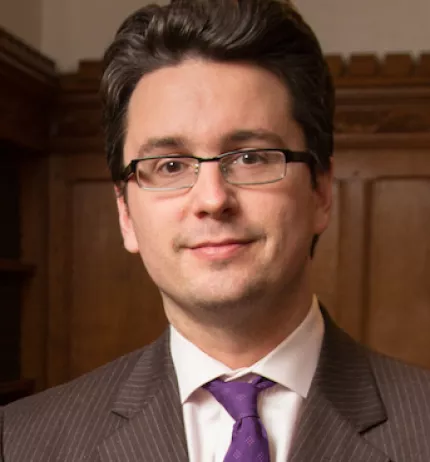
Andrew F. March, Professor of Political Science at the University of Massachusetts–Amherst, who wrote an article in the July 2025 issue, “What Kind of State for Syria?” which celebrated Syria’s quisling government that came to power with the help of the CIA. March wrote that “Syria is a rare case. A state being governed by a new elite that is committed to Islamic thought but open to a wide range of intellectual influences. While it is early, we may see the rise of a novel brand of Islamic presidentialism in the works.”
In reality, Syria’s government was engaged in pogroms against the country’s Shia Alawite population that supported the former Assad government and attacks on Syria’s Kurds, Druze and Christian population and churches.
The new regime was also allowing Israel to expand its occupation of the Golan Heights and plunder Syria’s resources; privatizing its oil resources; saying it wanted to build a Trump tower in Damascus,[45] and allowing the U.S. and Israel to use its air space to illegally attack Iran—facts which March did not find important to mention in his glowing account of the new Syrian regime.
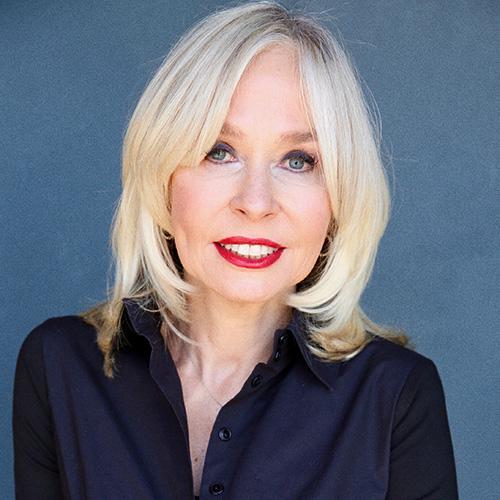
The same facts were omitted in an article published in The Journal of Democracy by Lisa Wedeen, the Mary R. Morton Distinguished Service Professor in the Department of Political Science at the University of Chicago, who also celebrated Assad’s fall and gushed over al-Shaara, whom Wedeen described as “smart, capable of navigating complex situations with uncommon tact and able to speak to multiple audiences.”
Wedeen is the co-editor of a volume on conspiracy theories—a term literally invented by the CIA to smear critics of the Warren report on the JFK assassination. The book has some legitimate critiques of MAGA but fails to rebuke conspiracy theorists in the Democratic Party who advanced the John Birch Society themed Russia Gate narrative that mobilized public support for a war against Russia.[46]
The strong presence of NED-affiliated scholars on American college campuses should generally be considered a disturbing trend that reflects a narrowing of political discourse in the U.S. today.
While the NED touts its role in advancing democracy, its takeover of college faculty is helping to compromise a key lifeblood of real functioning democracy.
By adopting terms like “misinformation” and “Putin lover,” NED-affiliated professors willfully demean people with dissenting viewpoints, while at the same time functioning as gatekeepers who define “respectable” academic discourse.
In this way and others, the NED is helping to transform education in the U.S. into a mirror image of education in authoritarian states that it purports to be against.

In a February 2026 article in The National Interest, Wilson—who served as executive vice president of the pro-NATO Atlantic Council and as special assistant to President George W. Bush and senior director for European Affairs on the National Security Council—claimed that the NED’s freedom agenda helped give advantage to U.S. companies in accessing natural resources around the world. Wilson made clear in the article that NGOs the NED financed to expose corruption targeted governments that were favoring Chinese business interests, state linked firms, or other U.S. business competitors. ↑
See Robin Winks, Cloak and Gown: Scholars in the Secret War, 1939-1961 (New York: William Morrow, 1987). ↑
They include Sumit Ganguly, Anna Grzymala-Busse, Gi-Wook Shin, Kathryn Stoner, and Abbas Milani. The new director of the Freeman Spogli Institute is Colin Kahl, the former Under Secretary of Defense. Rose Gottemoeller, the former Deputy Secretary General of NATO is also on its faculty. NED Board member Elizabeth Economy is a senior fellow at the conservative Hoover Institution at Stanford. ↑
Rice’s long-standing hawkish views were evident in her championing U.S.-Israeli aggression in Iran. Rice called on the Trump administration to “take care of Iran for good,” telling Fox News that “Iran has been at war with us for at least 47 years. If you ask people about Iraq, what was the source of many of our casualties in Iraq, you’ll get estimates as high as 75 or 80% of them were due to Iranian-made roadside bombs.” ↑
See Andrei P. Tsygankov, “Canceling” Russia: The Ukraine War and the Rise of the Western Hawks (New York: Palgrave Macmillan, 2026); Jeremy Kuzmarov, “The Drivel of a Diplomat,” The Progressive, May 25, 2018. McFaul wrote on Twitter that “there is a time and place for hearing two sides of an issue. This tragic moment in European history is not one of them. Do not give false equivalency to voices of evil and voices of good.” To mark the four-year anniversary of the Ukraine War, McFaul hosted a panel at Stanford that featured top Ukrainian government officials, including a member of the Ukrainian Defense Ministry. No Russian or dissenting perspective on the war was offered—something McFaul does not believe in allowing, lest students be exposed to different ideas—a main purpose of a liberal arts education. ↑
Past members of the NED Board of Directors have served as deans at elite U.S. universities. For example, Paul Wolfowitz, a member of the war-mongering Project for the New American Century who developed blueprints for a post-Cold War imperialist U.S. foreign policy, served as Dean of the Johns Hopkins School of Advanced International Studies (SAIS). Harry Harding is a specialist on China who advised George H. W. Bush when he was president. He also served on the CIA-linked Asia Foundation’s Board of Trustees. Arthur Hulnick, John D. Woodward Jr., the Director of the Pardee School’s International History Institute, and Joseph Wippl have been among the CIA agents to teach at BU’s Pardee School. Terrorism psychology expert Jessica Stern, who also teaches at the Pardee School, taught at CIA University and served on the Clinton administration’s National Security Council staff. ↑
Before Herbert Hoover served as U.S. President (1929-1933) when he was blamed for failing to adequately respond to the Great Depression because of his conservative governing philosophy, he was a millionaire engineer who, as head of the American Relief Administration (1919-1923), used food supplies as a weapon against Bolshevism in the Russian Civil War, withholding food aid from Bolshevik-controlled territory and using humanitarian relief as a cover for covertly supporting counter-revolutionaries (the whites) who were discredited among the Russian people and massacred thousands of Jews. The Hoover Institution features writings by empire apologists like Niall Ferguson and professors who are fervidly anti-communist, anti-Putin and pro-NATO. ↑
Economy, Taylor and Ayres serve as fellows with the Council on Foreign Relations (CFR), Wall Street’s think tank. ↑
Nuland served on the NED”s Board from 2017 to 2021 before being appointed again in 2024. For more info on her, see Covertaction Magazine article here. Formerly funded by the CIA, the Harriman Institute is named after Averill Harriman, Joe Biden’s mentor in the U.S. Senate and a wealthy Wall Street banker and State Department official who is considered by many historians to be one of the fathers of the Cold War. Additionally, Lieutenant Colonel William R. Corson revealed to journalist Joseph Trento that Harriman was the mastermind who gave orders for a coup in South Vietnam in November 1963 that resulted in the assassination of the Diem brothers and helped set the groundwork for America’s disastrous war in Vietnam. (Joseph Trento, The Secret History of the CIA, New York: Carroll Graf, 2001, 335). ↑
Pei is the Tom and Margot Pritzker ‘72 Professor of Government. The Pritzker family is a family with past CIA connection involved in an array of corporate crimes that bankrolled the political rise of Barack Obama. ↑
Taylor’s scholarship reflects a wide academic move away from the “dependency” school dominant in the 1960s and 1970s that promoted the need for African countries to overcome colonialism and neocolonialism through left-wing governing models (nationalized industry, heavy taxation on the rich to fund robust social programs, support for labor right and high tariff to stimulate local industry) and African unity, which conflicts with the goals of U.S. corporations intent on plundering Africa. The CIA in the past, as CovertAction Information Bulletin exposed in its April-May 1979 issue, financed Ali Mazrui, an African academic who taught at the University of Michigan and Binghamton University. Mazrui supported Idi Amin’s 1971 CIA/Mossad/MI-6 backed coup against socialist Milton Obote in Uganda and criticized the dependency school. Mazrui mentored Mahmood Mamdani, a Columbia University political scientist and father of the New York City mayor Zohran, whose scholarship, though at times critical of U.S. foreign policy, lacks a good political-economic analysis characteristic of the dependency school. ↑
Chi Jong-Kun and Joel Wit, “True North?” Foreign Affairs, July-August 2026, 199. ↑
For more on Jamal, see Jeremy Kuzmarov, “Sinister Agency Created To Do CIA’s Dirty Work in Public Has Just Named New Leaders,” CovertAction Magazine, March 2, 2023. Francis Fukuyama was also a student and protégé of Huntington, an adviser to Hubert Humphrey during the 1968 presidential campaign who authored a report put out by the elite Trilateral Commission in the 1970s that depicted the 1960s movements as having produced “an excess of democracy,” with minority groups demanding too many rights. How ironic an argument for a supposed champion of democracy who contributed regularly to the Journal of Democracy.The Journal of Democracy is published by Johns Hopkins University Press. Larry Diamond was its founding co-editor with Marc Plattner and Seymour Martin Lipset, a distinguished sociologist and political scientist who received one of the first NED grants and now has a lecture series named in his honor. Like many others in the NED’s orbit, Lipset started as a socialist but evolved into a conservative supporter of the Democratic Party. ↑
The author, Alejandro Tarre, wrote in this piece that “more than a month after the U.S. military raid that captured Venezuela’s dictator Nicolás Maduro, the country’s trajectory remains hard to predict. The Trump administration’s leverage over the regime now led by Maduro’s former deputy, Delcy Rodríguez, is extraordinary—derived from the credible threat of force and U.S. control over Venezuela’s oilfields, the country’s main source of income. The central question remains whether that leverage will be used to secure a genuine democratic transition after nearly three decades of authoritarian rule…There have been positive signs. Civil society is reawakening after the brutal 2024 crackdown that followed the country’s fraudulent presidential elections. Opposition leaders are emerging from hiding. Students and activists have taken to the streets in a show of dissent unimaginable just two months ago, with some media outlets defying censorship to cover the protests. Hundreds of political prisoners have been freed, including a number of high-profile figures, though many remain detained. The National Assembly passed legislation opening the oil sector to foreign firms, and U.S. pressure is leading Cuban intelligence agents to leave the country. Surveys point to growing public optimism.” ↑
Corrales was born to Cuban parents and is author of the book Autocracy Rising: How Venezuela Transitioned to Authoritarianism (Washington, D.C.: Brookings Institution Press, 2023) and another book critical of Hugo Chávez. ↑
Kronick’s right-wing viewpoint was apparent in her expressing enthusiasm for the replacement of Maduro with Juan Guaidó, who was anointed a Venezuela’s leader by Donald Trump and had almost no support among Venezuelans, and by her lionization of Teodoro Petkoff, a Marxist guerrilla in the 1950s and 1960s who shifted to the right and ran an anti-Chávez newspaper in his golden years (Chavistas saw Petkoff as a sellout, a former comrade who had traded in his leftist bona fides for a taste of power in the 1990s, when he held a post in the cabinet of Rafael Caldera, Chávez’s predecessor). In a 2007 article in The New Republic Kronick claimed that the strength of the Bolivarian economic model was a “myth” and blamed the “Chávez-style development model” for Venezuela’s “abysmal poverty and inequality.” Providing no acknowledgment of U.S. imperialism in Venezuela and its consequences, Kronick characterized the neo-liberal reforms in the 1980s and 1990s that produced mass protest and paved the way for Chávez’s ascendancy as “necessary reforms that in fact did begin to produce economic growth and investment outside the oil sector, but they were unpopular because, along with low oil prices and other negative shocks, they contributed to declines in purchasing power.” At the end of Kronick’s article, she demeaned the entire Venezuelan population that supports the Bolivarian Revolution by quoting from a dead Venezuelan writer who claimed that Venezuelans “admire myths because they don’t understand their own history.” ↑
Venezuela’s Supreme Court ratified the election results and found González to be in contempt of court for not appearing as summoned and for not consigning the requested evidence. A delegation from the U.S. National Lawyers Guild (NLG) issued a statement affirming that its members “witnessed no instances of fraud or serious irregularities and found overall voter satisfaction with the electoral process.” For independent analysis by a former top UN official that contradicts the viewpoint advanced in the Journal of Democracy, see Alfred de Zayas, “The Venezuela Elections of 28 July 2024: What and Whom to Believe?” Venezuela Analysis, September 10, 2024.Caleb T. Maupin, in Khrushchevism: A Study in Psychological Warfare (Brooklyn: Center for Political Innovation, 2025), 66, 67, takes Larry Diamond and other Journal of Democracy contributors and political scientists to task for describing the election of Hugo Chávez in Venezuela and Vladimir Putin in Russia as “steps away from democracy” when both leaders, Maupin said, had “clear popular mandates” and “worked over time to improve living conditions for the majority.” With regard to Russia, Maupin wrote that “in the mindset of Larry Diamond, when the business community of Russia was cooperating with Western looting under Yeltsin in the 1990s, when the Russian media was echoing Western talking points, when U.S. funded NGOs dominated civil society, when the police and intelligence agencies were powerless to stop what André Gunder Frank called ‘economic genocide’ as the country was being devastated with mass unemployment—this was merely an expression of independence.” ↑
The term “end of history” was coined by former NED Board member Francis Fukuyama. ↑
When commenting on domestic politics, NEDers like Levitsky and Way subscribe to “Trump derangement syndrome.” They claim that democracy in the U.S. is now only at risk because of Trump; not because of anything that the Democrats ever did, or that relates to the corporate takeover of the state, money-saturated politics and growth of the military-industrial complex. The NED intellectuals never condemn authoritarianism under Joe Biden, including the totalitarian COVID policies his administration advanced, or express any outrage over the cancellation of the 2024 Democratic Party primary process and the party’s nomination of a candidate, Kamala Harris, who had about 1% of the popular vote during the 2020 primaries. ↑
The University of Toronto’s Munk School of Global Affairs where Way teaches hosts the NED’s Seymour Martin Lipset Lecture on Democracy in the World. Speakers have included Leopoldo López, a right-wing Venezuelan extremist and mentor to Juan Guaidó implicated in terrorist activity; Anne Applebaum, a former NED Board member known for her Russophobia and hawkish views on the Ukraine War; and Minxin Pei. The founder of the Munk School, Peter Munk, was founder and CEO of Barrick Gold, a politically connected CIA-linked company (one of its largest investors was CIA arms trafficker Adnan Khashoggi, a pivotal figure in the Iran-Contra scandal) known for its exploitative and environmentally damaging mining practices in Africa and other predatory behavior. ↑
I read this book carefully and found that, while some aspects of the history covered by Levitsky and Way are accurate, other aspects are misleading and/or deficient in leaving out key parts of the story. One example is that their coverage of the Russian Revolution and civil war barely mentions the U.S. invasion of Russia and its consequences. They do not further address the hostility of U.S. corporate interests toward the Bolshevik regime, media propaganda that skewed public opinion of it, and how U.S. corporate interests tried to sustain influence in Russia after the revolution. Coverage of the Stalinist period follows an anti-Stalinist paradigm that has been challenged by historians whose work is not cited. Stalin is accused of crimes many serious historians believe him not to have committed (such as orchestration of the Ukrainian famine or Holodomor), and his leadership in the face of the Nazi invasion in World War II is belittled. The transformation of Soviet Russia into an industrial superpower and improvement of quality-of-life indicators is also disregarded. The same conservative bias is evident in Levitsky and Way’s coverage of Maoist China, which draws exclusively from the interpretations of fervently anti-communist and anti-Maoist writers. Levitsky and Way’s coverage of Vietnam is biased against Ho Chi Minh, a national hero in today’s Vietnam, and the revolutionary movement, and omits entirely U.S. geopolitical designs in Vietnam and covert and overt military intervention in the 1950s and early 1960s. Levitsky and Way barely address the impact of the U.S. invasion and post-war sanctions and embargo policy in advancing the legitimacy of Vietnam’s communist government and in causing economic hardship in Vietnam. Books that present the Vietnamese revolutionary viewpoint and experience of guerrilla fighters are ignored; ditto for the Korean War where Wilfred G. Burchett and Alan Winnington’s writings are absent from the notes. When covering Ghana, Levitsky and Way discuss the 1966 overthrow of socialist leader Kwame Nkrumah without discussing how British intelligence and the CIA helped orchestrate the coup against him, failing to cite CIA officer John Stockwell’s account and other recent scholarship on this topic and even failing to discuss or cite Nkrumah’s account of the events. In a chapter on Afghanistan at the end of the book that is generally very weak, Way and Levitsky justify the U.S. invasion by claiming that Mohamed Atta, the alleged 9/11 hijacker whom they call the “mastermind behind the 9/11 operation,” was “trained in Afghanistan where he coordinated and planned the attacks with bin Laden.” The latter is not firmly established; an alleged trip Atta took to Afghanistan was reported by some news outlets based on unnamed sources who spoke with German intelligence. These reports do not provide any hard evidence that Atta received training there from Al- Qaeda or was in touch with Bin Laden, let alone that he was involved in 9/11 planning there. The section on Rwanda in Revolution & Dictatorship is further dubious in that it omits entirely the U.S. support for the Rwandan Patriotic Front (RPF) and the U.S.-UK strategy of using the RPF to try to open up the mineral rich Democratic Republic of Congo (DRC) to multi-national corporations, which fueled the RPF’s genocidal conduct there (which Levitsky and Way do not mention). Having taught courses on revolutionary movements and U.S. foreign policy, I have found much better books than Revolution & Dictatorship. The book I routinely assigned to students in my course on this topic was James DeFronzo, Revolutions and Revolutionary Movements (Boulder, CO: Westview Press, 2014) which, astoundingly, is not even cited in the bibliography of Revolution & Dictatorship. DeFronzo effectively analyzes the ideological imperatives of the revolutionary movements, circumstances by which they came to power and impact of foreign pressure and intervention on these movements, and their major accomplishments. DeFronzo offers both sympathetic and critical analysis that does not whitewash the underside or excesses of the revolutionary movements, the latter being the primary focus of Levitsky and Way’s conservative text, which appears to exaggerate or take out of context some of these excesses. ↑
In the July 2026 issue of the Journal of Democracy, Levitsky and Way adopt a heavily ideological right-wing position arguing that “capitalism plays a central role in fostering democracy;” that a “strong private sector is critical for democratic survival;” that “an extensive and well-paid public sector has bolstered authoritarian rule” and that “the concentration of economic resources in state hands undermines democratic development.” These are positions long adopted by the U.S. State Department and two dominant corporate financed political parties in the U.S. While this author supports the freedom of intellectuals to argue whatever they like, the problem is the heavy advancement of right-wing positions compared to leftist ones on campuses today by “professors” who are effectively agents of the “deep state.” ↑
See Jacques Baud, Operation Z (Paris: Max Milo, 2022); Ivan Katchanovski, The Maidan Massacre in Ukraine: The Mass Killing That Changed the World (New York: Palgrave Macmillan, 202); Jeremy Kuzmarov, Obama’s Unending Wars: Fronting the Foreign Policy of the Permanent Warfare State (Atlanta: Clarity Press, 2019), among other works that thoroughly debunk Way’s narrative. Way is normally a Democratic Party partisan who warns about rising authoritarianism under Trump. He advances the false Russia-gate narrative presenting Trump as a Russian asset. In one tweet he endorsed the statement of a “Darth Putin” who wrote that “conquering GOP was easier than conquering Ukraine” (the insinuation being that Putin had conquered the GOP but not Ukraine). ↑
A visiting associate professor at Stanford’s Freeman Spogli Institute in 2012, Way falsely claimed in an interview published on March 9, 2022, that “revolution is now something we can envision happening” in Russia. He claimed at the same time that “Zelensky is really the man of the moment and has shown enormous bravery.”
This article’s bias was apparent in its praise for Ukraine’s early battlefield success when Russia took a significant amount of territory from Ukraine. Way and his co-author claimed that Ukraine is a remarkably “pluralist country” though they acknowledge that it had “banned a number of pro-Russian parties” and took off the air three opposition-oriented TV stations. Still, they suggest that, despite these latter problems, Ukraine’s media remained “remarkably free.” The article has the feel of a propaganda piece, not objective scholarly analysis. It reminded me of CIA-linked academic Wesley R. Fishel’s 1959 article in The New Leader, “Vietnam’s Democratic One-Man Rule,” about Ngo Dinh Diem in South Vietnam, another U.S.-backed client leader. The title of Fishel’s article embodies its contradictions. Way and his co-authors cite as an example of Ukraine’s supposedly flourishing democracy that more than 25,000 citizens signed a petition in late March to regulate online gambling by soldiers on the front—soldiers facing certain death or maiming because of policies for which Way advocated! ↑
See Jeremy Kuzmarov and Dan Kovalik, Syria: Anatomy of Regime Change (Montreal: Baraka Book, 2025). ↑
See Kuzmarov and Kovalik, Syria Anatomy of Regime Change. This is a book people like Masoud and their academic counterparts don’t bother to read and never cite. They should not be regarded as such as credible academics or scholars because they willfully suppress evidence and information that is publicly accessible. ↑
Caitlin Johnstone, “How To Be an Empire Propagandist,” The Unz Review, July 29, 2026. ↑
These are coveted tenured or tenure-track positions when most college professors today labor under poverty wages and exploitative work conditions as adjuncts. More articles are focusing on these exploitative conditions, but this article aims to break new ground by showing that many of the professors receiving the coveted tenure positions have links to U.S. intelligence agencies such as the NED and are compromised as such. ↑
Jacques Baud discusses the erroneous use of the term “separatists” to describe eastern Ukrainian rebels in Operation Z. ↑
Fish’s book on post-Soviet Russia advances the right-wing theory linking Russia’s lack of democracy to the preservation of certain statist economic policies from the communist era and presents economic liberalization as a pathway to democratization. This is a view similar to that of Michael McFaul. Both evade any meaningful discussion of U.S. foreign policy and how it helped set back Russian democracy in the 1990s and 2000s and how certain statist policies enacted under Putin were a response to exploitative Western business practices and efforts to obtain control over Russia’s natural resources, which Fish does not discuss. The whole frame of Fish’s analysis (and McFaul’s) is flawed in its “end of history” viewpoint, which assumes that Western democracy is superior and that Russia will only show progress as a society if it evolves in that direction and become more like the U.S. ↑
In 2021-22, Tin-bor Hui served as a Council on Foreign Relations International Affairs Fellow embedded with the Congressional-Executive Commission on China. ↑
This is in part because Lai’s tabloids have promoted rabid Sinophobia and stereotypes of Chinese people, comparing them to invading locusts in Hong Kong. Lai was arrested for colluding with a foreign power and violating national security laws. He has been subjected to imprisonment and solitary confinement at Stanley Prison in Hong Kong. ↑
In her review, Tin-bor Hui compares Lai to Alexei Navalny, whom she valorizes in the vein of other NED-linked authors. ↑
Past members of the journal’s editorial board who are professors teaching courses include: Daniel M. Brumberg of Georgetown, a frequent contributor to the Journal of Democracy; Cynthia McClintock of the Elliott School of International Affairs at George Washington University; Charles H. Fairbanks of Johns Hopkins’ School of Advanced International Studies (SAIS); and Donald L. Horowitz, a professor at Duke University and Duke Law School, among others. ↑
The Journal of Democracy’s website indicates that well over a hundred professors at U.S. and Canadian universities have written articles for The Journal of Democracy. People whose work I was previously familiar with who wrote for the journal include: a) Hal Brands, the Henry Kissinger Distinguished Professor at the Johns Hopkins School of Advanced International Studies who helps advance the U.S. government’s dominant anti-China narrative in many of his writings that helps build public support for the huge Southeast Asian military buildup and potential war; and b) Peter Feaver, a professor of political science at Duke University who served on the National Security Council under Bill Clinton and George W. Bush. Contributors to The Journal of Democracy in the past included: a) Bernard Lewis, a neoconservative intellectual guru known for his orientalist views towards the Middle East who taught Middle Eastern politics for years at Princeton; b) Zbigniew Brzezinski, the National Security Council adviser to Jimmy Carter identified as a CIA “asset” who taught at Harvard, Columbia and Johns Hopkins; and c) Jean-Bethke Elshtain, another intellectual guru to neoconservatives after 9/11 and champion of the U.S. invasions of Afghanistan and Iraq who taught at Georgetown University and the University of Chicago. ↑
Stoner, who has written several articles with Michael McFaul, is one of 15 other Stanford faculty members who have been sanctioned by Russia. Advancing a Cold War demonology, Stoner presents Russia—not the U.S.—as a threat to the so-called “rules-based international order,” a propaganda concept that was rightfully mocked in a January 2026 speech at the World Economic Forum by Canadian Prime Minister Mark Carney. ↑
Many articles in the Journal of Democracy supported the war on Iran as some kind of noble undertaking capable of ushering in a democratic revolution. One article by Ladan Boroumand, a source for inflated media figures regarding the death of protesters killed in the government crackdown that provided a pretext for the U.S.-Israeli invasion, backed the restoration of the Pahlavi dynasty, which had been installed by the CIA after the 1953 coup against nationalist Mohammad Mosaddegh. Boroumand claims that Shah Reza Pahlavi, who was known for carrying out brutal torture, along with his father, were “the builders of Iran as a modern nation-state.” She also claims that a January 2, 2026, address to Iranians by Donald Trump “created a collective expectation regarding democracies’ responsibility to protect a population under assault by its own government.” ↑
The indictment also cited “an institution called Hoofer [sic], at Stanford” for its alleged support of the Iranian opposition. A former communist turned neo-conservative who authored an impressive biography of the Shah, Milani considers the 1979 Iranian Revolution that re-established Iran’s national sovereignty to have been “no revolution at all [but] a cunning bait-and-switch game cleverly played by Ayatollah Ruhollah Khomeini, who put himself at the head of the movement.” ↑
I was a graduate student at Brandeis in 2003 and heard Makiya say this at a public forum on the Iraq War at Brandeis. When I referenced Palestinian literary scholar Edward Said in a pointed question to him, he had no adequate response, proving himself to be an intellectual lightweight who never read Said. I recall a Jordanian student with whom I was friendly being disgusted with Makiya and perceiving him to be an Uncle Tom. ↑
He was quoted in the NED’s 1995 annual report praising NED support for the Free Iraqi Foundation and Iraqi Research and Documentation Project which were part of a regime-change operation targeting Saddam Hussein that Makiya championed. ↑
Makiya, who had lived outside Iraq since 1967, followed a similar trajectory to Milani as a one-time Trotskyist who became a neo-conservative based probably on opportunism. Edward Said asserted that Makiya mistranslated Arab intellectuals, including himself, so he could condemn them for not speaking out against the crimes of Arab rulers. ↑
Kuzmarov and Kovalik, Syria: Anatomy of Regime Change. ↑
Conspiracy/Theory, ed. Joseph Masco and Lisa Wedeen (Durham, NC: Duke University Press, 2024). ↑
CovertAction Magazine is made possible by subscriptions, orders and donations from readers like you.
Blow the Whistle on U.S. Imperialism

Click the whistle and donate
When you donate to CovertAction Magazine, you are supporting investigative journalism. Your contributions go directly to supporting the development, production, editing, and dissemination of the Magazine.
CovertAction Magazine does not receive corporate or government sponsorship. Yet, we hold a steadfast commitment to providing compensation for writers, editorial and technical support. Your support helps facilitate this compensation as well as increase the caliber of this work.
Please make a donation by clicking on the donate logo above and enter the amount and your credit or debit card information.
CovertAction Institute, Inc. (CAI) is a 501(c)(3) non-profit organization and your gift is tax-deductible for federal income purposes. CAI’s tax-exempt ID number is 87-2461683.
We sincerely thank you for your support.
Disclaimer: The contents of this article are the sole responsibility of the author(s). CovertAction Institute, Inc. (CAI), including its Board of Directors (BD), Editorial Board (EB), Advisory Board (AB), staff, volunteers and its projects (including CovertAction Magazine) are not responsible for any inaccurate or incorrect statement in this article. This article also does not necessarily represent the views the BD, the EB, the AB, staff, volunteers, or any members of its projects.
Differing viewpoints: CAM publishes articles with differing viewpoints in an effort to nurture vibrant debate and thoughtful critical analysis. Feel free to comment on the articles in the comment section and/or send your letters to the Editors, which we will publish in the Letters column.
Copyrighted Material: This web site may contain copyrighted material the use of which has not always been specifically authorized by the copyright owner. As a not-for-profit charitable organization incorporated in the State of New York, we are making such material available in an effort to advance the understanding of humanity’s problems and hopefully to help find solutions for those problems. We believe this constitutes a ‘fair use’ of any such copyrighted material as provided for in section 107 of the US Copyright Law. You can read more about ‘fair use’ and US Copyright Law at the Legal Information Institute of Cornell Law School.
Republishing: CovertAction Magazine (CAM) grants permission to cross-post CAM articles on not-for-profit community internet sites as long as the source is acknowledged together with a hyperlink to the original CovertAction Magazine article. Also, kindly let us know at info@CovertActionMagazine.com. For publication of CAM articles in print or other forms including commercial internet sites, contact: info@CovertActionMagazine.com.
By using this site, you agree to these terms above.
About the Author
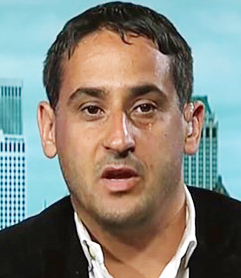
Jeremy Kuzmarov holds a Ph.D. in American history from Brandeis University and has taught at numerous colleges across the United States. He is regularly sought out as an expert on U.S. history and politics and co-hosts a radio show on New York Public Radio and on Progressive Radio News Network called “Uncontrolled Opposition.”
He is Managing Editor of CovertAction Magazine and is the author of eight books, including Obama’s Unending Wars (Clarity Press, 2019), The Russians Are Coming, Again, with John Marciano (Monthly Review Press, 2018), Warmonger. How Clinton’s Malign Foreign Policy Launched the U.S. Trajectory From Bush II to Biden (Clarity Press, 2023); with Dan Kovalik, Syria: Anatomy of Regime Change (Baraka Books, 2025), and Political Assassinations in America: The Intricate Nexus of Deep State Crime (Clarity Press, 2026).
Besides these books, Kuzmarov has published hundreds of articles and contributed to numerous edited volumes, including one in the prestigious Oxford History of Counterinsurgency .
He can be reached at jkuzmarov2@gmail.com and found on substack here.





Excellent article. I wish my friends on the fake left would read it.
Thank you Rachel!
The National Endowment for Democracy (NED) helped alert the world to the death of Mahsa Amini and the subsequent protests by funding and supporting independent Iranian journalists and human rights organizations who could bypass strict state censorship. When Amini was detained and fatally injured by Iran’s morality police in September 2022, it was NED-supported local media partners who broke the initial story, piercing through the government’s official denials and cover-up attempts .As the “Woman, Life, Freedom” movement erupted across the country, these civic partners and digital networks worked under extreme danger to track, verify, and document human rights abuses, protester deaths, and arbitrary arrests. By supplying verified data, names, and footage to international news outlets and global human rights bodies, NED’s network provided the vital factual backing needed to sustain global awareness and hold the Iranian regime accountable on the world stage.
A lot of the criticism of NED is merited, but NED has also done a lot of wonderful things as described briefly below
The National Endowment for Democracy (NED) plays a vital role in funding grassroots initiatives worldwide that expose corruption, protect free speech, and support independent journalism in repressive environments. In the area of exposing transnational repression, NED-backed researchers helped uncover more than 100 secret Chinese overseas police stations operating across 53 countries, while grantees in Serbia used investigative reporting on corrupt construction deals to spark major public accountability protests. To defend human rights and children, the Regional Center for Human Rights received a Democracy Award for tracking and seeking accountability for forcibly abducted Ukrainian children, and the Tibet Action Institute was honored for documenting efforts by the Chinese Communist Party to erase the cultural identity of Tibetan children.
Furthermore, the organization supports electoral and youth movements, as seen when NED grants helped youth groups like OK ’98 boost youth voter turnout in Slovakia from 25 percent to 80 percent, leading to a democratic transition—a successful civic engagement model that was later replicated in Croatia to help local coalitions monitor elections and secure fair outcomes. Finally, NED helps amplify marginalized voices by supporting local networks in Iran that bypass strict internet censorship to share the story of Mahsa Amini globally and back to citizens, alongside backing groups like the Waey Organization in Sudan, which received recognition for training young leaders to advance peace amidst violent internal conflict.
While CovertAction Magazine’s article deserves credit for drawing attention to the dense institutional networks connecting elite academia to federally funded foreign-policy bodies, it ultimately undermines its own thesis through hyperbole and factual inaccuracies. On a complimentary note, the piece successfully highlights an important conversation regarding transparency, institutional independence, and the extent to which higher education intertwines with state-backed soft power initiatives. However, the core critical flaw lies in its sweeping characterization of the National Endowment for Democracy (NED) as a direct “CIA cut-out.” Factually, the NED is an independent, publicly funded, non-governmental grant-making corporation established by Congress under the Reagan administration—not a covert intelligence agency subsidiary, despite historical acknowledgments by its founders that it performs openly what intelligence agencies once managed in secret. Conflating an overt, transparently funded statutory organization with a clandestine “cut-out” misrepresents its legal structure and operational model. Furthermore, painting every faculty member or university program with historical or financial links to the NED as an active agent of state propaganda relies on guilt-by-association logic, ignoring the complex realities of academic research, international exchange, and institutional autonomy. A more rigorous critique would separate legitimate concerns over state influence in academia from inaccurate historical categorization.
I like the Chief Operating Officer of the company a certified yoga teacher.
https://www.ned.org/experts/sheila-crowley/