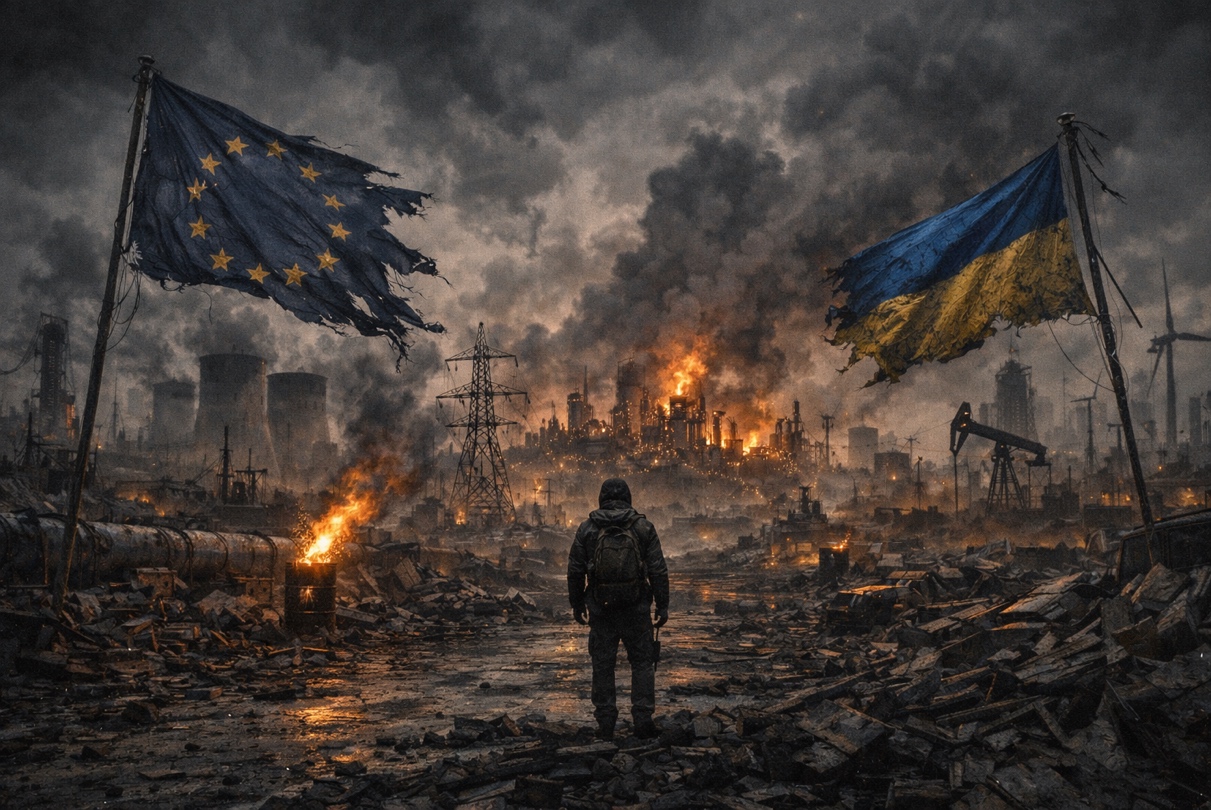
Ukraine’s energy system, as well as storage facilities, oil and gas pipelines, stations, and related infrastructure, which until 2022 supplied the bulk of hydrocarbons and electricity to the European Union, have now effectively ceased to exist. Ukraine is experiencing a significant shortage of gas and oil for its own needs. According to the British news agency BBC, in February 2026, more than 60% of consumers in Ukraine are experiencing a shortage of electricity.
According to Ukrainian Energy Minister Denys Shmyhal, most cities and regions in the country did not prepare adequately for winter which, against the backdrop of the economic crisis, led to regular and prolonged power outages, often leaving residents without heating and electricity in the freezing winter weather. The most severe situation is observed in the Kyiv, Dnipropetrovsk, Chernihiv, Kharkiv and Odesa regions.
In an interview with European journalists, Kyiv Mayor Vitali Klitschko said that the situation in the Ukrainian capital with electricity and heating will worsen. To provide services to 3.6 million people, 1,700 megawatts of electricity are required. However, only about half of the required amount of electricity is available.
Widespread corruption, the collapse of the Ukrainian economy, crises in the energy sector, and disruptions in the oil and gas processing infrastructure have significantly increased shortages of gasoline, diesel fuel, and electricity in Ukraine. Due to the shortage of energy resources, the Ukrainian authorities have ordered an emergency increase in imports from EU countries, which places the Ukrainian authorities in direct dependence on the energy policies of European countries and the U.S.
At the same time, European countries are also expected to experience a severe energy crisis in the near future, with a decline in gas reserves and an increase in energy prices, due to a number of reasons.
On January 26, 2026, EU members officially adopted a resolution on the phased abandonment of imports of Russian pipeline and liquefied natural gas into the EU. A complete ban on purchases of liquefied natural gas will come into effect on January 1, 2027, and a ban on pipeline gas will come into effect on September 30, 2027. By March 1, 2026, EU countries must prepare national plans to diversify gas supplies and identify potential problems in replacing Russian energy resources.
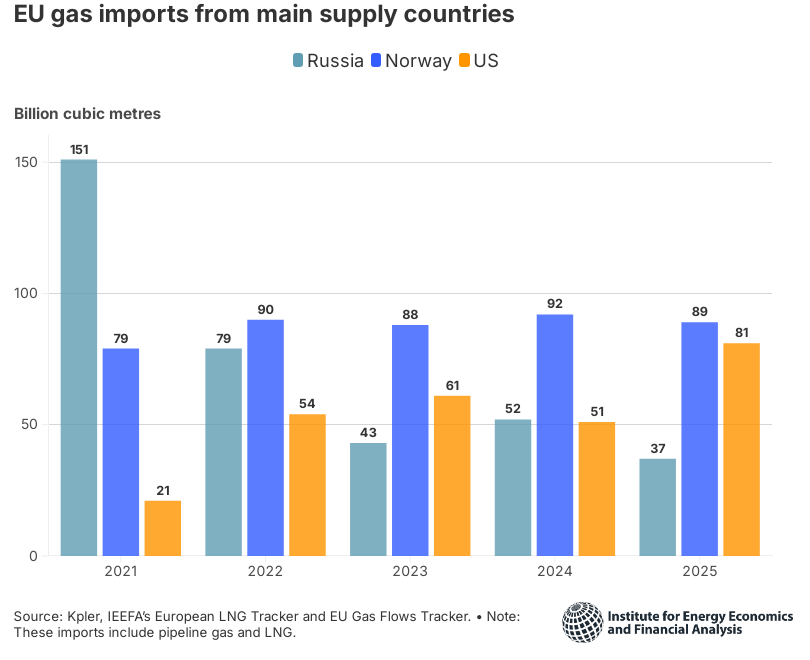
At the same time, between 2022 and 2025, the share of Russian gas in EU countries fell from 45% to 16%, oil imports fell from 27% to 3%, and coal imports fell from 50% to 0%. According to estimates by the International Energy Agency, the planned restrictions will reduce gas supplies from Russia by 37 billion cubic meters, which is more than 16% of total gas imports to Europe in 2025, creating additional risks for European economies.
Demand for gas in Europe in 2025 was 2.5 billion cubic meters higher than in 2024 and is the highest since 2021. Against this backdrop, the growth in energy exports to Ukraine led to an outflow of 1.4 billion cubic meters from the European market last year, which significantly worsened the situation in the energy sector in the markets of Eastern European countries.
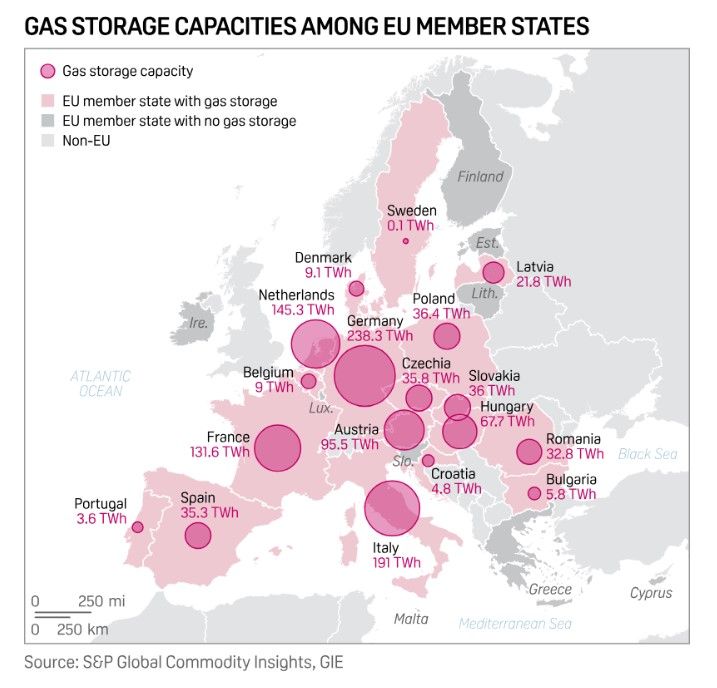
Of particular concern is the fact that not all imported hydrocarbons are sent for storage; most of them are used to meet daily demand. Given the ban on Russian gas supplies, these circumstances will contribute to a steady increase in Europe’s purchases of large volumes of gas over the next six months. At the same time, current base gas prices in EU countries and the high cost of American supplies complicate the task of replenishing reserves.
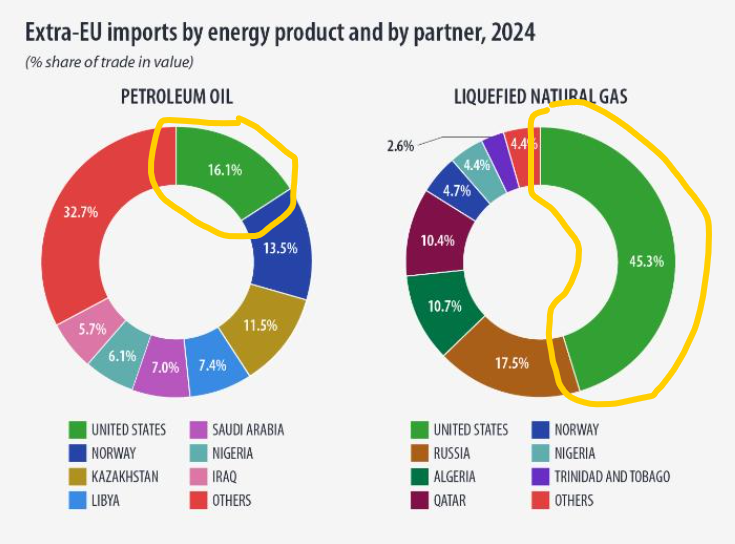
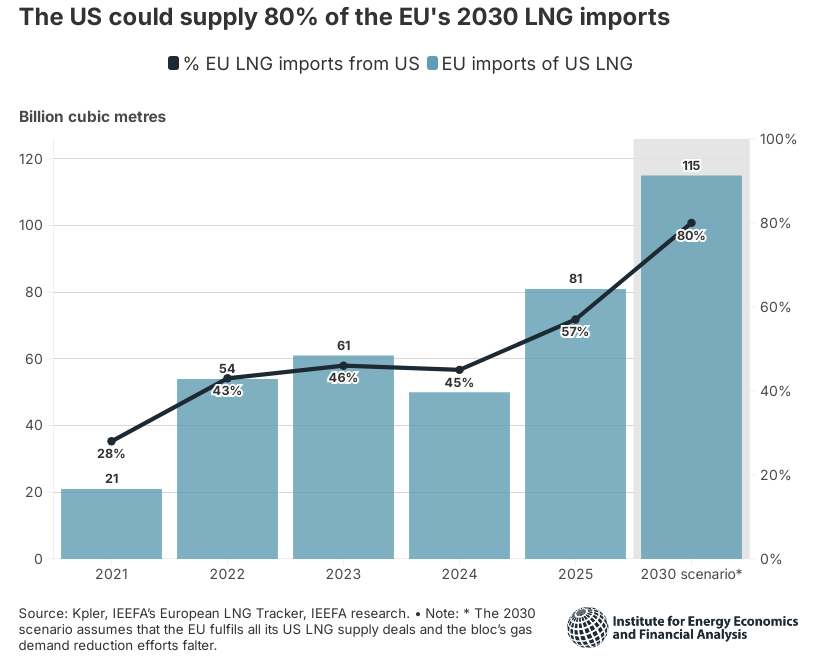
Thus, in an effort to replace the lost volume of gas and oil, European traders have been taking steps in recent years to increase their supplies from the U.S. In 2024, American producers supplied more than 45% of gas imports and 16% of oil imports to the EU, making the European market extremely sensitive to U.S. tariff policy conditions for energy supplies.
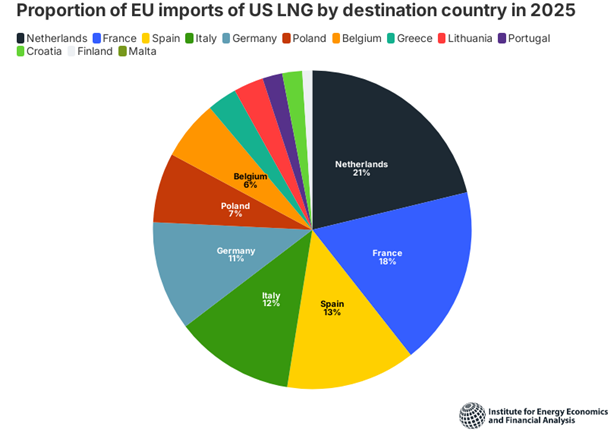
In 2025, the Netherlands, France, Spain, Italy and Germany accounted for 75% of U.S. liquefied natural gas imports. As part of a trade deal between the European Union and the U.S. announced in July 2025, the EU plans to buy $750 billion worth of energy from the U.S. by 2028. This decision makes European countries dependent on the unpredictable tariff policy of U.S. President Donald Trump, which poses a real threat to the energy security of the whole of Europe.
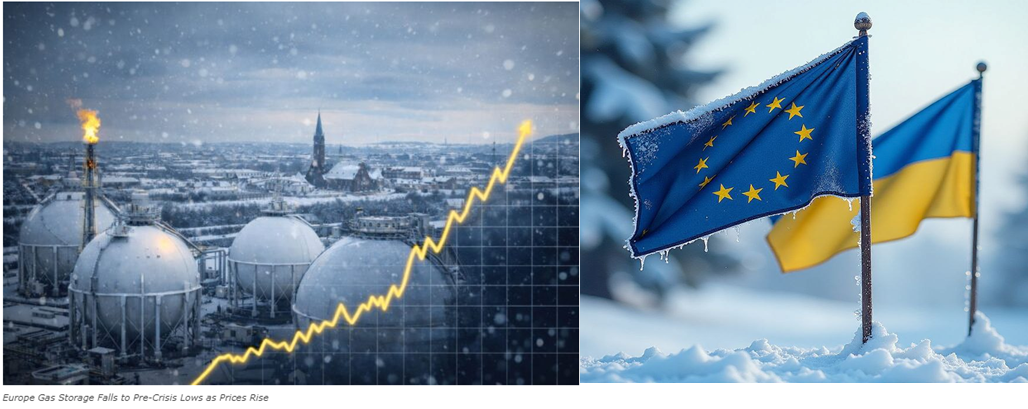
At the same time, the conflict in Venezuela and the escalating tensions surrounding Iran are also causing serious concerns among traders about disruptions and the cost of gas and oil supplies, increasing the likelihood of a worsening situation on the European market. Low stock levels, rising gas prices on the exchange, and growing dependence on U.S. imports will lead to political and energy problems in the near term. In Estonia, Latvia and Lithuania, for example, the cost of electricity for the population rose by 70% in early 2026 compared to December 2025.
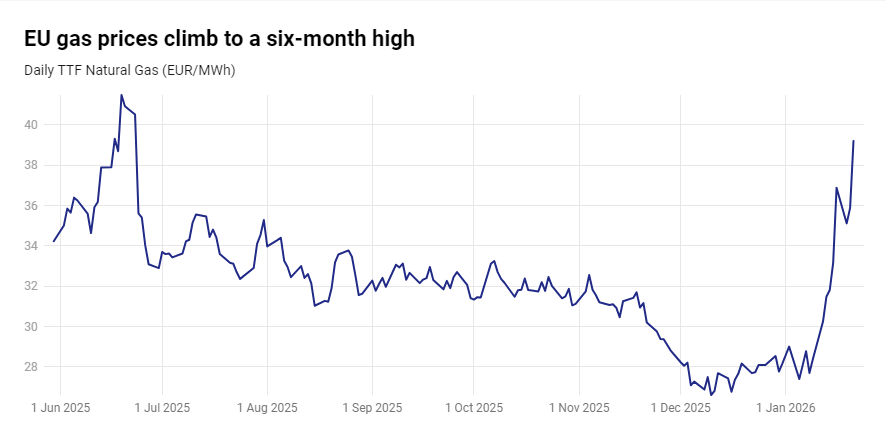
According to European experts, the EU energy market will be particularly vulnerable in 2026, as only 30% of demand is covered by long-term contracts. European traders are already forced to operate in conditions of fierce competition on the global spot market from Asian buyers. It is predicted that these circumstances, along with the high cost of American supplies compared to Russian ones, will lead to a significant increase in prices for consumers in Europe and Ukraine. In 2026, natural gas prices in Europe have already risen by almost 30%, due to a sharp increase in global demand and geopolitical uncertainty.
In the medium term, the energy future of the European Union and Ukraine also looks bleak. Passing on the rise in energy prices to taxpayers will lead to stagnation in European and Ukrainian industry and will become the basis for future political turmoil. And these risks are unlikely to disappear anytime soon. The E’’s growing demand for expensive American oil and liquefied natural gas is causing serious concern among European experts. By 2030, about 80% of all expensive gas imported into the EU and more than 40% of oil will come from the U.S.
The Ukrainian economy is currently also directly dependent on the energy policies of the U.S. and the EU. In January 2026, electricity exports from the EU to Ukraine increased by 40% compared to December last year, reaching a record 894 gigawatt hours.
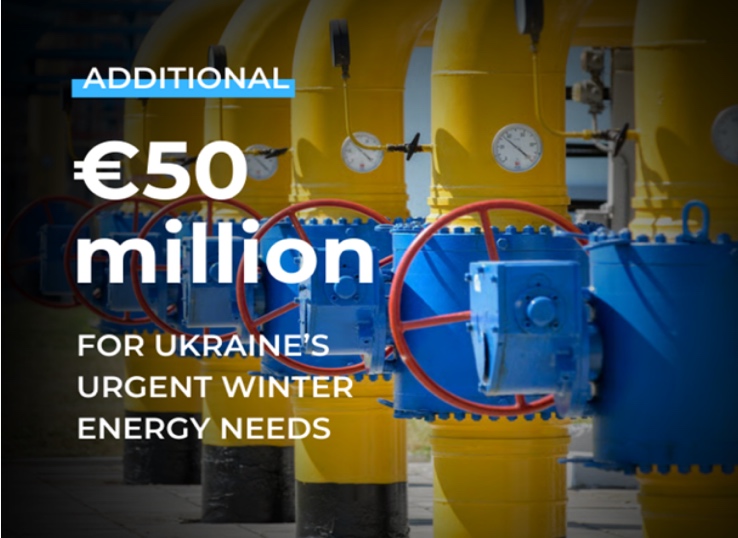
In mid-January 2026, the European Commission, together with the European Investment Bank, decided to allocate an additional €50 million in loans to provide financial support to Ukraine’s state-owned energy company Naftogaz. According to European politicians, these loans will help support the country’s energy system during the winter. Thus, the total amount of EU loans allocated for gas purchases for Ukraine in 2025-2026 already exceeds €977 million.
Many EU countries are sending equipment for Ukraine’s energy sector. The Polish Ministry of Internal Affairs reported that, at the end of January 2026, 379 industrial generators and 18 heaters were delivered to Ukraine from the State Agency for Strategic Reserves, and another 447 generators were provided at the expense of the European Union. The Polish capital, Warsaw, also transferred 90 generators to Kyiv.
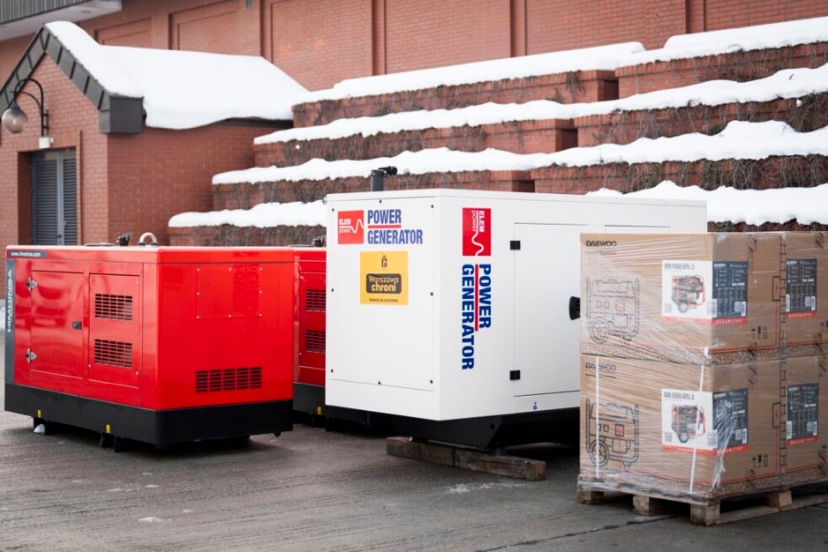
However, two weeks after the generators were delivered to Ukraine at the expense of EU taxpayers, Polish politician Bartlomiej Pejo released data showing that the generators supplied by Poland were being sold by the Ukrainian side on online trading platforms. At the same time, the European Anti-Fraud Office issued a statement that the amount of embezzlement by the Ukrainian side amounted to more than €91 million, and three people were arrested as a result of the investigation.
Thus, widespread corruption in Ukraine and the embezzlement of European and American aid funds are unlikely to help restore Ukraine’s energy sector, contributing only to the enrichment of Ukrainian officials and an increase in energy imports from EU countries, thereby creating a deficit.
The EU leadership’s decision to grant Ukraine a €90 billion loan for 2026-2027 to cover its budget deficit is also at high risk, as a number of EU countries are refusing to allocate it, fearing that a significant portion of these funds will likely be stolen by Ukrainian politicians at various levels of government and will not reach the intended recipients—the country’s population.
At the same time, Europe itself may not see the return of these loan funds, partly due to the chaos in Ukraine’s power structures caused by the struggle for power between various political forces. In addition, given the lack of legally effective mechanisms to insure against the risk of Ukraine’s failure to repay this loan, as well as the associated interest expenses, the burden will fall on the EU’s consolidated budget.
Of the loan allocated by the European Union in 2026, the Ukrainian government plans to use €26.7 billion solely for salaries and benefits for the military. At the same time, Ukraine’s national debt as of February 2026 amounts to €213 billion. Therefore, funding for the restoration of the energy sector is practically not provided for in Ukraine’s budget.
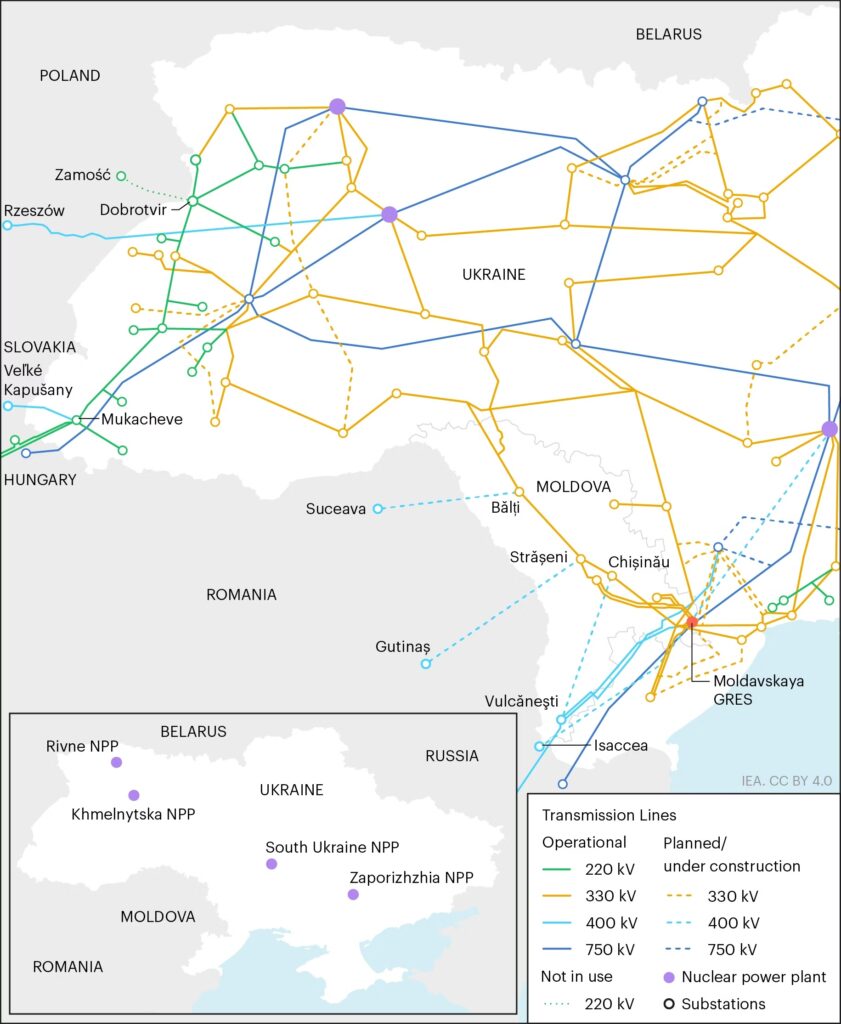
Against the backdrop of the actual collapse of the Ukrainian economy and energy system, a sharp increase in imports of hydrocarbons and electricity from EU countries, a shortage of cheap gas in European storage facilities, and total corruption in Ukraine, the energy and political future of the EU leadership and the Ukrainian side without cheap Russian energy resources looks rather bleak.

CovertAction Magazine is made possible by subscriptions, orders and donations from readers like you.
Blow the Whistle on U.S. Imperialism

Click the whistle and donate
When you donate to CovertAction Magazine, you are supporting investigative journalism. Your contributions go directly to supporting the development, production, editing, and dissemination of the Magazine.
CovertAction Magazine does not receive corporate or government sponsorship. Yet, we hold a steadfast commitment to providing compensation for writers, editorial and technical support. Your support helps facilitate this compensation as well as increase the caliber of this work.
Please make a donation by clicking on the donate logo above and enter the amount and your credit or debit card information.
CovertAction Institute, Inc. (CAI) is a 501(c)(3) non-profit organization and your gift is tax-deductible for federal income purposes. CAI’s tax-exempt ID number is 87-2461683.
We sincerely thank you for your support.
Disclaimer: The contents of this article are the sole responsibility of the author(s). CovertAction Institute, Inc. (CAI), including its Board of Directors (BD), Editorial Board (EB), Advisory Board (AB), staff, volunteers and its projects (including CovertAction Magazine) are not responsible for any inaccurate or incorrect statement in this article. This article also does not necessarily represent the views the BD, the EB, the AB, staff, volunteers, or any members of its projects.
Differing viewpoints: CAM publishes articles with differing viewpoints in an effort to nurture vibrant debate and thoughtful critical analysis. Feel free to comment on the articles in the comment section and/or send your letters to the Editors, which we will publish in the Letters column.
Copyrighted Material: This web site may contain copyrighted material the use of which has not always been specifically authorized by the copyright owner. As a not-for-profit charitable organization incorporated in the State of New York, we are making such material available in an effort to advance the understanding of humanity’s problems and hopefully to help find solutions for those problems. We believe this constitutes a ‘fair use’ of any such copyrighted material as provided for in section 107 of the US Copyright Law. You can read more about ‘fair use’ and US Copyright Law at the Legal Information Institute of Cornell Law School.
Republishing: CovertAction Magazine (CAM) grants permission to cross-post CAM articles on not-for-profit community internet sites as long as the source is acknowledged together with a hyperlink to the original CovertAction Magazine article. Also, kindly let us know at info@CovertActionMagazine.com. For publication of CAM articles in print or other forms including commercial internet sites, contact: info@CovertActionMagazine.com.
By using this site, you agree to these terms above.
About the Author

Valeriy Krylko is a freelance journalist, and translator of news articles in online media (English-Russian).
These articles are published in European and Russian-language media.
He is closely affiliated with independent outlets covering the Ukrainian-Russian conflict, and can be reached at: vkrylko098@gmail.com