Ukrainian intelligence units are conducting drone-warfare operations in Africa and the Middle East as proxies for the U.S.
A consolidation of U.S. elite interests has taken shape in the Russo-Ukrainian war, with a network of Western venture capitalists, high-tech start-ups, NATO military advisers, and CIA intelligence officials reaping material or strategic benefit from the conflict.
This has led not only to a digital transformation of the battlefield, but also to an environment in which Ukrainian military intelligence and security services trained in tactics such as drone warfare have reportedly proliferated in diverse theaters across Africa and the Middle East, including Mali, Sudan and Syria.
This clandestine proxy force may offer some indication, outside of the profit motive that drives endless war at its core, as to why Western hawks insist on continuing a proxy war with a nuclear power despite logical certainty that this could provoke an exchange that exterminates vast swaths of humanity.
CIA Influence in the Ukrainian State
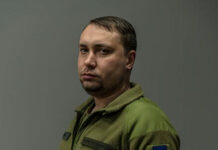
In October 2023, The Washington Post reported that “Ukrainian spies with deep ties to CIA” were waging a “shadow war” against Russia. It named Kyrylo Budanov, the head of the Main Directorate of Intelligence (GUR-now HUR), as leading Ukrainian efforts abroad “to fight Russia anywhere Russians can be found.”
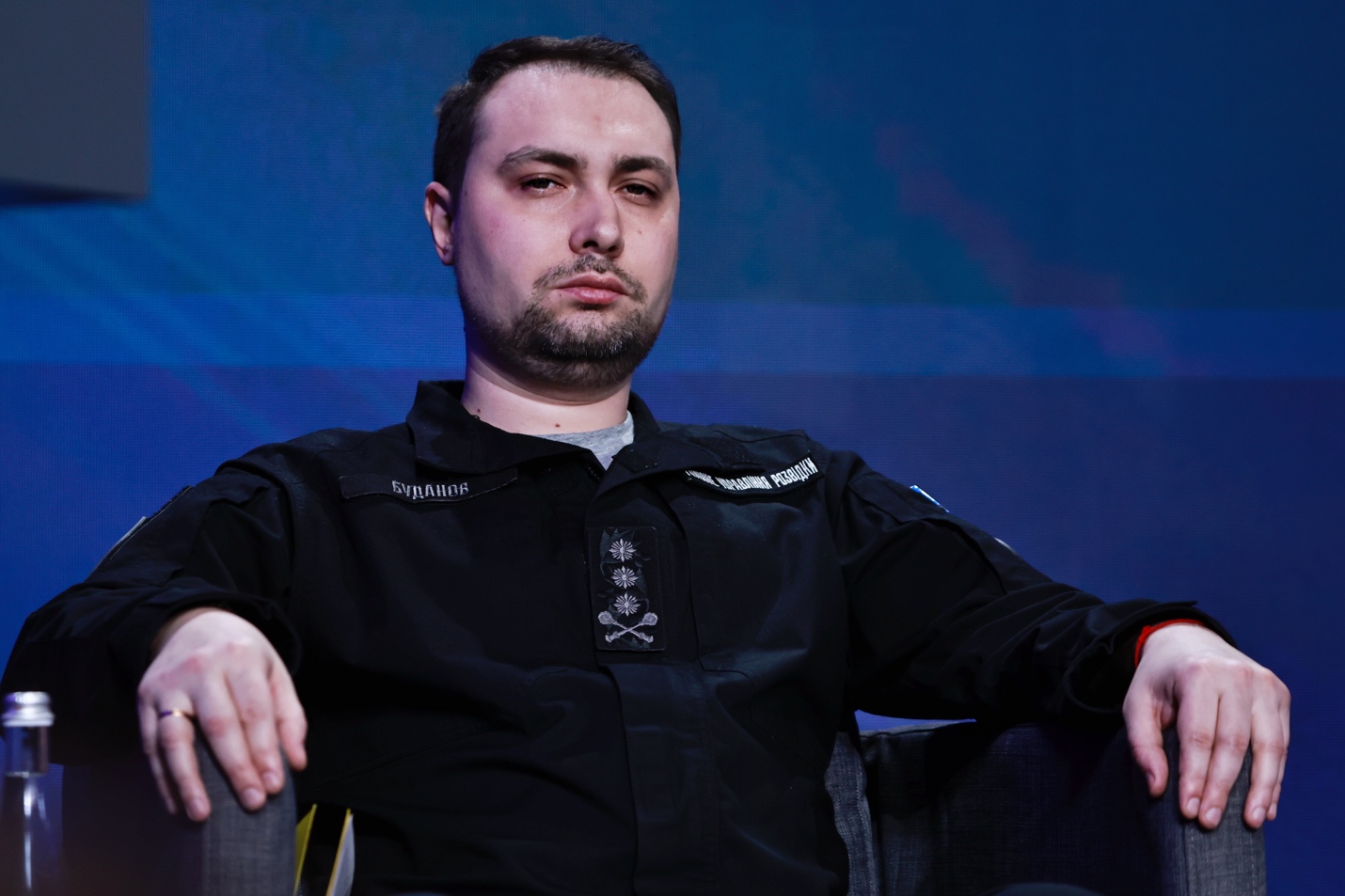
The article went on to describe how, after 2014, the CIA helped transform the GUR and the Security Service of Ukraine (SBU) through financing, training, equipment and institutional support:
“[Operations inside Russia] have involved elite teams of Ukrainian operatives drawn from directorates that were formed, trained and equipped in close partnership with the CIA, according to current and former Ukrainian and U.S. officials. Since 2015, the CIA has spent tens of millions of dollars to transform Ukraine’s Soviet-formed services into potent allies against Moscow, officials said. The agency has provided Ukraine with advanced surveillance systems, trained recruits at sites in Ukraine as well as the United States, built new headquarters for departments in Ukraine’s military intelligence agency, and shared intelligence on a scale that would have been unimaginable before.”
According to The New York Times, Budanov himself was trained by the CIA. His forces began “staging assassinations and other lethal operations,” which, according to the reporting, “violated the terms the White House thought the Ukrainians had agreed to.”
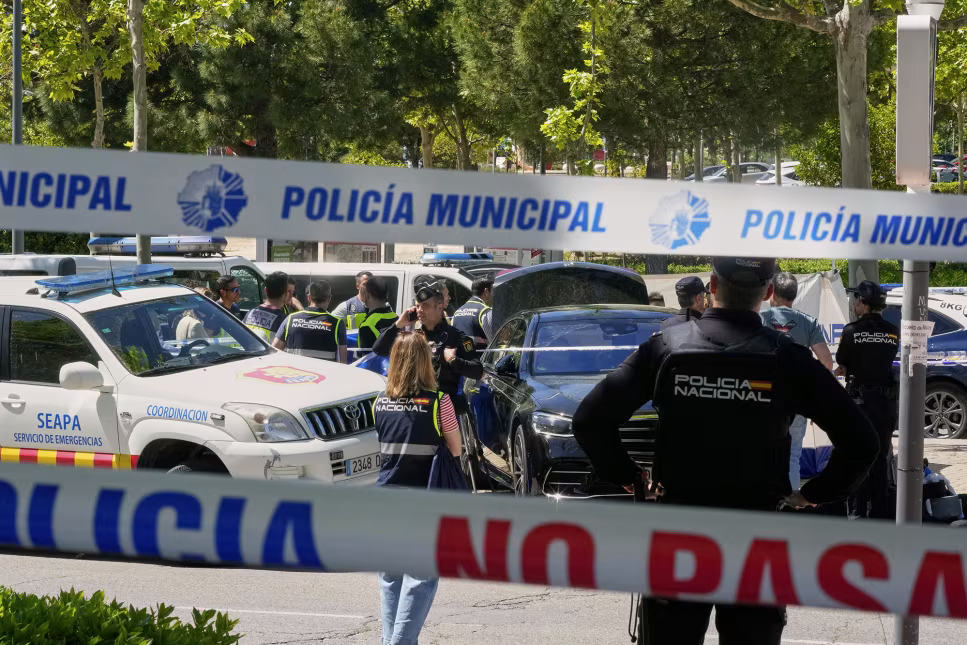
In 2015, the SBU established an elite counterintelligence unit for conducting “wet work,” or targeted assassinations. Scholar Richard Sakwa writes that a likely example of this activity was the May 21, 2025, killing of Andriy Portnov, opposition politician and senior aide to former President Viktor Yanukovich, outside his children’s school on the outskirts of Madrid. At the time of his death, he had been touted as a credible presidential rival to President Volodymyr Zelensky.[1]
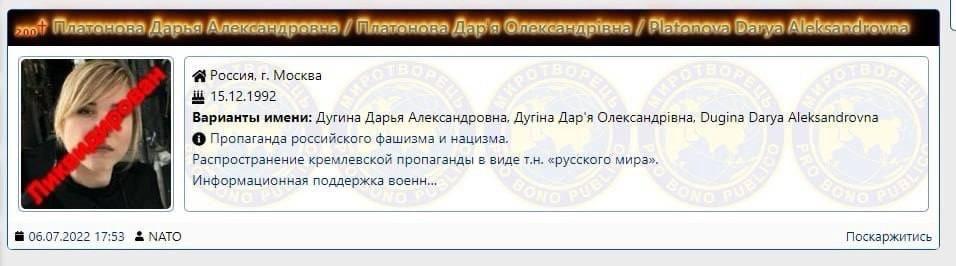
CovertAction Magazine reported in September 2022 on an assassination campaign involving a CIA-linked Ukrainian “hit list” called Myrotvorets (Peacemaker) that publishes the names and addresses of alleged “Russian propagandists.” In addition to Ukrainian opposition journalists and politicians, the list has included Americans such as writer Chris Hedges, political scientist John Mearsheimer, and former Director of National Intelligence Tulsi Gabbard.
When listed individuals are killed, the list updates with the word “liquidated” stamped in red across their names. After the shooting of former Ukrainian Socialist Party MP Illia Kyva, for example, GUR spokesman Andriy Yusov stated that “such a fate awaits other traitors of Ukraine and lackeys of the Putin regime” and referred to Kyva as “disgusting scum.”
This dehumanizing language is a hallmark of CIA assassination campaigns throughout the Global South, as seen in Nicaragua, Vietnam, and Indonesia. In western Ukraine during the early Cold War, the CIA allied with former Nazi collaborators in the Ukrainian Insurgent Army (UPA), who were responsible for the massacres of Jews and Poles, as part of Operation Rollback.[2]
Despite these networks being crushed by the Soviet NKVD, they survived in exile across Europe, the U.S., and especially Canada. After the dissolution of the Soviet Union, with Western support, these forces re-emerged in Galicia.[3]
These intelligence efforts foreshadow the massive behind-the-scenes support from Washington for the violent 2014 Maidan coup that introduced these far-right forces into the contemporary political mainstream.[4]
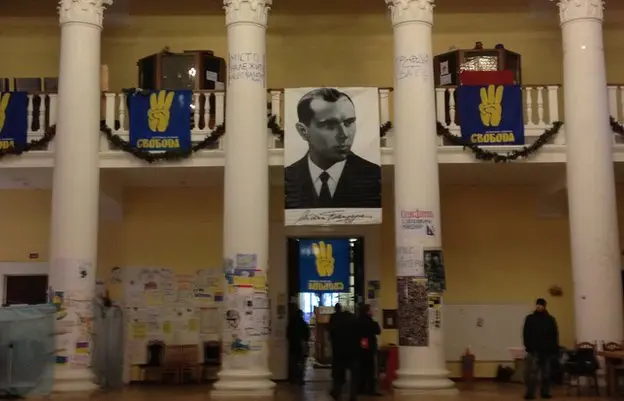
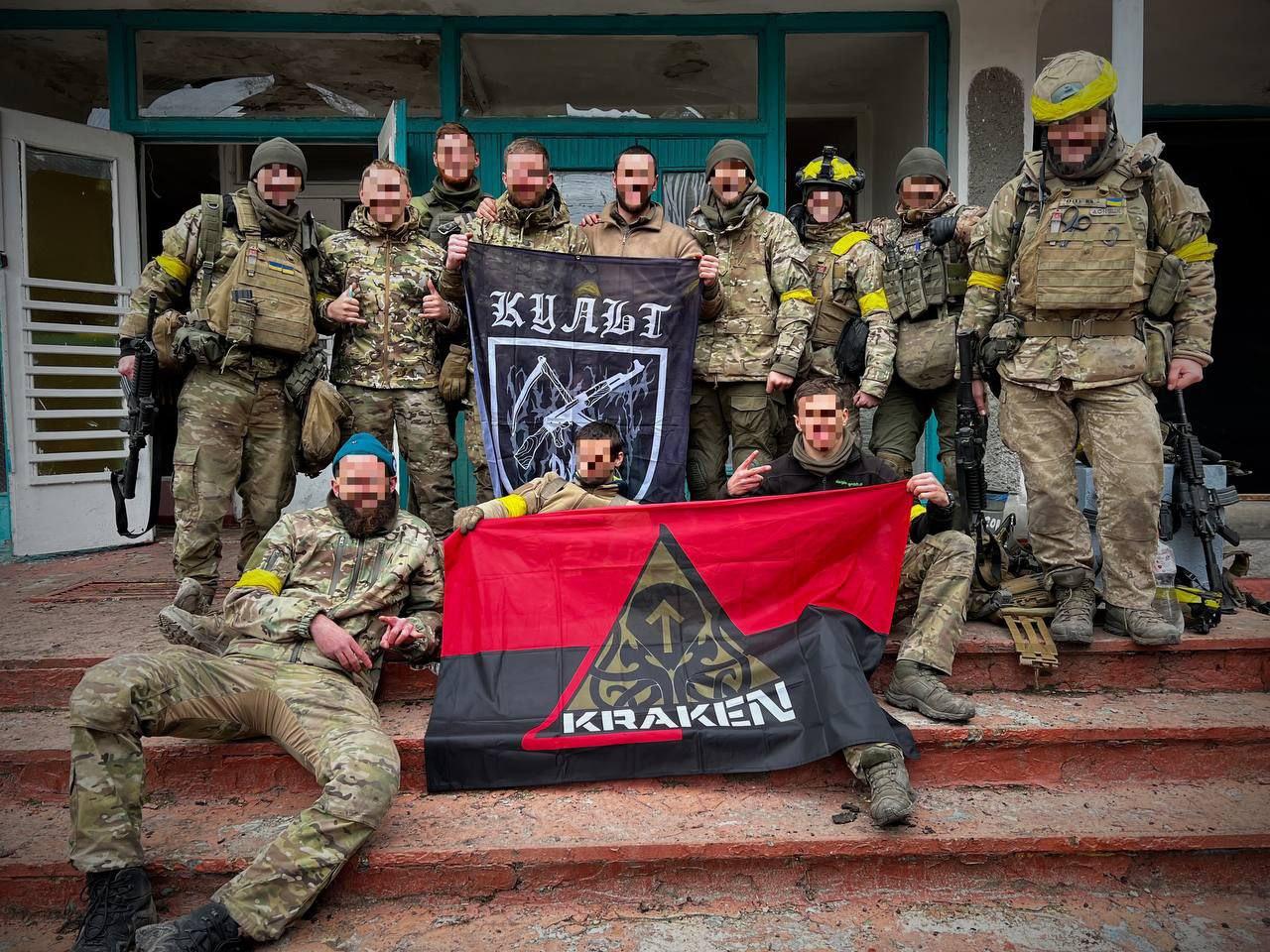
The post-2022 rehabilitation of neo-Nazi Azov founder Andriy Biletsky coincided with the increasingly close institutional ties between Budanov’s GUR and Azov-linked regiments like the 3rd Army Corps. For example, the GUR founded its elite Kraken Regiment from veterans of the Azov Battalion. Budanov has been described by one commentator as the “chief patron of Ukraine’s militarized neo-Nazis.”
In a January 2026 interview with CovertAction Magazine, former Ukrainian diplomat and parliamentary aide Andriy Telizhenko claimed that the CIA “controls almost everything in Ukraine.” This included journalists, advisers, and “a lot of politicians.” He stated furthermore that the CIA directly advises President Zelensky.
Telizhenko also alleged that Budanov was a key figure behind the 91-drone attack on the residence of Russian President Vladimir Putin in late December 2025, which reportedly threatened to derail months of talks of a peace deal. Both Ukraine and the CIA denied participation in the attack.
Amid a government shakeup, on January 15, 2026, Budanov was appointed head of the President’s Office, reinforcing claims of deep CIA links amongst Zelensky’s direct advisers.
A Ukrainian Global Proxy Force?
The next-generation surveillance and drone-strike technology commanded by CIA-trained intelligence services has enabled the Ukrainian state to project power outside its own territory.
As Michael Weiss, journalist and director of special investigations at the National Endowment for Democracy-funded Free Russia Foundation, stated in an interview with MS NOW on May 5, 2026, “the Ukrainians are fighting an incredible campaign not only on their own territory, but now all over the world.”
This apparently included Ukrainian intelligence having had a hand in “driving the Russians out of Mali,” as well as playing a role in providing drone technology to Syrians during the ousting of Bashar al-Assad. Weiss stated that, despite President Trump publicly seeking to end the war:
“The U.S. intelligence community has not stopped its support for the Ukrainians. In fact, that support, I’m told at high levels of the U.S. intelligence community, has only expanded. We are helping the Ukrainians wage war against Russia in a covert fashion. One CIA officer told me at one point that we see the Ukrainians the way we saw the Cubans in 1959. These are going to be an émigré population that is our proxy force to do all kinds of interesting things the world over.”
These claims are corroborated by The New York Times reporting that the CIA and U.S. military, with Trump’s blessing, secretly “supercharged a Ukrainian campaign of drone strikes on Russian oil facilities and tankers to hobble Mr. Putin’s war machine.”
Operations Abroad
Jihadist Allies in Mali
In August 2024, Mali cut diplomatic ties with Ukraine immediately following comments by GUR spokesperson Yusov.[5] His statements confirmed Ukraine’s involvement in providing Tuareg rebels with “all the necessary information they needed, and not just the information” that allowed them to conduct an attack that reportedly killed at least 84 Russian Wagner mercenaries[6] and 47 Malian soldiers over several days.
Yusov went on to say, “You will see more of this in the future.”
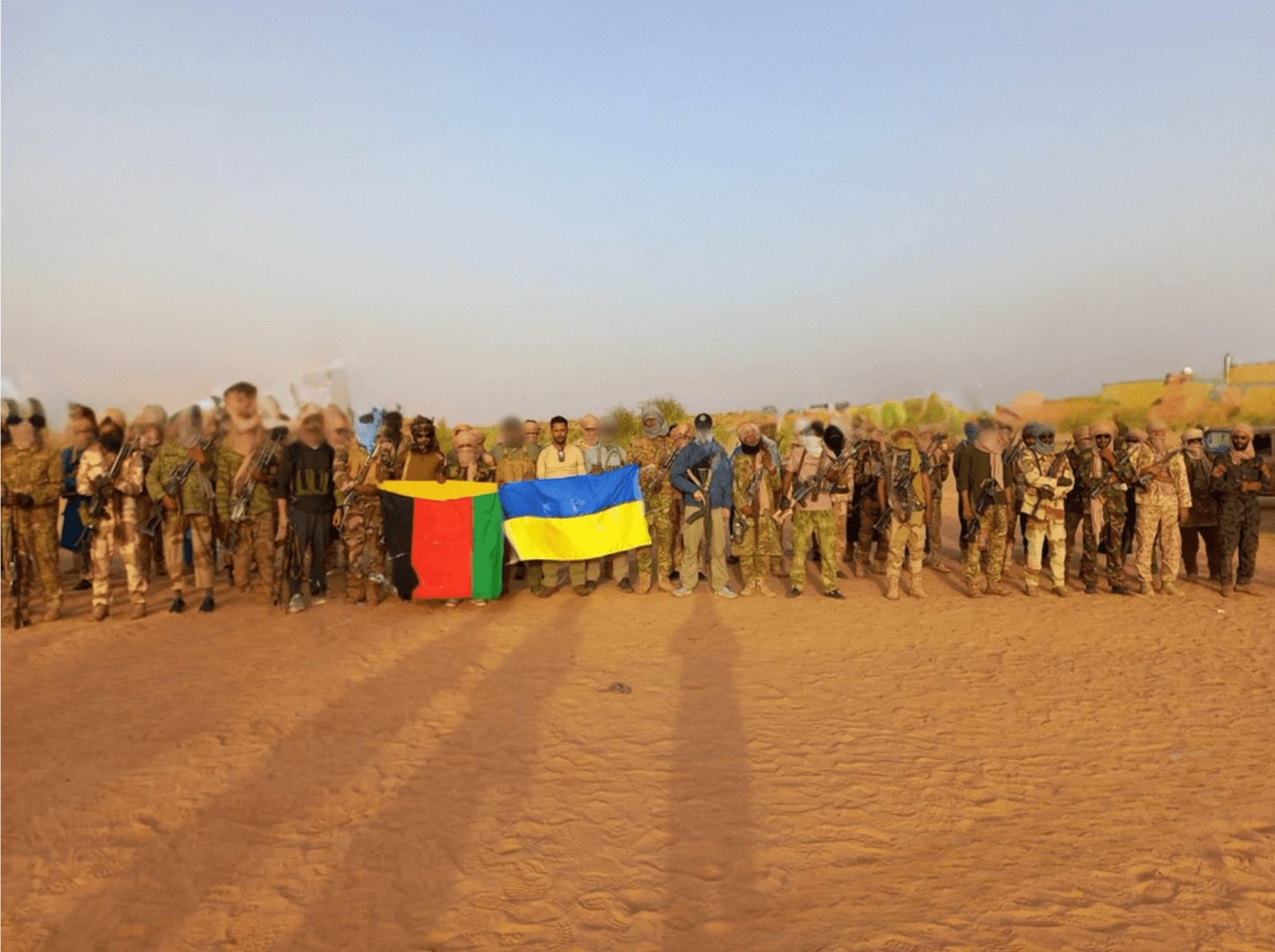
Mali said that Yusov had admitted Ukraine’s involvement in a “cowardly, treacherous and barbaric attack by armed terrorist groups” that resulted in multiple deaths of Malian security forces. Mali’s official statement said that the actions taken by the GUR “violate the sovereignty of Mali, go beyond the scope of foreign interference…and constitute a clear aggression against Mali and support for international terrorism.”
Almost two years later, on April 25-26, 2026, a large, coordinated attack was carried out by jihadist and separatist forces linked to al-Qaeda and the Islamic State that killed Mali’s Defense Minister, General Sadio Camara. General Camara had been a central figure in what some describe as an anti-colonial government, owing to its expulsion of French military forces and rhetoric of national sovereignty and anti-terrorism.
One foreign policy analyst asked in the days following the attack, “Is Ukraine Helping Al Qaeda Conquer West Africa?” The article detailed how Ukraine has trained Tuareg separatist proxies in drone warfare, which are now providing air support for al-Qaeda to capture and hold territory in Mali.
The article noted that this bears the marks of blowback, given that, although the U.S. has been aligned with al-Qaeda itself during the Syrian civil war, AFRICOM’s shadow network of 29 military bases across 15 countries in Africa is ostensibly intended to prevent al-Qaeda and Islamic State gains.
Washington has a strategic interest in maintaining Western influence in Mali following France’s and ECOWAS’s withdrawal from the Sahel region. One representative figure of post-war imperialist U.S. foreign policy—and of what political scientist Andrei Tsygankov identifies as the hawk section of the anti-Russian lobby pushing the war[7]—is former National Security Adviser Zbigniew Brzezinski.
In his 1997 book The Grand Chessboard,[8] Brzezinski underscored the criticality of American control over the Eurasian continent, given that this dominance entails “Africa’s subordination”—which, in non-Western hands, would render the “Western Hemisphere and Oceania geopolitically peripheral” to these rich continents.
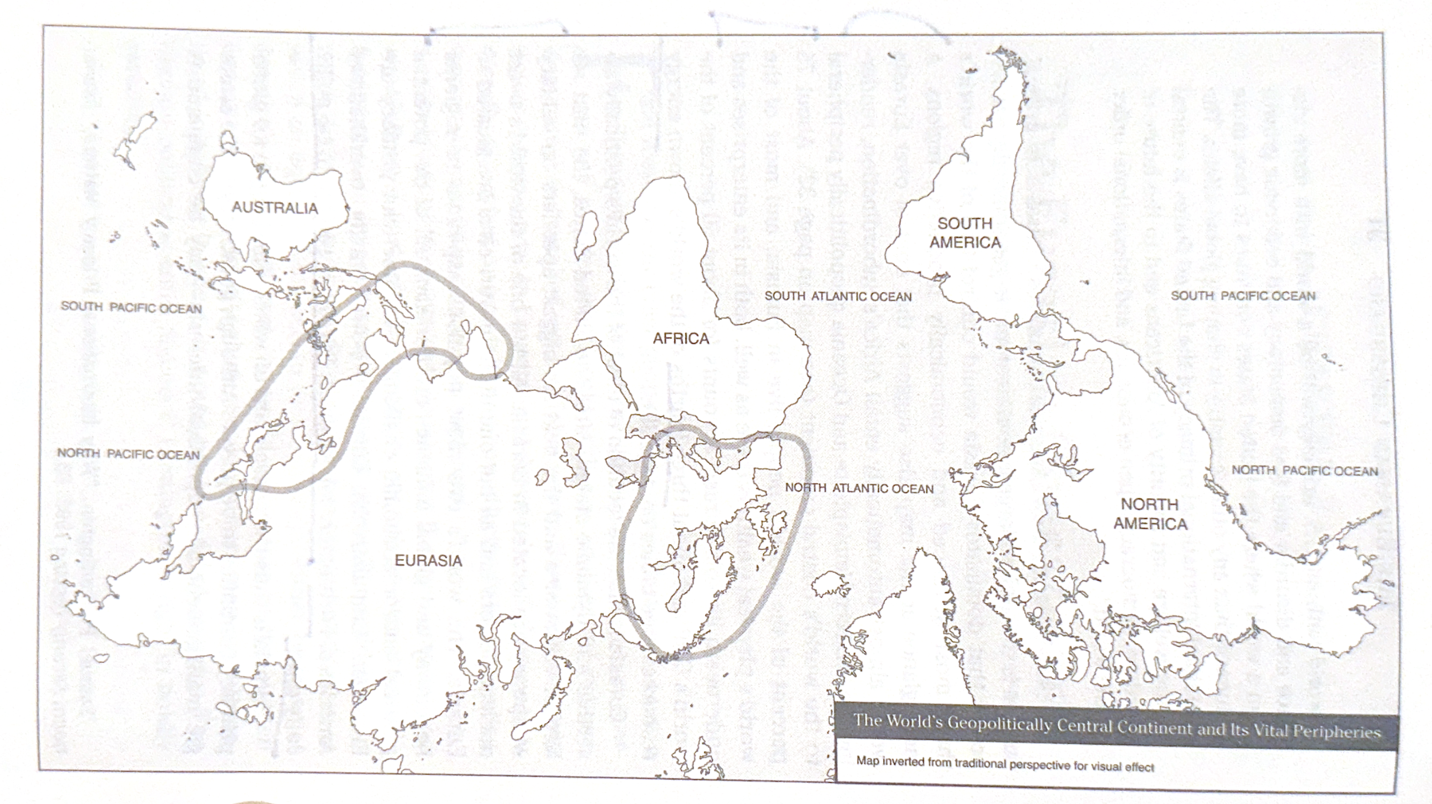
Brzezinski went on to advocate for a greater American acceptance of France’s concerns for a “European role” in Africa. Perhaps current U.S. foreign policy in West Africa is intended to fill the gap France has left in enforcing the Sahel region’s peripheral position in the global capitalist economy.
The Cold War policy of containment appears to have been adapted to the New Cold War. In its 21st-century iteration, these tactics have merged with innovations of the Global War on Terror for a “Global War on Russia,” making surveillance, drones, remote warfare and now artificial intelligence central to the U.S.’s aspirational global hegemony.
Aiding War Criminals in Sudan
In September 2023, CNN reported that Ukraine’s special forces were likely behind strikes on “Wagner-backed forces” in Sudan, with video footage revealing the hallmarks of Ukrainian-style drone attacks.
The report stated that covert drone strikes by Ukraine in Sudan marked a dramatic and provocative expansion of Kyiv’s theater of war against Moscow, and that this was the first time such first-person view loitering drones have been on the African continent. GUR spokesman Yusov had stated that Ukraine “can neither confirm nor deny” this report, a caution that apparently went unheeded in the August 2024 Mali attack.
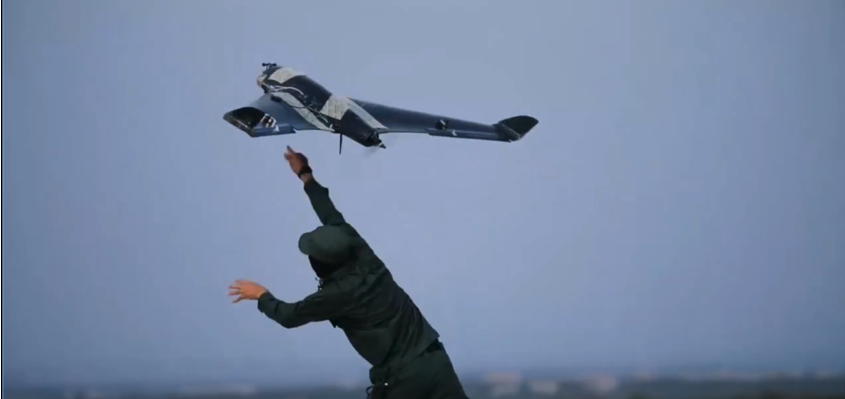
A month later, in November 2023, the Kyiv Post released footage purporting to show GUR special forces operators targeting Russian paramilitary forces and their local allies in Sudan with drones. Separate footage from January 2024 depicted Ukrainian special forces interrogating Wagner private military contractors in Sudan.
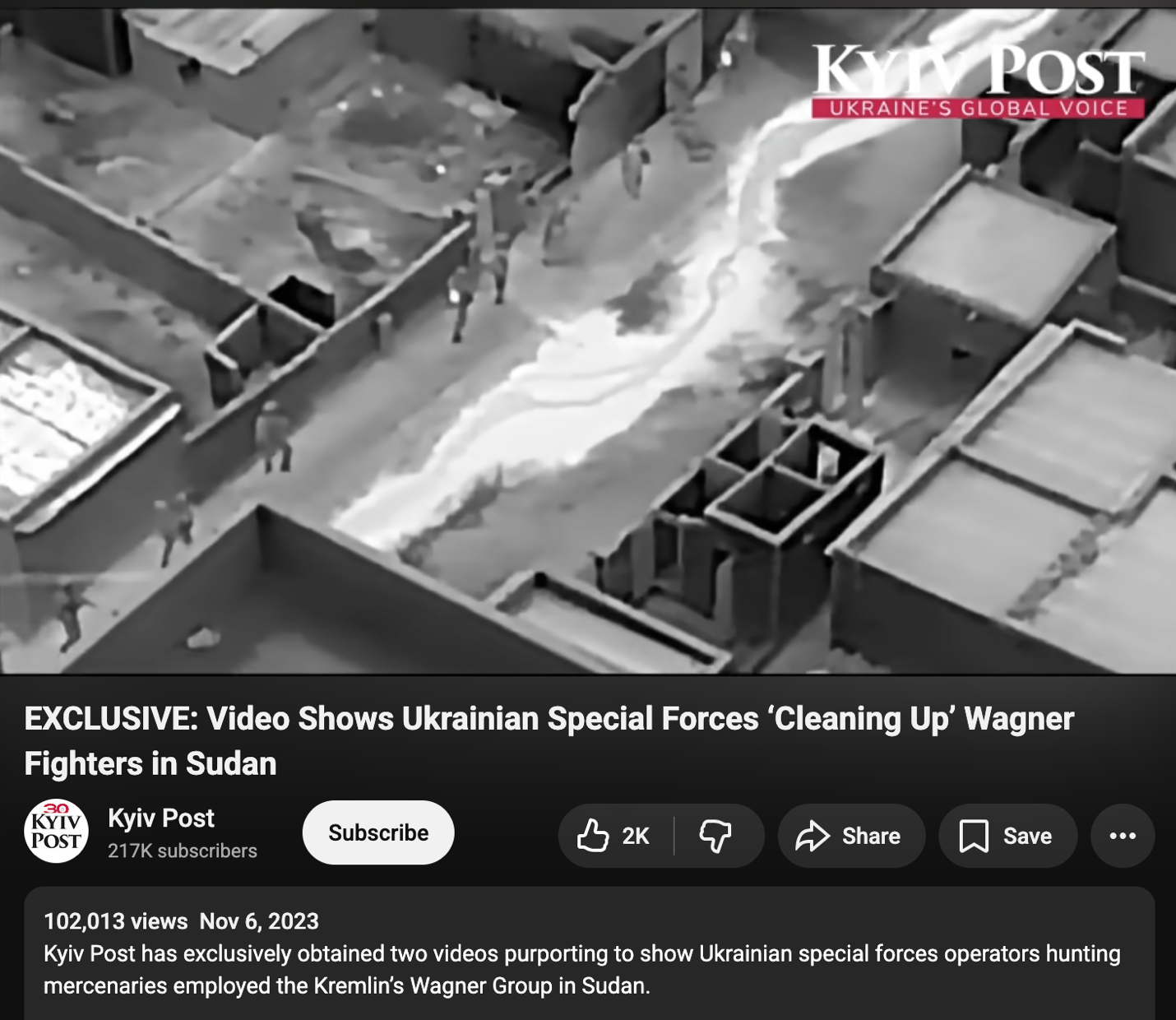
The article connected the Sudanese campaign to Budanov’s vow to “destroy Russian war criminals anywhere in the world, wherever they are.” In Sudan, this entails supporting the Sudanese Armed Forces (SAF) against the Rapid Reaction Force (RSF), which is reportedly armed by the Wagner Group.
In September 2024, President Zelensky said he had held an impromptu meeting with the head of the SAF, Abdel Fattah al-Burhan, while traveling through Ireland’s Shannon Airport: “We discussed our common security challenges, namely the activities of illegal armed groups financed by Russia.”
This appears, at least superficially, to conflict with U.S. foreign policy: Following a December 2023 determination that members of the SAF had committed war crimes, the U.S. sanctioned al-Burhan in January 2025.
A press statement released by former Secretary of State Antony Blinken stated that “under Al-Burhan’s leadership, [the SAF] have continued to commit atrocities, including targeting civilians and civilian infrastructure, and executing civilians.” This reportedly included the use of food deprivation as a tactic of war and the deliberate blocking of humanitarian aid, contributing to the world’s largest humanitarian crisis, which has left more than 25 million Sudanese facing acute food insecurity.
The press release went on to state that “The United States remains committed to holding accountable those responsible for atrocities committed in Sudan.”
Strange Bedfellows in Syria
The Washington Post reported in December 2024 that Western intelligence sources believed Ukraine played a modest role in overthrowing Syrian President Bashar al-Assad as part of a broader covert campaign against Russian operations in the Middle East and Africa.
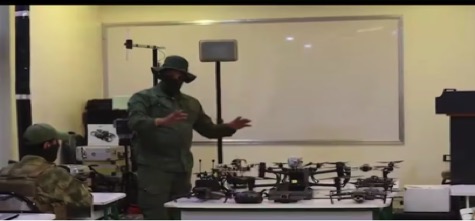
At about this time, Ukrainian intelligence sent approximately 20 experienced drone operators and 150 first-person view drones to rebel forces in Idlib, Syria, to help Hayat Tahrir al-Sham (HTS).
HTS is a Sunni Islamist group formed in January 2017 from Salafi jihadist forces, including Al-Nusra Front, a State Department-designated foreign terrorist organization and an official Syrian affiliate of al-Qaeda.
The Syrian newspaper Al-Watan reported that Budanov maintains contact with the leader of HTS and former leader of Al-Nusra Front, Abu Mohammad al-Julani (also known as Ahmed al-Sharaa), to recruit fighters into the Armed Forces of Ukraine (AFU). Two days later, the Turkish newspaper Aydınık reported that it had obtained footage from a meeting between a Ukrainian delegation and HTS from June 2024, although this footage was not released.
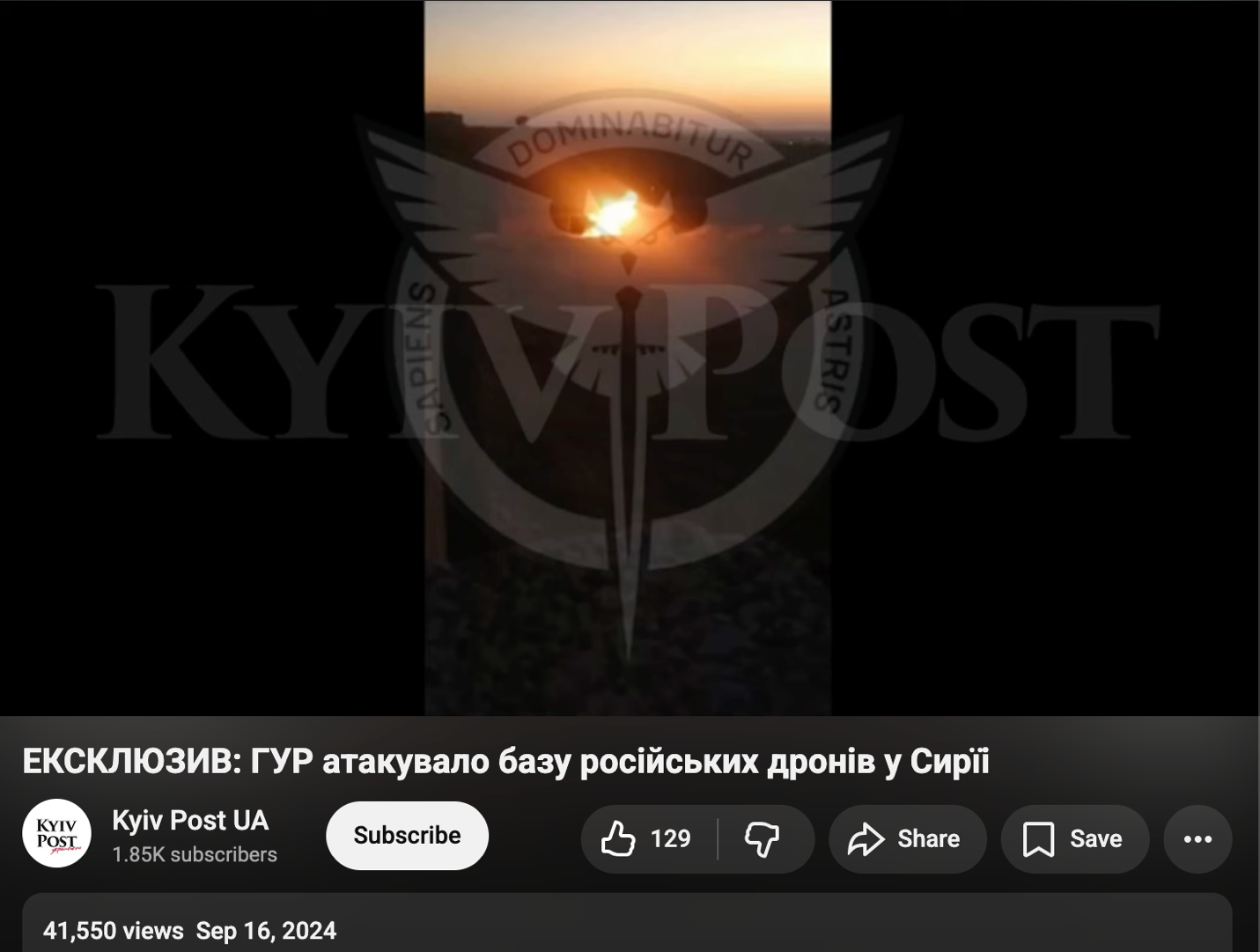
Ukrainian operations also involved countering Russian drone capabilities. According to a Kyiv Post source “with military intelligence,” in September 2024, GUR special forces planted improvised explosive devices at a Russian military base which manufactured drones on the southeastern outskirts of Aleppo. The article referenced several other operations for which they provided combat footage, for example, explosions resulting in Russian mercenary fatalities in the Golan Heights.
In response to these events, permanent Russian representative to the UN Vassily Nebenzia alleged that cooperation between Ukrainian and Syrian terrorists is under way and that HTS fighters are openly flaunting this. Russian Foreign Ministry representative Maria Zakharova commented that such events indicate the transformation of Ukraine into an international terrorist state.
Minister of Foreign Affairs Sergey Lavrov similarly alleged that Kyiv was training rebels in “new UAV [drone] production technologies for combat operations.” Ukrainian authorities, for their part, made no comment on the reporting.
One researcher with expertise in terrorist use of innovative technologies wrote that HTS’s use of drones significantly aided their offensive, helping them stave off regime forces and gain substantial ground in a relatively short period of time.
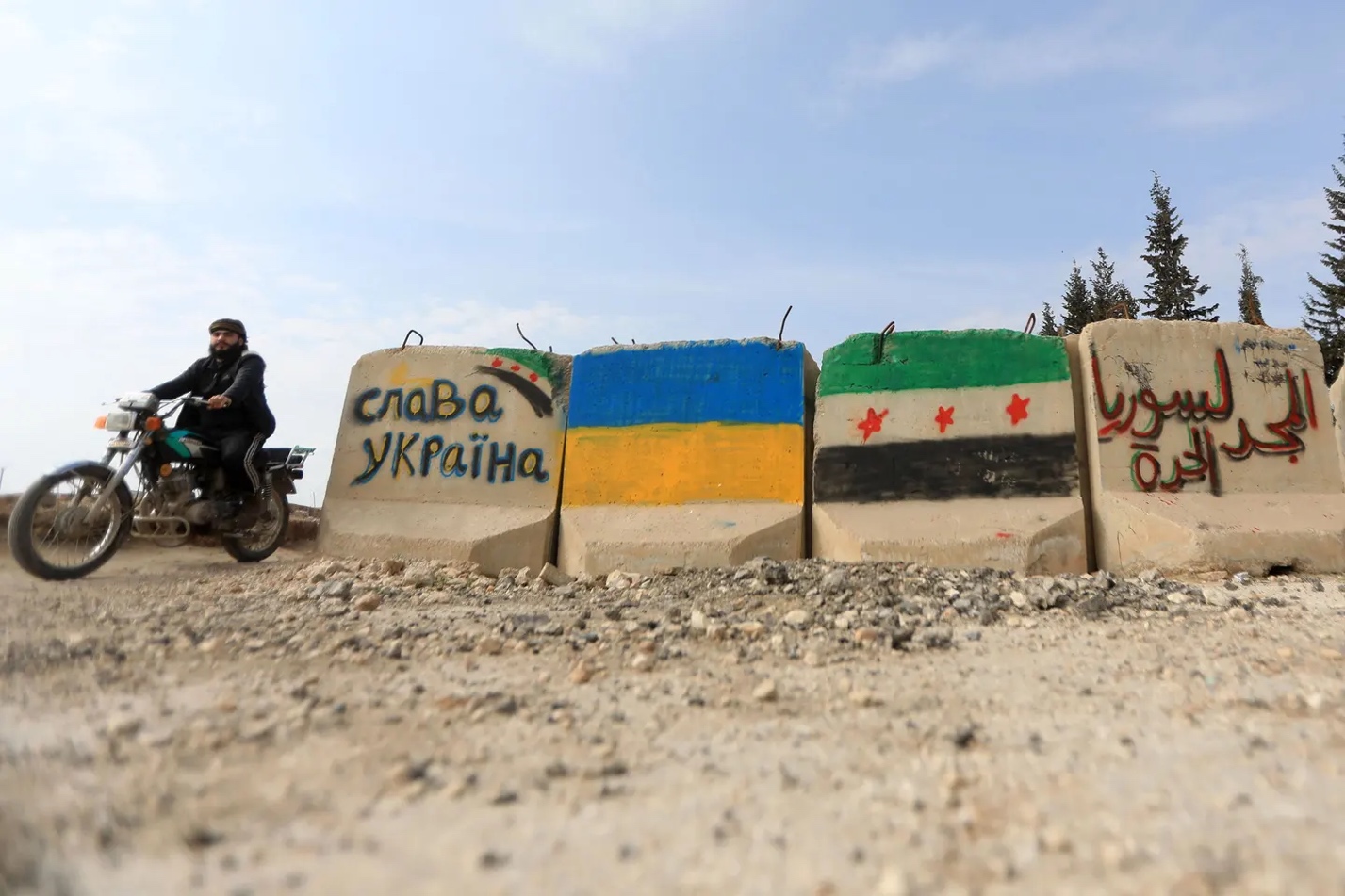
Following al-Assad’s ouster in January 2025, the U.S. and EU heartily welcomed the ascendancy of al-Jolani (now known as Ahmed al-Sharaa) to the position of President of Syria. This came despite al-Jolani remaining at the time on the State Department’s list of Specially Designated Global Terrorists for his activities.
These events can be seen as part of a long-term U.S. foreign policy strategy to weaken Russian influence in the Middle East, regardless of the character of its allies in this project. The applied strategy echoes Brzezinski’s late Cold War policy of arming Afghan mujahideen forces to overextend and weaken the Soviet Union, leading in part to its dissolution.
Modernizing Taiwanese Warfare
It is not only Mali, Sudan and Syria that have seen the introduction of “lessons” learned by Ukrainian intelligence and special forces. According to the Financial Times, Taiwan is seeking to become a drone production powerhouse.
Taiwan expects its monthly production of 15,000 drones to grow seven-fold by 2030, with half sold overseas. Washington supports this development, in part, because this could create a supply chain devoid of Chinese-made drones, such as DJI, which are ubiquitous in the Russo-Ukrainian war. This is seen by the U.S. as strategically important, given China’s rising technological capabilities.
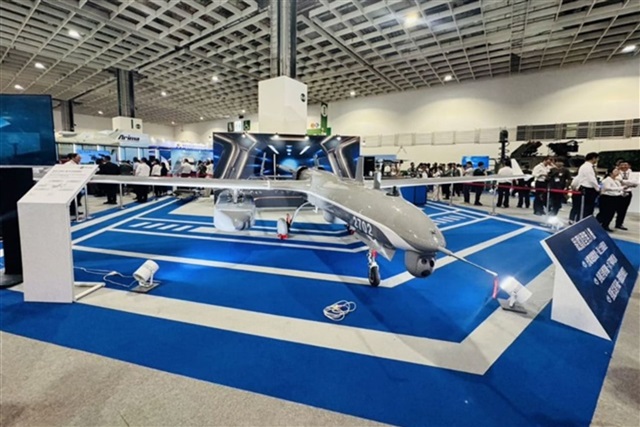
In August 2025, Intelligence Online noted that Taiwan was setting up a drone-warfare school with Washington’s support, which would be headed by “former foreign volunteers” who fought in Ukraine. Sources say their objective is to train several hundred FPV operators by mid-2026, capable of operating in a network with limited resources from scattered bases—in other words, to introduce Taiwan to Ukrainian tactics.
The New York Times reported that, despite Taiwan and Ukraine having no official diplomatic or military ties, an informal network led by Ukrainian defense company executives and “volunteers” has been exchanging military technology and expertise with Taiwan. Given that, since its independence in 1992, Ukraine has adhered to the “One China” policy, this shift may be interpreted as a by-product of U.S. influence.
Indicative of these growing ties, Taiwan, “as a member of the global democratic alliance,” set aside a special budget of almost USD 59 million for humanitarian aid for Ukraine in 2023. By January 2024, Taiwan had contributed more than USD 100 million in aid and today continues to align with Western sanctions against Russia.
Taiwan has been a key outpost for U.S. power in East Asia since the end of World War II, using it as a launching base for military interventions into Southeast Asia and as a bulwark in its effort to contain the rise of China.[9]
Blowback
Blowback is a term coined by the CIA to describe the unintended and often violent consequences of covert operations that eventually rebound against the state that initiated them.[10]
This became an especially prudent U.S. strategy after the abolition of the draft to mitigate the political risk in involving citizens in overseas operations, as did remote warfare through the employment of drones and private military and security contractors.
In this vein, Washington has a documented history of supporting far-right proxy forces to enforce its national interests abroad.[11] These forces are often drawn from individuals in diaspora networks united by their militant anti-communism, as many had fled what they considered communist political persecution.
For example, the CIA’s use of Cuban far-right exile networks referred to by Michael Weiss above entailed terroristic violence, sabotage and covert operations inside the U.S. and abroad.
Cuban exiles are known to have fought in CIA-run dirty wars in Congo and Angola; carried out repeated terrorist assaults on Cuba and Nicaragua, and have been linked to the JFK and RFK assassinations, the murder of Che Guevara, and the Watergate break-in.[12]
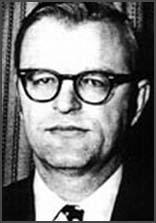
These right-wing Cubans—many of whom had been trained in terrorist methods under the direction of the CIA’s JM-Wave station in Miami headed from 1962 to 1965 by Theodore Shackley, were also heavily implicated in the drug trade and may have coordinated some drug trafficking for the CIA.
In December 2024, political commentator Ted Snider published an article entitled, “One Day, Ukrainians Might Hate America.” As he and many other analysts have noted, since its start, Washington has discouraged a diplomatic settlement to the war. This has deeply entrenched an authoritarian regime in Kyiv, which exacerbated latent regional differences in Ukraine that culminated in an ongoing territorial dispute.[13]
The war had, by mid-2025, resulted in an estimated 6.8 million Ukrainians fleeing the country, with another 4.9 million internally displaced. Although not confirmed, the Center for Strategic and International Studies estimated in a January 2026 report that Ukrainian forces have likely suffered somewhere between 500,000 and 600,000 casualties.
In financial terms, one estimate concluded that, between 2022 and early 2025, the U.S. poured more than $175 billion into the war effort, and the EU contributed another $118.5 billion.[14] In late 2024, Zelensky admitted that a total of $100 billion in support funds was missing, at a time when between 1,000 and 3,000 luxury vehicles were being imported into Ukraine, the GDP per capita had fallen, and the overall economy contracted by one-third.[15]
However, not all have been losing out. A massive influx of foreign capital followed Zelensky’s pushing through a “land reform” policy that enables foreign corporations to buy agricultural land in Ukraine. Of Ukraine’s 4.3 million hectares under large-scale agriculture, 3 million hectares now belong to a dozen giant agribusinesses.[16]
By late 2024, 70% of Ukrainians were convinced that leaders were using the war to enrich themselves, and many believed Zelensky was prolonging the war to stay in power.[17]
The war has poisoned U.S. political culture, with the return of Cold War hysteria reinforcing the power of the military-industrial-congressional complex and further subverting the integrity of mainstream media and academia. The only real beneficiary of prolonging the war appears to be the finance capitalists in the defense sector and the war-hawk political analysts whose stated goal is to see Russia “overextended and unbalanced.”
These beneficiaries include the CIA-linked Palantir Technologies, a U.S. surveillance company and defense contractor that hosts a “gamified” platform where neo-Nazi battalions upload drone strike videos in exchange for points so that Palantir can train AI weapons on human running patterns.
Additionally, the CIA gains a mobile proxy arm through which to enforce Washington’s geopolitical interests globally.
Unexpected Capacities
Elite narratives simultaneously claim that the legitimization of the far right is necessary because Ukraine is fighting for its life, while asserting that these same forces are on the brink of an absolute military victory.
If the normalization of far-right forces is to be excused on grounds of “emergency measures,” attentive observers may wonder how Ukraine has the strategic capacity to send its intelligence operators to conduct covert operations in foreign war zones.
These events might be especially puzzling considering that they involve supporting separatist or opposition movements that have no direct relation to preserving the territorial integrity of Ukraine.
With globally mobile, clandestine and high-tech elite units with CIA training and deep ties to ultra-nationalist and far-right military forces, the Russo-Ukrainian war can be expected to increasingly bleed into operations abroad that bear the marks of blowback.

See Richard Sakwa, The Russo-Ukrainian War: Follies of Empire (Boulder, CO: Lynne Rienner, 2026), 218. ↑
See Lindsey A. O’Rourke, Covert Regime Change: America’s Secret Cold War (Ithaca, NY: Cornell University Press, 2018), 146-52. ↑
See Per Anders Rudling, “‘Fighters for the Freedom of Ukraine’: Canada’s Nazi Collaborator Monuments,” in Grzegorz Rossolinski-Liebe and Per Anders Rudling, Transnational and Transatlantic Fascism, 1918-2018: The Far Right in East Central and Southeastern Europe (London: Routledge, 2025). ↑
See Ivan Katchanovski, The Maidan Massacre in Ukraine: The Mass Killing that Changed the World (London: Palgrave Macmillan, 2024). ↑
Prior to assuming this role, Yusov had been identified as a leader of the Capitulation Resistance movement which, according to independent researcher Moss Robeson, was “essentially an OUN-B front.” ↑
These events appear to be more complex than a straight-forward proxy conflict. In an interview with Zelensky, The Washington Post brought to his attention documents that indicate that the GUR had back-channel contact with former Wagner leader Yevgeny Prigozhin that Zelensky was aware of, including a meeting with Prigozhin and GUR officers in an unspecified African country. Zelensky responded that “this is a matter of [military] intelligence,” and asked the reporter to identify their source, given that “[state treason] is the most severe felony in our country.” The reporter went on to relay the information that, on February 13, 2023, Budanov informed Zelensky about a Russian plan to destabilize Moldova with two former Wagner associates as a way to incriminate Prigozhin because “we have dealings” and secret meetings with him in Africa. When informed of this, Prigozhin wrote on his Telegram channel, “Yes of course I can confirm this information, we have nothing to hide from the foreign special services. Budanov and I are still in Africa.” Days later, Budanov echoed this in an interview, stating that “80% of what [Prigozhin] says is the truth.” ↑
See Andrei P. Tsygankov, Russophobia: Anti-Russian Lobby and American Foreign Policy (New York: Palgrave Macmillan, 2009). ↑
See Zbigniew Brzezinski, The Grand Chessboard: American Primacy and Its Geostrategic Imperatives (New York: Basic Books, 1997). ↑
Recently, under U.S. pressure, Taiwan has planned to sharply increase its defense budget from 2.5% of GDP in 2024 to a planned 5% in 2030. This was decided against protests by the new chair of the Kuomintang (KMT), Cheng Li-wun, who has repeatedly argued Taiwan is “not an ATM” for “unreasonable” military budgets. A drone spending bill caused a conflict within Taiwan’s legislature over whether it should cap how many USD billions it allocates. ↑
See Chalmers Johnson, Blowback: The Costs and Consequences of American Empire (New York: Henry Holt, 2000). ↑
See William Blum, Killing Hope: U.S. Military and CIA Interventions Since World War II (London: Zed Books, 2004); Vincent Bevins, The Jakarta Method: Washington’s Anticommunist Crusade & The Mass Murder Program That Shaped Our World (New York: PublicAffairs, 2020). ↑
See among other sources U.S. House Select Committee on Assassinations, Final Report of the Select Committee on Assassinations Regarding the Assassination of President John F. Kennedy (Washington, DC: U.S. Government Printing Office, 1979), 3; Gaeton Fonzi, The Last Investigation (New York: Thunder’s Mouth Press, 1993); Peter Dale Scott, Deep Politics and the Death of JFK (Berkeley: University of California Press, 1993); John Stockwell, In Search of Enemies: A CIA Story (New York: W.W. Norton, 1984); David Whelan, Mind Games: The Assassination of John Lennon (2024); Piero Gleijeses, Conflicting Missions: Washington and Havana in Africa, 1959-1976 (Chapel Hill: University of North Carolina Press, 2002); Michael Ratner and Michael Steven Smith, Who Killed Che: How the CIA Got Away With Murder (New York: OR Books, 2011). ↑
See Volodymyr Ishchenko, Towards the Abyss: Ukraine from Maidan to War (London: Verso, 2024); Katchanovski, The Russia-Ukraine War and its Origins. ↑
Sakwa, The Russo-Ukrainian War, 279-80 ↑
Ibid., 280. ↑
Ibid., 235. ↑
Ibid., 233-34. ↑
CovertAction Magazine is made possible by subscriptions, orders and donations from readers like you.
Blow the Whistle on U.S. Imperialism

Click the whistle and donate
When you donate to CovertAction Magazine, you are supporting investigative journalism. Your contributions go directly to supporting the development, production, editing, and dissemination of the Magazine.
CovertAction Magazine does not receive corporate or government sponsorship. Yet, we hold a steadfast commitment to providing compensation for writers, editorial and technical support. Your support helps facilitate this compensation as well as increase the caliber of this work.
Please make a donation by clicking on the donate logo above and enter the amount and your credit or debit card information.
CovertAction Institute, Inc. (CAI) is a 501(c)(3) non-profit organization and your gift is tax-deductible for federal income purposes. CAI’s tax-exempt ID number is 87-2461683.
We sincerely thank you for your support.
Disclaimer: The contents of this article are the sole responsibility of the author(s). CovertAction Institute, Inc. (CAI), including its Board of Directors (BD), Editorial Board (EB), Advisory Board (AB), staff, volunteers and its projects (including CovertAction Magazine) are not responsible for any inaccurate or incorrect statement in this article. This article also does not necessarily represent the views the BD, the EB, the AB, staff, volunteers, or any members of its projects.
Differing viewpoints: CAM publishes articles with differing viewpoints in an effort to nurture vibrant debate and thoughtful critical analysis. Feel free to comment on the articles in the comment section and/or send your letters to the Editors, which we will publish in the Letters column.
Copyrighted Material: This web site may contain copyrighted material the use of which has not always been specifically authorized by the copyright owner. As a not-for-profit charitable organization incorporated in the State of New York, we are making such material available in an effort to advance the understanding of humanity’s problems and hopefully to help find solutions for those problems. We believe this constitutes a ‘fair use’ of any such copyrighted material as provided for in section 107 of the US Copyright Law. You can read more about ‘fair use’ and US Copyright Law at the Legal Information Institute of Cornell Law School.
Republishing: CovertAction Magazine (CAM) grants permission to cross-post CAM articles on not-for-profit community internet sites as long as the source is acknowledged together with a hyperlink to the original CovertAction Magazine article. Also, kindly let us know at info@CovertActionMagazine.com. For publication of CAM articles in print or other forms including commercial internet sites, contact: info@CovertActionMagazine.com.
By using this site, you agree to these terms above.
About the Author
Zachary Sedefian researches and writes about imperialism and global political economy.
He holds an M.A. in Political Science from CUNY. His scholarly work is forthcoming in the Journal of Labor and Society.
Zachary can be reached at zbsedefian@gmail.com.

While both instances involve the CIA countering Moscow’s sphere of influence, comparing them directly can be misleading. The Cuban operation was a covert, U.S.-engineered attempt at regime change using an exiled proxy force. The Ukrainian operation is an intelligence-partnership framework designed to assist a sovereign nation’s self-defense against foreign aggression.
The fundamental difference between these two strategies lies in whether the CIA is fabricating a force from scratch or reinforcing an established partner. In the case of Cuba, the agency pursued a strategy centered on an exiled proxy force, covertly recruiting and funding private citizens to build a standalone military unit (Brigade 2506) while micro-managing the planning, logistics, and execution of a regime-change invasion. Conversely, the strategy in Ukraine relies on institutional support, where the CIA acts as an intelligence partner to an existing sovereign national security apparatus. Investigative reporting reveals that over the course of a decade, the CIA has helped Kyiv build and finance a highly capable network of forward-operating spy bases and intercept capabilities, but the operations themselves are executed entirely by Ukrainian personnel defending their own territory.
The New York Times did a very thorough investigation of the Bucha Massacre accumulating an enormous amount of evidence that proved beyond a shadow of a doubt that Russia was responsible for the massacre. Despite the proof pro Russiian propagandists are still falsely claiming that Ukraine was responsible for this massacre.
There are several notable factual inaccuracies concerning the geopolitical events of late 2024. First, contrary to the claim that Ukrainian authorities “made no comment” on allegations of involvement in Syria, the Ministry of Foreign Affairs of Ukraine categorically rejected Russia’s accusations on December 4, 2024, labeling them completely groundless. Additionally, the timeline regarding the collapse of the Syrian regime is incorrect; Bashar al-Assad was ousted on December 8, 2024, when rebel forces successfully captured Damascus, rather than in January 2025. Finally, the assertion that the U.S. and EU “heartily welcomed” Abu Mohammad al-Jolani (Ahmed al-Sharaa) immediately following the ouster mischaracterizes the initial Western response. Early reactions from Western governments were highly cautious and conditional due to his past extremist ties; it was not until August 2026, following a period of transitional governance, that the U.S. officially removed Hay’at Tahrir al-Sham (HTS) and al-Sharaa from its terrorist designation list. Although there are some question marks about the new Syria President, Assad was one of the most ruthless and malicious dictators in the history of mankind so good that he is gone. .
The claim that Washington discouraged a diplomatic settlement in Ukraine represents non-interventionist political commentary rather than an objective consensus. Mainstream diplomatic and intelligence experts note that the 2022 Istanbul peace talks collapsed primarily due to Russian war crimes in Bucha and uncompromising territorial demands. Furthermore, characterizing Kyiv as an authoritarian regime is inaccurate, as Ukraine remains a globally recognized constitutional democracy operating under temporary martial law due to an active invasion
Claims linking Cuban exile networks to the JFK and RFK assassinations remain unproven conspiracy theories, as official investigations have never established involvement by these groups or the CIA. While allegations of active CIA coordination in drug trafficking are heavily contested, the 1989 Kerry Committee report did document that certain Contra-linked individuals engaged in drug trafficking with the awareness of some U.S. government elements