[This article follows a series on the military-industrial-academic complex and distortion of history teaching on American college campuses today. For previous articles, see here, here and here—Editors]
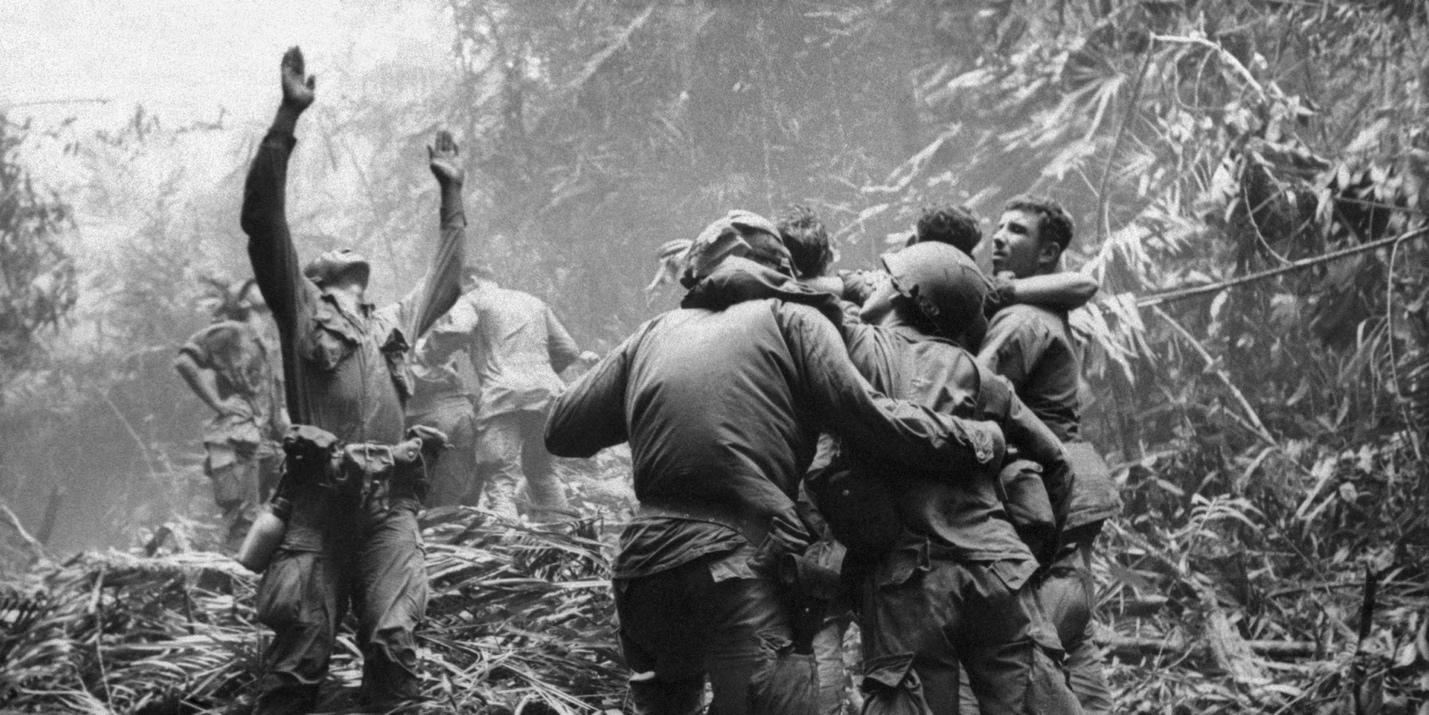
The Vietnam War was a horrific war rooted in U.S. government lies that resulted in the deaths of some two million Vietnamese civilians.
As young men facing the draft in the 1960s learned about the conflict, they began protesting the war in massive numbers, and a critical literature developed that framed the war in the larger context of U.S. history. Many soldiers also turned against the war and joined the antiwar movement.
Unfortunately, this academic year, students at many colleges will not be learning the truth about the Vietnam War. Instead, they will be taught a distorted history that purports to present a Vietnamese viewpoint but actually presents the viewpoint of the defeated South Vietnam government that had been installed by the U.S. and was hated by most of its own population.
A central mythology promoted by self-fashioned “revisionist” historians is that South Vietnam was a fledgling independent country ruled by devoted nationalists and that the Vietnam War was not the result of external aggression by the U.S. but was a civil war that started because of internal divisions.
Furthermore, many claim that the U.S. went into Vietnam with an honorable goal: saving South Vietnam from North Vietnamese communist aggression backed by China and the Soviet Union.
The problem with this assessment is that a large majority of Vietnamese did not accept the division of northern and southern Vietnam as legitimate and saw Vietnam as one country. The Soviet and Chinese role in the Vietnam War also paled in comparison to the U.S.[1]
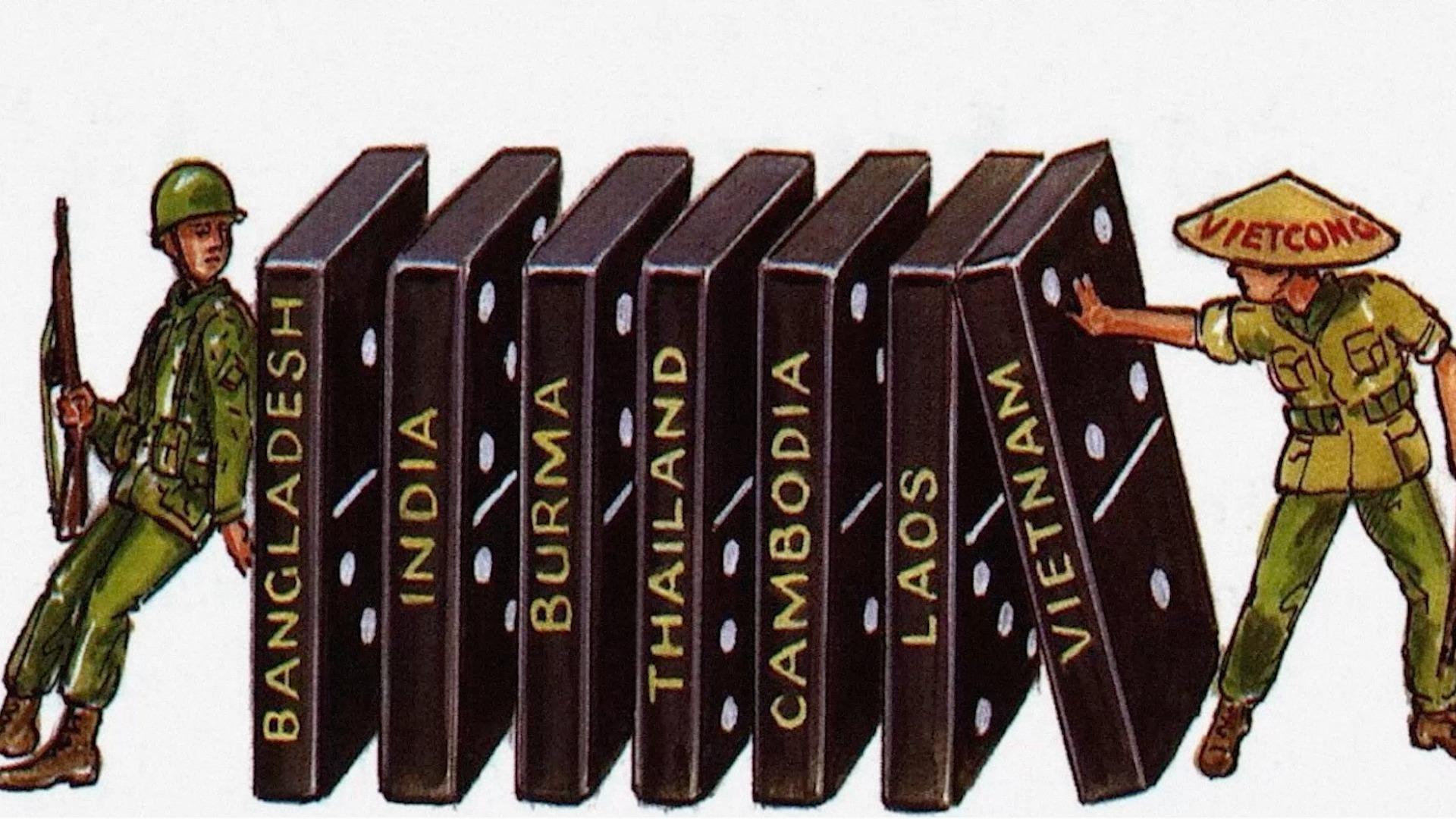
After the Vietnamese communists led by Ho Chi Minh defeated the French in the 1st Indochina War (1946-1954), Vietnam was supposed to be divided—but only temporarily—under the 1954 Geneva Accords, which the U.S. did not sign. The Eisenhower administration blocked elections that were supposed to take place in 1956 to unify the country because it was acknowledged that North Vietnamese communist leader Ho Chi Minh would win with about 80% of the vote.[2]
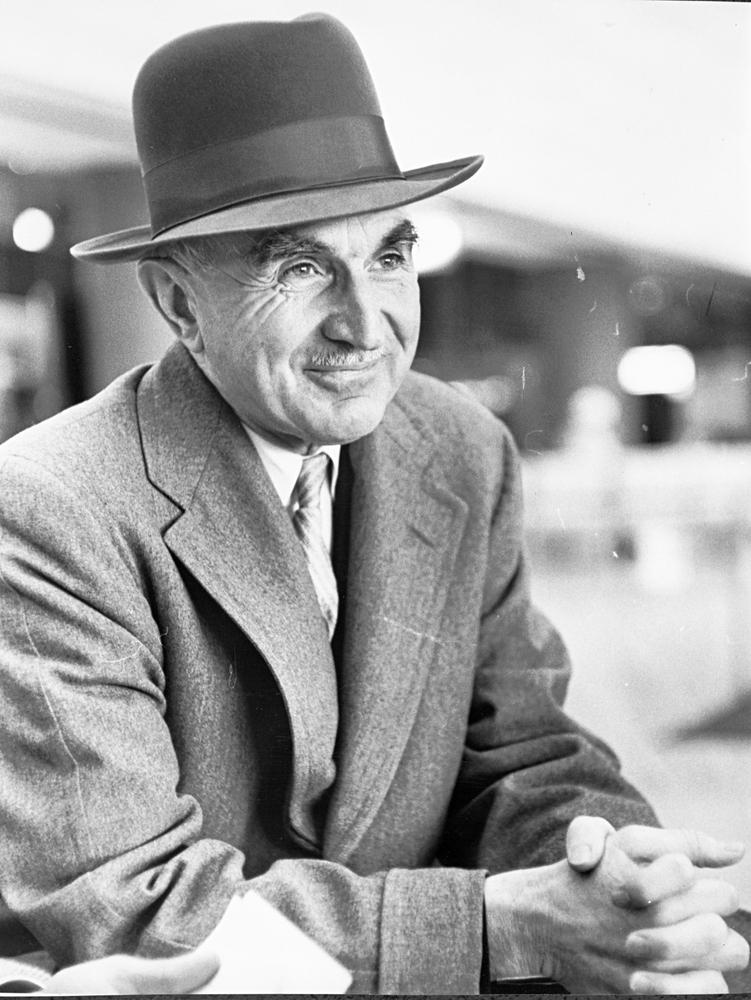
The “revisionist” historians recycle old Cold War demonologies and present Ho Chi Minh as a totalitarian ruler—ignoring the assessment of Office of Strategic Services (OSS) agent Archimedes Patti, who wrote a cable to Washington in 1945 stating that Ho was the best-qualified leader to govern Vietnam after it obtained independence from France.[3]
One of the leading “revisionists” explicitly attacks Patti in Cold War terms, suggesting that he was “duped by the communists” and basically a fool.[4]
Patti’s assessment was corroborated, however, by other U.S. intelligence agents like Ralph McGehee, who wrote in his memoir that “through his anti-imperialism and land reform programs,” Ho Chi Minh “built the Vietminh into a committed broad-based political organization, making him the only Vietnamese leader with a dedicated national following.”[5]
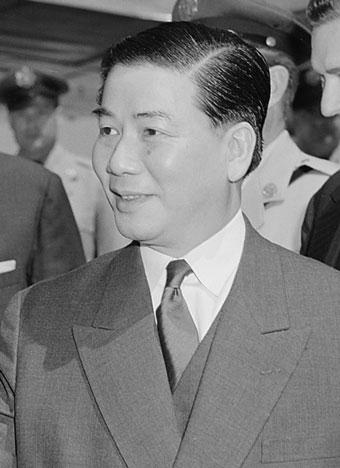
While attacking dissenting American voices, the “revisionists” heap praise on Ngo Dinh Diem, America’s hand-selected leader in South Vietnam, whom Senator Wayne Morse (D-OR) said headed a “totalitarian, military, tyrannical, puppet government [from 1955-1963].”
Diem spent the years of the 1st Indochina War in exile and alienated the Buddhist population by channeling U.S. foreign aid to the minority Catholics who had been tainted by their association with French colonial rule.
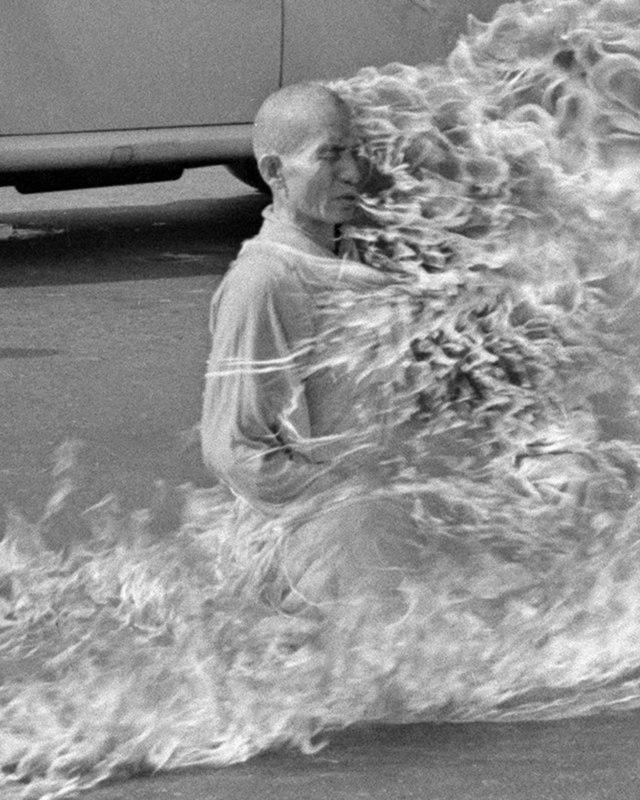
The Buddhist protests and immolations that Diem triggered are branded by the “revisionists” as having been manipulated by the communists—as the CIA claimed at the time.
In fact the protests and immolations were a result of the egregious injustice associated with Diem’s regime, which was opposed by roughly 70 percent of South Vietnam’s population.[6]
The “revisionist” professors want us to believe that Diem was an honorable leader when, in fact, he employed brutal methods that were made possible through the CIA’s training and financing of his policing and military apparatus—something they either underplay or ignore along with the massive corruption pervading the U.S. foreign aid programs under Diem.
Diem is reported to have collected protection money for allowing CIA backed Hmong tribesmen to cultivate opium along the Lao border and was involved in heroin trafficking with his brother, Ngo Dinh Nhu, as a liaison with the Corsican mafia.[7]
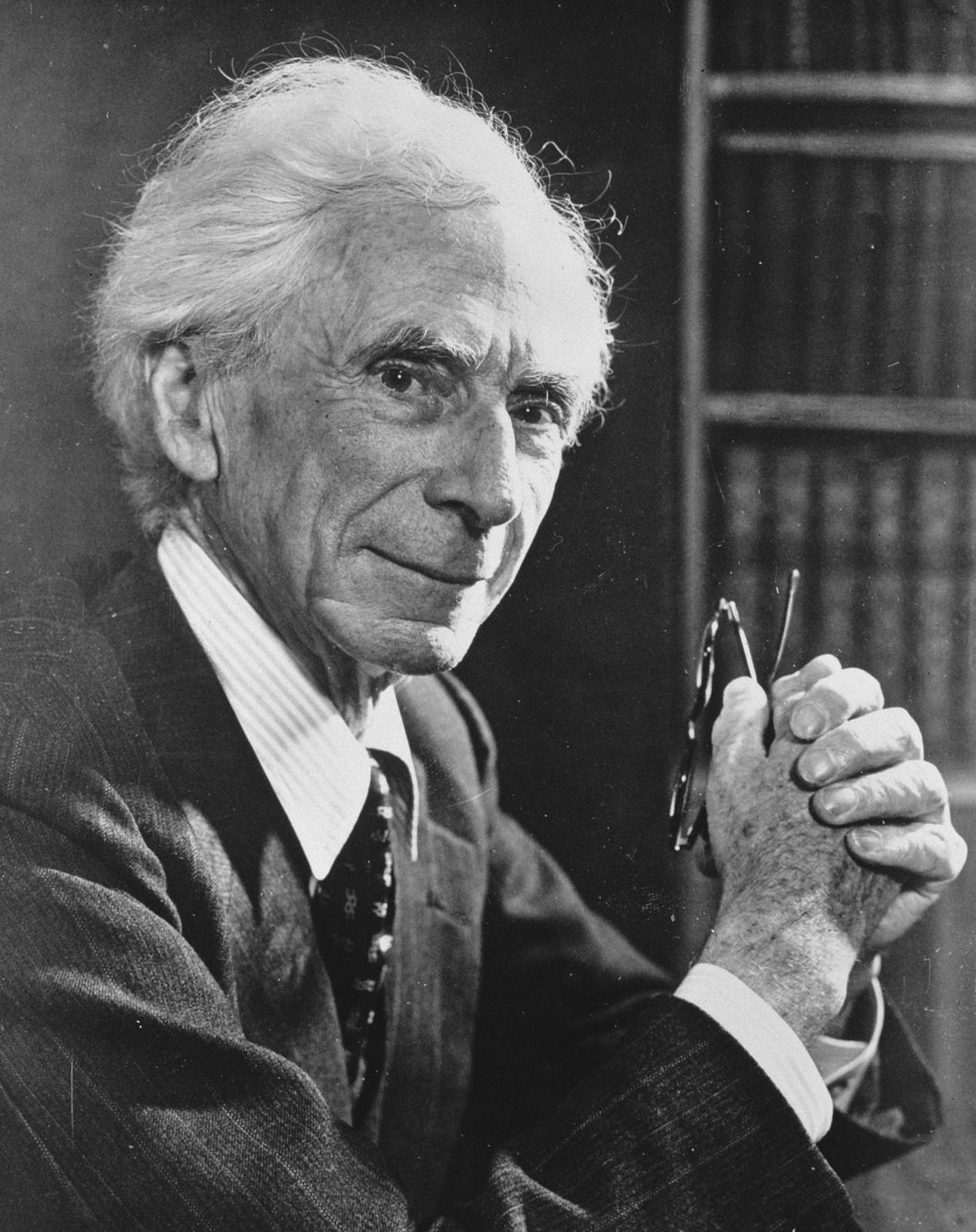
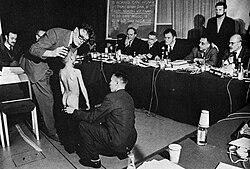
One of the most prominent “revisionist” historians, Professor Pierre Asselin of San Diego State University, attacks Bertrand Russell, the famed British philosopher who established a war crimes tribunal that documented extensive atrocities by the U.S.-South Vietnamese side in the war.
For Asselin, Russell is a dupe of the communists—as he was branded by the CIA and other hard-line cold warriors in the 1960s.[8]
Asselin’s work and that of other Vietnam War “revisionists” is refuted by James Bradley’s book Precious Freedom: A Novel of the Vietnam War (New York: Skyhorse, 2025), which is based on extensive interviews with Vietnamese war veterans and civilians.
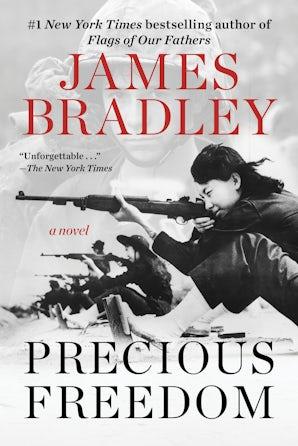
The Vietnamese whom Bradley interviewed all emphasized that Vietnam is one country, that South Vietnam was an illegitimate U.S. political construct, and that the people mobilized together out of necessity to defeat the U.S. invaders and their proxies.
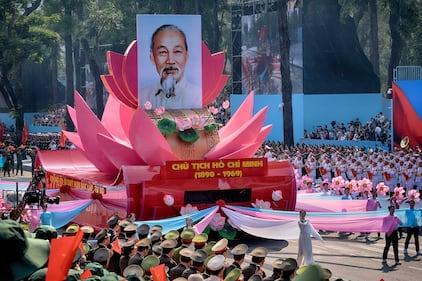
In a February 2026 podcast interview, Bradley recounted the festive celebrations in Vietnam that he attended to commemorate the 50th anniversary of the end of the Vietnam War. Bradley said that Ho Chi Minh apparel was being widely disseminated and that Ho Chi Minh was viewed as a great leader and “honored all across the country,” whereas Ngo Dinh Diem was “buried, dead and gone,” a brutal dictator “hated by the people” with “no monuments devoted to him.”[9]
Who Paid the Piper?
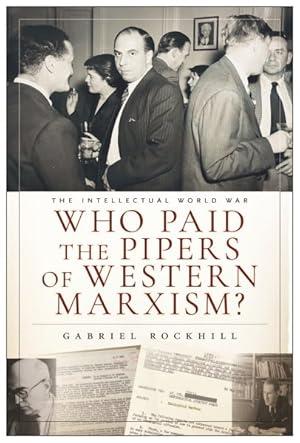
Gabriel Rockhill’s recent book, Who Paid the Pipers of Western Marxism, is important in showing the influence of corporate foundations and the CIA in shaping the direction of various academic disciplines and in compromising the integrity of many professors.
Rockhill’s main focus is on the Frankfurt School and fields of philosophy and political theory.
The phenomenon that he describes is widespread, however, and extends to many other academic disciplines, including Vietnam War studies, as this article tries to spell out.
What Rockhill shows is that most professors may not be directly under the pay of U.S. intelligence; however, they internalize the academy’s system of rewards that are driven by them and adjust their scholarly work accordingly.
Radical perspectives are marginalized as gatekeepers establish control over academic fields through a variety of mechanisms, including control over leading journals and academic presses through the peer review process, and control over the hiring and tenure system.
As a consequence, younger academics have come to recognize that they cannot advance professionally, get tenure or sustain a job if they fundamentally criticize U.S. foreign policy.
Some academics who receive tenure may point to certain excesses or mis-judgments, but they rarely portray the U.S. as an imperial power that trampled on the sovereignty of countries like Vietnam.
To burnish the academy’s liberal veneer, history professors will often cloak their conservative—and in the case of Vietnam War studies distorted—analysis in the fashionable academic jargon of post-modernism or post-colonial studies and make it seem as though they are sensitive to cultural differences and progressive in their outlook.
In reality, however, they are largely regurgitating discredited CIA viewpoints and helping to marginalize leftist critiques of U.S. imperialism, which has long been a goal of the corporate foundations, State Department and CIA.
Hall of Shame:
Below are some examples of Vietnam War specialists who will be teaching a distorted history to their students this academic year and who fit the paradigm of compromised intellectuals detailed in Rockhill’s book.
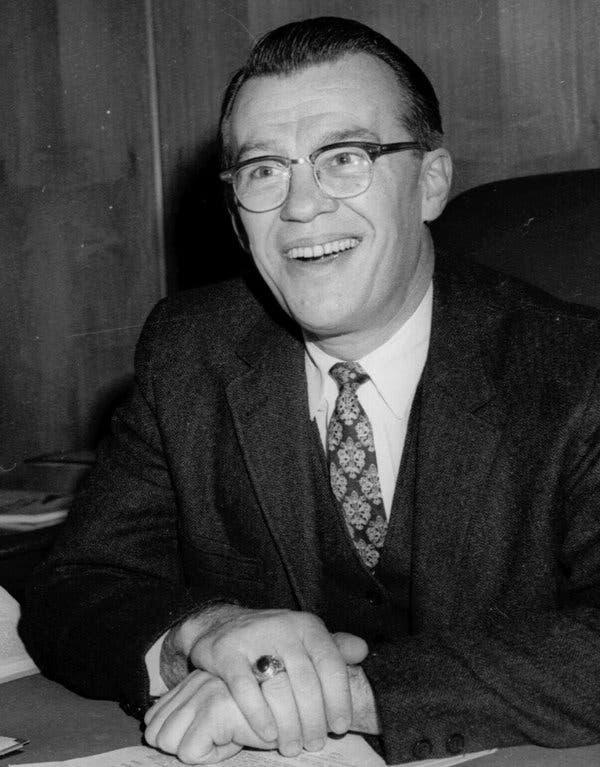
a) Edward Miller, Dartmouth
Edward Miller is a Harvard Ph.D. who wrote a seminal “revisionist” account of the reign of Ngo Dinh Diem. Miller acknowledges in his book, Misalliance: Ngo Dinh Diem, the United States, and the Fate of South Vietnam, that Diem employed torture as state policy and used the guillotine, but claims he had a sincere interest in democracy, and was not a puppet of the U.S.
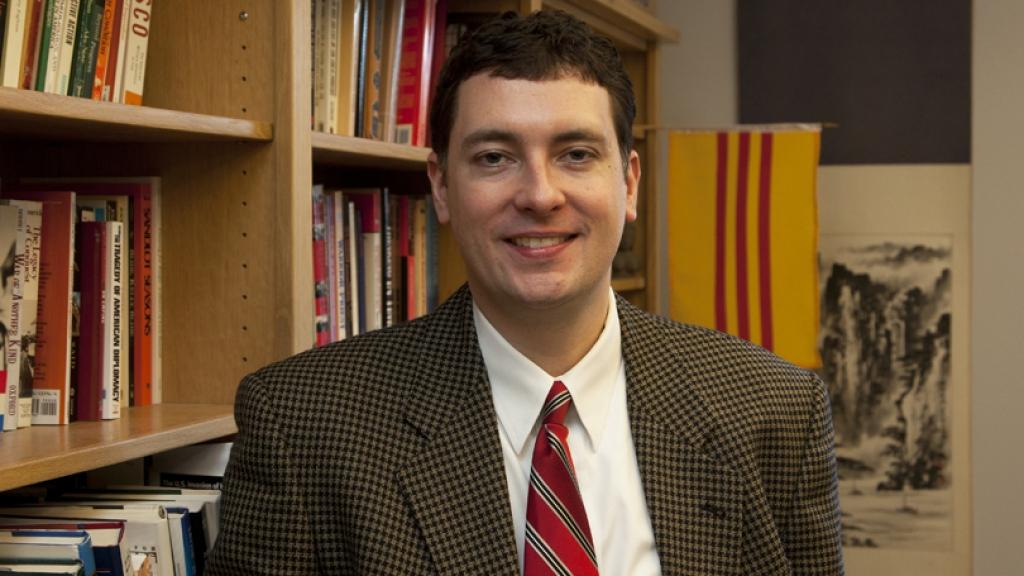
Miller’s book was praised by CIA operative Rufus Phillips, who wrote that Miller “dispels in definitive fashion the myth that Ngo Dinh Diem owed his appointment as prime minister of a nascent South Vietnam to American intercession or that he was ever a ‘tool’ of the Americans.”
Before his death, Miller invited Phillips, who worked under CIA operative Edward Lansdale, a key coordinator of CIA dirty tricks in South Vietnam and consigliere to Diem, to his class to speak to his students.[10]
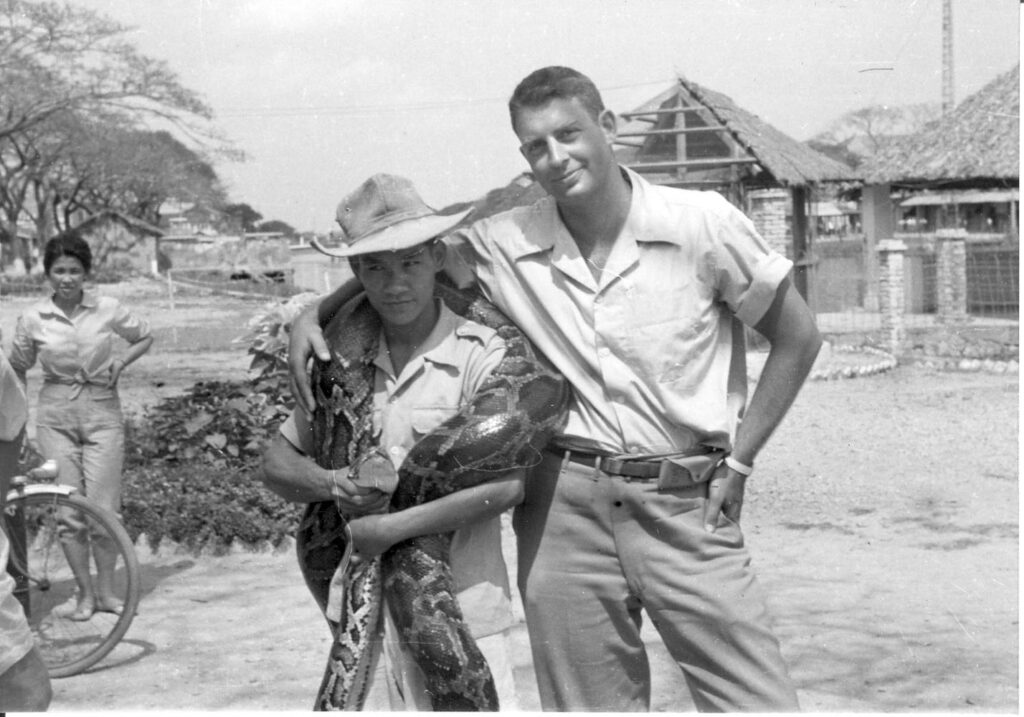
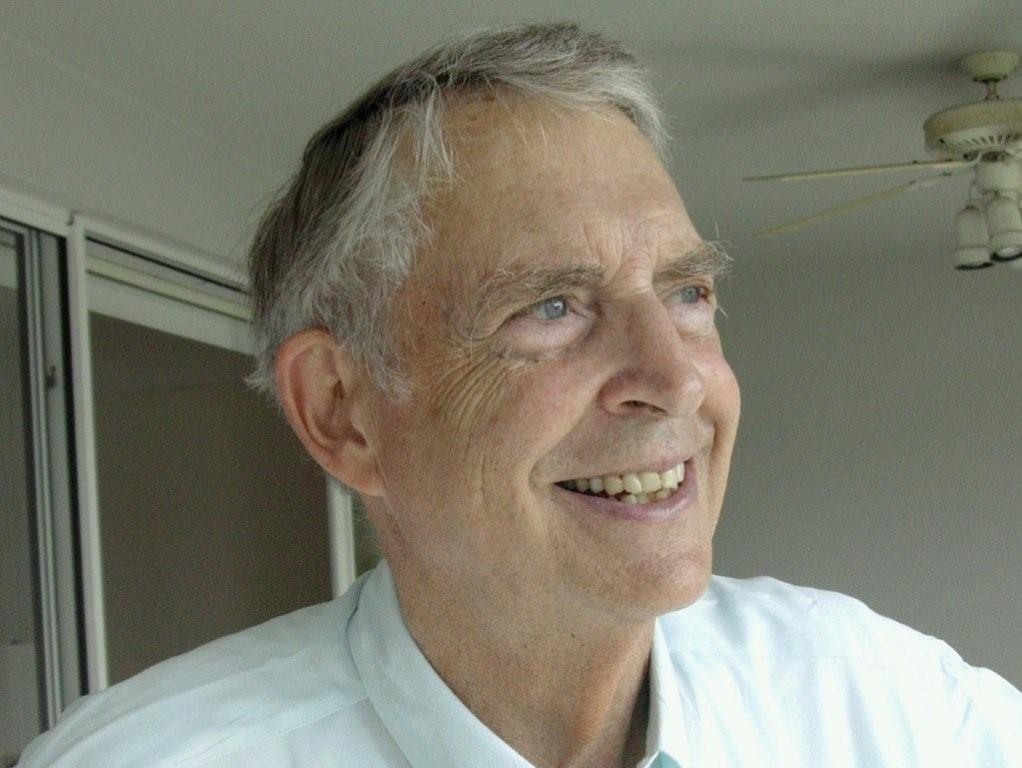
Phillips was also interviewed in Ken Burns and Lynn Novick’s PBS documentary on the Vietnam War, for which Miller served as an adviser.
Financed in part by the Rockefeller and Ford Foundations and the Koch brothers, the documentary whitewashes the CIA’s record, demonizes the anti-war movement, and distorts many other aspects of the Vietnam War.
Oblivious to the pattern by which U.S. governing elites build up and then discard foreign leaders when it suits them, Miller writes in Misalliance that Diem could not have been a puppet since the U.S. decided, after supporting him for a decade, to overthrow him in November 1963.
Miller further undercuts his own argument when he acknowledges that the U.S. provided Diem’s regime with more than $2 billion in foreign aid from the mid-1950s through the early 1960s.[11] Miller also notes Diem’s brother, Ngo Dinh Nhu, had ties to the CIA going back to 1951, that Diem suppressed a communist revolutionary uprising as a French colonial official in Ninh Thun Province in 1930-1931, that the CIA recognized that the Ngo brothers had no mass following, and that Nhu drew on French counter-insurgency theories of Roger Trinquier, the head of the French intelligence services.[12]
Additionally, Miller mentions how Roger Hilsman, a top State Department official in the Kennedy administration, tried to impart British colonial counter-insurgency methods from Malaya.[13]
Nonetheless, Miller remains in denial about the colonial character of U.S. foreign policy and the anti-colonial nature of the Vietnamese revolution extending beyond the era of the 1st Indochina War.
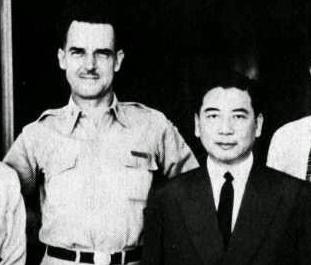
b) Pierre Asselin, San Diego State University
Dr. Asselin is the Dwight E. Stanford Chair in American Foreign Relations and the Interim Director of the Center for War and Society in the Department of History at San Diego State University, and author of the book Vietnam’s American War: A History (London: Cambridge University Press, 2018, 2024), among others.
In Vietnam’s American War, Asselin ludicrously writes that “the United States did not spawn conflict in Vietnam.”[14] The book offers a positive assessment of Ngo Dinh Diem,[15] calls the Vietcong terrorists and Strategic Hamlet Program, where Vietnamese peasants were put in concentration camps, a “success”[16] and says U.S. troops behaved professionally and that it was only Hanoi’s propaganda that depicted them as acting callously and savagely.
Asselin considers South Vietnamese President Nguyen Van Thieu to have been an effective leader,[17] at least initially, and credits him with standing up to President Lyndon Johnson during negotiations in 1968 when Thieu had made a secret deal to sustain the war with Richard Nixon who was intent on sabotaging the peace talks to help him win the 1968 U.S. election.
Asselin frames U.S. intervention as being responsive to Chinese and Soviet intervention in North Vietnam, which he said had made the North Vietnamese as dependent on them as the South Vietnamese government was on the Americans.
According to Asselin, Ho Chi Minh and his successor, Le Duan, were murderous tyrants. Archimedes Patti was a communist dupe along with British philosopher Bertrand Russell, whose war crimes tribunal Asselin calls “highly partisan and deeply flawed” (Vietnam’s American War, p. 174)—though it included testimony of U.S. pilots, peace activists who visited North Vietnam, and Vietnamese survivors of U.S. bombing and napalm attacks.[18]
Asselin makes an additional point of attacking the credibility of the authors of a study that called South Korean soldiers who committed massacres in South Vietnam “America’s Rented Troops.”
This study, put out by the American Friends Service Committee, is corroborated by U.S. military records and U.S. soldier testimonials, which Asselin gives the impression are beneath him to read since, he claims, the war was only about Vietnam and Americans did not matter.[19]
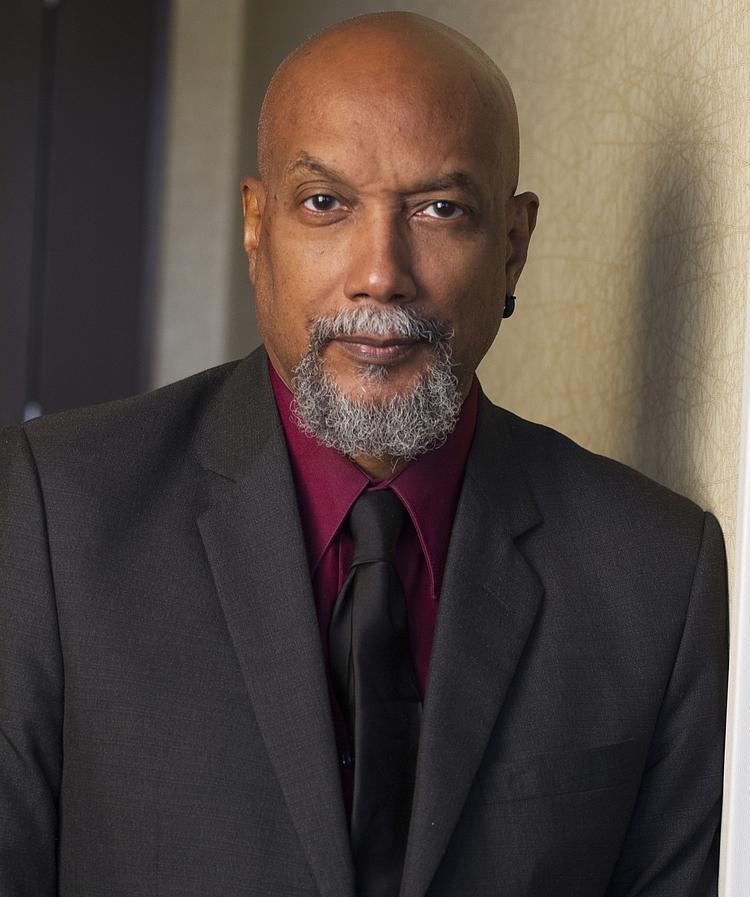
Asselin’s largely demonized view of Vietnam’s revolutionary movement seems to reflect what Ajamu Baraka termed a “racialized cognitive disorder embedded in the ideological and institutional architecture of Western power,” which “centers Europe and its settler extension as the apex of human development and renders its adherents incapable of perceiving objective reality when confronted with non-European resistance.”[20]
A twist with Asselin and his colleagues is that their arch-imperialist viewpoint masquerades in the phony and deceptive rhetoric of “post-colonial studies” to make it seem respectable to a liberal audience, and is framed in a way that is designed to make people think they are presenting the viewpoint of non-Western peoples.
c) Keith Taylor, Cornell
Speaking glowingly of Ngo Dinh Diem whom he says established a “real state,” Keith Taylor, a professor of Vietnamese Studies at Cornell University and expert in early Vietnam history, considers it to be a myth that the U.S. lost the Vietnam War. Instead, he says, Americans “abandoned the war” because the anti-war movement had raised its political cost, a position that reinforces the neo-conservative “stab-in-the-back” narrative that blames the anti-war movement for the war’s outcome.
Taylor believes that “the tragedy of Vietnam is not that the United States intervened when it should not have, but rather that the intervention was bungled so badly that the Vietnamese who believed in us were ultimately betrayed.”
Professor Robert Buzzanco of the University of Houston wrote that Taylor is “mad at Kennedy and Johnson for their apparently half-hearted efforts to win in Indochina, upset at those who did not have his ‘sense of honor’ [Taylor fought in Vietnam] and dodged the draft, disturbed by those in America who did not support the war.”
According to Buzzanco, Taylor is “proud that he is not among the self-loathing Americans who notice people in other countries looking to us for leadership and see nothing but neocolonialism and imperialism.”
d) Mark Moyar, Hillsdale College
Appointed by the Trump administration as a political officer for the U.S. Agency of International Development, Mark Moyar is the William P. Harris Chair in Military History at Hillsdale College, a conservative Christian college, with a Ph.D. from Cambridge University and military-intelligence background. His writing draws on documents translated by Merle Pribbenow II, a CIA staff officer from 1968-1995 who has written numerous books on the Vietnam War.[21]
Considering the Vietnam War to be a “noble cause,” Moyar condemns journalists David Halberstam and Neil Sheehan in terms similar to CIA asset Joseph Alsop for reporting critically on Ngo Dinh Diem and allegedly undermining support for U.S. intervention in Vietnam.[22]
Moyar calls Diem an effective leader and the Buddhist grievances that led to the protests and immolations “fictitious,” and says that the Buddhist protest movement was ‘infiltrated by communist agents.”
Claiming that much of the Vietnamese population opposed the communist revolutionaries before and after the 1954 Geneva conference,[23] Moyar believes that the CIA-backed 1963 coup against Diem was a mistake and that the Johnson administration should have escalated the war sooner, harder and into Laos and North Vietnam.
Equally disgracefully, Moyar heralded the CIA-trained Provincial Reconnaissance Units (PRUs) that were used in the infamous Phoenix Program as a model irregular guerrilla force, which the U.S. should strive to recreate in other countries. The PRUs carried out gruesome torture and other atrocities and were involved in the murders of thousands of civilians.[24]
Moyar rejects any resort to diplomacy on the grounds that the most important consideration for LBJ and his advisers was to keep China and North Vietnam from spreading communism.[25]
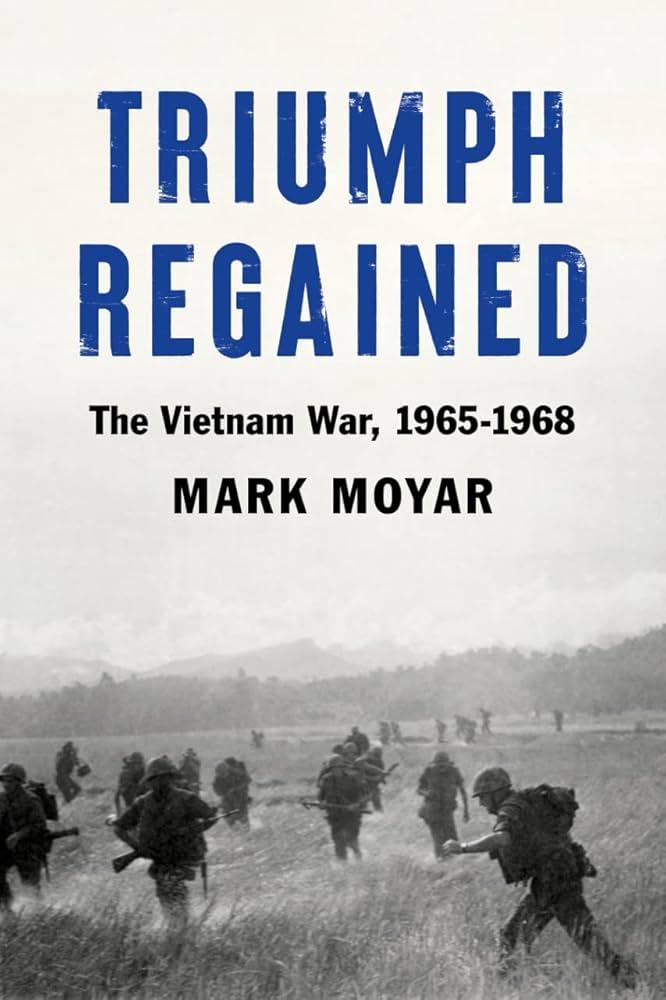
In his 2022 book, Triumph Regained: The Vietnam War, 1965-1968, Moyar frames the U.S. invasion of Vietnam as an act of principled defense against communist aggression and claims the U.S. could have won the Vietnam War if it had intensified bombing along the Ho Chi Minh Trail and invaded Laos with 206,000 U.S. troops in 1968.
This is a similar viewpoint to the group Vietnam Veterans for Factual History, consisting of former intelligence and Special Forces veterans whose goal is to counteract critical narratives about the Vietnam War.[26] Moyar thanks members of this extreme right-wing group in his acknowledgment page along with Merle Pribbenow of the CIA.[27]

Moyar claims in Triumph Regained that the 1968 Tet Offensive was a U.S.-Army of the Republic of Vietnam (ARVN) victory undermined on the home front by the U.S. anti-war movement, which Moyar claims was infiltrated by communist “agitators” in a rehash of yet more discredited CIA propaganda from the 1960s.[28]
Not only was Diem a great leader in Moyar’s estimation, but so was Nguyen Van Thieu, whom he credits with “installing better leaders in the government and armed forces” and “reducing restrictions on speech and political activity”[29]—though narcotics smuggling reached epic levels and human rights groups estimated that there were a record 200,000 political prisoners when Thieu was South Vietnam’s president.[30]
Thieu’s theft of $73 million worth of gold bullion after he fled South Vietnam and his use of the CIA’s Phoenix program to eliminate political rivals also goes unmentioned by Moyar and other “revisionists” who sanitize and distort history.[31]
One of the major flaws in Moyar’s book is that he accepts inflated U.S. military figures of Vietnamese killed as reflecting supposed U.S. battlefield success. The military often inflated the figures as part of Secretary of Defense Robert McNamara’s immoral body-count system whereby any Vietnamese, even if a civilian or child, was counted as a combat fatality.
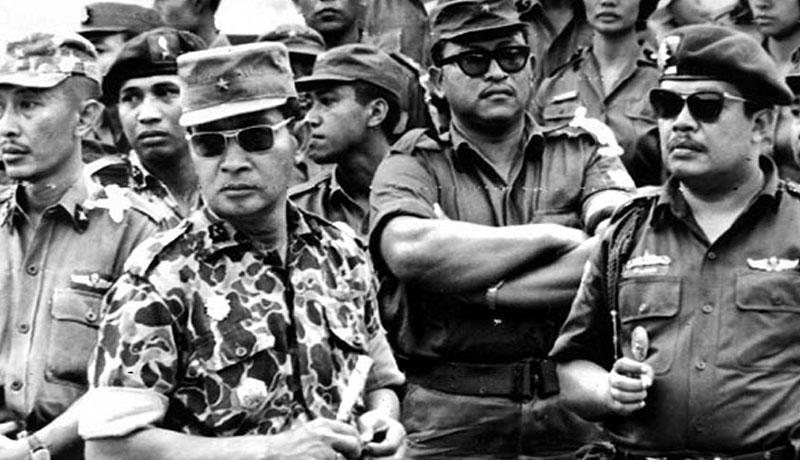
Not only is Moyar an apologist for the U.S. invasion of Vietnam that left millions dead; he also celebrates the 1965 CIA-backed right-wing coup in Indonesia led by General Suharto, which resulted in the slaughter of more than one million people in what the CIA itself recognized as one of the worst instances of mass slaughter during the Cold War.[32]
Moyar claims that the U.S. invasion in Vietnam gave General Suharto the “confidence” to thwart a communist coup, which was actually part of a false-flag operation set up by the CIA and Suharto.
e) Gregory Daddis, Texas A&M
A graduate of West Point and 26-year U.S. Army veteran, Gregory Daddis is the Melbern G. Glasscock Endowed Chair in American History at Texas A&M University.
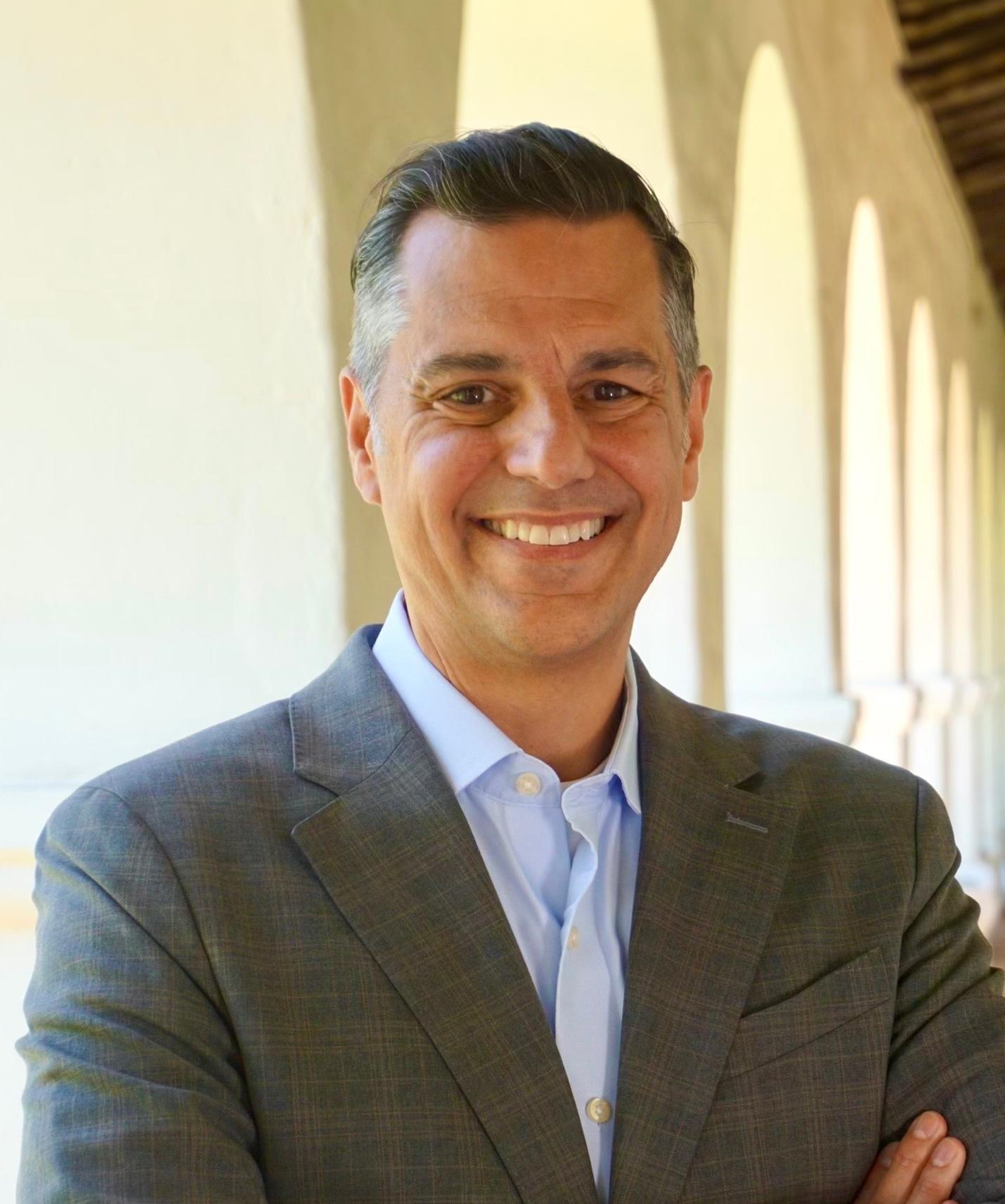
He also served with Edward Miller as an adviser to the biased Ken Burns-Lynn Novick PBS documentary on the Vietnam War.
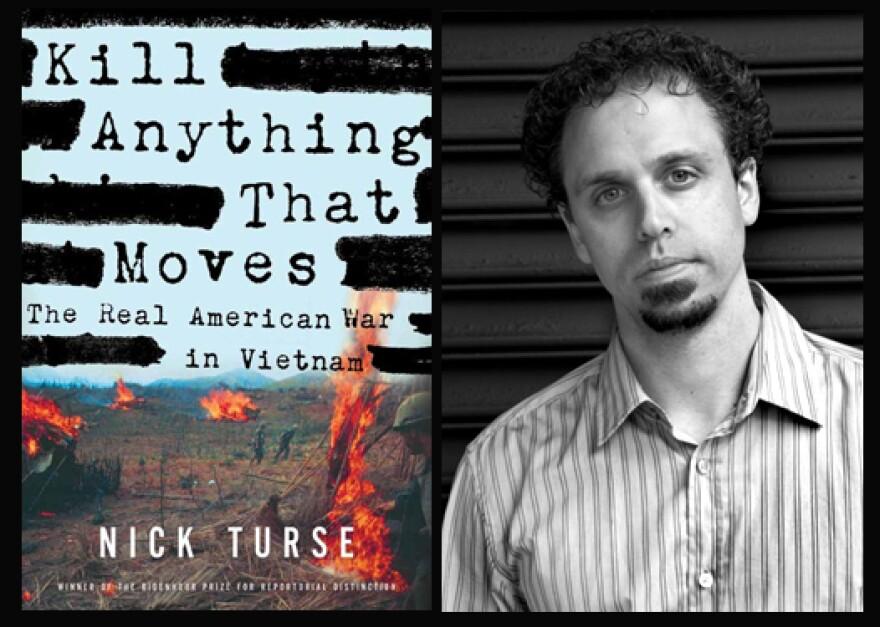
Author of No Sure Victory: Measuring U.S. Army Effectiveness and Progress in the Vietnam War, Daddis in 2013 published a review in the Journal of Military History of a book by journalist Nick Turse called Kill Anything That Moves: The Real American War in Vietnam.
Daddis was characteristically dismissive of the book’s findings of systemic U.S. atrocities, suggesting that Turse “used a narrow body of evidence” to “make broad generalizations about one of America’s longest wars” and that the U.S. enemy was “equally violent” as U.S. troops.
The attempt to assert moral equivalency between U.S. troops and the NLF/North Vietnamese is palpably false, as the scale of U.S.-ARVN atrocities in the war was conservatively estimated to be around 80%.[33] Daddis’s remarks further obscure that it was the U.S. that had invaded Vietnam and that the NLF was defending its country from a foreign aggressor.
Daddis criticized Turse for describing U.S. atrocities in Binh Dinh Province without acknowledging that this was a revolutionary stronghold. However, Turse’s book accurately shows how the U.S. soldiers were effectively at war with the entire population in provinces like Binh Dinh where the people supported the revolutionary cause, and that this fact accounted for the huge scale of civilian atrocities.
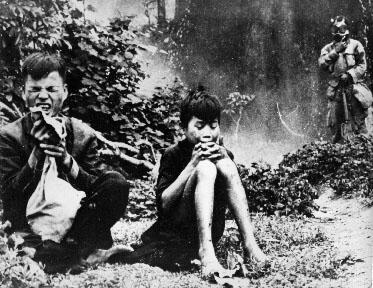
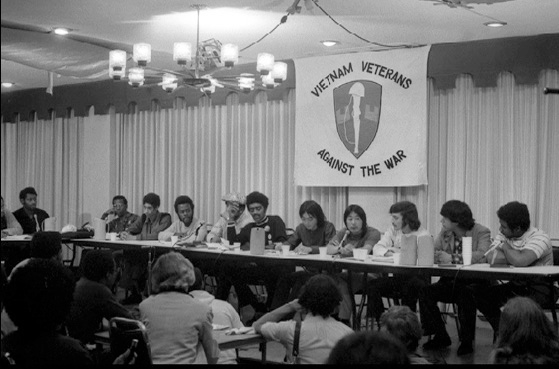
Daddis’s views echo those of Mark Moyar, who claims that Turse’s book is “not a work of history.”[34] In fact, Turse, who holds a Ph.D., did extensive work in U.S. archives and trekked across Vietnam for extended periods to remote areas researchers had never gone to interview victims of U.S. atrocities and their descendants. Additionally, his findings were corroborated by other similarly well-researched studies and by the testimony of U.S. soldiers at the Winter Soldier hearings and other public hearings where they detailed their own war crimes.[35]
The latter hearings serve as valuable primary sources that Daddis, Moyar, Asselin et al. characteristically fail to cite in their work.
Daddis embraces a classic imperialist trope in his claim that most Americans were well-intentioned and only wanted to create a stable “independent South Vietnam.”
Daddis further criticizes Turse for failing to evaluate non-military programs and Americans involved in civic action, which were in reality designed to reinforce the genocidal military operations that Turse describes.[36]
f) Lien-Hang T. Nguyen, Columbia University
Lien-Hang T. Nguyen is a tenured professor at Columbia University, who is co-editor with Edward Miller of The Cambridge History of the Vietnam War and wrote the book Hanoi’s War: An International History of the War for Peace in Vietnam (Chapel Hill: University of North Carolina Press, 2012) that was used as a basis for Ken Burns and Lynn Novick’s deeply flawed PBS documentary about Vietnam.
Dr. Nguyen has also collaborated with former CIA staff officer Merle Pribbenow II, writing the foreword to a book that Pribbenow co-authored on a North Vietnamese spymaster who was captured and interrogated by the CIA.
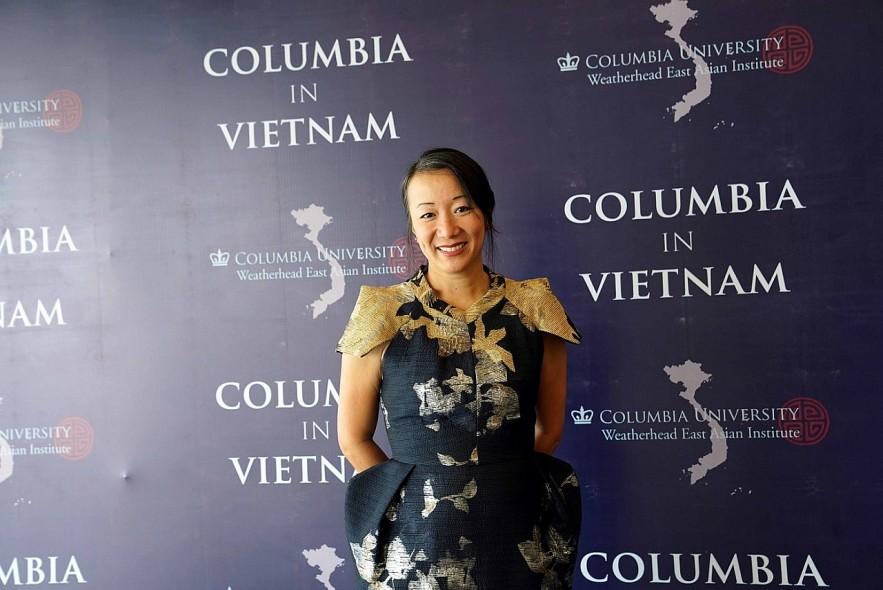
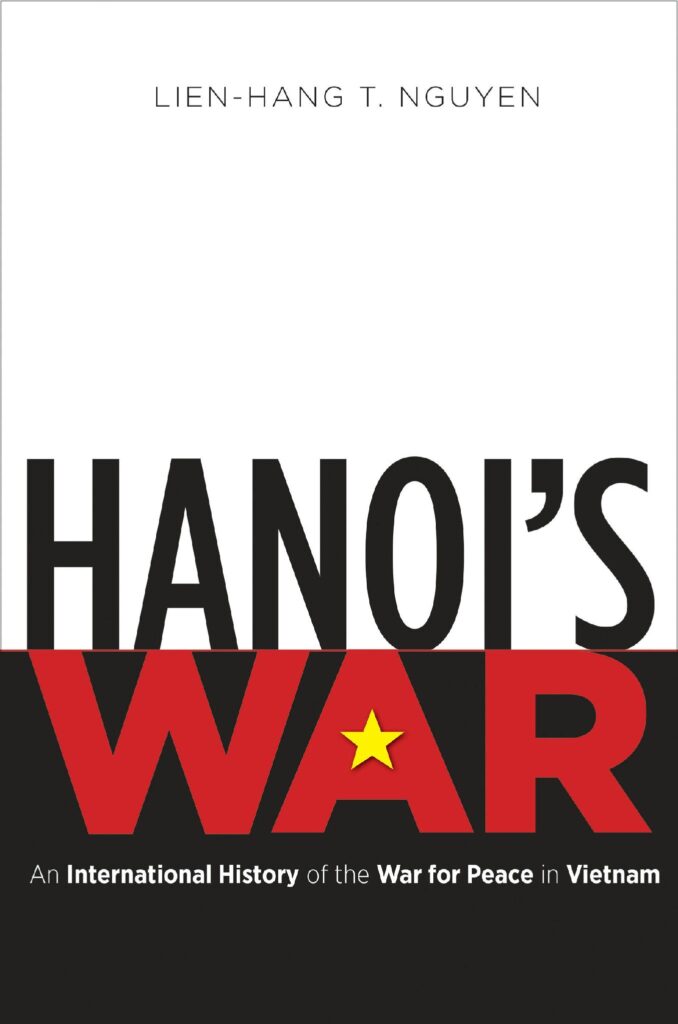
Winning numerous prestigious awards, Hanoi’s War blames Ho Chi Minh’s successor, Le Duan, for escalating the Vietnam War and characterizes North Vietnam as a repressive police state.[37]
Reviewers of Hanoi’s War in a 2013 H-diplo forum questioned whether Ms. Nguyen, who grew up in the South Vietnamese exile community in Philadelphia, actually used any novel Vietnamese sources as she claims.
An effective critique of Hanoi’s War was provided by Carolyn Eisenberg, a Bancroft Award-winning historian at Hofstra University who was involved in the antiwar movement as a student at Columbia University in the 1960s. She wrote that “Nguyen’s narrative conveys the impression that these are two rival nations ruthlessly competing for power in some hypothetical third country….Hanoi’s war never comes to grips with the behavior of the United States as an outside power, using vastly superior military capability to shape the destiny of foreign people.”
Two other reviewers noted, with respect to Hanoi’s War, that “the problem is with the agency Nguyen accords to her Vietnamese actors” and her claim that Le Duan “sought power in pursuit of his own ends, by which the author seems to mean power-seeking for power’s sake.”
Nguyen’s assessment obscured the wider geopolitical context and basically absolves the U.S. from any wrongdoing, making it appear that Vietnam was the aggressor in its own country because of unprincipled leaders like Le Duan, whom a 1971 New York Times profile characterized as a “popular figure in Vietnam,” who was “nationalistic” and eschewed the development of any “cults of personality” and “avoided the public gaze.”
Historian Peter Zinoman wrote that Nguyen’s characterization of Le Duan’s “ruthless” pursuit of total war “seems to stem from little more than a frustratingly vague reservoir of personal ambition.”
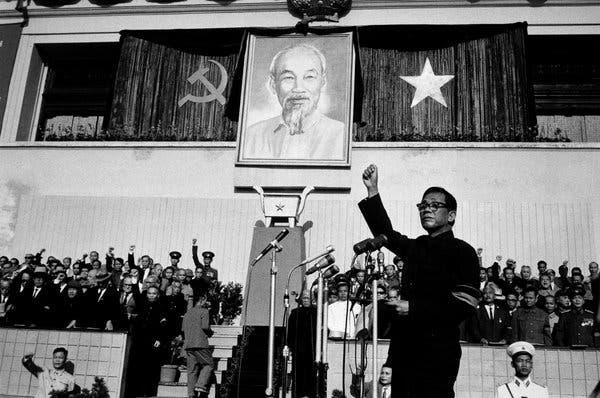
This kind of demonization—right out of the CIA playbook—“earned” Ms. Nguyen appointment to one of the best universities in the country, really nothing more than an adjunct of the U.S. military-industrial complex, in a tenured position!
g) Jessica Chapman, Williams College
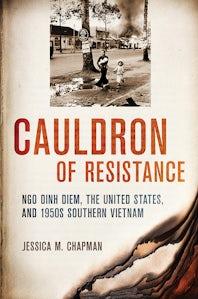
Jessica Chapman is a tenured professor at Williams College who wrote a book on Ngo Dinh Diem, Cauldron of Resistance: Ngo Dinh Diem, the United States, and 1950s Vietnam, that is critical of Diem and the U.S. for helping him to crush the non-communist opposition in Vietnam in the mid-1950s which, she believes, might have strengthened his political base, averted the authoritarian features for which he became known, and enabled him to defeat the NLF—for her a worthy goal.[38]
Chapman’s book was criticized by James Carter, author of the book Inventing Vietnam: The United States and State Building, 1954-1968, who wrote in a review: “[T]he author [Chapman] accepts that there was a ‘South’ Vietnam—a separate nation below the 17th parallel, and does so explicitly in the text by using the term ‘South Vietnam,’ in a context that occurred years prior to the Geneva Conference decision to establish the temporary demilitarized zone. In doing so, this also seems to establish the parameters within which the various nationalists are discussed. For instance, the ‘politico-religious groups’ of southern Vietnam are the non-communist alternative that was crushed by the United States and Ngo Dinh Diem. They are the lost opportunity. The Viet Minh, on the other hand, are not really included in the accounting of nationalist forces opposing Diem and the United States. They are the ‘communist foes.’ In concluding, Chapman is clear: the ‘politico-religious groups’ ‘might have been exploited [by the U.S.] to shore up the Saigon government against encroachment from its northern neighbor or, at the very least, appeased sufficiently to make the communist task of organizing a largely native southern insurgency against the RVN more difficult’ (197).”
Carter’s remarks make clear that Professor Chapman supports U.S. goals in Vietnam and an imperialistic foreign policy strategy but criticized some of the tactics that were adopted, which is characteristic of many historians.
Compared to the others, Chapman’s study has value in detailing the history of South Vietnam’s religious sects and how they contributed to the formation of the NLF after they were driven underground by Diem, with support from U.S. military and police advisers.
Chapman also presents evidence to contradict Asselin, Moyar and other “revisionists” about Diem, quoting from ARVN General Lam Quang Thi who said that “Diem acted like an emperor. He tolerated no organized opposition; his critics were harassed or arrested. His decrees became laws. He gradually transformed South Vietnam into a quasi-police state where the security apparatus was rigidly controlled by his brother Ngo Dinh Nhu [whose connections to the CIA Chapman made clear earlier].”[39]
But Chapman’s framing of the Vietnam War is still problematic, as when she refers to “Hanoi’s victory over the South,”[40] which obscures the organic nature of the NLF and the fact that the war was not one of northern aggression in the south but rather a Vietnamese national revolutionary victory against a foreign invader and its agents drawn from the country’s Catholic minority.
In a 2006 article in Diplomatic History, Chapman omits the role of the CIA in managing an October 1955 referendum elevating Diem over French puppet emperor Bao Dai while suggesting that critics of the referendum got it wrong by denouncing it as a farce. (Asselin for his part calls the rigged referendum a “crowning achievement.”)
Ignoring the fact that the CIA had bribed Bao Dai to appoint Diem as Prime Minister beforehand,[41] Chapman claims that Diem’s sincere commitment to democratization was seen in his rhetoric during the referendum, which he won with 98% of the vote, though admits that Diem attacked Bao Dai for pursuing negotiation with the “Vietcong” and that the referendum was envisioned as a means of “legitimating Diem’s refusal to hold the 1956 countrywide elections stipulated by the Geneva accords.”[42]
Chapman’s logic sounds very much like one of Diem’s early academic supporters, Wesley Fishel, a Michigan State University political scientist and CIA consultant who wrote a laudatory article about Diem in 1959 in the CIA subsidized New Leader magazine entitled “Vietnam’s Democratic One-Man Rule.”[43]
Chapman does briefly mention that Edward Lansdale advised Diem to use color on the referendum ballot to send a subliminal message to voters without appealing directly to superstition, and that Lansdale urged Diem to use a good photograph of Bao Dai to confirm the validity of the vote. This kind of advice would suggest a very intimate relationship reminiscent of colonial settings that Chapman does not bother to further explore or comment on.
In a 1966 internal assessment, the CIA itself concluded that “the atmosphere in advance of the balloting was calculated to produce the desired results,” adding that “military pressure, propaganda and ballot tampering [may have] contributed to Diem’s overwhelming victory.”[44]
Chapman’s airbrushing of U.S. covert interference and negative depiction of the Vietnamese revolutionary side coincides with her failure to discuss the fact that the U.S. pursued imperial objectives in Southeast Asia (i.e., obtaining military bases, access to raw materials) and was intent on exploiting fissures in Vietnamese society like other colonial powers as part of a strategy of divide and conquer, to which she and other “revisionist” historians are oblivious.
Vietnam and Other American Fantasies
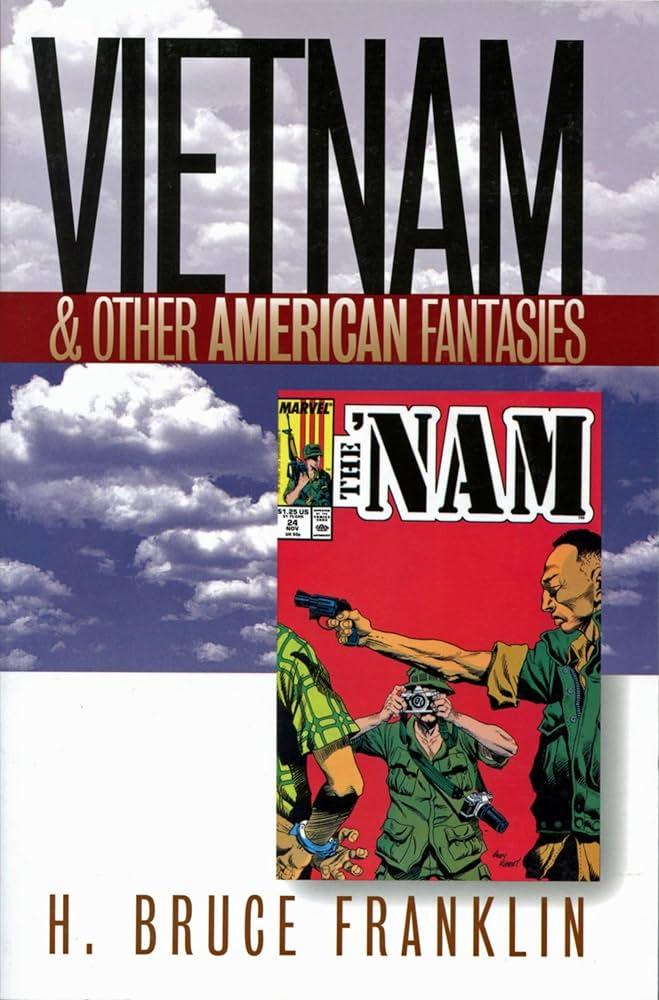
An excellent book debunking bad revisionism about the Vietnam War, mostly in popular culture, is H. Bruce Franklin’s Vietnam & Other American Fantasies (Amherst: University of Massachusetts Press, 2000).
Franklin discusses how American culture erases the imperialistic pattern in U.S. history dating back to the Indian Wars that the Vietnam War was part of, and how the horrific atrocities committed by the U.S. were largely suppressed.
Franklin was fired from Stanford University in 1972 for giving an anti-war speech though was subsequently appointed to the faculty at Rutgers University (Newark) where he had a long and distinguished career.
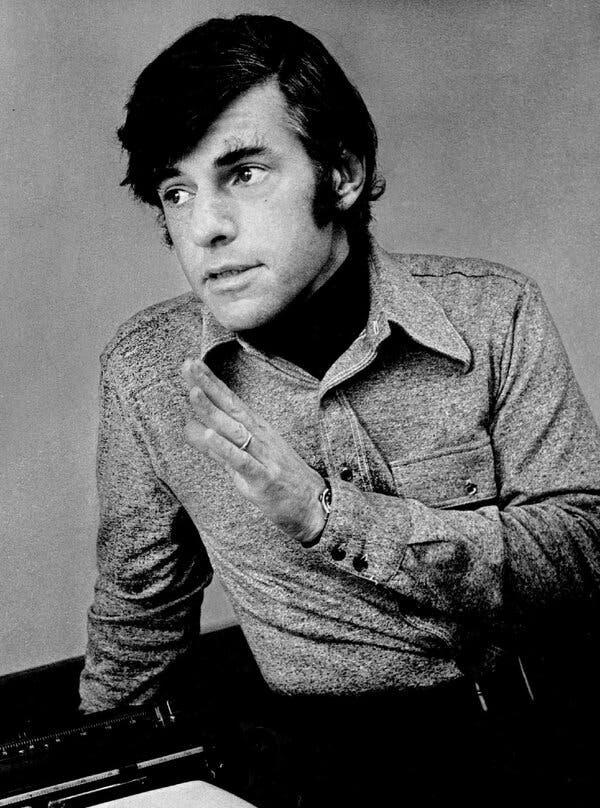
Unfortunately, Franklin passed away in 2024 and his analysis—like that of counterparts in the 1960s New Left movement—is being either disparaged or ignored by a newer generation of historians who are sanitizing, whitewashing and distorting the history that students are learning.[45]
However much they dress up their scholarship in the lingo of post-colonialism, these latter historians follow the same ideological line as John L. Gaddis of Yale and other so-called “post-revisionists” intent on discrediting the New Left and historians of the 1960s era (themselves then called “revisionists”) who blamed the U.S. for provoking the Cold War and supporting global counter-revolution.[46]
The latter agenda helps explain why the anti-war movement is portrayed so negatively by the Vietnam War “revisionists” whose political viewpoint meshes perfectly with the political temper of our time—an era of right-wing supremacy, neo-McCarthyism, imperial over-reach and endless war.
- See podcast episode with Jeremy Kuzmarov and James Bradley discussing distorted teaching of the Vietnam War on college campuses.
MIT linguist and leading antiwar intellectual Noam Chomsky aptly wrote in 1970 that the U.S. government claim of North Vietnamese aggression could only be justified under the assumption that “the U.S. had a perfect right to undermine the Geneva agreements and carry out the forceful repression of dissidents in the South, to engage in large-scale combat operations in the early 1960s, to dispatch a huge army of occupation beginning in 1965, and to carry out extensive bombardment in Vietnam and Laos; while the South Vietnamese cadres in the North had no right to return to their homes, the southern resistance forces had no right to react to the repression or subversion of the Geneva Accords, and the North Vietnamese had no right to react to the bombardment of their territory or the American attack on Laos and South Vietnam.” Noam Chomsky, At War With Asia (New York: Random House, 1970), 218. ↑
See George McT. Kahin, Intervention: How America Became Involved in Vietnam (New York: Alfred A. Knopf, 1986); https://peacehistory-usfp.org/vietnam-war/. ↑
See Archimedes L. A. Patti, Why Viet Nam? Prelude To America’s Albatross (Berkeley: University of California Press, 1981). Despite what the “revisionists” are telling their students, the book is an important primary source. ↑
Pierre Asselin. Vietnam’s American War: A History (New York: Cambridge University Press, 2018). ↑
Ralph McGehee, Deadly Deceits: My Twenty Five Years in the CIA (New York: Sheridan Square Press, 1983).129, 130. ↑
The 70% statistic is derived from James P. Bevill, Spies in Saigon: CIA Covert Operations in French Indochina and South Vietnam 1950-1963 (Atglen, PA: Schiffer Military History, 2026), 391. U.S. ambassador to Saigon Henry Cabot Lodge characterized Diem’s worldview as “medieval.” Diem subscribed to an arcane conservative philosophy called personalism that he could not effectively explain to the South Vietnamese population and had little appeal to them. In late August, Vietnamese Special Forces paid and trained secretly by the CIA had stormed Saigon’s Buddhist pagodas, killing and wounding numerous monks. This is not reported in the revisionist accounts, though was reported at the time in The Washington Post and written into The Congressional Record by Wayne Morse as an example of the injustice of U.S. foreign aid programs to Vietnam. “Secret Pay by Central Intelligence Agency to Vietnamese Troops,” The Washington Post, September 9, 1963, Congressional Record, September 9, 1963. ↑
Joseph J. Trento, Prelude to Terror: The Rogue CIA and the Legacy of America’s Private Intelligence Network (New York: Carroll & Graf Publishers, 2005), 26. Historian Robert Buzzanco has pointed out that by 1958, Diem had jailed over 40,000 political prisoners and executed over 12,000 dissidents. By 1961, those numbers had tripled. The massive levels of corruption under Diem is detailed in, among other works, Jerry A. Rose and Lucy Rose Fischer, The Journalist: Life and Loss in America’s Secret War (Phoenix, AZ: Spark Press, 2020). The book also shows how the theft of foreign aid undermined the Strategic Hamlet program, which was being run by members of the NLF because it was leading so many people to support them. On the latter see Truong Nhu Tang, A Vietcong Memoir: An Inside Account of the Vietnam War and Its Aftermath (New York: Vintage, 1986). Diem’s brother, Ngo Dinh Can, was described in a recent book on the CIA’s first station chief in Saigon as a “warlord of central Vietnam where he commanded a personal army while enriching himself by smuggling opium and siphoning off US aid funds.” Bevill, Spies in Saigon, 388. See also Alfred W. McCoy, The Politics of Heroin: CIA Complicity in the Global Drug Trade, rev ed. (New York: Lawrence Hill Books, 2003). ↑
Asselin, Vietnam’s American War, 174. ↑
In Vietnamese history texts, Diem is the equivalent of Benedict Arnold in American texts. ↑
Miller also thanked Phillips in the acknowledgment page of Misalliance. ↑
I scrutinized a syllabus of a course that Miller teaches at Dartmouth on the U.S. and the world post-1945. The main text was by Iraq War apologist Melvyn Leffler of the University of Virginia, a strident anti-communist, and another main book was a summary of the 9/11 Commission Report by Ernest R. May, the former chairman of the Harvard History Department and a historical consultant for the CIA, who was an apologist for U.S. policy in World War I, the Cold War, and the a lead historian on the 9/11 commission, which covered up the truth surrounding 9/11. Further, included on Miller’s syllabus is a book by neo-conservative and Russophobic historian Stephen Kotkin on the Soviet collapse that obscures U.S. involvement in the coup that brought Boris Yeltsin to power, and former National Security Council adviser and Libyan war architect Samantha Power’s book, “A Problem from Hell”: America and the Age of Genocide (New York: Basic Books, 2002), which presents a distorted history of recent conflicts and champions U.S. military intervention supposedly for humanitarian purposes. Predictably, I did not find any New Left or anti-imperialist writers on Miller’s syllabus or books examining the corporate influence on U.S. policy, or capturing the perspective of the many victims of U.S. imperialism in the 20th and 21st centuries. Nor did I find any that challenged U.S. government propaganda or that examined the dark history of the CIA, a crucial instrument of U.S. power in the period covered in Miller’s course. ↑
Edward Miller, Misalliance: Ngo Dinh Diem, the United States, and the Fate of South Vietnam (Cambridge, MA: Harvard University Press, 2013), 80, 81, 189, 232, 233. Contradicting Miller’s assessment, Diem was not held by U.S. officials in high regard in the 1950s. Douglas Dillon, the U.S. ambassador to France from 1953-1957, wrote to CIA Director Allen Dulles that the U.S. is only “prepared to accept the ridiculous prospect that this Yogi like mystic [Diem] could assume the charge of leading the government because the standard set by his predecessor [the French puppet emperor Bao Dai] is so low.” David F. Schmitz, Thank God They’re on Our Side: The United States & Right-Wing Dictatorships, 1921-1965 (Chapel Hill: The University of North Carolina Press, 1999), 205, 206, 207. ↑
Miller, Misalliance, 241. ↑
The war, according to Asselin, was not one of U.S. aggression, but rather “Vietnam’s fourth civil war.” I would agree that there were aspects of a civil war, however, it is simply wrong to ignore the role of the U.S. in helping to provoke and accentuate this war. ↑
Asselin writes that “demonization of Diem is wrong and that Diem’s assassination was a setback for the RVN [Republic of Vietnam].” ↑
Bevill, Spies in Saigon, details how North Vietnamese intelligence agents were actually overseeing the Strategic Hamlet program because it was such a great recruiting tool for the so-called Vietcong. ↑
Asselin sees Thieu’s efforts to advance democratization as having been compromised by Hanoi’s escalated aggression in the South, which led him to adopt more repressive measures. ↑
Asselin and other revisionists such as UC Berkeley History Department Chairman Peter Zinoman, a fervid anti-communist, try to discredit Russell’s tribunal by claiming that it was financed by Hanoi as part of a propaganda offensive. ↑
See Nick Turse, Kill Everything That Moves: The Real American War in Vietnam (London: Picador, 2013). Asselin fails to mention that South Korean dictator Chun Doo Hwan (1980-1988) had established a reputation for cruelty during the Vietnam War and then carried out brutal atrocities against the South Korean population that helped spawn mass social protest. Chun was characteristic of South Korean soldiers who carried out brutalities against alleged communists within South Korea after serving in Vietnam. ↑
Ajamu Baraka, “Iran and the Psychopathology of White Supremacy,” Black Agenda Report, March 4, 2026. ↑
Pribbenow has written articles attempting to restore the reputation of CIA assets in the South Vietnamese army who were accused of drug trafficking and other criminal activity. ↑
On Joe Alsop, a syndicated columnist during the war and CIA Mockingbird journalist who was a leading Vietnam War hawk, see Robert W. Merry, Taking On the World: Joseph and Stewart Alsop—Guardians of the American Century (New York: Viking, 1996). ↑
This viewpoint is contradicted by the memoir of Dwight Eisenhower who said that the U.S. could not allow for planned elections to reunify Vietnam in 1956 because Ho Chi Minh would win 80% of the vote. Moyar claimed that Diem did not favor Catholics, which is simply untrue. He also, like Miller and Asselin, fails to discuss draconian legislation Diem passed, including that outlawed dancing and contraception because of his strict catholicism, and Diem’s persecution of minority groups including Montagnards and Khmer living in South Vietnam, many of whom allied with the NLF. ↑
See Douglas Valentine, The Phoenix Program (New York: William Morrow, 1990). Moyar did very little original research for his book on Phoenix, like with his other books. According to Valentine who calls him a “total fraud,” Moyar interviewed some of the Phoenix veterans whose phone numbers Valentine gave him. The veterans who spoke with Moyar wanted someone who could write a book to refute the expose Valentine had written. Moyar’s book turned out, however to be of very low caliber; a pale shadow of Valentine’s outstanding work. ↑
If you can stomach it, read Mark Moyar, Triumph Forsaken: The Vietnam War, 1954-1965 (Cambridge: Cambridge University Press: 2006), and Mark Moyar, Phoenix and the Birds of Prey: The CIA’s Secret Campaign to Destroy the Viet Cong (Annapolis, MD: Naval Institute Press, 1997, and the new edition, Lincoln: University of Nebraska Press, 2007). Moyar, a hawk’s hawk, also wrote Strategic Failure: How President Obama’s Drone Warfare, Defense Cuts, and Military Amateurism Have Imperiled America (New York: Threshold, 2015). ↑
Supporters of Vietnam Veterans for Factual History include Bob Turner, a former member of Young Americans for Freedom (YAF), a CIA-backed organization set up in the 1960s to counter the anti-war Students for a Democratic Society (SDS), and Roger Canfield, executive director of the U.S. intelligence council and Navy veteran who has written books endorsed by the publisher of Soldier of Fortune Magazine, suggesting falsely that the leaders of the 1960s anti-war movement were communist agents (he calls them “Americong”). ↑
Mark Moyar, Triumph Regained: The Vietnam War, 1965-1968 (Encounter Books, 2023). Encounter Magazine was once supported by the CIA under the Congress for Cultural Freedom.
Moyar, Triumph Regained: The Vietnam War, 1965-1968. Moyar quoted from the CIA directly in an attempt to validate his allegations and criticizes Dr. Benjamin Spock and other anti-war leaders for failing to recognize North Vietnam and not the U.S. as the aggressor. Moyar’s book received praise from Pierre Asselin and other supposedly respectable scholars like Professor Luke Nichter, who holds an endowed chair in presidential studies at Chapman University, and Michael Kort, a professor at Boston University who is an apologist for the dropping of the atomic bomb on Hiroshima and wrote a book blaming the Vietnam anti-war movement for hindering U.S. policy in Vietnam and presenting other tropes of the new “revisionism.” Tellingly, Triumph Regained was also praised by Senator Tom Cotton (R-AR), an arch neo-conservative super-hawk known for his reactionary political views, who is chairman of the Senate Intelligence Committee. ↑
Moyar, Triumph Regained, xvi. ↑
Jeremy Kuzmarov, Modernizing Repression: Police Training and Nation-Building in the American Century (Amherst, MA: University of Massachusetts Press, 2012), ch. 7; Alfred W. McCoy, with Cathleen B. Read and Leonard P. Adams II, The Politics of Heroin in Southeast Asia (New York: Harper & Row, 1972). ↑
Valentine, The Phoenix Program. John Sherwood, who headed the CIA’s political action division from 1966 to 1968, stated that “we [the CIA] were giving money to every group, labor, youth, veteran, women, Seeing Eye dog groups, you name it [and] dispensed funds to sway elections, pretending there was a real government we could influence.” (David Corn, Blond Ghost: Ted Shackley and the CIA’s Crusades (New York: Simon & Schuster, 1994), 176.) These kinds of comments are simply airbrushed in Moyar’s pseudo-history and that of other revisionists. ↑
See Vincent Bevins, The Jakarta Method: Washington’s Anticommunist Crusade & the Mass Murder Program That Shaped Our World (New York: PublicAffairs, 2021). ↑
See Noam Chomsky and Edward S. Herman, The Washington Connection and Third World Fascism: The Political Economy of Human Rights—Volume 1 (Boston, MA: South End Press, 1979), which draws on estimates of RAND Corporation analyst Douglas Pike; https://peacehistory-usfp.org/vietnam-war/; and Bernd Greiner, War Without Fronts: The USA in Vietnam (New Haven, CT: Yale University Press, 2010). As a source for comparison never made by the Vietnam War “revisionists,” the South Korean government Truth and Reconciliation Commission on the Korean War found that South Korean forces backed by the U.S. committed five-sixths of the atrocities in that war. ↑
Turse received other hostile reviews by academic historians, including UC Berkeley historian Peter Zinoman, who co-authored a hit piece with Gary Kulik in Cross-Currents: East Asian History and Culture Review that can be seen here. Zachary Shore, a professor at the U.S. Naval Postgraduate School, also attacked the book in the Journal of Cold War Studies. Faulting Turse for supposedly “lending support to the authoritarian political agenda of hard-line opponents of reform within the Vietnamese one party-state,” Zinoman and Kulik use the standard hit-piece method of trying to attack the credibility of GI whistleblowers, like K. Barton Osborn and Scott Camil, that Turse quoted. They also claim that Turse was too willing to reference communist propaganda—which often, in the context of the Vietnam War, was accurate. Zinoman and Kulik suggest that Turse’s interviews with survivors were marred by the presence of local government officials who worked as translators. Zinoman and Kulik further claim that Turse lacked balance and was somehow ethno-centric because he did not discuss communist atrocities. By the same standard, Zinoman and Kulik could fault Roxanne Dunbar-Ortiz, author of An Indigenous People’s History of the United States and other historians who detail the barbarism of white settler genocide in North America for lacking balance and being ethno-centric because of the failure to discuss incidents where Indians killed white settlers or other Indians allied with the U.S. army. Zinoman and Kulik would additionally fault historians who adopt “one-sided” coverage of the Zimbabwean independence war by prioritizing discussion of colonial massacres, which may help Zimbabwe’s current government, since it invokes the liberation war as a legitimizing tool like Vietnam’s. In the Vietnam War, a key difference between the U.S. and the communists was that the latter were defending their homeland from a foreign invader intent on exploiting their resources and dividing their people—a reality that Zinoman and too many other academic historians fail to grasp. ↑
See, for example, Greiner, War Without Fronts; Valentine, The Phoenix Program; Christian G. Appy, Working-Class War: American Combat Soldiers and Vietnam (Chapel Hill: University of North Carolina Press, 1993); Deborah Nelson, The War Behind Me: Vietnam Veterans Confront the Truth About U.S. War Crimes (New York: Basic Books, 2008); Robert Jay Lifton, Home from the War: Vietnam Veterans—Neither Victims nor Executioners (New York: Simon & Schuster, 1973) among numerous other well grounded books the “revisionists” somehow overlook. ↑
Among other sources, see Jeremy Kuzmarov, “Under the Façade of Benevolence: Psy-Wars, Amnesty and Defectors in America’s Asian Wars,” The International History Review, 42, 5 (October 2020), 987-1008; Sir! No Sir! The Suppressed Story of the GI Movement to End the War in Vietnam (2005). Howard Levy, an army medic, is featured in this latter film. He was among the first servicemen to dissent from the Vietnam War and face court-martial. He said that the vaccine program he was involved in was a cover for counter-insurgency operations that resulted in the bombing and devastation of Vietnamese villages, something Levy out of principal did not want to participate in. ↑
Hanoi’s War won the Society for Military History (SMH) Edward M. Coffman Prize, the Society for Historians of American Foreign Relations (SHAFR) Stuart L. Bernath Book Prize, the UKY Department of History Alice S. Hallam Prize, was a finalist for the Berkshire Conference of Women Historians First Book Prize, and earned her an invitation to participate in the 2012 Library of Congress National Book Festival. ↑
Chapman argues that U.S. officials—encouraged by Ngo Dinh Diem—misread the politico-religious sects that constituted the non-communist opposition as exotic, irrational, anti-modern, “feudal” warlords, bandits and sects. ↑
Jessica M. Chapman, Cauldron of Resistance: Ngo Dinh Diem, the United States, and 1950s Vietnam (Ithaca, NY: Cornell University Press, 2013), 188. ↑
Chapman, Cauldron of Resistance, 203. ↑
Joseph J. Trento, The Secret History of the CIA (New York: Carroll & Graf, 2001), 329. ↑
Jessica M. Chapman, “Staging Democracy: South Vietnam’s 1955 Referendum to Depose Bao Dai,” Diplomatic History, 30, 4 (September 2006), 671-703. The CIA role in the 1955 referendum is detailed in Bevill, Spies in Saigon, 374, 375. ↑
Sounding not too dissimilar to Edward Miller and company decades later, Fishel wrote in the article that “no one who has known Ngo Dinh Diem well can fail to be impressed by his determination to keep his country alive and bring increasing benefits, happiness and freedoms to his countrymen.” For more on Fishel’s background and ties to the CIA, see Joseph G. Morgan, Wesley Fishel and Vietnam: A Great and Tragic American Experiment (Lexington Books, 2021). ↑
Bevill, Spies in Saigon, 374, 375. ↑
While there may be exceptions to the general pattern, these exceptions are increasingly few and far between. It is difficult to near impossible for young people with Franklin’s viewpoint to get full-time jobs or tenure in a political climate that is reminiscent of the 1950s McCarthy era—or worse. ↑
See Bruce Cumings, “‘Revising Postrevisionism,’ or, The Poverty of Theory in Diplomatic History,” Diplomatic History, 17, 4 (Fall 1993), 539-69. An adviser to George W. Bush during the Iraq War, Gaddis authored numerous books dating back to the early 1970s that aimed to legitimize U.S. foreign policy during the Cold War and discredit historians associated with the New Left who criticized U.S. foreign policy in a systemic way and addressed the political-economy of U.S. imperialism. ↑
CovertAction Magazine is made possible by subscriptions, orders and donations from readers like you.
Blow the Whistle on U.S. Imperialism
Click the whistle and donate
When you donate to CovertAction Magazine, you are supporting investigative journalism. Your contributions go directly to supporting the development, production, editing, and dissemination of the Magazine.
CovertAction Magazine does not receive corporate or government sponsorship. Yet, we hold a steadfast commitment to providing compensation for writers, editorial and technical support. Your support helps facilitate this compensation as well as increase the caliber of this work.
Please make a donation by clicking on the donate logo above and enter the amount and your credit or debit card information.
CovertAction Institute, Inc. (CAI) is a 501(c)(3) non-profit organization and your gift is tax-deductible for federal income purposes. CAI’s tax-exempt ID number is 87-2461683.
We sincerely thank you for your support.
Disclaimer: The contents of this article are the sole responsibility of the author(s). CovertAction Institute, Inc. (CAI), including its Board of Directors (BD), Editorial Board (EB), Advisory Board (AB), staff, volunteers and its projects (including CovertAction Magazine) are not responsible for any inaccurate or incorrect statement in this article. This article also does not necessarily represent the views the BD, the EB, the AB, staff, volunteers, or any members of its projects.
Differing viewpoints: CAM publishes articles with differing viewpoints in an effort to nurture vibrant debate and thoughtful critical analysis. Feel free to comment on the articles in the comment section and/or send your letters to the Editors, which we will publish in the Letters column.
Copyrighted Material: This web site may contain copyrighted material the use of which has not always been specifically authorized by the copyright owner. As a not-for-profit charitable organization incorporated in the State of New York, we are making such material available in an effort to advance the understanding of humanity’s problems and hopefully to help find solutions for those problems. We believe this constitutes a ‘fair use’ of any such copyrighted material as provided for in section 107 of the US Copyright Law. You can read more about ‘fair use’ and US Copyright Law at the Legal Information Institute of Cornell Law School.
Republishing: CovertAction Magazine (CAM) grants permission to cross-post CAM articles on not-for-profit community internet sites as long as the source is acknowledged together with a hyperlink to the original CovertAction Magazine article. Also, kindly let us know at info@CovertActionMagazine.com. For publication of CAM articles in print or other forms including commercial internet sites, contact: info@CovertActionMagazine.com.
By using this site, you agree to these terms above.
About the Author
Jeremy Kuzmarov holds a Ph.D. in American history from Brandeis University and has taught at numerous colleges across the United States. He is regularly sought out as an expert on U.S. history and politics and co-hosts a radio show on New York Public Radio and on Progressive Radio News Network called “Uncontrolled Opposition.”
He is Managing Editor of CovertAction Magazine and is the author of eight books, including Obama’s Unending Wars (Clarity Press, 2019), The Russians Are Coming, Again, with John Marciano (Monthly Review Press, 2018), Warmonger. How Clinton’s Malign Foreign Policy Launched the U.S. Trajectory From Bush II to Biden (Clarity Press, 2023); with Dan Kovalik, Syria: Anatomy of Regime Change (Baraka Books, 2025), and Political Assassinations in America: The Intricate Nexus of Deep State Crime (Clarity Press, 2026).
Besides these books, Kuzmarov has published hundreds of articles and contributed to numerous edited volumes, including one in the prestigious Oxford History of Counterinsurgency .
He can be reached at jkuzmarov2@gmail.com and found on substack here.


I’ve done several short videos trying to stamp out lies about Vietnam. There are many people paid to promote these obvious lies, its not their “opinion”. Here is:
“The Illusion Called South Vietnam”
https://www.youtube.com/watch?v=0B9BM8OTSB0
I was doing some research on the Professors who were inducted into the Hall of Shame and with the exception of Miller and Moyer, I do not have a problem with any of the the other Professors. I listened to them talking and they are fine people. Human beings always have differences of opinion. This is normal. But just because someone has a different opinion then us does not mean we should judge them to be bad people. We may believe strongly that our opinion is correct, but we should not look down on people who do not share our opinion. It is very narcistic to behave in this manner. Narcissists always think that their opinion is the best one.
Your negative assessment of Edward Miller has very high merit. This writer is also very critical of Edward Miller.
https://cindyanguyen.com/2015/07/13/revisting-ngo-dinh-diem-edward-miller-misalliance-2013/
i never took any of the courses of the Professors in the Hall of Shame so I cannot judge them. But all the professors except one were rated very highly by their students getting a rating of 5.0 or almost 5.0. One professor did not get any reviews. So they were rated very highly by both their peers and their students, not including the teacher who received no reviews. I find history classes very boring so I am not sure what rating I would have given.
This is a superb well written article with a lot of truthful information. But towards the end of the article the writer displays very strong judgemental feelings towards people he has never met face to face, people who do not share the same views as he does.
The article then becomes a politically charged critique from a “Left-Orthodox” academic perspective rather than a neutral or verified report of facts. It selectively extracts real historical quotes out of context to advance a specific anti-imperialist, anti-establishment viewpoint, applying a severe ideological spin to valid academic citations and reviews. For example, while a prominent 2013 H-Diplo Roundtable Review regarding Lien-Hang T. Nguyen’s book Hanoi’s War did actually take place, the provided text heavily distorts the nature of that debate. Historians like Carolyn Eisenberg and Peter Zinoman did write critical reviews—with Eisenberg arguing the book downplayed U.S. military power and Zinoman questioning the treatment of Le Duan’s psychology—but the excerpt misframes these standard academic disagreements as proof of “demonization” and “the CIA playbook.” Furthermore, the text’s attack on Dr. Nguyen’s childhood in an exile community serves as an ad hominem smear that ignores the broad academic consensus praising her groundbreaking access to North Vietnamese archives.
Similarly, the text manipulates the discourse surrounding Jessica Chapman, a tenured professor at Williams College and author of Cauldron of Resistance, a major study on 1950s South Vietnamese politico-religious sects. James M. Carter did write a critical review of Chapman’s book, arguing from a staunchly orthodox perspective that her acceptance of “South Vietnam” as a distinct political entity prior to the Geneva Accords inadvertently validated the narrative of a separate southern state. However, the provided text leaps from Carter’s structural, terminological critique to falsely claim that Chapman supports an imperialistic foreign policy. In reality, Chapman’s book is highly critical of both Ngo Dinh Diem and the United States for violently crushing non-communist opposition groups. Ultimately, this passage does not come from an objective textbook or encyclopedia. Its hostile language—such as labeling Columbia University an “adjunct of the U.S. military-industrial complex”—strongly indicates it originates from a fringe or far-left political publication that attacks modern mainstream historians for not being uniformly hostile toward American foreign policy.