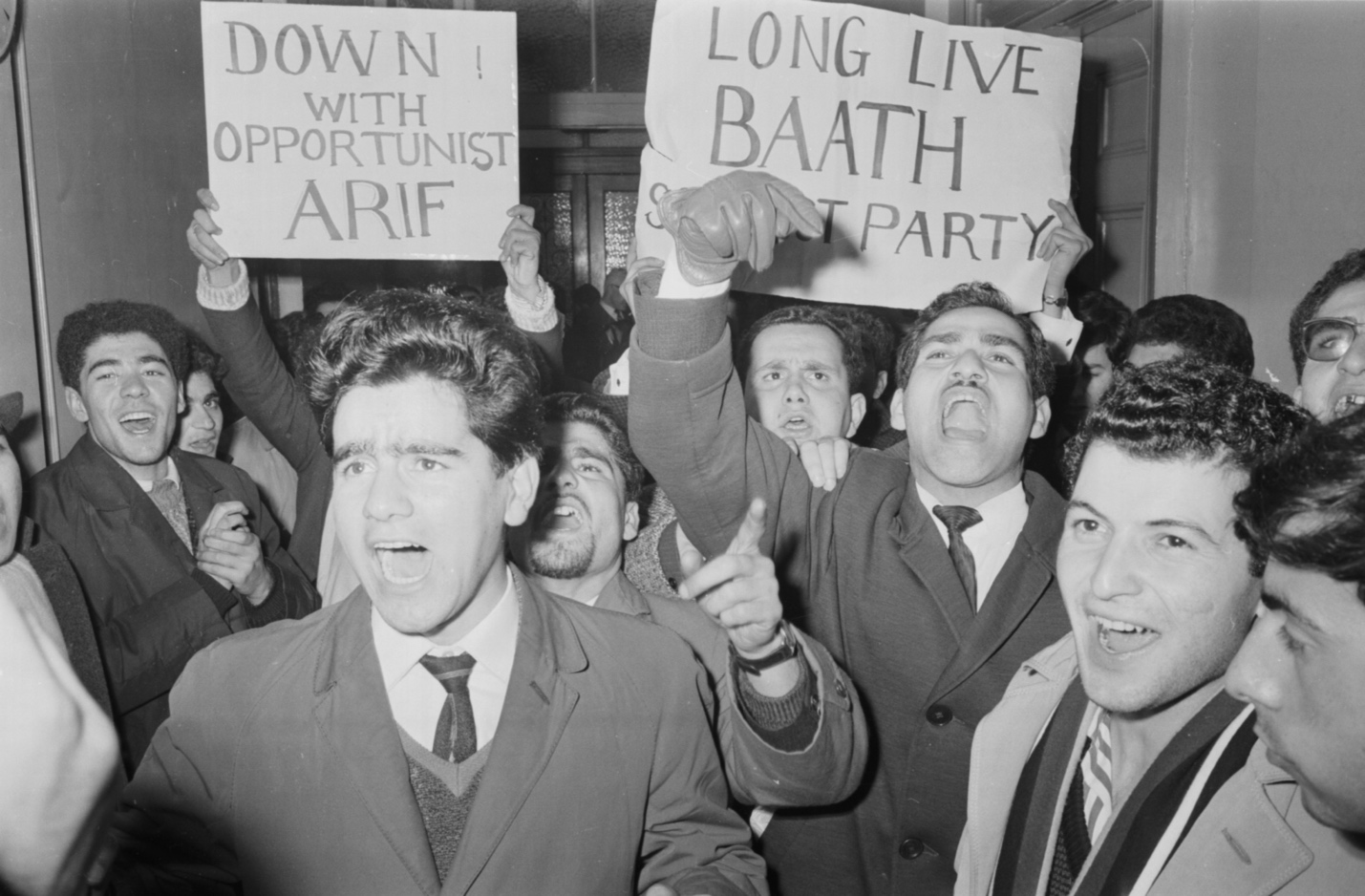
Considered to be the Arab world’s “great white hope,” the CIA empowered Iraq’s Ba’ath Party through secret arms supplies, blacklists, psychological warfare and propaganda.
[This article continues CovertAction Magazine’s efforts to expose the dark history of the CIA.—Editors]
On February 8, 1963, Iraq’s Ba’ath Party—which advocated for socialist and Pan-Arab ideals—carried out a successful coup resulting in the overthrow and execution of Abdul Karim Qassem.
Qassem was a nationalist who had overthrown the British-installed Hashemite monarchy in 1958, forged a political coalition with Iraq’s Communist Party (ICP) and challenged the neo-colonial power of the Iraq Petroleum Company (IPC), a consortium of mostly British- and American-owned oil companies partially owned by the British government.
The Ba’athist coup was followed by a wave of political pogroms directed against the ICP, whose members were hunted down, tortured and executed by the paramilitary National Guard.
The victims included women, who were raped in custody, and artists, intellectuals and poets, such as Iryan al-Sayyed, who was left disabled after being tortured.[1]
Like in Pinochet’s Chile, a sports stadium and athletic clubs were transformed into torture chambers as regular prisons became overcrowded.
The CIA’s official history published in 2016 refers to “thousands of deaths soon after the coup.”
Bill Lakeland, who served in the U.S. Embassy in Baghdad, reported to the State Department that relatives of hundreds of missing detainees believed the bodies of their loved ones had been dumped into the Tigris River.[2]
The U.S. and the “White Hope for the Arab World”
Weldon C. Matthews is a history professor at Oakland University who has published a book examining the Kennedy administration and the CIA’s complicity in the 1963 Ba’athist coup and massacres that followed, entitled Iraqi Ba’thists in America’s Cold War: Covert Action, Paramilitarism and Violence.
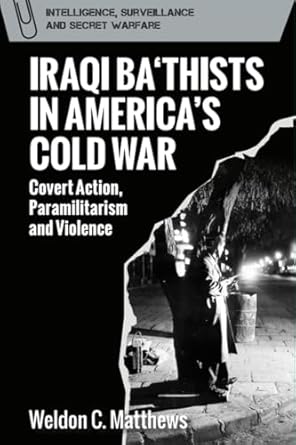

Matthews shows in his book how the Kennedy administration developed an “exceptionally close relationship with Iraq’s Ba’athist regime as it murdered, tortured and intimidated members of the Iraq Communist Party and its sympathizers.”
The Kennedy administration decided to align with the Ba’athists because they thought they could affect a transition to democracy and provide a vehicle by which the U.S. could establish control over Iraq’s oil resources and expand its political influence in the Middle East.[3]
Upon coming to power, the Ba’ath had moved toward a capitalist economic model, privatizing Iraq’s banking sector and liberalizing its trade policy by removing restrictions on imports from the West.[4]
This, combined with their violent repression of the communists, made the Ba’ath Party seem to be the “white hope for the Arab world,” as James Akins of the U.S. Embassy’s political section termed it.[5]
The injustice underlying the Ba’ath Party’s anti-communist pogrom was reflected on years later by Dr. Ali Karim Said, a young Ba’ath Party activist in the 1960s who is quoted by Matthews telling Talib Shabib,[6] the Foreign Minister in the original Ba’athist government: “Ba’athists and communists had both been patriots of the same country with many similar goals,” yet somehow, the Ba’ath leaders of that time “took political dialogue and debates that went on in salons and student dormatories to the execution sites and turned it into a dialogue of blood….What was the point of what the Ba’athists did to the communists?”
Shabib responded that, indeed, “the violence of 1963 could not be justified” as “the Ba’athist regime faced neither foreign aggression nor significant internal opposition.”[7]
Kennedy Counterinsurgency Era
The Kennedy administration embraced modernization theory with the intent of stamping out communist movements considered to be a “disease” of the transition in post-colonial economies.
Kennedy and his top advisers were zealous advocates of a counterinsurgency doctrine that emphasized the importance of covert, unconventional warfare practices combined with political propaganda and reformist efforts designed to stabilize a pro-Western technocratic elite and undercut support for communist parties.
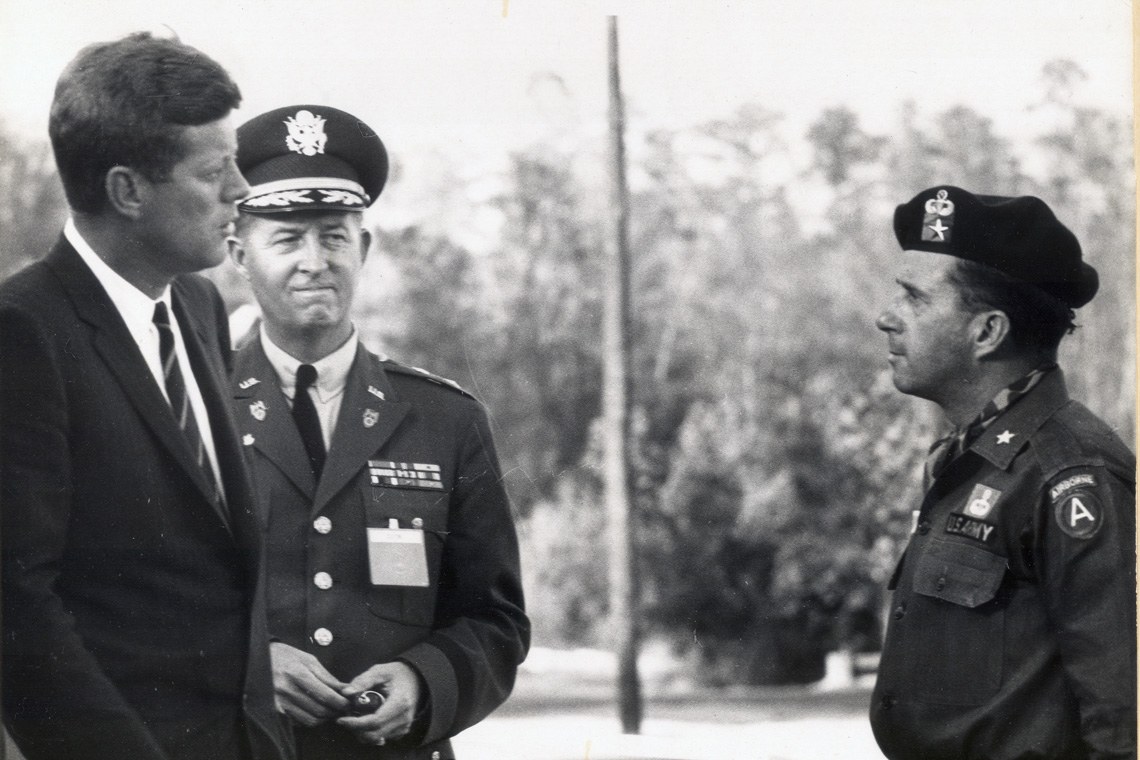
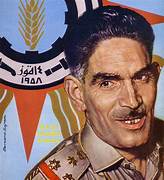
In Iraq, the CIA sought to exploit divisions in the nationalist and leftist movements between communists and other supporters of the Qassem regime and the Ba’athists who wanted to integrate Iraq with Syria and Egypt, which was then ruled by Pan-Arab socialist leader Gamal Abdel Nasser.
The CIA’s contacts with the Ba’ath Party went back to the 1950s and were largely established through the CIA-financed National Student Association, which brought promising Iraqi students to study in the U.S.
CIA contacts with the Ba’ath were also established through police training programs, which brought Iraqi police officers for training sessions with American police forces or at the CIA-supported International Police Academy (IPA), where they were given instruction in counter-subversion methods.[8]
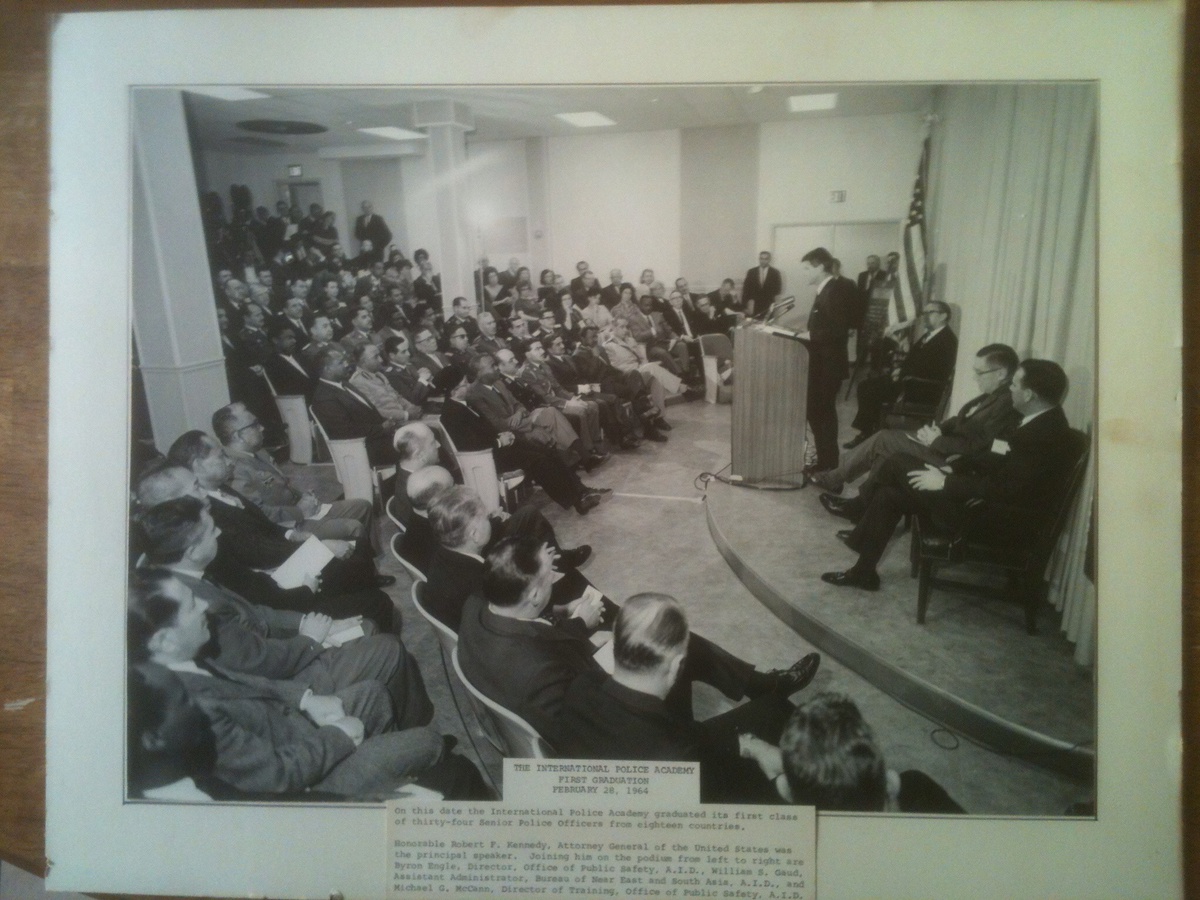
One of the Iraqi police officers who was brought to the U.S. under these programs, Ahmad Amin, had headed a Ba’athist cell in the Iraqi national police during the period of Karim Qassem’s rule, and became director of the national police force under the post-coup Ba’athist government with the rank of Lieutenant General.
Fadil al-Samarra’i, who was trained at International Police Services, Inc., a CIA proprietary connected to the IPA, became a commander of the Iraqi mobile brigade, a paramilitary force that was deployed to crush a Kurdish uprising after the 1963 Ba’ath Party coup.[9]
While the CIA may not have directly planned the Ba’athist coup, James Akins said that the U.S. supported the coup through financial means and by providing military equipment to the coup plotters.
The author of a CIA history of its Iraq policy acknowledged that the CIA “in some measure financed Iraqi Ba’athists before they carried out their coup.”[10]
Additionally, the CIA helped compile lists of communist agents that were provided to the Ba’ath government who then singled them out for torture or execution.[11]
The transfer of blacklists was similar to Indonesia where CIA lists compiled under Operation PROSYMS (in which Barack Obama’s mother Ann Dunham is thought to have participated) were used by the Suharto government to carry out pogroms against the Indonesian Communist Party (PKI) and its supporters.
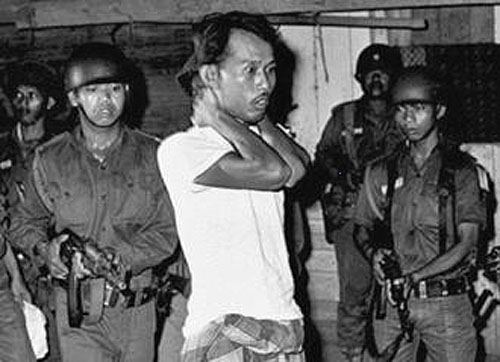
As with the 1965 U.S.-backed coup in Indonesia, U.S. officials were exuberant after the 1963 Ba’athist coup; Assistant Secretary of State Phillips Talbot wrote to Secretary of State Dean Rusk “We can expect…the Soviets and local communists in Iraq to be held at arm’s length…and the pace of modernization and reform to be speeded.”
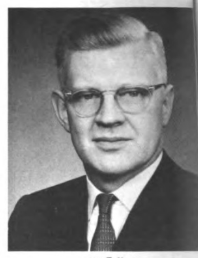
Talbot and his colleagues were informed about the campaign of terror being perpetrated by Iraq’s new leadership, though replicated the regime’s propaganda in suggesting that accounts of its atrocities were fabrications by communists or “merely reports of unauthorized excess.”[12]
Bill Lakeland of the U.S. Embassy claimed that American officials in Baghdad did not believe the atrocity reports because they did not come directly from detainees, because officials believed the rumors were fabricated by the regime’s opponents, and because of “the well-known Arab tendency to exaggerate.”[13]
To help shore up the Ba’athist regime, a team of CIA agents was sent into Iraq after the coup. Among them were Jack Waltz, former CIA chief of operations for the Near East, CIA analyst John Devlin, Hugh Fleischer, who had taken part in aborted 1957 CIA coup in Syria, and Robert E. Rice, who went on to work in South Vietnam running the Phoenix Program under which left-wing guerrillas were targeted for liquidation.[14]
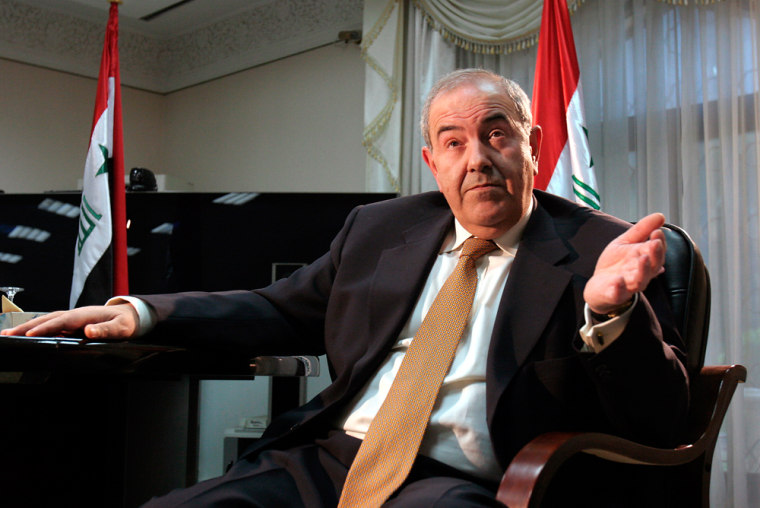
One of the Ba’athist thugs whom the CIA trained in combat operations was Ayad Allawi, then a first-year medical student who helped arrest and assassinate communists after the 1963 coup. Later, he was groomed by the CIA to be Iraq’s leader following the 2003 Operation Enduring Freedom that overthrew Saddam Hussein.[15]
“Something Wrong with Our Foreign Policy”
CIA operative Bruce Taylor Odell, who had worked under diplomatic cover in Iran before going to Iraq, described the CIA’s secret shipment of tanks, ammunition and guns soon after the 1963 coup in a fleet of unmarked transport planes from Dover, Delaware, to an air strip inside Iraq.[16]
The covert weapons supply provided over a three-month period included vital weapons the Iraq army needed to crush the Kurdistan Democratic Party in the face of a Kurdish rebellion.
The weapons included revolvers and Swedish K rifles, which were especially suited for clandestine work because they were not manufactured in the U.S.
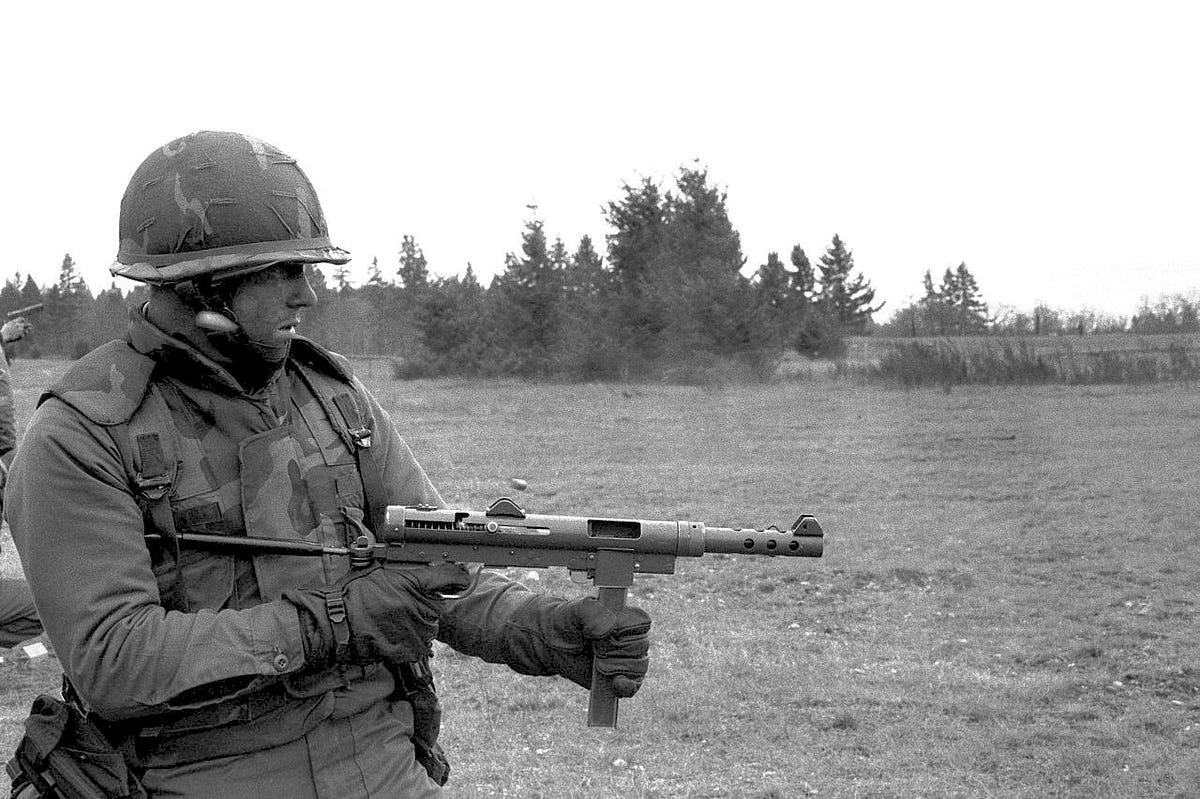
The Kennedy administration increased arms sales and military assistance programs to Iraq after the Ba’athist coup, with the U.S. becoming Iraq’s top arms supplier.[17]
In March 1963, the Kennedy administration sent two counterinsurgency specialists from Iran—Eric W. Pollard, a participant in the 1953 Iranian coup against Mohammad Mosaddegh, and George A. Carroll,[18] the assistant to Deputy Secretary of Defense Roswell Gilpatric, to assist in the counter-guerrilla campaign against Kurdish insurgents.
A few months later, CIA operative Edward Kennelly arrived in Baghdad to re-establish U.S. police-training programs and exchanges that brought Iraqi police officers to the U.S. for training in counter-subversion. (A key goal of those programs was to recruit the police as CIA assets).[19]
The propensity for abuse of civil liberties by U.S.-trained police extended to U.S. embassy employees. Gordon S. Brown, a security officer at the U.S. Embassy in Baghdad from 1963 to 1966 recalled in 1996 that, periodically, the Iraqi police would “arrest some of our Iraqi employees and I would have to go down and beg them not to crush their fingers. The police men told me how much they enjoyed the training they had gotten from the anti-insurgency courses we had trained them in, [but] I thought, there was something wrong with our foreign policy that we were training these people to maltreat our local employees.”[20]
After the Ba’athist coup, Iraq got on the radar of the Special Group on Counterinsurgency (CI), which the Kennedy administration had set up under the direction of Robert F. Kennedy to further worldwide counterinsurgency operations.
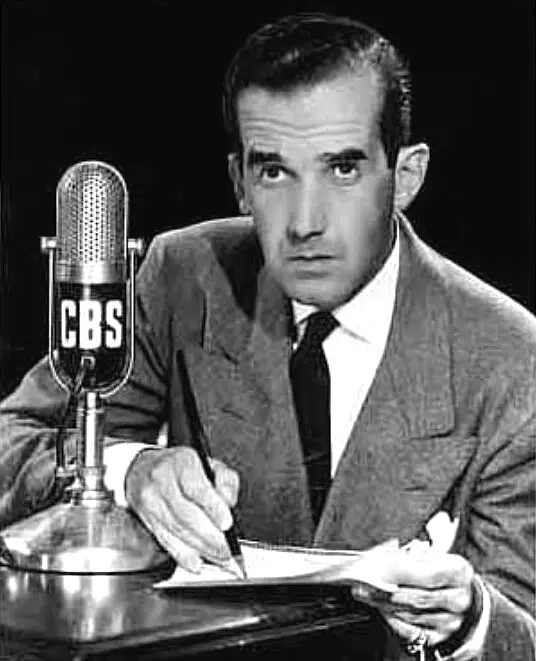
One key appointee to the CI was famed journalist Edward R. Murrow, who then headed the U.S. Information Agency (USIA).
The Kennedy brain trust considered propaganda as well as civic action programs and development aid critical to counterinsurgency in the ability to win the “hearts and minds” of people in Third World countries that were susceptible to a left-wing takeover.
The CIA, accordingly, helped Iraq’s Ministry of Guidance—whose director had graduated from the University of California at Berkeley—run a large-scale propaganda campaign to try to engender support for the new socio-political order.
This campaign included the broadcasting of the “confessions” of communist leaders on national television,[21] and dissemination of anti-Soviet propaganda films like one entitled Budapest and Berlin about the Soviet suppression of uprisings in Hungary and East Germany in the 1950s, and another on communist excesses during Qassem’s suppression of a 1959 uprising in Mosul.
USIS also distributed Why Korea, a propaganda film about the Korean War, hosted by Humphrey Bogart, and carried out English-language instruction programs.[22]
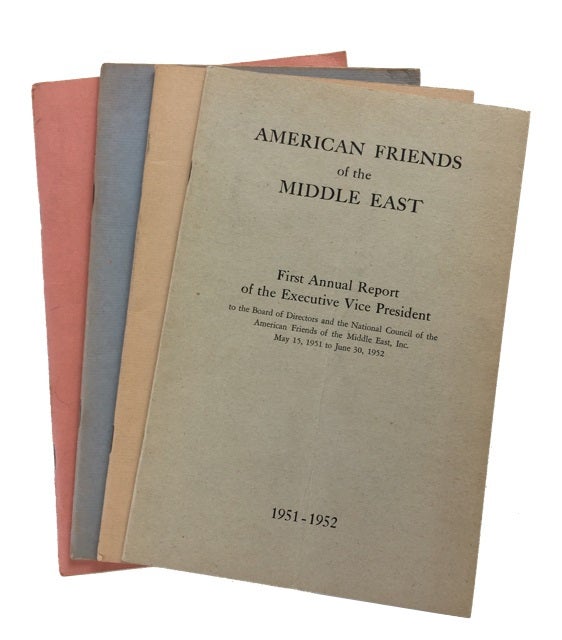
Meanwhile, the budget for the American Friends of the Middle East (AFME) increased in Iraq from $6,300 in 1962 to $16,800 for 1963. AFME was a CIA front that sponsored educational/propaganda initiatives and student exchanges that were used to groom Iraqi leaders who could serve U.S. interests during the Cold War.[23]
Another facet of U.S. covert intervention was the the CIA’s attempt to infiltrate the Iraqi Federation of Petroleum Workers (IFPW) and other Iraqi labor unions with the aim of purging communists and elevating rightists.
A key Iraqi liaison to the CIA for these efforts, Elia (Elias) K. Zughaib, had a Ph.D. from Syracuse University, taught at the American University of Beirut, and had been recruited as a CIA informant during a time he was involved with the National Student Association.[24]
A Legacy of Ashes
Kennedy administration/CIA efforts did not pay any dividends, as anti-American elements led by Saddam Hussein (who had plotted an assassination attempt against Qassem in 1959 that the CIA knew about) took over the Ba’athist Party by the late 1960s and drew closer to the Soviet Union while nationalizing Iraq’s oil industry.[25]
Robert Komer, a Deputy National Security Adviser under JFK and LBJ, said in 1964 that “Iraq is going sour.”[26]
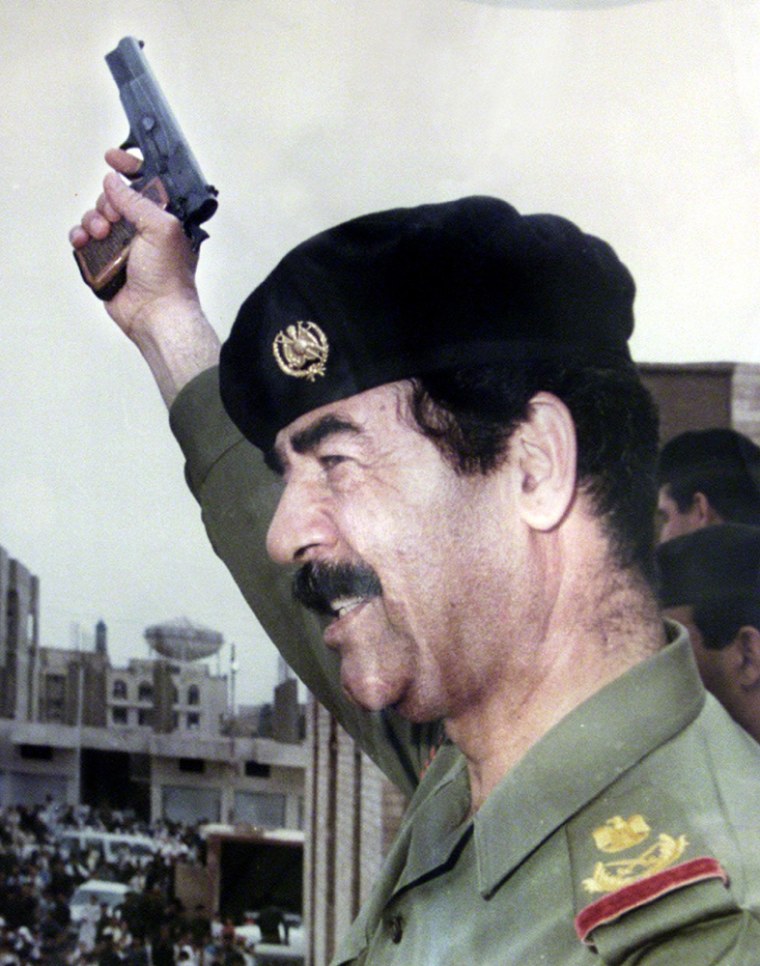
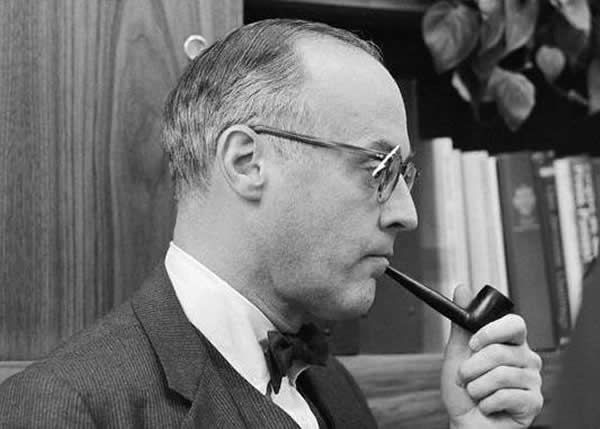
Iraq would go further sour in the years leading up to the 2003 Operation Enduring Freedom, during which time the CIA worked with some old Ba’athists from the 1960s era like Ayad Allawi in an attempt to reclaim the promise that had once been seen in the Ba’ath movement.
Matthews’ book is significant in showing a strong continuity in U.S. foreign policy from the Cold War to the era of the War on Terror and how the U.S. contributed to the degradation of Iraqi politics in the 1960s.
The book is also important in countering mythologies about John F. Kennedy advanced by liberals who want to believe that he was a knight in shining armor whose assassination completely changed the course of U.S. foreign policy.[27]
The Kennedy administration’s sordid intervention involving the CIA in Iraq in the 1960s left a blood-soaked legacy that set the groundwork for yet more disasters to come.
A country that was once at the heart of the Pan-Arabic movement has today been reduced to a war-weakened shell of its former self marked by sectarian divisions and long-term foreign military occupation[28] that started in certain respects with the U.S.-backed 1963 coup.
Weldon C. Matthews, Iraqi Ba’thists in America’s Cold War: Covert Action, Paramilitarism and Violence (Edinburgh: Edinburgh University Press, 2025), 135. ↑
Ibid. ↑
Ibid., 254. ↑
Eric Jacobsen, “A Coincidence of Interests: Kennedy, U.S. Assistance, and the 1963 Iraqi Ba’th Regime,” Diplomatic History, 37, 5 (November 2013), 1044, 1045. In 1960, the CIA had tried to assassinate Qassem by sending a monogrammed handkerchief laced with an incapacitating agent. ↑
Jacobsen, “A Coincidence of Interests,” 1041, 1045. Akins said that “the Ba’th got rid of a lot of communists…this was a great development.” ↑
In the 1990s, Shabib was part of the CIA-backed Iraqi National Congress (INC), which sought the ouster of Saddam Hussein. ↑
Matthews, Iraqi Ba’thists in America’s Cold War, 254. ↑
For more on these programs, see Jeremy Kuzmarov, Modernizing Repression: Police Training and Nation-Building in the American Century (Amherst, MA: University of Massachusetts Press, 2012). ↑
Matthews, Iraqi Ba’thists in America’s Cold War, 71, 154. ↑
Ibid., 94. The CIA history stated that the CIA “maintained relations with scores of oppositionist groups in the Middle East” and that the agency gave “modest subsidies to media outlets,” using such groups to “spread covert action themes.” ↑
Matthews, Iraqi Ba’thists in America’s Cold War, 149, 150. ↑
Ibid., 131. ↑
Idem., 131. ↑
Ibid., 150, 151, 153. Edwin F. “Ted” Atkins was another CIA agent stationed in Iraq during this period. ↑
Matthews, Iraqi Ba’thists in America’s Cold War, 110, 111. ↑
Ibid., 153. ↑
Jacobsen, “A Coincidence of Interests,” 1050. ↑
A Purple Heart and Silver Star winner in World War II who received an M.A. from the Tufts Fletcher School of Law and Diplomacy in 1947, Carroll was a special adviser to General Matthew Ridgway in the Korean War and key planner of the 1953 CIA coup in Iran. He officially served in the CIA from 1952 to 1961. ↑
The police programs, which the Kennedy administration vigorously championed around the world, had been instituted in Iraq by the Eisenhower administration when Iraq was ruled by Nuri al-Said, a British puppet, but canceled when Karim Qassem had taken over in the years before the Ba’ath Party coup. ↑
Ibid., 153. ↑
Ibid., 142. These “confessions” often gained under duress were modeled after the Soviet show trials; efforts to elicit confessions from alleged traitors to the Bolshevik Revolution. ↑
Matthews, Iraqi Ba’thists in America’s Cold War, 171. ↑
Ibid., 175. ↑
Ibid., 63, 176. ↑
Ibid., 249, 250, 251. In the 1970s, Saddam further angered the CIA by refusing to grant a sulfur-mining concession to a CIA-linked company, Iraqi Technical Agencies Co., Ltd., run by former Treasury Secretary Robert Anderson. Iraqi Technical Agencies Co. Ltd. was financed through a CIA networked bank. Its co-owner, Paul Parker, helped make a U.S. intelligence agent named Lufti al-Ubaydi an important person in Iraq so he could use his position to try to get Iraqi newspapers to avoid addressing the sulfur-mining concession Anderson was pursuing in Iraq. ↑
Matthews, Iraqi Ba’thists in America’s Cold War, 238. ↑
See Jeremy Kuzmarov, “The Liberal Savior as Conservative: John F. Kennedy’s Foreign Policy,” Class, Race & Corporate Power, 2024. Liberals who advance an idealized view of Kennedy believe he was killed because he was going to withdraw from Vietnam when evidence of the latter is sketchy at best. They fail to acknowledge the evidence pointing to Lyndon B. Johnson orchestrating Kennedy’s assassination with the support of wealthy Texas oilmen and renegade CIA agents as a palace coup. ↑
Up until the time the Trump administration pulled out U.S. troops from Iraq in September 2026, the U.S. still possessed at least two major military bases in Iraq that were occupied by an estimated 2,000 U.S. troops (a figure down from 20,000 a decade before that). In March 2025, the Trump administration carried out air strikes in Iraq’s Anbar Province targeting an alleged ISIS commander considered to be one of the world’s most dangerous terrorists. ↑
CovertAction Magazine is made possible by subscriptions, orders and donations from readers like you.
Blow the Whistle on U.S. Imperialism
Click the whistle and donate
When you donate to CovertAction Magazine, you are supporting investigative journalism. Your contributions go directly to supporting the development, production, editing, and dissemination of the Magazine.
CovertAction Magazine does not receive corporate or government sponsorship. Yet, we hold a steadfast commitment to providing compensation for writers, editorial and technical support. Your support helps facilitate this compensation as well as increase the caliber of this work.
Please make a donation by clicking on the donate logo above and enter the amount and your credit or debit card information.
CovertAction Institute, Inc. (CAI) is a 501(c)(3) non-profit organization and your gift is tax-deductible for federal income purposes. CAI’s tax-exempt ID number is 87-2461683.
We sincerely thank you for your support.
Disclaimer: The contents of this article are the sole responsibility of the author(s). CovertAction Institute, Inc. (CAI), including its Board of Directors (BD), Editorial Board (EB), Advisory Board (AB), staff, volunteers and its projects (including CovertAction Magazine) are not responsible for any inaccurate or incorrect statement in this article. This article also does not necessarily represent the views the BD, the EB, the AB, staff, volunteers, or any members of its projects.
Differing viewpoints: CAM publishes articles with differing viewpoints in an effort to nurture vibrant debate and thoughtful critical analysis. Feel free to comment on the articles in the comment section and/or send your letters to the Editors, which we will publish in the Letters column.
Copyrighted Material: This web site may contain copyrighted material the use of which has not always been specifically authorized by the copyright owner. As a not-for-profit charitable organization incorporated in the State of New York, we are making such material available in an effort to advance the understanding of humanity’s problems and hopefully to help find solutions for those problems. We believe this constitutes a ‘fair use’ of any such copyrighted material as provided for in section 107 of the US Copyright Law. You can read more about ‘fair use’ and US Copyright Law at the Legal Information Institute of Cornell Law School.
Republishing: CovertAction Magazine (CAM) grants permission to cross-post CAM articles on not-for-profit community internet sites as long as the source is acknowledged together with a hyperlink to the original CovertAction Magazine article. Also, kindly let us know at info@CovertActionMagazine.com. For publication of CAM articles in print or other forms including commercial internet sites, contact: info@CovertActionMagazine.com.
By using this site, you agree to these terms above.
About the Author
Jeremy Kuzmarov holds a Ph.D. in American history from Brandeis University and has taught at numerous colleges across the United States. He is regularly sought out as an expert on U.S. history and politics and co-hosts a radio show on New York Public Radio and on Progressive Radio News Network called “Uncontrolled Opposition.”
He is Managing Editor of CovertAction Magazine and is the author of eight books, including Obama’s Unending Wars (Clarity Press, 2019), The Russians Are Coming, Again, with John Marciano (Monthly Review Press, 2018), Warmonger. How Clinton’s Malign Foreign Policy Launched the U.S. Trajectory From Bush II to Biden (Clarity Press, 2023); with Dan Kovalik, Syria: Anatomy of Regime Change (Baraka Books, 2025), and Political Assassinations in America: The Intricate Nexus of Deep State Crime (Clarity Press, 2026).
Besides these books, Kuzmarov has published hundreds of articles and contributed to numerous edited volumes, including one in the prestigious Oxford History of Counterinsurgency .
He can be reached at jkuzmarov2@gmail.com and found on substack here.

Lately, I’m noticing a distinct pattern with many of the articles in CovertAction Magazine. Most of the pieces contain a lot of historically correct facts. But often in the very last segments, there are a lot of questionable statements. It is as if the writers are trying to gain the confidence of the readers by reporting a lot of historically correct facts, so that the final paragraph—which is highly subjective or questionable—will receive a positive response from the readers
why don’t you write some of your own articles. If you don’t like an article write something on the topic you think is better. And failure to use your own name makes you suspect. We’d consider publishing one of your article on CAM if it is well grounded. you are welcome to submit one.
Not right now. Maybe in future. Like for example one article you wrote was excellent and very factual until near the end when you wrote that the Bucha Massacre was conducted by the Ukrainians not the Russia. This is totally false. Admit that you are wrong and then I may consider writing an article.