
With little variation, as it was 60 years ago, Brazil’s military and political elite, as well as its big business sector—namely agribusiness—are not fond of what could remotely be perceived as progressive, left-wing politics.
God forbid their country, harboring Portuguese colonial heritage in every nook and cranny, despite failing to...
BRAZIL—As if: questions shrouding the loyalty of Brazil’s armed forces toward the country’s federal government did not persist; the potential of being affected by a colonial-inspired conflict involving Venezuela and Guyana over the oil-rich region of Essequibo; and Operation Shield, a police offensive following the death of a military...

We should present our condolences to each other. They do not resuscitate the dead, but they strengthen relationships among the living.—Article 10 of the Charter of Kurukan-Fuga (Constitution of the Mali Empire, circa 13th century AD)
A short list of massacres committed by Brazilian police in Rio de Janeiro favelas...
“Blindness that affects the other side also affects us.”
— Mano Brown
The saying goes: Um negócio pra boi dormir.” Literally, the Brazilian aphorism means: (To give) something for the bull to sleep. In practical layman’s terms it pre-figures social interactions where somebody, a group of people or an entity, says...
Newly elected President Luíz Inácio Lula da Silva remains in hotel accommodation in Brasília, still unable to reside in the Alvorada Palace due to material damage and security concerns.
On the 21st of January, Brazilian president, Luíz Inácio Lula da Silva, sacked general Júlio César de Arruda as head of...
Flashbacks, possibly nightmares, haunt the ghost of an old empire.
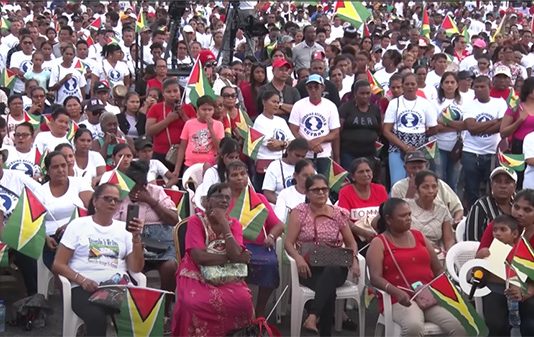
In December 2023, 57 years after the sun and Union Jack descended over British Guiana, Britain’s HMS Trent, a Royal Navy patrol vessel, was spotted sailing into a Guyanese harbor. “Nothing that we did in the past or we will...
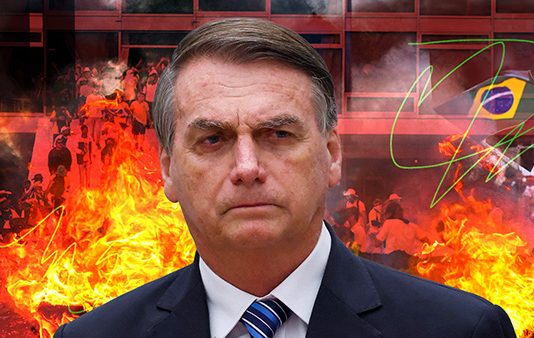
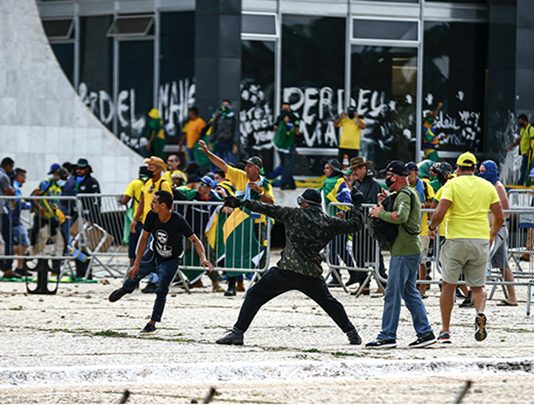
On January 8th, right-wing Brazilians stormed the federal building and Supreme Court in the capital of Brasília. Inspired by baseless accusations by former Brazilian President Jair Bolsonaro that the October elections were stolen, the rioters broke windows, smashed art, destroyed paintings, stole computers and more.

BRAZIL—Over the past few days and weeks, rumors of war, as if global conflict were an inevitable contagion bound to reach Indoamerica (South or Latin America), swirled at an uncanny, feverish pitch. The case for armed conflict has subsided only slightly.
An unspoiled, beautiful region known as Essequibo has taken...
He who was born, was born / He who wasn’t born, won’t be born / Get out the way of the bullet train or else you might get torn.—“He Who Was Born, Was Born” by MC G3
Will There Be “Peace, Liberty, And Justice” With Whatever Comes After Brazil?
Recorded circa...
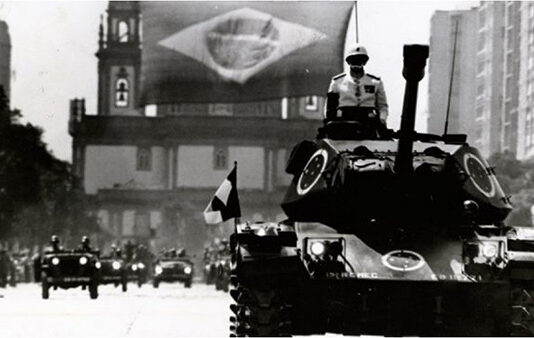
Private interests and foreign influence helped to pave the path toward Brazil’s military dictatorship (1964-1985). The armed forces is not an institution separate from society...It’s a reflection of that violent and authoritarian society. However, they are more dangerous because they have the prerogative to legally use firearms.
—Priscila Brandão
An...
