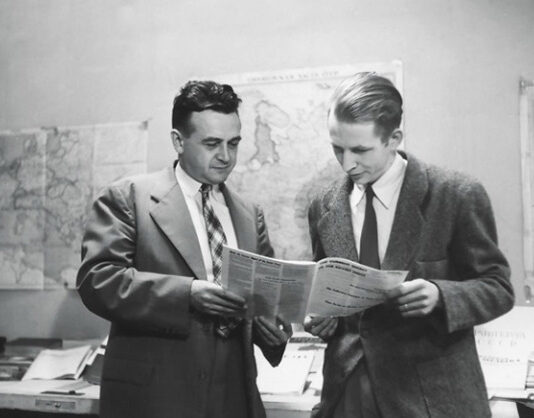
Philip Mosely, who was considered the “most influential Sovietologist of the Cold War,” embodies the close ties between academia and the CIA
In his 1987 book Cloak and Gown: Scholars in the Secret War, 1939-1961, historian Robin Winks details a close connection between academia and the CIA and its...

Just over a year ago we reported on Chanda Creasy, a courageous yoga coach, who had previously managed to work with militants in Africa, making her way up to the position of special assistant to CIA director on global operations. Recently, we found new details of Chanda’s trip to...
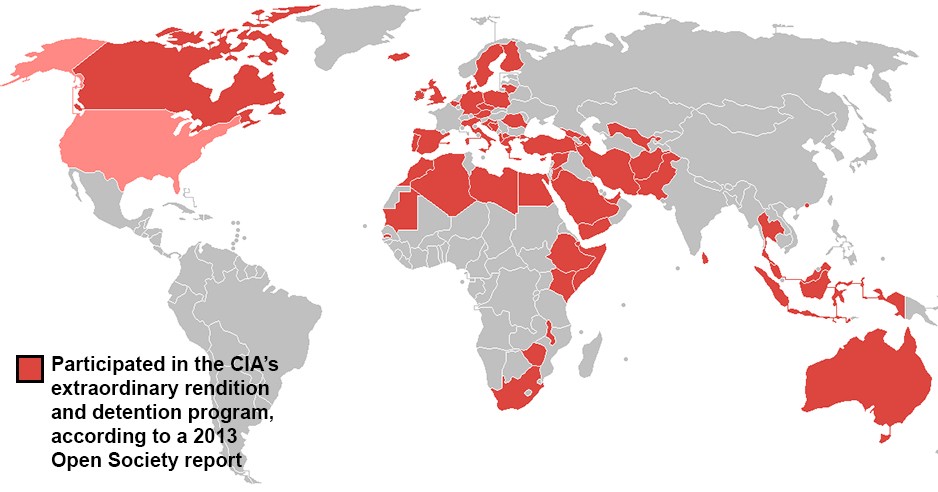
It’s been sixteen years since Gul Rahman died of hypothermia, beaten and left half-naked and short shackled to a bare prison floor at the CIA-run Salt Pit “black site” prison in Afghanistan. It is not known what the CIA did to his corpse. His body was never turned over to his family.
According to...
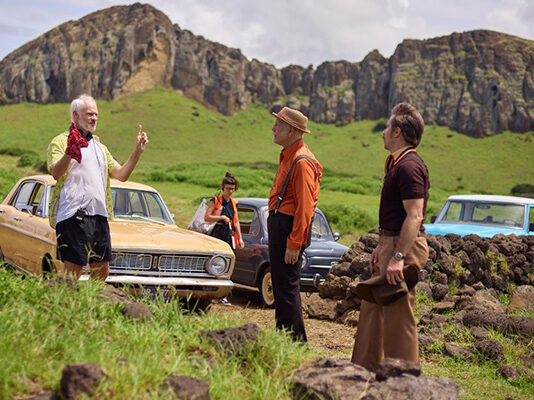
Great films, like great literature, please and teach. Wild Horse Nine is a bold, hilarious and heartbreaking ride, but it is also a “downbeat Western” that is aware enough of itself to teach us what it means to play with this style.
Like Sam Shepard’s True West, which John Malkovich...

Louis Wolf: Our first question relates to Gina Haspel. I should just point out that we have just posted on our webpage the transcripts of the torture documents which were obtained by the Federation of American Scientists...
Chris Agee: And the National Security Archive, right?
Louis Wolf: ...and the National Security Archive...in which...

“Cuban Outbreak of Swine Fever Linked to CIA” headlined a January 9, 1977, article by Drew Featherston and John Cummings in Newsday, a Long Island, New York, daily paper. It began,
With at least the tacit backing of U.S. Central Intelligence Agency officials, operatives linked to anti-Castro terrorists introduced African...

Over the past half-century, I have been engaged in research, lectured and worked with social movements and leftist governments in Latin America. I interviewed US officials and think tanks in Washington and New York. I have written scores of books, hundreds of professional articles and presented numerous papers at...

Investigating a possible link between the cold murder cases in the Antelope Valley of Hollywood screenwriter Gary Devore and Los Angeles County Sheriff’s Deputy Jonathan Aujay
Sprawling poppy fields, aerospace, and secret military bases, California’s Antelope Valley is known for these landmarks. Over the past decades, the Antelope Valley became...

Appointment of Abrams to Public Diplomacy Commission Shows President Biden’s Close Ties to the CIA
In September 1998, Desiree A. Ferdinand gave a sworn deposition, in a case filed with the U.S. District Court of Massachusetts, detailing the career of her father, Colonel Albert V. Carone, an army intelligence officer...

The effects of this poisonous coup attempt—cooked up at Langley more than 30 years ago—had lingering consequences which exacerbated income equality, stifled economic growth and undercut human rights.
Back in the 1980s New Zealand registered in the global consciousness because of its then-Prime Minister, the late David Lange, and his...

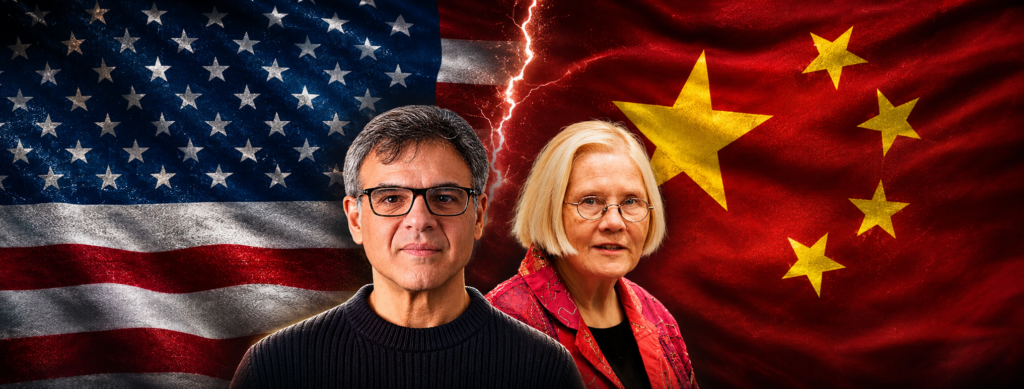
 Radhika Desai is a Professor of Political Studies at the University of Manitoba, Winnepeg, Canada, Director of its Geopolitical Economy Research Group, and Convenor of the International Manifesto Group. Ms. Desai is an author of multiple books, including Geopolitical Economy(2013) and her most recent Capitalism, Coronavirus and War(2022). Ms. Desai hosts a fortnightly show, Geopolitical Economy Hour on the Geopolitical Economy Report website.
 Yan Pan is a Chinese PhD researcher at LUT University, Finland. Her work examines the political economy of China’s technological and industrial development, with a particular focus on the industrialization and governance of neurotechnology in China. Her research concerns industrial policy models for future industries in Chinese and Global South contexts. Prior to her PhD, she researched educational reforms and structural change in labor demand in China.
 Ken Hammond is professor emeritus of East Asian and Global History at New Mexico State University. He has lived and worked in China from time to time since 1982. A lifelong political activist, he is a member of the Party for Socialism and Liberation.