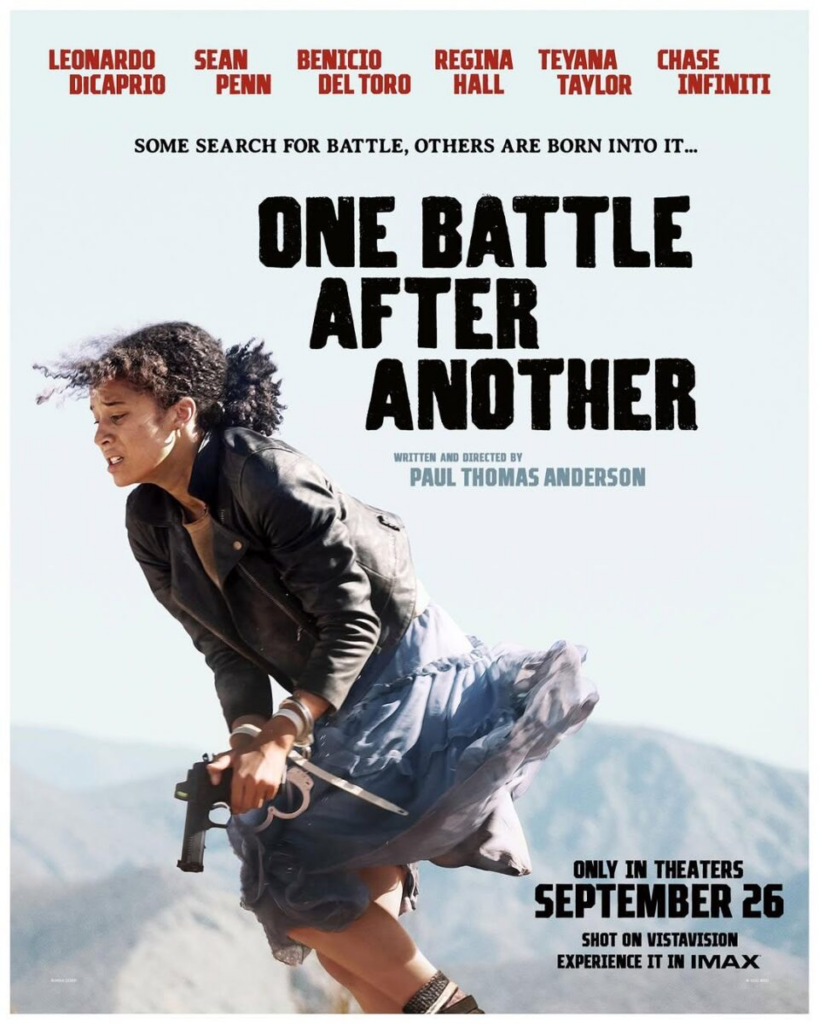
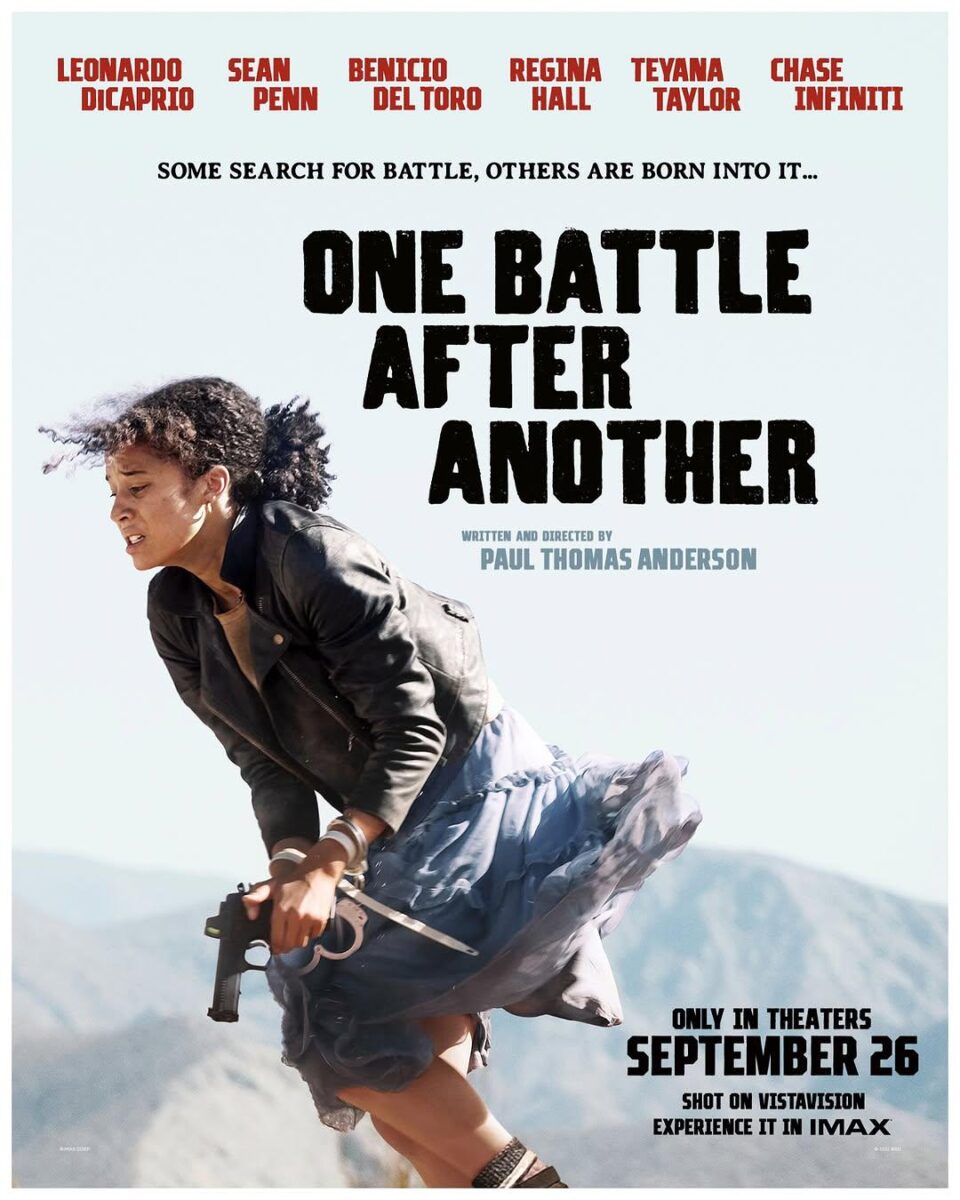
Paul Thomas Anderson’s Oscar-winning 2025 film One Battle After Another sparked a spirited debate on the left over its portrayal of a fictional group of revolutionaries known as the French 75. Some read the movie as a call to arms against Trump’s fascistic policies while others interpreted it as a satirical depiction of ultra-left adventurism gone awry.
However, whatever one’s explication of the film, it is clear that the primary inspiration for the French 75 was the Weather Underground—the notorious militant group that emerged in the late 1960s which took its name from a Bob Dylan song lyric—something leading man Leonardo DiCaprio confirmed in an interview with Radio Times. DiCaprio stated that, “[Anderson] based this on a lot of the activities of the Weathermen, late 1960s revolutionaries that were fighting imperialism, the Vietnam War, [and for] civil rights.”
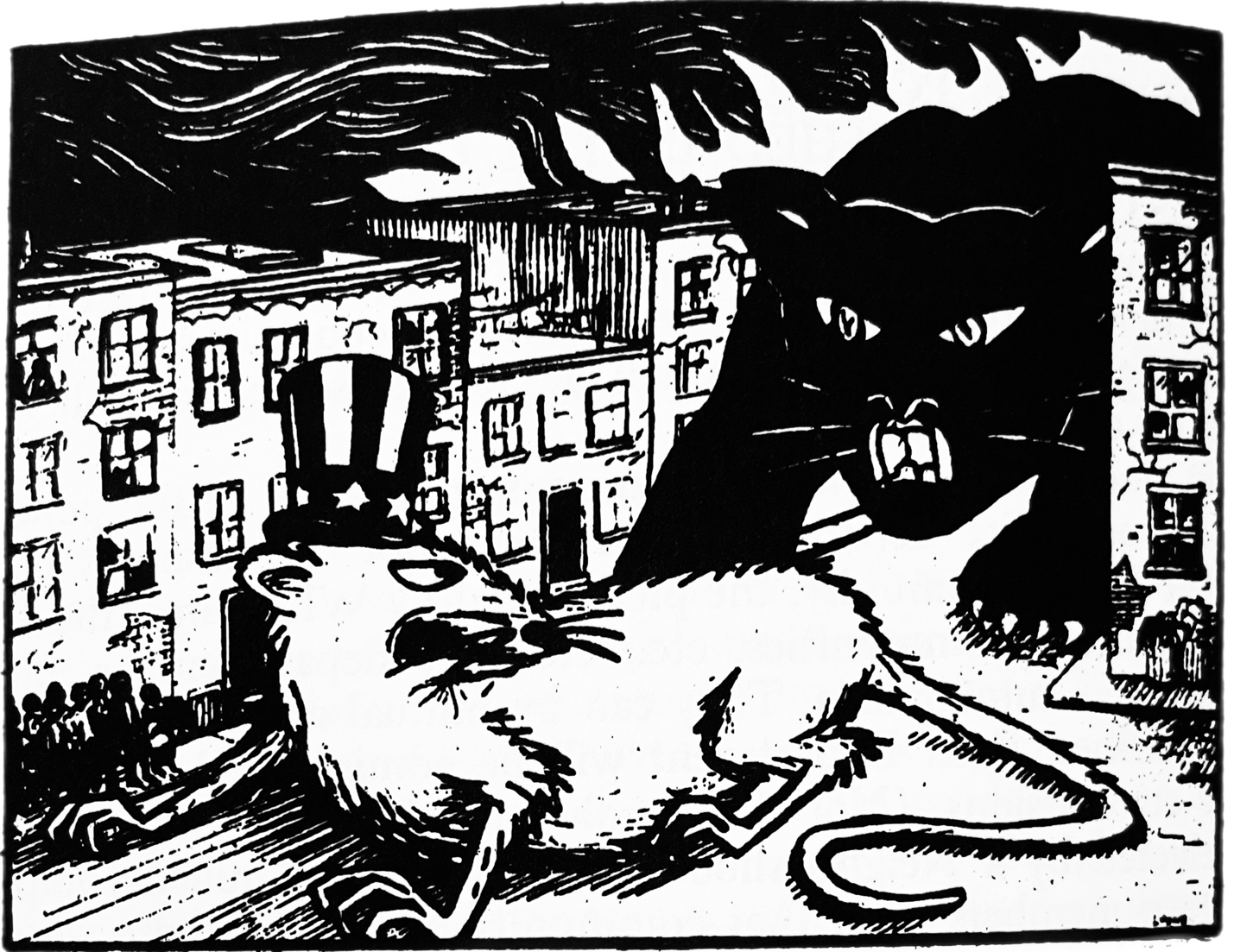
Indeed, in an era of rampant U.S. imperialist aggression and increasingly corporatized “resistance,” the Weathermen’s militant anti-imperialism holds a certain appeal. Yet a re-examination of Weather’s “armed struggle” tactics and organizational structure shows they should serve as a cautionary tale rather than an inspiration for activists today. Instead, of all the groups that came out of the New Left, the militant Black Panther Party (BPP) represents a model to the issues of strategy and party structure faced by the contemporary left.
Although the Weather Underground and the Black Panthers are frequently lumped together, the militants were often at odds and the stark differences in the U.S. government’s response to the two groups demonstrates who was most threatening to the existing order.
One could argue that One Battle After Another contributes to the conflation of the two groups, as some critics have argued that the character of Perfidia Beverly Hills (played by actress Teyana Taylor, who received an Academy Award nomination for her performance) seemingly made a mockery of the late fugitive revolutionary Assata Shakur.
However, it appears that Taylor, who cites Shakur’s autobiography as one of her favorite books, drew inspiration from the committed activist in crafting the redeeming elements of Perfidia’s flawed, complex and contradictory composite character.
Both the Weathermen and the BPP emerged after the U.S. national security apparatus had quelled the influence of the Communist Party of the United States (CPUSA).
Coupled with the overt suppression of McCarthyism, a heavy blow was dealt to CPUSA by the FBI’s Counter-Intelligence Program (COINTELPRO), the Bureau’s notorious covert campaign to sabotage the left. Begun in 1956, the same year the international communist movement split over Stalin’s legacy due to Nikita Khrushchev’s infamous “Secret Speech,” COINTELPRO was first deployed against CPUSA and the Trotskyist Socialist Workers Party (SWP).
The goal of the campaign of surveillance and infiltration was to provoke conflicts within the Marxist left, the Bureau’s primary tactic being the use of informants. It was later revealed in the Church Committee hearings of the 1970s, and it has been estimated that, at the peak of the FBI’s operations, 17% of CPUSA members and 10% of SWP members were Bureau informants. [NOTE: 17%? That’s a rather precise percentage]
In the 1960s, COINTELPRO was expanded to include “Black Nationalist Hate Groups” and the New Left, for which the program is most widely known. In fact, the Weathermen’s rise to prominence can be indirectly traced back to the FBI’s campaign against a faction within the Students for a Democratic Society (SDS), the campus-based New Left group from which Weather emerged.
The faction within the SDS targeted by the Bureau was an arm of the Progressive Labor Party (PLP), which was originally started in 1962 by expelled CPUSA members to counter the “revisionism” of the Communist Party. The PLP, a self-proclaimed Marxist-Leninist party which focused on building a mass movement, received its broadest support between 1965 and 1967, coinciding with its organization of the student-led May 2nd Movement against U.S. imperialist aggression in Vietnam.
Within SDS, the PLP backed a faction known as the Worker Student Alliance which aimed for militant students to leave academic circles and unite with industrial workers.
The FBI took advantage of the differences between the competing left-wing organizations as a divide-and-conquer strategy, as indicated in a Bureau memorandum which suggests “the exploiting of hostility between New Left groups and such organizations as the Progressive Labor Party.” However, conflicts were emerging not only between the PLP’s faction and the SDS, but also with the BPP over the Black Power group’s position on nationalism, with Panther activist Eldridge Cleaver accusing the PLP of advocating the “dogmatic” views of the “Old Left.”
In reality, both contingents bore the contradictions of the New Left, with the feds working to fracture the two camps over their differences on nationalism. While the PLP may have been viewed by their counterparts as a strict “Stalinist” party focused on building a worker-student alliance, it had arguably deviated from the traditional Marxist-Leninist position on the right of peoples to self-determination by opposing revolutionary Black nationalism.
Nevertheless, at SDS’s March 1969 National Council meeting, the PLP criticized the Panthers over their “bourgeois nationalist” stance, escalating the ideological battle for control of the New Left.
A few months later, a group of Panthers attended SDS’s National Convention in Chicago at which they denounced the PLP as “armchair Marxists” and “counterrevolutionary traitors.” At this same convention, all PLP members were expelled from SDS, even though they made up the voting majority. The mass expulsion was a joint effort of the two other factions within SDS, the Revolutionary Youth Movement II (RYMII) and the National Office (NO).
This SDS convention, at which Weather’s founding statement was distributed, is where the connection between the FBI’s offensive against the PLP and the emergence of the Weathermen lies. Estimated to have at least one informant in every chapter of the nationwide SDS, the FBI directed its plants within the radical student group to vote with the National Office for the expulsion of the PLP.
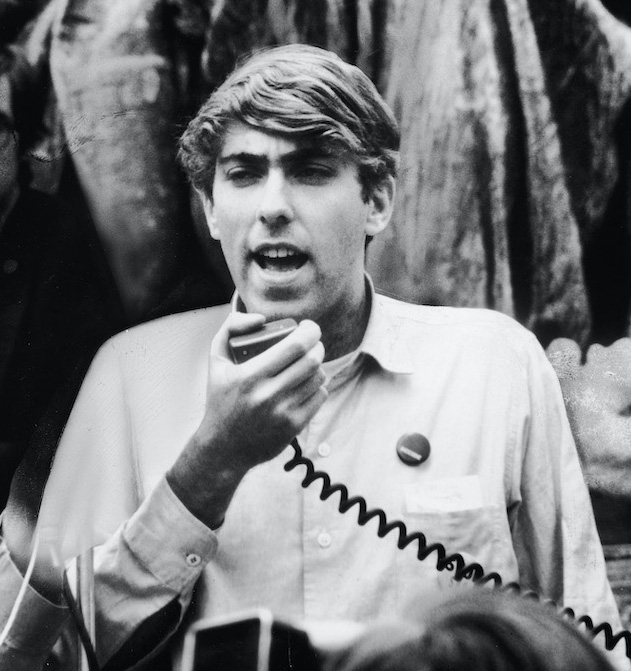
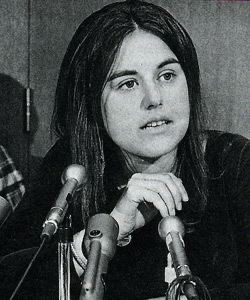
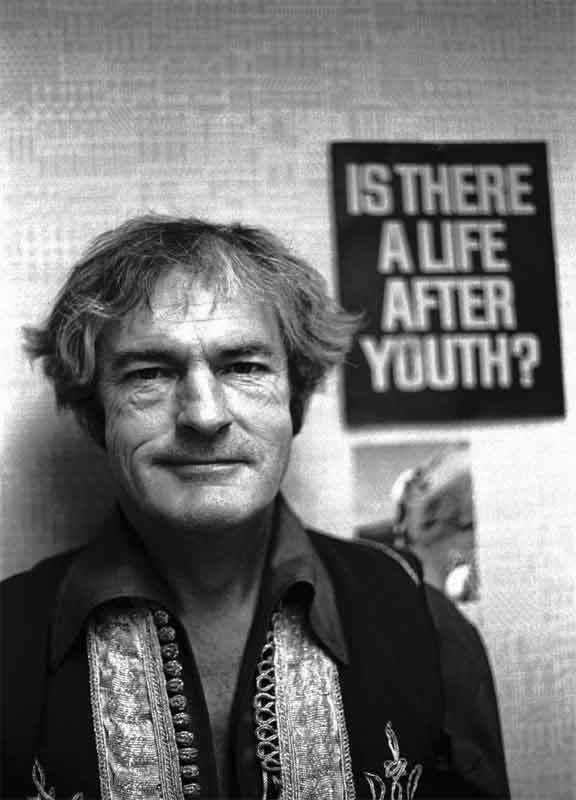
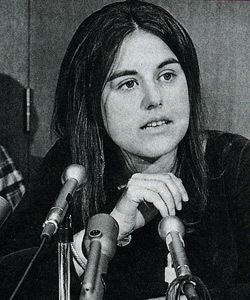
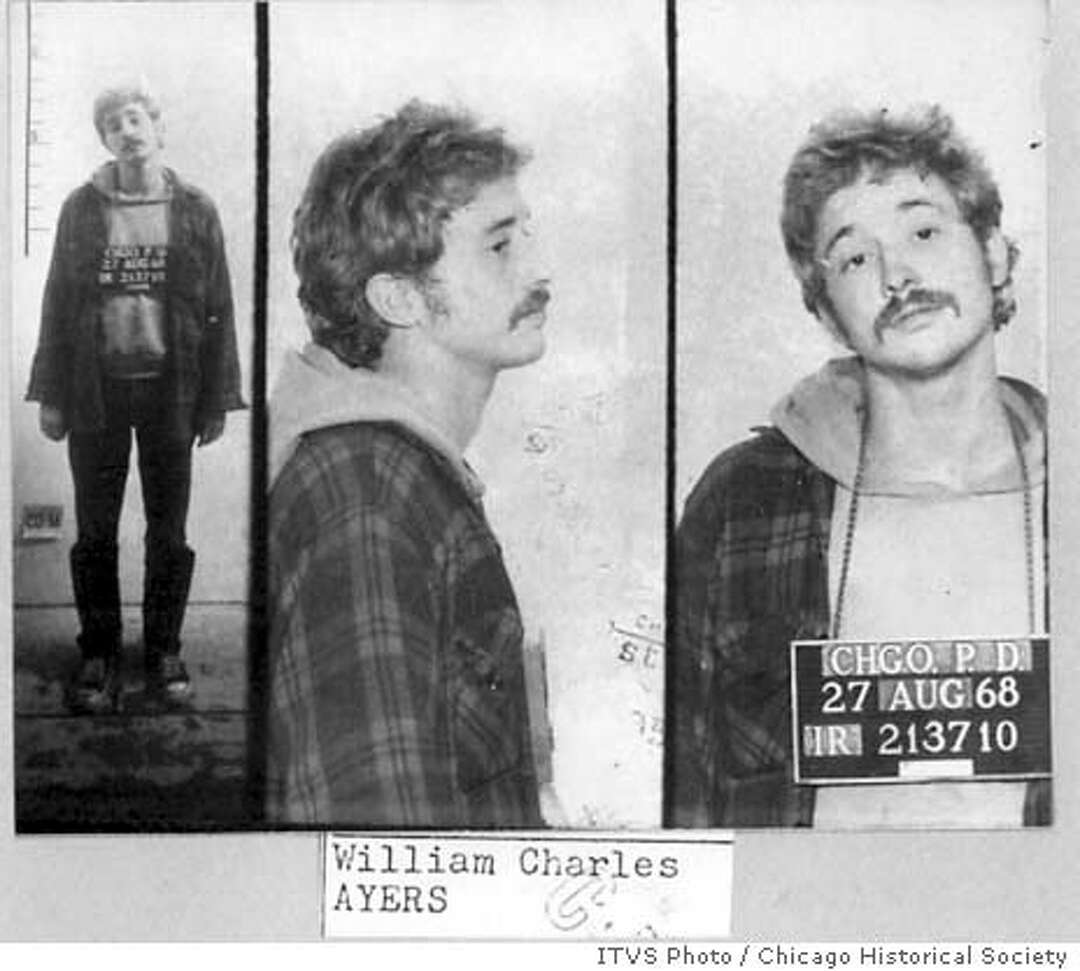
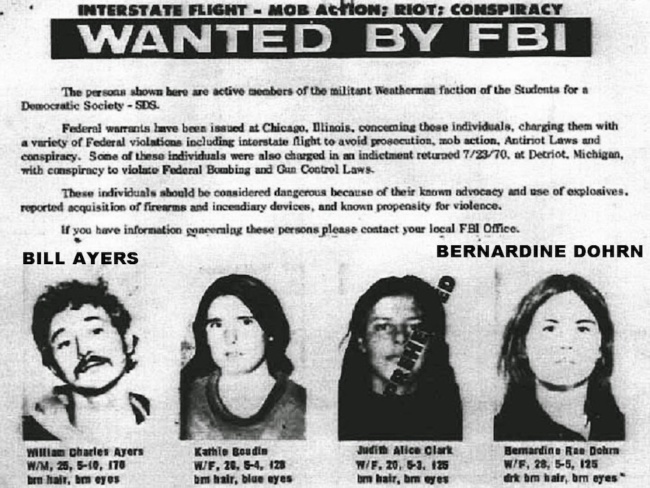
The National Office was spearheaded by Bill Ayers, Bernardine Dohrn, and Mark Rudd, the nascent leaders of the Weather Underground. The FBI preferred the NO over the victory of the PLP because the Bureau was concerned that the Maoist-oriented Party posed a greater long-term threat and would turn the SDS into a disciplined mass movement.
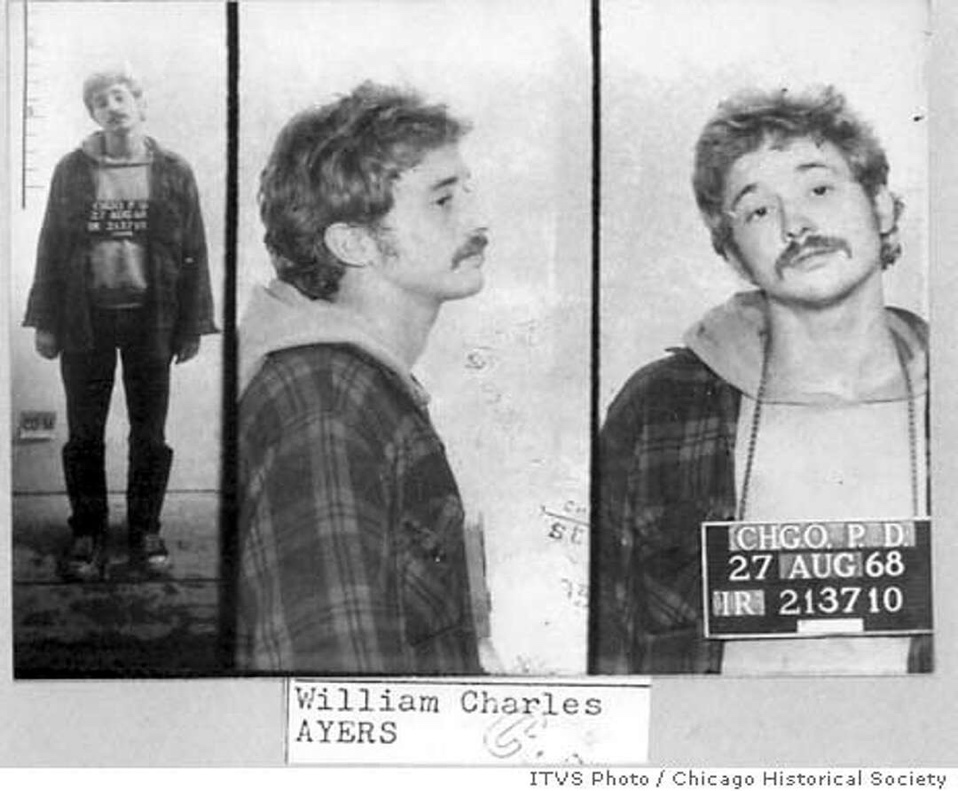
Two months after the June 1969 SDS convention, the FBI’s Detroit headquarters sent an anonymous letter to BPP and SDS leaders. Signed “An Angry Black Brother,” the letter stated how Black people should not work with the “lillywhite [sic] SDS” and was intended to cause friction between the two radical groups. Although the SDS worked alongside Black-led student groups like the Student Nonviolent Coordinating Committee (SNCC), it predominately consisted of white students from prestigious universities.
According to the August 1969 memo, the Detroit field office “further propose[d] that informants be instructed to make statements aimed at causing disruption in SDS/BPP, in an effort to further widen the gap between these two organizations.” Simultaneously, Mike Klonsky, the leader of RYMII, quit the National Organizing Committee due to his disagreement with Weather’s view of the working class as reactionary enemies of the revolution, allowing the faction to take control of the student movement.
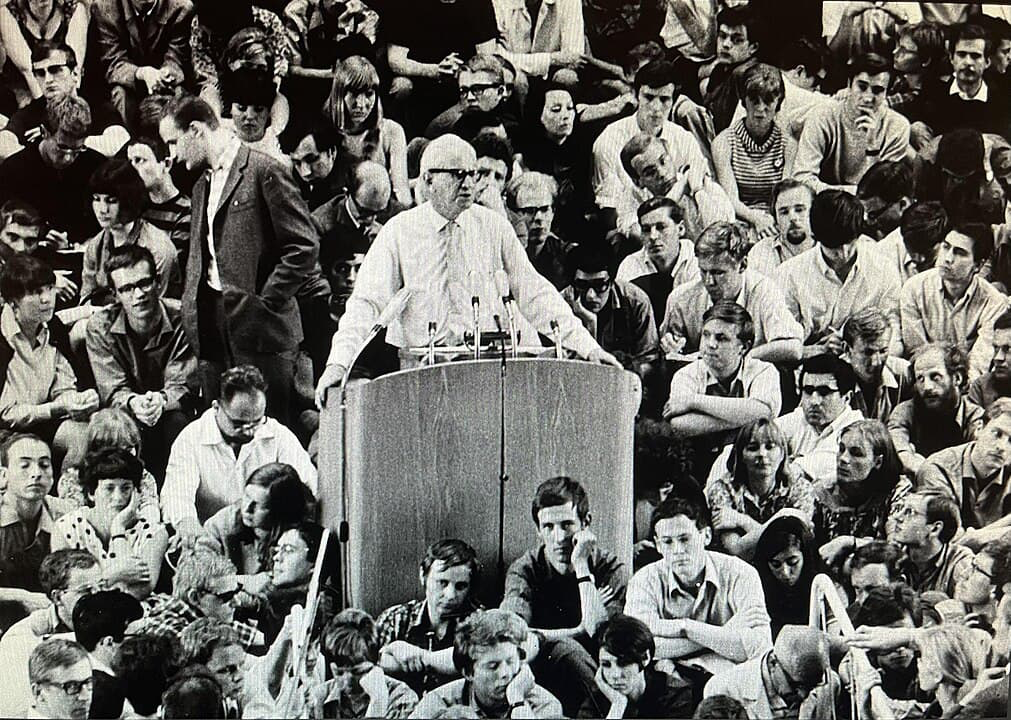
The Weathermen’s view of the white working class as inherently racist and incapable of recognizing its own oppression was reflected in much of the group’s subsequent actions. This position may have been influenced by the writings of Frankfurt School critical theorist Herbert Marcuse, who had an indirect connection to the militant group through rank-and-file Weather member Naomi Jaffe, a student of the “Godfather of the New Left” at Brandeis University.
Although the Weathermen (and Marcuse’s) abandonment of the working class as the motor of revolution is now widely accepted on what the American academic Gabriel Rockhill calls the “compatible left,” this stance garnered Weather criticism at the time.
Journalist Paul Glusman, writing in the legendary Ramparts magazine, criticized the Weathermen for not mentioning white youth as a revolutionary force in their own right, outside of providing support for the Black liberation struggle. Pointedly, he wrote: “One would think the Panthers would prefer allies who are in it for themselves and not guilt-ridden successors to the civil-rights liberals who left when things got hot.”
David Hilliard, Chief of Staff of the BPP, also criticized Weather for their lack of faith in the white working class. In a speech at San Francisco State College in 1969, Hilliard stated: “You have to keep a very watchful eye on the people that stand up and use super revolutionary slogans; but you can always catch them in various devious places. Watch these people. Judge these people by their actions and not by their words. Because the whole revolution has been infiltrated; it’s been infiltrated culturally and it’s been infiltrated ideologically.”
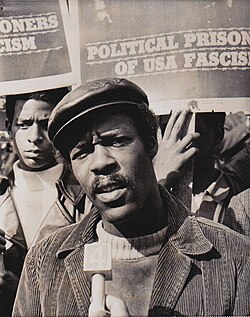
Contemporaneously, the Chicago branch of the BPP under the leadership of Fred Hampton had formed the “Rainbow Coalition” in alliance with the Young Patriots organization in Chicago, a left-wing group which consisted of mostly poor, white Southerners. Ultimately, the Weathermen did far more harm than good by alienating the working class with their adventurist tactics.
For example, in the fall of 1969, a group of Weathermen invaded an anti-war action organizing meeting at Boston University, assailing attendees as “pigs” for opposing Weather’s program. This view was not shared by Panther leader Huey Newton, who saw the Peace Movement as “one of the most important movements going on at this time.” Newton viewed Weather’s antagonizing of other anti-war activists for being insufficiently radical as counter-productive to building a mass movement.
Another illustration of what Hampton called Weather’s “revolutionary child’s play” was the group’s contemptuous view of all GIs as “pigs,” even though historically rank-and-file soldiers have played an important role in revolutions and are largely drawn from the working class. In fact, prominent Panther Geronimo Pratt (also known as Geronimo Ji-Jaga), who was the Deputy Minister of Defense of the BPP’s Southern California Chapter, had a military background. As a decorated Vietnam veteran, the GI Bill allowed Pratt to study political science at UCLA, where he became involved in activism.
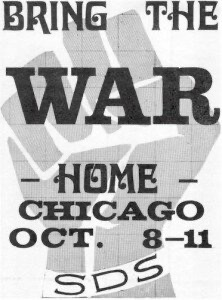
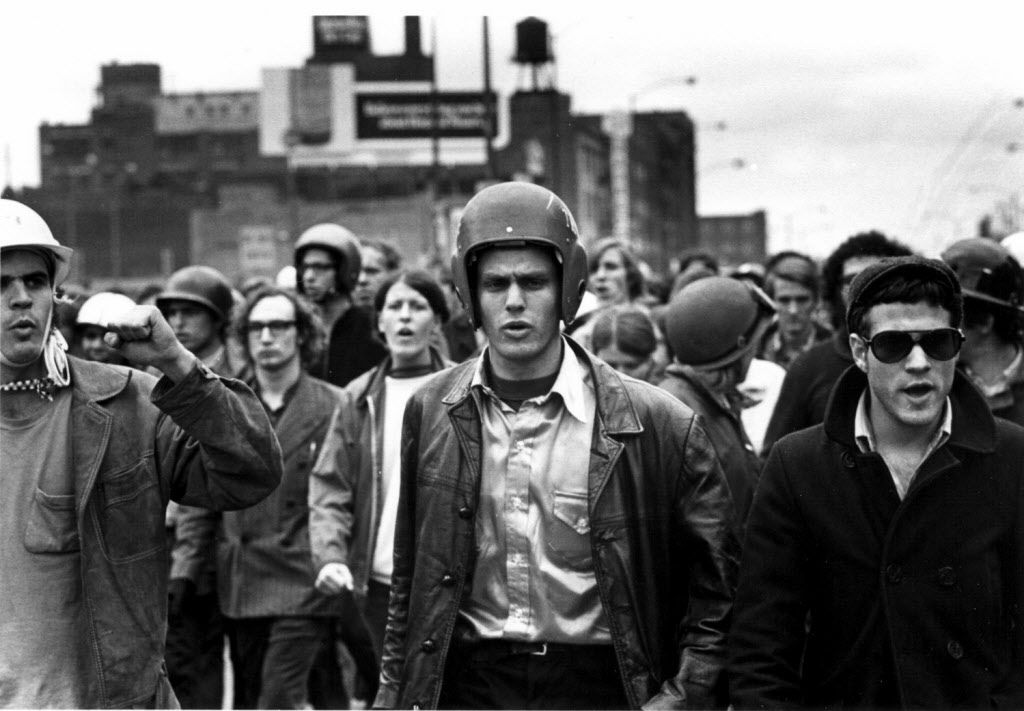
Weather’s most infamous action is its role in the three days of rioting in Chicago in October 1969. Known as the “Days of Rage,” the purported goal of the protests was to incite mass action to stop American involvement in Vietnam and “bring the war home.” Instead, the group’s efforts only resulted in violent clashes with the police, property damage to the city, and negative publicity, alienating the public and damaging the anti-war cause.
Meanwhile, RYMII organized the largest event of the “Days of Rage,” leading an interracial march with thousands of people in attendance. The Maoist-inspired SDS faction also coordinated a gathering with the Chicago Panthers in front of the courthouse where the Chicago 8 trial was taking place that same week. Demonstrating their superior organizing capabilities, on the same day Weather put on another anarchistic march-cum-riot (which attracted only about 300 people), RYMII held a demonstration at a Caterpillar factory in solidarity with striking workers which gathered around 3,000 supporters.
Illinois BPP Chairman Fred Hampton spoke critically of Weather’s “Days of Rage” tactics, accurately diagnosing their strategic errors: “The Weathermen should have spent their time organizing the white working and lumpen class instead of prematurely engaging in conflict with trigger-happy pigs.” Instead of stirring the masses into a revolutionary fervor, the “Days of Rage” only resulted in the FBI opening a file on the Weathermen.
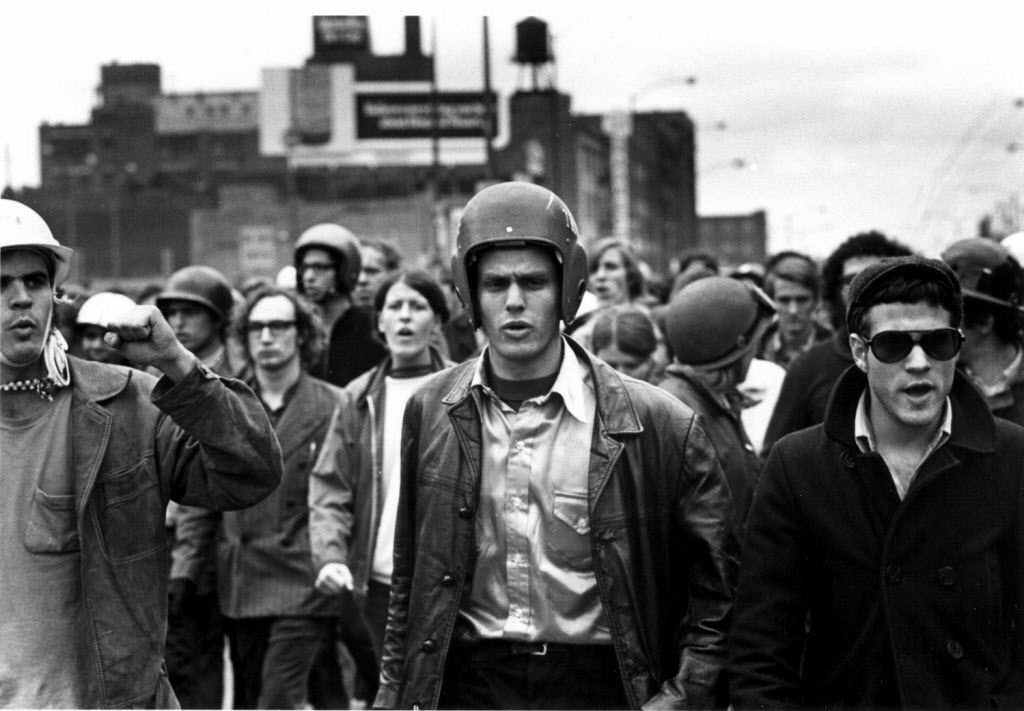
Weather continued to express their antipathy to the working class in their confrontational attitude toward the nationwide General Electric strike which began shortly after the Chicago riots. Weather members attended the demonstrations supporting the strikers, but not to show solidarity with the G.E. auto workers. Rather, the radicals disrupted the demonstrations by brandishing signs and distributing papers calling the G.E. workers “pigs.”
At Weather’s December 1969 “War Council,” Bob Avakian, the leader of the Bay Area Revolutionary Union (BARU), a radical Maoist group which had backed RYMII against the PLP, pointed out to the Weathermen that the Panthers advocated the organization of the white working class into a mass revolutionary movement. The militants believed this strategy to be “national chauvinism,” leading a Weather member retort to Avakian, “Well, we don’t agree with the Panthers on a lot of things.”
BARU later morphed into the Revolutionary Communist Party (RCP).
The Weathermen’s ultra-left adventurism is still used by the right to portray the left as morally bankrupt. Meanwhile, Weather’s practice of bizarre, hours-long “criticism/self-criticism” sessions—which consisted of verbal castigation of heretical members, the administration of LSD and forced sexual intercourse between members—resembled the CIA’s MK-ULTRA experiments and the contemporaneous cult around Charles Manson. In fact, Manson was the subject of controversial statements made by Weather leader Bernardine Dohrn that garnered the group widespread criticism. At the “War Council,” Dohrn publicly praised the Tate-LaBianca murders committed by Manson’s followers earlier that year. Describing the killings as “far out” and “wild,” Dohrn held up four fingers to represent the fork stabbed into Sharon Tate’s pregnant stomach and proclaimed that “the Weathermen dig Charles Manson,” a remark that is still used today by religious anti-abortion activists to paint leftist women as deranged. (Journalist Tom O’Neill’s book, CHAOS: Charles Manson, the CIA, and the Secret History of the Sixties, also documents how the Sharon Tate murders were likely a product of MK-ULTRA.)
Further demonstrating their aversion to organizing the masses, the Weathermen decided to move underground. The group had withdrawn from public view by February 1970, when three Molotov cocktails exploded in front of the home of Justice John M. Murtaugh, the New York Supreme Court judge presiding over the Panther 21 trial. The latter were a group of New York Panthers charged with conspiracy to bomb various buildings throughout the five boroughs. The Weather Underground’s attack on the judge’s house certainly did not help the Panther 21 who were trying to convince a jury that the bomb conspiracy charges were fabricated. The defendants were acquitted in 1971, the jury deliberating for just 45 minutes.
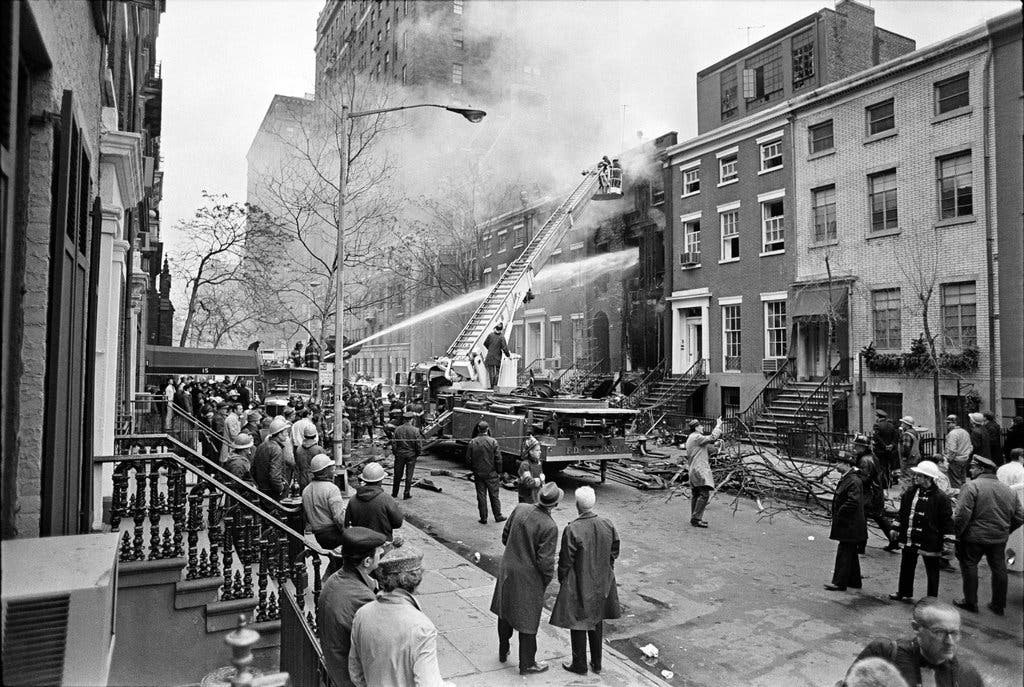
Two weeks after the group firebombed Judge Murtaugh’s home, an explosion occurred at an apartment in Lower Manhattan, killing three Weathermen. Cathy Wilkerson and a few other Weather members had been living in her parents’ Greenwich Village townhouse, using the location to manufacture explosives, when a bomb accidentally detonated due to improper wiring. The tragedy spurred the Weather Underground to criticize their own adventurist tactics as a “military error” and reconsider their approach. As Dohrn said in an interview in 2021, “Yes, we were labeled as violent after the townhouse bombing incident in the Village, and because our comrades were intending to do violence to civilians. But we had spent our first year underground having endless discussions and meetings across the country with friends and others on how to proceed, and we came to believe that violence against property was different from violence against people. We were not going to go down the road of hurting people. In fact, we would go out of our way to prevent anybody from being harmed.”
Even though no innocent bystanders were injured, the aftermath of the Townhouse explosion led the FBI to put Weather members Cathy Wilkerson and Kathy Boudin, who had both survived the accident, on its Ten Most Wanted Fugitives list, while subsequently indicting 12 other Weather leaders for their parts in the “Days of Rage” riots. In July 1970, a month after the radicals detonated dynamite at NYPD headquarters, more federal indictments were handed out. The FBI had planted informants in the Weather Underground, the most well-known being a U.S. Army veteran named Larry Grathwohl who infiltrated the group and later wrote a book about his experience. Yet, somehow, the militant radicals were able to move about with minimal interference from the law, even though their above-ground supporters were subjected to harassment.
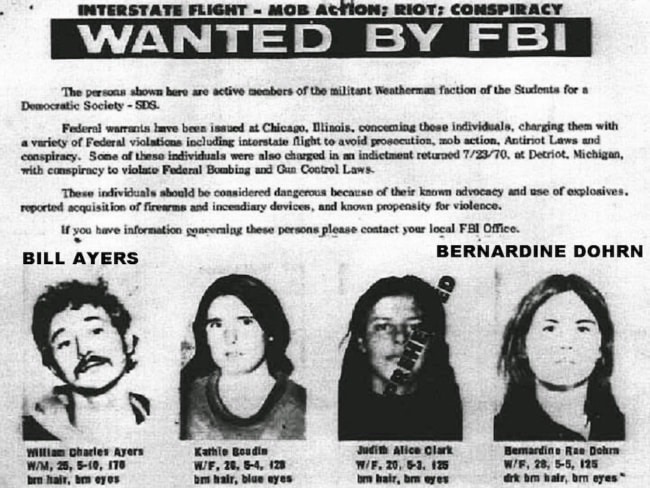
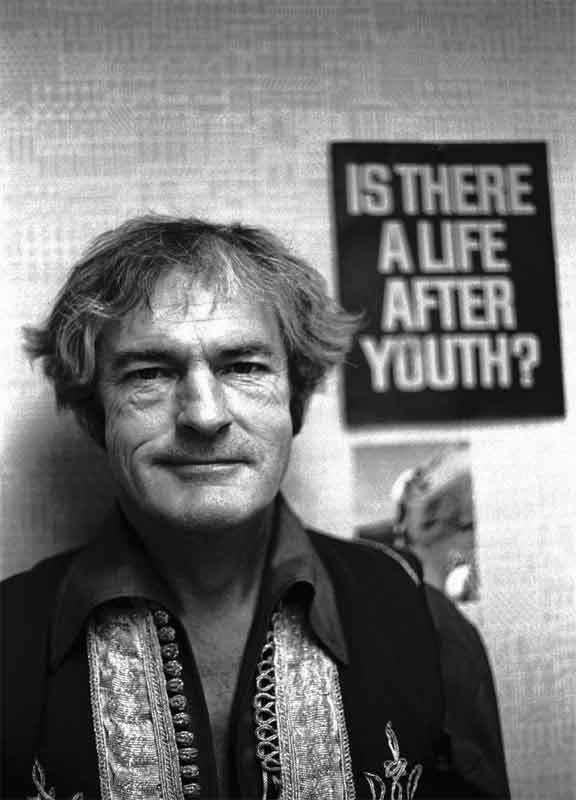
In 1970, the Weather Underground gained further notoriety when it helped LSD advocate Timothy Leary escape from prison. Leary was a clinical psychologist who worked at Harvard University, founding the Harvard Psilocybin Project and experimenting with LSD during his time at the prestigious Ivy League school. The acid guru’s research dove-tailed with the interests of the CIA’s MK-ULTRA program and it has been long suspected that he covertly received agency funding for his work.
Although there is no concrete documentation, the majority of MK-ULTRA files were destroyed and, given how Leary’s research was contemporaneous with the Agency’s project, it is not unlikely the “high priest” was the recipient of government funds. In fact, some FOIA requests do suggest agency money was funneled through organizations linked to his work. Indeed, Leary, the man who coined the slogan of the counter-culture—“turn on, tune in, drop out”—later in life stated his belief that the entire LSD movement was started by the CIA. At the very least, he was a rat, as Leary would go on to inform on the Weathermen to the FBI when he was later captured in Afghanistan in 1973.
In September 1970, Weather accepted $25,000 from The Brotherhood of Eternal Love (a Southern California commune that turned into the largest international psychedelics distributor apart from the CIA) to break Leary out of a San Luis Obispo-based penitentiary where he was held for marijuana possession. The prison break was successful, with the getaway vehicle driven by Clayton Van Lydegraf, a radical who had been expelled from both the CPUSA and PLP for his ultra-leftism. The goal was to transport Leary and his wife to Algeria to join exiled Black Panther Eldridge Cleaver. Leary did make it to the Panther compound in Algeria, but Cleaver placed him under “revolutionary arrest” over his continued drug advocacy and the LSD guru was eventually expelled from the compound.
Shortly after the prison break, the Weather Underground issued a communique which, while not renouncing militancy, acknowledged the need for organizing a mass movement. Instead of the working class, however, Weather looked to the drug-saturated youth culture of the time as a potential revolutionary force. However, the aforementioned New York Panther 21 voiced criticism of the group’s stance, pointing out that “grass and organic consciousness expanding drugs [were] not weapons of the revolution.” Similarly, in a 1971 interview with Pacifica Radio, Cleaver, speaking from Algeria, expressed how the Panthers did not support Leary or the psychedelic drug culture, which he characterized as counter-revolutionary.
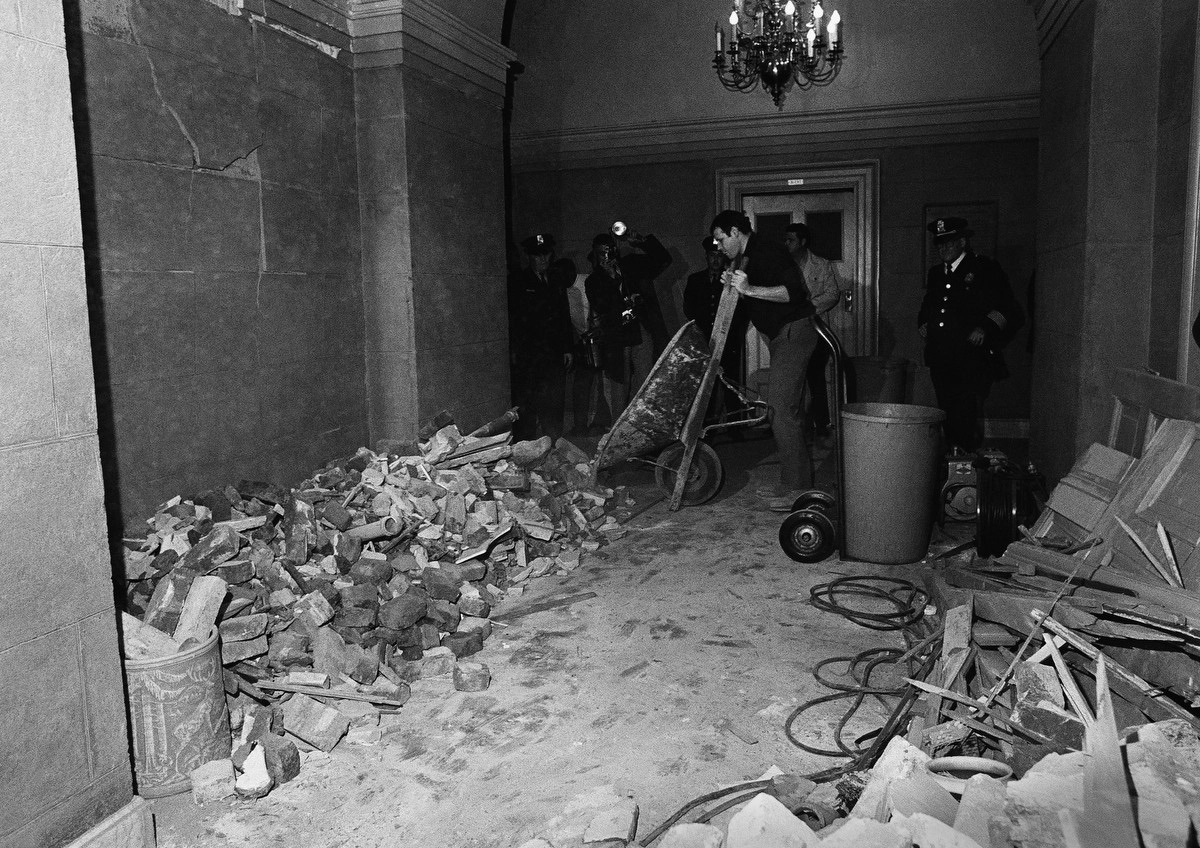
Contrary to their ostensible shift in views, the Weather Underground continued their bombing campaign with the purported aim of bringing attention to American atrocities in Indo-China. In response to the U.S. invasion of Laos in the spring of 1971, the radicals planted two bombs in the U.S. Capitol in Washington. D.C. The first explosive, planted on February 28, failed to ignite properly, leading the radicals to try again with a new munition on the following day, which exploded successfully.
A year later, supposedly in honor of Ho Chi Minh’s birthday, Weather placed a bomb inside the Pentagon. Hidden in the fourth-floor women’s restroom, the blast mangled the plumbing and blew away the wall, causing flood damage to a computer for military communications. A tape archive containing highly classified information was also severely compromised and the destruction of evidence of U.S. war crimes proved more helpful to the authorities than the anti-war movement.
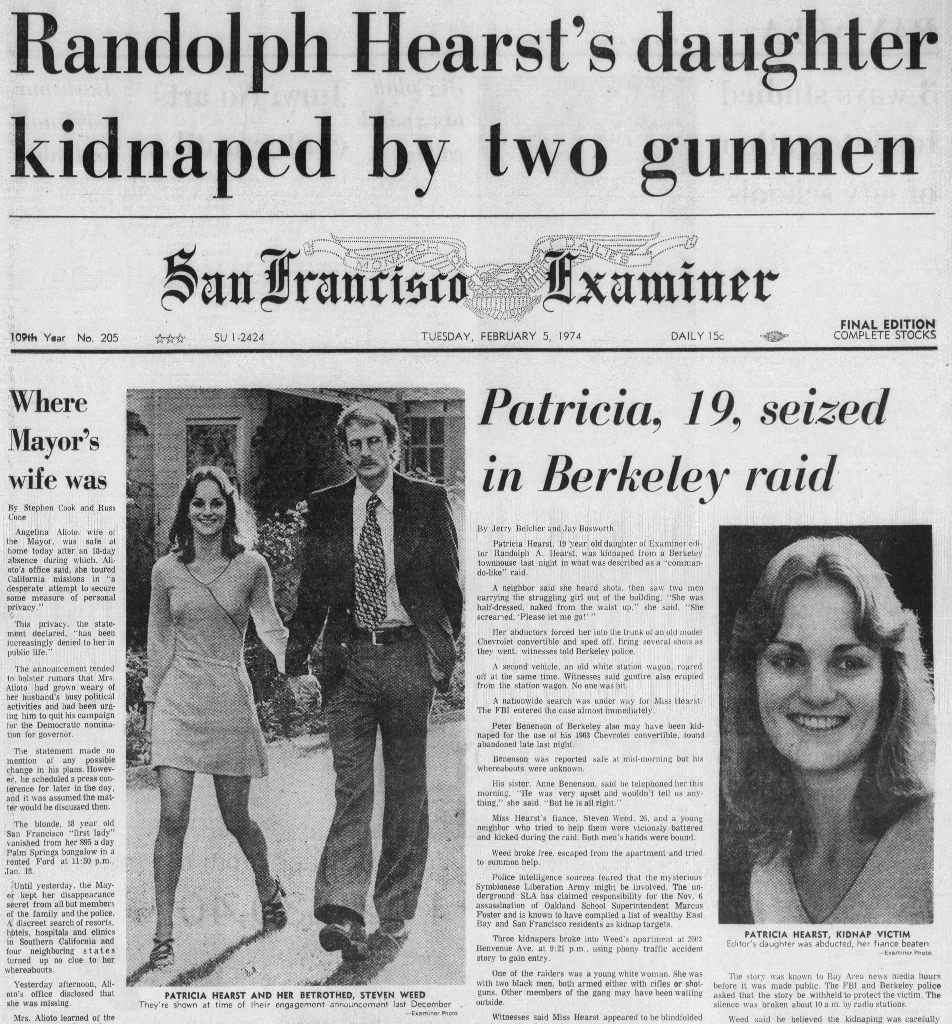
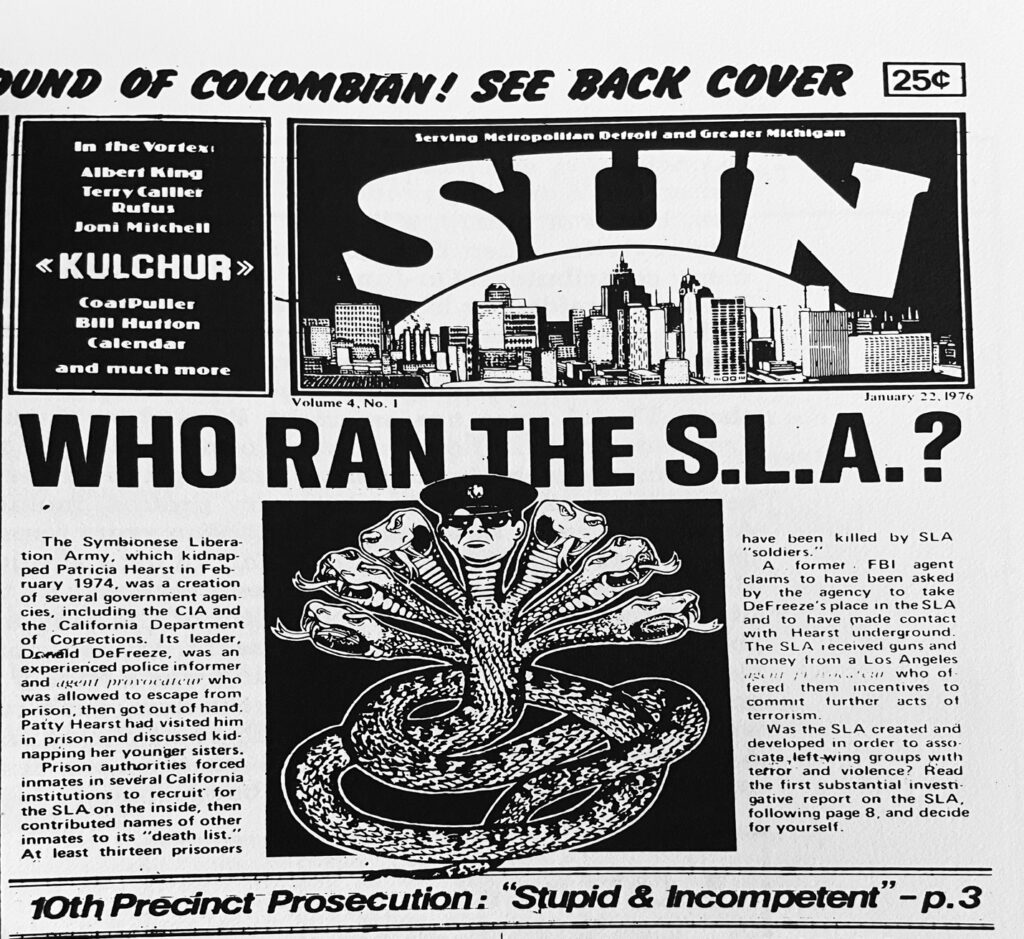
Even more controversially, Weather also endorsed the Symbionese Liberation Army (SLA), a small militant organization led by an escaped ex-con named Donald DeFreeze, that gained notoriety for the kidnapping and alleged brainwashing of newspaper heiress Patricia Hearst. In early 1974, three months after Hearst’s abduction, Weather issued a communique calling for people to “give them [the SLA] encouragement, support, shelter, and love. Empty your pockets.” However, many on the American Left viewed the SLA with suspicion, such as the underground newspaper the Ann Arbor Sun, better known as the mouthpiece for the White Panther Party. The radical rag issued an article titled “Who Ran The SLA?” written by legendary journalist Dick Russell originally for Argosy magazine, accompanied by a cartoon of the group’s multi-headed snake logo with the central head depicting a police officer, calling out the SLA as being the creation of several U.S. government agencies. The BPP also conducted their own investigation of the SLA, concluding that Donald DeFreeze was a police informant.
In 1974, Weather began to build an “above-ground” faction called the Prairie Fire Organizing Committee (PFOC) under the guidance of expelled PLP leader Clayton Van Lydegraf, who had formally joined the underground organization. This was followed by further infighting and fragmentation, seemingly endemic problems of the New Left. Two years after its birth, the PFOC split over whether to continue armed struggle and clandestine life or surface and face arrest. The New York “Central Committee,” headed by Ayers and Dohrn, favored coming out of hiding and broke with the “Bay Area Revolutionary Committee,” led by Van Lydegraf who accused the New York branch of abandoning revolutionary principles. By the end of 1976, Van Lydegraf’s Bay Area group had become the Weather Underground Organization, the Weather founders not included.
Slowly, the original Weather members began to surface. The first to emerge was Weather co-founder Mark Rudd, who turned himself into the authorities in 1977. Rudd was released on a $4,000 bail and, after pleading guilty, received a $2,000 fine and two years’ probation. In fact, in a 2021 interview with Jacobin magazine, Rudd was asked: “What was the outcome of your turning yourself in? Did you have to face charges and go to jail?” Rudd replied: “You’d think! No, nothing.” Earlier that year, U.S. President Jimmy Carter had given an unconditional pardon (Proclamation 4483) to hundreds of thousands of men who evaded the draft, as part of a campaign promise to heal national divisions over the Vietnam War. The lenient treatment Weather leaders received was arguably a result of this political climate but, notably, the Black Panthers did not benefit from the amnesty.
In December 1980, Dohrn and Ayers turned themselves in and were inexplicably not prosecuted for the 25 bombings for which Weather claimed responsibility. Dohrn received a mere three years’ probation and a $1,500 fine for her activities, after most of the charges against the Weathermen were thrown out due to “improper FBI surveillance.” The Bureau’s use of illegal tactics against the left had been revealed in the Church Committee hearings, which likely restricted the FBI’s ability to prosecute the group. However, it is also a possibility that the Weathermen were given leniency because they unwittingly served COINTELPRO’s larger purpose of tarnishing the left’s reputation.
However, to her credit, Dohrn was jailed (for less than a year) for refusing to testify before a grand jury investigating the 1981 Brinks robbery, a heist of an armored car carrying a large load of cash in Nanuet, New York, a suburb 30 miles north of Manhattan. The hold-up had been committed by several Black Liberation Army (BLA) members and four former Weather militants affiliated with the May 19th Communist Organization. Although the goal was to use the spoils to “finance the revolution,” the heist turned into a fatal shootout. The BLA was an offshoot of the New York Panthers but in terms of organizational structure was closer to Weather, being composed of decentralized autonomous cells, in contrast to the BPP’s democratic centralism. (The armored car robbery was masterminded by Mutulu Shakur, BLA leader and the stepfather of the late rapper, Tupac Shakur.)
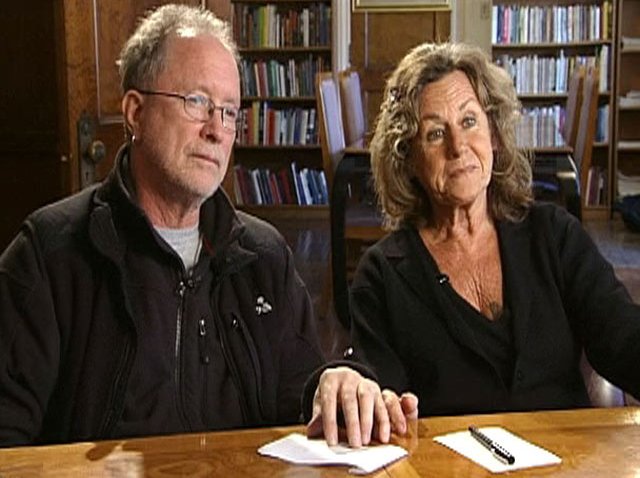
Although Dohrn faced legal repercussions, she and her husband’s careers were not impeded by their militant past. A former law student, in the late 1980s, Dohrn began working for a law firm. In fact, her position in the National Lawyers Guild was what initially had gotten her involved with SDS, as she had worked to defend students who had been arrested during the ‘68 protests. From 1991 to 2013, Dohrn was a professor at the Northwestern University School of Law, while Bill Ayers enjoyed a similarly successful academic career as a professor at the University of Illinois Chicago. It is important to note that these ostensible radicals who bombed the Pentagon had an easier time holding university jobs than other prominent figures on the left.
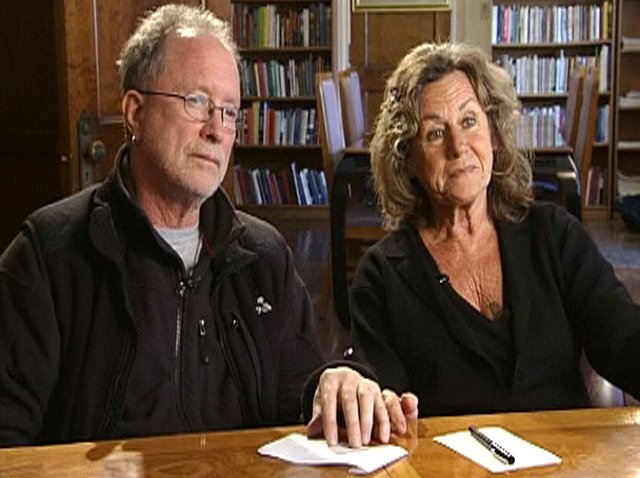
In later years, both Ayers and Rudd reflected on the damaging impact their organization had on the left as a whole. Ayers admitted that “the movement fractured, deep schisms and fissures ran us through, and all the progressive forces were weakened. I’m sorry for my role in that.” Rudd acknowledged “another big mistake that I was directly responsible for was eliminating organizing we had done so much of and substituting it with militancy.” However, activist organizing and militancy were not mutually exclusive, as the Black Panther Party demonstrated, and why the authorities considered the group such an existential threat.
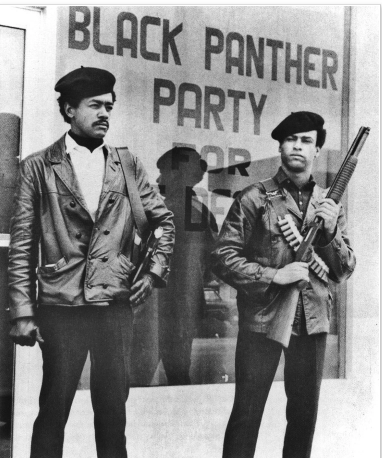
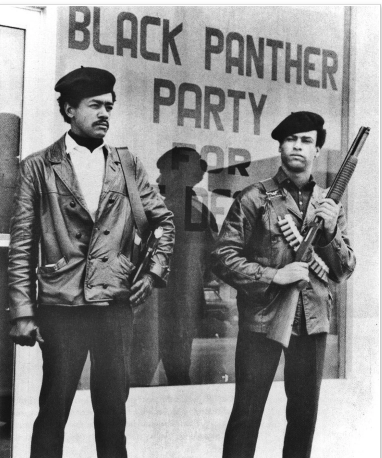
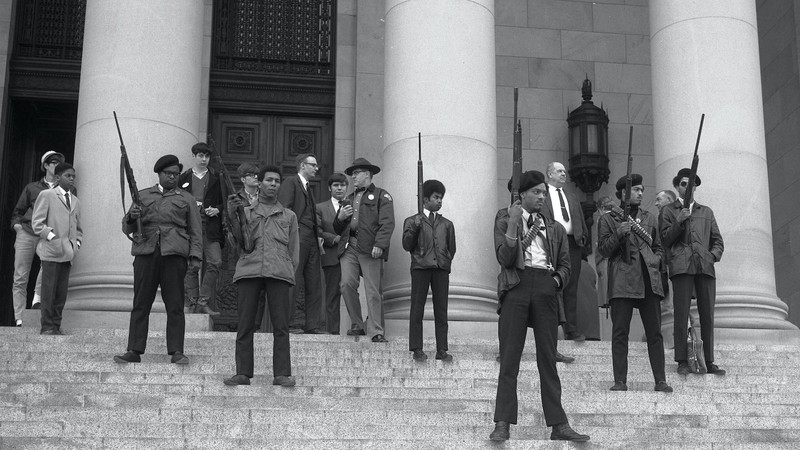
Founded in 1966 in Oakland, California, by college students Bobby Seale and Huey P. Newton, the BPP was initially called the Black Panther Party for Self-Defense with the aim of protecting Black communities from police brutality. Both Seale and Newton had been members of the Revolutionary Action Movement (RAM), a Marxist-Leninist, Black nationalist organization. The founders were inspired by anti-imperialist luminaries such as Malcolm X and Frantz Fanon, and even the iconic Panther beret was an homage to another great revolutionary: Ernesto “Che” Guevara. In fact, Seale and Newton raised money to purchase the group’s firearms by selling marked-up copies of Mao Tse-tung’s Little Red Book to Berkeley students. Newton, who had attended law school, had an intimate knowledge of California gun laws and organized the Panthers’ armed actions, such as monitoring police activity and defending the civil rights of Black Americans, within the bounds of Second Amendment rights.
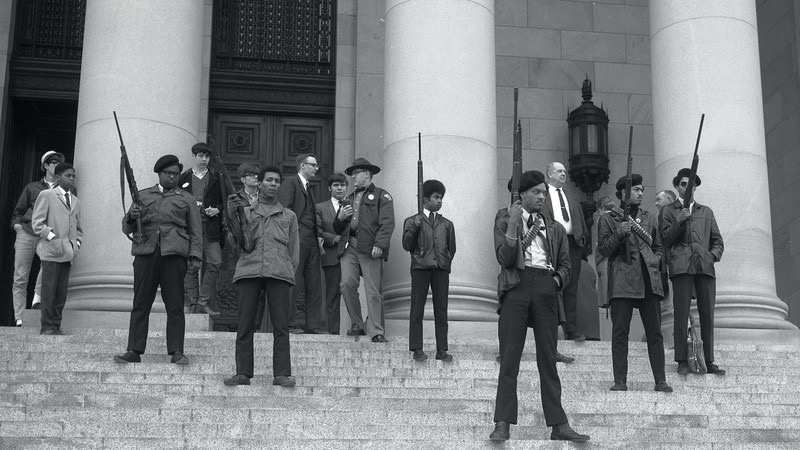
The BPP functioned as a people’s militia, protecting Black communities from state terror, and the group’s focus on militancy attracted the attention of other African-American activists of the time. Ex-con and Ramparts contributor Eldridge Cleaver was drawn to the group, becoming the party’s Minister of Information shortly after his parole from prison. Cleaver assisted Newton in organizing one of the BPP’s most famous actions in spring 1967 when the Panthers marched into the State Capitol in Sacramento to protest a proposed gun-control bill.
Newton, a clever strategist, made sure the protest was entirely legal. Six months after the Panthers marched on the California State Capitol, Newton was jailed for the alleged shooting of Oakland Police Officer John Frey during a traffic stop. Even though no gun was found and Newton had lost consciousness after being shot first in the stomach during the exchange, the Panther co-founder was originally convicted of voluntary manslaughter; the California Court of Appeals reversed Newton’s conviction, citing prejudicial errors in the trial.
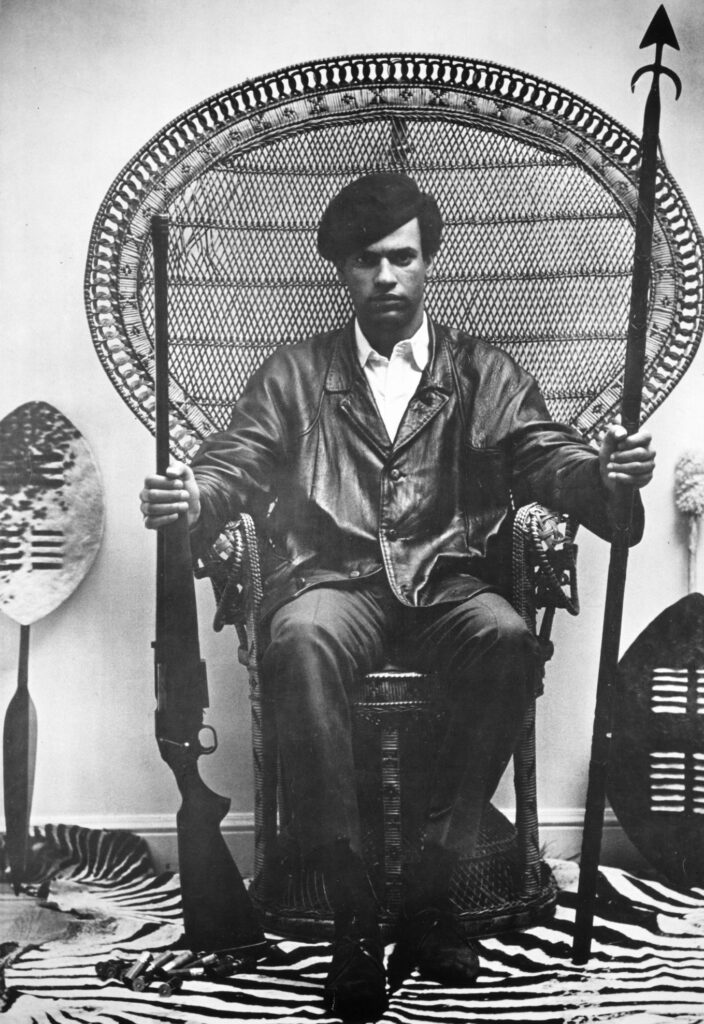
Following his release from prison, Newton shifted the BPP’s focus from police confrontation to community support programs designed to build autonomous, cooperative institutions. The four main programs were a petition campaign for community control of police, free health clinics, free breakfasts for school children, and political education through liberation schools.
This decision caused a split with Cleaver, by that time in exile in Algeria after his own trouble with the police, who argued for immediate violent revolution. Cleaver diverged from the Panther line in his support of the Weather Underground, who he lauded as “angels of destruction.”
In turn, Newton criticized Cleaver’s approach of ultra-left actionism and accused him of trying to turn the BPP into a revolutionary cult, out of touch with the Black community at large. In 1971, Newton wrote: “The correct handling of a revolution is not to offer the people an ‘either-or’ ultimatum. Instead we must gain the support of the people through serving their needs. Then, when the police or any other agency of repression tries to destroy the program, the people will move to a higher level of consciousness and action.”
The Oakland and New York branches of the BPP, under the leadership of Newton and Cleaver respectively, definitively split over the question of the timing of armed struggle. Newton’s West Coast faction believed that armed warfare would only serve to isolate the party and ensure its destruction by the state, not an unfounded view given the repression already faced by the group.
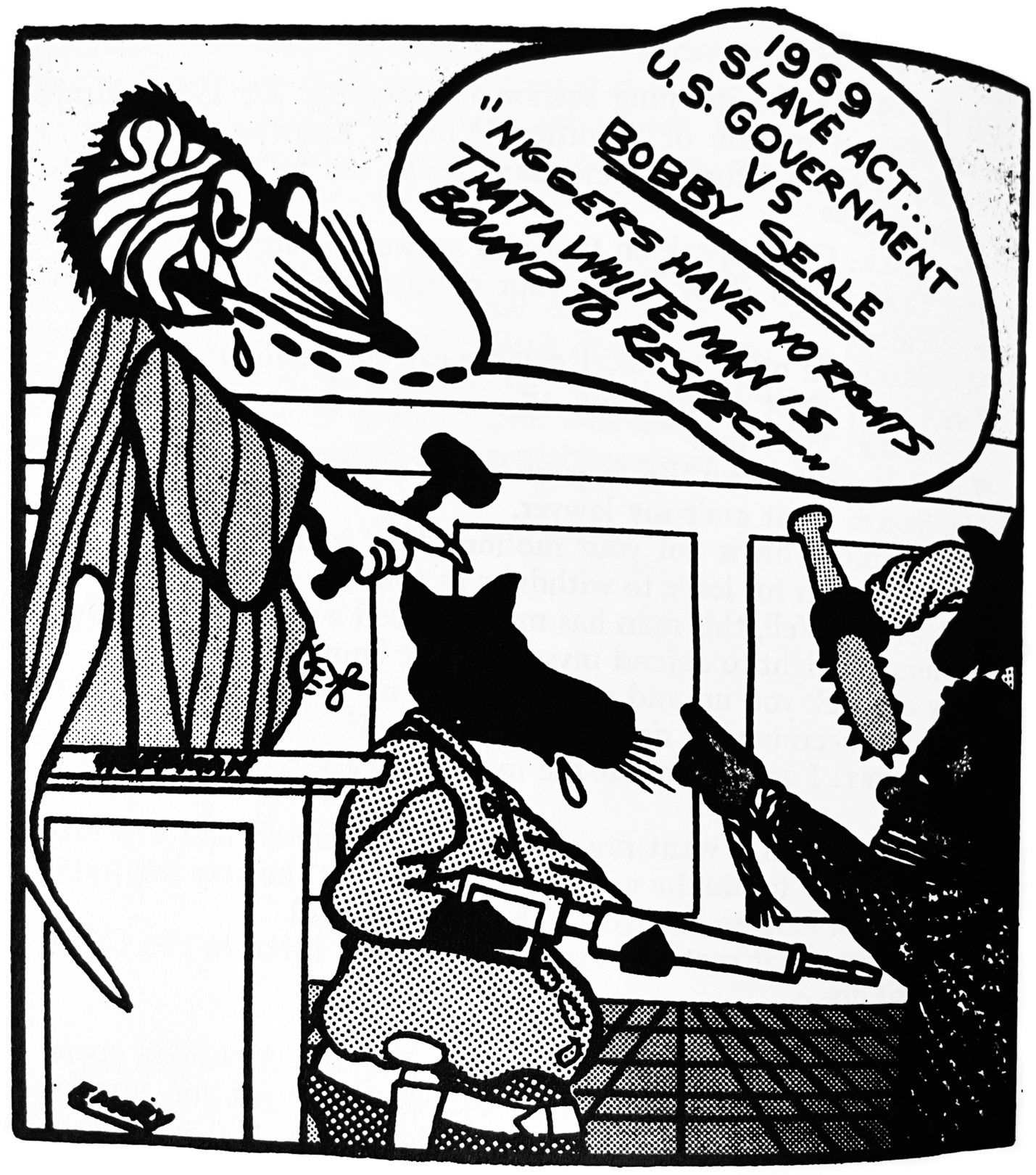
For example, co-founder Bobby Seale was persecuted in a similarly unjust way. The Texas native was originally arrested as one of the “Chicago Eight” defendants, in which the Panther and seven other anti-war activist co-defendants were charged with “conspiracy” and “inciting a riot” in the aftermath of the 1968 Democratic National Convention in Chicago. The evidence against Seale was practically non-existent, as he did not participate in the planning of the protest, only going to Chicago for two days as a last-minute replacement for Cleaver. The civil rights violations and humiliation Seale suffered during the Chicago “conspiracy” trial is even more shocking.
Firstly, U.S. District Judge Julius Hoffman refused to allow Seale to defend himself. Charles Garry, the BPP’s lawyer, was recovering from a major surgery at the time of the trial and was unable to represent him— but the judge refused to postpone the trial so Garry could attend. The whole trial put the institutionalized racism within the American criminal justice system on full display, with Seale chained to a chair and gagged so that he could not “interrupt” the proceedings. Seale was eventually ungagged as a result of public outcry but, nonetheless, the judge declared a mistrial and sentenced him to four years in prison until his conviction was suspended and he was released in 1972.
The most blatant example of the state repression the Panthers faced was the brutal murder of Fred Hampton, the Chairman of the Illinois chapter of the BPP. Hampton, who had worked as an NAACP organizer just out of high school, was only 19 when the FBI opened a file on him. A gifted student who graduated high school with honors and led civil rights actions in his teens, Hampton had the makings of a “Black Messiah,” the FBI’s term for an intelligent and dedicated leader who it feared could unite the Black Power movement. This was of particular concern to the Bureau, especially if the leader connected racial oppression to class exploitation.
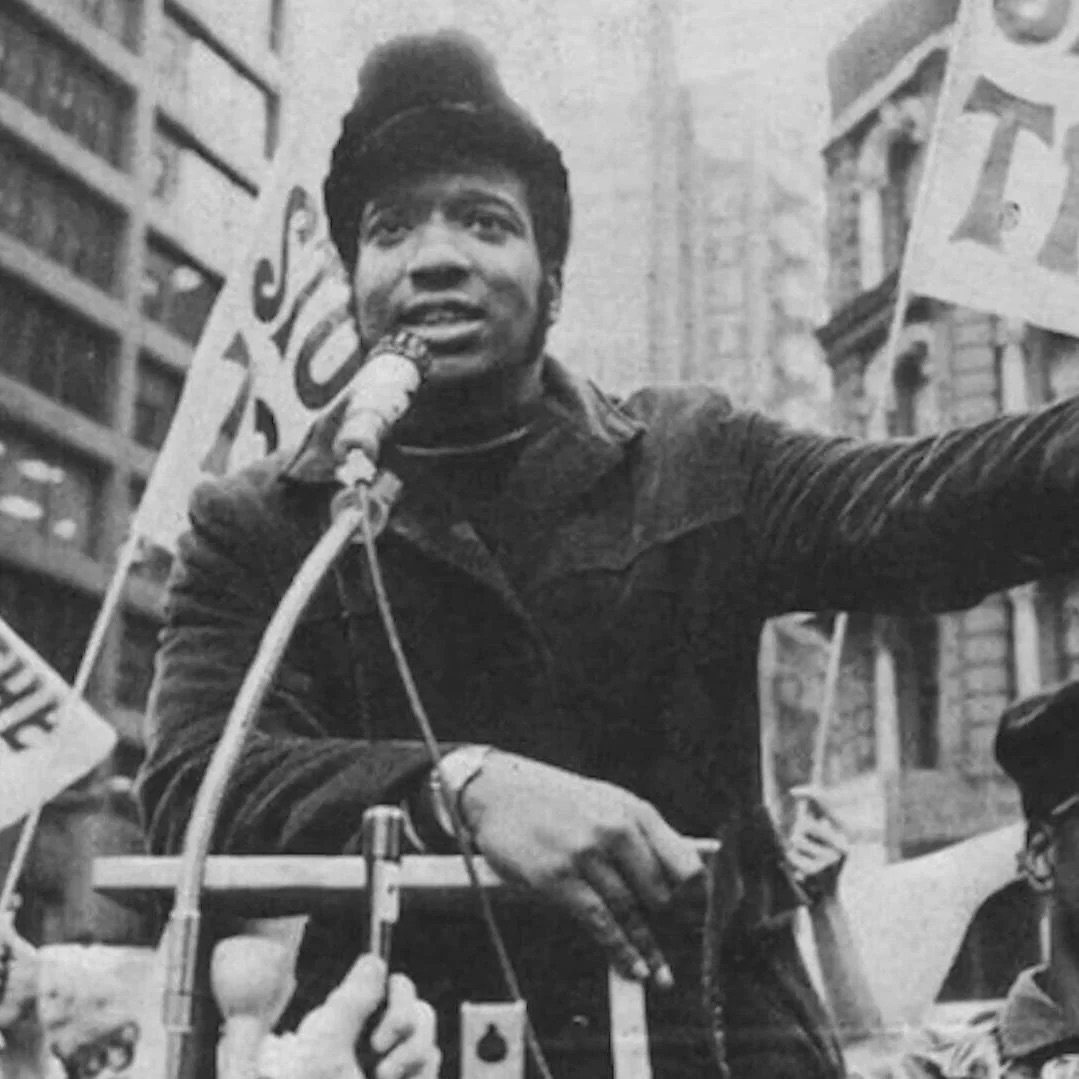
Hampton was a budding revolutionary who considered himself a Marxist-Leninist and he expanded the party’s community programs of dual power and mutual aid. This work, as well as his efforts to unite the struggle of other ethnic minorities and poor whites based on the recognition of class solidarity, made him a truly threatening figure to the existing order.
With his clean record, the police could only manage to frame him for the heinous crime of allegedly stealing ice cream bars and distributing them to children.
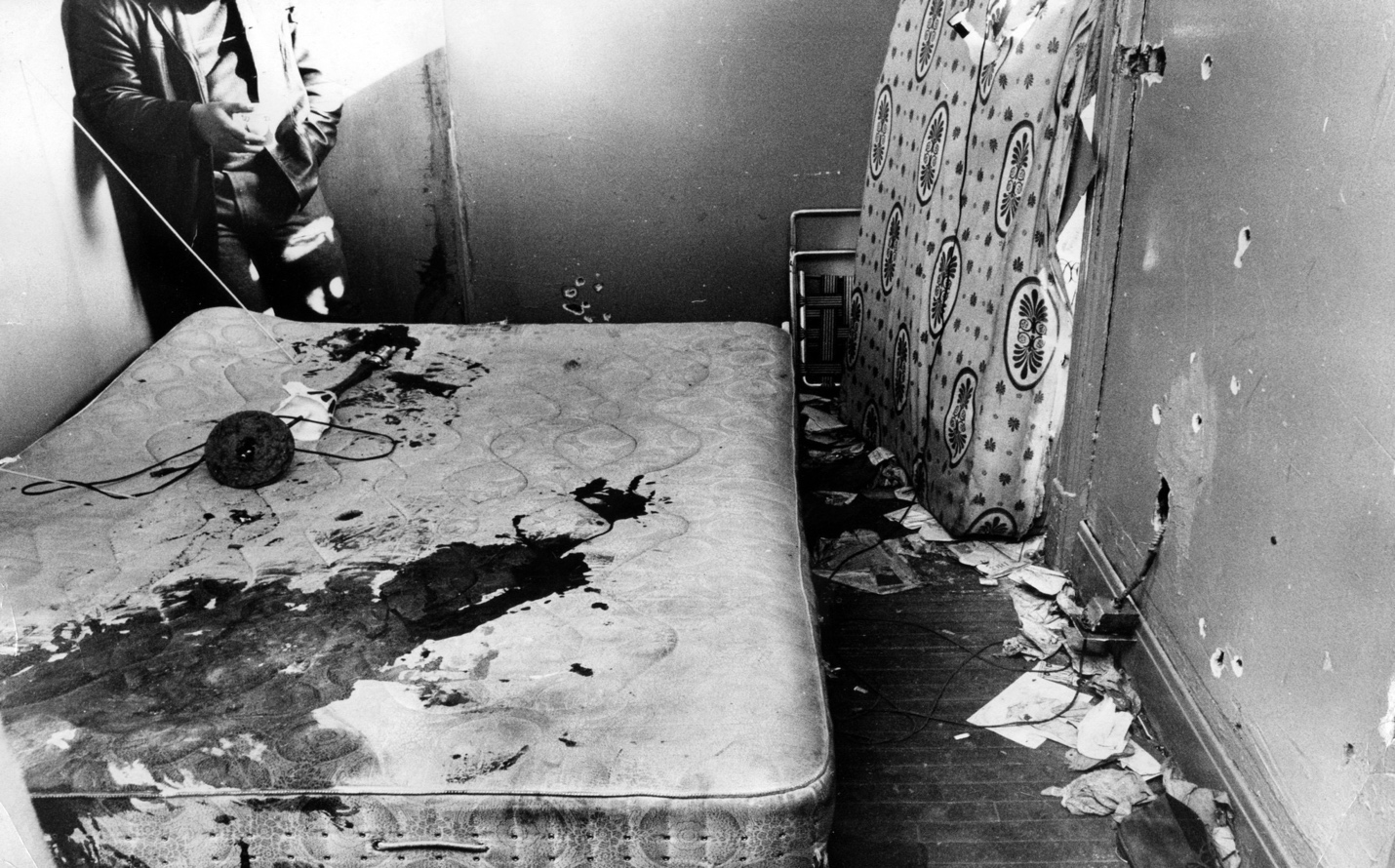
Via the COINTELPRO initiative, Hampton was shot dead in his sleep on December 4, 1969, during a pre-dawn police raid on his apartment. The raid was a joint effort by the local police, the FBI, and the Department of Justice, with the police and press misrepresenting the brutal murder of Hampton as a “wild gun battle” with deranged radicals. It turned out that FBI Director J. Edgar Hoover himself had authorized Hampton’s slaying, making him one of the few radicals to be executed by the police after extensive FBI planning.
The Bureau could not have carried out the operation without the vital intelligence provided by William O’Neal, the FBI’s informant within the Chicago Panthers, who had been recruited after being busted for auto-theft. O’Neal rose in the Panther ranks, becoming the Chicago branch’s Security Captain, simultaneously acting as an agent provocateur by pushing for more violent confrontations with the police.
The Hampton raid was executed after O’Neal provided misleading information about a stockpile of weapons in Hampton’s apartment and he even supplied the FBI with floor plans and keys to Panther headquarters. It has also been speculated that O’Neal drugged Hampton the evening prior to the raid. (In fact, the chemist who autopsied the slain revolutionary found enough of a barbiturate in his blood to keep him unconscious, but the FBI and the federal grand jury rejected the doctor’s findings.) Years later, O’Neal would admit to his role as an informant for the second installment of the acclaimed PBS documentary tv series Eyes on the Prize. On the night the second season premiered, O’Neal committed suicide.
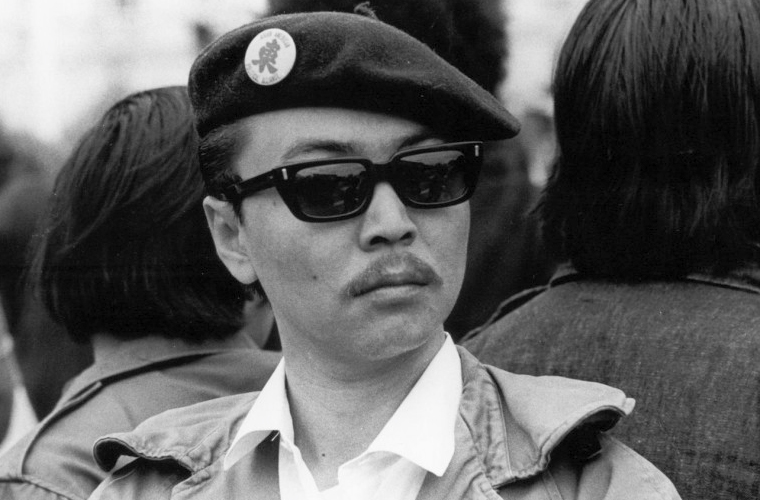
In fact, the BPP had been subject to heavy infiltration by law enforcement since its inception. A perfect example of the extent of the FBI’s penetration of the group was the life-long Bay Area civil rights activist and “secret” member of the Panthers, Richard Aoki. The latter was one of the few non-Black members of the BPP and the only Asian-American to hold a leadership role in the organization, being named Captain of the Berkeley Branch in 1967.
Decades later, Aoki was posthumously unmasked in 2012 as an FBI informant. It caused quite a stir among the left when journalist Seth Rosenfeld alleged in an article in the Center for Investigative Reporting that Aoki was a Bureau stoolie who infiltrated the Socialist Workers Party (SWP) and the BPP. Rosenfeld was met with backlash for tarnishing the reputation of a “committed activist” but, a month later, a second story was published with newly declassified documents from Aoki’s FBI file detailing more than 15 years of cooperation between the activist and the Bureau’s San Francisco field office.
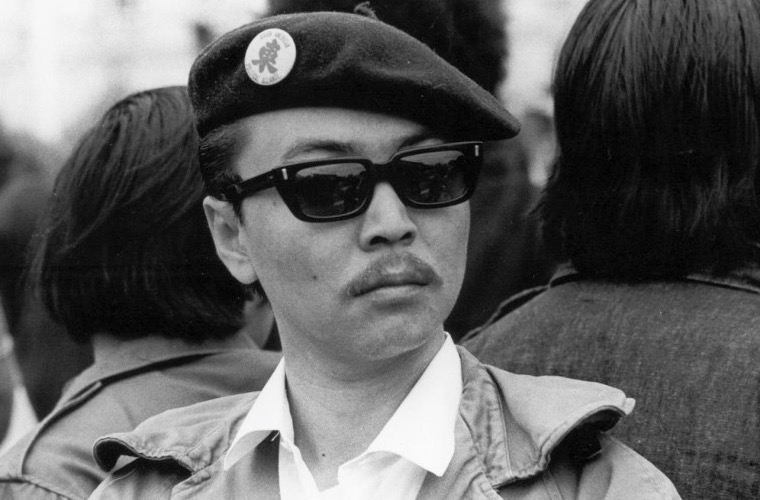
Ironically, Aoki himself had experienced the repressive nature of the U.S. government, having spent time in Japanese internment camps as a child. After joining an Oakland street gang in high school, the young Aoki signed up with the U.S. Army to expunge his juvenile criminal record. Most of his service was in the Army Reserves, where he made his connection with the Bureau and simultaneously became a member of the SWP. He also was elected to the Berkeley Young Socialist Alliance’s executive council and informed on both groups. While attending Merritt College, Aoki met Newton and Seale and subsequently befriended the young radicals. Seale’s book Seize the Time describes Aoki as giving the Panthers their first firearms and the Panther co-founder staunchly defended the latter as a loyal comrade in response to the allegations. If Aoki provided arms to the group in their infancy without the FBI’s knowledge, it is possible that he was conflicted about his role as a mole.
Aoki also took credit for introducing Seale and Newton to the work of Mao Tse-tung and generally painted himself as a principled activist. However, he gave valuable intelligence on the Panthers to local law enforcement agencies and, after his involvement with the BPP dwindled in 1968, he went on to inform on other left-wing groups. At the time, Aoki was enrolled at the University of California, Berkeley, where he became involved with the student activist movement. Although some dismiss the revelations about Aoki as a trivial detail, his work as a mole calls into question the authenticity of his entire career and a re-examination of his complicated legacy.
The BPP bore the brunt of the FBI’s efforts against the New Left, as well as against the Black Power movement. Some 80% of the Bureau’s authorized actions against Black Power groups were directed against the Panthers. After Nixon was elected in 1968, directives issuing from FBI headquarters called for “imaginative and hard-hitting counter-intelligence measures aimed at crippling the BPP.” J. Edgar Hoover himself placed a high priority on destroying the Panthers, in an official directive from the summer of 1969 the FBI director stated that, “The Black Panther Party, without question, represents the greatest threat to the internal security of the country,” adding that he would eradicate the group by the end of the year. By the end of the decade, Hoover had nearly completed his objective; Newton and Seale were in the can and Fred Hampton was six feet under.
The authorities had a hand in exploiting conflicts within the party as well as within the Black Power movement as a whole. In fact, FBI officials boasted of having created the vendetta between the Cleaver and Newton branches of the Panthers and, at the peak of the split, the feds sent death threats to Newton, making it appear as though the New York Panthers had written them.
The BPP’s treatment is comparable with CPUSA, which was subject to strict repression during the McCarthy era. However, the BPP had to deal with the double burden of institutionalized racism. Newton lawyer Charles Garry, who as a white attorney garnered Newton criticism from Black cultural nationalists for choosing a “honky lawyer,” was a self-professed Communist and had been brought before HUAC in 1948. Garry subsequently worked to represent other accused Communists before HUAC throughout the McCarthy era. In an essay where he examined the persecution of the BPP, Garry wrote that, “In the over thirty years I have been practicing law, I have never experienced the type of persecution faced by the Panthers.”
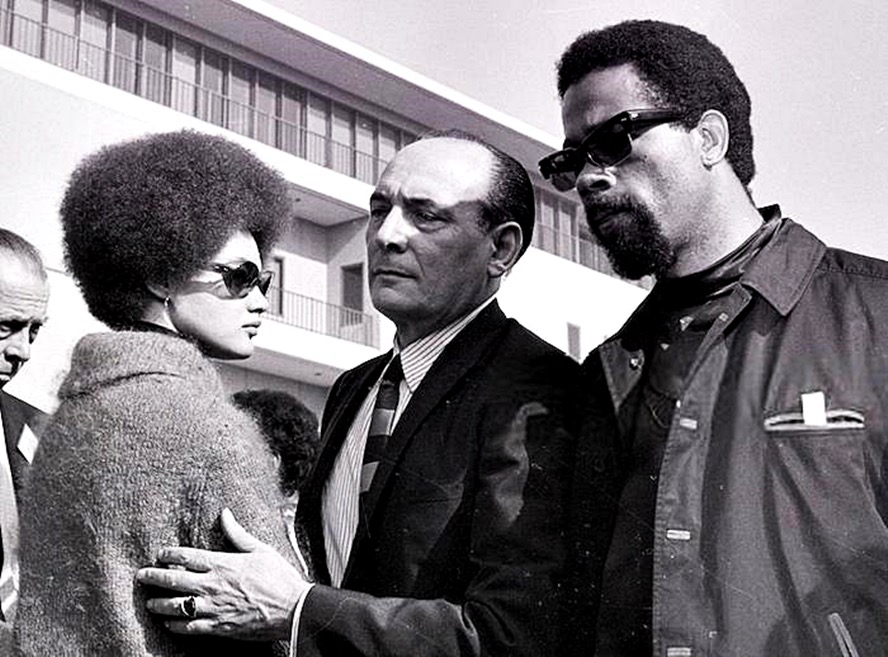
The party’s discipline and democratic centralist organization posed a greater threat than culturally nationalist Black groups or anarchistic student groups. The BPP’s community service programs were particularly threatening to the authorities as they built mass support for the group. The FBI considered the Free Breakfast for Children a “nefarious activity” and sent counter-intelligence agents to disrupt the survival program.
In contrast to the Panthers, who never did anything as audacious as bombing the Pentagon, the response by the authorities to the Weather Underground was relatively mild. Although the group was subject to FBI surveillance and infiltration, none of the leadership was killed or suffered life-long repercussions. Although the Weather Underground purported to be an anti-imperialist group, in practice, it tarnished the reputation of the left and anti-war movement.
Hampton shared this opinion, denouncing its adventurism as playing into the hands of the authorities. For all of Weather’s attempts to paint itself as aligned with the BPP, Hampton, in an interview, emphatically stated: “No, the BPP is not with the Weathermen,” and accused the group of provoking the U.S. power structure to react with violence. Unlike Weather, the BPP did not stock guns to promote adventurism, but to arm Black communities for self-defense against racist police, all within their constitutional rights.
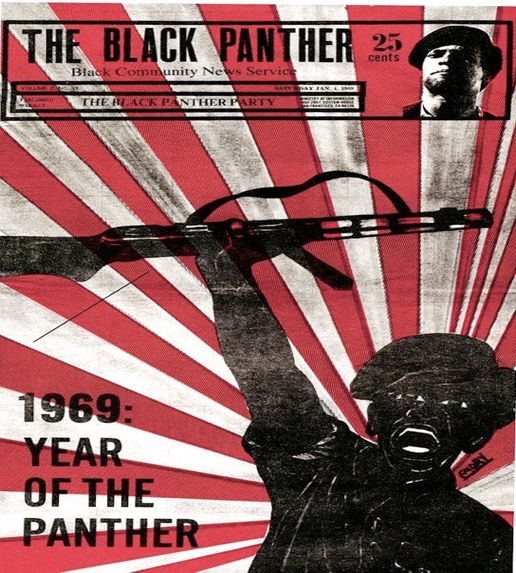
Today, the Panther legacy is often appropriated by liberal identity politics, with Newton and Hampton’s Marxist-Leninist principles obscured. In answer to the common mystifications around the Panthers, a 1969 article published in the party’s newsletter clearly states the group’s politics. Entitled “On Establishing a United Front with Communists,” which criticized those who resisted an alliance with Communists, the piece averred: “We [the Panthers] are adherents of Soviet democracy, the democracy of the toilers, the most consistent democracy in the world. But in the capitalist countries we defend and shall continue to defend every inch of bourgeois democratic liberties which are being attacked by fascism and bourgeois reaction, because the interests of the class struggle of the proletariat so dictate.”
This was in solidarity with Soviet leadership which urged communists in Western capitalist countries to fight for civil liberties against an increasingly fascistic bourgeoisie who were beginning to remove the pretenses of bourgeois democracy. With this in mind, if One Battle After Another can be read as a comedic romp in the pitfalls of ultra-leftism, the film can also serve as a warning for the left about the ineffective nature of fighting fascism with adventurism.
CovertAction Magazine is made possible by subscriptions, orders and donations from readers like you.
Blow the Whistle on U.S. Imperialism
Click the whistle and donate
When you donate to CovertAction Magazine, you are supporting investigative journalism. Your contributions go directly to supporting the development, production, editing, and dissemination of the Magazine.
CovertAction Magazine does not receive corporate or government sponsorship. Yet, we hold a steadfast commitment to providing compensation for writers, editorial and technical support. Your support helps facilitate this compensation as well as increase the caliber of this work.
Please make a donation by clicking on the donate logo above and enter the amount and your credit or debit card information.
CovertAction Institute, Inc. (CAI) is a 501(c)(3) non-profit organization and your gift is tax-deductible for federal income purposes. CAI’s tax-exempt ID number is 87-2461683.
We sincerely thank you for your support.
Disclaimer: The contents of this article are the sole responsibility of the author(s). CovertAction Institute, Inc. (CAI), including its Board of Directors (BD), Editorial Board (EB), Advisory Board (AB), staff, volunteers and its projects (including CovertAction Magazine) are not responsible for any inaccurate or incorrect statement in this article. This article also does not necessarily represent the views the BD, the EB, the AB, staff, volunteers, or any members of its projects.
Differing viewpoints: CAM publishes articles with differing viewpoints in an effort to nurture vibrant debate and thoughtful critical analysis. Feel free to comment on the articles in the comment section and/or send your letters to the Editors, which we will publish in the Letters column.
Copyrighted Material: This web site may contain copyrighted material the use of which has not always been specifically authorized by the copyright owner. As a not-for-profit charitable organization incorporated in the State of New York, we are making such material available in an effort to advance the understanding of humanity’s problems and hopefully to help find solutions for those problems. We believe this constitutes a ‘fair use’ of any such copyrighted material as provided for in section 107 of the US Copyright Law. You can read more about ‘fair use’ and US Copyright Law at the Legal Information Institute of Cornell Law School.
Republishing: CovertAction Magazine (CAM) grants permission to cross-post CAM articles on not-for-profit community internet sites as long as the source is acknowledged together with a hyperlink to the original CovertAction Magazine article. Also, kindly let us know at info@CovertActionMagazine.com. For publication of CAM articles in print or other forms including commercial internet sites, contact: info@CovertActionMagazine.com.
By using this site, you agree to these terms above.
About the Author
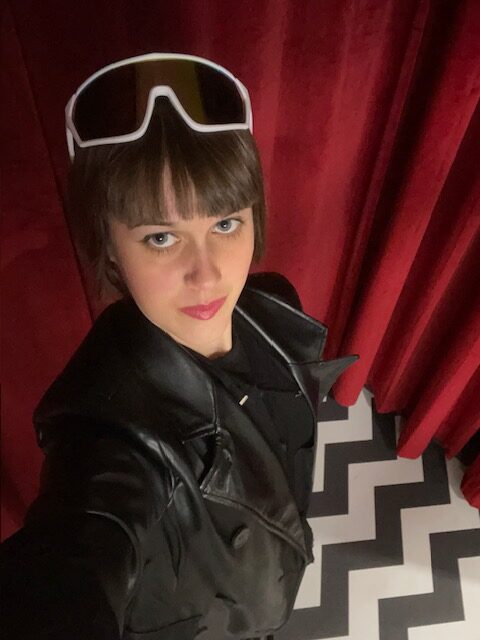
Shaenah Batterson is a polemicist and poet located in Baltimore, Maryland.
She writes a Substack called The Red Letter and cohosts the podcast Captive Minds.
Shaenah can be reached at shaenahbatterson@icloud.com.










Kurdish students interrogated in Afrin after graduation ceremony
Local sources reported that security personnel at the Faculty of Education affiliated with Turkey’s Gaziantep University in the city of Afrin are questioning Kurdish graduates and their families over the display of Kurdish symbols during the graduation ceremony, amid concerns among families that measures may be taken against them and their children.
Kurdish students interrogated in Afrin after graduation ceremony
NEWS
30 June, 2026 13:43
NEWSDESK
Listen to article
+
Gaziantep University – Afrin branch reportedly issued an internal decision calling Kurdish students and their families for questioning today, several days after the graduation ceremony organized by the university, due to some students wearing symbols and signs of a Kurdish nature during the event.
According to information conveyed by some students’ families, the summons were communicated through communication groups used by students and university administration, without any official clarification so far from the Afrin administration affiliated with the Syrian Interim Government regarding the nature of these measures or their legal basis.
The ceremony included the raising of both the Turkish and Syrian flags as part of the approved organizational arrangements, while on-the-ground procedures related to the event were carried out by security authorities affiliated with the administrative body supervising the area.
This has raised many public questions regarding the absence of an official explanation, particularly concerning the policies governing the legitimacy of raising the Turkish flag on Syrian territory and the reasons for the Syrian Interim Government’s silence on the matter, along with the absence of any statement clarifying the organizational basis of these practices.
During communication with ANHA agency’s correspondent, many students’ families expressed concern that their children’s graduation certificates could be withdrawn or that they could be referred to governmental security authorities on what they described as unfounded accusations.
Meanwhile, there is no official and clear legal provision criminalizing the display of Kurdish symbols in Kurdish areas.
This comes at a time when the agreement signed on January 29 between the Syrian Interim Government and the Syrian Democratic Forces (SDF) stipulates guarantees for the particularity of Kurdish regions.
Decree No. 13 issued by Prime Minister Ahmad al-Sharaa also states that Kurds are an essential part of Syria’s social fabric, while prohibiting discrimination or exclusion on ethnic grounds and guaranteeing the protection of cultural diversity.
It is worth noting that the Faculty of Education branch affiliated with Gaziantep University was established in Afrin in 2019, one year after the Turkish occupation army and its mercenaries took control of the city.
A-H
ANHA
There was once an old tale of a frog walking along a river bank. He met a scorpion who asked him to take him across the waters on his back.
“How do I know you won’t sting me?” asked the frog.
“I wouldn’t want to sting you, for then both you and I would both drown!” answered the scorpion.
Convinced, the frog took him on his back and headed off to the other side of the river. However, when he was halfway across, the scorpion stung the frog. And as both started to sink beneath the waves the scorpion said:
“I couldn’t help it! It’s my nature!” [1]
The moral of this story is when you engineer a group of fundamentalist extremists, re-brand them “freedom fighters” and then send them after the next figure on America’s Most Wanted list of figures standing in the way imperial conquest, don’t be surprised if those same fighters return to their old head chopping ways when your backs are turned.
The world may have witnessed an escalation of slaughter of Alawites and Christians in early March, and Amnesty International may have played a role in setting about investigating who was responsible and why it happened. But the side that gets little attention is how far Western nations are willing to go to ignore the guilt of the new “post-Assad” regime and giving them the responsibility to look into the situation.
According to human rights lawyer Prof. Dan Kovalik writing for CovertAction Magazine in March, “reliable data indicate 7,000 Christians and Alawites” were “slaughtered” with an estimate by Syrian actor Bashar Ismail with Sky News of 22,000 Alawites and Christians being killed in just over two weeks. These deaths are actually comparable in such a short time frame to the deaths of Palestinians on the doorstep of soon to be constructed Israeli settlements. [4][5]
On this week’s Global Research News Hour, we take a special look at this unrepentant flood of bloodshed to which even the Western Mainstream media considers unfit for public broadcast, and the hell some people have to suffer to satisfy the longings of America’s “opulent minority.”
On the show, we feature long-time Syrian reporter and friend Vanessa Beeley who talks about the people currently fleeing Syria into Lebanon and the stories they are relaying that are ignored by the Western Mainstream media. She as well talks about her own story of fleeing Syria when it was clear that the HTS fighters would soon be descending on new home of Damascus. After that, we talk to military and geopolitical analyst Drago Bosnic about the bigger picture, including what the foreign powers supporting this new regime get as a dividend for their investment.
Vanessa Beeley is an independent journalist and photographer who has worked extensively in the Middle East – on the ground in Syria, Egypt, Iraq and Palestine, while also covering the conflict in Yemen since 2015. In 2017 Vanessa was a finalist for the prestigious Martha Gellhorn Prize for Journalism which was won by the much-acclaimed Robert Parry that year. In 2019, Vanessa was among recipients of the Serena Shim Award for uncompromised integrity in journalism.
Drago Bosnic is a military and geopolitical analyst, regular author on Global Research and a frequent guest on the Global Research News Hour radio program. In December 2024, he received an award for his writings on geopolitical analysis and on nuclear war from the Mexican Press Club.
(Global Research News Hour Episode 471)
LISTEN TO THE SHOW
Click to download the audio (MP3 format)
Transcript of Vanessa Beeley, April 14, 2025
Global Research: The Western press actually reported on the violence in Syria perpetrated by government-aligned forces, but that was about a month ago and there have been no new reports except for instance a report from Amnesty International talking about investigating the attacks against Alawites, but from a month ago in Baniyas. From what you can tell from the people fleeing into Lebanon from Syria that you’ve spoken to, has that violence actually subsided?
Vanessa Beeley: No, not at all. In fact, we’ve been hearing in the last four or five days that there are convoys of so-called HTS, which I would still explain to people they are Al-Qaeda.
They were formerly Al-Nusra Front in Syria, which was Al-Qaeda in Syria. They were then re-branded as Hayat Tahrir al-Sham or HTS, as you rightly said, to try and distance themselves from the atrocities and crimes committed by Al-Qaeda or Nusra Front, but in reality the ideology remains the same, so I still perceive them as being Al-Qaeda. And basically we’ve heard stories from Aleppo, from Hama, Homs, from contacts that I still have there, that there have been huge convoys of HTS forces heading towards the coastal region and the belief is that they’re going to be increasing the ethnic cleansing campaigns there.
You’re right to say that I was in northern Lebanon a few weeks ago, shortly after the kind of ramping up of the ethnic cleansing, because of course it began immediately after the takeover of Damascus by HTS and Jolani. Now he’s of course known as Ahmed Al-Sharar, but his real name or his former name, which still has a bounty on his head, by the way, from the US, is in charge of operations. And so when I went to northern Lebanon, to Akkar, which is the region on the border with Syria in the far north, people, then Syrians, were crossing from the smuggling routes.
At that point there were already 10,000, so this is about two, three weeks ago. Now I’m told there are around 30,000 to 40,000 refugees in northern Lebanon fleeing the danger of ethnic cleansing and the slaughter that’s been ongoing on the coast, not only of the Alawite sect but also of Christians, of Sunni Muslims that are objecting to the extremist actions or the atrocities being committed by HTS and the foreign mercenaries that came also under the HTS umbrella, which include of course Uyghurs from China, Chechens, Tajikstans, Afghanis, a huge number of foreign Salafists that are operating now in Syria and have been since 2011. And the atrocities that we were hearing being talked about in Akkar, in Lebanon, and the fact that when they fled their homes and villages, they were being hunted down in the mountains and in the forest by drones and assassinated even after they had fled.
The forests were being set on fire to try and smoke the refugees out. Recently I think HTS has threatened to establish checkpoints close to the smuggling routes to prevent the refugees even reaching Lebanon safely by shooting them when they see them crossing. And so, you know, the atrocities have continued.
They haven’t stopped. And even they are now taking place also in Damascus. There have been attacks particularly on Alawites and Shia Muslims in Damascus itself and also attacks on the holy shrines, the Shia holy shrines like Sayyidah Zaynab, but also other shrines across Syria have been decimated.
And so, no, you know, nothing has really slowed down or stopped. There was, of course, this ridiculous idea that HTS would investigate its own crimes just as they expect the Zionists to investigate their own crimes against the Palestinians. And of course, that has come to nothing.
GR: So, do you have a fairly reliable estimates as to how total the number of people who have died so far as a result of the HTS aligned government or the Al Qaeda, if you will, government?
VB: I think the last number that I had that was, let’s say, reliable from a perspective of people on the ground letting me know what the numbers were, the Syrian Observatory for Human Rights, to be honest, always downplays the figures, although it’s widely used for its reporting by the UN and so on. But I think the realistic number is around 20,000 to 25,000 dead. And then on top of that, of course, the 30,000 to 40,000 refugees in Lebanon.
GR: Do you have any insights into why exactly even the mainstream media were reporting on the violence around March 6th and 7th and 8th and 9th, and now it’s subsided? I mean, what kind of factors entered into it? I mean, why would they report it out in the first place? And now why are they dumbing down the activities that have been taking place?
VB: Well, I mean, I think what’s interesting is that there was an alleged UN investigation committee that went to Syria. There was a lot of controversy over that, whether they did actually send a committee or not. But I know that HTS were effectively threatening people if they came forward to speak to either the media or the UN, that if they did so, their families would be punished as a result.
And of course, that means they would be killed. And so I think very few people actually came forward to speak to whatever media was available, or were enabled to actually go and report on the atrocities. And I think, you know, the other thing is, Michael, of course, these media outlets, they supported for the last 14 years, the rise of HTS to power.
And so the last thing that Western media wants to do is to report honestly, on the nature of the creature that they have put in power in Syria, because they didn’t do that in the last 14 years. All of the crimes, as you well know, were apportioned to President Assad personally, and secondarily to the Syrian Arab Army and its allies, which of course included Russia, Iran and Hezbollah in Syria that were fighting the multiple terrorist proxies that were basically being used by the West and by Israel, Turkey and the Gulf States to overthrow the Syrian government. And so the last thing that the Western media wants to do, and that reflects upon Western regimes also that supported this regime change war, the last thing they want to do is to portray HTS as the criminal terrorist entity that it really is.
So since December the 8th, I mean, we had Jeremy Bowen from the BBC, literally running with excitement at the idea that HTS supporters might be actually about to extra judicially execute someone who was deemed to be a regime remnant or a regime supporter. No condemnation for the fact that this summary execution without any legal process was about to be carried out, but actual enthusiasm for it. I mean, this is quite shocking.
So for me, it’s really not surprising that we’re seeing Western media largely trying to play it down and to reduce the numbers to basically put the ball back in HTS’s court by saying they should investigate. In other words, trying to separate the crimes that are being committed in their view by disparate groups that are not necessarily under the control of HTS and therefore bringing HTS in to investigate the crimes. But the reality is it’s HTS militia, it’s HTS mercenaries or affiliated mercenaries that are carrying out these crimes.
And when people have gone to HTS security to make a complaint or to start an investigation, it’s been quashed completely. So, you know, I’m not surprised by the Western media reaction. And I’m not surprised that they perhaps highlighted it.
But as I said, downplayed it for those few days that it was really escalating. And then basically, they’ve buried it. And now they’ve started talking again, I’ve noticed in the last few days, there’s another story about mass graves that are going to be, of course, attributed to President Assad.
But there’s no one on the ground to provide counter evidence or to provide a diverging view. They don’t have anyone on the ground now.
GR: Yeah, you just say they trust the fox guarding the henhouse, so to speak, right?
VB: Yeah, exactly.
GR: Could you just share with us of the stories that you’ve heard, maybe share with our audience, a couple of the more shocking stories that were revealed to you by the people you escaping Syria?
VB: Well, I mean, you know, even during the years that I was reporting on Syria, and in particular, on the CIA MI6, incubated, or orchestrated White Helmet organization that was established in Turkey and Jordan before it was embedded in Syria alongside al Qaeda. That organization, of course, is back operating on the ground. And I was told that they were again, taking part in organ extraction and trafficking operations from the bodies of those that were massacred by the al Qaeda terrorists.
And again, this is something that I’ve reported on previously. We had a UN panel back in December 2018, talking about the accusations made by Syrian civilians against al Qaeda and the various affiliated groups and against the White Helmets of their involvement in organ extraction and trafficking. And again, we’re hearing this on the ground.
And I heard this from refugees, particularly those that had arrived in the last 24 hours before I arrived in Akkar itself. We heard about children being executed, four or five children being put on a sofa, and being asked individually, which one should be executed first before each one was individually shot in the head. We heard of children being shot in the house and the house being set on fire.
Women are being trafficked, young women, teenagers from the age of 15, 16, upwards, are being kidnapped and trafficked to Idlib. Whatever their fate is, then we still don’t know. We heard of the rape of women, mass rape of women in the villages that were invaded by the terrorist factions.
Summary executions, I mean, the most recent witness testimony that I published actually at my substack is of a father in, I can’t remember the name of the village, it was a small village near Banias. And the terrorists entered, they took his two sons, one was still a child and was suffering from cancer, so they returned him. And then they called the father from the son’s phone.
And when the father picked up, they told him basically that they had killed him. And when he went to find the body, they’d cut the heart from the body. Now again, this isn’t an isolated case.
I don’t know if you remember back in 2013, there was the gruesome report on the Nusra Front terrorist who’d, sorry to say this for your listeners, but he’d eaten the heart of the Syrian Arab army soldier that he’d killed. He was interviewed by the BBC, who, of course, tried to basically normalize his action as an aggrieved rebel in Syria, who was, you know, fighting for freedom and democracy. But effectively, this is something that has been ongoing since 2011 onwards.
There was a similar massacre in Baluta in the Latakia countryside back in 2013, when very similar activities took place. And there was mass killing and torture and abuse of Shia and Alawite civilians back then. So this entire ethnic cleansing program that’s ongoing now and is escalating now, began back in 2011.
And the only thing that stood between the mass killings that we’re seeing now and the terrorists was, of course, the government of President Assad and the army of Syria. And right now we’re seeing the consequences of that army being disbanded and of President Assad and the government being toppled. We’re seeing, you know, lawlessness, lack of security, starvation, poverty, and sectarian ethnic cleansing programs against particularly Alawites, Shia, Christians, but also an attempted attack on the Druze populations.
So, you know, it’s not something, it’s not something new for those that have been following Syria or, as I was very fortunate to have done to have lived in Syria, or worked in Syria from 2016, and living there from 2019 onwards.
GR: Vanessa, I just got to bring up something. According to the Office of the UN High Commissioner for Refugees, actually, they reported that more than 1 million displaced people in Syria have returned to their homes, including, it’s been more than, let’s see, it’s been more than four months since the former government of Syria was overthrown.
But there were 885,000, according to them, internally displaced persons and 302,000 refugees, you know, according to their statistics. How can these people feel it’s safe to move back if this sort of killing of minorities and, you know, the atrocious things you’ve just relayed to us is happening, you know, particularly to the Alawites and the Christians?
VB: Can you just give me that figure again? So it was 885,000 internally displaced?
GR: Yeah. And 302,000 refugees.
VB: Okay. Well, I mean, I think to start with, let’s talk about the external refugees, a huge number of whom, and we know this, because we’ve seen the recrimination against the same kind of sectarian language being used by Syrian refugees that had been living abroad since 2011, that many of those who were given refugee status in Europe were, in reality, from the Salafist factions themselves, and from the Muslim Brotherhood factions that were weaponized against the Syrian government. Not all, of course, some were genuine refugees that were fleeing the crisis in general, but many of them were the extremists themselves, that now feel that they can safely return to a Syria that’s under the governance of their comrades in arms, let’s say, right? Internally displaced, I’m not quite sure how they’re arriving at that figure, unless, of course, you’re talking about those that were released from prison, and those that potentially came back from Idlib, who had been affiliated to the extremist factions.
And if you remember, when each area of Syria was effectively liberated from the terrorist occupation and sieges and attacks, they were put on the green buses to Idlib. So it could be that they’re counting the return of those that had taken up arms against the country to the places where they had taken up arms against their own neighbours and against the Syrian people, if that makes sense. Because otherwise I can’t understand how internally displaced people are going to be coming back to their homes, right? Because it doesn’t make sense.
Because in reality, during the regime change war, the majority of the internally displaced were those who’d fled the areas that were occupied by the terrorist groups into areas that were protected by the government and the Syrian Arab army. And of course, that figure was never mentioned. You just heard about, I can’t remember the figures now, but it was something in the region of 6 million internally displaced.
Well, yes, you know, in Aleppo, for example, it was 500,000 alone that went from east to west when the Turkish backed Tawheed brigades invaded eastern Aleppo in 2012. 500,000 civilians went from the east to the west for safety and the west was under the protection of the Syrian army and the Syrian government. So it would make perfect sense to me.
And I need to look into it. But I’m now I’m just speaking from my own experience, I would guess that those internally displaced 885,000 would be coming back from Idlib to the areas where they accepted amnesty and accepted to be moved to Idlib because they had taken up arms against the state arms, of course, that were supplied by the US and the UK, the Gulf states, Israel, Turkey. And they had basically carried out crimes against their own people, their own neighbors in many cases.
– intermission –
GR: In the time remaining, could you maybe tell us about your own experience in Damascus back just recently in December, you know, from the time you heard word of HTS coming into town to Assad’s departure to getting yourself getting across the border into Lebanon?
VB: Yeah, I mean, basically, for people to understand, it was an extremely confusing time, we were largely in an information vacuum. There was a lot of confusion, a lot of conflicting reports from the moment that HTS began their attacks on Aleppo.
I was on the ground in Tartus, Homs and close to Hama as HTS was advancing. I knew that the Russians had basically abandoned Aleppo. The Syrian army was still fighting south of Aleppo until they received a call from their own chief of staff, and he removed around 15 generals from the battlefield.
And that’s when the disarray and the confusion really began. And there was a very, there was a breakdown in communication between the various Syrian army brigades. Many people are making the claim that the Syrian army surrendered, I would argue against that I would say that they were thrown into confusion, they had the command taken away from them, a command that was still fighting and at that point was pushing back against HTS.
I think Russia to a large degree was involved in, let’s say the betrayal of the of the Syrian army in the state, because from the moment that those commandos were taken from the field, and the Syrian army withdrew, Russia stopped bombing, and HTS effectively advanced far more rapidly than it could have done had Russia continued its bombing campaign. The Russian forces withdrew to Khamenei. And from Homs onwards, it became very clear that the Syrian army had no choice but to surrender because it was facing extreme odds, it was coming under severe and intense drone attack, which was of course being engineered by Turkey.
And not forgetting that Ukraine, Ukraine Special Forces had been in Idlib for about one year training the terrorist forces, Jolani’s militia in drone technology, providing them with the technology and the equipment needed while also recruiting Jolani’s militia to go and fight in Ukraine against Russia. So once Homs had fallen, we also knew at that point that Russia or Haim Amin had turned back an Iranian plane that was bringing in reinforcements to help the Syrian army. Basically, it was turned back by Haim Amin, it was refused safe entry into Syrian airspace.
And it was threatened by the states, the United States and Iraq. And so therefore, it had to turn back to Tehran. So all of this was kind of going on.
And some of it I only found out after I left Syria, and I could speak to some of the Syrian command that had made it safely out of the country. And by the time HTS reached Homs, which of course is the nearest major city to Damascus, there was a feeling that things were not going too well, which was completely unexpected, you know, because we had a Syrian army that had been fighting the terrorists for 14 years against undeniable odds and disproportionate force and modern equipment provided by the West. And yet they’d never failed, you know, they had liberated the majority of Syria.
So we never expected this to happen. But in reality, there was a huge betrayal, both, I believe, internally and externally, that led to the collapse. In the last few hours, there was still again confusion over, excuse me, whether President Assad was still in Damascus or not, I was told he was.
And so therefore, I made the decision not to leave on Saturday morning, but to stay because I was told that a deal had been struck, whereby President Assad would stay for six months to oversee a replacement government, which would be made up of a coalition of all of the factions in Syria that wanted representation, and that he was still in Damascus. So at that point, I made a decision to stay. And it then became very apparent that all of the because where I was living was very close to a number of military bases, including air defense bases.
But it became very apparent at around 8pm that the military forces had abandoned their posts and the checkpoints, the border had also been abandoned by the security officials there. And the firing of machine guns around the house began at around 8pm and carried on until the next morning. Obviously, I wasn’t able to leave the house and nobody could leave their homes to come and help me or to just stay with me in the house because I was completely on my own, apart from my dogs, of course.
At around 10pm, Israel started bombing. And when I say bombing, nothing that we’d experienced before because there’d always been Syrian air defense. But of course, now there wasn’t.
So they were using the bunker buster bombs to destroy the air defense bases very close to me. So the house was shaking for a number of hours while Israel destroyed the majority of the Syrian military defense and offence capability in and around Damascus, and then of course, throughout Syria. In the morning, there was a degree of panic because it then became clear that the president had left, that the country had been given over to al Qaeda effectively.
And of course, all those who had resisted for the last 14 years, whether in the media or in the army or in politics and diplomacy, were under threat. And so I was speaking to a friend in Lebanon who managed to organize a car for me to come midpoint between the Syrian and the Lebanese border. But we needed to find out if I could safely leave via the Syrian border, because there was no control, there was no security, and there were armed groups everywhere, including around my house.
And at that point, while I was speaking to my friend in Lebanon, they started trying to break down the door, the outside door to the house where I was living. I managed to yell at them, and the dogs were barking, so they left. But I mean, that was a truck full of armed men.
The driver came and picked me up, I had about an hour to pack one suitcase, grab all the essential things, one dog, I had six. So I could only take one, because the journey was totally unpredictable. So I couldn’t take any more than that.
I luckily managed to arrange someone to take care of them after I left. And they’re now all rehomed. In fact, two are here with me now.
And we left, and we drove through armed groups surrounding my house. Luckily, again, they were focused on looting and theft, so they weren’t really paying attention. When I got to the border, the same thing.
I mean, it was a bit like a Mad Max scene. They were looting everything, homes, shops, duty free, which I thought was quite ironic, as they’re not supposed to drink alcohol. But still, they were stealing all of the whiskey and vodka and gin and so on from the duty free shop at the border.
And it was teeming with armed groups that were fighting amongst themselves over the spoils of war, of course. And so luckily, they weren’t paying too much attention. And as I was in a normal car, I wasn’t in a car, you know, a diplomatic car with the blacked out windows, many of which were shot at.
And in fact, a number of government people were killed trying to to leave to Lebanon at around the same time or a bit earlier. I managed to get through because they really weren’t paying attention. And I had a very brave driver, thank God, who kept kind of reversing and turning around and doing U-turns to try and get through them because it was packed.
It was very difficult to even find a route through. The dog, I have to say, was pretty astounded by what was going on. I don’t think she’d ever seen anything like it.
But we managed to get through the border. Of course, there was no one to stamp the passport or anything else because there was no one there. And then we met the driver halfway.
And then he sort of threw everything on board his car. And then we went through the Lebanese border, where they stamped my passport. And then I safely continued on into Lebanon thank God!
The Global Research News Hour airs every Friday at 1pm CT on CKUW 95.9FM out of the University of Winnipeg.
The programme is also broadcast weekly (Monday, 1-2pm ET) by the Progressive Radio