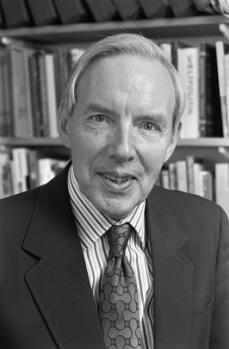
Ernest R. May embodies deep connection between academia and the CIA
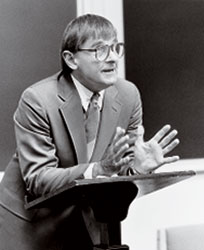
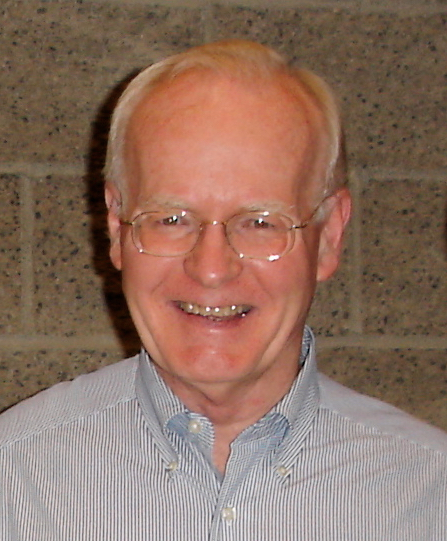
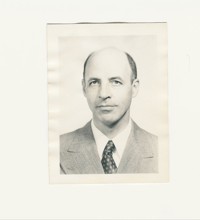
Ernest R. May (1928-2009) was a Harvard history professor for 55 years and dean of Harvard College in the late 1970s; he also served as the senior historian, consultant and main author (with Philip Zelikow) of the 9/11 Commission Report.
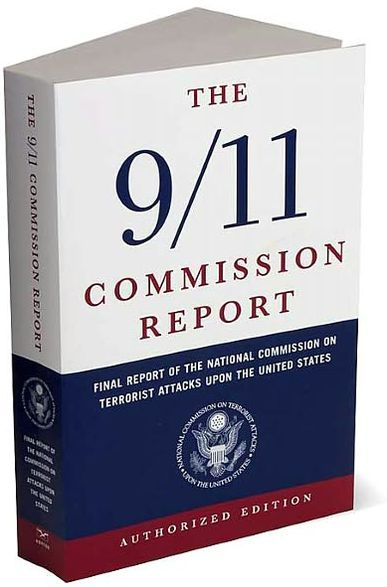
The 9/11 Commission Report was a 600+ page history published in 2004 that was intended as the definitive account of 9/11 and aimed to validate the official U.S. government narrative and its backstory, and to defend the White House, Justice Department, FBI, CIA and U.S. military.
While the report acknowledged advanced warnings about 9/11 that, in hindsight, should have been followed up, it did not place the onus of responsibility on anyone in any position of power and advocated for relatively minor bureaucratic restructuring rather than sweeping changes in government policy.
After May’s death, George Washington University’s National Security Archive published a tribute which referenced a book noting that May was “well known for his long-standing relationship as a historical consultant for the Central Intelligence Agency.”[1]
A naval officer in the Korean War who served on President John F. Kennedy’s academic advisory board, May had historical expertise as an analyst of intelligence-gathering failures and, for years, taught a course on the subject at Harvard for intelligence operatives.[2]
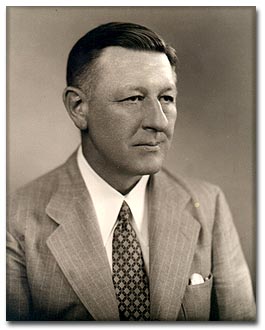
Recruited to Harvard in 1954 by historian William Langer, a former Office of Strategic Services (OSS) operative and CIA researcher director accused of being a “hired gun” (i.e., government agent),[3] May also wrote a report for the Office of the Secretary of Defense on strategic arms competition in the Cold War.
While critical studies of the 9/11 Commission Report have been published, May’s role as a key author of the 9/11 Commission Report has largely evaded attention, along with that of at least nine other CIA consultants.
Future independent historians are likely to view the 9/11 Commission Report as part of a pattern of government cover-up of state crimes analogous to the 1964 Warren Commission Report and 1942 Roberts Commission Report on Pearl Harbor.[4]
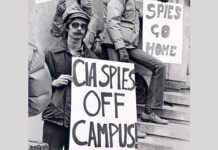
May’s importance reflected the pivotal role played by the CIA in the cover-up along with the nexus between the CIA and academia, which has ignited campus demonstrations in the past.
The Cover-up Commission
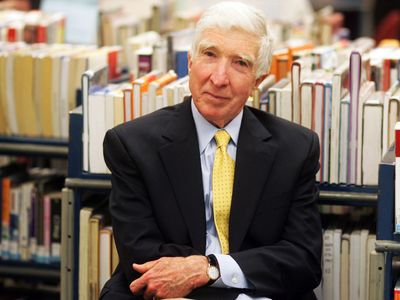
Nominated for a national book award, Time magazine called the 9/11 Commission Report “one of the most riveting, disturbing and revealing accounts of crime, espionage and the inner works of government ever written.” Novelist John Updike wrote in The New Yorker that “King James’ Bible had been our language’s lone masterpiece produced by committee, until this year’s 9/11 Commission report.”[5]
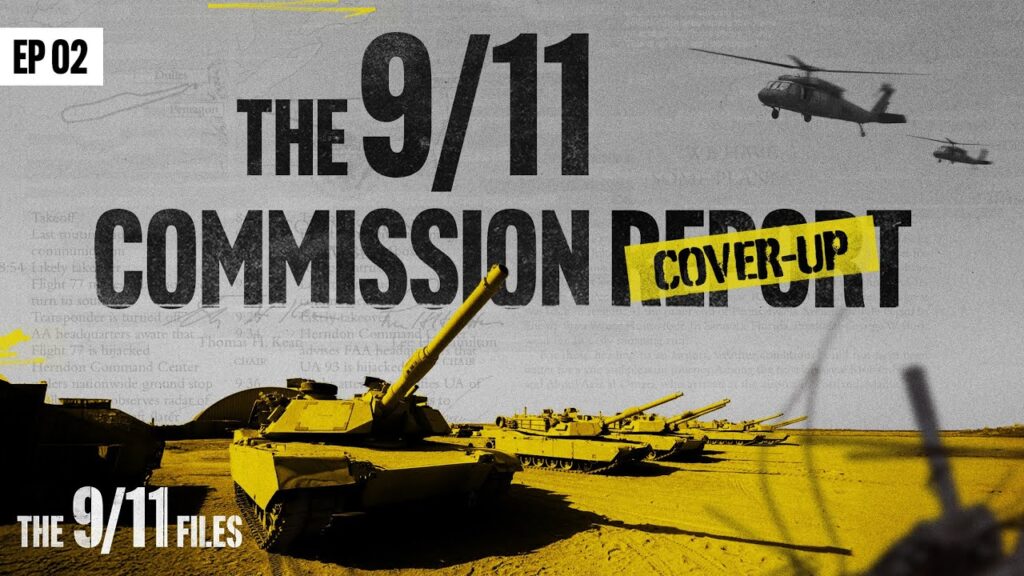
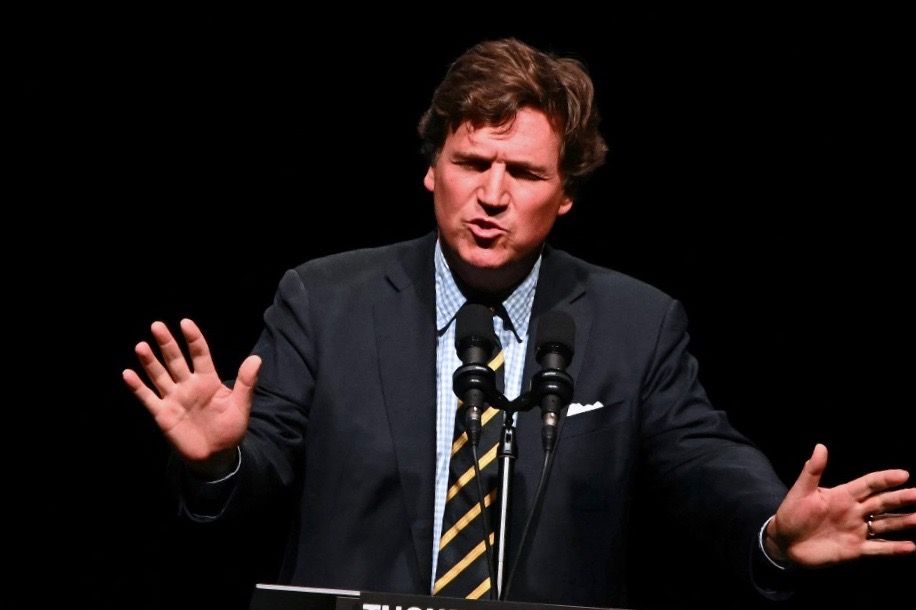
In a 2025 documentary, former Fox News commentator Tucker Carlson characterized the 9/11 Commission Report more accurately as the “cover-up commission” and “corrupt.” An October 2004 Harper’s Magazine article by Benjamin DeMott had referred to it as a “cheat” and “fraud.”
David Ray Griffin’s 2005 book, The 9/11 Commission Report: Omissions and Distortions, provided substance to these latter assessments, noting that the “partiality of the 9/11 Commission’s report [was] so extreme that it even fail[ed] to acknowledge the existence of an alternative theory.”[6]
At the outset of his book, Griffin quoted from a September 2004 letter to Congress signed by 25 people that worked for government agencies responsible for national security (FBI, CIA, FAA, DIA, Customs) who stated that “omissions [are] one of the major flaws in the Commission’s report. We are aware of significant issues and cases that were duly reported to the Commission by those of us with direct knowledge, but somehow escaped attention….The report simply does not get at key problems within the intelligence, aviation security, and law enforcement communities. The omissions of such serious and applicable issues and information by itself renders the report flawed, and casts doubt on the validity of many of its recommendations.”[7]
![The 9/11 Commission Report: Omissions and Distortions [9/11 COMM REPORT] [Paperback]](https://covertactionmagazine.com/wp-content/uploads/2026/09/the-9-11-commission-report-omissions-and-distorti.jpeg)
One of the egregious omissions that Griffin points to was the fact that at least six of the nineteen men identified as suicide hijackers showed up alive after 9/11![8]
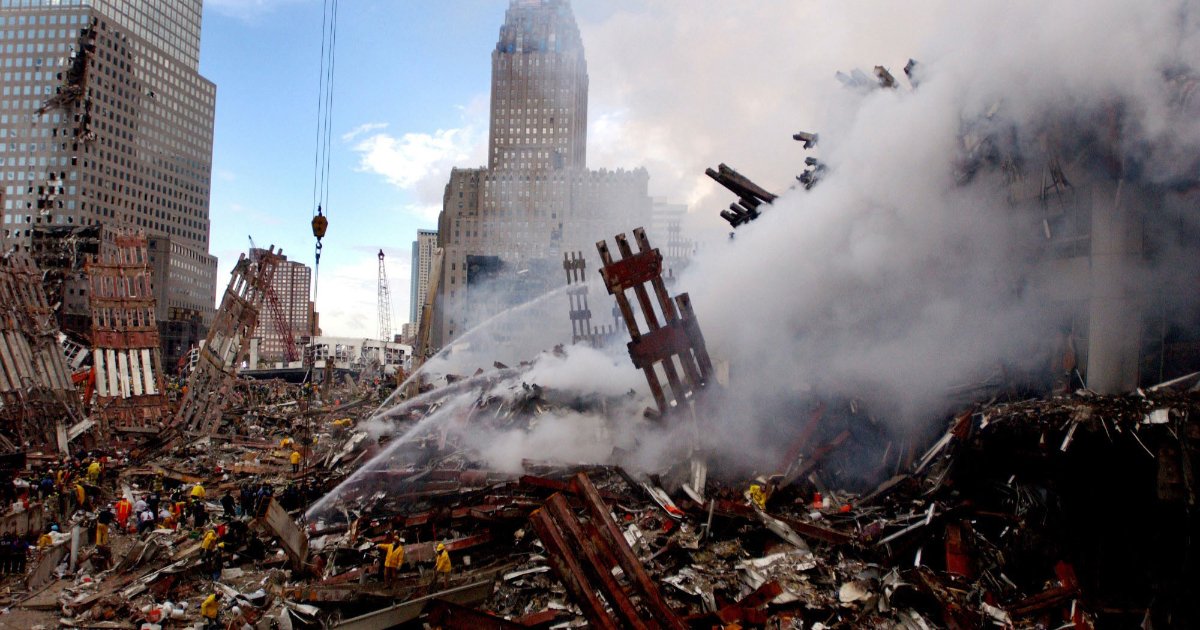
The 9/11 Commission also repeated the official narrative that World Trade Center 7 was destroyed by fire when fire had never before caused a steel-framed high-rise building to collapse (the fires in WTC-7 were actually quite small), and when steel only melts at 2,770° Fahrenheit, whereas fires based on jet fuel can at most rise to 1,700° Fahrenheit.
According to Griffin, WTC-7 had ten standard features of a building that experienced a controlled demolition collapse produced by explosives placed in the building, which the 9/11 Commission Report never discussed.[9]
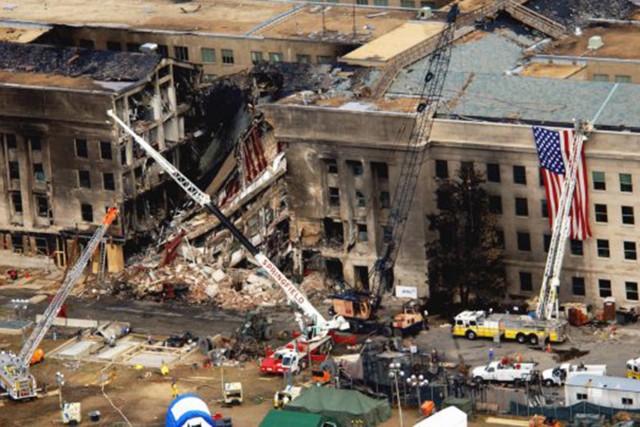
The 9/11 Commission Report failed to discuss various anomalies regarding the alleged airplane strike on the Pentagon, including the fact that no airliner was visible before or after the crash when photographs showed that the entrance hole for the Boeing 757 that struck the building was big enough only for the nose of the plane to have gotten through.[10]
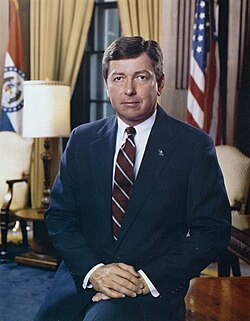
Chapter 5 of Griffin’s book addressed the 9/11 Commission’s omission of advance warnings received by Attorney General John Ashcroft and its failure to investigate why the National Security Agency (NSA) somehow failed to translate a phone call from alleged 9/11 mastermind Khalid Sheikh Mohammed to hijacker Mohamed Atta the day before 9/11.
Griffin further points to the 9/11 report’s failure to investigate a) the suspicious behavior of President George W. Bush, Vice President Dick Cheney and Defense Secretary Donald Rumsfeld on 9/11; b) the Saudi Royal Family’s connection to al-Qaeda and potential involvement in the 9/11 attacks; and c) the U.S. military’s failure to intercept the hijacked airplanes following normal military protocol.
While the commission acknowledged suspicious stock trades on the eve of 9/11, it concluded that these had nothing to do with the attacks without explaining the basis for this conclusion or appearing to have done any investigation.
When a Navy captain who oversaw a data-mining program known as Able Danger that identified Mohamed Atta and other hijackers long before the 9/11 attacks visited the 9/11 Commission office on K Street and urged it to investigate Able Danger, he was rebuffed.[11]
The 9/11 Commission Report additionally omitted the testimony of FBI whistleblowers Coleen Rowley and Sibel Edmonds about serious FBI misconduct and collaboration between al-Qaeda militants and the CIA prior to the attacks, and failed to include evidence that Osama bin Laden was visited by a CIA agent at an American hospital shortly before 9/11.
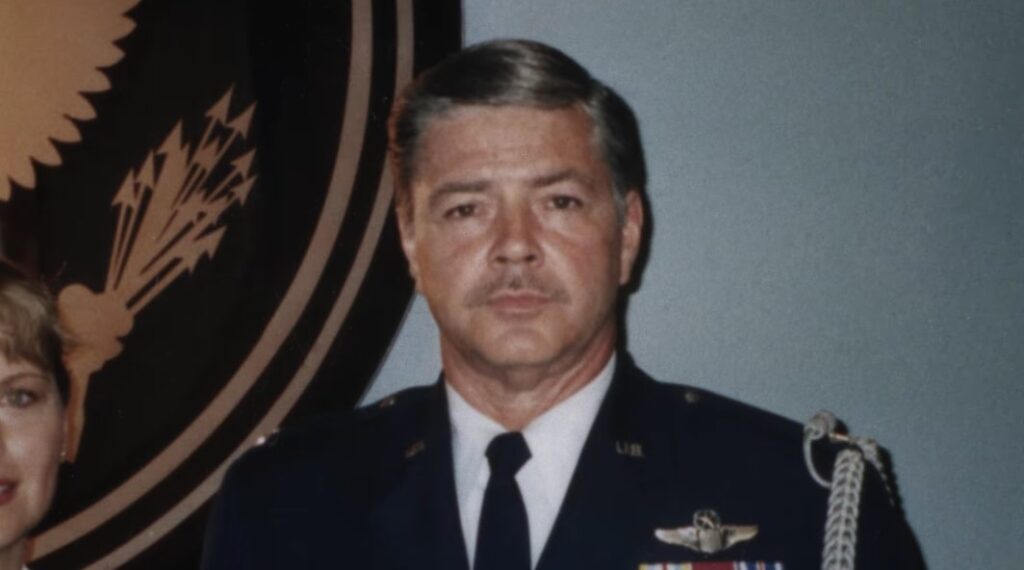
The omissions regarding the CIA are unsurprising, considering May’s CIA background and that of other writers who were clearly intent on covering up the CIA’s ties to bin Laden. According to CIA whistleblower Michael Riconosciuto, these latter ties extended to bin Laden having been trained in the early 1980s in Australia by CIA officer Robert Booth Nichols.[12]
Further Dubious Aspects
The 911/ Commission Report followed the CIA’s norm of whitewashing the imperial character of U.S. foreign policy, neglecting to mention the oil and gas interests driving U.S. geopolitical ambitions in the Middle East and expansion of the U.S. military base network or fact that members of the Bush administration had long been anxious for war to gain control of Iraq.
Carol Elder Bruce, who interviewed for the position of general counsel with the commission and proposed subpoenaing top Bush administration officials, said her suggestion went over like a “particularly odiferous skunk at a garden party,” especially with 9/11 Commission Executive Director Philip Zelikow.[13] She was not given the job.
Zelikow suppressed a memo issued by John J. Farmer, Jr., a senior counsel to the 9/11 Commission who had been New Jersey’s Attorney General, that pointed to false statements from military officers and Federal Aviation Administration (FAA) officials who worked for the North American Aerospace Defense Command (NORAD).
NORAD had developed a false cover story that it had chased United Flight 93 before it crashed to the ground when in fact it had not been notified of the hijacking until after it crashed.[14]
Farmer Jr. wrote in a 2009 book that, “at some level of government, at some point in time, a decision was made not to tell the truth about the national response to the attacks on the morning of 9/11. We owe the truth to the families of the victims of 9/11.”
One of the most dubious aspects of the 9/11 Commission Report was its reliance on information provided by al-Qaeda operatives who had been tortured. At least four of the operatives claimed that they told interrogators critical information as a way to stop being tortured.[15]
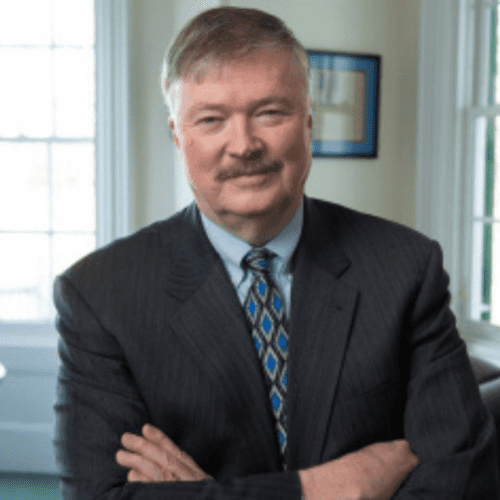
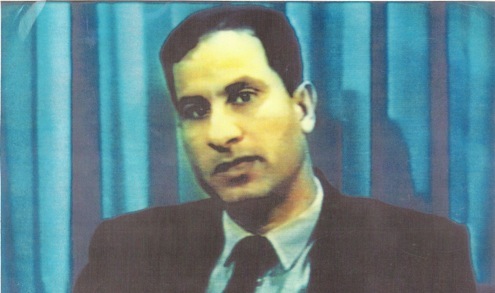
Additionally, the 9/11 Commission failed to probe into the activities of Ali Abdel Saoud Mohamed, an al-Qaeda organizer who trained Afghan mujahidin fighters working for the CIA in the 1980s, and then came to the U.S. on a visa-waiver program designed to shield “those who have performed valuable services for the country.”[16]
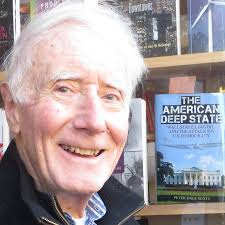
Researcher Peter Dale Scott sees the 9/11 Commission’s failure to investigate Mohamed—who was detained by the Royal Canadian Mounted Police but released upon instruction of the FBI—as reminiscent of the Warren Commission’s failure to pursue crucial leads that might have helped unravel the conspiracy behind the JFK assassination.
Scott pointed out that the 9/11 Commission created a false picture of al-Qaeda as an example of non-state terrorism, which ignored its support by the CIA and Saudi and Qatari Royal families. [17]
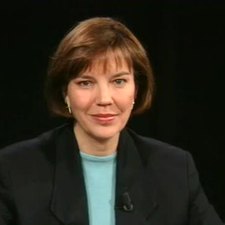
Tellingly, when the 9/11 Commission scheduled a set of public hearings in 2003, one of the featured speakers was Laurie Mylroie, a Harvard Ph.D. who served as “godmother of the Iraqi invasion” by arguing that Iraqis played a pivotal role in the 9/11 attacks.[18]
Mylroie’s book Study of Revenge: Saddam Hussein’s Unfinished War against America (Washington, DC: AEI Press, 2000) was promoted by CIA Director James Woolsey. In another book, Mylroie tried to present a link between Iraq and the 1995 Oklahoma City bombing.[19]
Ernest May’s Pattern of Historical Cover-ups
May’s function as a cover-up artist for U.S. foreign policy and apologist for the U.S. government as a lead author of the 9/11 Commission Report fit with the pattern of his academic career at Harvard going back to the 1950s.
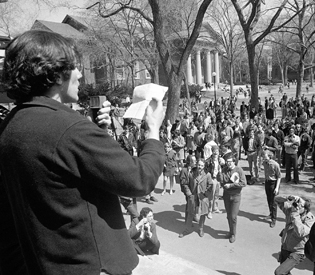
In October 1969, The Harvard Crimson reported that May had faced a revolt among Harvard students in his American diplomacy course who charged that History 164b aided the Vietnam war, reinforced an “anti-communist Cold War mystique,” failed to analyze U.S. economic motives in world affairs and strengthened support for American foreign policy.[20]
Much of May’s energy as a diplomatic historian was focused on countering the so-called “Wisconsin School,” headed by Professor William Appleman Williams, which examined how U.S. foreign policy aimed to open up new markets and investment opportunities and gain access to cheap raw materials.
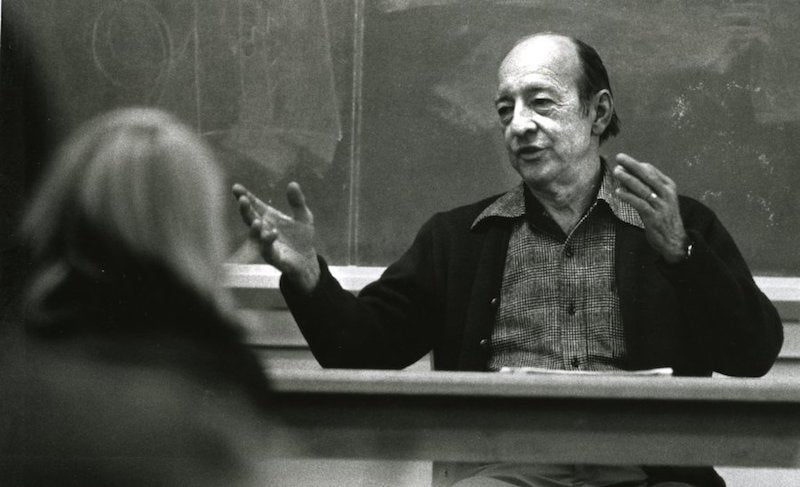
May wrote in 1967 that “no administration ever has [had] a coherent scheme or an overall plan.” He suggested in other writings that policy decisions could be explained in terms of the limited options available to the president that were constrained by Congress and the press.[21]
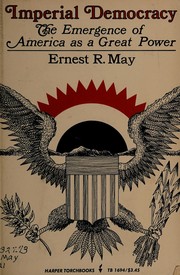
In Imperial Democracy (1961), May claimed the U.S. had “greatness thrust upon it” and that American leaders were “only incidentally concerned about real or imagined interests abroad.”[22]
In a review of Imperial Democracy, Williams noted that May’s analysis obscured how farmers, manufacturers and top political leaders attributed the 1893 depression to overproduction and a lack of markets, resulting in the adoption of a coordinated program of imperial expansion that was implemented after Spain was blamed for sinking the USS Maine in February 1898.
According to Williams, May failed to point out that President William McKinley (1897-1901), whom May claimed chose war with Spain and in the Philippines not because he had yearned for it but because it was the path of least resistance, perhaps the only path, was the keynote speaker at the founding convention of the National Association of Manufacturers, whose goal was to expand American exports abroad.[23]
In 1964, May co-authored an American history textbook (A History of the United States) with his former Ph.D. adviser at U.C.L.A. and father in-law John W. Caughey (1902-1995), which, while impressive in its breadth, reinforced official government narratives about U.S. foreign policy and boasted that in three and a half centuries, the United States had “peopled a wilderness” and grown to be the “richest and most powerful on the globe.”[24]
Referring to Native Americans as “wild Indians,”[25] May and Caughey avoided discussion of the genocidal nature of U.S. military operations in the Spanish-American Philippines War and heaped praise on John F. Kennedy’s foreign policy in Latin America that aimed to destroy left-wing movements sympathetic to the Cuban Revolution.
When addressing Kennedy’s assassination, May and Caughey reinforced the Warren Commission Report findings that Lee Harvey Oswald was Kennedy’s lone assassin,[26] which some members of the commission itself did not believe.[27]
In their discussion of World War I, May and Caughey dismissed the view embraced by so-called revisionist historians that “munitions makers, bankers and a handful of eastern Anglophiles had conspired to bring about U.S. intervention”—without addressing any of the evidence introduced at the 1934 Nye Committee hearings that helped validate this view.
May and Caughey further failed to cite Ferdinand Lundberg’s book, America’s Sixty Families, which details how Woodrow Wilson’s political career was bankrolled by Cleveland H. Dodge, owner of the Dodge-Phelps copper mine, and director of the National City Bank and the Winchester Repeating Arms Company, which was a leading war profiteer.[28]
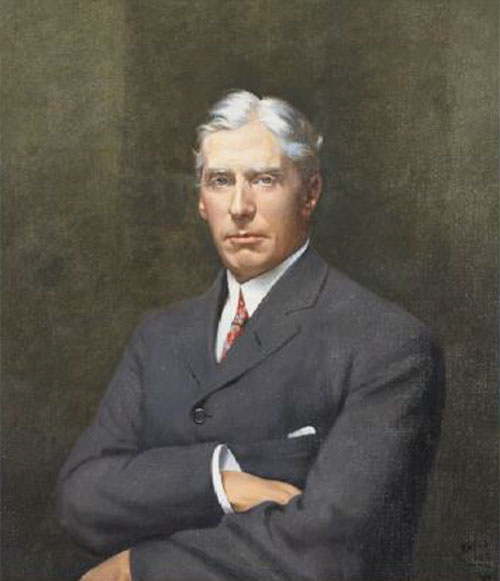
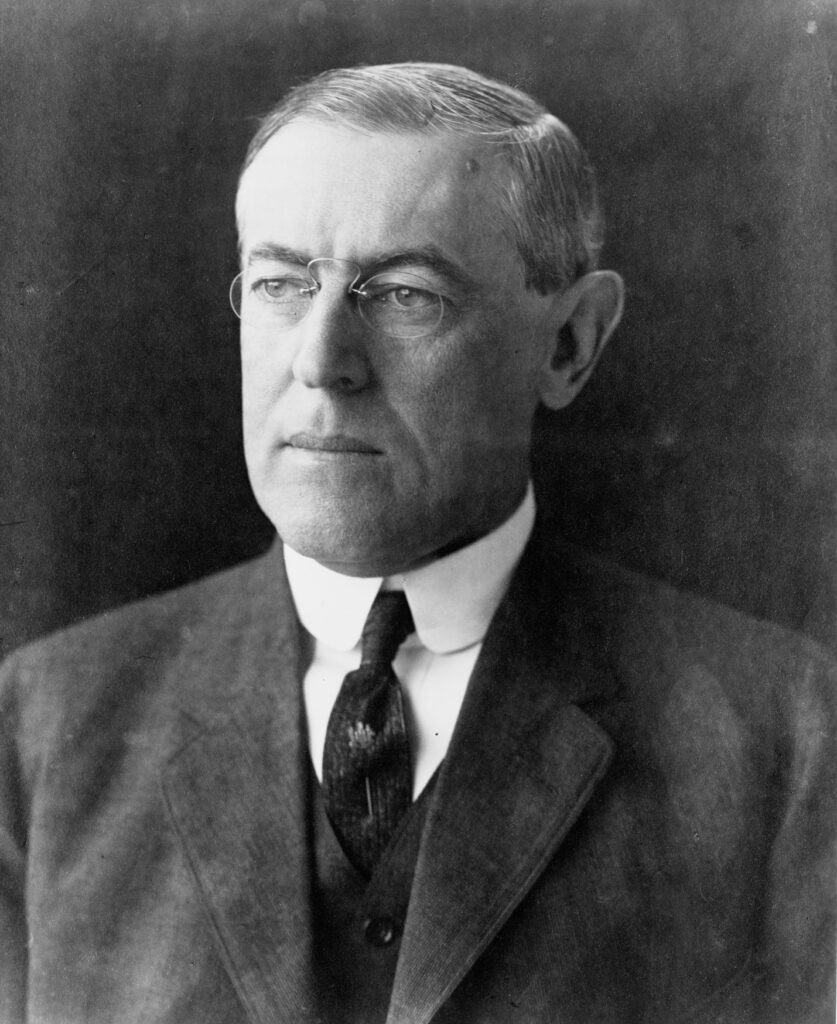
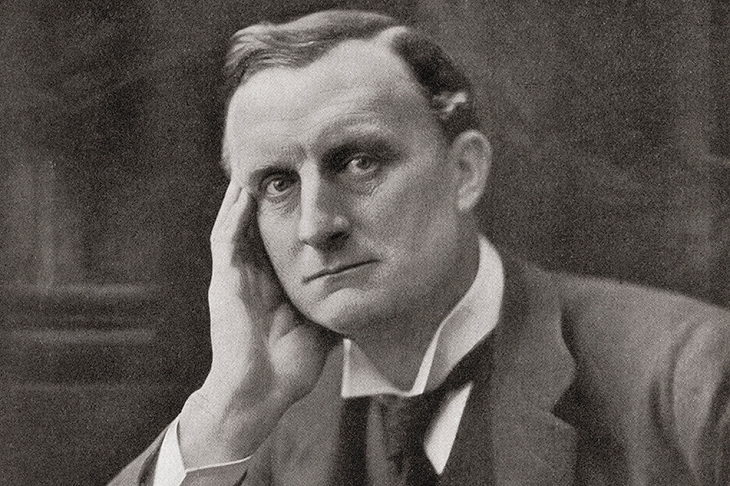
In 1959, May had published a scholarly book on World War I that was critical of American isolationists and presented as its hero British Foreign Minister Edward Grey who secretly schemed to enlist the U.S. in the Great War to help Great Britain achieve victory.[29]
May and Caughey claimed in A History of the United States that “the profit motive had little to do with the decision of 1917 [for the U.S. to enter the war] and that Allied propaganda had little effect. Many more felt, with Wilson that with the submarine controversy the nation’s honor was at stake. In the last analysis, the decision for war was made by the President. In 1915, he had been legalistic in opposing submarine warfare, and he had been concerned over the possible danger to America’s recovering foreign trade. By 1917, the paramount consideration in his mind seemed the fact that the United States would lose its influence on the peace settlement if it failed to make good on its earlier threats.”[30]
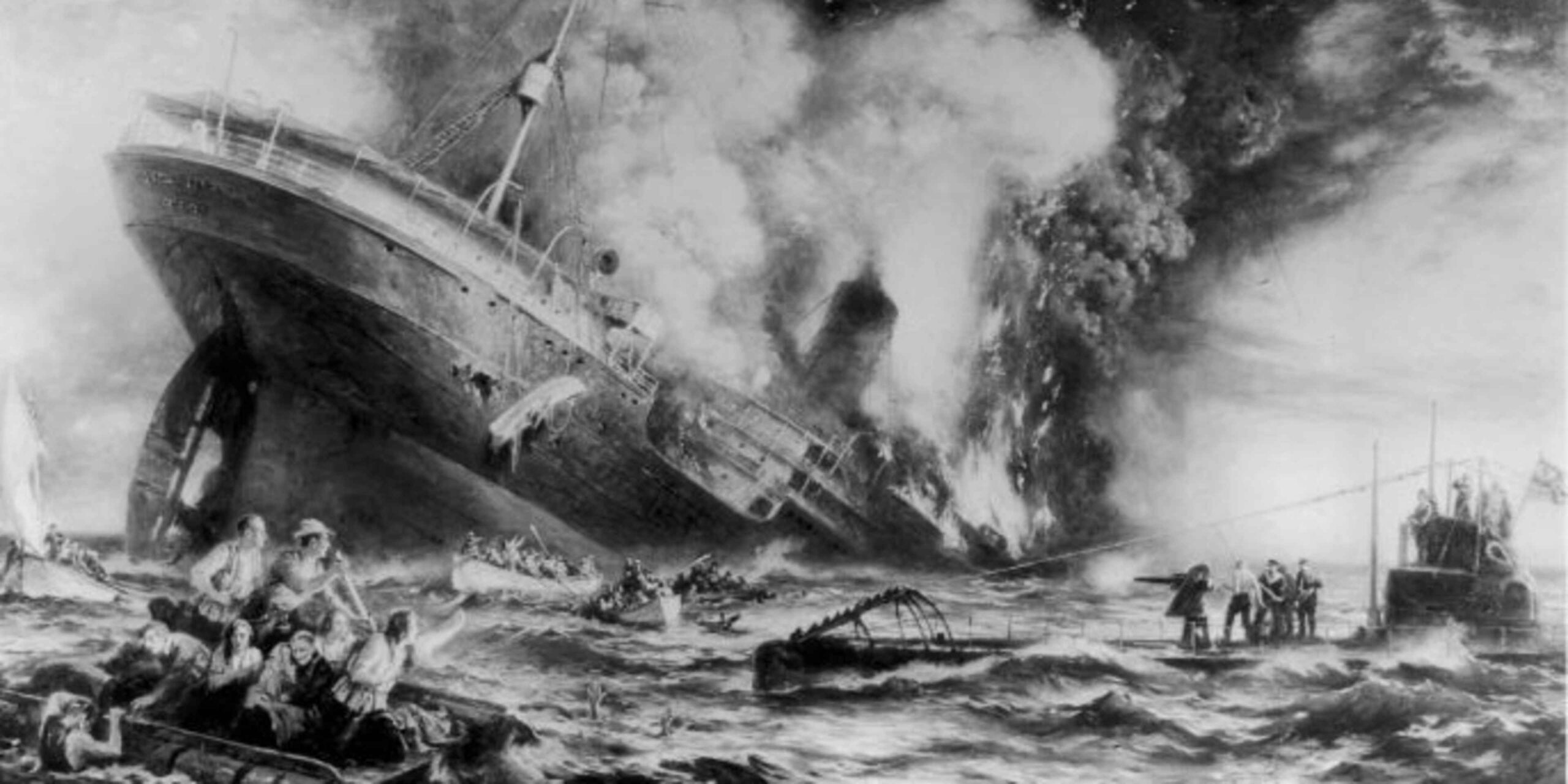
Among other things, this conclusion dismissed the findings of the Nye Committee hearings and Wilson’s deception regarding the sinking of the Lusitania, which was blamed on Germany but which was found to have had explosives planted on-board beforehand.[31]
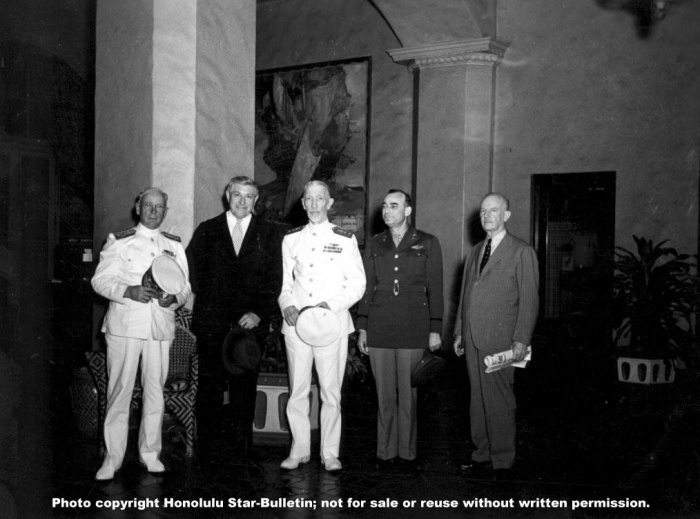
When covering Pearl Harbor, May reinforces the official narrative about a surprise attack while claiming falsely that “exhaustive inquiries turned up no supporting evidence that the FDR administration had provoked the Japanese and left the Pearl Harbor base poorly defended.”
The “exhaustive” inquiry May was referring to, the Roberts Commission, was described by one of its own members, Admiral William Standley, as being “crooked as a snake.”
Admiral James O. Richardson, former Chief of Naval Operations, called the Roberts Commission report “the most unfair, unjust and deceptively dishonest document ever printed by the Government Printing Office…A more disgraceful spectacle has never been presented to this country during my lifetime.”[32]
May and Caughey advanced more U.S. government myths when they claimed that a U.S. invasion of the Japanese home islands at the end of World War II was projected to cost 500,000 American lives. The actual military estimates were one-tenth as much.[33] May’s inflated figures justified the Truman administration’s misleading claim that the dropping of the atomic bombs over Hiroshima and Nagasaki saved half a million lives (George H. W. Bush upped it to a million).[34]
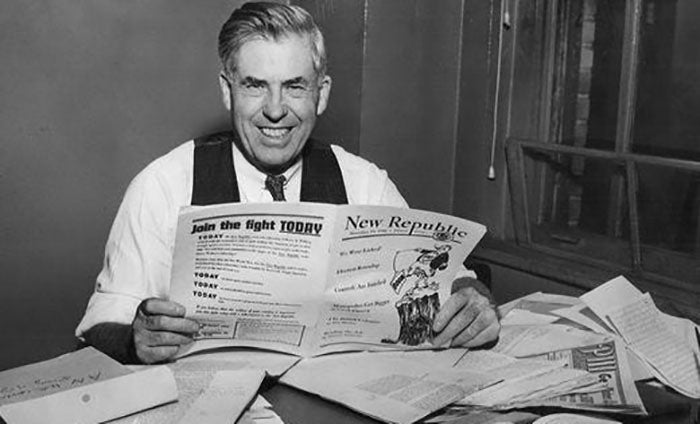
May and Caughey’s depiction of the early Cold War era followed the narrative of U.S. intelligence when they characterized Henry Wallace, FDR’s Vice President (1941-1945), who sought to continue Roosevelt’s conciliatory policy toward the Soviets, as an agent of the “far left.”
May and Caughey were both Cold War liberals who criticized the abuses of McCarthyism and presented the New Deal and liberal reformers in U.S. history, like Wisconsin Governor (1901-1906) and Senator (1906-1925) Robert La Follette favorably. Louisiana Senator Huey P. Long, however, was compared to Mussolini and Hitler for adopting a more radical left-wing program.[35]
In providing a usable history that would validate Cold War interventions, May and Caughey left out that the U.S. invaded Russia at the end of World War I, poisoning U.S.-Russian relations, and ignored covert programs adopted by the Truman administration that made use of Nazi war criminals and their violation of the 1945 Yalta agreements.[36]
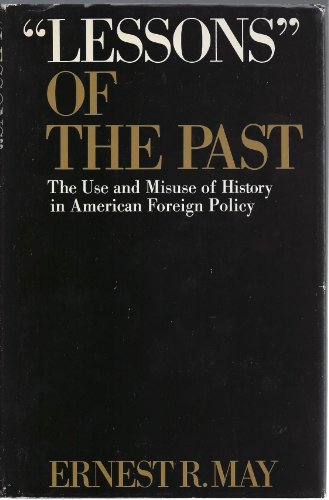
In “Lessons” of the Past: The Use and Misuse of History in American Foreign Policy (1973) May dismissed Wallace and the revisionist view of the Soviet government as “being preoccupied with its own recovery and security” after World War II—even though this view was advanced by the CIA.[37]
For May, U.S. leaders never deceive the public but are always constrained in their actions by forces out of their control and must make agonizing decisions—a view that leaves out of the equation the financial interests that bankroll their political careers and often drive policy.
When covering the Korean War, May and Caughey advanced the false claim that on June 25, 1950, North Koreans “suddenly attacked South Korea.”[38] In fact, we know that the attack was not sudden but provoked by South Korea, which had mounted clandestine raids into North Korea with CIA backing beforehand that included efforts to assassinate North Korean leader Kim Il-Sung. Evidence also indicates that it was South Korea that invaded North Korea first.[39]
Echoing the dominant media of the 1950s, May’s account additionally overplays the Soviet influence over the North Korean government while failing to explain the popular appeal of North Korea’s efforts to industrialize its economy, advance agrarian reform and women’s rights and delink from a world capitalist system that resulted in the exploitation of Third World countries.
Long Pattern of Historical Omissions and Distortions
May appears to have been selected to head the writing of the 9/11 Commission Report because of his close relations with Philip Zelikow, the commission’s executive director who was close with Bush administration officials, including Condoleezza Rice, with whom he wrote a book.
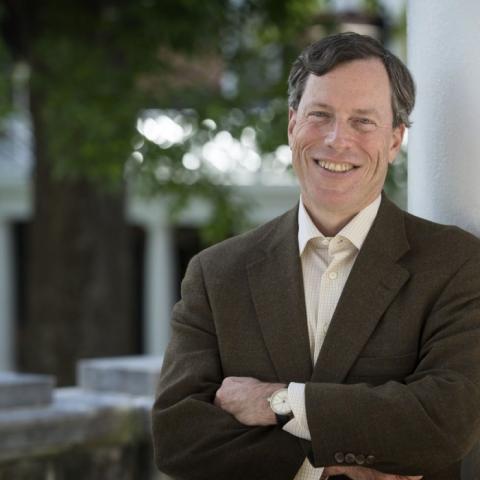
May wrote that he and Zelikow were “the architects of the 9/11 report” and said that they were the “general editors” who vetted all the material. May also wrote up the historical sections.
Employed as a historian at the University of Virginia, Zelikow started his career working for Jimmy Carter’s presidential campaign in 1976 but became a Republican in 1985 after joining the Foreign Service and served on the National Security Council when George H. W. Bush was president.[40]
Zelikow’s close ties to the CIA were evident in his serving on the president’s Foreign Intelligence Advisory Board and having helped prepare case studies for the CIA on intelligence issues.[41]
For over a decade, Zelikow and May ran the intelligence and policy program, a joint unclassified endeavor between the CIA and the John F. Kennedy School of Government.
In addition to an executive education component for senior managers in the U.S. intelligence community, the program developed case studies that focused on the intelligence-policy nexus.
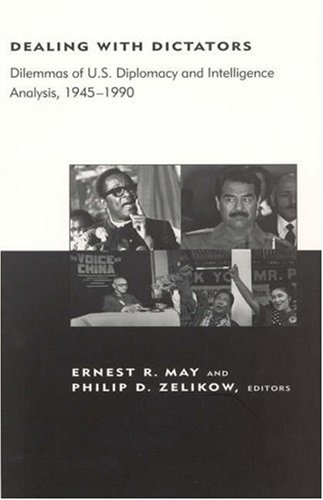
Six of these case studies were published in Dealing with Dictators: Dilemmas of U.S. Diplomacy and Intelligence Analysis, 1945–1990, a volume edited by May and Zelikow that was endorsed by onetime CIA Director John Deutch.
Dealing with Dictators framed the U.S. support for right-wing authoritarian regimes as being “practical” and part of a policy-makers “dilemma” stemming from the threat of communism, obfuscating the economic and geopolitical scheming that lay behind U.S. foreign policy strategy.
May and Zelikow further suggested that the U.S. tried to “nudge” its favored tyrants towards democracy, failing to report on how the U.S. explicitly helped build up their machinery of repression through police training programs and military assistance.[42]
Charles Cogan, who had been posted to the Congo during the period of the murder of Patrice Lumumba and its aftermath and was a research fellow in the Harvard program, co-authored a case study with May, “The Congo, 1960–1963: Weighing Worst Choices,” which became a chapter in Dealing with Dictators.[43]
The title show how the authors made it seem like allowing Congo to have self-determination and reclaim control over its natural resources under Lumumba’s leadership was somehow among the bad choices U.S. policy makers faced—as opposed to murdering Lumumba and supporting a brutal tyrant, Joseph Mobutu who allowed the looting of Congo by foreign mining interests that were close to the CIA—something May and Cogan inexplicably do not mention.
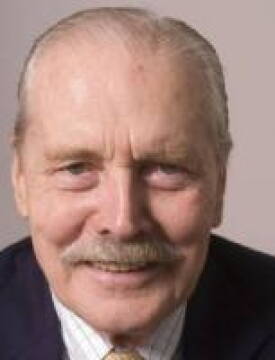
In 1992, Zelikow triggered local protests by giving a speech at a UN disarmament conference in Hiroshima claiming that the atomic bombs dropped on Japan at the end of World War II did Japan a service by shortening the war and saving more than a million lives.[44] Zelikow was also principal author of a national security strategy paper justifying pre-emptive war in Iraq.
After his appointment to head the 9/11 Commission, Zelikow visited CIA headquarters and met with Director George Tenet’s top lieutenants, Mark Lowenthal and Winston Wiley, who told journalist Philip Shenon that Zelikow “reeks of arrogance…Here’s a guy who spent his career trying to insinuate himself into power so when something like this came up [9/11 Commission], he could grab it.”[45]
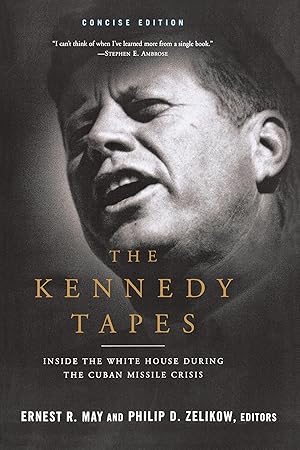
Zelikow had been May’s prized student at the Tufts Fletcher School, and besdies co-teaching courses with him at the Harvard Kennedy School, in 1997, edited a book with him, The Kennedy Tapes: Inside the White House During the Cuban Missile Crisis (Harvard University Press), which was turned into a Hollywood script for the movie Thirteen Days, starring Kevin Costner.[46]
Sheldon Stern, former director of the John F. Kennedy presidential library, identified serious mistakes and omissions throughout The Kennedy Tapes that foreshadowed the 9/11 Commission Report.[47]
Warnings As Blips on a Screen
May’s conclusion in the 9/11 report was that the warnings that went ignored by U.S. intelligence agencies related to 9/11 had been “blips on a screen teeming with warnings of possible attacks outside the United States.”
This assessment implied that top government leaders were in no way complicit since they were inundated with warnings and would have had difficulty discerning which ones were real.
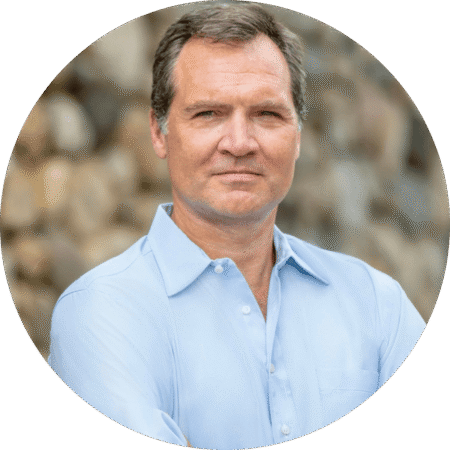
Richard A. Falkenrath, a professor at the Johns Hopkins School of Advanced International Studies who served on George W. Bush’s White House staff, wrote in International Security that May and Zelikow had endorsed a “no fault” theory of government in which individuals were not held responsible for their actions, no matter how catastrophic.[48]
May himself suggested in a May 2005 New Republic article that the 9/11 Commission Report was “probably too balanced…individuals, especially the two presidents [Clinton and Bush II] and their intimate advisers received even more indulgent treatment.”
May wrote in the same article that he agreed with the 9/11 Commission Report’s conclusion that “Al Qaeda attacked the United States because of what the nation was rather than because of what it did.” This reinforces the Bush administration’s assessment and is dismissive of critics like Chalmers Johnson and Noam Chomsky who viewed 9/11 as “blowback” for imperialistic U.S. foreign policies in the Middle East that the 9/11 Commission Report fails to address.[49]
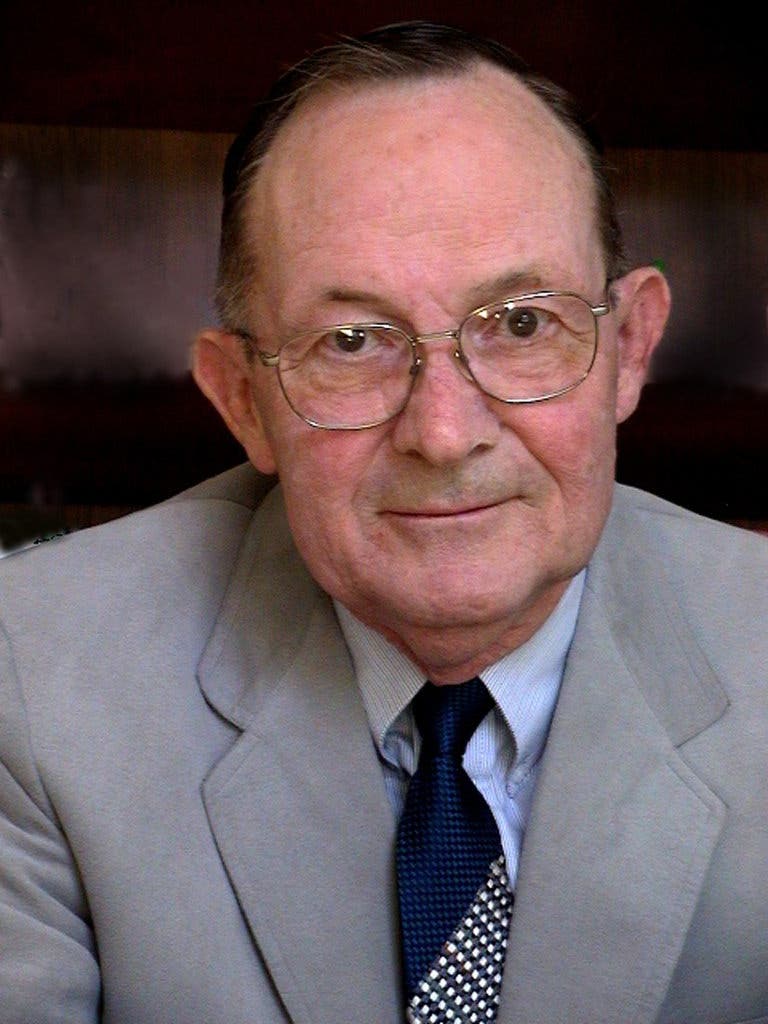
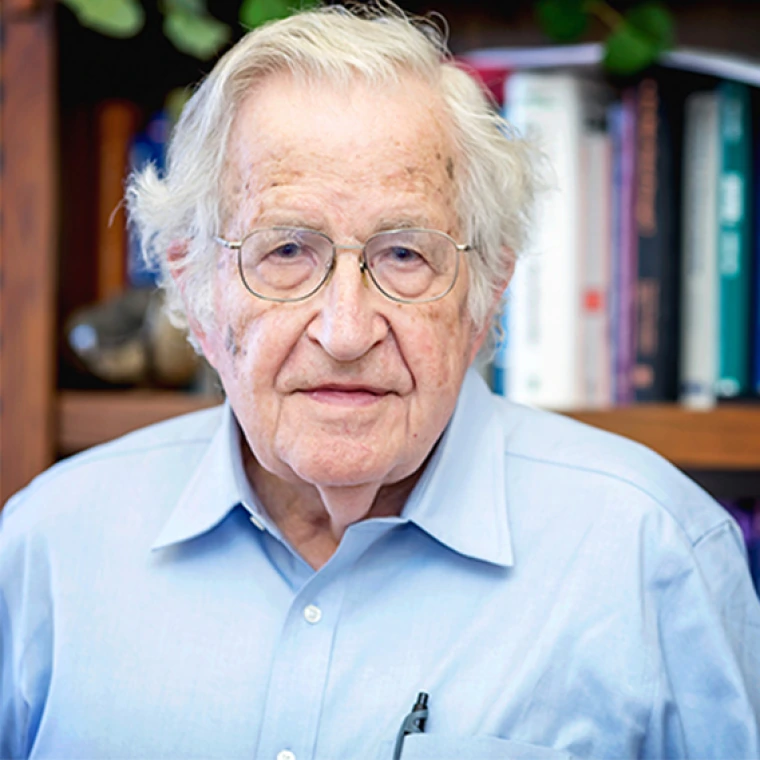
The historical sections in the report fit with May’s previous scholarship in skirting over the human costs and double standards of U.S. foreign policy.
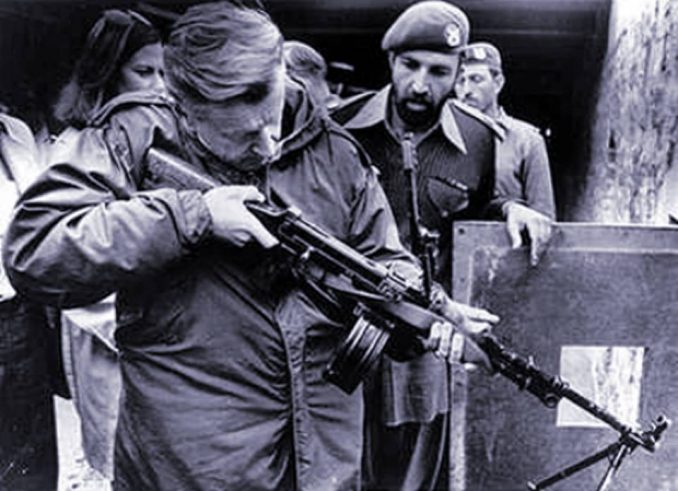
As one example, the 9/11 report fails to highlight the CIA’s role in provoking a Soviet intervention in Afghanistan, which Zbigniew Brzezinski, a key architect of U.S. policy towards Afghanistan in the Carter administration, bragged about.[50]
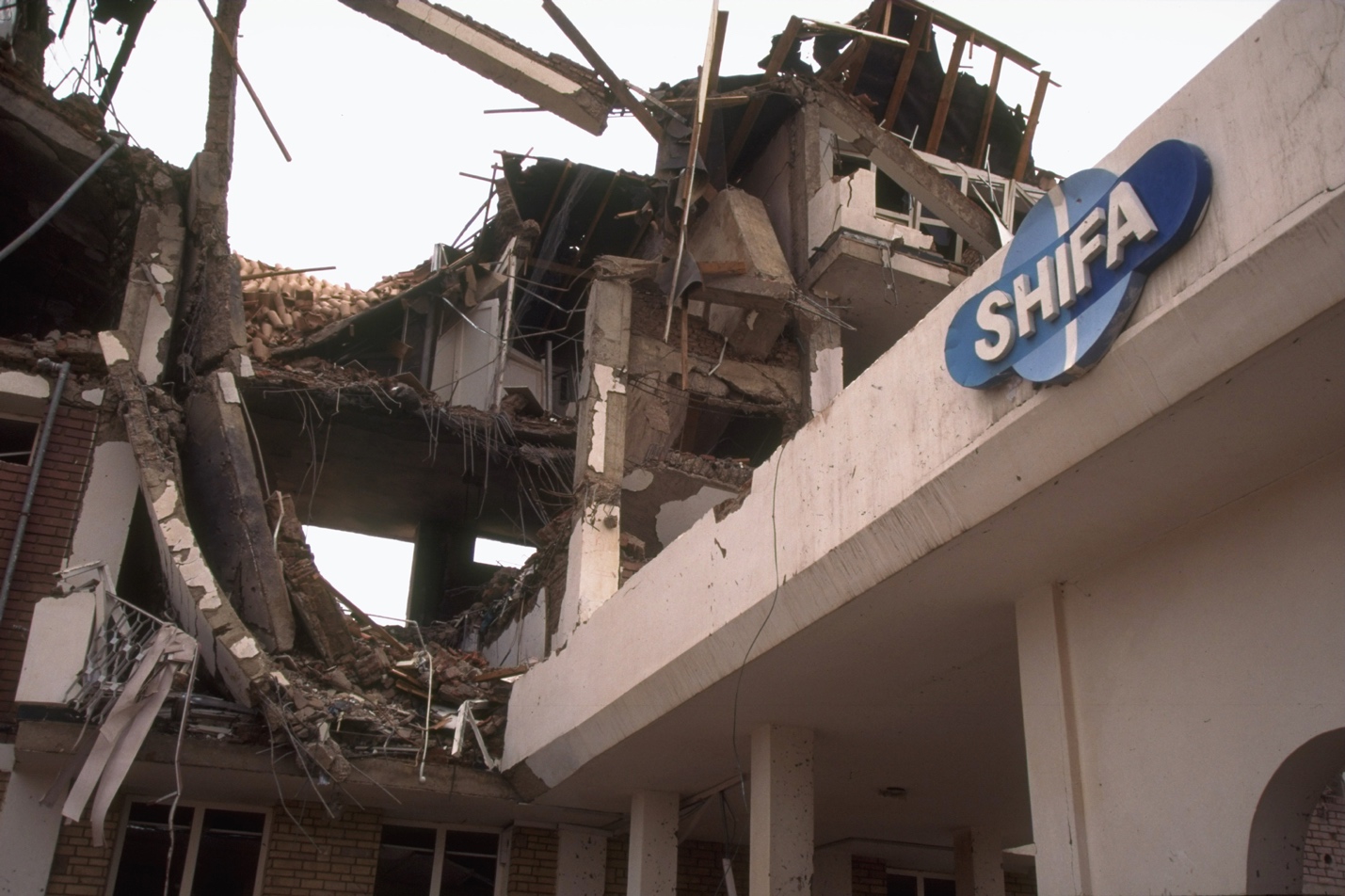
The report also failed to discuss U.S. support for Israeli oppression in the Israeli-occupied territories of Palestine or how the Clinton administration’s bombing of the al-Shifa pharmaceutical plant in Sudan caused major health problems for the local population and anger toward the U.S.[51]
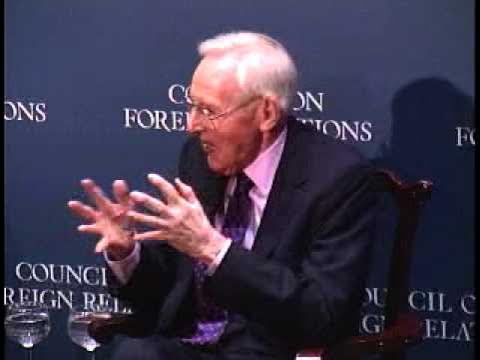
In a 2007 talk before the Council on Foreign Relations, May compared 9/11 with the surprise Nazi attack on France in 1940, about which May wrote a book. The comparison of al-Qaeda with the Nazis helped validate the U.S. Global War on Terror as a righteous crusade against evil.
CIA-Packed Commission
Besides May, Zelikow recruited several other CIA operatives to assist in the writing of the 9/11 Commission Report whose authors were given a CIA facility in downtown Washington from which to work. The known CIA operatives involved with the commission were:
- Douglas MacEachin, who joined the CIA in 1965 after a stint in the Marine Corps. MacEachin served as Director of the CIA’s Office of Soviet Analysis (1984-1989) and the CIA’s Deputy Director of Intelligence (1993-1995). After his “retirement” from the Agency, MacEachin became a research analyst at Harvard who worked with May and Zelikow in producing what May called several “exquisite monographs on intelligence history.” One of them sought to refute accusations that the CIA had been oblivious to the Soviet Union’s deteriorating economy.[52]
- Michael Hurley, a lawyer and career officer in CIA’s Directorate of Operations who represented the CIA on the National Security Council. After 9/11, he deployed for 18 months to Afghanistan where he led Agency personnel and U.S. Special Forces in Operation Anaconda, the biggest campaign of the Afghan conflict.[53]
- Lloyd Salvetti, the head of the CIAs internal think tank, the Center for the Study of Intelligence, where he worked closely with Zelikow and May on a Harvard executive program for senior intelligence analysts, part of which involved developing historical case studies for classroom use.[54]
- Daniel Byman, a Ph.D. from MIT in Political Science and staff member of the Joint 9/11 Inquiry of the U.S. House and Senate Intelligence Committees who served as a CIA political analyst from 1990 to 1993 with a focus on the Middle East. In 2000, Byman wrote an article with Zalmay Khalilzad, U.S. ambassador to Afghanistan and Iraq in the 2000s, providing a blueprint for regime change in Afghanistan.[55]
- Kevin J. Scheid, served in the CIA from 1988 to 1996 and then in the Office of the Director of Central Intelligence and the Office of the Director of National Intelligence. Later, he became Deputy General Manager of the NATO Consultation, Command and Control Agency.
- Thomes E. Dowling, a State Department officer in the Middle East and South Asia’s Bureau of Intelligence for many years and faculty at the National Intelligence University who holds a National Intelligence Medal.
- Mark S. Bittinger, whose LinkedIn cv lists his role as a Continuity of Operations Specialist with the CIA’s Critical Mission Assurance Program. He was also an intelligence policy and strategy specialist with the MITRE Corporation which performs functions for the U.S. intelligence community and military and advises the CIA on technical projects.
- T. Graham Giusti, a CIA security officer from 1978 to 2009.
- Nicole Marie Grandrimo, an attorney who works for the CIA.
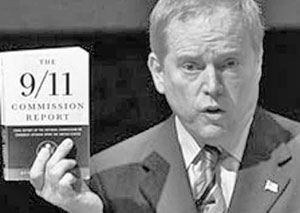
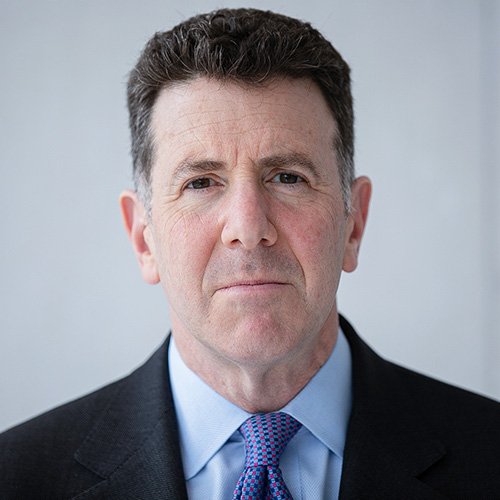
In addition to those who had worked for the CIA or other intelligence agencies, six 9/11 Commission staffers were former FBI agents, nine had worked for the Department of Justice, four worked for the White House, three for the State Department, one for the RAND Corporation[56] and Council on Foreign Relations[57] and five for the Pentagon. Additionally, Lorry Fenner was an Air Force intelligence officer who worked closely with NSA.[58]
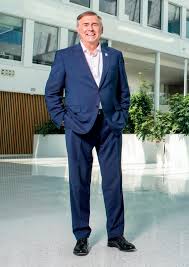
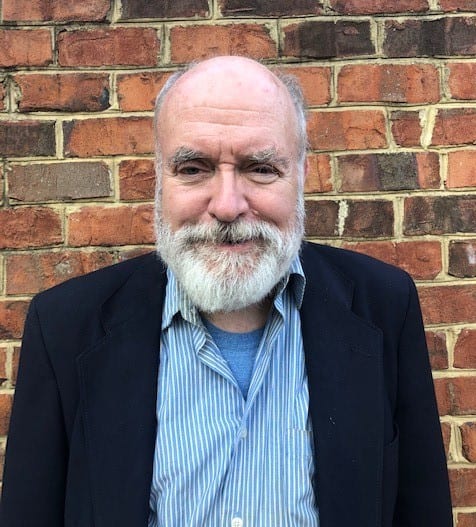
Another 9/11 Commission researcher, Alexis Albion, who was tasked with investigating the CIA, served as curator of the International Spy Museum in Washington, D.C., and was an intelligence historian who studied at Harvard under May, writing a Ph.D. dissertation entitled “The Spy in All of Us: The Public Image of Intelligence.”[59]
Master Cover-up Artist
The CIA’s significant role in overseeing and writing the 9/11 Commission Report solidifies the assessment of it as a whitewash along the lines of the Roberts and Warren Commission reports, whose integrity May, not coincidentally, had sought to validate in his historical writings.
May was the perfect person to oversee the 9/11 report’s writing because he had a long history of covering up for state crimes.
His career shows a strong line of continuity from the first textbook that he wrote on American history with his Ph.D. supervisor and father-in-law in 1964 to the 9/11 Commission Report.
All of May’s published writings in that 40-year period show his skill in assembling facts and crafting historical narratives that appear on the surface to be scholarly and well-grounded but, in fact, omit key information that would cast U.S. foreign policymakers in a negative light and expose how big business interests often drive U.S foreign policy.
The tributes to May after his death by former students and colleagues testify to the wide influence that he exhibited in spreading his ideological world view.
This influence appears to have all been by design as May’s military and intelligence background helped get him appointed to the Harvard faculty and allowed him to become a prominent academic figure who could shape public discourse significantly.
Professor Anne Karalekas of the Harvard Kennedy School wrote in a tribute to May that he had “served as a consultant to the Defense Intelligence Agency and the Central Intelligence Agency.” ↑
May was long-time director of Harvard’s Intelligence and Policy Project and Board Member for the Joint Military Intelligence College. Born in Fort Worth, Texas, May’s father was a trial lawyer active in local politics. His mother died when he was four years old and he was raised primarily by his maternal grandmother. A gifted student, he received his Ph.D. at 22. After his service in the Korean War, he worked as a historian for the U.S. Joint Chiefs of Staff, advising Chairman Admiral Arthur Radford. There he became collegial with a group of historians involved in writing official histories of World War II. According to one of his students, top policy-makers over the years who sought May’s advice included Averell Harriman, John McCloy, Brent Scowcroft and Robert Gates. ↑
Robin W. Winks, Cloak & Gown: Scholars in the Secret War, 1939-1961 (New York: William Morrow, 1987), 79. The source of this quote was Harry Elmer Barnes, a revisionist historian critical of U.S. involvement in World Wars 1 and II. Considered to be a “court historian” like May, Langer supported an orthodox perspective that defended U.S. policy and attacked revisionists like Barnes. A critique of Langer can be found in Harry Elmer Barnes, ed. Perpetual War for Perpetual Peace: A Critical Examination of the Foreign Policy of Franklin Delano Roosevelt and Its Aftermath (Caldwell, ID: The Caxton Printers, 1953). According to historian Howard Zinn, Langer published a history of the U.S. entry into World War II in the 1950s with S. Everett Gleason that aimed to chronicle “the tortured emergence of the United States of America as leader of the forces of light in a world struggle which even today has scarcely abated.” Howard Zinn, “The Politics of History in the Era of the Cold War: Repression and Resistance,” in The Cold War & The University: Toward an Intellectual History of the Postwar Years, ed. André Schiffrin (New York: The New Press, 1997), 39. ↑
On the fraudulent character of the Roberts Commission, see Jeremy Kuzmarov, “Eighty Years of Lies: President Franklin Roosevelt Told Public Pearl Harbor Was A Surprise Attack—However There Is Considerable Evidence Demonstrating Government Foreknowledge,” CovertAction Magazine, December 7, 2023; and on the fraudulent nature of the Warren Commission, see Jeremy Kuzmarov, “60 Years After JFK’s Death It Is More and More Apparent that Kennedy Was a Victim of a Palace Coup—Spearheaded by Vice-President Johnson,” CovertAction Magazine, November 22, 2023.Philip Shenon, The Commission: The Uncensored History of the 9/11 Investigation (New York: Twelve, 2008), 415. Harvard historian Arthur Schlesinger, Jr., called the 9/11 report a “tour de force.” Both ABC and NBC announced plans for a TV mini-series and the report rose to number one on The New York Times best-seller list. Time’s connection to the CIA is documented here. ↑
David Ray Griffin, The 9/11 Commission Report: Omissions and Distortions (Northampton, MA: Olive Branch Press, 2005), 11. Griffin was a Professor of Philosophy and Religion at Claremont School of Theology in California. ↑
Griffin, The 9/11 Commission Report, 12, 13. ↑
Idem., 12, 13. The 9/11 Commission asserted that Waleed al-Shehri was responsible for stabbing one of the flight attendants on American Airlines Flight 11 that crashed into the World Trade Center’s North Tower, failing to mention that al-Shehri was interviewed after 9/11 by a London-based newspaper and spoke to the U.S. Embassy in Morocco to tell them he worked as a pilot for Royal Air Maroc, as the Associated Press reported. The 9/11 Commission could have used its subpoena power to clear up questions about the flight logs and lack of Arab names on them but did not do so. ↑
For more insights on this, see Kristen Gasparini, “Chronicle of a Collapse Foretold: The Paradox of World Trade Center 7 and the 9/11 Narrative,” CovertAction Magazine, September 11, 2025.
Griffin also discussed the failure of the 9/11 Commission Report to report that a video from a nearby gas station that captured the crash was immediately confiscated by federal law enforcement authorities. ↑
Shenon, The Commission, 417. For more on Able Danger, see Curt Weldon, Able Danger: What the 9/11 Commission Never Told You (Tucker Carlson Books, 2026).↑
Author interview with Peter Osborne, May 5, 2026. ↑
Shenon, The Commission, 93, 94. In the 1980s, Bruce had led the high-profile prosecution of CIA operative Edwin Wilson who was later taped in prison trying to arrange her murder. ↑
Shenon, The Commission, 208. ↑
Michael Ratner, president of the Center for Constitutional Rights, said he was “shocked” that the Commission never asked about extreme interrogation measures. “Most people look at the 9/11 Commission Report as a trusted historical document. If their conclusions were supported by information gained from torture, therefore their conclusions are suspect.” ↑
For a time, Mohamed was an instructor at the Al Kifah Refugee Center in Brooklyn, which was set up by bin Laden’s mentor, Abdullah Azzam, another CIA-connected mujahidin veteran, to train jihadists for conflicts in Bosnia and Yemen. He was believed to be connected to the 1993 World Trade Center bombing and 1998 bombing of the U.S. Embassy in Nairobi. ↑
Peter Dale Scott, The American Deep State: Wall Street, Big Oil and the Attack on U.S. Democracy (New York: Rowman & Littlefield, 2014), 45; Peter Dale Scott, The Road to 9/11: Wealth, Empire and the Future of America (Berkeley: University of California Press, 2007). ↑
Mylroie’s book Study of Revenge was promoted by CIA Director James Woolsey.
Shenon, The Commission. ↑
May responded by claiming that radical students lamented that his course was “not an indictment of American imperialism.” The students, for their part, objected to what The Harvard Crimson characterized as May’s “conservative theory of foreign policy.” Princeton historian Sean Wilentz, who wrote a neo-McCarthyite attack on Peter Kuznick and Oliver Stone’s Untold History of the United States, called May “the most distinguished American historian there is.”
At Harvard, Professor May developed a course on the use of historical comparisons to determine current public policy choices with historian Richard E. Neustadt. May and Neustadt wrote a book on the subject, Thinking in Time: The Uses of History for Decision-Makers (New York: Free Press, 1986). ↑
Ernest R. May, Imperial Democracy: The Emergence of America as a Great Power (New York: Harcourt, Brace & World, 1961). ↑
William Appleman Williams, “The Acquitting Judge,” in David W. Eakins and James Weinstein, eds., For a New America: Essays in History and Politics from Studies on the Left, 1959-1967 (New York: Random House, 1970), 42. Williams called May a “young man of uncommon intelligence and industry who is employed at Harvard in the history department.” He may not have been aware of his intelligence connection. ↑
John W. Caughey and Ernest R. May, A History of the United States (Chicago: Rand McNally, 1964), 730. The book was billed as a more inclusive history of the U.S. and a later version for high school students was published with John Hope Franklin, a pioneering African American historian. May had obtained his Ph.D. in 1951 from UCLA under Caughey’s supervision and married his daughter Nancy. May’s Ph.D. dissertation was on Populist Party leader William Jennings Bryan and his tenure as Secretary of State (1914-1915) when he tried to prevent U.S. intervention into World War I. Caughey received his Ph.D. in 1928 from the University of California at Berkeley and taught at UCLA from 1930 until 1970. His specialty was California history and the American West. In the 1950s, Caughey refused to take a loyalty oath and was barred from teaching for four years. During this period, he wrote an article in Harper’s Magazine advocating for academic freedom. He also worked to desegregate Los Angeles area public schools. Serving as president of the Western History Association and Organization of American Historians (OAH) and managing editor for 21 years of the Pacific Historical Review, Caughey authored numerous well-researched books, including on the California gold rush (1975), a history of the city of Los Angeles (1976), on the Indians of Southern California (1952), and on famous Western historian Hubert Howe Bancroft. See Stephen Dow Beckham, “John Walton Caughey, Historian and Civil Libertarian,” Pacific Historical Review, 56, 4 (November 1987), 481-93. ↑
While depicting the Indians often negatively for carrying out violent attacks on white communities, Caughey and May provide some good information on aspects of the Indian Wars and cite critical books such as Helen Hunt Jackson’s A Century of Dishonor. ↑
Caughey and May, A History of the United States, 729. ↑
Senator Richard Russell (D-GA) told young Georgia political prodigy Ellis Fielding Baxter (1948-2022) in 1968 or 1969 that the Warren Commission Report was “bullshit…and I didn’t want to do it.” Hale Boggs (D-LA) believed this too and regretted signing the report. One of his former aides said, “Hale always returned to one thing: Hoover lied his eyes out to the Commission—on Oswald, on Ruby, on their friends, the bullets, the gun, you name it.” [NOTE: Does this former aide (line 3) have a name?] ↑
Caughey and May, A History of the United States, 457, 458. May and Caughey take aim at revisionist historians like Charles Callan Tansill, Charles Beard and Harry Elmer Barnes who wrote critically about U.S. intervention in World War I. Dodge was Wilson’s classmate at Princeton. His New York Times obituary noted that Dodge gave contributions of $50,000 and $29,000 for Wilson’s presidential campaigns in 1912 and 1916. ↑
Ernest R. May, The World War and American Isolation, 1914-1917 (Chicago: Quadrangle Books, 1959). May wrote in the book that the “‘neutral rights/U-Boat’ narrative was the narrative to explain why the war widened in April 1917 to include the United States. Within the context of that narrative, close analysis cannot find the point at which [President Woodrow Wilson] might have turned back or taken another road.” William Appleman Williams noted that May’s views on Wilson echoed those of Charles Seymour, a history professor and President of Yale University (1937-1951) and founding member of the Council on Foreign Relations who served in the State Department under Wilson and was close with his top adviser, Colonel Edward M. House. ↑
Caughey and May, A History of the United States, 458. ↑
It was also determined that, as First Lord of the Admiralty, Winston Churchill deliberately withheld rescue boats so more civilians would be killed and public outrage would be maximized. See Colin Simpson, The Lusitania: A shocking second-by-second account of the single most important event in the outbreak of World War I (New York: Ballantine Books, 1974). May is dismissive of the impact of the U.S. propaganda campaign to sell the war that demonized Germany. The influence of that campaign in shifting public opinion was evident by the fact that Wilson had campaigned successfully on an anti-war platform in the 1916 election. For a more critical view of U.S. intervention in World War I, see here. ↑
May and Caughey, on page 589, make a point of characterizing revisionist historians like Charles A. Beard, who wrote detailed books critiquing Roosevelt’s foreign policy, as “polemical” and asserts that they were wrong in their suggestion that Roosevelt “tricked the country into war” when this has been admitted even by some of Roosevelt’s staunchest supporters. See, for example, Thomas A. Bailey, The Man in the Street: The Impact of American Public Opinion on Foreign Policy (New York: Macmillan, 1948), 13. ↑
Caughey and May, A History of the United States, 458. For more realistic estimates, see Robert Jay Lifton and Greg Mitchell, Hiroshima in America: A Half Century of Denial (New York: Harper Perennial, 1996); Gar Alperovitz, Atomic Diplomacy: Hiroshima and Potsdam, rev ed. (London: Pluto Press, 1994). ↑
Lifton and Mitchell, Hiroshima in America. May and Caughey leave out the fact that the overwhelming majority of the U.S.’s Joint Chiefs of Staff concluded that the bomb was unnecessary as Japan had already agreed to surrender. ↑
Caughey and May, A History of the United States, 549. ↑
For a corrective, see Jeremy Kuzmarov and John Marciano, The Russians Are Coming, Again: The First Cold War as Tragedy, the Second as Farce (New York: Monthly Review Press, 2018). ↑
Ernest R. May, “Lessons” of the Past: The Use and Misuse of History in American Foreign Policy (New York: Oxford University Press, 1973), 51; Frank Kofsky, Harry S. Truman and the War Scare of 1948: A Successful Campaign to Deceive the Nation (New York: Palgrave Macmillan, 1995). ↑
Caughey and May, A History of the United States, 670. ↑
See Jeremy Kuzmarov, “The Korean War: Barbarism Unleashed,” U.S. Foreign Policy: History and Resource Guide; Frank Hoffmann and Mark E. Caprio, eds. Witness to Korea 1945-47: The Unfolding of an Authoritarian Regime (Berkeley, CA: Academia Publishers, 2026). ↑
Shenon, The Commission, 108, 109. ↑
Ibid., 79. ↑
Dealing with Dictators: Dilemmas of U.S. Diplomacy and Intelligence Analysis, 1945–1990, ed. Ernest R. May and Philip Zelikow (Cambridge, MA: MIT Press, 2007). For backup of the latter point, see Jeremy Kuzmarov, Modernizing Repression: Police Training and Nation Building in the American Century (Amherst, MA: University of Massachusetts Press, 2012). May wrote the first chapter in the book on the U.S, support for Chiang Kai-Shek in the late 1940s in the Chinese civil war. Predictably, he underplays Chiang’s fascistic leanings and brutality and says nothing about the basis for the Maoists appeal among China’s peasants while basically affirming the Truman adminstration’s policy. ↑
Dealing with Dictators, ed. May and Zelikow. Cogan served as chief of the Near East and South Asia Division in the CIA’s Directorate of Operations from 1979–1984, the vital years of the Afghan mujahadin operation. Amazingly, Cogan admitted to Vijay Prashad that in Afghanistan, the CIA had “funded the worst fellows right from the start, long before the Iranian revolution and long before the Soviet invasion.” ↑
Ibid., 42. Some people at the CIA distrusted Zelikow and expressed belief that the CIA was being scapegoated for the intelligence failure as part of an effort to introduce organizational reform with the creation of the Director of National Intelligence (DNI), now held by Jay Clayton. The impression that Zelikow was somehow anti-CIA appears to be part of a deception operation as anything critical of the CIA barely scratches the surface and the creation of the DNI position serves merely to create the illusion that the Bush administration was shaking things up. ↑
Shenon, The Commission, 79. ↑
Ibid., 387, 388. ↑
Ibid., 42. ↑
Richard A. Falkenrath, “The 9/11 Commission Report: A Review Essay,” International Security, Vol. 29, No. 3 (Winter 2004/05), pp. 170-90; Shenon, The Commission, 390. May and Zelikow’s response to Falkenrath’s article can be read here. Omitted from this debate is the question of not just whether government officials were negligent, but were actually complicit, in the 9/11 attacks, which is never contemplated. ↑
See Chalmers Johnson, Blowback: The Costs and Consequences of American Empire (New York: Owl Books, 2000) and subsequent writings, and Noam Chomsky, Hegemony or Survival: America’s Quest for Global Dominance (New York: Metropolitan Books, 2004). ↑
The 9/11 Report: The National Commission on Terrorist Attacks Upon the United States (New York: St. Martin’s Press, 2004), 82. ↑
The 9/11 Report, 171. See Seymour M. Hersh, “The Missiles of August,” The New Yorker, October 12, 1998, 34-41. For more critical understanding of Clinton’s War on Terrorism and its double standards, see Jeremy Kuzmarov, Warmonger: How Clinton’s Malign Foreign Policy Launched the U.S. Trajectory From Bush II to Biden (Atlanta: Clarity Press, 2024). ↑
MacEachin’s background is discussed in Shenon, The Commission, 311. ↑
Philip Shenon refers to Hurley as a “battle hardened spy.” The Commission, 87. ↑
Shenon, The Commission, 370, 371. According to a 2000 Washington Post article, Salvetti was the CIA official in charge of teacher placement on college campuses. ↑
Like many others at the Agency, Byman went on to an academic career, working as a professor at the Walsh School of Foreign Service at Georgetown University and Director of the Security Studies Program at Georgetown University. Working also as a policy analyst for the RAND Corporation, Byman has strong neo-conservative views that are evident in the title of his numerous books and articles. ↑
The RAND Corporation is a think tank that provides research and analysis used by the Air Force and CIA, among other government agencies. ↑
The CFR is known as Wall Street’s think tank and has had deep ties to the CIA. Warren Bass, who worked for the CFR, went on to become a speechwriter and senior adviser to Defense Secretary Lloyd Austin (2021-2025); before that, he served as an adviser to Susan Rice when she was U.S. Ambassador to the UN. ↑
Griffin, The 9/11 Report, 286; Shenon, The Commission, 87. Thomas R. Eldridge, a counsel to the 9/11 Commission, went on to become a senior vice president at SAIC, a leading private military contractor that helped integrate technologies used by the CIA and works closely with the CIA and other U.S. intelligence agencies. ↑
Shenon, The Commission, 135. ↑
CovertAction Magazine is made possible by subscriptions, orders and donations from readers like you.
Blow the Whistle on U.S. Imperialism
Click the whistle and donate
When you donate to CovertAction Magazine, you are supporting investigative journalism. Your contributions go directly to supporting the development, production, editing, and dissemination of the Magazine.
CovertAction Magazine does not receive corporate or government sponsorship. Yet, we hold a steadfast commitment to providing compensation for writers, editorial and technical support. Your support helps facilitate this compensation as well as increase the caliber of this work.
Please make a donation by clicking on the donate logo above and enter the amount and your credit or debit card information.
CovertAction Institute, Inc. (CAI) is a 501(c)(3) non-profit organization and your gift is tax-deductible for federal income purposes. CAI’s tax-exempt ID number is 87-2461683.
We sincerely thank you for your support.
Disclaimer: The contents of this article are the sole responsibility of the author(s). CovertAction Institute, Inc. (CAI), including its Board of Directors (BD), Editorial Board (EB), Advisory Board (AB), staff, volunteers and its projects (including CovertAction Magazine) are not responsible for any inaccurate or incorrect statement in this article. This article also does not necessarily represent the views the BD, the EB, the AB, staff, volunteers, or any members of its projects.
Differing viewpoints: CAM publishes articles with differing viewpoints in an effort to nurture vibrant debate and thoughtful critical analysis. Feel free to comment on the articles in the comment section and/or send your letters to the Editors, which we will publish in the Letters column.
Copyrighted Material: This web site may contain copyrighted material the use of which has not always been specifically authorized by the copyright owner. As a not-for-profit charitable organization incorporated in the State of New York, we are making such material available in an effort to advance the understanding of humanity’s problems and hopefully to help find solutions for those problems. We believe this constitutes a ‘fair use’ of any such copyrighted material as provided for in section 107 of the US Copyright Law. You can read more about ‘fair use’ and US Copyright Law at the Legal Information Institute of Cornell Law School.
Republishing: CovertAction Magazine (CAM) grants permission to cross-post CAM articles on not-for-profit community internet sites as long as the source is acknowledged together with a hyperlink to the original CovertAction Magazine article. Also, kindly let us know at info@CovertActionMagazine.com. For publication of CAM articles in print or other forms including commercial internet sites, contact: info@CovertActionMagazine.com.
By using this site, you agree to these terms above.
About the Author
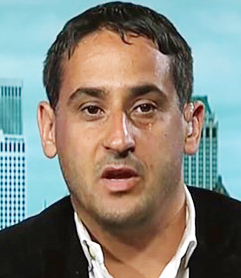
Jeremy Kuzmarov holds a Ph.D. in American history from Brandeis University and has taught at numerous colleges across the United States. He is regularly sought out as an expert on U.S. history and politics and co-hosts a radio show on New York Public Radio and on Progressive Radio News Network called “Uncontrolled Opposition.”
He is Managing Editor of CovertAction Magazine and is the author of eight books, including Obama’s Unending Wars (Clarity Press, 2019), The Russians Are Coming, Again, with John Marciano (Monthly Review Press, 2018), Warmonger. How Clinton’s Malign Foreign Policy Launched the U.S. Trajectory From Bush II to Biden (Clarity Press, 2023); with Dan Kovalik, Syria: Anatomy of Regime Change (Baraka Books, 2025), and Political Assassinations in America: The Intricate Nexus of Deep State Crime (Clarity Press, 2026).
Besides these books, Kuzmarov has published hundreds of articles and contributed to numerous edited volumes, including one in the prestigious Oxford History of Counterinsurgency .
He can be reached at jkuzmarov2@gmail.com and found on substack here.