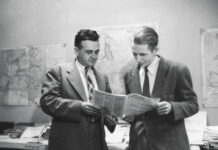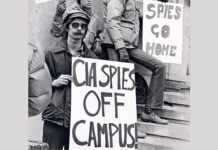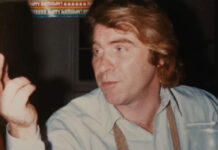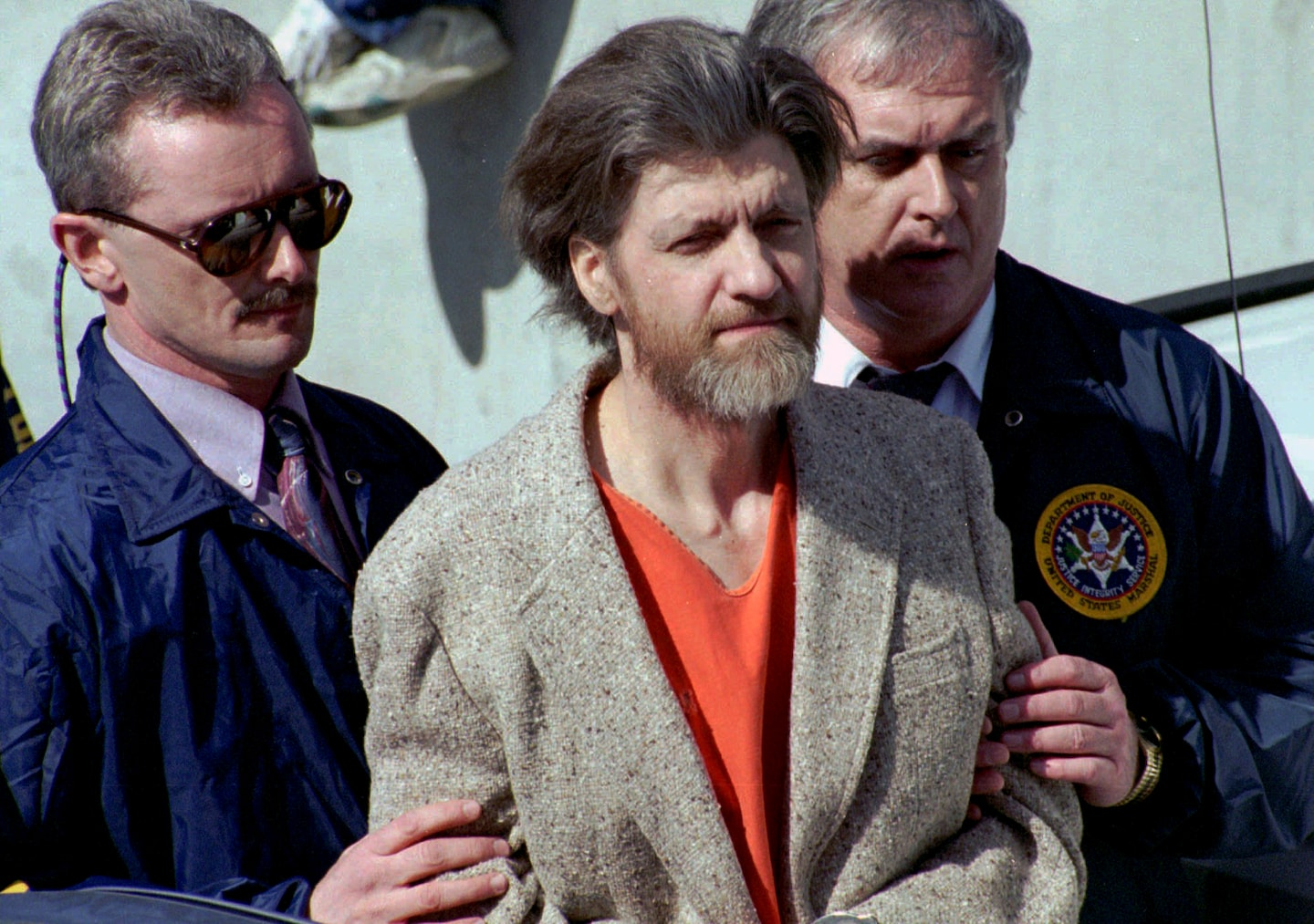
Netflix has revived public interest in the Unabomber, Theodore Kaczynski (1942-2023), a one-time mathematics professor at UC Berkeley, who killed three people and injured 23 in a mail-bombing campaign from 1978 to 1995 targeting people he thought were destroying society and the environment through use of modern technology.
Kaczynski was a victim of the CIA’s Operation MK-ULTRA program as a Harvard University undergraduate student in the late 1950s, where he was subjected to mock interrogations and abusive attacks under the direction of Harvard psychologist Henry Murray, who worked for the CIA.
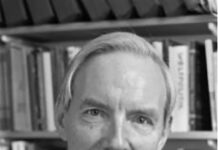
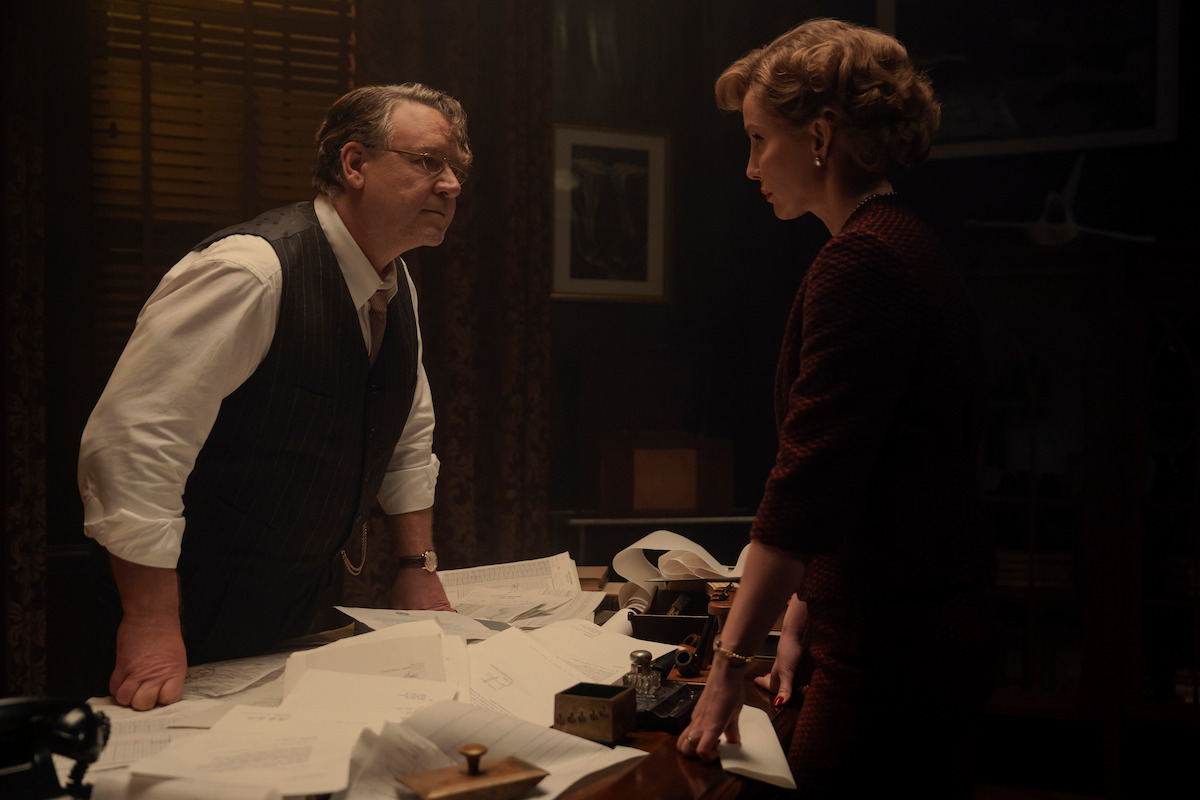
Russell Crowe plays Dr. Murray in the Netflix film about Kaczynski called Unabomber. Described by Timothy Leary as “the wizard of personality assessment,” Murray was the long-time director of the Harvard Psychological Clinic going back to the late 1920s, who wrote a classic psychology text on personality and provided a personality assessment of Adolf Hitler when he was working for the Office of Strategic Services (OSS) during World War II.[1]
Co-founder of the humanistic psychology discipline dedicated to expanding human potential that gave birth to alternative therapies in the 1960s and 1970s, Murray also monitored military experiments on truth-drug brainwashing and interrogation when he was with the OSS.[2]
In the early 1960s, Murray approved CIA asset Timothy Leary’s appointment to the Harvard faculty and psilocybin and LSD research projects, which entailed performing drug tests on Harvard students. The testing was an offshoot of the MK-ULTRA program which aimed to further the use of LSD and other mind-enhancing drugs as a mechanism of social control.[3]
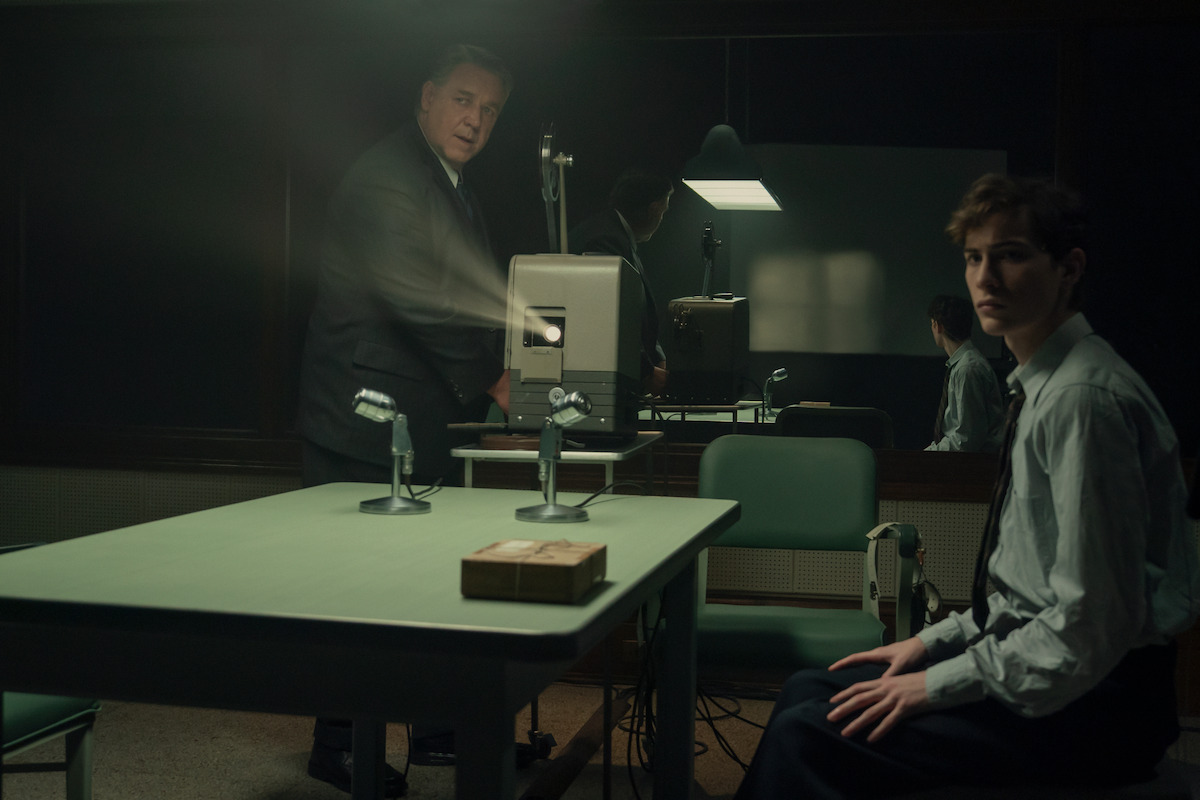
Unabomber presents Murray as a sinister figure who boasts about working for OSS founder “Wild” Bill Donovan in World War II and is obsessed with obtaining data from the experiment with students that could be used in a report he was producing for the CIA.
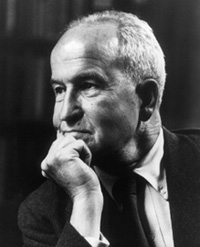
The purpose of the experiment Kaczynski participated in was to help the CIA develop techniques for breaking people down and getting them to renounce previously held beliefs. The CIA also wanted to better understand how people would react under extreme stress.
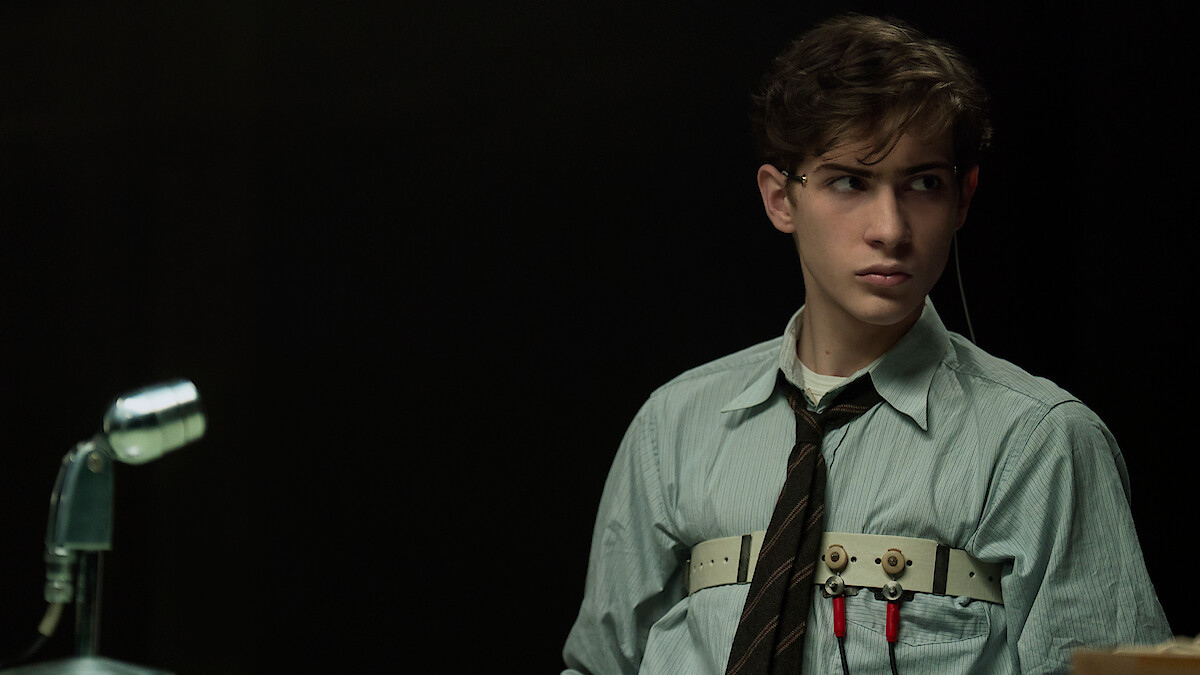
Before they signed up, students had been told they would be debating their core beliefs. Instead, they had those beliefs ridiculed by one of Murray’s assistants sitting behind a mirror while they had a spotlight on them and electrodes attached to their body as fluctuations in their respiration and pulse were measured on a cardiotachometer.[4]
Another embarrassing aspect of the experiment was that students were asked to divulge information about deeply personal matters, like the frequency of their masturbation and their erotic fantasies.
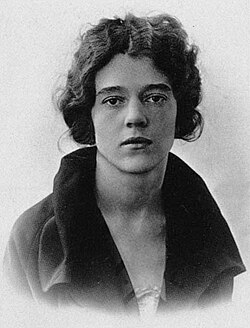
Murray’s top aide on the experiment was his lover Christiana Morgan (played by Annabelle Wallis), a Jungian psychoanalyst who is shown in the film befriending Kaczynski at a party and getting him to open up to her about his insecurities with girls and bad experiences he had on a recent date.
Morgan betrays Kaczynski by secretly recording the conversation and giving it to Murray and another assistant who play it in front of Kaczynski during one of the mock interrogation sessions, humiliating him.[5]
Played by Jacob Tremblay, Kaczynski had been made to believe that he was specially selected for the Harvard experiment, but Morgan tells him that the mere reason he was selected was because of his young age—Kaczynski was only 16 when he entered Harvard after having skipped two grades.
The film implies that Kaczynski was adversely impacted by the MK-ULTRA experiment, that it made him bitter and mistrustful toward authority figures, compounding a difficult relationship he had with his father, and that it contributed to his evolution into a domestic terrorist.
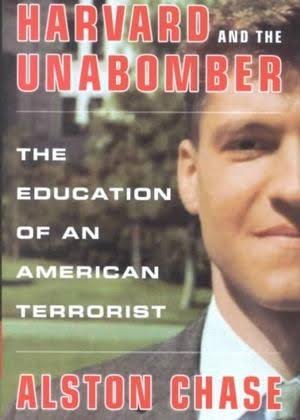
This conclusion is corroborated in Alston Chase’s book, Harvard and the Unabomber: The Education of an American Terrorist, which argues that the Harvard experiment furthered Kaczynski’s perception of betrayal by authority figures and led him to develop fantasies of revenge against people and institutions that failed him and society.[6]
Significantly, Kaczynski’s 1995 manifesto first appearing in The New York Times and The Washington Post, Industrial Society and Its Future, included expressions of wariness about society’s use of mind control and other efforts to control human behavior and criticized academia and psychologists and the misuse of science in modern society.
In researching the records of the experiment at Harvard, Chase found that Murray and his team concluded that Kaczynski was most severely affected by the experiment compared to the other participants and had the most traumatic experience.
The reason, according to Chase, was that Kaczynski was insecure at the time because he was struggling academically and socially, despaired about the direction of society, and came from a family that pushed him academically but did not provide emotional support or outward love.
Chase found out that Kaczynski never forgot his experience at Harvard, as he kept a copy of Murray’s 1963 article in American Psychologist about the experiment in the cabin where he lived in Montana, and characterized the experiment to his attorney 36 years later as a “highly unpleasant experience” in which he and other subjects were “told that we were to engage in a debate about our personal philosophies, and then found that our adversary in the debate subjected us to various insults that presumably, the psychologist, helped him to concoct.”[7]
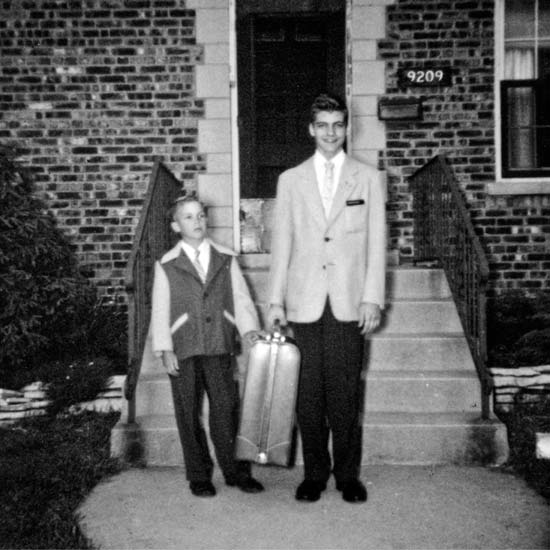
After his arrest in 1998, Kaczynski told a court-appointed psychologist that he began having dreams after the Harvard experiment in which a psychiatrist or psychologist appeared who tried to convince him he was “sick” and tried to control his mind through psychological techniques and that he responded by breaking out in physical violence against him and his allies and eventually killing him, which gave him a great feeling of liberation and relief.[8]
The psychologist/psychiatrist in the dream clearly was Murray, who symbolized for Kaczynski the evil of the academic establishment (many of his letter-bomb targets were academics) and everything that was wrong with society.
The experimentation Murray carried out at Harvard was an extension of the work he had done for the OSS in World War II where he had designed tests designed to predict how well OSS applicants would withstand interrogation, whether they were best equipped to serve as saboteurs, spies or propagandists, and whether they could successfully stand up to pressure, be a leader, hold their liquor and lie skillfully.[9]
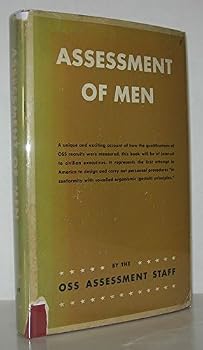
A recipient of the Legion of Merit, in spring 1945, Murray was flown in Donovan’s private plane to Chungking, China, to evaluate Chinese Special Forces being trained to operate behind Japanese lines. Afterwards, he co-wrote a book, Assessment of Men, that inspired the systems used to evaluate personnel in government and private industry and the CIA’s creation of a special division of personality analysis focused on Soviet leaders.[10]
In 1958, Murray joined Princeton psychologist Hadley Cantril on a CIA-sponsored tour of the Soviet Union under academic cover to gather information on the social psychology of the Soviet people and their relationship with the Soviet elite.[11]
A few years earlier, Murray had been an adviser on a U.S. Army project at Boston’s Brigham Hospital in which patients were given experimental doses of steroids and cortisone to determine its pharmacological effects. Some patients allegedly became psychotic.[12]
Carrying himself in the Harvard psychology department as “the ruler of a latifundia estate,” Murray had a narcissistic personality disorder, according to Chase, and proclivity for cruelty to others that may have derived from a tormented relationship with his mother and sister.[13]
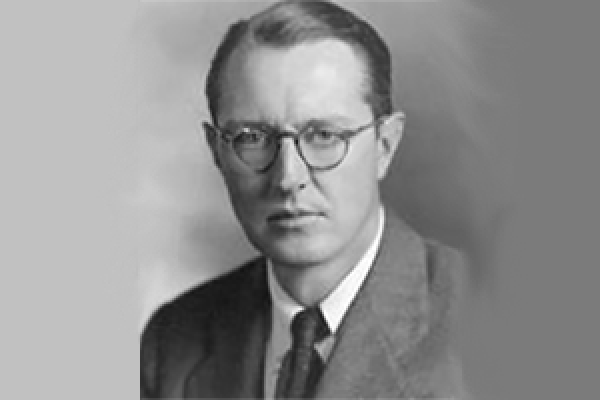
People who knew Murray had trouble believing he was a clandestine government agent because he had become a “militant” pacifist after Hiroshima and supported the World Federalist Movement, which advocated for a one-world government.[14]
The latter world view, however, was not incompatible with his work for the CIA, as Murray and other Cold War liberals believed that the Cold War was a struggle for hearts and minds that could be won without bloodshed through effective psychological warfare and mind-control techniques.
In that vein, enemy captives could be made to divulge state secrets to help the West save humanity by ending the scourge of communism and abuses of civil liberties associated with it.
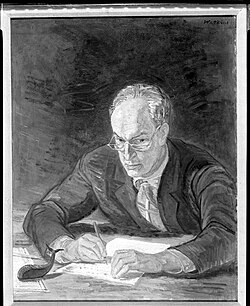
At the time, many in the psychology field were enlisted in the Cold War. Harvard students became ripe testing material for MK-ULTRA experiments, including those involving LSD, which Murray considered a potential wonder drug capable of altering human behavior.
In addition to Leary’s well-known LSD testing experiment, Dr. Robert W. Hyde, a CIA funded psychiatrist, administered LSD to Harvard students at Boston Psychopathic Hospital where some of the students had bad reactions.[15]
By the time of the Kaczynski experiment, Murray had become obsessed with finding ways of transforming human personality. In 1962, he wrote that “the fundamental task assigned to the social sciences will be that of designing a system of practices of child-rearing, education and self-development which under favorable conditions would produce generations of adult personalities who would prove progressively more fit, emotionally and intellectually, to live and, if called upon, to govern in a world capable of producing genocidal weapons.”[16]
Murray had first obtained Rockefeller Foundation funding in 1949 for experiments on personality assessment and response to stress.[17] The Harvard experiment aimed to be the last in the series inspired by the OSS assessments that would set the groundwork for social-engineering efforts Murray hoped would transform U.S. society.
The Harvard students who were chosen, like Kaczynski, were mere guinea pigs whose emotional response to the experiment factored little in Murray’s calculations, nor those of his Harvard and CIA colleagues. The latter never considered that their cavalier treatment of people like Kaczynski could blow back and harm the young men being experimented on, and also society.

Alston Chase, Harvard and the Unabomber: The Education of an American Terrorist (New York: W. W. Norton, 2003), 241. Murray’s classic book on personality was entitled Explorations in Personality (1938). Psychologist Edwin Shneidman described the book as “the most important book in psychology since William James’ Principles of Psychology appeared in 1890.” Other psychologists believed the book was brilliant for its time, but did not have great enduring value.
Chase, Harvard and the Unabomber, 241, 273. Born to a wealthy family in New York in 1893, Murray obtained a B.S. degree from Harvard in 1915, a medical degree from Columbia University in 1919, and a Ph.D. in biochemistry from Cambridge University in 1927. ↑
Chase, Harvard and the Unabomber, 248, 249; Jeremy Kuzmarov, “Timothy Leary—1960s Acid Guru—May Have Been Among the CIA’s Greatest Assets,” CovertAction Magazine, April 24, 2026. According to Chase, Murray became addicted to methamphetamines and then gravitated to LSD after he was introduced to it by Timothy Leary. Murray in turn was a major supporter of Leary coming to Harvard and carrying out continued research on LSD at the behest of the CIA. Leary wrote in his memoir that, as OSS Chief of Psychology, Murray “had maintained military experiments on brainwashing and sodium amytal interrogation. Murray expressed great interest in our drug research project and offered his support.” Chase suggests that Murray’s behavior was increasingly erratic at the time of the Kaczynski experiment because of his use of drugs.Chase, Harvard and the Unabomber, 235. Students spent hundreds of hours in the interviews and provided dozens of pages of intimate details about their lives. The experiment was later deemed to be unethical by the standards of the psychological profession and Nuremberg Code, which prevents doctors from deceiving patients or subjects in an experiment. ↑
Christiana Morgan died under suspicious circumstances on a vacation in the Virgin Islands in 1967. Both she and Henry remained married to other people while carrying on a long-term affair. Some people close to Murray and Morgan believed there was foul play and that Murray may have been behind her death. ↑
Chase (1935-2022) was a Harvard graduate and philosophy professor who, like Kaczynski, quit academia to move to a remote region in Montana to be close to the wilderness. ↑
Chase, Harvard and the Unabomber, 287. Murray’s article was entitled “Studies of stressful interpersonal disputations.” ↑
Chase, Harvard and the Unabomber, 304. The court-appointed psychologist was named Sally Johnson. ↑
Chase, Harvard and the Unabomber, 259. ↑
Idem. More background on Dr. Murray can be found in Forrest G. Robinson, Love’s Story Told: A Life of Henry A. Murray (Cambridge, MA: Harvard University Press, 1992). ↑
Chase, Harvard and the Unabomber, 259, 266. Chase notes that, in 1952, the Harvard faculty benefited from no less than 160 clandestine defense contracts. From 1960 to 1966, the CIA contributed $456,000 to 13 Harvard professors in the departments of psychology, philosophy and social relations. The Department of Social Relations with which Murray was part had two prominent members who performed services for the CIA: sociologist Talcott Parsons and anthropologist Clyde Kluckhohn, the first director of Harvard’s Russian Research Center. As late as 1974, Parsons served as a consultant to the CIA on the effects of the students rebelling in the 1960s and on the personality of potential CIA recruits. ↑
Chase, Harvard and the Unabomber, 263. ↑
Ibid., 288. ↑
Ibid., 274. ↑
Ibid., 248, 249. ↑
Ibid., 257. ↑
The Rockefeller Foundation as a cut-out for the CIA is well documented. It financed Murray’s research for many years, along with the research of other prominent psychologists of the era, like Erik Erikson. ↑
CovertAction Magazine is made possible by subscriptions, orders and donations from readers like you.
Blow the Whistle on U.S. Imperialism
Click the whistle and donate
When you donate to CovertAction Magazine, you are supporting investigative journalism. Your contributions go directly to supporting the development, production, editing, and dissemination of the Magazine.
CovertAction Magazine does not receive corporate or government sponsorship. Yet, we hold a steadfast commitment to providing compensation for writers, editorial and technical support. Your support helps facilitate this compensation as well as increase the caliber of this work.
Please make a donation by clicking on the donate logo above and enter the amount and your credit or debit card information.
CovertAction Institute, Inc. (CAI) is a 501(c)(3) non-profit organization and your gift is tax-deductible for federal income purposes. CAI’s tax-exempt ID number is 87-2461683.
We sincerely thank you for your support.
Disclaimer: The contents of this article are the sole responsibility of the author(s). CovertAction Institute, Inc. (CAI), including its Board of Directors (BD), Editorial Board (EB), Advisory Board (AB), staff, volunteers and its projects (including CovertAction Magazine) are not responsible for any inaccurate or incorrect statement in this article. This article also does not necessarily represent the views the BD, the EB, the AB, staff, volunteers, or any members of its projects.
Differing viewpoints: CAM publishes articles with differing viewpoints in an effort to nurture vibrant debate and thoughtful critical analysis. Feel free to comment on the articles in the comment section and/or send your letters to the Editors, which we will publish in the Letters column.
Copyrighted Material: This web site may contain copyrighted material the use of which has not always been specifically authorized by the copyright owner. As a not-for-profit charitable organization incorporated in the State of New York, we are making such material available in an effort to advance the understanding of humanity’s problems and hopefully to help find solutions for those problems. We believe this constitutes a ‘fair use’ of any such copyrighted material as provided for in section 107 of the US Copyright Law. You can read more about ‘fair use’ and US Copyright Law at the Legal Information Institute of Cornell Law School.
Republishing: CovertAction Magazine (CAM) grants permission to cross-post CAM articles on not-for-profit community internet sites as long as the source is acknowledged together with a hyperlink to the original CovertAction Magazine article. Also, kindly let us know at info@CovertActionMagazine.com. For publication of CAM articles in print or other forms including commercial internet sites, contact: info@CovertActionMagazine.com.
By using this site, you agree to these terms above.
About the Author
Jeremy Kuzmarov holds a Ph.D. in American history from Brandeis University and has taught at numerous colleges across the United States. He is regularly sought out as an expert on U.S. history and politics and co-hosts a radio show on New York Public Radio and on Progressive Radio News Network called “Uncontrolled Opposition.”
He is Managing Editor of CovertAction Magazine and is the author of eight books, including Obama’s Unending Wars (Clarity Press, 2019), The Russians Are Coming, Again, with John Marciano (Monthly Review Press, 2018), Warmonger. How Clinton’s Malign Foreign Policy Launched the U.S. Trajectory From Bush II to Biden (Clarity Press, 2023); with Dan Kovalik, Syria: Anatomy of Regime Change (Baraka Books, 2025), and Political Assassinations in America: The Intricate Nexus of Deep State Crime (Clarity Press, 2026).
Besides these books, Kuzmarov has published hundreds of articles and contributed to numerous edited volumes, including one in the prestigious Oxford History of Counterinsurgency .
He can be reached at jkuzmarov2@gmail.com and found on substack here.