
Space Attacks and Cyber Attacks Could Now Trigger Military Intervention Under Article 5 of the NATO Treaty
The NATO proclamation—promoted at its annual summit this week—that a cyber attack could trigger Article 5 of the NATO treaty heightens the risk of military confrontation with Russia or China.
So does a new stipulation—announced at the summit—that space attacks could trigger Article 5. Russia has already been accused of testing space-based anti-satellite weapons, which could be adopted as a justification now for war.

Article 5 says that the NATO alliance regards an attack on one of its members as an attack on all of them. That is supposed to come into play only in case of an armed attack, since that is the only kind of attack under the UN Charter that warrants responsive use of force.
If one expands the concept of armed attack in violation of the UN Charter, one opens a broader path to the use of force. Thus, while the concept of self-defense is obviously necessary, where an actual armed attack occurs, the concept is dangerous if acts not amounting to armed attack can trigger it.
NATO’s history with invocation of Article 5 does not give much comfort. The only time that occurred was after the September 11, 2001, criminal attacks in the United States against the Pentagon and World Trade Towers. That invocation provided justification for military action in Afghanistan that was said to be aimed at Al-Qaeda but that morphed into a twenty-year fiasco that is now reaching its ignoble end. It is dangerous to leave the decision to start war to NATO.

The UN Charter is set up, in fact, to keep regional defense organizations from undertaking war without authorization from the UN Security Council. NATO decisions to start wars skirt that obligation.
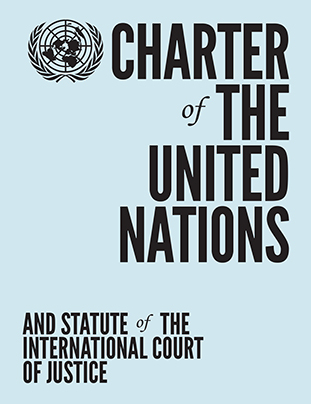
The United States decreed a dangerous expansion of self-defense in 2002 when it said in the Defense Department’s annual strategic policy document that self-defense is warranted in response not only to an actual armed attack, but as well in response to an anticipated attack. That interpretation opened the path to the distortion of facts relating to Iraq that provided a rationale for the invasion of Iraq in 2003.
NATO, moreover, was set up to stop what was said to be a risk of a Soviet invasion of Western Europe. NATO has transformed itself into an organization with worldwide scope. So when President Biden says, as he just did, that Article 5 is a “sacrosanct” obligation, he is diverting attention from what Article 5 was created to prevent.
Cyber attacks of one kind or another occur frequently these days. While it is true—and this is the rationale for the NATO statement—that cyber attacks can be extremely damaging, their very frequency heightens the risk of calling cyber attacks the equivalent of an armed attack.
The nightmare scenario is that a cyber attack occurs, the origin is not obvious, but NATO says it was the work of Russia or China and proceeds with military action. There would be no oversight for that assessment.
Another nightmare is that Russia or China is accused of a space-based attack of unknown origin, or which derives from weapons testing.
The prohibition of use of force contained in the UN Charter in 1945 was an important achievement for the world community. The Charter allowed for self-defense but kept it within narrow bounds. The expansion of the parameters of Article 5 in the 21st century that is claimed to allow for defense force—in violation of the UN Charter—is a danger to world peace.

John Quigley is Professor of International Law at Ohio State University.







 Radhika Desai is a Professor of Political Studies at the University of Manitoba, Winnepeg, Canada, Director of its Geopolitical Economy Research Group, and Convenor of the International Manifesto Group. Ms. Desai is an author of multiple books, including Geopolitical Economy(2013) and her most recent Capitalism, Coronavirus and War(2022). Ms. Desai hosts a fortnightly show, Geopolitical Economy Hour on the Geopolitical Economy Report website.
 Yan Pan is a Chinese PhD researcher at LUT University, Finland. Her work examines the political economy of China’s technological and industrial development, with a particular focus on the industrialization and governance of neurotechnology in China. Her research concerns industrial policy models for future industries in Chinese and Global South contexts. Prior to her PhD, she researched educational reforms and structural change in labor demand in China.
 Ken Hammond is professor emeritus of East Asian and Global History at New Mexico State University. He has lived and worked in China from time to time since 1982. A lifelong political activist, he is a member of the Party for Socialism and Liberation.
[…] Visit and follow us on Instagram at @crg_globalresearch. […]
[…] John Quigley at covertactionmagazine – June 17, 2021 0illustrations […]
[…] John Quigley at covertactionmagazine – June 17, 2021 0 illustrations […]
Few Americans are aware that NATO has become an aggressive monster as an arm of the American empire.
https://www.youtube.com/watch?v=r2lamuu8fzk
[…] CovertAction Magazine […]
[…] Research, June 18, 2021CovertAction Magazine 17 June […]